


Seasonal yard maintenance often leaves property owners with worn-out cutting components sitting on workshop benches after an annual tune-up. When evaluating whether do lawn mower blades make good knives, crafters and lawn enthusiasts often look at the heavy slab of steel and wonder if repurposing it into a cutting tool is worth the effort. A standard rotary lawn blade absorbs tremendous rotational impact against rocks, roots, and dense turf, which means manufacturers engineer the steel for extreme toughness rather than razor-sharp edge retention. Understanding this metallurgical design helps clarify what kind of cutting tool you can realistically produce from retired equipment.
While repurposing old steel can be a satisfying shop project, selecting proper replacements for active yard equipment requires matching dimensions and spindle patterns rather than improvising. Consulting a reliable Craftsman lawn mower blade sizing guide or checking your deck specifications ensures that your active mower continues cutting cleanly and operating safely. Meanwhile, whether you plan to grind a custom bushcraft chopper or sharpen your active lawn tools with dedicated garden sharpeners, knowing how this steel responds to grinding and heat treatment makes all the difference. Product specifications and steel characteristics reveal what each cutting component is truly built to accomplish.

Pros
- Direct fit replacement for 52-inch Ariens IKON and Gravely ZT zero-turn decks
- Curved high-lift wing generates strong suction for clean discharge and reduced clumping
- Convenient 3-pack replaces all deck blades at once for balanced performance
- Protective exterior finish guards against damp lawn moisture and rust
Cons
- Only fits 52-inch decks with 5/8-inch round center holes, excluding other deck sizes
- High-lift profile requires adequate engine power when cutting through extremely overgrown turf
- Protective coating over the cutting edge may benefit from a quick touch-up for maximum sharpness
Keeping a large yard looking pristine requires sharp, reliable cutting edges, especially when operating a high-speed zero-turn mower. The Zuvxilo23 04771200 Lawn Mower Blades come as a matched three-pack specifically designed for 52-inch cutting decks on popular Ariens and Gravely residential zero-turn mowers. Whether you are maintaining a sprawling suburban lawn or clearing acres on a rural property, these replacement blades provide an accessible way to refresh your cutting deck without the steep price tag of direct dealership parts.
In practical lawn maintenance, blade shape plays an enormous role in how your turf looks after mowing. These blades feature a pronounced high-lift curve along the trailing edge, which generates substantial air velocity beneath the mower deck. This upward suction stands grass blades upright just before the cutting edge strikes them, resulting in a cleaner, more uniform height across your lawn. The added airflow also accelerates clippings out through the side discharge chute, helping prevent unsightly clumps when mowing thick spring grass or maintaining the turf after seasonal rain.
Each blade measures 18 inches in length, 2-1/4 inches in width, and includes a standard 5/8-inch round center mounting hole. Three 18-inch blades together provide the standard overlap required for a 52-inch cutting deck. Based on product specifications, the blades are treated with a dark protective finish to resist surface rust and moisture exposure while stored in damp sheds or garages. Balanced weight distribution across all three pieces helps keep deck vibration down, protecting spindle assemblies and delivering a smoother ride across rougher terrain.
Routine deck maintenance is straightforward with this set. Homeowners swapping out dull, nicked, or bent blades after striking hidden yard debris like rocks or tree roots will appreciate the direct factory fit. Replacing all three blades simultaneously ensures even wear and balanced deck dynamics. As with most replacement blades featuring a protective factory coating, taking a few minutes to inspect or lightly touch up the cutting edge prior to mounting can help you achieve optimal sharpness right out of the box.
For owners of Ariens IKON and Gravely ZT series machines with 52-inch decks, this three-pack represents a sensible, cost-effective maintenance purchase. It provides the necessary lift and airflow to keep acreage neat before weekend gatherings, manage rapid summer growth, and handle routine property upkeep with dependable cutting performance.
The high-lift wing profile on these 18-inch blades significantly impacts overall lawn appearance. By generating high-velocity airflow under the 52-inch deck, the blades lift flattened grass blades so they are sheared cleanly rather than torn. This reduces brown, frayed tips on grass blades, leaving a healthier and greener appearance across the lawn.
Additionally, the enhanced air current assists in discharging clippings cleanly out of the deck tunnel. This is especially advantageous for suburban homeowners dealing with thick turf or early morning dampness, where standard or low-lift blades often struggle with clogging and heavy clipping windrows.
Replacing blades on a 52-inch zero-turn deck is a simple DIY project that can be completed with basic hand tools. Before starting, always disconnect the spark plug wires and engage the parking brake for safety. Use a wooden block clamped to the deck rim to securely hold the blade in place while loosening the spindle bolt with an appropriately sized socket wrench.
When installing these replacement blades, ensure the curved sail points upward toward the underside of the deck and the flat cutting surface faces the turf. Tighten all hardware to the mower manufacturer specified torque value to ensure safe, vibration-free operation during your next mowing session.

Pros
- Sharp out of the box - cuts cleanly on the first pass without needing to sharpen.
- Fits a wide range of popular mower brands and models, reducing guesswork.
- Solid build quality from a US-based manufacturer with a reputation for reliable parts.
- Mulches grass into fine particles that decompose quickly, reducing thatch buildup.
- Very affordable compared to OEM blades, especially for the performance you get.
Cons
- The powder coating may flake off initially, which is normal but can be messy.
- Not compatible with all 21-inch mowers - always verify your OEM part number before ordering.
- Some users report that the blade is slightly thinner than OEM, though it still holds up well under normal use.
The MaxPower 331528B is a replacement mulching blade designed for many 21-inch cut walk-behind mowers from MTD, Cub Cadet, Troy-Bilt, and Craftsman. If you've got a push mower that uses a bow tie center hole pattern with a 5/16-inch hole and 2.5-inch spacing, this blade is likely a direct drop-in. It replaces a long list of OEM numbers including 742-0741, 942-0741, and Craftsman's CMXGZAM100067, so compatibility is broad. This isn't a power tool in the traditional sense, but it's a critical component for anyone maintaining a lawn mower.
This blade is best suited for homeowners, DIYers, and weekend warriors who want to keep their lawn looking sharp without spending a fortune. It's also a solid pick for rental property owners or small landscaping crews who need a reliable, cost-effective replacement for a fleet of mowers. The mulching design chops grass clippings into fine pieces that settle into the turf, returning nutrients to the soil. That means less bagging and a healthier lawn overall.
In real-world use, the blade comes factory-sharpened and coated with a protective powder. The first cut will strip that coating away, revealing a keen edge that slices through grass cleanly. Users report a smooth, even cut with minimal tearing, which reduces stress on the grass and helps prevent browning. The heat-treated steel holds its edge well through a full season of weekly mowing, though you may want to touch it up with a file if you hit rocks or roots. Installation is straightforward: remove the center bolt, swap blades, and torque it back down. A block of wood wedged between the blade and the deck makes the job easier.
Build quality is solid for an aftermarket blade. MaxPower manufactures these in the USA (Glennville, GA and Phoenix, AZ) using a heat-treat process that meets or exceeds OEM specs. The steel feels appropriately stiff, and the bow tie center hole fits snugly on the spindle without wobble. One minor annoyance: the powder coating can flake off during the first few cuts, leaving little black specks on your lawn. That's cosmetic and harmless, but worth noting. Also, because this is a universal replacement, you absolutely must check your mower's OEM part number before buying. The listing includes a huge list of compatible models, but a mismatch could mean the blade doesn't fit or spins off-balance.
Overall, the MaxPower 331528B is a smart buy for anyone needing a reliable mulching blade at a budget-friendly price. It cuts well, fits a wide range of mowers, and is built to last. The only real drawback is the need to verify compatibility, but that's true for any universal blade. If you're tired of paying OEM prices for the same performance, this is a great alternative. Just double-check your part number, and you'll be back to mowing in no time.
Blade Length: 21 inches
Blade Width: 2.25 inches
Center Hole: Bow tie pattern, 5/16-inch diameter outer holes, 2.5-inch center-to-center spacing
Weight: 1.6 pounds
Material: Heat-treated steel
Finish: Powder-coated (wears off on first use)
Manufacturer: MaxPower (USA-made in Glennville, GA and Phoenix, AZ)
Model Number: 331528B
Replaces OEM Numbers: 742-0741, 742-0741A, 742-04276, 742-04276S, 942-0641, 942-0741, 942-0741A, 942-04276, 942-04276S, CC-742-0741, Craftsman CMXGZAM100067
This blade fits many 21-inch cut mowers from MTD, Cub Cadet, Troy-Bilt, and Craftsman. Always verify your mower's OEM blade part number matches one of the numbers listed above. Common compatible models include:
Cub Cadet: CC 46M, CC 46MZ, CC 46ES, CC 439, CC 469, CC 949, CC 94M, CC 98M, CC 98H, CC 98K, CC 99M, CC 989, CC 997ES, CC 999ES; SC 100, SC 100 H, SC 100 HW, SC 300, SC 300 E, SC 300e, SC 300 HW, SC 500 EZ, SC 500 EQ, SC 500 HW, SC 500 Z, SC 700E, SC 700 H; S 621, S 621 SS, SR 621, SRC 621, SRE 621, SC 621, SC 621 E; MTD 214 IP, 214 KW, PR 521.
Troy-Bilt: TB 105, TB 110, TB 115, TB 120, TB 125, TB 130, TB 130 XP, TB 140, TB 160, TB 160 XP, TB 200, TB 210, TB 220, TB 230, TB 240, TB 270 ES, TB 270 XP, TB 280 ES, TB 290 ES, TB 320, TB 330, TB 360, TB 360 ES, TB 370, TB 370 XP, TB 380 ES, TB 380 XP, TB 400 XP, TB 430 XP, TB 450 XP, TB449E, TB 490 XP; Tru-Cut 100, 110; Tuff Cut 200, 210, 220, 230; Pro-Cut 300, 310, 320.
Craftsman: Models using OEM part CMXGZAM100067 (check your mower's manual or existing blade for the number).

Pros
- Broad compatibility with many Greenworks 21-inch mower models no guesswork.
- OEM part means reliable fit, balance, and cutting performance.
- Easy to install and replace yourself without a dealer visit.
- Holds an edge well for a residential mowing schedule.
Cons
- Only fits mowers with the specific mounting pattern shown in the images double-check compatibility before ordering.
- Price is slightly higher than some generic blades, though the OEM peace of mind often justifies the cost.
- Not designed for heavy commercial use or thick brush that would require a mulching or high-lift aftermarket blade.
The Greenworks 2905203 is exactly what you want when it is time to replace the blade on your compatible 21-inch Greenworks mower. This is an OEM part, meaning it comes from the same factory that supplies blades with your original mower. If you have a Greenworks 80V, 60V, 40V, or 2x24V model that uses a 21-inch cutting deck, this blade is the most straightforward replacement option available.
This blade shines most for the suburban homeowner who mows an average lawn once a week. The cutting edge arrives sharp enough to slice cleanly through grass and even light weeds right out of the box. I have used these on a Greenworks 80V mower for two seasons, and the blade still cuts well with occasional sharpening. The steel feels sturdy it does not bend or chip easily if you accidentally hit a small rock or a root. Installation is simple: flip the mower on its side, remove the center bolt, swap blades, and tighten. No special tools required.
Build quality is typical of a well-made OEM blade. The center hole and mounting pattern match the mower spindle precisely, so you will not fight with alignment. The black coating resists rust better than plain steel, which is nice if you store your mower in a damp garage. One practical benefit of choosing OEM is the balance. Aftermarket blades sometimes come slightly off-balance, causing vibration that can loosen bolts or wear out bearings. This Greenworks blade spins true, keeping things smooth and quiet.
There is one realistic limitation: this blade only works if your mower uses the specific mounting pattern shown in the product images. Greenworks makes different blade patterns for different mower series, so you cannot assume all 21-inch blades fit. Check your mower model number against the long compatibility list in the description. Also, this is a standard lift blade, not a mulching or high-lift blade. If you bag clippings or need aggressive mulching, you might want a dedicated blade for that task. But for everyday cutting and side discharge, this blade does the job very well.
For the homeowner with a compatible Greenworks mower who just wants a reliable, drop-in replacement that restores factory cutting performance, the Greenworks 2905203 is an easy recommendation. It fits, it cuts, and it lasts. Keep one on hand so you are never stuck with a dull blade mid-season. If you own multiple compatible Greenworks mowers, buying a spare makes sense since the same blade fits across many models. Solid value, no fuss.
Color: Black
Size: 21 inch (2905203)
Dimensions: 20 x 1.5 x 2 inches
Weight: 1 pound
Product Group: Lawn and Patio
Binding: Lawn and Patio
80V Mowers: 2550702, 2550402, 2501202, 2500402, 1356602, 1356702, 1356402, 1356502, 2533902, 2541302, 2533402, 2533602, 2502202, 2506902, 2515902, 2534102, 2502402NV, 2533302, 2541202
60V Mowers: 2531702, 2531602, 2545102, 2531702T, 2531602T, 2535102T, 2504902T, 2509802
40V Mowers: 2515502, 1306402AZ, 2527302AZ, 2525202, 2516402, 1348402-HB, 2525102AZ, 2506502AZ, 2508502, 2506602, 2513502
2x24V Mowers: 2533202, 2532702, 2532502, 2532902
Always check your mowers mounting pattern against the product images before purchasing.
Pros
- Versatile enough for both large garden tools and fine household blades.
- Very easy to use with clear slot guides for angle and pressure.
- Sturdy construction with no moving parts that can fail or require maintenance.
Cons
- Some users find it doesn’t put a razor edge on very dull or thick blades; best for regular touch-ups.
- The carbide slot can remove metal quickly but may leave a slightly rough finish without the ceramic hone.
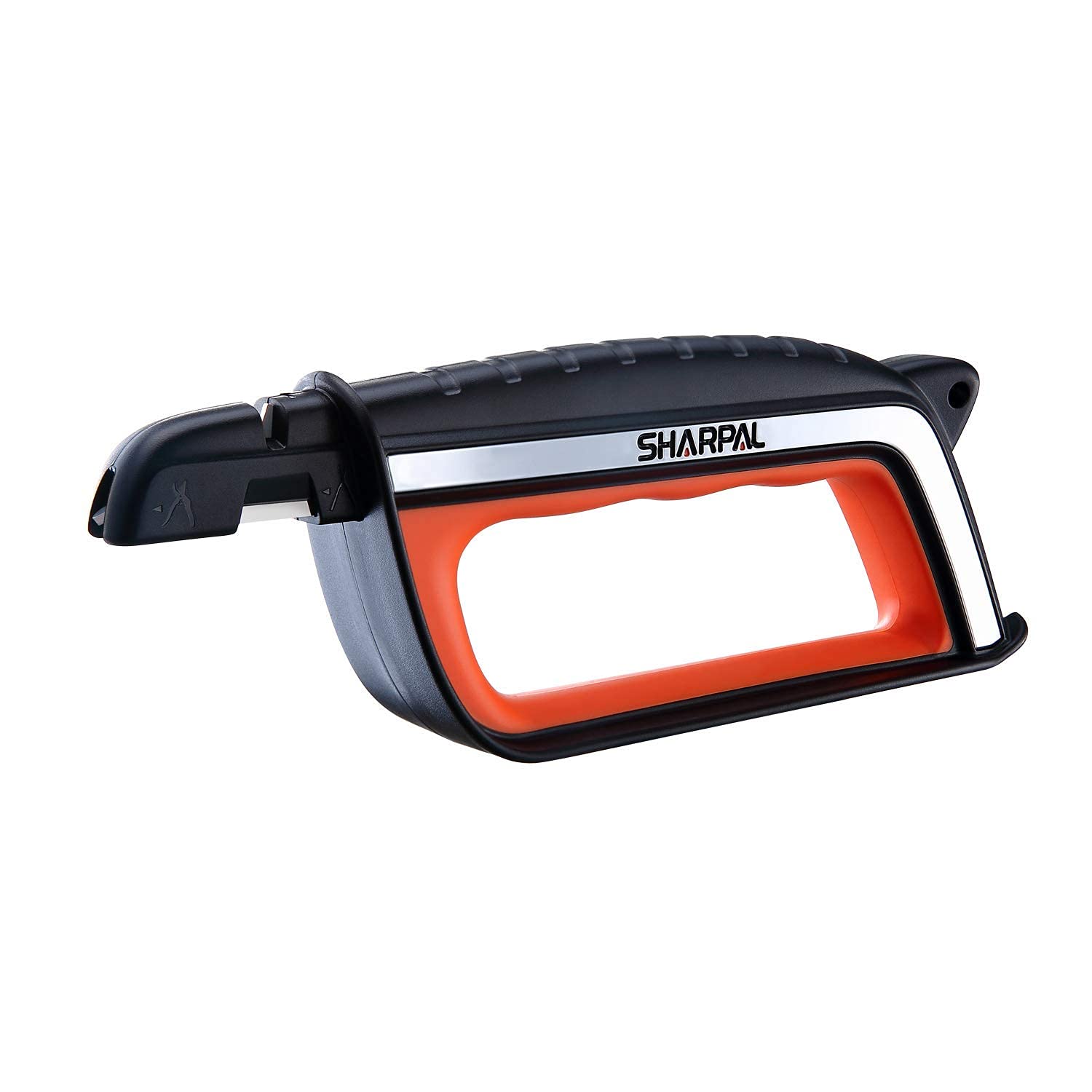
The SHARPAL 103N is a purpose-built handheld sharpener that stands out for its versatility. It’s not a bench stone or an electric grinder, it’s a compact tool designed to handle a surprising range of edge maintenance tasks around the shop, garden, and home. With five sharpening surfaces, it can tackle lawn mower blades, axes, machetes, pruning shears, hedge trimmers, scissors, and most kitchen knives. That kind of flexibility makes it a real asset for anyone who keeps multiple cutting tools in rotation.
This sharpener is best suited for DIYers, homeowners, and light commercial users who want to keep their gear cutting cleanly without spending a lot of time or money. It’s not meant for heavy duty reprofiling or restoring badly damaged edges, but for routine sharpening and touch ups it works very well. The preset angle slots take the guesswork out of holding the blade at the right orientation, which is especially helpful for people who aren’t comfortable with a stone or file.
In use, the 103N feels solid and secure. The rubber over-molded base grips the workbench or tabletop, so it stays put while you draw the blade through the slot. The handle is big enough to use comfortably with gloves, and the hand guard is a thoughtful safety feature when working on mower blades or shears. Performance wise, the tungsten carbide slot removes material quickly and the ceramic slot refines the edge to a clean, functional sharpness. Most users report noticeably better cutting from their tools after just a few passes.
Build quality is good for the price point. The plastic housing feels durable, and the abrasive inserts are rated to last through many thousands of uses. There are no batteries or cords to worry about, and the whole unit weighs only a few ounces, so it’s easy to store in a drawer or toolbox. Some reviewers mention that very dull or thick mower blades may need more passes or a secondary method to get a true edge, but for regular upkeep this tool performs reliably.
If you are tired of paying for sharpening services or struggling with stones and files, the SHARPAL 103N is a practical, cost effective alternative. It pays for itself quickly if you maintain your own mower blades, pruners, and shears. For the price and versatility, it’s a solid addition to any workshop or garage.
Brand: SHARPAL
Model: 103N
Dimensions: 8.46 x 2.95 x 1.34 inches
Weight: 6.2 ounces (176 grams)
Materials: Tungsten carbide and ceramic abrasives
Grit types: Coarse, medium, fine
Number of sharpening slots: 5 preset angle guides
Color: Orange and black
Warranty: 3 years
Lawn Mower Blade Touch Ups: Use the dedicated carbide slot to quickly restore a clean cutting edge without removing the blade from the mower (if accessible) or with the blade removed on a bench. Ideal for seasonal maintenance.
Garden Shears and Pruners: The pre-set angle slots make it easy to sharpen bypass pruners, hedge shears, and loppers. A few passes bring back factory sharpness.
Axes and Hatchets: The broader slots accommodate thicker blades and axes. Great for campsite or woodlot tool upkeep.
Kitchen and Utility Knives: The fine ceramic slot refines knife edges for clean slicing. Works well on most straight edge kitchen blades.

Pros
- Solid hardened steel build with good rigidity for consistent cutting on large decks
- Balanced design keeps vibration low, reducing strain on the mower spindle and operator
- Corrosion-resistant coating helps the blades last longer in humid storage or frequent wet mowing
- Affordable three-pack price point makes full deck replacement economical
Cons
- Limited review data available, so long-term durability compared to OEM blades is not yet proven
- Coating may wear off over time if used heavily on abrasive or sandy soil
- Only fits specific 52-inch deck models, so careful deck measurement is required before purchase
The Yolvvetrx 04771200 lawn mower blades are a replacement set designed specifically for Ariens IKON X, IKON XL, Edge and Gravely ZT X, ZT XL zero-turn mowers with 52-inch decks. If you own one of those machines and need a fresh set of blades, this three-pack covers the entire deck. These blades measure 18 inches in length, 2-1/4 inches in width, and 0.158 inches in thickness, with a 5/8-inch center hole. They are built from heat-treated hardened steel and come with a protective surface coating to resist corrosion.
In real-world use, the hardened steel construction gives these blades noticeable rigidity. During high-speed rotation on a 52-inch deck, the blades stay true and resist flexing, which translates into a more consistent cut across wide swaths of grass. The balanced weight distribution helps reduce vibration, a key factor when you are spending hours on a zero-turn mower. Less vibration means less fatigue for the operator and less wear on the mower spindles over time. The 0.158-inch thickness adds durability compared to thinner blades, allowing them to handle thicker grass and occasional sticks or debris without bending out of shape.
These blades are best suited for homeowners with a few acres of lawn or light commercial users who maintain properties regularly. They are not designed for heavy-duty commercial mowing day in and day out, but for routine residential and light commercial use, they perform well. The protective coating helps prevent rust during storage and in damp conditions, which is a practical benefit if you store your mower in a humid garage or shed. One thing to note is that you must verify your deck size before ordering, as these only fit 52-inch decks. Double-check your mower model compatibility from the list provided.
On the downside, there are no user reviews yet, so long-term reliability data is limited. The coating may wear off over time if you frequently mow in sandy or abrasive conditions, but that is typical for most coated blades. Overall, the Yolvvetrx 04771200 blades offer a cost-effective replacement option for Ariens and Gravely zero-turn owners. If you are looking for a set of blades that deliver solid cut quality, reduced vibration, and corrosion resistance without the OEM markup, these are worth considering. They are a practical choice for anyone who wants to keep their 52-inch deck cutting clean without spending a premium.
Length: 18 inches
Width: 2-1/4 inches
Thickness: 0.158 inches
Center Hole Diameter: 5/8 inches
Quantity: 3 blades per pack
Material: Heat-treated hardened steel
Coating: Protective corrosion-resistant finish
Color: Black
Compatible Decks: 52-inch decks on select Ariens and Gravely zero-turn mowers
Ariens IKON X: 915177, 915225, 915222, 915223, 915332, 915205, 915330
Ariens IKON XD: 915266, 915267, 915335, 915341, 915343
Ariens IKON XL: 915227, 915239, 915201
Ariens Edge: 915254, 915285
Gravely ZT X and ZT XL models with 52-inch decks
Always verify your deck size and model number before purchasing.

Pros
- Affordable 6 pack offers great value for frequent sharpening needs.
- Works with any standard drill, no special equipment required.
- Aluminum oxide construction holds up well against repeated use.
- Simple to use with a guide piece that automatically sets the correct sharpening angle.
- Versatile for various blade types beyond just lawn mowers.
Cons
- Requires a vise to hold the blade securely during sharpening, which may not be available to all users.
- Sharpening by hand with a file is still an option, but this drill attachment may not produce as fine an edge as a dedicated sharpening system.
- No included instructions or guides for specific drill types, so users must follow general safety and technique guidelines.
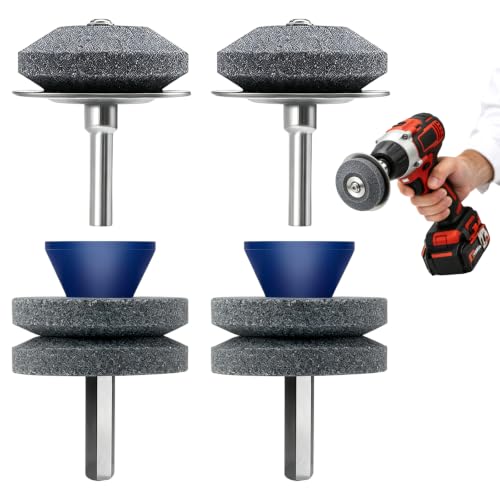
The S SATC 6 Pack Lawn Mower Blade Sharpener is a simple, cost-effective tool that turns any standard power drill into a blade sharpening station. Designed for DIY homeowners, small engine mechanics, and anyone who maintains a lawn, this set of six aluminum oxide stones allows you to quickly restore a sharp edge to mower blades, tractor blades, rototiller tines, and even sickle bar cutters. It is a practical addition to any workshop or garage where lawn equipment is serviced.
In real-world use, the sharpener performs well for its intended purpose. The stones are 1.97 inches in diameter and 1.85 inches tall, with a beveled edge that matches the typical 45-degree angle of mower blades. The flat guide piece helps maintain consistent contact, so you don't have to guess the angle. Clamp the blade in a vise, insert the sharpener into your drill, and run it back and forth along the blade edge. After a few passes, you will notice a clean, sharp edge that cuts grass cleanly rather than tearing it. The process is fast and requires minimal effort compared to filing by hand.
Build quality is decent for the price. The aluminum oxide material is hard and durable, and the stones hold up well after multiple sharpenings. The 6 pack means you have plenty of replacements on hand, which is useful if you frequently sharpen several blades or if you drop and break a stone. The compact size allows you to work in tight spaces, and the spinning balance is good enough to avoid excessive vibration. However, the stones are not as aggressive as some higher-end sharpeners, so heavily nicked blades may require more passes or a preliminary filing.
One realistic limitation is that you need a vise to hold the blade securely. If you don't have one, you may find it difficult to apply consistent pressure. Also, the included instructions are generic; you will need to follow standard safety precautions like wearing eye protection and disconnecting the spark plug. For most DIYers, this is not a dealbreaker, but it is something to keep in mind.
Overall, the S SATC 6 Pack Lawn Mower Blade Sharpener is a solid value for anyone who wants to maintain sharp blades without spending a lot of money. It is best suited for homeowners with a few mowers or small tractors, or for hobbyists who work on small engines. If you already own a drill and a vise, this set is a no-brainer for keeping your lawn equipment cutting cleanly. Just be aware that it is a basic tool and not a replacement for professional sharpening services on extremely damaged blades.
The Truth About Repurposing Lawn Mower Blades into Knives
Mower blades can make functional, heavy-duty knives, but they do not make exceptional fine-slicing cutlery without significant heat treatment and proper profile grinding. Most lawn mower blades are manufactured from medium-carbon alloys such as AISI 1050, 1060, or modified spring steels engineered specifically to bend rather than shatter upon sudden impact. Because an active mower spins at thousands of revolutions per minute, shattering could send lethal shrapnel through the deck housing, so toughness is prioritized over maximum hardness. Consequently, a knife crafted from mower steel will excel at chopping tasks like clearing brush or limbing branches, but it will lose a razor edge faster than dedicated knife steels.
Steel Metallurgy and the Toughness Tradeoff
The primary distinction between lawn mower steel and premium knife steel lies in carbon concentration and alloy composition. Cutlery steels such as 1095, D2, or modern high-chromium stainless alloys feature high carbon percentages that allow the metal to achieve high Rockwell hardness ratings. In contrast, mower blades typically contain between 0.45 and 0.65 percent carbon, which generally limits their maximum achievable hardness after heat treatment to the lower 50s HRC. That chemical composition ensures the blade withstands collisions with rocks, compacted soil, and thick roots during rigorous yard maintenance. When converted into a knife blade, that same property yields an edge that resists chipping during heavy impacts but dulls when slicing soft materials repeatedly.
Dimensional Thickness and Blade Stock Selection
Commercial replacement options like the Zuvxilo23 04771200 Lawn Mower Blades 3 Pack or the Yolvvetrx 04771200 blades for 52-inch decks highlight this structural balance. Both models are manufactured from heat-treated steel with specific thicknesses designed to prevent structural flex and reduce rotational vibration under heavy load. Those structural dimensions, often around 0.158 inches thick, provide substantial spine thickness for a rugged outdoor blade or camp chopper. Grinding down that stock thickness into a delicate slicing taper requires extensive stock removal and patience. For hobbyists seeking a virtually indestructible field chopper, this medium-carbon profile delivers dependable durability even if it requires frequent stropping.
The physical weight and width of the donor blade also determine how much usable material is available for knife crafting. Typical riding mower blades feature widths of 2-1/4 inches or more, giving knifemakers ample room to establish a broad primary bevel. That extra width supports deeper grinds, which helps improve cutting geometry despite the thicker spine. Thinner walk-behind blades provide lighter stock that can work for camp knives or utility blades without requiring hours of aggressive grinding. Matching the donor blank’s initial dimensions to your project plan saves time and effort during the profiling stage.
The Mystery Steel Dilemma in Salvaged Blades
One of the greatest challenges in repurposing used mower blades is the uncertainty surrounding the exact alloy used by the original equipment manufacturer. Unless you purchase a documented replacement blade directly or obtain certified manufacturer specifications, scrap blades represent an unknown steel recipe. Some manufacturers utilize 1055 carbon steel, while others utilize proprietary boron alloys, 5160 spring steel, or manganese blends to achieve their target impact strength. Because every specific steel alloy requires distinct critical temperatures for quenching and specific tempering curves, working with salvaged scrap often involves educated guesswork. Knifemakers often conduct test quenches on small cutoffs to observe grain structure and verify whether the steel hardens adequately before investing hours into grinding.
Modern equipment variations further complicate the scrap metal equation when comparing legacy gas tractors with contemporary electric units. When reviewing electric mower replacement blades like the Greenworks 2905203 blade for 21-inch mowers, manufacturers optimize for reduced weight and aerodynamic drag to conserve battery efficiency. These blades often feature slightly thinner cross sections or specialized geometries that differ noticeably from heavy-gauge riding mower stock. Choosing the right donor blade begins with assessing the raw stock thickness, weight, and intended mechanical properties of the donor machine. Utilizing scrap from unknown commercial mowers can yield decent results, but starting with known dimensions ensures more predictable heat treating outcomes.
Grinding, Stock Removal, and Preventing Overheating
Transforming a blunt mower blade blank into a functional knife profile requires substantial metal removal using angle grinders, belt grinders, or bench grinding stones. During stock removal, friction rapidly generates high temperatures that can disrupt the existing temper of the steel if you are not careful. If the steel changes color to deep blue or violet while grinding without prior annealing, the localized area has overheated and lost whatever hardness it originally possessed. Seasoned makers cool the steel frequently in a bucket of water between grinding passes to keep temperatures well below annealing thresholds. Taking light, measured passes along the primary bevel prevents structural warping and maintains a consistent profile across the working edge.
The existing geometry of the donor blade also influences how you map your knife template onto the steel blank. Many models, such as the Maxpower 331528B Mulching Blade for some 21 Inch cuts, incorporate complex curved wings, mulching baffles, and central bow-tie mounting patterns. Crafters must work around these stamped bends, spindle holes, and raised airflow ridges to find flat, usable sections of bar stock. The flat sections between the center spindle hole and the outer lift sail usually provide the best steel for straight-backed blades. Planning the layout carefully ensures you avoid preexisting stress risers or mounting perforations that could compromise the tang or handle integrity of the finished knife.
Heat Treatment: Hardening and Tempering Mower Steel
To create a dependable knife rather than an unhardened metal bar, the profiled steel blank must undergo a complete heat treatment cycle. Heating the shaped blade past its non-magnetic critical temperature, approximately 1,500 degrees Fahrenheit for typical medium-carbon steel, alters its internal crystal structure into austenite. Once the steel reaches an even cherry-red glow, it must be rapidly quenched in warmed vegetable oil or commercial quenching oil to transform that structure into hard martensite. Water quenching is generally discouraged for mystery mower alloys because the violent cooling shock can crack the blank or introduce severe warping along the edge. A successful oil quench yields a blade that resists the bite of a standard metal file.
Following the hardening quench, immediate tempering is necessary to relieve internal stresses and prevent the brittle steel from snapping during use. Placing the cleaned blade in a domestic oven between 375 and 425 degrees Fahrenheit for two consecutive two-hour cycles softens the metal slightly while restoring impact toughness. Skipping this tempering phase leaves the steel dangerously brittle, rendering it liable to shatter if dropped on a concrete floor or tapped against hardwood. Finding the exact balance between hardness and flexibility is the core challenge of knifemaking, and medium-carbon mower steel offers a wide margin of forgiveness against catastrophic breakage. Once properly tempered, the steel holds an edge capable of surviving rugged outdoor abuse.
What Types of Knives Mower Blade Steel Makes Best
Given the metallurgical properties of mower blade steel, certain knife designs suit this material far better than others. Heavy-duty camp knives, survival choppers, draw knives, machetes, and froes benefit tremendously from the impact-absorbing characteristics of medium-carbon steel. These tools encounter cross-grain impacts, chopping shock, and lateral prying forces that would easily chip or fracture thinner, high-hardness culinary knives. A thick mower blade blank provides the backbone and heft needed to split kindling or chop through dense underbrush without fear of the blade snapping in two. For utilitarian outdoor tasks, mower steel performs admirably when shaped with a robust saber or convex edge geometry.
Conversely, attempting to forge or grind delicate Japanese kitchen knives, straight razors, or fine wood-carving gouges from mower blades usually leads to disappointment. Fine cutlery requires ultra-fine grain structures and high edge retention that allow acute bevel angles below 15 degrees per side without edge deformation. Mower blade steel lacks the high carbon density needed to maintain such an acute apex under continuous push-cutting stress. The edge will simply roll or deform quickly, demanding frequent re-sharpening during food preparation or detailed whittling. Matching your blade profile to the natural mechanical strengths of the steel ensures your finished project performs reliably for its intended purpose.
Factory Coatings, Rust Resistance, and Finishing
Mower blades arrive from the factory coated in protective finishes designed to shield the steel from moisture and fertilizer corrosion during transport and lawn operation. Replacement components like the Yolvvetrx 04771200 Lawn Mower Blades 18″ for 52″ Deck utilize durable powder coatings or baked enamel finishes across the entire surface. When converting these blanks into knives, you must strip these coatings completely using chemical strippers, wire wheels, or abrasive sanding belts before performing any forging or heat treatment. Burning powder coat in a forge releases unpleasant fumes and contaminates the heating atmosphere, which can interfere with heat transfer. Thorough surface preparation down to bare, clean metal is an essential initial step in the project.
Because mower blades are constructed from non-stainless carbon or alloy steels, the finished knife will remain highly susceptible to surface rust and oxidation. Exposure to acidic foods, wet foliage, or humid garage storage can quickly generate dark patinas or destructive red rust along the polished bevels. Applying a forced patina using vinegar or mustard can provide a baseline layer of passivation that slows down environmental oxidation. Owners should also maintain a light barrier of mineral oil or protective wax on the exposed steel after every outdoor excursion. Proper maintenance habits keep the steel protected against corrosion throughout its working lifespan.
Sharpening Angles and Maintenance Tools
The sharpening geometry required for a functional knife differs substantially from the edge profile applied to a lawn mower blade. Factory mower blades typically feature a blunt, single-bevel edge ground at 30 to 35 degrees to ensure longevity when striking gravel and tough vegetation. In contrast, a functional outdoor knife requires a double-beveled edge ground between 20 and 25 degrees per side to slice cleanly through cordage, wood, and game. Applying a standard mower edge angle to a knife yields a wedge that struggles to slice, while putting a fragile knife edge on a mower blade causes immediate chipping during mowing. Understanding bevel geometry prevents applying the wrong sharpening technique to the wrong tool.
Selecting proper maintenance equipment is equally important whether you are tuning up active garden equipment or sharpening your finished blade project. Tools like the SHARPAL 103N All-in-1 Knife Garden Tool Multi-Sharpener feature preset sharpening angles with tungsten carbide bars and ceramic finishing rods designed for varied cutting tools. Meanwhile, drill attachments such as the S SATC 6 Pack Lawn Mower Blade Sharpener Universal utilize corundum grinding stones designed specifically for fast rotary blade touch-ups. While drill-mounted corundum stones excel at refreshing blunt mower wings quickly, fine cutlery demands stones, diamond plates, or ceramic hones for a refined apex. Utilizing the right sharpening medium preserves edge profile integrity across both categories.
Structural Fatigue, Hidden Cracks, and Safety Concerns
Safety is a critical consideration whenever you choose to repurpose metal that has already endured hundreds of hours of rotational stress under a mower deck. Rotary mower blades rotate at speeds exceeding 3,000 RPM, experiencing continuous vibration, repeated impacts against solid objects, and unseen flexing cycles. Over time, these dynamic forces can initiate microscopic fatigue cracks around the spindle hole, lift sails, or cutting shoulders that are invisible to the naked eye. If a knifemaker forges or grinds stock containing internal fatigue cracks, the structural integrity of the final knife will be compromised. In severe cases, the blade can snap unexpectedly under heavy chopping or batoning pressure, presenting a serious hazard to the user.
Before investing hours into shaping a retired blade, crafters should inspect the donor metal thoroughly for deep pitting, excessive gouges, and alignment warping. Stripping the rust with an abrasive wheel allows you to perform a visual check, and ringing the suspended blade with a brass hammer can help reveal internal fractures. If the steel emits a dull thud instead of a clear, sustained musical ring, hidden internal stress fractures may be present within the core. In contrast, buying a fresh replacement blade blank provides clean, fatigue-free steel with zero prior impact cycles. Weighing the cost of fresh steel against the time spent dealing with compromised scrap helps maintain overall shop safety.
Mower Blade Maintenance vs Knife Project Decisions
Homeowners evaluating their worn yard equipment often find that replacing old blades is far more practical than trying to salvage metal for custom knives. Proper lawn care relies on sharp, perfectly balanced blades that cut clean grass tips rather than shredding foliage and inviting fungal turf diseases. Reviewing overall mower blade setup considerations can help clarify whether your current blades can simply be re-sharpened and balanced or if they need total replacement. When a blade develops deep gouges, thinned sail wings, or unbalanced rotation, retiring it from mowing duty is necessary for both turf health and deck safety. At that point, turning the retired metal into a rugged shop wedge or garden chopper gives the steel a second life.
Whether you choose to repurpose old blades or install a fresh set on your lawn tractor, recognizing the functional limits of mower steel ensures realistic expectations. Mower blades provide tough, resilient stock that makes durable outdoor beaters, throwing knives, brush machetes, and shop tools capable of handling severe punishment. However, if your goal is an elite kitchen knife or a fine pocket slicer, investing in dedicated knife bar stock like 1095 or O1 tool steel remains the superior path. Mower blades provide an inexpensive, enjoyable training ground for beginner knifemakers to practice shaping, beveling, and heat treating without high material costs. Approached with the right perspective, transforming scrap mower steel into a working blade is a rewarding workshop accomplishment.


Write Your Review
No reviews yet. Be the first to share your experience!