


Most lawn mower owners should use either SAE 30 or SAE 10W-30 oil, depending on the ambient temperature and the specific engine manufacturer’s recommendation. The exact grade is printed in your owner’s manual, which serves as the primary authority for your specific model. Using the wrong viscosity can lead to poor lubrication, increased wear, or difficulty starting the engine in extreme temperatures. This guide helps you identify the correct what to use for lawn mower oil based on common small engine specifications.
Small engines in push mowers, riding mowers, and lawn tractors generally require 4-cycle (four-stroke) motor oil. You should never use 2-cycle oil in these engines, as it lacks the necessary detergents and additives for long-term lubrication. Brands like Toro, STP, Briggs & Stratton, and Lucas Oil produce specific formulations for this purpose.
Understanding the difference between single-grade and multi-grade oils is essential for maintaining engine health. The right choice ensures consistent performance whether you are mowing in a hot summer or a cool spring. For related maintenance tasks, our practical sharpening guide offers useful tips on keeping your cutting components in top shape.

Pros
- Convenient combo saves time and effort on routine small engine maintenance
- SAE 30 oil provides reliable protection for hot-running engines
- Fuel treatment helps keep fuel fresh and prevents gumming in stored equipment
Cons
- SAE 30 is not ideal for cold-weather operation; use a multi-viscosity oil in winter
- Only 1 quart of oil included, may not be enough for larger engines requiring multiple quarts
If you own a lawn mower, generator, pressure washer, or any other small engine equipment, you know regular oil changes and fuel maintenance are key to keeping things running season after season. The Toro 38903 combo pack bundles a quart of SAE 30 engine oil with a 2-ounce bottle of Yellow 3-n-1 Advanced Fuel Treatment, giving you two essential maintenance items in one purchase. It is designed for the weekend warrior or homeowner who values simplicity and reliability over chasing the latest synthetic blends.
SAE 30 is a single-viscosity oil that works best in warmer temperatures, typically above 40 degrees Fahrenheit. It provides a solid film strength that reduces engine wear during operation, especially in air-cooled engines that run hotter than car engines. The included fuel treatment is a nice bonus: it stabilizes gasoline for up to 12 months, cleans fuel injectors and carburetors, and helps prevent ethanol-related corrosion. For anyone who stores their equipment over winter, this combo is a no-brainer.
Build quality is what you would expect from Toro: the oil meets industry standards for small engines, and the fuel treatment is a proven additive. The quart bottle has a threaded cap that pours cleanly, though a funnel is recommended to avoid spills. At just 3 pounds total, the kit is easy to toss in a toolbox or keep on a shelf in the garage. There is nothing flashy here, but that is the point. It is a straightforward, reliable maintenance solution for common power equipment.
A realistic drawback is that SAE 30 is not suitable for cold-weather use. If you run your equipment in temperatures below 40 degrees, you will want a multi-viscosity oil like 10W-30. Also, the quart size is fine for most push mowers and small generators, but larger riding mowers or commercial units may require multiple quarts. The fuel treatment bottle is small, but it treats 10 gallons of gas, which is plenty for most home users.
Overall, this Toro combo is a solid buy for anyone who wants to simplify small engine maintenance. It is best suited for homeowners with a single mower or generator who want a one-and-done solution for oil and fuel care. If you are a contractor running multiple machines or need year-round performance, you might opt for separate products. But for most DIYers, this kit delivers exactly what you need without overcomplicating things.
Brand: Toro
Model: 38903 + 31001
Viscosity: SAE 30
Liquid Volume: 1 Quart
Fuel Treatment: Yellow 3-n-1 Advanced, 2 oz bottle treats 10 gallons
Item Weight: 3 pounds
Package Dimensions: 9 x 3 x 5 inches
Vehicle Service Type: Car, Truck (but intended for small engines)
This combo is ideal for seasonal maintenance of lawn mowers, pressure washers, generators, and other small engines used in warm weather. It works well for homeowners who want to store their equipment properly before winter. The fuel treatment is especially useful for equipment that sits unused for months, preventing varnish and corrosion in the fuel system. If you have a single mower or a generator for backup power, this kit covers both oil change and fuel stabilization in one purchase.

Pros
- OEM quality guarantees reliable fit and performance without guesswork
- Helps protect your engine by removing dirt and debris from oil
- Easy to install, even for DIY users with basic mechanical skills
- Backed by a well-known, trusted brand in small engines
Cons
- Only compatible with specific engine models, so checking your manual is a must
- May cost slightly more than aftermarket alternatives
- No included gasket or installation hardware with this single filter pack
The Briggs & Stratton 2-1/4 inch Standard Oil Filter (part number 492932S) is a genuine OEM replacement part designed for select Intek and Vanguard OHV engines. This oil filter is essential for removing harmful contaminants from your engine oil, helping your lawn mower, generator, or other small engine run cleaner and last longer. Anyone who maintains a lawn mower at home, a contractor with a fleet of equipment, or a DIYer who values preventive maintenance will appreciate the straightforward improvement this filter brings to their engine's health.
In real-world use, this filter does exactly what it's supposed to. It fits securely on compatible engines, and swapping it out during an oil change takes just a few minutes. The 2-1/4 inch diameter with 3/4-16 thread size matches many Briggs & Stratton Intek and Vanguard models, which means you can count on a tight seal right out of the box. There's no struggling with adapters or worrying about compatibility if you've checked your owner's manual. The filter element is paper media, and it's rated as a performance part that effectively traps debris without restricting oil flow noticeably.
Build quality is what you'd expect from a genuine OEM part. The metal canister is sturdy, the gasket material seals well against the filter housing, and the threading is clean. At 6.4 ounces, it's lightweight and easy to handle during installation. For workshop or garage use, there's no ergonomic issue it's a simple spin-on filter. Durability is high for this type of product; the filter will last the full service interval without problems, as long as you follow the recommendation to replace it yearly or every 100 hours.
One realistic drawback is that this filter only fits specific engine models, so you must confirm compatibility before buying. Also, while prices are reasonable for a genuine part, aftermarket filters may cost a few dollars less. That said, this filter ensures your engine stays within EPA emissions compliance, which can matter for both performance and legal reasons. Another minor point: it only comes with the filter itself no extra gasket or oil included so you'll need to have oil on hand for the change.
Overall, the Briggs & Stratton 2-1/4 inch Standard Oil Filter is a solid choice for anyone who wants a reliable, hassle-free replacement part. Whether you're a homeowner doing your own lawn mower maintenance or a contractor keeping multiple small engines running, this filter delivers trustworthy performance. If you're already using Briggs & Stratton equipment and want to keep it in top shape, this genuine part is the way to go. Pair it with a quality oil and a consistent service schedule, and your engine will thank you season after season.

Pros
- Reliable protection for a variety of small engines, from push mowers to generators.
- All-weather formula allows use in both summer and winter without needing different oils.
- Positive reviews confirm good engine cleanliness and reduced wear after use.
- Competitive price point for a synthetic blend that still offers excellent value per quart.
Cons
- Synthetic blend, not full synthetic: some users may prefer a fully synthetic oil for high-performance engines.
- Each bottle is 32 oz, which may require multiple bottles for larger engines (e.g., riding mowers or snow blowers).
- Best suited for standard maintenance; may not be the top choice for extreme-duty commercial use.
STP's Premium Synthetic Blend 4 Cycle Small Engine Oil SAE 10W-30 is a well-rounded lubricant designed for the vast majority of outdoor power equipment. Whether you maintain a push mower, generator, tractor, or snow blower, this oil meets the basic needs of 4-cycle engines operating in a wide range of conditions. The pack of two 32 oz bottles gives you enough oil for several oil changes on smaller machines.
This oil is best suited for DIYers and homeowners who want dependable protection without needing to step up to a full synthetic. Its synthetic blend formula combines the benefits of synthetic base oils with conventional oil to keep costs reasonable while still offering easier cold-weather starts, better resistance to thermal breakdown, and enhanced engine cleanliness. Users report consistent viscosity and reduced deposits even after extended storage periods.
In real-world use, the oil flows smoothly at low temperatures, making those first pulls of the season less frustrating. The anti-wear additives help minimize scuffing on piston rings and cylinder walls, which is especially important during the initial break-in period of a new engine. The corrosion inhibitors add extra peace of mind during summer or winter layup, protecting internal metal parts from moisture damage.
One realistic limitation is that this is a synthetic blend, not a full synthetic oil. For engines that see extreme loads, high heat, or extended running times (like commercial mowing or continuous generator operation), a full synthetic might offer marginally better longevity. But for the average homeowner pushing a mower every week or running a generator for a few hours during a storm, this oil performs more than adequately.
Overall, STP's small engine oil delivers exactly what it promises: reliable, affordable protection for your outdoor equipment. If you change your oil regularly and store your gear properly, this pack will keep your engines running smoothly for seasons to come. It is a practical choice for anyone who wants to maintain their lawn and garden tools without spending a premium.
Viscosity: SAE 10W-30
Type: Synthetic Blend (4-Cycle)
Volume: 32 fl oz per bottle (Pack of 2)
Total Volume: 64 fl oz
Brand: STP
Model Number: 18588
Package Dimensions: 9.29 x 3.78 x 2.56 inches
Item Weight: 3.91 pounds

Pros
- Effective wear protection for extended engine life.
- Works in both push mowers and riding mowers.
- Prevents rust during storage with anti-corrosion additives.
Cons
- Only available in 1 quart size, so you may need multiple bottles for larger mowers.
- Not suitable for two-stroke engines.
- No pour spout included, so careful pouring is needed.
Lucas Oil 11315 SAE 30 Lawn Mower Motor Oil is a dedicated four-stroke engine oil designed for push and riding mowers. It is not a power tool in the traditional sense but an essential maintenance product for the gas engines that power many lawn tractors, walk-behind mowers, and other outdoor power equipment. For anyone who takes their lawn care seriously, using a quality oil like this is one of the simplest ways to keep equipment running reliably year after year.
This oil is best suited for homeowners and DIY landscapers who own push mowers or riding mowers with four-stroke engines. It delivers proven protection against engine wear and overheating, which are two of the biggest enemies of small engines during the mowing season. The formulation also includes rust preventatives that help protect internal components during storage, a major plus if you live in a region with long winters. Users report that engines start easier and run smoother after switching to this Lucas Oil product.
The SAE 30 viscosity is a common recommendation for lawn mower engines, providing the right thickness for lubrication in warm weather. While the quart size is convenient for a single oil change on most push mowers, you may need a few bottles for larger riding mowers with bigger crankcase capacities. The bottle lacks a pour spout, so be careful to avoid spills when adding oil to your mower. This is a minor inconvenience that can be solved with a funnel.
Lucas Oil is a well-known brand in the lubricants world, and this oil lives up to its reputation for quality. For anyone looking for a dependable, off-the-shelf oil that does exactly what it promises, this is a strong choice. It will help extend the life of your mower and keep it performing well all season long.
Size: 1 Quart (1 Pack)
Dimensions: 4.35 x 2.42 x 9 inches
Product Group: Lawn & Patio
Binding: Automotive
Pros
- Specifically designed for lawn mower engines, offering targeted protection against wear and heat
- Helps prevent rust and corrosion during off-season storage, a real plus for seasonal gear
- Promotes easier starting and smoother running, which means less hassle on mowing day
Cons
- Only available as a 1-quart bottle, which may not be enough for larger riding mowers that require a full oil change
- Not suitable for 2-stroke engines, so make sure your equipment is a 4-stroke before buying
- Premium price compared to generic oils, but the added protection may justify the cost for serious DIYers
The Lucas Oil 11313 SAE 10W-30 Lawn Mower Motor Oil is a four-stroke engine oil designed to keep push and riding mowers running reliably through the season. It's not a power tool itself, but it's an essential consumable for anyone who maintains small engines in their workshop or shed. If you own a lawn mower, tiller, or generator with a 4-stroke engine, this oil can help reduce wear and extend equipment life.
This oil is best suited for DIY homeowners and small engine enthusiasts who want a dedicated product rather than using leftover car oil. Lucas Oil specifically targets the challenges of mower operation: heat buildup from dense grass, frequent stop-start cycles, and long storage periods. The formulation includes additives that minimize engine wear and prevent overheating, which is a common issue when mowing in summer heat.
In real-world use, users can expect easier starting and a noticeably smoother idle after an oil change. The anti-rust properties are a standout advantage for those who store their mower for months at a time. Instead of fighting corroded internal components in spring, you'll get quick, clean starts. The oil also helps the engine maintain consistent operating temperature, reducing the risk of vapor lock or premature breakdown.
Build quality is what you'd expect from Lucas Oil: a reputable brand known for lubricants and additives. The 1-quart bottle is practical for small engines, though owners of larger riding mowers may need two bottles for a full change. The oil is not designed for 2-stroke engines, so be sure to confirm your equipment's requirements before use.
One realistic drawback is the price. It costs more than generic 10W-30, but the targeted protection and storage benefits can be worth the extra expense for those who value equipment longevity. If you're a weekend mower who just wants quick, reliable operation and engine protection, this Lucas Oil product is a solid investment. It's not flashy, but it does the job well.
Size: 1 Pack (1 Quart)
Type: SAE 10W-30
Application: Four-stroke small engines (push mowers, riding mowers, tillers, generators)
Dimensions: 4.35 x 2.42 x 9 inches
Product Group: Lawn and Patio
Binding: Automotive
This oil is ideal for routine oil changes on push mowers and small riding mowers used on residential properties. It's also suitable for other 4-stroke small engines like pressure washers, log splitters, and portable generators. If you store your equipment in an unheated shed or garage for the winter, the anti-rust protection is especially valuable. For best results, follow your owner's manual viscosity recommendation and change at the start of each season.
Pros
- Reduces engine wear and extends equipment life significantly.
- Protects against overheating in high heat conditions.
- Prevents rust during storage, ensuring easy spring startup.
- Compatible with most push and riding mowers with four-stroke engines.
Cons
- Only sold in single quart containers; may be less economical than gallon jugs.
- Not suitable for two-stroke engines or mixed-fuel equipment.
- Premium price compared to generic alternatives.
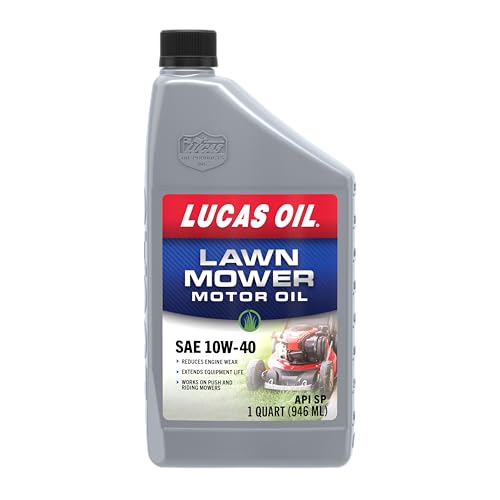
Lucas Oil 11314 SAE 10W-40 Lawn Mower Motor Oil is a dedicated four-stroke engine oil designed for push mowers and riding mowers. It's formulated to handle the high heat and heavy loads that small engines face during regular lawn care. If you own a walk-behind mower or a garden tractor with a 4-stroke engine, this oil is engineered to keep it running reliably season after season.
This product is best suited for homeowners and DIY enthusiasts who perform their own maintenance. Lucas Oil focuses on reducing engine wear, which is critical for mowers that sit idle for months and then get worked hard in summer. The 10W-40 viscosity provides excellent protection across a wide temperature range, helping the engine start easier and run smoother. Users will appreciate the anti-overheating properties, especially when cutting thick grass or using a bagger attachment.
Build quality is solid with Lucas Oil's reputation for additives that minimize sludge and varnish buildup. The quart bottle is easy to pour and store, though some might wish for a larger container for multiple oil changes. A key drawback is price per quart; it costs more than generic oils, but the enhanced protection against rust during storage and reduced wear may justify the premium for those who want to extend their mower's life.
Overall, Lucas Oil 10W-40 is a reliable choice if you're maintaining a single mower and value long-term engine health. It delivers on its promises of easier starting, smoother operation, and rust prevention. For the DIY user who wants one less thing to worry about during mowing season, this oil is a solid investment in your equipment.
Size: 1 Quart (1 Pack)
Dimensions: 4.35 x 2.42 x 9 inches
Product Group: Lawn and Patio
Binding: Automotive
Viscosity: SAE 10W-40
Engine Type: Four-Stroke
Understanding Lawn Mower Oil Viscosity Grades
Viscosity refers to the thickness of the oil and its resistance to flow. This property determines how well the oil lubricates engine parts at different temperatures. The Society of Automotive Engineers (SAE) standardizes these grades to provide a consistent reference for consumers. For small engines, the two most common grades are SAE 30 and SAE 10W-30. Each has specific advantages depending on the climate and operating conditions of your mower.
| Oil Grade | Temperature Range | Best For |
|---|---|---|
| SAE 30 | Warmer climates (above 40°F) | Standard 4-cycle engines in summer |
| SAE 10W-30 | All-weather (varies by region) | Multi-season use, easier cold starts |
| SAE 10W-40 | Mixed or hotter conditions | Engines running in high heat |
Single-grade oils like SAE 30 are designed for consistent performance in warmer temperatures. They are often recommended for summer mowing in regions that do not experience freezing temperatures. Multi-grade oils, such as 10W-30, contain additives that allow the oil to flow more easily during cold starts while maintaining protection at operating temperatures. This makes them a versatile choice for homeowners who use their mowers across different seasons. The “W” in 10W stands for “Winter,” indicating the oil’s low-temperature performance.
Choosing the correct grade prevents engine stress during startup. Cold, thick oil does not circulate quickly, leading to increased wear on the first few minutes of operation. A multi-grade oil addresses this by thinning out in the cold. However, if you live in a consistently warm climate, SAE 30 may be sufficient and cost-effective. Always verify the specific recommendation for your engine model in the owner’s manual. The manual will list the approved viscosity grades for your specific small engine.
4-Cycle vs. 2-Cycle Oil Distinctions
It is critical to distinguish between 4-cycle and 2-cycle engine oils. Most modern push mowers, riding mowers, and lawn tractors use 4-cycle engines. These engines have a separate oil sump and require regular oil changes. 2-cycle engines mix oil with fuel and do not have a separate lubrication system. Using 4-cycle oil in a 2-cycle engine, or vice versa, can cause severe damage. Check your engine label or manual to confirm the cycle type.
4-cycle oils contain detergents and dispersants that keep the engine clean. These additives help prevent sludge and carbon buildup over time. 2-cycle oils are designed to burn cleanly and do not contain these long-term lubricants. Mixing the wrong type can lead to clogged exhaust systems or inadequate lubrication. If your engine has an oil cap and dipstick, it is almost certainly a 4-cycle engine. This is the standard for the majority of residential lawn equipment.
Choosing Between SAE 30 and 10W-30
SAE 30 is a single-grade oil that performs well in temperatures above 40°F. It is a traditional choice for small engines in warmer regions. Many older manuals specify SAE 30 as the primary recommendation for summer use. It provides a stable film at operating temperatures. However, it can become very thick in cooler weather, making starting more difficult.
SAE 10W-30 is a multi-grade oil suitable for a wider range of temperatures. It offers easier cold starts while maintaining protection in heat. This makes it a popular choice for all-weather use. Many modern manufacturers list 10W-30 as an acceptable alternative to SAE 30. If you mow in spring, summer, and early fall, 10W-30 may be the more convenient option. It reduces the need to switch oils with the seasons.
- Check the owner’s manual for the recommended viscosity grade
- Consider your local temperature range when selecting oil
- Use 10W-30 for all-weather convenience and easier starts
- Use SAE 30 for warm-weather-only operation
- Never use 2-cycle oil in a 4-cycle engine
- Verify the oil type on the engine label or cap
Some engines may also accept SAE 10W-40 in hotter conditions. This grade offers slightly more viscosity at high temperatures. It can be beneficial if your mower runs in sustained heat. However, it is less common than 10W-30 or SAE 30. Always prioritize the manufacturer’s specific recommendation. Deviating from the manual’s guidance can void warranties or lead to premature wear. The goal is to match the oil’s properties to the engine’s design and your local climate.
Oil Additives and Fuel Treatments
Some oil products include fuel treatments or additional additives. For example, certain brands bundle a small bottle of fuel treatment with the oil. These treatments can help stabilize fuel and prevent varnish buildup. While not strictly necessary for every user, they may offer added protection. Fuel stabilizers are particularly useful if you store your mower for long periods. They prevent the fuel from degrading in the tank.
Anti-wear additives in premium oils help reduce engine wear. These additives form a protective layer on metal surfaces. This is especially important during high-load operations like mowing thick grass. Detergents in the oil help keep internal components clean. They suspend contaminants so they can be filtered out during oil changes. Using high-quality oil with these additives can extend the life of your engine. Look for products that explicitly mention anti-wear and detergent properties.
Corrosion inhibitors are another key component in small engine oils. They protect metal parts from rust, especially during storage. If you store your mower outdoors or in a damp garage, this feature is valuable. It helps prevent rust on the engine block and internal components. Many homeowners find that using oil with strong corrosion protection simplifies seasonal maintenance. It reduces the need for additional rust-prevention steps. This can save time and effort in the long run.
Oil Change Intervals and Maintenance
Regular oil changes are essential for maintaining engine health. Most manufacturers recommend changing the oil every 50 to 100 hours of use. Some recommend a change after every season, even if the hour count is low. Check your manual for the specific interval for your model. Oil degrades over time due to heat, moisture, and contaminants. Fresh oil provides better lubrication and protection. Keeping track of your hours is a simple way to stay on schedule.
When changing the oil, drain it while the engine is warm. Warm oil flows more easily and carries more contaminants with it. Allow the engine to run for a few minutes before draining. This ensures the oil is at its optimal temperature for draining. Use the correct amount of new oil as specified in the manual. Overfilling can cause problems, while underfilling leads to inadequate lubrication. Check the dipstick to ensure the level is correct. Proper oil level is critical for engine longevity.
Consider replacing the oil filter if your engine has one. Many Briggs & Stratton engines use a replaceable oil filter. Changing the filter along with the oil ensures clean lubrication. The filter traps contaminants that would otherwise circulate in the engine. A clogged filter can restrict oil flow and lead to wear. Use the correct filter part number for your engine. This is a simple task that can significantly improve engine health. It is a small investment in your equipment’s longevity.
- Change oil every 50 to 100 hours of use
- Drain oil while the engine is warm for best results
- Use the correct amount of oil as per the manual
- Replace the oil filter if your engine has one
- Check the dipstick to verify the oil level
- Store used oil properly for disposal
Disposing of used oil correctly is also important. Never pour used oil down the drain or into the ground. Collect it in a sealed container and take it to a recycling center. Many auto parts stores accept used oil for free. This is a simple step that protects the environment. It also ensures compliance with local regulations. Proper disposal is a responsible part of lawn mower maintenance. It keeps your equipment and the ecosystem in good health.
Common Mistakes to Avoid
One of the most common mistakes is using the wrong oil type. Using 2-cycle oil in a 4-cycle engine is a frequent error. This can cause severe damage because 2-cycle oil is not designed for long-term lubrication. It lacks the necessary additives to protect engine parts. Always double-check the engine type before pouring oil. If you are unsure, consult the manual or a professional. This simple check can prevent costly repairs.
Another mistake is ignoring the oil level. Running the engine with low oil can lead to overheating and failure. Check the oil level before each use, especially if you mow frequently. It takes only a minute to check the dipstick. If the level is low, top it off with the correct oil. Regular checks help catch issues before they become serious. This proactive approach saves time and money in the long run.
Using expired or contaminated oil is also a problem. Oil can degrade over time, especially if stored improperly. If the oil looks dark, gritty, or has a bad smell, it may be compromised. Always use fresh oil from a sealed container. This ensures the additives are still effective. Contaminated oil can introduce dirt and moisture into the engine. It can lead to premature wear and reduced performance. Always buy oil from a reputable source. This ensures quality and reliability.
Storing Your Mower for the Season
Proper storage is key to extending the life of your mower. Before storing the mower for the winter, change the oil. Fresh oil helps protect the engine from corrosion during storage. It also removes contaminants accumulated during the season. This is a simple step that can make a big difference. It ensures the engine starts easily in the spring. It also reduces the risk of internal rust.
Consider adding a fuel stabilizer to the tank. This prevents fuel from degrading and forming varnish. Varnish can clog carburetors and fuel lines. It can make starting difficult in the spring. Using a stabilizer simplifies the restart process. It saves time and effort when the mowing season begins. Many homeowners find this a worthwhile addition to their maintenance routine. It ensures a smooth transition from storage to use.
Cover the mower to protect it from dust and debris. A cover helps keep the engine and body clean. It also protects the paint and decals from the elements. This is especially important if you store the mower in a garage or shed. A clean mower is a happy mower. It makes the next season’s maintenance easier. It also helps you spot any potential issues early. A well-maintained mower is a reliable tool for your lawn care needs.
Selecting the right oil for your lawn mower is a straightforward task once you understand the basics. Always refer to your owner’s manual for the specific viscosity grade recommended for your engine. Most modern small engines accept SAE 30 or SAE 10W-30, with the choice depending on your climate and usage patterns.
Regular oil changes and proper storage complete the maintenance picture. By following these guidelines, you ensure your mower runs smoothly and lasts for many seasons. For more on maintaining your cutting components, see our metal mower blade setup essentials to keep your whole machine in top condition.





Write Your Review
No reviews yet. Be the first to share your experience!