


A mower that starts and handles comfortably can make routine yard work less of a chore, but the right choice also depends on how you want to manage clippings. For anyone asking what is the best push lawnmower, the useful starting point is the difference between a manual reel mower, a cordless mower, and a gas mower. Those designs have different power sources, cutting widths, and collection or discharge options, so a popular feature is only helpful if it suits your lawn and mowing habits.
The products listed below include compact reel mowers, a cordless option, and gas models with different cutting configurations. Product descriptions provide useful specifications, but they do not establish that a mower is right for every lawn or that a particular blade fits another mower. Check the exact model documentation before ordering replacement parts, especially mower blades and mounting hardware. For related upkeep, see our PowerSmart blade setup information and guide to filing a mower blade.
Product Shortcode

Pros
- Auto choke and recoil start make ignition easy even for first time gas mower users.
- 6 cutting heights offer fine tuning for different grass types and conditions.
- Foldable handle saves storage space, a big plus for small sheds or garages.
- Steel deck is durable enough for regular residential use without rusting quickly.
Cons
- No bagging option included, only mulch and side discharge which may leave clippings on the lawn.
- Without self-propulsion, pushing 59 pounds on hilly terrain can be tiring.
- Gas engine requires regular maintenance like oil changes and fuel management, adding to upkeep chores.
The PowerSmart DV8621C is a straightforward gas push lawn mower built for homeowners who want a reliable cutting tool without extra complexity. It features a 144cc 4-cycle OHV engine that fires up easily thanks to an auto choke and recoil starter. The 21-inch steel deck provides a good balance between cutting width and maneuverability, making it suitable for yards up to about half an acre.
This mower is best suited for DIY homeowners or weekend warriors who prefer a simple, no frills machine. The 2-in-1 cutting system lets you choose between mulching clippings for natural fertilization or side discharging for quick cleanup. The single lever height adjustment offers six positions from 1.5 to 3.9 inches, so you can fine tune the cut for different grass lengths and seasons.
In real world use, the engine delivers enough torque to slice through typical cool season grasses without bogging down. The deck leaves a clean cut, though thick or wet grass may require slower passes. The 10-inch rear wheels handle lumpy terrain reasonably well, but the lack of self-propulsion means you have to push the 59 pound mower yourself. On flat ground this is fine, but hills can become a workout.
Build quality is solid for the price point. The steel deck feels sturdy, and the folding handle reduces storage footprint. Assembly is minimal, with only the handle and grass catcher (if you buy one separately) needing attachment. However, note that a bagger is not included in this model. If you prefer bagging to keep your lawn pristine, you will need to purchase a compatible bag kit.
Overall, the PowerSmart DV8621C offers excellent value for anyone needing a dependable gas mower for a modest sized yard. It is easy to start, simple to adjust, and stores compactly. Just be mindful that it lacks self-propulsion and bagging, so it works best for flat lawns or customers who don't mind mulching. For the price, it is a smart choice for budget conscious DIYers.
Engine: 144cc 4-cycle OHV, recoil start with auto choke
Cutting Width: 21 inches
Cutting Options: Mulch or side discharge (2-in-1)
Height Adjustment: 6 positions, 1.5 to 3.9 inches
Wheels: 10 inch rear, 7 inch front
Deck Material: Steel
Weight: 59.4 pounds
Dimensions: 56.5 x 22 x 42.5 inches
Color: Red


Pros
- Quiet and emission-free operation
- Lightweight and easy to push
- Low maintenance and durable construction
- Adjustable cutting height for customized lawn care
Cons
- Not suitable for tall, thick, or overgrown grass
- Requires a flat, well-maintained lawn for best results
- Lacks a grass catcher; clippings must be raked or left as mulch
The Great States 204-14 is a manual reel mower designed for homeowners who want a quiet, eco-friendly way to maintain a small, flat lawn. Unlike gas or electric mowers, this hand-powered tool uses a spinning reel to cut grass with a scissor-like action that promotes healthier turf. It's ideal for DIYers and homeowners who value low maintenance and environmental responsibility over raw power.
In real-world use, the 204-14 delivers a precise, clean cut on grass up to about 4 inches tall, provided the lawn is relatively level and free of debris. The 14-inch cutting width is narrow enough for tight spots and small yards but means more passes on larger areas. The adjustable cutting height (0.5 to 1.75 inches) gives you control over grass length, and the 8.5-inch polymer wheels roll smoothly over even terrain. You won't get the speed of a powered mower, but the trade-off is near-silent operation and zero emissions.
Build quality is solid for the price. The alloy steel blades are heat-treated for longevity and can be resharpened, while the steel frame feels sturdy enough for regular use. At just 20 pounds, this mower is easy to push and store. Assembly is tool-free and takes only a few minutes. However, the lack of a grass catcher means you'll need to rake clippings or leave them as mulch, which may not suit all users.
The biggest limitation is that this reel mower struggles with tall, thick, or weedy grass. It works best on a well-maintained lawn that's mowed frequently. If you let the grass get too long, the reel can jam or skip, requiring a second pass. Also, the cutting height range is limited compared to some gas mowers, so it's not ideal for rough or uneven ground.
Overall, the Great States 204-14 is a practical choice for homeowners with small, flat lawns who want a quiet, low-maintenance, and eco-friendly mowing solution. It's not a replacement for a gas mower on a large property or tough terrain, but for its intended use, it performs reliably and helps keep your grass healthy. If you value simplicity and sustainability, this manual reel mower is worth considering.
Brand: Great States
Model: 204-14
Type: Manual Reel Mower
Cutting Width: 14 inches
Cutting Height: 0.5 to 1.75 inches
Number of Blades: 4
Wheel Size: 8.5 inches
Weight: 20 lbs
Material: Alloy Steel
Color: Blue
Assembly Required: Yes, tool-free
Product Dimensions: 23 x 8.5 x 13 inches
Item Model Number: 204-14
The Great States 204-14 is best suited for small, flat lawns up to about 1/4 acre where grass is mowed regularly and kept under 4 inches tall. It's an excellent choice for homeowners who want to reduce their carbon footprint, avoid noise complaints, or simply enjoy a quiet morning routine. This mower also works well for maintaining a small patch of grass in a city yard or as a backup mower for tight spots. However, it is not recommended for large properties, thick or overgrown grass, or uneven terrain.
Pros
- Quiet and emission-free, great for early morning or late evening mowing without disturbing neighbors
- Very easy to assemble and requires almost no ongoing maintenance
- Cuts grass cleanly without shredding, leading to a healthier lawn appearance
- Lightweight and easy to store, takes up minimal garage or shed space
Cons
- Not suitable for tall or wet grass; requires frequent mowing when grass is dry and under 4 inches
- Limited cutting width of 14 inches means more passes on larger lawns, best for small to medium yards
- No power assist, so uneven or hilly terrain can make pushing more difficult
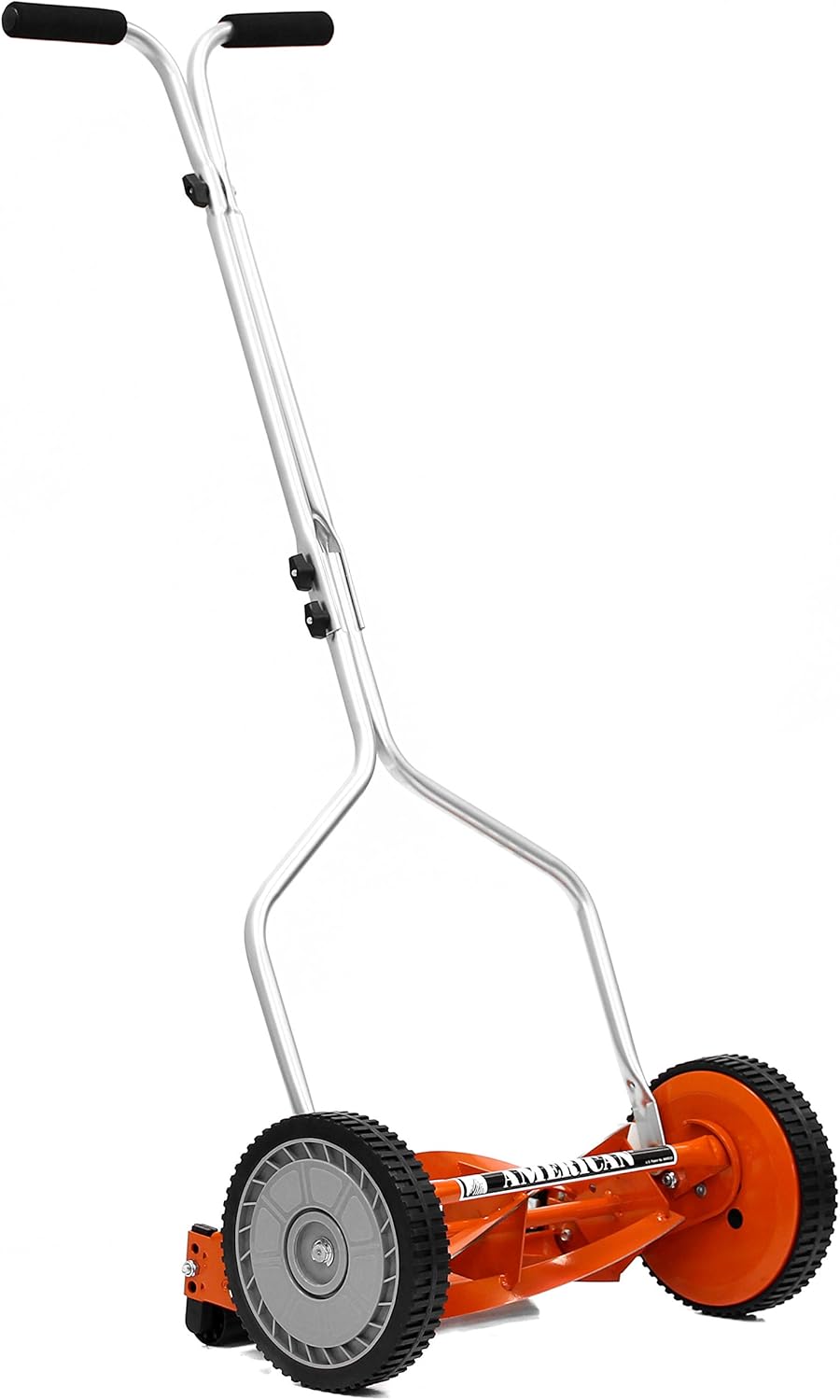
The American Lawn Mower Company 1204-14 is a classic push reel mower that brings back the simplicity of manual lawn care. Unlike gas or electric mowers, this tool relies entirely on your own muscle power to spin the reel and cut grass. It's a straightforward, no-nonsense machine designed for homeowners who prioritize quiet operation, zero emissions, and low maintenance over speed and brute force.
This mower is best suited for small, flat lawns with cool-season grasses like bluegrass, fescue, and rye. It's ideal for DIY homeowners who enjoy a bit of exercise while taking care of their yard. If you have a quarter acre or less and don't mind mowing more frequently during the growing season, this reel mower can deliver a clean, precise cut that actually promotes a healthier lawn by slicing rather than shredding the grass blades.
In real-world use, the 1204-14 performs best when you stay on top of your mowing schedule. It handles grass up to 4 inches tall, but for the best results, you should mow when the grass is dry and no more than about 3 inches high. The adjustable cutting height ranges from 0.5 to 1.75 inches, giving you good control over lawn appearance. The 8.5-inch polymer wheels roll smoothly on flat ground, but the mower can struggle on uneven or bumpy terrain. You'll need to make multiple passes if the grass is on the taller side, and wet grass will clog the reel and leave an uneven cut.
Build quality is decent for the price point. The frame is made of steel, and the reel blades are heat-treated alloy steel that stay sharp for years with minimal care. Assembly is straightforward and can be done in about 15 minutes with basic tools. The cushioned T-handle is comfortable for most users, though taller individuals might find it a bit low. At just 19 pounds, the mower is easy to lift and store, and it takes up very little space in a garage or shed.
One realistic drawback is that this mower won't replace a gas or electric model for larger or more demanding lawns. If you have a half-acre or more, or if your yard has hills, you'll likely find the manual effort tiring and time-consuming. Also, the 14-inch cutting width means more passes compared to a 21-inch power mower. But for its intended use - small, flat lawns - the American Lawn Mower 1204-14 is a reliable, eco-friendly, and cost-effective choice that gets the job done without noise, fumes, or ongoing fuel costs.

How to Choose a Push Mower for Your Lawn
There is no single best push mower for every property. The products listed here range from manual reel designs to cordless and gas-powered rotary mowers, and their stated features serve different needs. A sensible choice starts with the lawn’s size and conditions, then weighs the type of cutting and clipping handling you want. Product specifications can narrow the field, but they cannot replace checking the mower’s instructions and matching any replacement blade to the exact mower model.
Match the mower design to the work
A manual reel mower relies on the operator pushing the mower and uses a rotating reel rather than a powered engine or motor. The Great States 204-14 and American Lawn Mower Company 1204-14 are both listed as 14-inch, four-blade reel mowers. Their product details also list adjustable cutting heights from 0.5 to 1.75 inches, which is a relatively low stated range compared with the gas models in this selection. That makes them options to consider for a small lawn where the owner is comfortable mowing regularly and wants a manual setup.
The American Lawn Mower Company listing states that its reel mower can cut grass up to 4 inches tall and is less effective on taller grass. It also advises mowing frequently enough to avoid removing more than one-third of the grass blade and avoiding mowing when the grass is wet. These are product-description statements, not a guarantee of results on every lawn. A buyer with frequently overgrown grass should consider whether a manual reel design matches the actual mowing schedule and conditions.
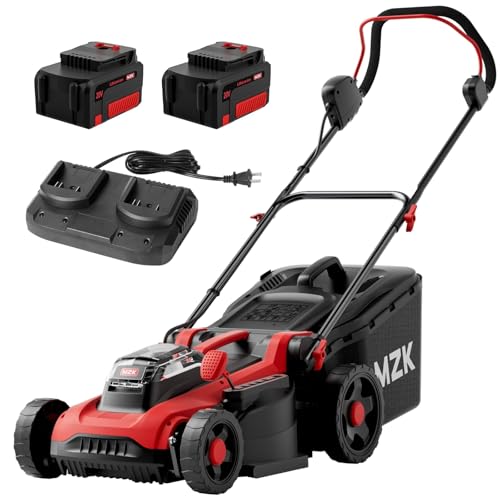
A powered rotary mower may suit a different routine. The MZK is a cordless model with a 16-inch cutting width, a brushless motor, two 20V 4.0Ah batteries, and a listed runtime of up to 45 minutes. The manufacturer notes that runtime can vary with grass conditions, terrain, and operation, so the stated figure should not be treated as a guaranteed session length. Its 40L removable rear grass bag and listed mulching or rear-bagging options matter to buyers who want to collect clippings or use the mulching configuration.
Gas models here have wider stated cutting widths than the cordless and reel options. The PowerSmart has a 21-inch deck and lists mulching and side discharge, while the Baococo model has a 20-inch deck and also lists side discharge and mulching. The BILT HARD has a 21-inch deck and lists three clipping options: mulching, side discharge, and rear bagging. A wider listed cutting width may mean fewer passes in some layouts, but it does not by itself establish how easily a mower will move around trees, narrow gates, or garden beds.
Compare clipping options with your cleanup routine
Mulching, bagging, and side discharge are different ways to manage clippings, not interchangeable guarantees of lawn results. The MZK listing describes mulching and rear bagging; the two gas models from PowerSmart and Baococo list mulching and side discharge. BILT HARD lists mulching, side discharge, and rear bagging. That distinction can help narrow choices if you already know whether you want clippings collected, discharged to the side, or handled through the mower’s mulching setup.
Listing a mode does not establish that it will perform equally well in every grass type, mowing condition, or setup. The cut quality and clipping behavior can depend on factors that are not documented in the supplied product details. Follow the mower maker’s instructions about the intended configuration and suitable operating conditions. If bagging is a priority, verify that the correct bag and related components are included or available for the exact model rather than assuming that a general mention of bagging confirms every package detail.
Reel mower cutting is different from the rotary blade arrangement described for the powered models. Great States identifies its reel as a four-blade design with a scissor-action cut, and the American Lawn Mower Company listing describes a four-blade reel as well. Those product details help distinguish the mower types, but they do not establish compatibility between parts. A reel mower blade and a rotary mower blade are not equivalent replacement parts merely because both products are push mowers.
Use height adjustment as a practical filter
Cut-height range varies across the listed models, so it is worth comparing the specific adjustment figures against the cut you want. PowerSmart lists six positions from 1.5 to 3.9 inches, and BILT HARD lists ten positions from 1.2 to 3.75 inches. The MZK lists five positions from 1.4 to 3 inches. The reel models list an adjustment range from 0.5 to 1.75 inches, so their stated range is notably different from the powered options.
A greater number of positions does not automatically mean better cutting for a particular yard. The useful question is whether the stated range accommodates your preferred mowing height and the guidance for your grass and mower. A height adjustment feature also does not establish that the blade or deck has any particular replacement compatibility. If a mower blade needs replacement, use the exact model and parts documentation, not a height range or a similar-looking machine, to identify the correct part.
Seasonal growth can make adjustment especially relevant, but the product data does not supply a universal mowing-height recommendation. The American Lawn Mower Company listing advises taking smaller amounts more frequently and avoiding wet grass for that reel mower. Treat those points as listing guidance for that product, not as instructions that automatically apply to every mower in the roundup. For model-specific operation, the owner’s manual is the appropriate reference.
Consider power source and handling without assuming results
The MZK is the only cordless electric model among these products. Its listed kit includes two 20V 4.0Ah batteries and a dual-port charger, with runtime stated as up to 45 minutes under conditions that may vary. Buyers should consider the stated runtime alongside lawn size, grass conditions, and whether they can recharge or swap batteries as needed. The information supplied does not establish runtime for a different lawn or operating pattern.
PowerSmart lists a 144cc four-cycle OHV engine, recoil starting, and an auto choke. Baococo also lists a 144cc four-stroke engine and pull starting. BILT HARD lists a 201cc four-stroke OHV engine and says its design does not use a choke or primer. These are product specifications and description claims, not independent measurements of starting ease or cutting performance. Buyers should also consider the maintenance and storage requirements stated in each mower’s documentation before choosing a power source.
Handling details deserve attention, especially where a lawn includes obstacles or storage space is tight. PowerSmart lists 10-inch rear wheels and 7-inch front wheels, and its description identifies a foldable design. MZK lists a 16-inch cutting width and a removable rear bag. Baococo’s product description reports a weight range of 50 to 65 pounds, rather than one unambiguous weight, so that figure should be treated cautiously. None of these details alone proves how a mower will feel on a particular slope or surface.
Keep replacement-blade decisions separate from mower selection
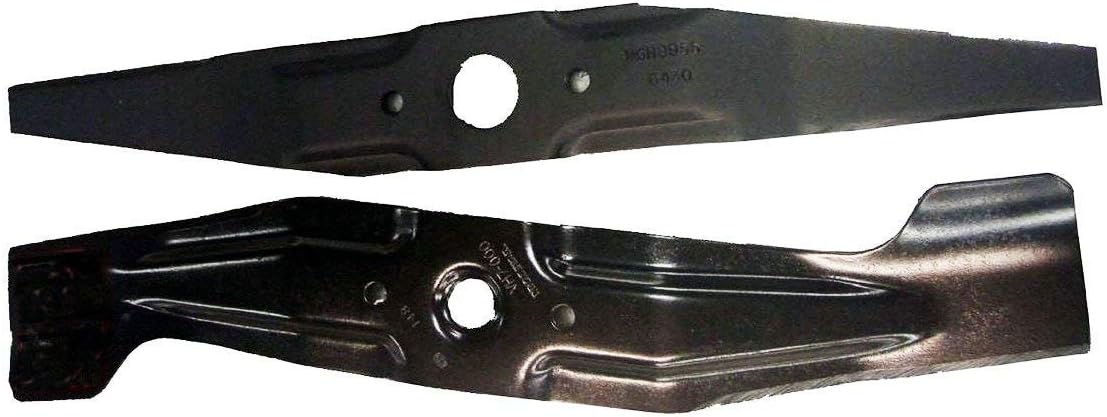
The product list describes complete mowers, not a set of interchangeable replacement blades. It does not provide blade length, blade width, blade thickness, center-hole geometry, outer-hole spacing, OEM blade part numbers, or cross-references for these mower models. As a result, this information cannot establish which replacement blade fits any one of the listed mowers. It also does not establish that a blade described for a different mower with a similar deck width will fit.
Deck cutting width and individual blade length are different measurements. A mower’s stated cutting width describes its mowing path, while a replacement blade’s length describes the blade itself. Matching a nominal width is therefore not enough to confirm fit. The center hole and any additional mounting geometry matter too, and the supplied product details do not document those dimensions for these mowers.
Before ordering a blade, identify the mower’s exact model from its product label or documentation and consult the mower manufacturer or an authorized parts listing. Compare the documented blade part number and fitment information, including the deck configuration when specified. If the documentation provides blade dimensions and mounting details, check them together rather than relying on one measurement. A physical resemblance or matching cutting-width label is not the same as documented compatibility.
Package contents matter as well. A listing for a mower does not establish the number of replacement blades required for its deck, whether a replacement blade is sold individually or in a set, or whether a blade bolt, washer, nut, or adapter is included. Those details should be verified on the specific parts listing. Do not assume that mounting hardware from another mower or a general-purpose accessory is suitable without documented compatibility.
For a PowerSmart mower, the supplied product information identifies a 21-inch deck and a 144cc engine, but it does not provide an OEM blade number or blade mounting dimensions. A dedicated metal mower blade setup guide can provide related background on blade setup, but it cannot substitute for checking the correct model-specific parts documentation. Keep the mower identity and the replacement-part identity connected throughout the search, particularly if a seller lists multiple similar models or deck versions.
Read product ratings and specifications with context
The supplied data shows ratings alongside zero review counts for several products, so those figures are not a useful basis for treating one mower as a proven favorite. A displayed rating without supporting review detail should not be presented as evidence of reliability, cutting quality, or long-term durability. Product specifications offer a firmer basis for narrowing the options, while still leaving important questions unanswered. Check the live listing and manufacturer documentation for current package information and model details before purchasing.
Brand names also do not establish that a part from one model fits another model from the same brand. A mower maker may have different deck or mounting configurations across products, and the supplied data does not provide compatibility cross-references among these models. Likewise, an advertised material or blade description should not be applied to a replacement part unless that part’s own listing states it. Use the exact item information rather than assumptions based on brand familiarity.
Product-description language can help explain intended features, but it should be kept distinct from verified performance. For example, a listing that calls a mower lightweight or easy to start is making a product claim; it does not provide a measured comparison with the other models here. The Baococo listing describes the mower as lightweight and gives a weight range, while the PowerSmart description states that it is mostly assembled. Neither statement resolves whether a particular buyer can comfortably handle, assemble, store, or maintain that mower.
Make the final choice from the use case and the documentation
For a small, regularly maintained lawn where manual operation is acceptable, the two 14-inch reel mowers offer the simplest power-source distinction in this selection. For a cordless option with a grass bag and listed mulching mode, the MZK supplies a different combination, but its runtime is conditional. The gas options provide wider listed cutting widths and different clipping arrangements, with PowerSmart and Baococo listing two modes and BILT HARD listing three. These are practical distinctions, not a ranking.
A buyer who values collecting clippings should pay attention to whether rear bagging is actually listed for the specific model. In this group, the MZK lists rear bagging and BILT HARD lists rear bagging as one of its three modes; PowerSmart and Baococo list mulching and side discharge. The listing details supplied do not establish whether accessories beyond those named are included. Verify package contents and the correct mower configuration in the current product information.
For cutting-height flexibility, compare the published range rather than relying on the number of positions alone. For storage, consider only features the product description actually identifies, such as PowerSmart’s foldable design. For blade replacement, shift to the exact mower model and the manufacturer’s parts documentation; the product list does not supply enough blade geometry or part-number detail to identify a compatible replacement. This separation avoids mistaking a mower-selection feature for evidence of blade fit.
In short, the best match depends on lawn conditions, preferred clipping handling, power-source preference, and the model details that can be verified. Use listed specifications to shortlist a mower, then consult its instructions for operating and maintenance requirements. If buying a replacement blade, confirm the exact model, deck configuration, part number, and mounting details before ordering. That is a more dependable basis for the decision than a broad claim that one push mower or blade suits every yard.






Write Your Review
No reviews yet. Be the first to share your experience!