


Most replacement mower blades arrive with a factory-sharpened edge, meaning you do not need to sharpen a new blade before its first use. The does a new mower blade need to be sharpened question usually arises when a homeowner receives a replacement and notices the edge looks dull compared to a hand tool, or when a previous blade was damaged.
For the vast majority of steel mower blades, including the EGO POWER+ 21″ Blade for Electric Lawn Mowers, the manufacturer specifies that the blade is ready for installation and immediate use. The initial cutting performance is designed to be effective out of the box, provided the blade is installed correctly and balanced.
However, the answer changes if the blade has been stored for a long time, has visible rust, or was shipped with protective packaging that may have caused minor edge damage. In those cases, a light touch-up might be necessary. For most standard residential scenarios, the focus should be on verifying the blade balance and ensuring the correct mounting hardware is used rather than sharpening.
Understanding the difference between a factory edge and a worn edge helps prevent unnecessary wear on your mower’s spindle and drive system. If you are dealing with a stuck bolt during this process, our guide on loosening stuck lawn mower blade bolts can help you prepare the deck safely before handling the new part.

Pros
- Noticeably better lift and suction compared to stock blades, reducing recuts and clumps
- Cuts cleanly through tall, damp grass and leaf layers without bogging down the mower
- Durable steel construction maintains edge longer than many OEM alternatives
- Simple to install and fits perfectly on compatible EGO mowers
Cons
- Produces slightly more noise during operation compared to the original blade
- May reduce battery runtime on particularly thick or tall lawns due to increased cutting resistance
- Some users report the factory edge is not razor sharp out of the box and may benefit from a quick touch-up
The EGO POWER+ AB2100 replacement blade is a genuine OEM part built specifically for EGO's line of 21-inch cordless mowers, including the LM2100, LM2101, LM2102SP, LM2100SP, and LM2142SP models. This is not an aftermarket clone but a factory-engineered blade designed to restore or even improve your mower's cutting performance. Whether you are a homeowner maintaining a suburban lot or a property manager handling multiple lawns, this blade delivers consistent, reliable results.
In real world use, the standout feature is suction. Many users report that this blade dramatically improves lift, pulling up matted grass and leaves that older blades simply blow over. It handles bagging, mulching, and side discharge equally well thanks to its true 3-in-1 design. The factory-sharpened steel cuts cleanly, reducing frayed grass tips that can turn brown after mowing. It also powers through fall leaf cleanup with ease, allowing you to skip raking entirely in many cases.
Build quality is solid. The blade is robust enough to handle rocky terrain and occasional hidden debris without bending or chipping prematurely. Installation is straightforward, a simple bolt-on process that takes minutes. Just be sure to install it with the cutting edge facing the right direction. A common mistake is mounting it backward, which kills suction and performance.
There are a few trade-offs to consider. Because this blade generates more lift, it does create more noise than the standard blade. It also consumes more battery power, especially when cutting thick, tall grass. Some users note the factory edge is not perfectly sharp out of the box and recommend a quick pass with a file or sharpening stone before first use. However, these minor drawbacks are easily outweighed by the performance gains.
Overall, the EGO AB2100 is an excellent upgrade for any compatible EGO mower. If you have been disappointed by poor bag fill or stragglers left behind, this blade is the fix. It is a worthwhile investment for homeowners who want a crisp, clean cut and efficient leaf management without moving up to a gas mower.
Brand: EGO Power+
Model Number: AB2100
Blade Type: 3-In-1 Mulching, Bagging, Side Discharge
Cutting Width: 21 Inches
Material: Factory Sharpened Steel
Item Weight: 1.1 Pounds
Compatible Mower Models: LM2101, LM2100, LM2102SP, LM2100SP, LM2142SP
Assembly Required: No
UPC: 692042006142
This blade is ideal for homeowners with medium to large lawns who want the convenience of a single blade for all mowing tasks. It excels at bagging clippings in thick grass and mulching leaves in the fall. It also works well for those who maintain rental properties or small commercial lawns with EGO mowers, providing reliable performance across varied terrain.

Pros
- Quick and easy to use with any standard power drill no need for a bench grinder or expensive sharpening system.
- Durable double-layer corundum stone handles high heat without degrading, unlike cheaper single-layer stones.
- Compact and portable enough to carry in a pocket or tool pouch for on-site sharpening anywhere.
- Versatile compatibility with multiple blade types including mowers, tractors, and rototillers.
Cons
- May not restore severely damaged or nicked blades as effectively as a professional grinder or file.
- Requires a steady hand and consistent pressure to maintain a uniform edge angle across the entire blade.
- Limited to sharpening flat blades; not suitable for curved or serrated edges found on some specialty mowers.
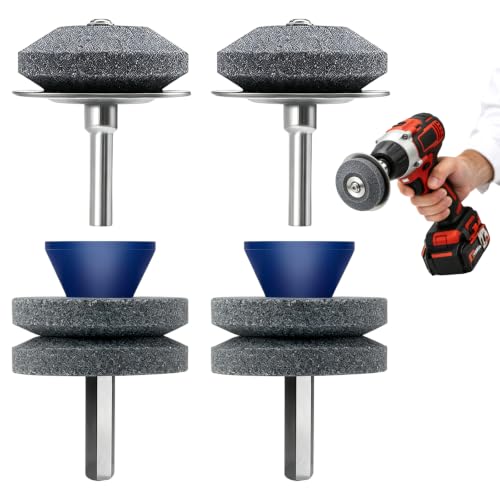
If you are tired of pushing a dull mower blade through thick grass, the 2025 Lawnmower Blade Sharpener by Home offers a practical, budget-friendly fix. This small but capable tool attaches directly to any power hand drill, turning it into a portable sharpening station. The double-layer corundum stone is key here it handles the heat generated by high-speed drilling without melting or glazing over, unlike cheaper stones that fail after a few passes. For the DIY homeowner or weekend warrior, this means you can sharpen your mower blade in place without removing it, saving a ton of time and hassle.
In real-world use, this sharpener excels at bringing dull blades back to life. Just chuck it into your drill, spin it against the blade edge at a shallow angle, and you will see a noticeable improvement in cut quality after a few passes. It works on standard lawn mowers, riding tractors, rototillers, and even drill bits or scythe blades. The compact size (about 2 inches across) makes it easy to carry in a pocket or toss in a tool bag, so you can touch up blades right on the jobsite or in the field. For small property owners who mow once a week, this tool can extend blade life between professional sharpenings, saving both money and frustration.
Build quality is decent for the price point. The corundum stone is bonded to a steel core, and the plastic handle provides a secure grip during use. However, it is not a heavy-duty industrial solution. If you have severely nicked or bent blades, you will still need a bench grinder or file to remove deep damage before using this sharpener. Also, maintaining a consistent edge angle takes a bit of practice, especially on longer blades. But for routine maintenance and light to moderate wear, this tool delivers reliable results that any homeowner can achieve.
Drawbacks are relatively minor given the low cost. The sharpener works best on flat, straight blades; curved or serrated edges are not ideal candidates. You also need a steady hand to avoid uneven sharpening, which can lead to vibration during mowing. And while the corundum stone is heat-resistant, prolonged use at high RPM can still cause some wear, so take breaks and let the stone cool if you are doing multiple blades. That said, for the price of a fast-food meal, this is a solid addition to any DIYer's tool kit.
Overall, the 2025 Lawnmower Blade Sharpener is a smart buy for homeowners who want to keep their mower blades sharp without investing in expensive equipment. It is simple, effective, and portable, making it perfect for quick touch-ups before a mowing session. If you value a clean cut and want to reduce mowing time, this tool delivers practical value that justifies its place in your workshop or shed. Just keep your expectations realistic, and you will not be disappointed.
Product Dimensions: 1.97 x 1.97 x 2.16 inches
Item Weight: 7.4 ounces
Material: Corundum stone, steel, plastic
Color Options: Blue, Red
Package Includes: 3 or 5 lawn mower sharpeners depending on variant
Compatibility: Works with most power hand drills
Manufacturer: Surlveia
ASIN: B0D5YG1H4R
This lawnmower blade sharpener is ideal for quick touch-ups on standard walk-behind mowers, riding lawn tractors, and small rototillers. It works best for routine maintenance where blades are dull but not severely damaged. Homeowners with less than an acre of grass will find it particularly useful for keeping blades sharp between professional sharpenings. It is also handy for contractors who need to sharpen mower blades on-site without returning to the shop. For best results, use it with a drill that has variable speed control to adjust RPM based on blade condition.
Factory Edge Standards and When Sharpening is Actually Needed
A new mower blade is manufactured with a specific cutting angle that is optimized for the mower’s deck geometry and engine power. This factory edge is typically ground to a precise specification that allows for a clean cut of grass stems without tearing.
When you unbox a genuine OEM or high-quality aftermarket blade, the edge is usually sharp enough to cut through paper or cardboard, which is a simple indicator of readiness. You do not need to sharpen it unless the edge shows signs of corrosion, nicks, or blunting from storage or shipping.
| Blade Condition | Sharpening Required? | Recommended Action |
|---|---|---|
| New, factory-sharpened | No | Install and check balance |
| Light surface rust | Yes | Remove rust and touch up edge |
| Nicked or bent | Yes | Grind out nick and rebalance |
| Old, stored for years | Yes | Sharpen to original angle |
Many homeowners assume that because a blade is new, it must be dull, but this is rarely the case. The steel used in mower blades, such as the high-carbon steel often found in electric mower replacements, is hardened to maintain its edge during the initial mowing sessions.
Sharpening a new blade that is already sharp can actually reduce its lifespan by removing material unnecessarily. The primary goal of a new blade is to restore the mower’s cutting performance to its original state, which is achieved by the factory edge, not by additional grinding.
Identifying a Worn or Damaged Edge
Before deciding to sharpen a new blade, you must inspect the edge carefully to identify specific conditions.
- A worn edge will show signs of rounding, discoloration from heat, or visible rust spots during inspection.
- If the blade was previously used and is being replaced, the old blade should be discarded, not sharpened, if it has cracks or significant wear.
- For a brand-new blade, check for any shipping damage, as protective plastic covers or cardboard packaging can leave minor marks on the edge.
- These marks do not usually affect cutting performance and do not require sharpening unless they are deep nicks that compromise the structural integrity of the edge.
Another indicator is the presence of burrs. A burr is a small, raised piece of metal on the edge that can cut grass stems unevenly. If you feel a burr when running your finger across the edge (carefully), it may need to be filed down. However, this is more common in blades that have been stored in humid environments where rust has begun to form. In such cases, a light pass with a file or a sharpening tool can restore the edge to a smooth finish without removing significant material.
Why You Should Not Sharpen a New Blade Immediately
Sharpening a new blade immediately after installation is a common mistake that can lead to premature wear. The factory edge is designed to last for a specific number of mowing hours, often ranging from 20 to 50 hours depending on the grass type and mower usage.
Removing material from a new edge reduces the total lifespan of the blade. Instead, focus on ensuring the blade is balanced. An unbalanced blade can cause vibration, which damages the mower’s bearings and spindle over time. A balanced blade with a factory edge will cut more effectively than a sharpened but unbalanced blade.
Additionally, sharpening requires removing heat from the steel. If you sharpen a new blade with a power tool and do not manage the heat properly, you can anneal the steel, making it softer and more prone to bending or breaking. This is particularly dangerous for the spindle assembly. It is far safer to install a new, balanced blade and let it cut as intended. If the cutting performance is poor, the issue is likely not the edge sharpness but rather the mower’s deck height, grass condition, or engine speed.
When a Touch-Up is Necessary
There are specific scenarios where a new blade may need a light touch-up. If the blade has been sitting in a garage or shed for an extended period, rust can form on the edge.
Rust is softer than the hardened steel of the blade, and mowing with a rusted edge will result in a poor cut and can transfer rust to the grass. In this case, you should remove the rust and sharpen the edge to expose fresh, hard steel. This is not a full sharpening job but a restorative action to clear the corrosion.
Another scenario is if the blade was shipped with a protective coating that has worn off in spots. Some blades come with a temporary coating to prevent rust during shipping. If this coating is uneven, it can cause the blade to cut unevenly. A light sharpening pass can remove the uneven coating and ensure a consistent edge. However, this should be done sparingly, as the goal is to reveal the original steel, not to grind down the blade.
Tools for Touching Up a New Blade
If you determine that a new blade needs a touch-up, the right tool is essential. A standard file is often sufficient for minor rust removal or burr removal. For a more precise edge, a lawn mower blade sharpener, such as the corundum stone attachment for a power drill, can be used.
These tools are designed to grind the edge at a consistent angle. The Lawnmower Blade Sharpener mentioned in our product list is a practical option for this task. It attaches to a drill and allows you to sharpen the blade quickly and evenly.
- Inspect the edge for rust or nicks before installation
- Use a file for minor burrs or surface rust
- Check the blade balance with a balancer tool
- Ensure the mounting bolt is tightened to specification
- Verify the blade orientation (up/down) before securing
When using a power sharpener, it is crucial to control the speed and pressure. High speed can generate excessive heat, which can damage the steel. Use a low speed and apply light pressure, moving the sharpener along the edge in a consistent motion. After sharpening, check the balance again, as removing material from one side can unbalance the blade. A balanced blade is critical for safe and effective mowing.
Understanding Blade Balance and Its Impact on Cutting
Blade balance is often overlooked, but it is just as important as edge sharpness. A new blade should be balanced from the factory, but shipping and handling can sometimes affect this. If a blade is unbalanced, it will vibrate at high speeds, causing wear on the mower’s spindle bearings and potentially leading to a broken spindle. You can check the balance by hanging the blade from a nail or a balancer tool. If one side dips lower than the other, the blade is unbalanced.
An unbalanced blade will also cut poorly, even if the edge is sharp. The vibration causes the blade to skip or bounce, resulting in an uneven cut. If you find that a new blade is unbalanced, you can sometimes restore balance by filing a small amount of metal from the heavier side. However, if the imbalance is significant, it is better to replace the blade. A properly balanced blade will cut more cleanly and extend the life of your mower’s components.
Common Myths About New Blade Sharpening
One common myth is that a new blade is always dull and needs sharpening to perform well. This is not true for most quality blades. The factory edge is designed to be effective for the first mowing season. Another myth is that sharpening a new blade will make it cut better.
In reality, sharpening a new blade removes material that is already optimized for cutting. The best practice is to install the new blade, check the balance, and mow. If the cut is poor, investigate other factors such as deck height or grass moisture.
Another myth is that you need to sharpen a blade after every few mows. This is only true if the blade is dull or damaged. A well-maintained blade can last for many mowing sessions without sharpening. The frequency of sharpening depends on the grass type, mowing frequency, and the condition of the blade. If you mow hardy grasses or have a large lawn, you may need to sharpen more often. However, for most suburban lawns, a new blade will perform well without immediate sharpening.
Proper Installation and Safety Checks
Before installing a new blade, ensure that the mower is safe to work on. Disconnect the spark plug wire for gas mowers or remove the battery for electric mowers. This prevents the mower from starting accidentally while you are working. Use the correct tools for removing the old blade and installing the new one. A blade removal tool or a wrench with the correct socket is essential. Do not use a hammer or pliers, as this can damage the blade or the spindle.
When installing the new blade, pay attention to the orientation. Most mower blades have a specific up and down position, indicated by a label or the shape of the blade. Installing the blade upside down can reduce cutting performance and cause the mower to scallop the lawn. Ensure that the blade is seated correctly on the spindle and that the mounting bolt is tightened to the manufacturer’s specification. A loose blade can fly off during operation, causing serious injury.
Maintenance Tips for Extending Blade Life
To extend the life of a new blade, follow a few simple maintenance tips. After mowing, clean the blade and the deck to remove grass clippings and dirt. This prevents rust and corrosion. Store the mower in a dry place, and consider applying a light coat of oil to the blade if it will be stored for an extended period. Regularly check the blade for damage, and sharpen it only when necessary. A well-maintained blade will cut more cleanly and last longer than a neglected one.
Also, ensure that the mower’s deck is in good condition. A dented or rusty deck can affect cutting performance and cause the blade to wear unevenly. If you notice that the cut is uneven, check the deck for damage and adjust the deck height as needed. A properly maintained deck and a balanced, sharp blade work together to provide a crisp, healthy lawn. By following these tips, you can maximize the performance of your new mower blade and avoid unnecessary sharpening.
For more detailed information on maintaining your mower’s cutting system, our guide on how to file lawn mower blade offers practical sharpening techniques for when the edge does eventually wear down.
In summary, a new mower blade typically does not need to be sharpened before use. The factory edge is designed to be effective for the first mowing season. Focus on checking the blade’s balance and ensuring proper installation. Only sharpen the blade if you notice rust, nicks, or a dull edge. By following these guidelines, you can maintain the performance of your mower and extend the life of your blade.




Write Your Review
No reviews yet. Be the first to share your experience!