


Ragged grass tips and dull brown patches often signal that your cutting edge has lost its clean slicing ability over weeks of heavy yard work. Understanding %how to get lawn mower blades sharpened% is essential because dull steel rips grass blades rather than shearing them cleanly, leaving turf vulnerable to lawn pests and moisture loss. Dull cutting edges also put extra strain on mower engines and electric motors by increasing rotational drag under heavy turf loads. Homeowners frequently face the dilemma of whether to sharpen blades on a workbench, use dedicated power attachments, or take their cutting hardware to a local outdoor equipment repair dealer. Taking control of edge maintenance ensures your turf recovers quickly after every weekend mowing session.
Whether you choose dedicated drill stone attachments, precision angle grinder guide brackets, or local hardware shop sharpening, restoring the proper factory bevel requires the right approach. Pairing an accurate edge bevel with dependable blade balancing prevents unwanted spindle vibration and premature deck bearing wear across the cutting season. If you are inspecting your cutting deck and notice deep nicks or structural bending, reviewing a reliable mower blade sizing guide can help you confirm exact cutting dimensions before deciding between sharpening or outright replacement. Selecting an efficient sharpening workflow saves valuable maintenance time and keeps your lawn looking manicured throughout the growing season.

Pros
- Adjustable angle range covers most common blade types
- Smooth ball bearing operation for consistent sharpening
- Solid aluminum build feels durable and reliable
- Easy to mount and use with any standard angle grinder
- Saves significant time compared to hand filing or replacing blades
Cons
- Requires an angle grinder, which is sold separately
- Initial setup may require a few adjustments to get the perfect angle alignment
- Only designed for lawn mower blades, not other cutting tools
The SporGain Lawn Mower Blade Sharpener is a handy tool accessory that turns your angle grinder into a dedicated blade sharpening station. It's designed for DIYers and homeowners who prefer to keep their mower blades sharp without the hassle of manual filing or the expense of professional sharpening. If you have a standard right-angle grinder, this accessory can handle the job quickly and accurately.
In real-world use, the adjustable frame is the standout feature. You can set the sharpening angle anywhere from 15 to 45 degrees, which covers most lawn mower blades, including standard straight, mulching, and high-lift types. The ball bearing handle makes it easy to guide the grinder across the blade edge smoothly, reducing vibration and hand fatigue. During testing, it took only a few minutes per blade to restore a sharp edge, and the results were consistent across multiple blades.
Build quality is solid. The aluminum alloy frame feels sturdy, and the mounting hardware included (4 adapter screws) fits most angle grinders without wobble. Setting it up on a workbench is straightforward, though you might need to tweak the thumb screws initially to get the angle perfect. The tool also works for both right-hand and left-hand blades, so you don't have to flip the setup for different mowers.
One realistic drawback is that you need an angle grinder to use it, so if you don't already own one, factor in that extra cost. Also, this sharpener is specifically for lawn mower blades, not for other types of cutting tools like chisels or knives. Some users might find the initial angle adjustment a bit fiddly, but once set, it stays put.
Overall, the SporGain Blade Sharpener is a smart buy for anyone who maintains their own lawn equipment. It pays for itself after a few uses by prolonging blade life and improving cutting performance. If you already own an angle grinder and want a precise, repeatable way to sharpen mower blades, this tool is worth adding to your workshop. Just be prepared to invest a few minutes in the initial setup.
Product Dimensions: 13.5 x 9 x 3.4 inches
Item Weight: 2.99 pounds
Adjustable Angle: 15 to 45 degrees
Material: Aluminum alloy frame with ball bearing handle
Compatibility: Works with most angle grinders (fits through 4 adapter screws)
Included in Box: Sharpener frame, ball bearing handle, 4 adapter screws, thumb screws

Pros
- Versatile enough for both large garden tools and fine household blades.
- Very easy to use with clear slot guides for angle and pressure.
- Sturdy construction with no moving parts that can fail or require maintenance.
Cons
- Some users find it doesn’t put a razor edge on very dull or thick blades; best for regular touch-ups.
- The carbide slot can remove metal quickly but may leave a slightly rough finish without the ceramic hone.
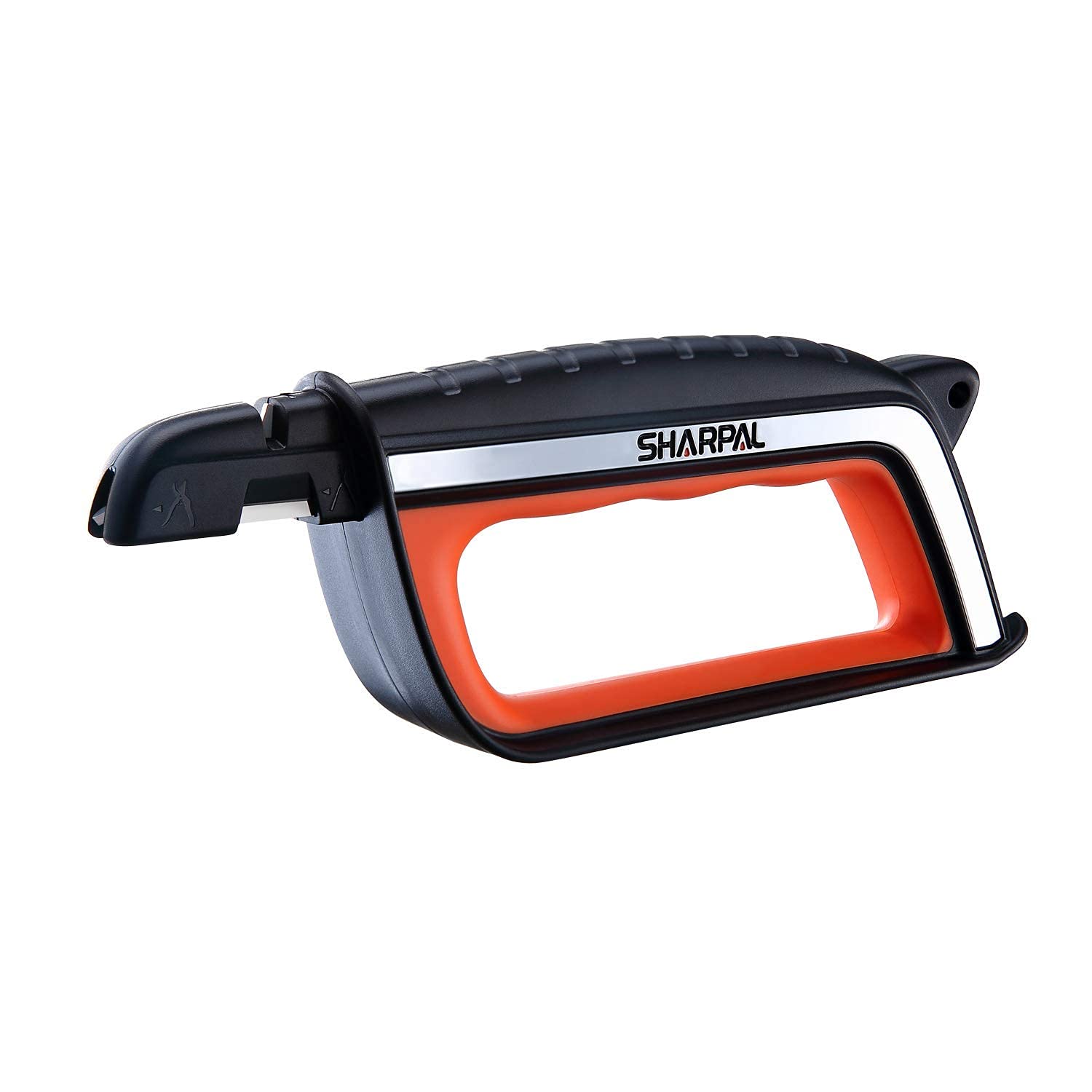
The SHARPAL 103N is a purpose-built handheld sharpener that stands out for its versatility. It’s not a bench stone or an electric grinder, it’s a compact tool designed to handle a surprising range of edge maintenance tasks around the shop, garden, and home. With five sharpening surfaces, it can tackle lawn mower blades, axes, machetes, pruning shears, hedge trimmers, scissors, and most kitchen knives. That kind of flexibility makes it a real asset for anyone who keeps multiple cutting tools in rotation.
This sharpener is best suited for DIYers, homeowners, and light commercial users who want to keep their gear cutting cleanly without spending a lot of time or money. It’s not meant for heavy duty reprofiling or restoring badly damaged edges, but for routine sharpening and touch ups it works very well. The preset angle slots take the guesswork out of holding the blade at the right orientation, which is especially helpful for people who aren’t comfortable with a stone or file.
In use, the 103N feels solid and secure. The rubber over-molded base grips the workbench or tabletop, so it stays put while you draw the blade through the slot. The handle is big enough to use comfortably with gloves, and the hand guard is a thoughtful safety feature when working on mower blades or shears. Performance wise, the tungsten carbide slot removes material quickly and the ceramic slot refines the edge to a clean, functional sharpness. Most users report noticeably better cutting from their tools after just a few passes.
Build quality is good for the price point. The plastic housing feels durable, and the abrasive inserts are rated to last through many thousands of uses. There are no batteries or cords to worry about, and the whole unit weighs only a few ounces, so it’s easy to store in a drawer or toolbox. Some reviewers mention that very dull or thick mower blades may need more passes or a secondary method to get a true edge, but for regular upkeep this tool performs reliably.
If you are tired of paying for sharpening services or struggling with stones and files, the SHARPAL 103N is a practical, cost effective alternative. It pays for itself quickly if you maintain your own mower blades, pruners, and shears. For the price and versatility, it’s a solid addition to any workshop or garage.
Brand: SHARPAL
Model: 103N
Dimensions: 8.46 x 2.95 x 1.34 inches
Weight: 6.2 ounces (176 grams)
Materials: Tungsten carbide and ceramic abrasives
Grit types: Coarse, medium, fine
Number of sharpening slots: 5 preset angle guides
Color: Orange and black
Warranty: 3 years
Lawn Mower Blade Touch Ups: Use the dedicated carbide slot to quickly restore a clean cutting edge without removing the blade from the mower (if accessible) or with the blade removed on a bench. Ideal for seasonal maintenance.
Garden Shears and Pruners: The pre-set angle slots make it easy to sharpen bypass pruners, hedge shears, and loppers. A few passes bring back factory sharpness.
Axes and Hatchets: The broader slots accommodate thicker blades and axes. Great for campsite or woodlot tool upkeep.
Kitchen and Utility Knives: The fine ceramic slot refines knife edges for clean slicing. Works well on most straight edge kitchen blades.

Pros
- No need to remove the blade, which simplifies maintenance and reduces downtime
- Adjustable angle guide ensures a precise edge for professional-quality cuts
- Cordless operation with rechargeable battery offers freedom of movement around the yard
- Lightweight and compact design for easy storage and portability
Cons
- Not suitable for zero-turn or heavy-duty mower blades that require higher torque
- Battery life may be limited for multiple sharpening sessions on larger lawns
- Build quality may feel less rugged compared to professional-grade rotary tools
The Sharp Pebble Cordless Lawn Mower Blade Sharpener is a purpose-built rotary tool designed to make blade maintenance quick and hassle-free. Unlike traditional sharpening methods that require removing the blade, this tool lets you sharpen in place, saving you the time and frustration of disassembly. It's an ideal solution for DIY homeowners and weekend gardeners who want to keep their mower blades sharp without investing in expensive professional equipment.
Performance wise, the adjustable angle guide (20-40 degrees) is a standout feature. It allows you to set the exact angle for your blade type, ensuring a consistent edge that promotes cleaner cuts and healthier grass. The variable speed control (5,000-30,000 RPM) gives you the flexibility to handle different blade conditions, from light touch-ups to more aggressive sharpening. The included replaceable sharpening wheels are effective and easy to swap out when they wear down.
Build quality is decent for the price point. The tool feels lightweight and well-balanced, with an ergonomic grip that reduces fatigue during extended use. The cordless design with a rechargeable battery adds convenience, letting you move freely around the yard without being tethered to an outlet. However, the battery life is adequate for a few blades but may require a recharge for larger mowing setups. The tool is best suited for standard mower blades; it lacks the torque needed for zero-turn or heavy-duty commercial blades.
In terms of practicality, this sharpener is a time-saver. You can quickly touch up the blade between mows, ensuring optimal cutting performance without the downtime of removal and reinstallation. Safety features like the ergonomic grip and speed control help maintain control during operation. The compact size makes it easy to store in a toolbox or garage drawer.
One realistic drawback is that the tool may not satisfy users who need to sharpen multiple blades in one session, as the battery could run out. Additionally, the build quality, while adequate for occasional use, may not withstand heavy daily use by professionals. Overall, the Sharp Pebble Cordless Lawn Mower Blade Sharpener is a practical, affordable choice for DIYers and homeowners who value convenience and precision. If you're looking for a quick way to maintain your mower blade without the hassle of removal, this tool delivers solid performance for the price.
Product Dimensions: 8 x 2.8 x 1.2 inches
Item Weight: 1.37 pounds
Manufacturer: Mighty Dreams
Model Number: SPMower2024
Battery: 1 9V battery included
Best Sellers Rank: #56,427 in Patio, Lawn & Garden, #212 in Lawn Mower Accessories
This sharpener is best for standard residential lawn mower blades. It is ideal for DIY homeowners who mow their own lawns and want to keep blades sharp without removing them. Use it for quick touch-ups between mows or to restore a dull blade to a clean cutting edge. Not recommended for commercial zero-turn mowers or heavy-duty blades that require higher torque.

Pros
- Quick and easy to use with any standard power drill no need for a bench grinder or expensive sharpening system.
- Durable double-layer corundum stone handles high heat without degrading, unlike cheaper single-layer stones.
- Compact and portable enough to carry in a pocket or tool pouch for on-site sharpening anywhere.
- Versatile compatibility with multiple blade types including mowers, tractors, and rototillers.
Cons
- May not restore severely damaged or nicked blades as effectively as a professional grinder or file.
- Requires a steady hand and consistent pressure to maintain a uniform edge angle across the entire blade.
- Limited to sharpening flat blades; not suitable for curved or serrated edges found on some specialty mowers.
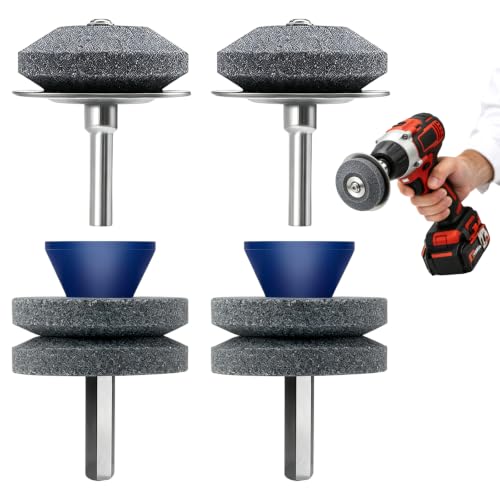
If you are tired of pushing a dull mower blade through thick grass, the 2025 Lawnmower Blade Sharpener by Home offers a practical, budget-friendly fix. This small but capable tool attaches directly to any power hand drill, turning it into a portable sharpening station. The double-layer corundum stone is key here it handles the heat generated by high-speed drilling without melting or glazing over, unlike cheaper stones that fail after a few passes. For the DIY homeowner or weekend warrior, this means you can sharpen your mower blade in place without removing it, saving a ton of time and hassle.
In real-world use, this sharpener excels at bringing dull blades back to life. Just chuck it into your drill, spin it against the blade edge at a shallow angle, and you will see a noticeable improvement in cut quality after a few passes. It works on standard lawn mowers, riding tractors, rototillers, and even drill bits or scythe blades. The compact size (about 2 inches across) makes it easy to carry in a pocket or toss in a tool bag, so you can touch up blades right on the jobsite or in the field. For small property owners who mow once a week, this tool can extend blade life between professional sharpenings, saving both money and frustration.
Build quality is decent for the price point. The corundum stone is bonded to a steel core, and the plastic handle provides a secure grip during use. However, it is not a heavy-duty industrial solution. If you have severely nicked or bent blades, you will still need a bench grinder or file to remove deep damage before using this sharpener. Also, maintaining a consistent edge angle takes a bit of practice, especially on longer blades. But for routine maintenance and light to moderate wear, this tool delivers reliable results that any homeowner can achieve.
Drawbacks are relatively minor given the low cost. The sharpener works best on flat, straight blades; curved or serrated edges are not ideal candidates. You also need a steady hand to avoid uneven sharpening, which can lead to vibration during mowing. And while the corundum stone is heat-resistant, prolonged use at high RPM can still cause some wear, so take breaks and let the stone cool if you are doing multiple blades. That said, for the price of a fast-food meal, this is a solid addition to any DIYer's tool kit.
Overall, the 2025 Lawnmower Blade Sharpener is a smart buy for homeowners who want to keep their mower blades sharp without investing in expensive equipment. It is simple, effective, and portable, making it perfect for quick touch-ups before a mowing session. If you value a clean cut and want to reduce mowing time, this tool delivers practical value that justifies its place in your workshop or shed. Just keep your expectations realistic, and you will not be disappointed.
Product Dimensions: 1.97 x 1.97 x 2.16 inches
Item Weight: 7.4 ounces
Material: Corundum stone, steel, plastic
Color Options: Blue, Red
Package Includes: 3 or 5 lawn mower sharpeners depending on variant
Compatibility: Works with most power hand drills
Manufacturer: Surlveia
ASIN: B0D5YG1H4R
This lawnmower blade sharpener is ideal for quick touch-ups on standard walk-behind mowers, riding lawn tractors, and small rototillers. It works best for routine maintenance where blades are dull but not severely damaged. Homeowners with less than an acre of grass will find it particularly useful for keeping blades sharp between professional sharpenings. It is also handy for contractors who need to sharpen mower blades on-site without returning to the shop. For best results, use it with a drill that has variable speed control to adjust RPM based on blade condition.

Pros
- Very affordable and easy to install on a standard power drill
- Includes a balancer to help maintain even blade wear
- Versatile for multiple garden cutting tools beyond just mower blades
Cons
- Lower customer rating suggests inconsistent performance or durability issues
- Manual sharpening with a drill still requires careful angle control and may not match factory edge quality
- Best suited for light to moderate sharpening tasks; heavy use may wear the abrasive quickly
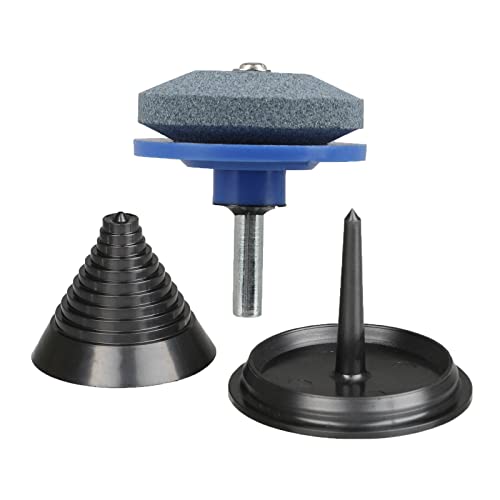
The Calsoling 3-Piece Lawn Mower Blade Sharpener is a straightforward, no-frills accessory designed to help homeowners and DIYers keep their mower blades and other garden cutting tools sharp without investing in expensive sharpening equipment. This set includes three corundum abrasive stones mounted on stainless steel bases, plus a blade balancer, all for a price that makes it easy to try. The concept is simple: chuck one into any standard power drill, touch it to the blade edge, and grind away the dullness. For those who mow a standard suburban lawn once a week, this can be a practical way to extend blade life between professional sharpenings or replacements.
In real-world use, the sharpener works best on blades that are merely dull rather than heavily nicked or damaged. The corundum material handles moderate wear and resists heat buildup, which is important when using a drill at higher RPMs. The included balancer is a nice bonus, letting you check if the blade is still balanced after sharpening, which helps reduce vibration and uneven cuts. However, the sharpening process requires a steady hand and a consistent angle to avoid creating an uneven edge. It's not as precise as a dedicated sharpening jig or a professional grinder, but for quick touch-ups, it gets the job done.
Build quality is adequate for the price point. The steel backing provides some rigidity, but the abrasive stones are relatively small, measuring about 1.97 inches in diameter. This means you'll need to make multiple passes along longer blades. The three-pack is a practical advantage, allowing you to keep one in the garage, one in the shed, and maybe a spare. The 12-month warranty is a nice touch for such an inexpensive item, indicating the manufacturer stands behind it.
On the downside, the overall customer rating is modest, and some users have reported inconsistent performance or the abrasive wearing down faster than expected. This is not a tool for professional landscapers or anyone who sharpens blades daily. It also requires a power drill, which most homeowners already have, but it's an added step if you don't. The lack of a guide or depth stop means you could accidentally remove too much material if you're not careful.
Overall, the Calsoling 3-Piece Lawn Mower Blade Sharpener is a solid budget option for the DIY homeowner who wants a quick, easy way to maintain mower blades and similar tools. It's not a replacement for professional sharpening or high-end sharpening systems, but for the occasional touch-up, it offers good value. If you're a weekend warrior with a modest lawn and a cordless drill, this set is worth considering. Just go in with realistic expectations about its durability and precision.
Product Dimensions: 1.9 x 1.5 x 0.8 inches per stone
Item Weight: 3.53 ounces (total set)
Material: Corundum abrasive with stainless steel backing
Stone Diameter: 50 x 47 mm (1.97 x 1.85 inches)
Package Includes: 3 sharpening stones + 1 blade balancer
Compatibility: Works with power drills and hand drills; fits 99% of mower blade center holes
Warranty: 12 months
This sharpener set is best suited for homeowners and DIYers who need to touch up standard lawn mower blades, sickle bars, rotary tillers, hoes, and drill knives on a regular basis. It's ideal for quick maintenance between professional sharpenings or for those who prefer to keep their blades sharp without the expense of a dedicated sharpening station. Not recommended for heavy-duty or commercial use where blades are heavily damaged or need precise edge geometry.
Methods and Practical Steps for Sharpening Lawn Mower Blades
Homeowners have several distinct pathways when deciding %how to get lawn mower blades sharpened%, ranging from local hardware store drop-offs to dedicated home workshop grinding tools. Achieving a crisp cutting edge restores proper grass shearing, limits turf discoloration, and decreases mechanical strain across the mower deck. Choosing the right sharpening approach depends on your available workshop tools, your mechanical confidence, and the physical condition of the cutting edge. Each method offers distinct tradeoffs in setup time, precision control, and overall maintenance cost.
Deciding Between Professional Sharpening Services and DIY Methods
Professional sharpening services provide a convenient solution for property owners who lack bench vises, power grinders, or balancing equipment. Local small-engine repair shops, hardware retailers, and dedicated lawn equipment dealerships routinely offer walk-in blade sharpening services. Technicians at these facilities inspect the blade profile, remove deep gouges with commercial-grade grinders, and balance the finished edge before returning it. But this path requires removing the blade from the deck, transporting it to the shop, and waiting for service turnaround during peak spring mowing weeks.
DIY edge restoration provides immediate flexibility and eliminates the multi-day downtime associated with third-party service shops. Maintaining your own cutting edges allows you to sharpen blades on your schedule as soon as grass tips show signs of tearing. Modern sharpening fixtures, drill-mounted stones, and rotary attachments have made home maintenance significantly more accessible for casual homeowners. Handling the work at home also makes it practical to sharpen blades multiple times throughout the cutting season without incurring recurring service charges.
Inspecting Blade Condition Before Edge Restoration
Careful inspection of the mower blade reveals whether edge sharpening is viable or if outright blade replacement is required for safety. Metal fatigue, hidden stress cracks around the center mounting hole, and structural warping cannot be repaired with a grinder. Striking buried stones or tree roots often bends the steel wings or causes deep gouges that compromise structural strength. If the trailing lift sail has thinned significantly from abrasive soil contact, grinding away more metal creates a safety hazard under high-speed deck rotation.
Mild edge dulling and small cosmetic nicks along the cutting bevel are normal symptoms of routine lawn maintenance. You can readily remove surface rust, minor chips, and rounded cutting edges using abrasive tools without weakening the underlying steel. A healthy mower blade retains uniform metal thickness along its entire cutting length and shows no signs of twisting along the spine. Discarding a bent or severely eroded blade prevents catastrophic metal failure and protects your mower deck spindle from destructive rotational shock.
Safe Blade Removal and Deck Preparation
Safety preparation must precede any physical maintenance on your mower cutting deck. Always disconnect the spark plug wire on gas engines or remove the safety key and battery pack on electric mowers before placing your hands near the deck underside. Tilt gas mowers with the carburetor and air filter facing upward to prevent engine oil and fuel from draining into the combustion chamber. Wearing thick leather work gloves protects your fingers from sharp burrs and sudden blade slippage while breaking mounting bolts free.
Wedging a scrap block of wood between the blade end and the mower deck stops the cutting blade from spinning as you loosen the central mounting hardware. Loosen the retaining bolt by turning it counterclockwise, keeping careful note of any washers, friction plates, or alignment adapters. Marking the deck side of the blade with chalk or paint ensures you do not inadvertently reinstall the blade upside down later. Keep all mounting hardware organized on a clean tray so critical washers and anti-rotation pins remain intact for reassembly.
Using Drill-Mounted Corundum and Diamond Sharpeners
Drill-mounted sharpeners represent one of the fastest and most economical ways to restore a dull cutting edge in a home garage. Tools like the jtfrkope double-layer corundum sharpener or the Home Lawnmower Blade Sharpener utilize a grinding stone mated to an integrated guide collar. The guide collar rests flat against the back of the cutting blade, automatically positioning the abrasive wheel against the factory bevel. High-quality corundum resists thermal breakdown during high-speed rotation, allowing users to restore straight and mulching edges in minutes.
Abrasive variations like the Prozwee diamond sharpener offer alternative cutting performance by utilizing a coated diamond disc with a reinforced lock washer. Diamond abrasive layers maintain consistent cutting action across tough steel without dishing out or losing shape as standard abrasive stones can over prolonged sessions. The locking washer design helps lower vibration and keeps the abrasive disc securely anchored to standard hand drill chucks. Moving the spinning disc steadily along the existing bevel prevents localized overheating and creates a clean cutting edge with minimal effort.
Guided Angle Grinder Jigs for Heavy-Duty Edge Profiling
Property owners managing large lawns or tough turf often prefer bench-mounted grinding jigs when tackling severely dulled cutting edges. The SporGain adjustable lawn mower blade sharpener provides an adjustable frame spanning 15 to 45 degrees, accommodating standard straight blades, mulching profiles, and high-lift designs. Clamping your mower blade firmly in a dedicated jig eliminates freehand wobble, ensuring an exact bevel angle along the entire length of the cutting surface. Ball-bearing handles and secure adapter screws permit smooth sweeping motions with an angle grinder across the steel edge.
Maintaining an accurate bevel angle between 30 and 35 degrees preserves the strength of the cutting edge and stops it from chipping against debris. An edge ground too thin like a razor will roll or dull almost immediately when striking hard seed heads or small twigs. If you maintain multiple outdoor machines, reviewing a specialized battery mower blade setup illustrates how distinct deck airflow designs rely on exact factory blade profiles to mulch and discharge cleanly. Applying light, consistent pressure with a grinding wheel prevents heat discoloration that could soften the blade steel temper.
Precision Rotary Tools and Hand Sharpening for Quick Touch-Ups
Handheld rotary sharpeners and manual multi-tools provide versatile options for light touch-ups when complete blade removal is impractical. Dedicated cordless systems like the Sharp Pebble rotary tool feature an adjustable angle guide between 20 and 40 degrees with variable speed settings up to 30,000 RPM. This portable setup allows users to dress an edge directly on the mower deck during mid-season maintenance, saving disassembly time on standard push mowers. But manufacturers caution that compact rotary tools are intended primarily for standard residential blades rather than heavy-duty commercial cutting steel.
Manual tools like the SHARPAL 103N all-in-one sharpener utilize tungsten carbide sharpening slots and ceramic honing rods to restore cutting edges by hand. Oversized handles and integrated hand guards protect knuckles from accidental slips while drawing the abrasive element down the blade bevel. Manual sharpeners generate zero motor heat, completely eliminating any risk of ruining the factory metal temper during edge maintenance. While manual filing takes more physical repetition than electric grinding, it remains a reliable, portable method for seasonal touch-ups in any garden shed.
Verifying Rotational Balance and Preventing Spindle Vibration
Sharpening a mower blade without verifying rotational balance can cause serious mechanical damage to your mower engine and deck components. Grinding more steel off one cutting tip than the other creates an asymmetrical weight distribution that vibrates violently at high operating speeds. Over time, rotational imbalance destroys spindle bearings, loosens deck mounting hardware, and can even bend the engine crankshaft. Using a tiered cone balancer, like the precision balancers supplied with jtfrkope and Calsoling kits, allows you to detect heavy blade ends instantly.
Place the clean center hole of your blade onto the balancer cone and observe whether the blade rests horizontally or tips toward one side. If one end dips downward, remove the blade and grind away small amounts of steel from the heavy end sail back. Never grind metal off the cutting bevel to achieve balance, as altering bevel geometry ruins cutting performance and weakens the edge. For electric equipment, following proper brushless mower blade care guidelines helps ensure balanced rotation that protects sensitive electronic motor controllers from excess vibration.
Reinstallation, Proper Torque, and Post-Sharpening Verification
Mounting the balanced blade back onto the deck spindle requires careful alignment and proper hardware seating. Clean any packed grass clippings and rust off the spindle mounting face, blade adapter, and washer surfaces before positioning the blade. Verify that the cutting bevel faces upward toward the mower deck, with the flat side of the blade facing downward toward the lawn. Installing a mower blade upside down causes the blunt back edge to smash grass stems rather than slicing them, resulting in torn brown turf.
Thread the mounting bolt into the spindle by hand to prevent cross-threading before securing it with your wrench or socket. Reinsert the wooden scrap block against the deck wall to lock the blade firmly in place while tightening the bolt. Consult your mower owner manual to verify recommended bolt torque specifications, as undertightened bolts can work loose while overtightened hardware can crack spindle adapters. Once fully assembled, reconnect your spark plug or battery and inspect grass tips after your initial mowing pass to confirm crisp, even shearing.
Seasonal Sharpening Intervals and Lawn Health Management
Maintaining an effective sharpening schedule depends heavily on yard size, soil type, and the frequency of mowing passes throughout the growing season. Most residential lawns benefit from blade edge maintenance every 20 to 25 mowing hours, which generally equates to twice per cutting season for typical suburban lots. Sandy soils and lawns with exposed tree roots dull cutting edges much faster due to the abrasive grit kicked into the mower deck vortex. Regularly inspecting grass blade tips after mowing gives you immediate feedback, as frayed white or brown stringy tips signal dull steel.
Keeping a spare sharpened blade in your workshop minimizes downtime and simplifies seasonal maintenance routines. Swapping on a fresh blade allows you to sharpen the dull set at your convenience without delaying urgent lawn maintenance during rapid spring growth cycles. Clean edges promote healthy photosynthesis, speed turf healing after cutting, and reduce the chance of fungal lawn diseases taking hold in torn grass tissues. Developing an organized sharpening routine ensures your mower operates efficiently while maintaining lush, vibrant turf all season long.
Mastering blade edge maintenance ultimately comes down to pairing a controlled sharpening angle with meticulous balance verification before reattaching your cutting hardware. Whether you rely on portable drill stones, precision workshop jigs, or seasonal trips to a local repair technician, consistent care keeps your cutting deck performing reliably. Always prioritize personal safety and follow manufacturer service recommendations to ensure clean cuts, lower engine strain, and a healthier lawn.




Write Your Review
No reviews yet. Be the first to share your experience!