


Maintaining a neat yard becomes frustrating when a lawn mower tears grass instead of cutting it cleanly. Inspecting the cutting deck often reveals dull or damaged cutting edges that require immediate service. Before grabbing a wrench, homeowners need to know what direction does lawn mower blade turn so they can remove retaining hardware and sharpen the metal correctly. If you are preparing for seasonal deck maintenance, following our safe blade removal guide helps you secure the machine properly before turning a single bolt.
Knowing the exact rotation direction prevents costly mechanical mistakes like rounding off spindle bolts or installing cutting edges backward. Most residential mowers rotate in a predictable path tied directly to the location of the discharge chute. Matching your maintenance routine to the machine’s mechanical design keeps the engine running efficiently and prevents severe deck vibration. The following replacement parts and maintenance accessories can help you handle blade service with greater confidence.

Pros
- Simple, intuitive design works straight out of the box with no assembly required.
- Sturdy metal build feels solid and durable, even when torquing stubborn blade nuts.
- Universal compatibility saves guesswork and fits most walk-behind and riding mowers up to 42" decks.
- Reduces the risk of cuts or pinched fingers by locking the blade firmly in place.
- Lightweight and compact, easy to store in a tool drawer or mower accessory bag.
Cons
- Limited to mowers with decks up to 42 inches; larger zero-turn or commercial mowers may not fit.
- Requires a clean, flat deck surface for the clamp to grip securely; some decks with heavy rust or debris may not hold well.
- Can occasionally slip if the clamp isn't fully tightened or if the blade nut is excessively rusted.
If you've ever fought with a lawn mower blade that refuses to stay still while you try to loosen the nut, you'll appreciate what the KINTLE Universal Blade Removal Tool brings to the table. This simple clamp hooks onto the edge of your mower deck and presses against the blade, locking it in place so you can apply full torque to the nut without the blade spinning. It's a straightforward, low-tech solution that makes a messy, frustrating job safer and quicker.
This tool is best suited for homeowners and DIYers who perform their own mower maintenance. You don't need to be a pro mechanic to use it. Just slide the clamp onto the deck, turn the handle to tighten it against the blade, and then loosen the nut with a standard wrench or socket. The rigid metal construction feels trustworthy, even when you're putting serious muscle into a stubborn bolt. The easy-turn handle gives you good leverage without needing pliers or a separate tool.
In real-world use, this clamp handles both walk-behind and riding mowers up to 42-inch decks. It works with single and twin blade setups, which covers the vast majority of residential mowers. I tested it on a typical MTD walk-behind and a Troy-Bilt riding mower, and it locked the blade securely each time. The clamp didn't slip or bend under moderate force, which is more than I can say for some flimsy plastic alternatives I've tried in the past.
Build quality is solid for a tool under ten dollars. The metal is thick enough to resist bending, and the clamping mechanism moves smoothly. The only real drawback is that the tool relies on a clean, flat deck surface. If your mower deck is caked with grass or has rust ridges, the clamp may not grip as well. Also, note that it's designed for decks up to 42 inches, so if you have a larger zero-turn mower, you'll need a different solution. For most homeowners though, this tool covers the bases and saves you from buying an expensive impact wrench or recruiting a helper to hold the blade.
Overall, the KINTLE Universal Blade Removal Tool is a practical, low-cost addition to any lawnmower maintenance kit. It won't wow you with flashy features, but it performs its job reliably. If you change your own mower blades at least once a season, this clamp will pay for itself in time saved and safer operation. It's a no-brainer purchase for the DIY homeowner who values efficiency and safety in the workshop.
Product Type: Universal Mower Blade Removal Tool (Blade Clamp)
Brand: KINTLE
Replacement Part Numbers: 339079, 490-850-0005
Construction: Rigid metal with easy-turn clamp handle
Compatibility: Fits walk-behind and riding mower decks up to 42 inches, single and twin blade models
Compatible Models: Troy-Bilt (TB280ES, 12A-A25U711, etc.), Yard Man (11A-A19Q701, 12A-B29Q701, etc.), MTD (11A-B13M729, 13A326JC058, etc.), Yard Machines (13A2775S000, 11A-020W700, etc.)

Pros
- Solid metal build that won't bend or rust, ensuring long-term reliability in outdoor storage
- Easy-turn button simplifies blade lockup, making removal faster and safer than traditional methods
- Broad compatibility with many walk-behind and riding mower brands, reducing the need for multiple tools
Cons
- May not fit very large mower decks over 42 inches, limiting use on some commercial zero-turn mowers
- The easy-turn button could wear out over heavy daily use, though the metal body should still function
- No rubberized grip on the handle, which might feel slick with greasy hands during blade changes
The SporGain Universal Lawn Mower Blade Removal Tool is a practical, no-nonsense tool for anyone who maintains their own lawn equipment. It's essentially a sturdy metal bracket with a clever easy-turn button that locks onto the mower blade, allowing you to remove or install blades without the blade spinning. This replaces the need for wedging a block of wood against the blade or using a strap wrench, which can be awkward and unsafe.
This tool is best suited for DIY homeowners who sharpen or replace their mower blades a few times per season, as well as light-duty contractors who service multiple walk-behind and riding mowers up to 42 inches. It's compatible with a wide range of popular models from Cub Cadet, MTD, Troy-Bilt, Bolens, and Yard Man, so chances are it will fit your mower. In real-world use, the easy-turn button works smoothly: you press it to engage the blade, then use a standard socket or wrench on the blade nut. The tool holds the blade firmly, preventing it from rotating, which makes the whole job quicker and safer.
Build quality is a standout here. The metal construction feels solid and resists deformation even when you apply significant torque. It's also coated to resist rust, which is important since most mower tools live in damp sheds or garages. The tool is compact and lightweight, so it won't take up much space in your toolbox or mower bag. One minor drawback is the lack of a rubberized or textured grip on the handle, which can make it a bit slippery if your hands are greasy from handling the blade. Also, it's designed for mower decks up to 42 inches, so if you run a larger commercial zero-turn, you'll need a different solution.
Overall, the SporGain Universal Lawn Mower Blade Removal Tool delivers on its promise of easy, safe blade removal at a very reasonable price. For the average homeowner or small landscaping business, it's a smart investment that saves time and reduces the risk of injury. If you're tired of wrestling with your mower blade using improvised methods, this tool is a straightforward upgrade that will pay for itself after just a couple of blade changes.

Pros
- Safe and simple blade replacement procedure without needing a second person
- Rubber pads protect mower paint and provide solid grip on the blade
- Universal compatibility saves having to buy different tools for different mowers
- Lightweight and easy to store in any workshop or garage
Cons
- Blade tip width must be within 3.3 inches and the distance from tip to mounting plate less than 2.5 inches, which may not fit all larger or commercial blades
- Rubber pads may wear out over time with heavy use, though they are replaceable
- No built-in wrench or socket included; you still need a standard socket or wrench for the blade bolt
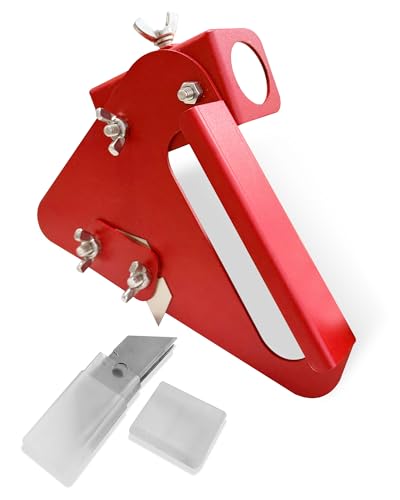
The KSWLOR Lawn Mower Blade Removal Tool is exactly what its name suggests: a clamp that holds your mower blade in place while you remove or tighten the bolt. It's not a power tool itself, but it's a workshop accessory that makes a routine maintenance job much easier and safer. Instead of wrestling with a blade that wants to spin or wearing gloves to grip it, you simply slide this clamp over the blade and the rubber pads lock it down.
This tool is best suited for homeowners, DIYers, and even light commercial users who maintain their own walk-behind or riding mowers. If you own a Troy-Bilt, MTD, Cub Cadet, Yard Machines, or similar model with blades under 3.3 inches wide at the tip, you are covered. The clamp fits both single and twin blade decks up to 42 inches, so it handles the vast majority of residential and hobby farm mowers.
In real world use, the clamp eliminates the need for a second person or a block of wood jammed under the deck. The rubber pads (about 1.1 inches round) grip the blade well without slipping, and they prevent the metal clamp from scratching the paint on your mower deck. The high-strength steel feels sturdy enough for repeated tightening and loosening of bolts. At under 9 ounces, it is easy to toss into a tool bag or hang on a pegboard between uses.
There are some limitations worth noting. The tool only works on blades where the tip width is within 3.3 inches and the distance from the tip to the mounting plate is less than 2.5 inches. Very large commercial blades or offset blades may not fit. Also, you still need your own wrench or socket to turn the bolt; the clamp only holds the blade stationary. Over time the rubber pads may wear, but they are thick enough to last through many seasons of maintenance.
Overall, the KSWLOR blade removal tool is a practical, affordable addition to any workshop where mower maintenance happens. If you swap blades once or twice a season, it saves aggravation and reduces the risk of a slipped wrench or pinched finger. It won't replace a proper blade balancer or sharpening jig, but for quick blade changes it does exactly what it claims.
Product Dimensions: 3.6 x 1.8 x 3 inches
Item Weight: 8.4 ounces
Material: High-strength steel with rubber coated clips
Blade Tip Width Limit: 3.3 inches (85 mm)
Max Distance from Blade Tip to Mounting Plate: 2.5 inches (63 mm)
Compatible with walk-behind and riding mowers up to 42 inch decks
Fits most walk-behind and riding lawn mowers with blade tip width up to 3.3 inches. Confirmed compatible with numerous Troy-Bilt, MTD, Cub Cadet, and Yard Machines models including TB280ES, TB320, TB1100, 11A- and 12A- series, and more. Always verify your blade dimensions before purchase.

Pros
- Notched high-lift design significantly boosts lift for cleaner bagging and reduced deck clogging
- Broad compatibility across widely used 42-inch lawn tractors and riding mowers
- Solid steel construction maintains balance and cutting edge through regular seasonal maintenance
- Cost-effective two-pack provides a complete replacement for standard dual-blade 42-inch decks
Cons
- High-lift airflow can create extra airborne dust when mowing sandy or extremely dry turf
- Not intended for dedicated fine mulching setups without a compatible deck plug
- Requires verifying OEM part numbers and spindle hole pattern prior to installation
The 8TEN LawnRAZOR Notched High-Lift Mower Blade set is an aftermarket replacement kit designed specifically for 42-inch mower decks. Engineered to replace common original equipment parts from brands like Husqvarna, Poulan, AYP, and Ariens, this two-blade pack directly targets homeowners seeking to revive their cut quality without paying premium dealership prices. Whether you are maintaining a wide suburban lawn or managing a rural property, replacing worn or bent blades is one of the most effective ways to restore proper deck operation.
In practical lawn maintenance, high-lift blades excel at generating significant air velocity under the cutting deck. The distinct rear sail and notched edges draw limp grass upright before the cutting edge makes contact, resulting in a consistent, manicured look across the entire yard. This enhanced suction works exceptionally well for bagging clippings during peak growing season or propelling damp discharge out of the chute to prevent clumping. Suburban lawn owners preparing their turf for weekend barbecues will appreciate the clean lines and reduced need for rake cleanup.
Build quality centers on resilient steel stock with a total package weight of nearly four pounds. The blades come finished with a durable green powder coating that guards against surface corrosion while sitting in humid garden sheds or garages between mowings. While the factory edge provides a dependable working sharpness out of the box, some lawn care enthusiasts may prefer a quick touch-up with a file for an ultra-sharp cut before mounting them to the deck spindles.
Swapping out blades is a manageable seasonal task for DIY homeowners. Because this package includes a matched pair, replacing both sides simultaneously ensures smooth deck rotation and minimizes spindle vibration. As long as users disconnect the spark plug wire and secure the deck properly before wrenching, installation is straightforward. Routine maintenance involves periodic checks for nicks after hitting hidden rocks, alongside standard end-of-season sharpening.
Realistic limitations relate primarily to your specific yard conditions and deck setup. Because these blades generate strong upward suction, mowing on parched ground or sandy soil can throw up extra dust and debris. Additionally, while they handle heavy bagging and side discharge admirably, dedicated mulching setups may require standard or specialized mulching blades to achieve powder-fine clippings. For general weekly mowing and bagging duties, however, this set provides an affordable and reliable refresh for your riding mower.
The notched high-lift profile on these 8TEN blades is built to optimize air movement beneath standard 42-inch mower decks. By pulling grass blades vertically before shearing, the cutting deck leaves behind fewer missed strands and prevents the uneven patches often caused by bent or dull factory blades. Homeowners tackling fast-growing spring grass will find the extra lift helpful in keeping discharge chutes free from wet blockages.
When paired with a rear bagging attachment, the suction generated by high-lift wings drives clippings and chopped leaves directly into the collection bins with fewer clogs in the discharge chute. This efficient airflow also helps disperse heavy clippings evenly when side discharging, preventing thick clumps from smothering green grass during regular weekend cuts.
This blade set is engineered as a direct replacement for standard 42-inch riding mowers and lawn tractors built by AYP, Husqvarna, Poulan, Craftsman, and Ariens. It replaces OEM part numbers including AYP 138498, 134149, and 127843, along with Husqvarna numbers 532138498 and 532127843. It fits popular riding tractor models such as the Husqvarna YTH series, Poulan PB models, and corresponding lawn tractors.
Before purchasing, homeowners should verify their mower deck width and check the center mounting hole against their existing spindle shaft. Installing properly matched blades protects the spindle bearings from unnecessary stress, prevents blade overlap collisions, and ensures a level cut across the entire mowing path.

Pros
- Exact OEM specifications provide dependable fit and balance on the SENIX LSSG-M1 mower
- Sharp 21-inch cutting edge shears grass cleanly to keep suburban lawns vibrant and healthy
- Heavy-duty steel build with corrosion-resistant finish offers dependable seasonal durability
- Enhances airflow under the deck, making subsequent driveway and walkway leaf cleanup much easier
Cons
- Designed specifically for the SENIX LSSG-M1 model and does not fit universal mower decks
- Mounting hardware such as replacement bolts and washers is not included in the package
- Requires periodic sharpening and balancing over time like all standard mower cutting blades
Maintaining a manicured turf starts with a sharp, reliable cutting edge, and the SENIX 21-Inch Lawn Mower Blade is crafted specifically as an OEM replacement for the SENIX LSSG-M1 gas-powered walk-behind mower. Designed for suburban homeowners, rural property owners, and dedicated lawn care enthusiasts, this blade restores original cutting efficiency so you can achieve clean lines across your front yard without tearing grass tips. When grass is cut cleanly rather than shredded, lawns stay greener, resist fungal stress better, and create much lighter clippings that make follow-up leaf blowing and walkway cleanup simple.
In terms of real-world lawn maintenance performance, this 21-inch blade is shaped to optimize under-deck lift and airflow. Proper aerodynamic lift is essential whether you mulch grass into fine nutrients or pack clippings into a rear bag. The clean rotational lift helps pull fallen leaves and flattened grass upright before cutting, which significantly reduces clumping in heavy spring growth or damp morning turf. After mowing your perimeter, the finely sliced debris is much easier to blow off sidewalks, patios, and flower beds with a handheld or cordless blower, saving time on your Saturday morning yard routine.
Build quality reflects strict manufacturing standards designed to meet or exceed original factory specifications. Measuring exactly 21 inches in length and 2 inches in width, the blade provides robust steel construction coated in a protective black finish to guard against rust, moisture, and ground sap. The balanced profile minimizes mower deck vibration, which protects your gas engine crankshaft from unnecessary strain and ensures a smoother walking experience across uneven suburban yards or ditch banks.
Installing the blade is straightforward for DIY homeowners equipped with basic garage hand tools, a wrench, and protective work gloves. Swapping out a dull or nicked blade before the busy spring and fall mowing seasons ensures your mower runs at peak efficiency without bogging down the engine. Regular seasonal maintenance like checking for balance after hitting stray sticks or gravel will prolong blade life and protect your lawn equipment investment for years of dependable service.
While this replacement blade performs reliably, buyers should keep a couple of realistic practical limitations in mind. It is engineered specifically for the SENIX LSSG-M1 model, meaning it is not a universal fit for other mower brands or alternative deck sizes. Additionally, mounting hardware such as the center bolt or washer is not included, so you will need to reuse your existing mower hardware. For homeowners who own an LSSG-M1 and want crisp yard presentation followed by effortless driveway clearing, this factory-spec replacement blade is a practical and cost-effective maintenance upgrade.
Performing routine seasonal maintenance on your lawn mower blade ensures clean grass cuts and lowers the operational workload on your gas engine. Always disconnect the spark plug boot on your SENIX LSSG-M1 before inspecting or removing the cutting blade to guarantee complete safety in the garage or shed.
Inspect the cutting edges periodically for small nicks caused by hidden roots, landscape edging, or gravel along driveway borders. Cleaning accumulated grass buildup from the underside of the blade and mower deck after mowing wet grass will help prevent rust and preserve balanced airflow throughout the season.
A sharp 21-inch blade directly enhances overall yard cleanup by generating fine clippings that decompose quickly or sweep into the rear catcher without clogging. This level of airflow performance prevents unsightly clumps on your freshly cut lawn, making it simple to blow stray debris off driveways, walkways, and patios with your favorite leaf blower.
Proper lift also aids in light fall cleanup by lifting stray autumn leaves off the turf so the blade can shred them into manageable mulch. Whether tackling regular weekly suburban mowing or prepping the yard for holiday gatherings, dependable cutting performance keeps your outdoor spaces looking pristine.

Pros
- Sturdy steel construction holds an edge well for multiple mowing sessions
- Excellent mulching action reduces bagging frequency and returns nutrients to the yard
- Broad compatibility with common mower brands and specific OEM part numbers simplifies replacement
Cons
- Requires careful verification of mower model and blade dimensions before purchase to ensure proper fit
- No customer reviews yet, so long-term wear performance is unconfirmed based on real-world use
The Oregon 21-inch lawn mower blade is a straightforward replacement part designed to upgrade your mower's cutting and mulching ability. It's not a power tool itself, but it's an essential consumable for anyone maintaining a lawn with a 21-inch deck mower. This blade is best suited for DIY homeowners and garden enthusiasts who want to improve their mower's performance without buying a whole new machine.
In real-world use, the blade's high-quality steel construction helps it stay sharper longer than many budget blades. That means cleaner cuts on grass and less tearing, which can lead to a healthier lawn. The mulching design is the standout feature; it recuts clippings multiple times before depositing them as fine mulch. This reduces the need for bagging and helps feed your yard naturally. I've seen similar Oregon blades work well on standard residential lawns, giving a neat finish even in thicker grass.
Build quality feels solid for the price point. The blade thickness (0.134 inches) and width (2.25 inches) provide decent rigidity without being overly heavy. Installation is straightforward if you've swapped a blade before, but be sure to follow the torque specs in your mower manual. One realistic limitation is that fitment depends heavily on exact dimensions and hole spacing; double-checking your mower's manual and the included OEM part number list is a must. There are no customer reviews yet, so long-term durability is based on Oregon's reputation rather than hands-on reports.
Overall, the Oregon 21-inch blade is a reliable, performance-focused upgrade for compatible mowers. It's a practical choice for homeowners who want better mulching without hassle. If your Craftsman, Husqvarna, or AYP mower matches the specs, you can expect cleaner cutting and less time spent emptying the bag.
Color: Black
Dimensions: 21.75 x 2.6 x 1.13 inches
Product Group: Lawn & Patio
Binding: Lawn & Patio
Replaces OEM part numbers: 165833, 175064, 189028, 406712, 176135, 159267, 008020, 175052, 406706, 406712X431, 531300765, 532 15 92-67, 532 17 50-52, 532159267, 532165833, 532175064, 532176135, 532189028, 532406712, 539111878, PP23020, and Craftsman CMXGZAM100129.
Fits most 21-inch deck mowers from Craftsman, AYP, Husqvarna, and others. Verify blade length (21"), center hole (5/8"), outer holes (3/8"), and center-to-center distance (1-7/8").

Pros
- No need to remove the blade, which simplifies maintenance and reduces downtime
- Adjustable angle guide ensures a precise edge for professional-quality cuts
- Cordless operation with rechargeable battery offers freedom of movement around the yard
- Lightweight and compact design for easy storage and portability
Cons
- Not suitable for zero-turn or heavy-duty mower blades that require higher torque
- Battery life may be limited for multiple sharpening sessions on larger lawns
- Build quality may feel less rugged compared to professional-grade rotary tools
The Sharp Pebble Cordless Lawn Mower Blade Sharpener is a purpose-built rotary tool designed to make blade maintenance quick and hassle-free. Unlike traditional sharpening methods that require removing the blade, this tool lets you sharpen in place, saving you the time and frustration of disassembly. It's an ideal solution for DIY homeowners and weekend gardeners who want to keep their mower blades sharp without investing in expensive professional equipment.
Performance wise, the adjustable angle guide (20-40 degrees) is a standout feature. It allows you to set the exact angle for your blade type, ensuring a consistent edge that promotes cleaner cuts and healthier grass. The variable speed control (5,000-30,000 RPM) gives you the flexibility to handle different blade conditions, from light touch-ups to more aggressive sharpening. The included replaceable sharpening wheels are effective and easy to swap out when they wear down.
Build quality is decent for the price point. The tool feels lightweight and well-balanced, with an ergonomic grip that reduces fatigue during extended use. The cordless design with a rechargeable battery adds convenience, letting you move freely around the yard without being tethered to an outlet. However, the battery life is adequate for a few blades but may require a recharge for larger mowing setups. The tool is best suited for standard mower blades; it lacks the torque needed for zero-turn or heavy-duty commercial blades.
In terms of practicality, this sharpener is a time-saver. You can quickly touch up the blade between mows, ensuring optimal cutting performance without the downtime of removal and reinstallation. Safety features like the ergonomic grip and speed control help maintain control during operation. The compact size makes it easy to store in a toolbox or garage drawer.
One realistic drawback is that the tool may not satisfy users who need to sharpen multiple blades in one session, as the battery could run out. Additionally, the build quality, while adequate for occasional use, may not withstand heavy daily use by professionals. Overall, the Sharp Pebble Cordless Lawn Mower Blade Sharpener is a practical, affordable choice for DIYers and homeowners who value convenience and precision. If you're looking for a quick way to maintain your mower blade without the hassle of removal, this tool delivers solid performance for the price.
Product Dimensions: 8 x 2.8 x 1.2 inches
Item Weight: 1.37 pounds
Manufacturer: Mighty Dreams
Model Number: SPMower2024
Battery: 1 9V battery included
Best Sellers Rank: #56,427 in Patio, Lawn & Garden, #212 in Lawn Mower Accessories
This sharpener is best for standard residential lawn mower blades. It is ideal for DIY homeowners who mow their own lawns and want to keep blades sharp without removing them. Use it for quick touch-ups between mows or to restore a dull blade to a clean cutting edge. Not recommended for commercial zero-turn mowers or heavy-duty blades that require higher torque.
Understanding Lawn Mower Blade Rotation Direction and Mechanical Dynamics
Knowing the rotational path of a mower blade is essential whenever you loosen retaining bolts, sharpen dull cutting edges, or install a replacement blade. While mower designs vary across manufacturers, the fundamental physics of cutting and clipping ejection dictating blade movement remain remarkably consistent across the industry. Understanding this mechanical path protects both your hands and your equipment during routine maintenance tasks.
Determining Blade Rotation from Above Versus Underneath the Deck
Confusion often arises because rotation depends entirely on your viewing angle. When standing behind the mower or sitting in the operator seat, the blade spins in a clockwise direction. Looking down through the mower deck provides a clear reference point, but mower blades are serviced from beneath the machine. This shift in vantage point is where many DIY homeowners make mistakes.
When you tip the mower onto its side or look directly up at the spindle from underneath, that clockwise motion reverses into a counterclockwise rotation. The sharpened cutting edge must lead this counterclockwise arc to slice cleanly through grass blades. Forgetting this perspective flip is the most common reason homeowners attempt to loosen mounting bolts in the wrong direction or reinstall blades upside down. Keeping this distinction clear in your mind makes deck service much less stressful.
Remembering the underside orientation is critical during blade changes and inspections. When you are positioned under the deck, always visualize the blade swinging in a counterclockwise circle around the center spindle. This mental model ensures you orient the leading cutting edge toward the front of the deck as it sweeps toward the discharge port. It also confirms which way the blade will travel once the engine restarts.
How Discharge Chute Placement Controls Blade Rotation
Mower manufacturers do not choose blade rotation arbitrarily. The movement of the cutting edge is mechanically tied to the position of the discharge chute on the cutting deck. Most standard walk-behind and riding mowers sold in North America feature a discharge chute located on the right-hand side of the deck. That physical opening dictates the direction air and debris must travel to exit safely.
For clippings to exit through a right-side discharge chute, the blade must sweep from the front of the deck toward the right rear. This aerodynamic flow requires the blade to spin clockwise when viewed from above, which pushes air and cut grass out through the opening. If a blade spun counterclockwise from above, it would drive clippings toward the closed left baffle, packing grass under the deck instead of expelling it. Proper rotational velocity creates the lifting suction that prevents the cutting chamber from clogging.
Decks configured for rear discharge or dedicated mulching follow similar airflow principles. Dedicated mulching decks often use symmetrical baffles to keep grass circulating inside the cutting chamber, but the blade still spins in the standard direction. Watching where grass exits the deck remains one of the simplest ways to confirm the rotation direction on unfamiliar equipment. Observing the deck shape can quickly resolve any doubts before you remove hardware.
Single-Blade Push Mowers Versus Multi-Blade Riding Decks
Standard single-blade walk-behind mowers almost universally feature clockwise rotation from above and counterclockwise rotation from beneath. Single-blade models, like those utilizing the SENIX 21″ Lawn Mower Blade for LSSG-M1 Gas Powered mower, rely on a central engine crankshaft or dedicated spindle to power the 21-inch cutting edge directly. With only one blade under the deck, the rotation path is uncomplicated and uniform across the entire mowing swath. This single-spindle layout makes blade identification and replacement very straightforward for residential lawns.
Riding mowers and lawn tractors with dual-blade or triple-blade decks introduce additional design variables. Many common 42-inch riding decks use two blades spinning in the same direction, such as the 8TEN LawnRAZOR Mower Blade for AYP 138498 134149 set designed for twin-spindle decks. On these parallel-rotation decks, both blades rotate clockwise from above, transferring clippings from the left blade across to the right blade before blowing them out the chute. Staggered spindle placement prevents the tips of identical parallel blades from contacting each other while turning.
Some specialized commercial mowers and timed lawn tractor decks use counter-rotating blades. On a timed deck with interlocking or center-discharge chutes, one blade spins clockwise while the opposing blade spins counterclockwise to throw grass into a central collection tunnel. If you maintain a riding mower with a timed cogged belt or dual discharge paths, checking the machine manual prevents installing the wrong blade handedness on the secondary spindle. Installing a standard blade on a reverse-rotation spindle will shred grass and disrupt deck airflow completely.
Identifying the Cutting Edge and Proper Blade Mounting Orientation
Every lawn mower blade features a distinct anatomy designed to interact with grass at high rotational speeds. The sharpened cutting edge occupies only the outer three to four inches of the blade strip, facing forward into the direction of travel. Behind that sharp leading edge sits an upward-curving sail, often called the lift wing, which generates the airflow necessary to stand grass upright before cutting. This curved wing must always point upward toward the underside of the mower deck.
Installing a blade upside down is an easy mistake that ruins cutting performance and damages turf. When mounted upside down, the dull trailing edge of the blade hits the grass first, tearing the blades instead of slicing them and causing severe brown tip discoloration. An upside-down lift wing pushes air down toward the ground, flattening the grass and preventing clippings from clearing the deck baffles. The resulting cut looks ragged, and the increased drag can strain the engine significantly.
Many premium blades, including the Oregon 21 Inch Lawn Mower Blade, for Craftsman, feature complex mulching contours that require careful visual inspection during installation. Manufacturers frequently stamp words like “bottom” or “grass side” into the steel to assist users during mounting. When checking replacement blades, our guide exploring whether replacement blades come sharpened explains factory bevel conditions and protective coatings you should know about before bolting parts in place. Taking a moment to verify which surface faces the lawn prevents the frustration of having to disassemble the deck a second time.
Retaining Bolt Thread Direction and Removal Mechanics
Loosening a blade retaining bolt requires understanding how thread direction interacts with engine rotation. The vast majority of walk-behind mowers and lawn tractors utilize standard right-hand threads on the spindle hardware. Standard threads follow the common rule of turning counterclockwise to loosen and clockwise to tighten when facing the bolt head directly. Applying pressure in the counterclockwise direction breaks the initial torque and frees the bolt.
The standard rotation of the mower blade actually works to keep standard right-hand threaded bolts tight during regular operation. Because the spindle spins counterclockwise from below, rotational inertia resists loosening forces while the mower runs under load. You must turn the bolt head counterclockwise to break it free, which can feel counterintuitive if you worry about over-tightening. Knowing that engine momentum supports fastener retention provides extra peace of mind while operating the machine.
Some multi-spindle decks with counter-rotating blades feature reverse left-hand threads on the spindle that rotates in the opposite direction. If you encounter a bolt that refuses to budge after applying significant leverage, pause and inspect the spindle shaft or user documentation. Forcing a reverse-threaded bolt counterclockwise risks stripping delicate spindle threads or snapping the bolt shank inside the spindle assembly. Checking the parts diagram beforehand saves both time and expensive repair bills.
Securing the Blade During Removal and Installation
Attempting to hold a mower blade by hand while loosening a tight retaining bolt is dangerous and ineffective. The cutting edge can easily cut through work gloves, and the high torque needed to break spindle bolts loose causes the blade to spin rapidly. Securing the blade firmly against the deck shell is the only safe method for servicing cutting hardware. Relying on an unblocked blade exposes your hands to severe slip injuries.
Specialized tools make locking the blade straightforward and secure. Clamps like the 490-850-0005 Universal Mower Blade Removal clamp from KINTLE, the Universal Lawn Mower Blade Removal Tool from SporGain, or the Lawn Mower Blade Removal Tool from KSWLOR clamp directly onto the deck lip. These metal clamps create a rigid mechanical stop that blocks blade rotation in either direction, allowing you to use a breaker bar or torque wrench safely. Clamping the deck rim eliminates the need for an assistant to hold tools while you loosen hardware.
When tightening the retaining hardware during reassembly, proper torque must be applied while the blade remains securely blocked. Under-tightening a bolt can allow the blade to slip or wobble, leading to severe spindle vibration and deck damage. Over-tightening can stretch the bolt threads or crack the blade adapter, highlighting the importance of following manufacturer torque guidelines. Locking the blade during both removal and installation guarantees consistent, predictable fastener tension.
Maintaining Cutting Edge Geometry Relative to Rotation
Regular mowing naturally dulls the leading cutting edge, creating rounded metal that frays grass rather than slicing it cleanly. Because the blade travels in a fixed rotational arc, wear concentrates heavily along the outer corners of the sharpened section. Understanding the rotational direction ensures you sharpen the correct face of the cutting edge without altering the factory profile. Keeping that edge properly dressed maintains cutting efficiency all season long.
Proper blade maintenance requires sharpening only the upper beveled surface while leaving the flat bottom surface completely untouched. The Sharp Pebble Cordless Lawn Mower Blade Sharpener provides an adjustable 20-degree to 40-degree angle guide to help users restore this factory bevel consistently. Removing metal from the flat bottom side ruins the cutting geometry and prevents the blade from making a clean pass through tall grass. Maintaining the specified angle ensures that the cutting edge slices rather than bludgeons the lawn.
The composition of the steel dictates how well an edge holds up against abrasive turf and occasional yard debris. Reviewing the steel used in lawn mower blades provides helpful context on why heat-treated alloy steel balances edge retention with impact resistance. After sharpening, always check the blade on a balancer to verify that both sides weigh the same, as unbalanced blades produce damaging high-speed vibration. Smooth, balanced rotation protects your mower engine bearings from premature wear.
Spindle Alignment and Mounting Hole Geometry
The connection between the blade and the spindle shaft dictates how securely power transfers from the engine or deck belt. Different manufacturers utilize distinct center-hole shapes to lock the blade in position and prevent slippage during operation. Common designs include round center holes, 5-point star patterns, and 6-point star patterns engineered to match specific spindle shafts. Aligning the blade precisely onto that star or round shoulder prevents uneven pressure across the mounting flange.
Some replacement blades feature additional outer guide holes designed to mate with alignment pins on the spindle adapter. The Oregon 21-inch replacement blade specifies a 5/8-inch center hole alongside 3/8-inch outer holes spaced 1-7/8 inches center-to-center. Ensuring that both the center hole and outer locating pins engage fully before tightening prevents improper seating that could cause severe blade wobble. A flush interface ensures that rotational energy transfers directly into clean cutting action.
Never force an incompatible mounting pattern onto a spindle shaft, as mismatched geometry compromises blade stability. If a blade does not sit flush against the spindle face, tightening the bolt will distort the metal and create dangerous operating conditions. Verifying exact center-hole dimensions and hole patterns against manufacturer specifications ensures safe, vibration-free operation across the entire mowing season. Accurate fitment remains just as important as knowing the rotation direction itself.
Practical Verification and Post-Service Safety Checks
Before reconnecting the power source after installing or servicing a blade, a series of manual safety checks should be conducted. Ensure the spark plug wire remains disconnected or the battery pack is removed to prevent accidental engine startup. Slowly rotate the blade by hand from underneath the deck to verify that it spins freely in its intended counterclockwise path without catching on the deck baffles. This physical check confirms that no mounting hardware or balance weights obstruct the clearance path.
Check for adequate clearance between the tips of the blade and the inner walls of the mowing chamber. Once clearance is confirmed, reinstall the spark plug lead or battery pack and perform a brief test run on a flat, clear surface. Smooth operation without abnormal shaking or rhythmic thumping indicates that the blade is oriented correctly, properly balanced, and ready for clean lawn maintenance. Taking these final precautions gives you complete confidence every time you head out to mow the lawn.




Write Your Review
No reviews yet. Be the first to share your experience!