


Achieving a clean, manicured turf cut depends far more on accurate cutting geometry than on raw horsepower. Homeowners frequently search for %how to adjust height of lawn mower blade% after discovering uneven ridges, unexpected scalping on lawn slopes, or ragged grass tips across their property. On rotary lawn equipment, cutting height is rarely modified by moving the blade up or down along its drive spindle; instead, height is governed by adjusting the mower deck hangers, wheel linkages, and overall deck pitch. Verifying that your cutting edge sits at the correct distance from the ground prevents crown damage to turf and ensures the machine performs smoothly with matching replacement mower blades.
Rough ground and hardware vibrations can cause cutting decks to drift out of alignment during a heavy cutting season. When operating mowers designed for uneven terrain, establishing a true measurement from the blade tip to a flat, solid surface provides the most reliable diagnostic baseline. Dedicated deck leveling gauges, proper tire inflation, and inspecting blades for bends help isolate whether cut flaws stem from mower deck suspension or bent cutting steel. Taking time to dial in proper cutting clearance protects your lawn canopy and preserves mower drive components.

Pros
- Simple to use, no complex setup or training required.
- Scale markings are clear and easy to read on the job.
- Lightweight and portable, easy to carry between mowers or job sites.
- Affordable price point for a dedicated leveling tool.
Cons
- Plastic construction may not be as durable as metal alternatives over many years of heavy use.
- Scale range limited to 1 1/2 to 5 inches, which may not suit every mower deck or aftermarket blade setup.
- Manual measurement still relies on your eye for true level; best used as a quick reference, not a precision instrument.
The Xhziy Mower Deck Leveling Gauge is a straightforward measuring tool designed to help you set blade height accurately on lawn mowers. It's a pocket-sized plastic gauge that reads from 1 1/2 to 5 inches, giving you a quick visual reference for leveling your deck. No batteries, no electronics, just a simple mechanical tool that gets the job done.
This gauge is best suited for DIY homeowners and lawn maintenance techs who want a faster way to check blade height without dragging out a tape measure or level. If you zero-turn mows every week or you're a contractor who maintains a fleet of mowers, this tool saves time and reduces guesswork. The ergonomic handle makes it easy to use even with greasy fingers or work gloves.
In real-world use, the gauge works as advertised. Place it on the mower deck, line up the scale with the blade tip, and read the height. The markings are clear and easy to interpret. It's robust enough for occasional drops on the lawn or shop floor, though the plastic body won't survive a direct hit from a truck or heavy equipment.
Build quality is decent for the price. The plastic feels solid, and the blue color helps prevent losing it in the grass. At just 2.24 ounces and measuring 12x5x2 inches, it's truly portable. You can stash it in a tool pouch or leave it in the mower's storage compartment. The main drawback is the limited range and the fact it requires manual reading, so you still need some basic understanding of deck leveling. Also, if you have non-standard blades or a deck with unusual geometry, the gauge might not fit perfectly.
Overall, for under ten bucks, the Xhziy Mower Deck Leveling Gauge is a handy addition to any lawn care setup. It won't replace a professional dial indicator or laser level, but for everyday tuning and quick checks, it's a practical, no-fuss tool. I'd recommend it to any homeowner who wants a level cut without the hassle, or to lawn service crews who need a quick reference gauge for multiple mowers.


Pros
- Extremely easy to use with no complicated adjustments
- Works with nearly all standard lawn mower blades
- Solid zinc alloy build feels durable and resists rust
- Low cost makes it accessible for any budget
Cons
- Only includes one balancer, no extra accessories
- May not fit unusually large or non-standard blade center holes
- Requires a flat, level surface for accurate balance reading
The Silcpall Lawn Mower Blade Balancer is a straightforward accessory designed to help you keep your mower blades perfectly balanced. It's not a power tool itself, but it's an essential companion for anyone who sharpens their own blades. This balancer is best suited for DIY homeowners, weekend warriors, and budget-conscious lawn care enthusiasts who want to get the most out of their mower without spending a lot.
In real-world use, the balancer is incredibly simple. You just place it on the center hole of your blade and see if it sits level. A balanced blade means less vibration, a cleaner cut, and less strain on your mower's engine. After sharpening, this tool quickly confirms whether you've removed too much material from one side. It's a quick check that can save you from a wobbly mower and uneven grass.
Build quality is solid for the price. The zinc alloy construction feels heavy and durable, and the rust-resistant finish means it can handle a damp garage or occasional splash without corroding. The round shape is comfortable to hold, and the center slot holds most standard blades securely. It's compact enough to toss in a toolbox or hang on a pegboard.
One realistic drawback is that it's a single-size balancer, so if you have an unusually large or oddly shaped blade with a non-standard center hole, it might not fit perfectly. Also, you need a flat surface to get an accurate reading. But for the vast majority of residential mower blades, it works great.
Overall, the Silcpall Lawn Mower Blade Balancer is a smart, low-cost investment for anyone who maintains their own mower. It's not flashy, but it does exactly what it promises: helps you keep your blades balanced for smoother, more efficient cutting. If you sharpen your own blades, this tool is worth having in your workshop.
Product Dimensions: 1.96 x 1.97 x 2.36 inches
Item Weight: 3.2 ounces
Material: Zinc Alloy
Manufacturer: Silcpall
Model Number: PHQ1
ASIN: B0FHB6TFNJ

Pros
- Sturdy metal build that won't crack or warp like plastic balancers.
- Accurately detects even small imbalances for improved cut quality.
- Works with a wide variety of blade center hole sizes thanks to the stepped cone design.
- Easy to use: place blade, watch gravity, and remove material from the heavy side.
Cons
- Some users report that the cone steps may not fit every blade perfectly, though most find a suitable step.
- Requires a bit of trial and error to center the blade precisely on the cone.
- The balancer itself has a narrow base that can tip if bumped during use.
The Oregon Precision Mower Blade Balancer (model 42-100) is a simple, no-fuss tool that belongs in every mower maintenance kit. After you sharpen your blade, tossing it back on the mower without checking balance is a gamble. Even a tiny imbalance can cause excessive vibration, rough cutting, and accelerated wear on your mower's engine and spindle bearings. This compact metal balancer solves that problem with a straightforward gravity-based design.
Best suited for homeowners who sharpen their own blades as well as professional landscapers, the balancer works with virtually any rotary mower blade. The stepped metal cone accommodates different center hole sizes, so it fits push mowers, riding mowers, and zero-turn machines from brands like Stihl, Husqvarna, Troy-Bilt, and more. The zinc die-cast body feels solid and substantial easily outlasting cheap plastic alternatives that can crack or warp over time.
Using the Oregon balancer is refreshingly simple. Place the blade flat on the cone, let it settle, and gravity will tell you if one side is heavier. If the blade dips, grind a bit more material off that side and recheck. The process takes only a minute or two but makes a real difference in how your mower runs. Users consistently report noticeably less vibration and a cleaner, more even cut after balancing.
One realistic limitation is that the cone steps might not align perfectly with every blade's center hole, though most users find a step that works. Also, the balancer has a narrow base, so you'll want to set it on a stable surface to avoid tipping. But these are minor tradeoffs for a tool that costs under ten dollars and can extend the life of your mower's engine and deck.
If you maintain your own mower blades, the Oregon Precision Blade Balancer is a smart, low-cost investment. It helps you get professional-level results at home, reduces vibration that leads to premature wear, and keeps your lawn looking its best. For the price and performance, there's little reason not to add one to your workshop gear.
Brand: Oregon
Model: 42-100
Material: Zinc die-cast metal
Weight: 0.2 pounds
Dimensions: 10 x 6 x 1 inches
Power Source: Manual
Color: Original Version
Compatibility: Fits most push mower and riding mower blades
Pros
- Eight internal N52 magnets provide strong magnetic retention for steel mower blades
- Infinitely adjustable interface fits a wide variety of blade center holes without extra tools
- Hidden magnet design prevents debris collection on the magnetic surface
- Compact 6.5 x 4.25 x 5.31-inch frame fits conveniently on any level work surface
- Manufacturer offers customer service support with replies within 24 hours
Cons
- Requires a flat, level bench or mounting platform to ensure accurate static balancing
- Specific minimum and maximum center-hole diameter limits are not documented in the listing
- Balancing tool only; does not include blade-removal or blade-sharpening equipment
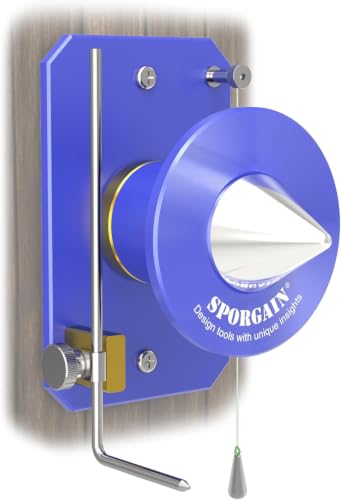
The SporGain Lawn Mower Blade Balancer is a dedicated benchtop blade-care tool designed to verify static balance across a wide range of rotary mower blades. Measuring 6.5 by 4.25 by 5.31 inches and finished in Denim Blue, the unit relies on an internal magnetic alignment system to suspend and check blades after grinding or regular seasonal maintenance. By incorporating eight powerful N52 magnets into an enclosed housing, this tool helps DIYers and equipment owners confirm that their replacement, mulching, or high-lift blades are evenly weighted prior to reinstallation.
This balancer is primarily suited for homeowners, property managers, and DIY small-engine maintenance enthusiasts who service their own push mowers, lawn tractors, or zero-turn mowers. Imbalanced blades frequently create severe deck vibration, which can lead to premature wear on spindle bearings, deck welds, and engine components. For buyers who sharpen their blades at home, an accessible magnetic balancer provides a critical quality-check step before mounting hardware is torqued back into place.
A notable design feature is the tool's hidden magnetic structure, which nests eight N52 magnets securely inside the alignment hub. Rather than exposing bare magnetic surfaces to metal shavings, filings, and abrasive grit from sharpening, the enclosed configuration protects the magnets while maintaining sufficient magnetic pull to support the blade. Paired with this is an infinitely adjustable centering mechanism, which the manufacturer states fits blades of most center-hole dimensions without needing distinct stepped adapters or loose plastic rings.
Practical ownership of the SporGain balancer requires minimal preparation, but buyers should ensure the device sits on a completely level, vibration-free surface during inspection. In standard operation, a clean, deburred blade is positioned onto the adjustable hub where the magnets engage the steel core. If one side dips, material must be incrementally removed from the heavy side until horizontal equilibrium is achieved. Blades should always be inspected when disengaged and disconnected from the mower, adhering strictly to machine safety guidelines.
While the infinitely adjustable hub provides broad versatility, the product documentation does not specify the precise minimum or maximum inner-diameter tolerances for uncommon or proprietary center holes. Prospective buyers with oversized commercial hubs or unusual star patterns should double-check physical compatibility before purchasing. Overall, for operators seeking an accessible, magnet-assisted balance tool for standard residential and light-duty commercial blades, the SporGain balancer offers practical workshop utility at a modest profile.
The SporGain balancer relies on an internal array of eight N52 neodymium magnets to hold mower blades securely on the alignment axis. Neodymium magnets of the N52 grade provide a dense magnetic field, ensuring that standard carbon steel and hardened mower blades remain firmly seated while pivoting freely for static balance checks.
By enclosing the magnets within a hidden design, the tool minimizes direct exposure to abrasive grinding dust, metal filings, and ambient moisture. This design choice helps protect the magnets from physical chipping and ensures smooth rotation when assessing horizontal level across the blade wings.
Unlike static cone balancers that require specific stepped increments, the SporGain tool features an infinitely adjustable alignment mechanism. This setup is designed to accommodate various center-hole configurations found across walk-behind, lawn tractor, and zero-turn mower decks without relying on interchangeable adapter bushings.
While the mechanism is engineered to seat most common round and shaped center holes, buyers should note that exact diameter boundaries are not listed by the manufacturer. Ensuring that the blade is cleaned of caked grass, dirt, and loose paint before mounting is essential for obtaining smooth, repeatable balance readings on the adjustable spindle.
Using a blade balancer is a vital safety and maintenance procedure that prevents rotational imbalance from damaging spindle assemblies, mower decks, and engine crankshafts. Blades should only be balanced after the lawn mower has been completely shut down, the spark plug boot disconnected, and the blade safely removed following manufacturer torque and safety procedures.
Care for the SporGain balancer itself involves keeping the unit clean and storing it in a dry workshop environment. Wiping away fine steel filings with a non-magnetic cloth after each sharpening session prevents buildup around the hub, preserving the smooth movement of the balancing mechanism over time.

Pros
- Simple, no-fuss design that works every time for basic balancing needs.
- Metal build feels solid and should hold up to years of garage use.
- Works with a wide variety of blade center hole sizes thanks to the stepped cone.
- Costs less than a coffee and delivers real performance improvement.
Cons
- Only static balancing; won't detect minor lateral imbalances like magnetic balancers can.
- May not fit blades with non-circular or odd-shaped center holes (e.g., some mulching or gator blades).
- Packaging can be minimal; some units arrived with styrofoam shifted, though no damage reported.
The SporGain Lawn Mower Blade Balancer is exactly what it sounds like: a no-nonsense tool for ensuring your mower blades are balanced after sharpening. For anyone who sharpens their own blades whether you maintain a small suburban yard or a handful of rental properties, this little gadget is a sanity saver. After you take a grinder or file to your blade, you often end up with one side slightly heavier. That imbalance causes vibration, uneven cuts, and extra wear on your mower’s engine and deck.
This balancer solves that problem simply. You set the blade on the tapered metal cone, and the heavy side drops down. Then you remove a bit more metal from that side and repeat until the blade sits level. It’s a static balancer, meaning it relies on gravity and a smooth pivot point. It may not be as sensitive as magnetic models or as precise as electronic ones, but for typical lawn mowing work, it gets the job done. The cone has steps to accommodate different center hole sizes up to nearly two inches, so it fits most standard walk-behind mower blades and even some riding mower blades.
Build quality is impressive for the price. The base and cone are made of metal, not plastic, so they won’t crack or warp. It’s small enough to toss in a tool bag or leave in a drawer. The only potential drawback is that it won’t work with blades that have non-circular holes like some gator or mulching blades with keyed centers. Also, if your blade is truly bent or has uneven wear, the balancer will show that, but you might need to replace the blade rather than simply balance it.
In real-world use, this balancer makes a noticeable difference. Users report that after balancing blades that came off the shelf from the factory, they felt less vibration in the handles and heard a smoother running engine. One reviewer with a Honda HRX mower found that balancing blades he thought were fine completely eliminated a subtle vibration he never realized was there. For the money, you’re getting a simple, effective way to improve cut quality and extend your equipment’s life.
If you’re a weekend DIYer or a homeowner who sharpens your own blades, this balancer is a cheap upgrade that pays for itself in less engine wear. Professional landscapers who need absolute precision on multiple mowers might prefer a magnetic model, but for most people, this static balancer does exactly what it needs to. A solid buy.
Product Dimensions: 2.4 x 2.4 x 2.1 inches
Item Weight: 3.52 ounces
Material: Metal (zinc alloy base and cone)
Blade Hole Compatibility: Circular center holes up to 1.97 inches (largest step)
Base Diameter: 2.36 inches
Color: Silver
Includes: One blade balancer only

Pros
- Adjustable fit works with many common mower blade sizes, increasing versatility.
- Rust-resistant metal build feels solid and durable for long-term use.
- Easy-turn knob makes adjustments quick and tool-free.
- Compact and lightweight, easy to store or carry to the jobsite.
Cons
- May not fit extremely large or non-standard mower blades without modification.
- Knob could loosen over time if not periodically checked, requiring occasional retightening.
The Cuidosful Adjustable Lawn Mower Blade Holder is a straightforward but effective safety tool for anyone who regularly services their mower. Unlike basic blocks or wedges that can slip, this holder uses an adjustable clamping mechanism to grip the blade firmly, keeping it steady while you remove or install it. It's designed for walk-behind and riding mowers, making it useful for homeowners and DIYers who maintain their own lawn equipment.
In real-world use, the adjustable width is the standout feature. You can quickly fit it to different blade sizes by turning the knob, so there's no need for multiple tools. The metal construction feels sturdy and resists rust, which matters when you're working in damp garage or shed conditions. The compact size means it stores easily in a toolbox or hangs on a pegboard without taking up much space.
One area where this tool shines is safety. Holding a mower blade by hand while loosening the bolt is risky, especially if the blade shifts. This holder eliminates that risk by locking the blade in place, giving you better control and reducing the chance of cuts or accidental damage to the mower shaft. It's a simple upgrade that makes routine maintenance less stressful.
Build quality is decent for the price. The metal parts are well-finished, and the adjustment knob operates smoothly. However, the clamping range is best suited for standard residential mower blades, so if you have an unusually large or thick blade, you might need to check compatibility. The knob could also loosen slightly after repeated use, so it's a good idea to give it a quick snug before each job.
Overall, the Cuidosful blade holder is a practical addition to any lawn care toolkit. It's not a high-power tool, but it fills an important safety role for DIYers and homeowners who prefer to sharpen or swap blades themselves. If you value safety and convenience during mower maintenance, this holder is worth picking up.


Pros
- Metal build feels solid and durable for long-term use
- Accurate static balancing method works reliably with most standard blades
- Universal cone design accommodates various center hole shapes and sizes
- Easy to use with no setup required - just place and balance
- Affordable two-pack offers great value for DIY homeowners
Cons
- Best results require a perfectly level surface - not ideal for uneven jobsite use
- May not balance non-circular or unusually shaped center holes as effectively
- Cone steps are relatively small - large blades may be top-heavy
The TonGass 2-Pack Metal Precision Blade Balancers are a simple but essential tool for anyone who sharpens their own lawn mower blades. These static balancers let you check and correct blade balance after grinding, which reduces vibration, improves cut quality, and protects your mower's engine from unnecessary wear.
Best suited for DIY homeowners and lawn care enthusiasts who sharpen blades at home. If you already use a bench grinder or file to sharpen, this balancer should be a staple in your workshop. It's also handy for small engine repair shops that want a quick, reliable balancing check without expensive electronic gear.
In real-world use, the balancer performs exactly as expected. Just set it on a level surface - like a workbench or concrete floor - place the blade's center hole over the cone, and let it settle. A balanced blade stays horizontal; an unbalanced one dips to the heavy side. The metal construction feels sturdy enough for daily use, and the compact size means it stows easily in a drawer or toolbox. The two-pack is nice because you can keep one at the sharpening station and one in your mower shed, or share with a neighbor.
Build quality is solid for the price - all metal with a clean finish, no plastic parts to break. The cone has stepped diameters to fit different hole sizes, and the base is wide enough for stability. One limitation: you absolutely need a level surface for accurate results. If your workbench is uneven, the balancer won't read true. Also, while the cone fits most standard blades, very large or oddly shaped center holes might not seat properly.
Overall, if you sharpen lawn mower blades at home, the TonGass blade balancers are a worthwhile addition. They take the guesswork out of balancing, help your mower run smoother, and cost less than a typical gas fill-up. For DIY homeowners who want to extend the life of their equipment and get a cleaner cut, this two-pack is an easy recommendation.
Package Dimensions: 3.43 x 2.8 x 2.48 inches
Item Weight: 6.4 ounces (both balancers combined)
Manufacturer: TonGass
Model: bladebalancermetal
Material: Metal base and stepped cone
Cone largest step: 1 3/8 inches
Base diameter: 2.36 inches
Compatibility: Most lawn mower blades with circular or standard center holes

Pros
- Adjustable sharpening angle (15°-45°) covers most common mower blades.
- Magnetic balancer is quick to use and provides accurate results.
- Solid build quality with metal components and ball bearings for durability.
- Easy to set up and use, even for beginners with no prior sharpening experience.
Cons
- May not accommodate very large or unusually shaped mower blades due to fixed mounting design.
- Magnetic balancer works best on flat, clean blades; debris or heavy rust can affect accuracy.
- Price is higher than simple sharpening guides, but the combo adds balancing capability.
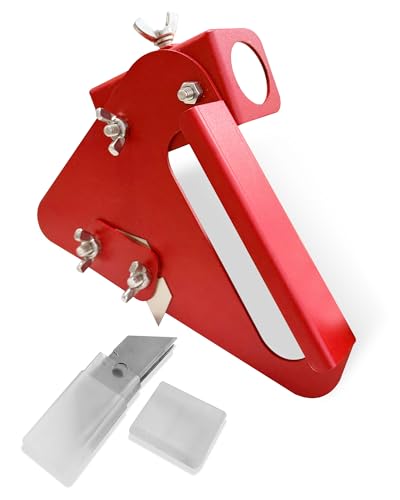
The SporGain Lawn Mower Blade Sharpener & Balancer Combo Kit is a dual-purpose tool set designed for homeowners and DIYers who want to keep their mower blades in top shape without relying on a shop. This kit includes an adjustable blade sharpener and a high-precision magnetic balancer, both made with solid materials that feel substantial in hand.
For real-world performance, the sharpener’s 15° to 45° adjustment range lets you match the factory bevel on most push mower and riding mower blades. The ball-bearing mechanism allows smooth, controlled strokes, and the enlarged handle gives good leverage. After sharpening, the magnetic balancer quickly shows if the blade is off-center, which helps prevent vibration and uneven cutting. Users typically see a cleaner lawn and less strain on the mower engine after using this combo.
Build quality is a highlight here. The sharpener is made from thick aluminum alloy with sealed ball bearings, and the balancer uses strong N52 magnets to hold the blade securely. Both tools feel rugged enough for regular use in a garage or shed. The magnetic balancer has a hidden magnet design that avoids interference, and the sharpener’s clamping mechanism holds blades firmly without slipping.
One realistic drawback is that the sharpener’s clamping range may not accommodate very wide or oddly shaped aftermarket blades. Also, the magnetic balancer requires a clean, flat blade surface for accurate results; heavy rust or debris should be cleaned off first. These are minor trade-offs for a tool set that otherwise performs very well for its intended audience.
Overall, the SporGain Lawn Mower Blade Sharpener & Balancer Combo Kit is a smart buy for anyone who mows regularly and wants to extend blade life while improving cut quality. It’s especially useful for homeowners with a few acres, or DIYers who maintain multiple mowers. The combination of adjustable sharpening and magnetic balancing saves time and delivers professional-level results without a steep learning curve.
Practical Guide to Measuring and Adjusting Lawn Mower Blade Height
Adjusting the cutting height of a lawn mower blade requires understanding that rotary blades mount flush against a fixed spindle adapter rather than sliding freely along a shaft. Blade height changes happen through mechanical deck linkages, wheel adjustment levers, and intentional front-to-back rake alignment. Mastering this procedure ensures uniform turf clipping, prevents engine bogging, and stops unwanted ground scalping.
The Mechanical Principle Behind Blade Mounting and Deck Elevation
Rotary mower blades fasten directly against the spindle shaft or a dedicated blade adapter using a center bolt and heavy washer. This interface is engineered to hold the cutting blade tightly at a perpendicular angle to the spindle bearings. Manufacturers design this connection as a rigid mount to handle rotational forces without slipping or wobbling during operation. Trying to alter cutting height by inserting loose washers or spacers along the spindle bolt is dangerous and compromises blade retention.
All vertical blade adjustments occur by moving the surrounding mower deck or changing the wheel axle positions relative to the chassis. When you raise or lower the mower deck, the entire spindle assembly and blade rotate together at the new elevation. Understanding that the blade follows the deck housing allows you to focus maintenance efforts on the linkages that support the cutting enclosure. This perspective keeps blade hardware secure while directing adjustments to the intended mechanical control points.
Walk-Behind Mowers: Calibrating Wheel Notches and Linkage Rods
Walk-behind push and self-propelled mowers control blade height by raising or lowering the wheel assemblies relative to the deck shell. Most push models feature individual spring-loaded lever notches at each wheel, while others utilize a single-lever central adjustment system. To adjust cutting height on individual wheel systems, move each lever into the identical notch position across all four corners. Selecting mismatched notch settings between the left and right sides immediately creates an uneven cut line across your lawn.
Single-lever adjustment systems connect all four wheels through mechanical cross-linkage rods underneath or along the deck exterior. Over time, rough terrain or collisions with landscaping borders can bend these linkage rods or loosen pivot bushings. If a single-lever mower cuts unevenly despite selecting a uniform height setting, inspect the connecting rods for bends or worn pivot pins. Straightening a bent rod or replacing a sloppy pivot bushing restores proper wheel geometry so the blade tracks level across the turf.
Riding Mowers and Lawn Tractors: Deck Leveling and Hanger Adjustment
Riding mowers and lawn tractors rely on suspended cutting decks supported by lift linkages, draft arms, and adjustable hanger brackets. Adjusting blade height on these machines involves calibrating side-to-side level as well as front-to-back pitch. Side-to-side adjustments ensure both ends of a multi-blade deck cut the grass canopy at the exact same elevation. Most tractor decks use threaded lift link trunnions or eccentric cam bolts located near the rear draft arms to raise or lower each side independently.
Before turning any adjustment nuts, park the mower on a dead-level concrete floor and lower the deck to your preferred mid-range cutting notch. Rotate the mower blades so their cutting tips point directly outward toward the left and right sides of the machine. Measure the distance from the cutting edge of each blade tip straight down to the concrete surface. Loosen the jam nuts on the lift link trunnion and turn the adjustment nut until the left and right blade tips match within one-eighth of an inch.
Always adjust the low side upward rather than lowering the high side excessively, which helps maintain proper deck belt tension and lift clearance. After balancing the side-to-side measurement, tighten the locking jam nuts firmly to prevent the adjustment trunnion from vibrating loose. Checking this lateral measurement twice per season prevents one-sided turf striping and minimizes unnecessary stress on mower deck hanger brackets.
Measuring True Cutting Clearance with Dedicated Deck Gauges
Measuring from the outer lip of a mower deck housing down to the ground provides an inaccurate estimate of true cutting height. Deck shells often have rolled lips, baffling, and structural contours that do not reflect the actual position of the spinning blade edges inside. A dedicated mower deck leveling gauge, such as the Xhziy blue deck leveling gauge with clearly marked scales from 1 1/2 to 5 inches, slides directly underneath the deck to contact the blade tip. This tool allows you to measure the exact clearance between the cutting edge and the ground surface with high precision.
To obtain an accurate measurement, place the gauge base flat against smooth concrete and slide the sliding arm upward until it touches the sharp cutting tip. Repeat this measurement at the opposite blade tip on single-blade mowers, or at the outer discharge and trim tips on multi-blade decks. Reading the precise measurement value on the gauge scale removes guesswork and confirms whether your deck lift dial matches actual grass cutting height. Using a dedicated measuring tool avoids scraped knuckles and delivers consistent baseline data for every height adjustment.
Understanding Deck Pitch: Why Front and Rear Blade Heights Must Differ
Proper deck setup requires establishing a specific front-to-back pitch, commonly referred to as rake. On almost all rotary mowers, the front blade tip should sit between one-eighth and one-half inch lower than the rear blade tip. This forward tilt ensures that the leading edge of the blade cuts the grass stalk cleanly once as the mower advances. If the deck is completely flat or tilted backward, the rear edge of the blade re-cuts standing grass, creating ragged tips and wasting engine power.
Deck pitch plays a crucial role when cutting thick grass evenly because proper forward rake promotes optimal under-deck airflow. The high-pressure zone created by high-lift wings discharges or mulches clippings efficiently only when air enters freely beneath the front lip. To adjust pitch on a riding mower, rotate the blade tips until they point straight forward and backward along the centerline of the machine. Adjust the front draft arm nuts until the front tip sits approximately one-quarter inch lower than the rear tip, then lock the hardware securely.
Critical Preparation and Safety Protocols Before Adjusting Height
Working around mower blades requires strict adherence to equipment safety standards to eliminate accidental engine or motor starts. Park the mower on a smooth, solid concrete slab rather than on turf or dirt, as uneven ground makes accurate measurements impossible. Disconnect the spark plug wire on gas-powered equipment and ground the terminal away from the plug, or remove the safety key and disconnect the battery pack on electric models. Engage the manual parking brake firmly and insert wheel chocks to keep the machine completely stationary.
Tire pressure is an invisible factor that frequently ruins deck leveling and height adjustments. A difference of just two or three pounds per square inch between left and right rear tires can tilt a mower deck by more than a quarter inch. Check all four tires with a reliable low-pressure tire gauge and inflate them strictly to the manufacturer specifications stamped on the tire sidewall or operator manual. Leveling a mower deck on improperly inflated tires guarantees that the deck will cut unevenly the moment tire pressures are corrected later.
Diagnosing False Height Flaws: Bent Blades and Loose Spindles
When an uneven cut persists despite careful deck leveling, the root cause often lies in a bent blade or worn spindle rather than the deck suspension. A blade tip can bend upward or downward after striking a hidden tree root, rock, or metal water valve box. To test for a bent blade, rotate the blade 180 degrees so the opposite cutting tip occupies the exact location where you took the first measurement. If the second tip measures at a different elevation than the first tip in the identical physical spot, the blade itself is bent and requires replacement.
Spindle assembly wear also introduces unwanted vertical play that alters blade tracking under rotational loads. Grasp the blade firmly with thick leather gloves while the machine is deactivated and attempt to wiggle the blade vertically. Any noticeable clunk or vertical play indicates worn spindle bearings, a loose mounting hub, or a cracked deck mounting plate. Operating with loose spindle hardware prevents stable blade height and can lead to severe deck vibration during yard maintenance.
Using a specialized blade clamping tool, such as the Cuidosful adjustable lawn mower blade holder, simplifies inspecting and servicing blade hardware safely. The metal clamp holds the blade securely against the deck housing so you can loosen stubborn spindle bolts without the cutting edge spinning unexpectedly. Once the blade is removed, you can inspect the spindle adapter star or splined hub for rounding, cracking, or metal deformation that would otherwise throw off blade seating.
The Impact of Blade Sharpening and Balancing on Level Cutting
Sharpening and balancing mower blades regularly directly influences how level a mower cuts across its entire operating path. When a blade edge becomes dull or chipped, operators often lower the deck height to compensate for tearing grass, which accelerates turf browning and scalping. Uneven grinding during sharpening removes more steel from one sail than the other, resulting in an unbalanced blade that vibrates severely at high rotational speeds. This vibration causes the spindle and deck hangers to shake, leading to wavy, washboard cutting patterns across the lawn.
Verifying blade balance after every sharpening session prevents mechanical vibration and uneven cutting heights. Universal static cone balancers, such as models from Oregon, TonGass, Silcpall, and SporGain, use zinc or metal step cones to check balance quickly. For maximum precision, magnetic balancers like the SporGain precision magnetic balancer use hidden N52 magnets to suspend the blade horizontally, making even minute weight discrepancies visible. Sharpening jigs with 15 to 45 degree angle adjustments help maintain consistent bevels across both wings, preserving balanced lift and uniform cutting tracking.
Balanced cutting edges are especially critical on an electric mulching lawn mower, where battery runtime and motor efficiency rely on smooth rotational aerodynamics. Unbalanced blades place excess drag on electric drive motors and battery packs while producing uneven mulch distribution under the deck chamber. Taking the time to balance your blades after sharpening keeps spindle bearings running cool and ensures that your adjusted deck height translates into a clean, velvet-smooth cut.
Common Height Adjustment Mistakes to Avoid
One widespread mistake among lawn owners is attempting to level mower decks or adjust blade heights while parked on a grassy lawn. Turf blades, thatch density, and minor soil depressions prevent measuring gauges from sitting flat, resulting in wildly erratic height readings. Always perform deck adjustments on a smooth concrete garage floor or flat asphalt driveway to establish an indisputable reference plane. Taking shortcuts on soft ground invariably leads to frustration and uneven mowing results on your next yard pass.
Another frequent error is relying entirely on the numbers stamped on the mower height adjustment dial or fender console. These factory numbers serve as rough reference guides rather than calibrated measurements of actual cutting height. Over seasons of use, linkage wear, tire tread degradation, and deck settling cause the true blade height to deviate noticeably from console numbers. Trusting a physical measurement gauge placed directly against the cutting edge ensures your lawn receives the exact height intended, regardless of what the console markings show.
Verifying the Cut and Managing Seasonal Turf Clearance
After completing side-to-side leveling, establishing forward pitch, and checking tire pressures, perform a short test cut on an inconspicuous section of your lawn. Observe the freshly cut swath under bright daylight to verify that grass blade tips appear neatly sliced rather than shredded or scalloped. Check that the boundary where two adjacent mowing passes overlap shows zero ridge lines or height variations. If a slight step appears between passes, re-check the side-to-side blade tip measurements on your concrete baseline.
Managing blade height also involves adapting your cutting clearance to seasonal weather conditions and grass varieties. Cool-season grasses benefit from higher blade settings during hot summer months to shade root zones and conserve soil moisture, while lower settings in early spring encourage dense greenup. Never remove more than one-third of the total grass blade length during a single mowing session to avoid shocking the plant canopy. Following disciplined height adjustment habits keeps your mower hardware aligned and ensures your lawn remains healthy and resilient throughout the growing year.


Write Your Review
No reviews yet. Be the first to share your experience!