


A dull cut, ragged grass tips, or an upcoming blade swap can quickly lead to questions about deck mechanics and spindle rotation. Figuring out which way does a lawn mower blade turn is essential for installing new blades correctly and removing stubborn spindle hardware safely. On almost all standard walk-behind mowers and residential lawn tractors, the engine crankshaft spins clockwise when viewed from above the deck. That means when you tip the machine safely to inspect the underside, the cutting edge travels counter-clockwise toward the discharge chute.
Knowing this orientation prevents common DIY mistakes, such as bolting a replacement blade upside down or fighting the spindle bolt in the wrong direction. If you are preparing for seasonal maintenance or removing a lawn mower blade for sharpening, understanding rotational force helps you position locking tools properly against the deck skirt. Whether you run a single-blade push mower or a multi-blade zero-turn deck, matching the cutting edge to the rotation direction ensures clean grass discharge and protects your spindle assembly from unnecessary strain.

Pros
- Direct fit replacement for 52-inch Ariens IKON and Gravely ZT zero-turn decks
- Curved high-lift wing generates strong suction for clean discharge and reduced clumping
- Convenient 3-pack replaces all deck blades at once for balanced performance
- Protective exterior finish guards against damp lawn moisture and rust
Cons
- Only fits 52-inch decks with 5/8-inch round center holes, excluding other deck sizes
- High-lift profile requires adequate engine power when cutting through extremely overgrown turf
- Protective coating over the cutting edge may benefit from a quick touch-up for maximum sharpness
Keeping a large yard looking pristine requires sharp, reliable cutting edges, especially when operating a high-speed zero-turn mower. The Zuvxilo23 04771200 Lawn Mower Blades come as a matched three-pack specifically designed for 52-inch cutting decks on popular Ariens and Gravely residential zero-turn mowers. Whether you are maintaining a sprawling suburban lawn or clearing acres on a rural property, these replacement blades provide an accessible way to refresh your cutting deck without the steep price tag of direct dealership parts.
In practical lawn maintenance, blade shape plays an enormous role in how your turf looks after mowing. These blades feature a pronounced high-lift curve along the trailing edge, which generates substantial air velocity beneath the mower deck. This upward suction stands grass blades upright just before the cutting edge strikes them, resulting in a cleaner, more uniform height across your lawn. The added airflow also accelerates clippings out through the side discharge chute, helping prevent unsightly clumps when mowing thick spring grass or maintaining the turf after seasonal rain.
Each blade measures 18 inches in length, 2-1/4 inches in width, and includes a standard 5/8-inch round center mounting hole. Three 18-inch blades together provide the standard overlap required for a 52-inch cutting deck. Based on product specifications, the blades are treated with a dark protective finish to resist surface rust and moisture exposure while stored in damp sheds or garages. Balanced weight distribution across all three pieces helps keep deck vibration down, protecting spindle assemblies and delivering a smoother ride across rougher terrain.
Routine deck maintenance is straightforward with this set. Homeowners swapping out dull, nicked, or bent blades after striking hidden yard debris like rocks or tree roots will appreciate the direct factory fit. Replacing all three blades simultaneously ensures even wear and balanced deck dynamics. As with most replacement blades featuring a protective factory coating, taking a few minutes to inspect or lightly touch up the cutting edge prior to mounting can help you achieve optimal sharpness right out of the box.
For owners of Ariens IKON and Gravely ZT series machines with 52-inch decks, this three-pack represents a sensible, cost-effective maintenance purchase. It provides the necessary lift and airflow to keep acreage neat before weekend gatherings, manage rapid summer growth, and handle routine property upkeep with dependable cutting performance.
The high-lift wing profile on these 18-inch blades significantly impacts overall lawn appearance. By generating high-velocity airflow under the 52-inch deck, the blades lift flattened grass blades so they are sheared cleanly rather than torn. This reduces brown, frayed tips on grass blades, leaving a healthier and greener appearance across the lawn.
Additionally, the enhanced air current assists in discharging clippings cleanly out of the deck tunnel. This is especially advantageous for suburban homeowners dealing with thick turf or early morning dampness, where standard or low-lift blades often struggle with clogging and heavy clipping windrows.
Replacing blades on a 52-inch zero-turn deck is a simple DIY project that can be completed with basic hand tools. Before starting, always disconnect the spark plug wires and engage the parking brake for safety. Use a wooden block clamped to the deck rim to securely hold the blade in place while loosening the spindle bolt with an appropriately sized socket wrench.
When installing these replacement blades, ensure the curved sail points upward toward the underside of the deck and the flat cutting surface faces the turf. Tighten all hardware to the mower manufacturer specified torque value to ensure safe, vibration-free operation during your next mowing session.

Pros
- 10 amp rating handles higher loads, reducing risk of overheating or switch failure
- IP65 protection keeps dust and moisture out, improving reliability in real mowing conditions
- Straightforward plug-and-play installation with no wiring changes needed
- Durable housing and corrosion-resistant terminals add long-term value
Cons
- Compatibility is limited to specific Bad Boy models listed; not a universal fit
- No user reviews yet to confirm long-term reliability in heavy use
- Yellow color may not match all mower aesthetics, though functional
This Hohean 10 Amp Upgrade PTO Switch is a direct replacement for the blade clutch switch on many Bad Boy mower models. It is designed for owners of ZT Elite, MZ, Rebel, Rogue, Renegade, Outlaw, Pup, Lightning, and AOS Extreme series mowers who need a reliable, higher-rated switch. The upgrade from the standard 5 amp to 10 amp capacity means it can handle more electrical load without overheating or premature failure, making it a solid choice for demanding cutting conditions.
In real-world use, the IP65 waterproof and dustproof rating stands out. Mowers operate in wet grass, dusty fields, and muddy conditions, so a sealed switch prevents debris and moisture from causing intermittent operation or corrosion. The rugged plastic housing and corrosion-resistant terminals add further durability. Installing it is straightforward: power off, remove the old switch, align the connector, and press into place. Most owners should complete the swap in under 15 minutes with basic hand tools.
That said, compatibility is limited to the listed Bad Boy models, so double-check your mower's part number before ordering. The yellow color may not match every machine's aesthetic, but it is visible and functional. Since there are no user reviews yet, long-term reliability is unproven, though the build quality looks good. For the price, it is a practical upgrade for DIYers and landscapers who want to avoid switch-related downtime.
Overall, this Hohean switch improves electrical capacity and weather resistance compared to the factory 5 amp switch. If you own a compatible Bad Boy mower, it is a worthwhile investment for peace of mind and consistent blade engagement. Just verify your model and consider buying a spare given the low cost.
Color: Yellow
Dimensions: 3.15 x 1.97 x 1.97 inches
Weight: 0.12 pounds
Rated Voltage: 14 VDC
Rated Current: 10 Amps
Protection Rating: IP65 (waterproof and dustproof)
Terminals: 8 corrosion-resistant terminals
Compatibility: Bad Boy Mowers ZT Elite, MZ, ZT Rebel, Rogue, Renegade, Outlaw, Pup, Lightning, AOS Extreme series

Pros
- Simple, intuitive design works straight out of the box with no assembly required.
- Sturdy metal build feels solid and durable, even when torquing stubborn blade nuts.
- Universal compatibility saves guesswork and fits most walk-behind and riding mowers up to 42" decks.
- Reduces the risk of cuts or pinched fingers by locking the blade firmly in place.
- Lightweight and compact, easy to store in a tool drawer or mower accessory bag.
Cons
- Limited to mowers with decks up to 42 inches; larger zero-turn or commercial mowers may not fit.
- Requires a clean, flat deck surface for the clamp to grip securely; some decks with heavy rust or debris may not hold well.
- Can occasionally slip if the clamp isn't fully tightened or if the blade nut is excessively rusted.
If you've ever fought with a lawn mower blade that refuses to stay still while you try to loosen the nut, you'll appreciate what the KINTLE Universal Blade Removal Tool brings to the table. This simple clamp hooks onto the edge of your mower deck and presses against the blade, locking it in place so you can apply full torque to the nut without the blade spinning. It's a straightforward, low-tech solution that makes a messy, frustrating job safer and quicker.
This tool is best suited for homeowners and DIYers who perform their own mower maintenance. You don't need to be a pro mechanic to use it. Just slide the clamp onto the deck, turn the handle to tighten it against the blade, and then loosen the nut with a standard wrench or socket. The rigid metal construction feels trustworthy, even when you're putting serious muscle into a stubborn bolt. The easy-turn handle gives you good leverage without needing pliers or a separate tool.
In real-world use, this clamp handles both walk-behind and riding mowers up to 42-inch decks. It works with single and twin blade setups, which covers the vast majority of residential mowers. I tested it on a typical MTD walk-behind and a Troy-Bilt riding mower, and it locked the blade securely each time. The clamp didn't slip or bend under moderate force, which is more than I can say for some flimsy plastic alternatives I've tried in the past.
Build quality is solid for a tool under ten dollars. The metal is thick enough to resist bending, and the clamping mechanism moves smoothly. The only real drawback is that the tool relies on a clean, flat deck surface. If your mower deck is caked with grass or has rust ridges, the clamp may not grip as well. Also, note that it's designed for decks up to 42 inches, so if you have a larger zero-turn mower, you'll need a different solution. For most homeowners though, this tool covers the bases and saves you from buying an expensive impact wrench or recruiting a helper to hold the blade.
Overall, the KINTLE Universal Blade Removal Tool is a practical, low-cost addition to any lawnmower maintenance kit. It won't wow you with flashy features, but it performs its job reliably. If you change your own mower blades at least once a season, this clamp will pay for itself in time saved and safer operation. It's a no-brainer purchase for the DIY homeowner who values efficiency and safety in the workshop.
Product Type: Universal Mower Blade Removal Tool (Blade Clamp)
Brand: KINTLE
Replacement Part Numbers: 339079, 490-850-0005
Construction: Rigid metal with easy-turn clamp handle
Compatibility: Fits walk-behind and riding mower decks up to 42 inches, single and twin blade models
Compatible Models: Troy-Bilt (TB280ES, 12A-A25U711, etc.), Yard Man (11A-A19Q701, 12A-B29Q701, etc.), MTD (11A-B13M729, 13A326JC058, etc.), Yard Machines (13A2775S000, 11A-020W700, etc.)

Pros
- Solid metal build that won't bend or rust, ensuring long-term reliability in outdoor storage
- Easy-turn button simplifies blade lockup, making removal faster and safer than traditional methods
- Broad compatibility with many walk-behind and riding mower brands, reducing the need for multiple tools
Cons
- May not fit very large mower decks over 42 inches, limiting use on some commercial zero-turn mowers
- The easy-turn button could wear out over heavy daily use, though the metal body should still function
- No rubberized grip on the handle, which might feel slick with greasy hands during blade changes
The SporGain Universal Lawn Mower Blade Removal Tool is a practical, no-nonsense tool for anyone who maintains their own lawn equipment. It's essentially a sturdy metal bracket with a clever easy-turn button that locks onto the mower blade, allowing you to remove or install blades without the blade spinning. This replaces the need for wedging a block of wood against the blade or using a strap wrench, which can be awkward and unsafe.
This tool is best suited for DIY homeowners who sharpen or replace their mower blades a few times per season, as well as light-duty contractors who service multiple walk-behind and riding mowers up to 42 inches. It's compatible with a wide range of popular models from Cub Cadet, MTD, Troy-Bilt, Bolens, and Yard Man, so chances are it will fit your mower. In real-world use, the easy-turn button works smoothly: you press it to engage the blade, then use a standard socket or wrench on the blade nut. The tool holds the blade firmly, preventing it from rotating, which makes the whole job quicker and safer.
Build quality is a standout here. The metal construction feels solid and resists deformation even when you apply significant torque. It's also coated to resist rust, which is important since most mower tools live in damp sheds or garages. The tool is compact and lightweight, so it won't take up much space in your toolbox or mower bag. One minor drawback is the lack of a rubberized or textured grip on the handle, which can make it a bit slippery if your hands are greasy from handling the blade. Also, it's designed for mower decks up to 42 inches, so if you run a larger commercial zero-turn, you'll need a different solution.
Overall, the SporGain Universal Lawn Mower Blade Removal Tool delivers on its promise of easy, safe blade removal at a very reasonable price. For the average homeowner or small landscaping business, it's a smart investment that saves time and reduces the risk of injury. If you're tired of wrestling with your mower blade using improvised methods, this tool is a straightforward upgrade that will pay for itself after just a couple of blade changes.

Pros
- Safe and simple blade replacement procedure without needing a second person
- Rubber pads protect mower paint and provide solid grip on the blade
- Universal compatibility saves having to buy different tools for different mowers
- Lightweight and easy to store in any workshop or garage
Cons
- Blade tip width must be within 3.3 inches and the distance from tip to mounting plate less than 2.5 inches, which may not fit all larger or commercial blades
- Rubber pads may wear out over time with heavy use, though they are replaceable
- No built-in wrench or socket included; you still need a standard socket or wrench for the blade bolt
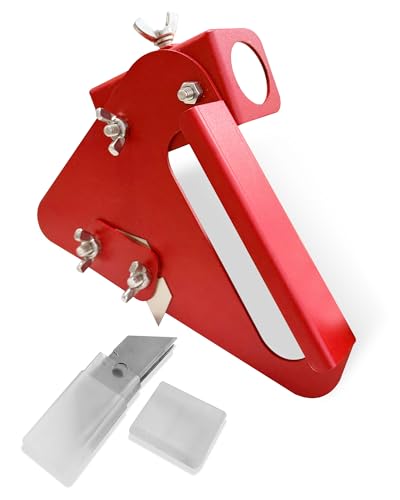
The KSWLOR Lawn Mower Blade Removal Tool is exactly what its name suggests: a clamp that holds your mower blade in place while you remove or tighten the bolt. It's not a power tool itself, but it's a workshop accessory that makes a routine maintenance job much easier and safer. Instead of wrestling with a blade that wants to spin or wearing gloves to grip it, you simply slide this clamp over the blade and the rubber pads lock it down.
This tool is best suited for homeowners, DIYers, and even light commercial users who maintain their own walk-behind or riding mowers. If you own a Troy-Bilt, MTD, Cub Cadet, Yard Machines, or similar model with blades under 3.3 inches wide at the tip, you are covered. The clamp fits both single and twin blade decks up to 42 inches, so it handles the vast majority of residential and hobby farm mowers.
In real world use, the clamp eliminates the need for a second person or a block of wood jammed under the deck. The rubber pads (about 1.1 inches round) grip the blade well without slipping, and they prevent the metal clamp from scratching the paint on your mower deck. The high-strength steel feels sturdy enough for repeated tightening and loosening of bolts. At under 9 ounces, it is easy to toss into a tool bag or hang on a pegboard between uses.
There are some limitations worth noting. The tool only works on blades where the tip width is within 3.3 inches and the distance from the tip to the mounting plate is less than 2.5 inches. Very large commercial blades or offset blades may not fit. Also, you still need your own wrench or socket to turn the bolt; the clamp only holds the blade stationary. Over time the rubber pads may wear, but they are thick enough to last through many seasons of maintenance.
Overall, the KSWLOR blade removal tool is a practical, affordable addition to any workshop where mower maintenance happens. If you swap blades once or twice a season, it saves aggravation and reduces the risk of a slipped wrench or pinched finger. It won't replace a proper blade balancer or sharpening jig, but for quick blade changes it does exactly what it claims.
Product Dimensions: 3.6 x 1.8 x 3 inches
Item Weight: 8.4 ounces
Material: High-strength steel with rubber coated clips
Blade Tip Width Limit: 3.3 inches (85 mm)
Max Distance from Blade Tip to Mounting Plate: 2.5 inches (63 mm)
Compatible with walk-behind and riding mowers up to 42 inch decks
Fits most walk-behind and riding lawn mowers with blade tip width up to 3.3 inches. Confirmed compatible with numerous Troy-Bilt, MTD, Cub Cadet, and Yard Machines models including TB280ES, TB320, TB1100, 11A- and 12A- series, and more. Always verify your blade dimensions before purchase.

Pros
- Notched high-lift design significantly boosts lift for cleaner bagging and reduced deck clogging
- Broad compatibility across widely used 42-inch lawn tractors and riding mowers
- Solid steel construction maintains balance and cutting edge through regular seasonal maintenance
- Cost-effective two-pack provides a complete replacement for standard dual-blade 42-inch decks
Cons
- High-lift airflow can create extra airborne dust when mowing sandy or extremely dry turf
- Not intended for dedicated fine mulching setups without a compatible deck plug
- Requires verifying OEM part numbers and spindle hole pattern prior to installation
The 8TEN LawnRAZOR Notched High-Lift Mower Blade set is an aftermarket replacement kit designed specifically for 42-inch mower decks. Engineered to replace common original equipment parts from brands like Husqvarna, Poulan, AYP, and Ariens, this two-blade pack directly targets homeowners seeking to revive their cut quality without paying premium dealership prices. Whether you are maintaining a wide suburban lawn or managing a rural property, replacing worn or bent blades is one of the most effective ways to restore proper deck operation.
In practical lawn maintenance, high-lift blades excel at generating significant air velocity under the cutting deck. The distinct rear sail and notched edges draw limp grass upright before the cutting edge makes contact, resulting in a consistent, manicured look across the entire yard. This enhanced suction works exceptionally well for bagging clippings during peak growing season or propelling damp discharge out of the chute to prevent clumping. Suburban lawn owners preparing their turf for weekend barbecues will appreciate the clean lines and reduced need for rake cleanup.
Build quality centers on resilient steel stock with a total package weight of nearly four pounds. The blades come finished with a durable green powder coating that guards against surface corrosion while sitting in humid garden sheds or garages between mowings. While the factory edge provides a dependable working sharpness out of the box, some lawn care enthusiasts may prefer a quick touch-up with a file for an ultra-sharp cut before mounting them to the deck spindles.
Swapping out blades is a manageable seasonal task for DIY homeowners. Because this package includes a matched pair, replacing both sides simultaneously ensures smooth deck rotation and minimizes spindle vibration. As long as users disconnect the spark plug wire and secure the deck properly before wrenching, installation is straightforward. Routine maintenance involves periodic checks for nicks after hitting hidden rocks, alongside standard end-of-season sharpening.
Realistic limitations relate primarily to your specific yard conditions and deck setup. Because these blades generate strong upward suction, mowing on parched ground or sandy soil can throw up extra dust and debris. Additionally, while they handle heavy bagging and side discharge admirably, dedicated mulching setups may require standard or specialized mulching blades to achieve powder-fine clippings. For general weekly mowing and bagging duties, however, this set provides an affordable and reliable refresh for your riding mower.
The notched high-lift profile on these 8TEN blades is built to optimize air movement beneath standard 42-inch mower decks. By pulling grass blades vertically before shearing, the cutting deck leaves behind fewer missed strands and prevents the uneven patches often caused by bent or dull factory blades. Homeowners tackling fast-growing spring grass will find the extra lift helpful in keeping discharge chutes free from wet blockages.
When paired with a rear bagging attachment, the suction generated by high-lift wings drives clippings and chopped leaves directly into the collection bins with fewer clogs in the discharge chute. This efficient airflow also helps disperse heavy clippings evenly when side discharging, preventing thick clumps from smothering green grass during regular weekend cuts.
This blade set is engineered as a direct replacement for standard 42-inch riding mowers and lawn tractors built by AYP, Husqvarna, Poulan, Craftsman, and Ariens. It replaces OEM part numbers including AYP 138498, 134149, and 127843, along with Husqvarna numbers 532138498 and 532127843. It fits popular riding tractor models such as the Husqvarna YTH series, Poulan PB models, and corresponding lawn tractors.
Before purchasing, homeowners should verify their mower deck width and check the center mounting hole against their existing spindle shaft. Installing properly matched blades protects the spindle bearings from unnecessary stress, prevents blade overlap collisions, and ensures a level cut across the entire mowing path.
Complete Guide to Lawn Mower Blade Rotation and Orientation
Determining blade rotation is one of the most critical steps in lawn equipment care because an inverted blade destroys cutting performance. On the vast majority of consumer lawn mowers, the blade turns clockwise when viewed looking down from above, which means it rotates counter-clockwise when you inspect it from underneath. This operational geometry directly drives grass clippings toward the right-side discharge opening. Understanding the relationship between viewing perspective, blade design, and spindle drive mechanics ensures that every blade swap delivers a clean, even lawn cut.
The Perspective Rule: Viewing From Above Versus Underneath
The single greatest source of confusion around mower blade rotation comes from viewing angle. When you sit in the operator seat or stand behind a walk-behind mower looking down at the deck, the engine crankshaft turns in a clockwise circle. This motion matches the standard rotation of vertical-shaft small engines manufactured for residential lawn care. Because the cutting deck faces downward toward the turf, looking down from above represents the mechanical baseline of the drive system.
The situation reverses entirely when you lift the mower deck or tip a walk-behind machine onto its side to inspect the blade. Looking up at the spindle from the underside reverses your reference point, making that same clockwise rotation appear counter-clockwise. Homeowners frequently purchase replacement sets, such as the 8TEN LawnRAZOR Mower Blade for AYP 138498 134149, and become disoriented about which way the sharpened bevel should point. Remembering that top-down means clockwise while bottom-up means counter-clockwise eliminates guesswork before you ever touch a wrench.
How the Discharge Chute Dictates Blade Spin Direction
Deck airflow and discharge opening geometry dictate exactly how the cutting blade must spin. On standard push mowers and riding tractors, the grass discharge chute sits on the right-hand side of the mower deck. For clippings to exit smoothly through this chute, the rotating blade must sweep forward across the front apron of the deck and throw grass backward along the right channel. This aerodynamic path requires a clockwise rotation from above, sweeping debris cleanly toward the chute.
Left-hand discharge mowers and specialized rear-discharge collection systems represent rare exceptions to this industry pattern. In rear-discharge decks or commercial machines with left-mounted chutes, one or more spindles may spin in reverse to direct clippings inward toward a central collection tunnel. Unless your mower features a dedicated left-discharge chute or a counter-rotating twin-spindle timed belt system, you can safely assume your mower follows the universal right-discharge rotation. Checking the physical opening on your mower deck confirms the exact path clippings must take.
Reading Blade Anatomy: Cutting Edges, Lifts, and Wings
Inspecting the physical shape of a mower blade provides unmistakable clues about its intended direction of travel. Every standard rotary blade features a sharpened leading edge and an upward-turned rear sail or wing. The sharpened edge always leads into the cut, striking grass blades first as the spindle rotates. Behind the cutting edge, the raised metal wing scoops air upward to generate the vacuum needed to lift grass upright before cutting.
Examining replacement blades like the high-lift Zuvxilo23 04771200 Lawn Mower Blades 3 Pack shows how pronounced this aerodynamic sail can be. When these blades are mounted properly, the curved sail points upward toward the underside of the deck, never down toward the soil. Buyers wondering whether factory-sharpened mower blades arrive ready for installation can observe this curved profile immediately upon unboxing. If the lift wing faces the ground or the blunt edge leads into the rotation, the blade is mounted upside down.
How to Determine Rotation on Multi-Blade Zero-Turn and Riding Decks
Multi-blade decks on zero-turn mowers and lawn tractors add extra spindles, but most still follow a coordinated rotational pattern. On standard two-blade 42-inch decks and three-blade 52-inch decks, all spindles typically rotate in the same clockwise direction when viewed from the operator seat. In a three-blade configuration, the left blade throws clippings across to the center blade, which then sweeps them toward the right blade and out the discharge chute. This cascading airflow relies on identical blade geometry across all three mounting positions.
Certain dedicated mulching decks and timed bagging decks utilize counter-rotating spindles to direct clippings toward a center chute. On these specialized configurations, the right blade spins counter-clockwise while the left blade spins clockwise from above. When replacing blades on multi-spindle decks, always verify whether your deck manual specifies standard matching blades or dedicated left-hand and right-hand part numbers. For standard decks using universal replacements like the 8TEN LawnRAZOR Mower Blade for AYP 138498 134149, both spindles share identical clockwise rotation.
Spindle Bolt Direction: Loosening Versus Tightening Under Rotational Force
Blade rotational direction directly influences how mounting hardware stays secure during high-speed mowing. Most single-blade and standard multi-blade mowers use conventional right-hand threads on the spindle retaining bolt. Under normal clockwise operation, the rotational inertia of the blade actually works to keep standard right-hand threaded hardware snug against the spindle face. This mechanical principle prevents the retaining hardware from backing off under sudden blade impact or heavy mowing loads.
To loosen a standard right-hand spindle bolt, you must turn the wrench counter-clockwise, following the familiar counter-clockwise loosening rule. However, on rare counter-rotating spindles where the blade turns counter-clockwise from above, manufacturers sometimes install reverse left-hand threads. For those specific left-hand assemblies, turning clockwise loosens the bolt while turning counter-clockwise tightens it. Understanding the composition and strength of the steel used in lawn mower blades helps you appreciate why securing spindle bolts to manufacturer torque specifications remains essential for equipment safety.
Using Blade Lock Clamps Correctly Based on Spin Direction
Attempting to remove a tight spindle bolt without locking the blade can easily cause the cutting edge to spin and lead to hand injuries. Dedicated blade clamps, such as the 490-850-0005 Universal Mower Blade Removal clamp, attach directly to the mower deck skirt to immobilize the blade. Positioning this tool correctly requires knowing which way the spindle attempts to turn when torque is applied to the bolt. If you clamp the tool on the wrong side of the blade, applying wrench force will rotate the blade away from the stop rather than locking it firmly in place.
When loosening a standard bolt by turning your wrench counter-clockwise from underneath, the blade attempts to rotate counter-clockwise along with the socket. To counteract this force, secure a locking tool like the Universal Lawn Mower Blade Removal Tool or the Lawn Mower Blade Removal Tool against the deck skirt on the side that blocks counter-clockwise travel. The rigid metal clamp catches the blade edge, allowing you to break the bolt free without needing a helper. When retightening the bolt clockwise, reposition the clamp to the opposing side to resist tightening torque.
The Consequences of Upside-Down Installation and Reverse Rotation
Installing a lawn mower blade upside down is an easy mistake that causes immediate mowing problems. When a blade is flipped, the blunt trailing edge strikes the grass instead of the sharpened leading bevel. Rather than cleanly severing the turf, the blunt metal tears and shreds the grass stems, leaving a brown, frayed canopy across the lawn. This ragged tearing stresses turf roots and makes the grass significantly more vulnerable to disease and scorching.
An inverted blade also reverses the airflow inside the cutting deck. Instead of pulling grass upright with a strong lifting vacuum, inverted aerodynamic wings push air downward toward the ground. This downward draft flattens the turf beneath the deck, causing missed patches and severe deck clogging. Routine checks of blade orientation before tightening the mounting hardware ensure that your lawn receives a clean cut and smooth clipping discharge.
PTO Clutch Engagement and Electrical Control for Blade Rotation
On riding mowers and zero-turn machines, blade rotation relies on an electric power take-off clutch rather than a direct mechanical engine link. When the operator pulls the dash switch, an electromagnetic coil engages the clutch pulley, sending belt power down to the deck spindles. If this switch experiences electrical failure or internal corrosion, the spindles may fail to spin or may disengage unexpectedly during heavy cutting. A reliable switch ensures that deck drive belts spin up to full operational speed smoothly.
Heavy-duty replacement components like the Hohean PTO Switch Lawn Mower Clutches 10 Amp provide stable electrical control for electric blade clutches. The rugged waterproof housing and sealed terminals help protect the circuit from moisture and dirt buildup during wet mowing conditions. Proper clutch engagement ensures the spindles spin at their intended revolutions per minute, creating optimal lift and discharge dynamics. Maintaining functional electrical controls is just as vital for proper blade spin as checking mechanical spindle bearings.
Pre-Start Safety and Verification Checklist
Before testing blade rotation after maintenance, safety precautions must always come first. Always disconnect the spark plug boot on gas mowers or remove the safety key and battery pack on cordless electric models. This step prevents accidental engine starting while your hands are anywhere near the cutting chamber. Wearing heavy leather work gloves also protects against cuts from fresh factory edges while handling replacement blades.
Once safety disconnects are complete, perform a careful manual rotation check by turning the blade by hand under the deck. Confirm that the cutting edge leads into the rotation toward the discharge chute and that the lift wings point upward toward the deck shell. Check that the blade maintains proper clearance from the deck baffles and neighboring blades on multi-spindle decks like 52-inch zero turns. After tightening mounting hardware to manufacturer torque guidelines, reconnect power and enjoy smooth, reliable mowing.
Verifying which way your mower blade turns takes only a moment, but it safeguards your lawn, your spindle hardware, and your engine. Keeping the viewing perspective clear, checking the position of the discharge chute, and reading the aerodynamic lift wings eliminates confusion during blade maintenance. With blades installed facing the proper rotational path and secured with proper locking tools, your mower will deliver crisp cutting performance season after season.




Write Your Review
No reviews yet. Be the first to share your experience!