


Using a manual garden edger requires positioning the tool vertically and applying downward pressure through the footplate to slice a clean trench along the lawn’s edge. This method creates a sharp boundary between the grass and hardscape or flower beds without the noise or fuel requirements of gas-powered equipment. The primary goal is to remove the thin strip of turf and roots that typically grow over sidewalk or patio edges, resulting in a defined, professional-looking yard.
Many homeowners find that manual edging is a low-maintenance alternative to motorized tools, particularly for smaller yards or specific border sections. The process relies on the leverage of your body weight and the sharpness of the blade to penetrate compact soil and dense root systems. Proper technique minimizes physical strain while ensuring the cut is deep enough to prevent grass from creeping back onto the hard surface.
For those maintaining multiple border types, understanding the specific requirements for different blade geometries can help optimize workflow, similar to how sharpening mower blades maintains cutting efficiency over time.
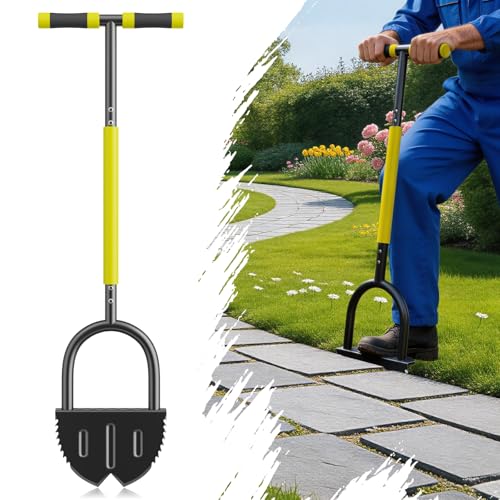

Pros
- Sturdy manganese steel blade with saw-tooth design cuts through tough soil and roots effectively
- Wide footplate provides good stability and helps transfer body weight for easier cutting
- Adjustable handle length accommodates different user heights and reduces back strain
- Lightweight and easy to maneuver around garden beds and tight spaces
- Eco-friendly, no emissions, and quiet operation – ideal for noise-sensitive areas
Cons
- Manual edging requires physical effort and may not be ideal for very large yards or heavy clay soil
- Some users may prefer a wheeled edger for longer straight runs along driveways
- Assembly required, though it is straightforward with the included hardware
The BlumeTrec Manual Edger Lawn Tool is a hand-operated border edger designed for homeowners who want precise, clean edges along sidewalks, driveways, patios, and garden beds. Unlike gas or electric edgers, this tool relies on your own strength, making it a quiet, eco-friendly choice for routine yard maintenance. It is especially suited for budget-conscious shoppers, suburban lawn owners, gardeners, and anyone who prefers a simple, no-fuel approach to lawn care.
In terms of cutting performance, the half-moon saw-tooth blade is made from thickened manganese steel, which is known for its durability and ability to slice through dense turf, compact soil, grass roots, and weeds. The saw-tooth edge helps grip the material, reducing the need for repeated strikes. The extra-wide footplate allows you to apply your body weight evenly, which improves cutting efficiency and reduces strain on your legs and lower back during extended use. Many homeowners may find this design effective for maintaining neat lawn borders after a weekly mow.
Build quality is solid for a manual edger in this price range. The blade is powder-coated to resist rust and wear, and the steel handle is adjustable to three preset heights (from 38 to 42 inches) to accommodate different user heights. The T-grip handle provides comfortable leverage and control. The tool weighs about 4.6 pounds, so it is easy to carry around the yard and store in a garage or shed without taking up much space. Assembly is straightforward with the included screw and hardware.
When it comes to storage and maintenance, this edger requires minimal upkeep. Simply rinse off dirt after use and occasionally check the blade for sharpness. Because it is manual, there are no engines, batteries, or cords to worry about. It stores flat or hangs easily on a wall hook. For homeowners with small to medium-sized lawns, this tool may work well for defining edges around flower beds, trees, and walkways. It can also be used to install plastic edging or separate lawn from garden areas.
Realistically, this edger is not ideal for very large properties or heavy clay soil, as manual effort can become tiring over long runs. Some users may prefer a wheeled edger for longer straight sections along driveways. However, for targeted edging around curvy beds or tight spaces, the BlumeTrec offers good control and precision. It is a practical, low-cost solution for keeping your yard looking tidy between mowings, especially if you value quiet operation and zero emissions.
Overall, the BlumeTrec Manual Edger Lawn Tool is a reliable choice for homeowners, gardeners, and budget shoppers who want a durable, adjustable hand edger for regular lawn maintenance. It delivers clean cuts, reduces physical strain with its wide footplate, and requires no fuel or electricity. If you are looking for an affordable way to sharpen your lawn's edges without noise or fumes, this tool is worth considering.
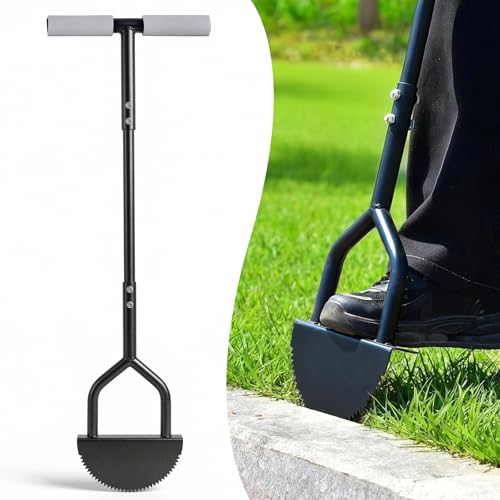

Pros
- Quiet operation won't disturb neighbors or wildlife
- Lightweight at only 4 pounds for easy handling
- Sturdy fiberglass shaft withstands repeated use
- Lifetime warranty shows manufacturer confidence
Cons
- Requires manual effort compared to powered edgers
- Blade needs to be wiped clean after each use to prevent rust
- May not be ideal for very large lawns or tough, compacted soil
The Radius Garden 25602 Pro-Lite Carbon Steel Edger is a manual step edger designed to help homeowners and gardeners maintain clean, sharp edges along garden beds, sidewalks, and driveways without the noise, fumes, or maintenance of a gas-powered model. It's best suited for those with small to medium-sized lawns, budget-conscious shoppers, eco-conscious users, and anyone who prefers a quiet, straightforward tool for weekly lawn upkeep.
In terms of cutting performance, the heat-treated carbon steel blade measures about 9 by 5 inches and slices through soil and turf effectively. The extra-wide elevated step offers good leverage, making it easier to push the blade into the ground while maintaining balance. Many users find that it creates crisp edges quickly, especially in loose or moderately compacted soil. It handles light grass and soft earth well, though very hard, dry, or rocky ground may require more effort or multiple passes.
Build quality is solid for a manual edger. The fiberglass shaft is lightweight yet strong enough for repeated digging tasks, and the blade is heat-treated for durability. However, the manufacturer recommends wiping the blade clean after each use to prevent rust and maintain its edge. The entire tool measures about 40.25 inches long, which is a comfortable height for most adults, and the green color is easy to spot in the garden.
Setup is minimal since the tool comes fully assembled. Storage is easy thanks to its compact size and light weight; it can hang on a hook in the garage or lean against a wall. Maintenance mainly involves cleaning the blade after use and occasionally sharpening it to keep the edge sharp. The lifetime manufacturer guarantee in the continental US adds confidence in the product's longevity.
A realistic limitation is that this is a manual tool, so it won't match the speed or ease of a powered edger for large properties or tough jobs. It also requires proper technique and some physical effort. For those with arthritis or limited strength, the step action might be tiring over extended use.
Overall, the Radius Garden 25602 is a practical choice for homeowners, gardeners, and apartment dwellers with small yards who want a quiet, eco-friendly, and affordable way to keep their lawn edges looking neat. It's especially good for routine maintenance and light edging tasks, and the lifetime warranty makes it a low-risk investment for budget-conscious buyers.
The Radius Garden Pro-Lite Edger features a fiberglass shaft that resists bending and breaking during heavy use. The carbon steel blade is heat-treated for hardness and edge retention, but it requires prompt cleaning after each use to prevent rust. The step platform is extra-wide and elevated, providing good stability and leverage. Overall, the construction feels sturdy for a manual tool, and the lifetime guarantee in the continental US backs its long-term reliability.
Using the Radius Garden edger is straightforward: place the blade where you want the edge, step down on the wide platform, and rock the tool to cut. The extra-wide step helps maintain balance, and the 40-inch length reduces bending. It's light enough to carry around the yard and requires no fuel, cords, or batteries. Some users may need a bit of practice to get consistent results, but most find it intuitive after a few passes.
To keep the blade in good condition, wipe it clean with a dry cloth after each use to remove soil and moisture. Occasionally, you may need to sharpen the blade with a file or sharpening stone to maintain cutting efficiency. The fiberglass shaft can be wiped down as needed. No other routine maintenance is required, and the tool has no moving parts to lubricate or replace.


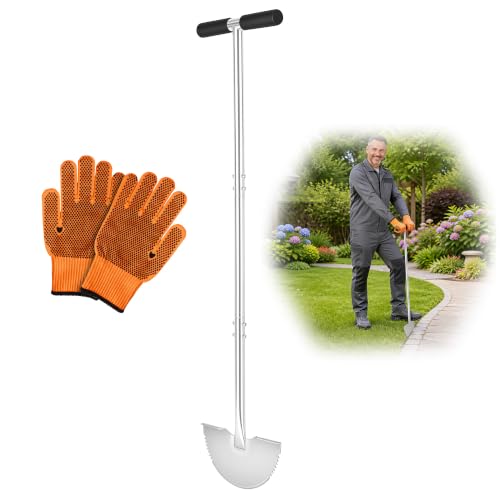
Pros
- Serrated blade provides superior cutting power compared to standard flat edgers
- Ergonomic T-handle and long handle reduce back strain and improve comfort
- Rust-proof steel construction offers good durability and weather resistance
- Versatile use for edging, trenching, and small sod cutting tasks
Cons
- Manual operation requires more physical effort than power edgers, especially in hard or compacted soil
- Blade width may be narrow for larger edging projects, requiring more passes
- Some users may find the footrest a bit small for larger feet
The KYEEN-TOOLS Serrated Edger Lawn Tool is a manual half-moon shovel designed to help homeowners and gardeners create clean, defined edges along sidewalks, driveways, flower beds, and garden paths. Unlike power edgers that require fuel or electricity, this tool relies on your own muscle and a sharp, serrated blade to slice through grass and soil. It is best suited for budget-conscious shoppers, first-time buyers, apartment dwellers with small yards, suburban lawn owners, and gardeners who prefer a quiet, eco-friendly approach to lawn maintenance.
In terms of real-world lawn care performance, the serrated blade is the standout feature. According to product specifications, it offers superior cutting power compared to flat-blade shovels, making it easier to cut through thick grass roots and compacted soil. The wide footrest provides stability, allowing you to apply more force for deeper, cleaner cuts. While it won't replace a power edger for large, overgrown edges, it handles routine edging along sidewalks and flower beds efficiently. The manual design also means zero noise, zero emissions, and no cords to untangle, which is a plus for early morning or quiet neighborhood work.
Build quality appears solid for the price point. The blade is made from rust-proof steel with a rust-resistant coating, which should hold up well against moisture and outdoor storage. The 38-inch T-handle is designed to reduce bending and back strain, and the included gloves add a nice touch for hand protection. The tool is lightweight and easy to store in a garage, shed, or even a small apartment closet. Assembly is straightforward, with no complicated steps required.
Setup and daily handling are simple: you just step on the footrest and push down. Maintenance involves rinsing off soil after use and occasionally wiping the blade to prevent rust. One realistic limitation is that manual edging requires more physical effort than using a power tool, especially in hard or rocky soil. The blade width is also modest, so larger edging projects may take more time and multiple passes. However, for small to medium-sized yards and regular upkeep, it is a practical, low-cost solution.
Overall, the KYEEN-TOOLS Serrated Edger Lawn Tool is a reliable choice for anyone who wants to keep their lawn edges tidy without spending a lot of money or dealing with the hassle of gas, batteries, or extension cords. It is especially well-suited for apartment dwellers with small yards, suburban homeowners with manageable edging needs, and gardeners who appreciate a straightforward, durable tool. If you are looking for a quiet, eco-friendly way to maintain crisp lawn edges, this edger is worth considering.
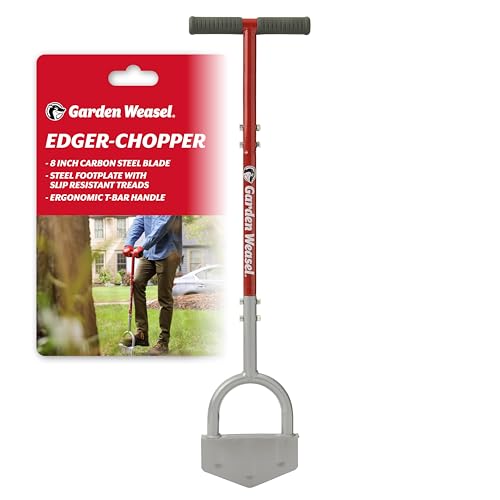

Mastering the Manual Garden Edger Technique
The effectiveness of a manual edger depends on the alignment of the blade with the target edge and the consistency of the downward force applied. Unlike a shovel, which is used for digging, the edger is designed to slice vertically into the ground to separate the lawn from the adjacent surface.
This action creates a narrow trench that defines the border and makes it easier to maintain in the future. The user must stand with feet shoulder-width apart, placing the wide footplate firmly on the ground to provide a stable base for the cutting action.
| Component | Function | Material Example |
|---|---|---|
| Blade | Cuts through soil and roots | Carbon steel, Manganese steel |
| Footplate | Provides leverage and stability | Steel, Aluminum |
| Handle | Controls direction and depth | Fiberglass, Steel |
Before beginning the edging process, it is helpful to inspect the blade for any signs of damage or dullness. A sharp edge is critical for penetrating turf and compacted soil without excessive effort. If the blade is dull, the tool may push through the ground rather than cutting, leading to user fatigue and an uneven border.
Some tools feature serrated edges, which can help grip the soil and roots, while others have a smooth V-shape for a cleaner slice. The choice between these styles often depends on the specific soil conditions and the type of grass being edged.
To start edging, position the blade directly over the line where the grass meets the hardscape. The blade should be perpendicular to the ground to ensure a vertical cut. Once the position is set, place one foot on the footplate and apply steady pressure downward.
The handle should be kept straight to maintain control over the blade’s trajectory. As the blade penetrates the soil, the user may feel resistance, particularly in areas with dense root systems or compacted earth. Consistency in this downward motion is key to achieving a uniform trench depth along the entire border.
After completing a section, it is important to clear the cut soil and grass clippings from the trench. This material, often referred to as “edging waste,” can be composted or disposed of as yard trimmings. Leaving this material in the trench can obscure the clean line and may lead to grass regrowth if not removed.
Regular cleaning of the trench helps maintain the aesthetic appeal of the border and ensures that the edging remains effective over time. For larger properties, dividing the edging task into manageable sections can prevent fatigue and maintain quality control.
Preparation and Safety Checks
Safety is a primary concern when using any garden tool, and manual edgers are no exception. Before use, inspect the tool for any loose bolts, cracks, or damage to the blade and handle. A compromised tool can fail during use, potentially causing injury or damaging the landscape. Ensure that all assembly parts are tightened according to the manufacturer’s instructions. Many manual edgers come in multiple pieces for shipping and require quick assembly before first use.
- Check blade sharpness and condition
- Tighten all bolts and assembly points
- Wear sturdy, closed-toe shoes
- Inspect the work area for obstacles
Wearing appropriate footwear is essential to protect the feet from the heavy blade and to provide a stable surface for the footplate. Soft-soled shoes or sandals are not recommended, as they offer insufficient protection and stability. Additionally, consider wearing gloves to protect hands from rough handles and to improve grip, especially in wet or humid conditions. The work area should be clear of rocks, debris, or other objects that could interfere with the edging process or cause the blade to deflect unexpectedly.
Technique for Straight and Curved Borders
Edging straight lines, such as those along sidewalks or driveways, requires a consistent reference point. The edge of the hardscape itself serves as this guide, allowing the user to maintain a uniform distance from the blade. For curved borders, such as around flower beds or trees, the technique adjusts to follow the natural curve. This requires more frequent repositioning of the tool and a steady hand to maintain the desired depth and angle. The half-moon shape of many edger blades facilitates this curved motion, allowing for smoother transitions around obstacles.
When edging around trees or large plants, it is important to be mindful of the root systems. Avoid cutting too deeply into the root zone, as this can damage the plant and affect its health. Instead, edge slightly further from the trunk, leaving a small buffer zone of soil.
This approach protects the plant while still defining the lawn’s edge. For tight corners, the user may need to use a smaller tool or manually remove excess soil with a trowel to achieve a clean finish. Patience and attention to detail are key to handling these more complex border sections.
Maintenance and Blade Care
Proper maintenance extends the life of a manual edger and ensures consistent performance.
- Clean the blade after each use to remove soil, grass, and moisture to prevent rust and corrosion.
- A simple wipe with a damp cloth is often sufficient, but stubborn residue may require a mild detergent.
- Dry the blade thoroughly before storage to prevent rust formation on the metal surface.
- Store the tool in a dry, sheltered location, such as a garage or shed, to protect it from the elements.
Sharpening the blade periodically is also important for maintaining cutting efficiency. A dull blade requires more force to penetrate the soil, leading to user fatigue and less precise cuts. A file or sharpening stone can be used to restore the edge, following the manufacturer’s recommendations for angle and technique.
For tools with replaceable blades, checking the availability of replacement parts is advisable. This ensures that the tool can be maintained over time, providing long-term value for the homeowner. Regular inspection and care help keep the edger in optimal condition for seasonal use.
Common Challenges and Solutions
One common challenge is dealing with compacted soil, which can be difficult to penetrate with a manual edger. In such cases, loosening the soil slightly with a rake or aerator before edging can make the process easier. Alternatively, using a tool with a serrated blade may help grip the compacted earth and improve cutting performance.
Another challenge is edging in wet conditions, which can make the soil sticky and the blade prone to clogging. Waiting for the soil to dry slightly before edging can reduce this issue and improve the cleanliness of the cut.
Physical strain is another concern, particularly for users with back or knee issues. Using a tool with an adjustable handle length can help find the optimal height for comfortable use. Maintaining a straight back and using leg muscles to apply pressure, rather than bending at the waist, reduces strain on the lower back. Taking breaks as needed and staying hydrated are also important for managing fatigue during longer edging sessions. By addressing these common challenges, users can improve their efficiency and comfort when using a manual garden edger.
Ultimately, the success of manual edging lies in consistent technique and proper tool maintenance. By following the steps outlined in this guide, homeowners can achieve clean, professional-looking borders that enhance the overall appearance of their yard. The manual approach offers a quiet, eco-friendly alternative to gas-powered edgers, making it a practical choice for many gardeners.
With the right tool and technique, edging becomes a manageable task that contributes to a well-maintained landscape. For those looking to expand their garden toolset, understanding the specific needs of different tasks, such as mower blade setup, can help in selecting the right equipment for comprehensive yard care.





Write Your Review
No reviews yet. Be the first to share your experience!