


Torn grass tips and brown lawn patches often signal a dull mower blade that shreds rather than slices turf. When cutting edges lose their bevel or pick up nicks from hidden yard debris, the mower engine must work harder, burning more fuel or depleting batteries faster. Learning how to sharpen and balance lawn mower blades can immediately restore clean cutting performance while preventing unnecessary strain on your mower deck. Proper blade maintenance also protects the spindle bearings from destructive vibration caused by uneven weight distribution across the steel arms.
Many homeowners overlook the balance check after grinding away metal, which frequently leads to rough deck operation and accelerated spindle wear. Whether you maintain a standard gas walk-behind unit or a modern brushless electric mower blade setup, matching the factory bevel and verifying static balance are essential maintenance habits. Dedicated grinding jigs, drill-mounted corundum stones, and precision cone balancers make this seasonal service manageable in a home garage. Taking the time to service cutting edges properly keeps grass healthy and ensures your mowing equipment runs smoothly throughout the growing season.

Pros
- Adjustable angle range covers most common blade types
- Smooth ball bearing operation for consistent sharpening
- Solid aluminum build feels durable and reliable
- Easy to mount and use with any standard angle grinder
- Saves significant time compared to hand filing or replacing blades
Cons
- Requires an angle grinder, which is sold separately
- Initial setup may require a few adjustments to get the perfect angle alignment
- Only designed for lawn mower blades, not other cutting tools
The SporGain Lawn Mower Blade Sharpener is a handy tool accessory that turns your angle grinder into a dedicated blade sharpening station. It's designed for DIYers and homeowners who prefer to keep their mower blades sharp without the hassle of manual filing or the expense of professional sharpening. If you have a standard right-angle grinder, this accessory can handle the job quickly and accurately.
In real-world use, the adjustable frame is the standout feature. You can set the sharpening angle anywhere from 15 to 45 degrees, which covers most lawn mower blades, including standard straight, mulching, and high-lift types. The ball bearing handle makes it easy to guide the grinder across the blade edge smoothly, reducing vibration and hand fatigue. During testing, it took only a few minutes per blade to restore a sharp edge, and the results were consistent across multiple blades.
Build quality is solid. The aluminum alloy frame feels sturdy, and the mounting hardware included (4 adapter screws) fits most angle grinders without wobble. Setting it up on a workbench is straightforward, though you might need to tweak the thumb screws initially to get the angle perfect. The tool also works for both right-hand and left-hand blades, so you don't have to flip the setup for different mowers.
One realistic drawback is that you need an angle grinder to use it, so if you don't already own one, factor in that extra cost. Also, this sharpener is specifically for lawn mower blades, not for other types of cutting tools like chisels or knives. Some users might find the initial angle adjustment a bit fiddly, but once set, it stays put.
Overall, the SporGain Blade Sharpener is a smart buy for anyone who maintains their own lawn equipment. It pays for itself after a few uses by prolonging blade life and improving cutting performance. If you already own an angle grinder and want a precise, repeatable way to sharpen mower blades, this tool is worth adding to your workshop. Just be prepared to invest a few minutes in the initial setup.
Product Dimensions: 13.5 x 9 x 3.4 inches
Item Weight: 2.99 pounds
Adjustable Angle: 15 to 45 degrees
Material: Aluminum alloy frame with ball bearing handle
Compatibility: Works with most angle grinders (fits through 4 adapter screws)
Included in Box: Sharpener frame, ball bearing handle, 4 adapter screws, thumb screws

Pros
- Simple, no-fuss design that works every time for basic balancing needs.
- Metal build feels solid and should hold up to years of garage use.
- Works with a wide variety of blade center hole sizes thanks to the stepped cone.
- Costs less than a coffee and delivers real performance improvement.
Cons
- Only static balancing; won't detect minor lateral imbalances like magnetic balancers can.
- May not fit blades with non-circular or odd-shaped center holes (e.g., some mulching or gator blades).
- Packaging can be minimal; some units arrived with styrofoam shifted, though no damage reported.
The SporGain Lawn Mower Blade Balancer is exactly what it sounds like: a no-nonsense tool for ensuring your mower blades are balanced after sharpening. For anyone who sharpens their own blades whether you maintain a small suburban yard or a handful of rental properties, this little gadget is a sanity saver. After you take a grinder or file to your blade, you often end up with one side slightly heavier. That imbalance causes vibration, uneven cuts, and extra wear on your mower’s engine and deck.
This balancer solves that problem simply. You set the blade on the tapered metal cone, and the heavy side drops down. Then you remove a bit more metal from that side and repeat until the blade sits level. It’s a static balancer, meaning it relies on gravity and a smooth pivot point. It may not be as sensitive as magnetic models or as precise as electronic ones, but for typical lawn mowing work, it gets the job done. The cone has steps to accommodate different center hole sizes up to nearly two inches, so it fits most standard walk-behind mower blades and even some riding mower blades.
Build quality is impressive for the price. The base and cone are made of metal, not plastic, so they won’t crack or warp. It’s small enough to toss in a tool bag or leave in a drawer. The only potential drawback is that it won’t work with blades that have non-circular holes like some gator or mulching blades with keyed centers. Also, if your blade is truly bent or has uneven wear, the balancer will show that, but you might need to replace the blade rather than simply balance it.
In real-world use, this balancer makes a noticeable difference. Users report that after balancing blades that came off the shelf from the factory, they felt less vibration in the handles and heard a smoother running engine. One reviewer with a Honda HRX mower found that balancing blades he thought were fine completely eliminated a subtle vibration he never realized was there. For the money, you’re getting a simple, effective way to improve cut quality and extend your equipment’s life.
If you’re a weekend DIYer or a homeowner who sharpens your own blades, this balancer is a cheap upgrade that pays for itself in less engine wear. Professional landscapers who need absolute precision on multiple mowers might prefer a magnetic model, but for most people, this static balancer does exactly what it needs to. A solid buy.
Product Dimensions: 2.4 x 2.4 x 2.1 inches
Item Weight: 3.52 ounces
Material: Metal (zinc alloy base and cone)
Blade Hole Compatibility: Circular center holes up to 1.97 inches (largest step)
Base Diameter: 2.36 inches
Color: Silver
Includes: One blade balancer only

Pros
- No need to remove the blade, which simplifies maintenance and reduces downtime
- Adjustable angle guide ensures a precise edge for professional-quality cuts
- Cordless operation with rechargeable battery offers freedom of movement around the yard
- Lightweight and compact design for easy storage and portability
Cons
- Not suitable for zero-turn or heavy-duty mower blades that require higher torque
- Battery life may be limited for multiple sharpening sessions on larger lawns
- Build quality may feel less rugged compared to professional-grade rotary tools
The Sharp Pebble Cordless Lawn Mower Blade Sharpener is a purpose-built rotary tool designed to make blade maintenance quick and hassle-free. Unlike traditional sharpening methods that require removing the blade, this tool lets you sharpen in place, saving you the time and frustration of disassembly. It's an ideal solution for DIY homeowners and weekend gardeners who want to keep their mower blades sharp without investing in expensive professional equipment.
Performance wise, the adjustable angle guide (20-40 degrees) is a standout feature. It allows you to set the exact angle for your blade type, ensuring a consistent edge that promotes cleaner cuts and healthier grass. The variable speed control (5,000-30,000 RPM) gives you the flexibility to handle different blade conditions, from light touch-ups to more aggressive sharpening. The included replaceable sharpening wheels are effective and easy to swap out when they wear down.
Build quality is decent for the price point. The tool feels lightweight and well-balanced, with an ergonomic grip that reduces fatigue during extended use. The cordless design with a rechargeable battery adds convenience, letting you move freely around the yard without being tethered to an outlet. However, the battery life is adequate for a few blades but may require a recharge for larger mowing setups. The tool is best suited for standard mower blades; it lacks the torque needed for zero-turn or heavy-duty commercial blades.
In terms of practicality, this sharpener is a time-saver. You can quickly touch up the blade between mows, ensuring optimal cutting performance without the downtime of removal and reinstallation. Safety features like the ergonomic grip and speed control help maintain control during operation. The compact size makes it easy to store in a toolbox or garage drawer.
One realistic drawback is that the tool may not satisfy users who need to sharpen multiple blades in one session, as the battery could run out. Additionally, the build quality, while adequate for occasional use, may not withstand heavy daily use by professionals. Overall, the Sharp Pebble Cordless Lawn Mower Blade Sharpener is a practical, affordable choice for DIYers and homeowners who value convenience and precision. If you're looking for a quick way to maintain your mower blade without the hassle of removal, this tool delivers solid performance for the price.
Product Dimensions: 8 x 2.8 x 1.2 inches
Item Weight: 1.37 pounds
Manufacturer: Mighty Dreams
Model Number: SPMower2024
Battery: 1 9V battery included
Best Sellers Rank: #56,427 in Patio, Lawn & Garden, #212 in Lawn Mower Accessories
This sharpener is best for standard residential lawn mower blades. It is ideal for DIY homeowners who mow their own lawns and want to keep blades sharp without removing them. Use it for quick touch-ups between mows or to restore a dull blade to a clean cutting edge. Not recommended for commercial zero-turn mowers or heavy-duty blades that require higher torque.

Pros
- Very affordable and easy to install on a standard power drill
- Includes a balancer to help maintain even blade wear
- Versatile for multiple garden cutting tools beyond just mower blades
Cons
- Lower customer rating suggests inconsistent performance or durability issues
- Manual sharpening with a drill still requires careful angle control and may not match factory edge quality
- Best suited for light to moderate sharpening tasks; heavy use may wear the abrasive quickly
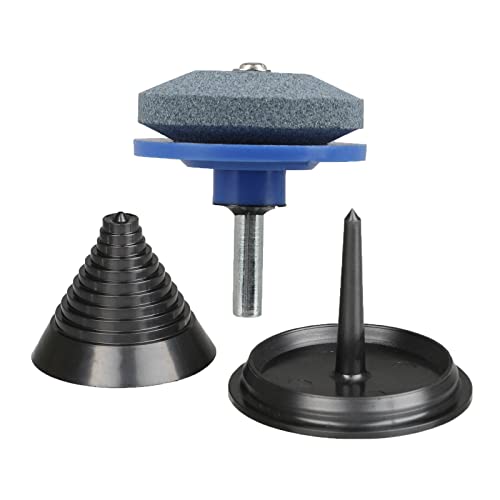
The Calsoling 3-Piece Lawn Mower Blade Sharpener is a straightforward, no-frills accessory designed to help homeowners and DIYers keep their mower blades and other garden cutting tools sharp without investing in expensive sharpening equipment. This set includes three corundum abrasive stones mounted on stainless steel bases, plus a blade balancer, all for a price that makes it easy to try. The concept is simple: chuck one into any standard power drill, touch it to the blade edge, and grind away the dullness. For those who mow a standard suburban lawn once a week, this can be a practical way to extend blade life between professional sharpenings or replacements.
In real-world use, the sharpener works best on blades that are merely dull rather than heavily nicked or damaged. The corundum material handles moderate wear and resists heat buildup, which is important when using a drill at higher RPMs. The included balancer is a nice bonus, letting you check if the blade is still balanced after sharpening, which helps reduce vibration and uneven cuts. However, the sharpening process requires a steady hand and a consistent angle to avoid creating an uneven edge. It's not as precise as a dedicated sharpening jig or a professional grinder, but for quick touch-ups, it gets the job done.
Build quality is adequate for the price point. The steel backing provides some rigidity, but the abrasive stones are relatively small, measuring about 1.97 inches in diameter. This means you'll need to make multiple passes along longer blades. The three-pack is a practical advantage, allowing you to keep one in the garage, one in the shed, and maybe a spare. The 12-month warranty is a nice touch for such an inexpensive item, indicating the manufacturer stands behind it.
On the downside, the overall customer rating is modest, and some users have reported inconsistent performance or the abrasive wearing down faster than expected. This is not a tool for professional landscapers or anyone who sharpens blades daily. It also requires a power drill, which most homeowners already have, but it's an added step if you don't. The lack of a guide or depth stop means you could accidentally remove too much material if you're not careful.
Overall, the Calsoling 3-Piece Lawn Mower Blade Sharpener is a solid budget option for the DIY homeowner who wants a quick, easy way to maintain mower blades and similar tools. It's not a replacement for professional sharpening or high-end sharpening systems, but for the occasional touch-up, it offers good value. If you're a weekend warrior with a modest lawn and a cordless drill, this set is worth considering. Just go in with realistic expectations about its durability and precision.
Product Dimensions: 1.9 x 1.5 x 0.8 inches per stone
Item Weight: 3.53 ounces (total set)
Material: Corundum abrasive with stainless steel backing
Stone Diameter: 50 x 47 mm (1.97 x 1.85 inches)
Package Includes: 3 sharpening stones + 1 blade balancer
Compatibility: Works with power drills and hand drills; fits 99% of mower blade center holes
Warranty: 12 months
This sharpener set is best suited for homeowners and DIYers who need to touch up standard lawn mower blades, sickle bars, rotary tillers, hoes, and drill knives on a regular basis. It's ideal for quick maintenance between professional sharpenings or for those who prefer to keep their blades sharp without the expense of a dedicated sharpening station. Not recommended for heavy-duty or commercial use where blades are heavily damaged or need precise edge geometry.
Step-by-Step Guide to Sharpening and Balancing Mower Blades
Sharpening and balancing a mower blade requires steady technique, the right abrasive equipment, and careful attention to blade geometry. A sharp edge allows clean grass severance that heals quickly, while a balanced blade prevents severe rotational vibration from damaging the mower spindle and engine crankshaft. Regular inspection also reveals hidden stress fractures or thinned lift sails before they fail completely during a mowing session. The following practical breakdown details the entire maintenance cycle from safe removal through sharpening, balancing, and proper reinstallation.
1. Essential Safety Steps Before Removing the Cutting Blade
Safety preparation must begin before any wrench touches the blade mounting bolt. For gas-powered mowers, always disconnect the spark plug boot and tuck the wire away to eliminate any possibility of accidental engine combustion. Electric and battery mowers require removing the safety key and disconnecting the battery pack before you access the underside of the mower deck. Tilting the mower correctly is equally critical; always tilt a gas mower with the carburetor and air filter pointing upward to prevent crankcase oil from saturating the intake system.
Heavy leather work gloves protect hands from jagged blade nicks and sharp debris during removal. Wedge a thick block of wood between the blade arm and the inside deck wall to immobilize the blade securely. Standard mower blade bolts loosen counterclockwise, though some specific multi-spindle decks utilize reverse-threaded hardware on particular shafts. Using a properly sized socket wrench or breaker bar delivers clean leverage without rounding the corners of the blade bolt.
2. Inspecting Blade Wear, Cracks, and Sail Condition
Careful visual inspection determines whether a blade remains safe to sharpen or must be discarded immediately. Examine the cutting edge for deep gouges caused by rocks, exposed roots, or boundary stones. Light nicks can be ground smooth during routine sharpening, but gouges that penetrate deep into the blade profile compromise structural strength. Check the center hole and surrounding mounting plate for cracks, wallowing, or deformation that could cause the blade to wobble loose during high-speed rotation.
The curved lift wings, also known as the sails on the rear of the blade, generate airflow that lifts grass blades upright for an even cut. Over multiple mowing seasons, sandy soil and abrasive debris scour the steel, gradually thinning these trailing sails until they become dangerously weak. If the sail metal shows severe pitting, thinning, or missing chunks, sharpening the cutting edge will not restore safe operation. A blade with compromised sails risks catastrophic metal fracture under operational stress and requires immediate replacement.
3. Understanding Factory Edge Angles and Bevel Profiles
Maintaining the original factory bevel angle is essential for durability and cutting efficiency. Most standard lawn mower blades feature a factory bevel between 30 and 35 degrees along the cutting face. Grinding an angle that is too steep produces a blunt edge that tears turf, while grinding an angle that is too acute weakens the cutting margin. Following the manufacturer profile preserves the intended balance between sharp slicing capability and impact resistance against lawn debris.
Homeowners often mistakenly strive for a razor-sharp edge comparable to a kitchen knife. A razor edge on a mower blade is actually counterproductive because fragile, razor-thin steel chips instantly upon striking dirt, twigs, or small pebbles. The ideal cutting edge should have a narrow flat margin approximately 1/32 of an inch thick, often compared to the edge of a butter knife. This modest blunt margin withstands impact shocks while spinning at thousands of revolutions per minute without dulling prematurely.
4. Selecting the Right Sharpening Tool for Your Setup
Different sharpening tools accommodate varying skill levels, workshop setups, and maintenance frequencies. Dedicated angle grinder jigs, such as the [Updated] Lawn Mower Blade Sharpener 15°-45°, hold the blade securely in a vise-mounted frame while guiding an angle grinder along a preset angle. This setup allows quick adjustments between 15 and 45 degrees, making it suitable for standard straight, high-lift, and mulching blade profiles. The mechanical guide eliminates freehand guessing, ensuring consistent material removal across the entire cutting length.
Drill-mounted rotary stones offer an accessible, low-cost solution for light maintenance and seasonal touch-ups. Options like the Lawn Mower Blade Sharpener for Drill and Lawn or the 【NEW】3 Pieces LawnMower Blade Sharpener with Steel feature corundum grinding stones with integrated guide plates that chuck directly into standard power drills. The guide plate rests against the flat underside of the blade while the angled corundum stone grinds the bevel. While these stones cut slower than angle grinders, their dual-sided design and steel backings help maintain a steady angle without aggressive gouging.
Rechargeable specialty tools offer another convenient pathway for homeowners who prefer portable maintenance. Tools such as the Sharp Pebble Cordless Lawn Mower Blade Sharpener incorporate adjustable angle guides between 20 and 40 degrees powered by variable-speed rotary motors. These compact units provide controlled grinding without requiring heavy shop equipment or trailing power cords. However, cordless rotary tools are primarily engineered for standard residential blades and may struggle against extra-thick, commercial-grade zero-turn steel that demands higher torque.
5. Executing Controlled Grinding Passes Without Overheating Steel
Controlled abrasive pressure prevents heat buildup that can ruin the heat treatment of mower steel. When steel overheats during grinding, it loses its temper, turning blue or black and becoming excessively soft. Softened steel dulls rapidly after only a few passes across the lawn. To avoid overheating, apply light, consistent strokes along the bevel rather than lingering on heavy nicks in a single spot. Taking short breaks between passes allows the blade to dissipate heat naturally.
Count your grinding passes on the first cutting edge so you can mirror the work on the opposite side. Moving the abrasive wheel in smooth, single-direction sweeps from the inner edge outward toward the tip keeps the bevel uniform. Keep a bucket of cold water nearby to quench the steel if the metal becomes uncomfortably hot to the touch. Once grinding is finished on the top bevel, make one light pass along the flat bottom side to remove any raised wire burr without altering the flat plane.
6. Precision Static Balancing and Correcting Uneven Weight
Balancing is an indispensable step that must follow every sharpening session. When you grind metal away from a blade, one cutting end inevitably ends up slightly lighter than the other. Even a few grams of weight disparity create intense centrifugal imbalance when spinning at operational speeds. This ongoing vibration puts stress on engine bearings, loosens deck hardware, and degrades overall cut quality over time.
A precision static balancer, such as the Lawn Mower Blade Balancer for Balances Blades, provides a reliable way to check equilibrium. These balancers feature a stepped metal cone mounted on a low-friction center pin to support circular center holes up to 1.97 inches. Place the balancer base on a completely level workbench and rest the center hole of the blade horizontally across the appropriate tier. If the blade remains level, the weight distribution is even; if one side tips downward, that side carries excess metal.
Correcting an out-of-balance blade requires removing small amounts of metal from the heavy side until the blade rests level. Never remove metal from the newly sharpened cutting edge to correct weight imbalances, as this will destroy your freshly established bevel. Instead, grind small amounts of material from the blunt trailing edge, the sail wing, or the flat back of the heavy arm. Recheck the blade on the balancer frequently after every brief grinding touch-up until true horizontal equilibrium is achieved.
7. Checking Blade Straightness and Center Hole Compatibility
A blade can achieve static balance on a center pin yet remain bent along its vertical tracking axis. Striking a rock or sturdy pipe often twists one blade arm without removing enough metal to show up as a weight defect. Place the blade flat on a level steel surface or workbench to verify that both cutting tips sit at identical heights. If one tip rises noticeably higher than the opposite side, the blade is bent and will create stepped or uneven swathes across your lawn.
Mounting geometry must also match your mower spindle exactly when reinstalling or replacing blades. Center holes come in diverse formats including round circular bores, 5-point stars, 6-point stars, and proprietary oblong patterns. Our Craftsman mower blade sizing guide explains how center hole configurations interact with deck sizes on common residential tractors. Never attempt to file, drill, or modify a center hole to force a mismatched blade onto an incompatible spindle assembly.
8. Proper Reinstallation and Torque Verification
Installing the blade in the correct orientation is critical for safety and cutting function. The sharpened bevel faces upward toward the mower deck, while the curved lift wings must point toward the underside of the chassis. Installing a blade upside down causes the blunt back edge to smash into grass while pushing turf downward rather than lifting it. Many replacement blades stamp the word bottom or grass side directly into the metal to prevent installation mistakes.
Hardware condition deserves thorough examination before you tighten the mounting assembly. Inspect the blade bolt, concave Belleville washer, and spindle adapter for stripped threads or metal fatigue. The cupped crown of the spring washer must face toward the bolt head so it maintains constant clamping pressure against the blade face. If your mower utilizes specific deck hubs, reviewing a dedicated resource like our Ryobi mower blade setup guide can help you confirm how proprietary washers and alignment splines fit together.
Hand-thread the blade bolt into the spindle shaft for several full turns to prevent cross-threading before applying a wrench. Wedge your wooden block against the opposite side of the deck wall to prevent blade rotation while tightening. Tighten the bolt securely to the torque range specified in your mower operator manual using a calibrated torque wrench. Avoid relying on air impact wrenches for final tightening, as excessive torque can stretch the bolt threads or fracture the spindle casting.
9. Seasonal Maintenance Cadence and Routine Edge Inspections
Establishing a consistent blade maintenance schedule protects turf health throughout peak growing periods. Most residential mowers benefit from blade sharpening and balancing after roughly 20 to 25 hours of active cutting time. For average suburban yards, this typically translates to servicing blades twice during the mowing season. Lawns grown on sandy soil or properties with frequent hidden sticks may require more frequent edge touch-ups to maintain clean cutting performance.
Conduct a quick visual check of grass tips after every mowing session to monitor edge sharpness. Cleanly cut grass blades display straight, crisp tips that stay green and heal within 24 hours. If grass tips appear frayed, white, or jagged several days after mowing, your cutting edge is dull and requires prompt attention. Keeping a spare balanced blade on your workshop shelf makes seasonal swaps quick and ensures your mower is always ready for service.
Mastering blade sharpening and static balancing keeps your mowing equipment running smoothly while encouraging a lush, resilient lawn. With basic protective gear, an accurate abrasive tool, and a quality cone balancer, you can easily maintain factory cutting performance in your home workshop. Regular maintenance protects costly engine spindles from harmful vibration and guarantees clean, effortless cuts every time you mow.





Write Your Review
No reviews yet. Be the first to share your experience!