


Tattered, brownish grass tips across an otherwise green lawn often indicate a dull cutting deck rather than poor soil or lack of water. When spinning steel loses its crisp bevel, grass blades get shredded instead of sheared cleanly, leaving the turf vulnerable to disease and rapid moisture loss. Learning how to sharpen lawn mower blades with a file provides a straightforward, cost-effective maintenance habit that restores clean cutting performance without requiring expensive shop machinery. Homeowners inspecting their equipment can check our guide on sizing Craftsman mower blades to verify deck fitment and blade measurements before undertaking seasonal maintenance.
Manual filing delivers exceptional control because a hand tool removes minimal metal compared to high-speed bench grinders, preserving the original blade profile and balance. High-carbon rotary mower files bite directly into hardened steel, allowing you to reshape minor nicks while keeping temper intact without overheating the edge. Reviewing general mower blade feedback patterns shows that regular edge maintenance extends deck life and prevents premature replacement. Taking the time to master basic stroke mechanics ensures a smooth, durable cutting edge that holds up across dense turf conditions.

Pros
- Extremely easy to use with any corded or cordless drill
- Consistent sharpening angle for a balanced, sharp edge
- Good value with 5 stones in one pack
- Works on a variety of blade types beyond just mowers
Cons
- Not ideal for heavy-duty or thick commercial blades; may wear out quickly
- Some users report stones spinning on the shaft or breaking under heavy pressure
- Best results require a corded drill for consistent speed and torque
The cenoz Crafts Man Lawn Mower Blade Sharpener is a straightforward accessory that turns your power drill into a handy blade sharpening tool. This 5-pack of corundum sharpening stones is designed for DIY homeowners, lawn care enthusiasts, and light-duty contractors who want to keep their mower blades sharp without investing in a dedicated bench grinder or sending blades out for sharpening.
In real-world use, this sharpener delivers a consistent edge on straight lawn mower blades, especially on push mowers and riding mowers with standard blades. The pre-set angle takes the guesswork out of maintaining the correct bevel. Users who follow the instructions and use a corded drill for steady speed report excellent results, with blades cutting cleanly through grass after just a few passes. The corundum material holds up well at typical drill speeds, though some users have experienced stones spinning on the shaft or cracking under heavy pressure, particularly on thicker commercial blades.
Build quality is acceptable for the price point. The stones are light and compact, and the pack of 5 gives you plenty of backups. Installation takes about 10 seconds just chuck it into your drill and you are ready to go. However, the sharpener works best on blades with a relatively straight cutting edge. Curved blades on some push mowers can be more challenging to sharpen evenly, as noted in a few reviews. For heavy-duty blades from commercial zero-turn mowers, these stones may wear out quickly or fail to achieve a sharp edge.
Overall, this is a practical, budget-friendly tool for routine lawn mower maintenance. If you are a weekend warrior with a standard push mower or a small lawn tractor, this sharpener will save you time and money. For professionals with demanding schedules and thick blades, a bench grinder or professional sharpening service remains a better investment. But for most homeowners, the cenoz 5-pack offers solid value and decent performance.
Material: Corundum
Size per stone: 50 x 47 mm (1.97 x 1.85 inches)
Package includes: 5 sharpeners
Compatibility: Fits most power drills (corded recommended for best results)
Ideal for: Lawn mower blades, tractor blades, rototiller tines, sickle bars, drill bits
Color: Blue
Homeowners: Keep your push mower or riding mower blades sharp for a clean cut and healthier lawn.
DIYers: Sharpen blades on your tiller, sickle bar mower, or even old drill bits.
Light commercial: For small lawn care businesses with a few mowers, this pack provides quick touch-ups between professional sharpenings.
Workshop: Use as a quick backup when you need a sharp edge and your bench grinder is tied up.
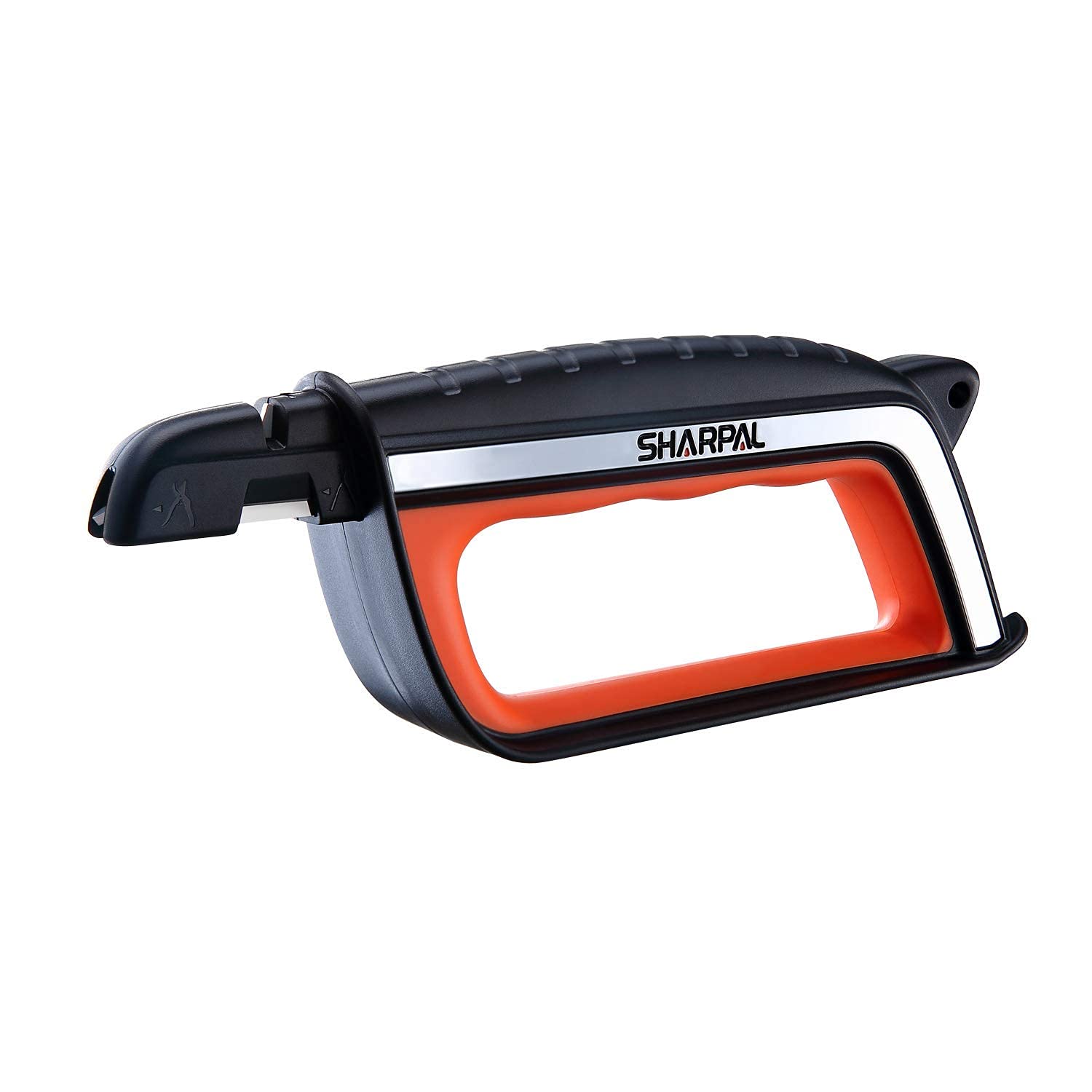
Pros
- Versatile enough for both large garden tools and fine household blades.
- Very easy to use with clear slot guides for angle and pressure.
- Sturdy construction with no moving parts that can fail or require maintenance.
Cons
- Some users find it doesn’t put a razor edge on very dull or thick blades; best for regular touch-ups.
- The carbide slot can remove metal quickly but may leave a slightly rough finish without the ceramic hone.
The SHARPAL 103N is a purpose-built handheld sharpener that stands out for its versatility. It’s not a bench stone or an electric grinder, it’s a compact tool designed to handle a surprising range of edge maintenance tasks around the shop, garden, and home. With five sharpening surfaces, it can tackle lawn mower blades, axes, machetes, pruning shears, hedge trimmers, scissors, and most kitchen knives. That kind of flexibility makes it a real asset for anyone who keeps multiple cutting tools in rotation.
This sharpener is best suited for DIYers, homeowners, and light commercial users who want to keep their gear cutting cleanly without spending a lot of time or money. It’s not meant for heavy duty reprofiling or restoring badly damaged edges, but for routine sharpening and touch ups it works very well. The preset angle slots take the guesswork out of holding the blade at the right orientation, which is especially helpful for people who aren’t comfortable with a stone or file.
In use, the 103N feels solid and secure. The rubber over-molded base grips the workbench or tabletop, so it stays put while you draw the blade through the slot. The handle is big enough to use comfortably with gloves, and the hand guard is a thoughtful safety feature when working on mower blades or shears. Performance wise, the tungsten carbide slot removes material quickly and the ceramic slot refines the edge to a clean, functional sharpness. Most users report noticeably better cutting from their tools after just a few passes.
Build quality is good for the price point. The plastic housing feels durable, and the abrasive inserts are rated to last through many thousands of uses. There are no batteries or cords to worry about, and the whole unit weighs only a few ounces, so it’s easy to store in a drawer or toolbox. Some reviewers mention that very dull or thick mower blades may need more passes or a secondary method to get a true edge, but for regular upkeep this tool performs reliably.
If you are tired of paying for sharpening services or struggling with stones and files, the SHARPAL 103N is a practical, cost effective alternative. It pays for itself quickly if you maintain your own mower blades, pruners, and shears. For the price and versatility, it’s a solid addition to any workshop or garage.
Brand: SHARPAL
Model: 103N
Dimensions: 8.46 x 2.95 x 1.34 inches
Weight: 6.2 ounces (176 grams)
Materials: Tungsten carbide and ceramic abrasives
Grit types: Coarse, medium, fine
Number of sharpening slots: 5 preset angle guides
Color: Orange and black
Warranty: 3 years
Lawn Mower Blade Touch Ups: Use the dedicated carbide slot to quickly restore a clean cutting edge without removing the blade from the mower (if accessible) or with the blade removed on a bench. Ideal for seasonal maintenance.
Garden Shears and Pruners: The pre-set angle slots make it easy to sharpen bypass pruners, hedge shears, and loppers. A few passes bring back factory sharpness.
Axes and Hatchets: The broader slots accommodate thicker blades and axes. Great for campsite or woodlot tool upkeep.
Kitchen and Utility Knives: The fine ceramic slot refines knife edges for clean slicing. Works well on most straight edge kitchen blades.

Pros
- Effective for quick sharpening of various blades and tools
- Comfortable paddle handle for good control
- Durable high carbon steel material
- Lightweight and easy to store
- Versatile for lawn, garden, and woodworking use
Cons
- Not suitable for heavy-duty reshaping or very dull blades
- The metal handle can get slippery if hands are oily
- Limited to 8-inch length, may not be ideal for larger tools
The Mercer Industries 8-Inch Rotary Mower File is a simple yet effective hand tool for anyone who needs to keep their cutting edges sharp. Whether you are a homeowner maintaining a lawn mower, a gardener honing pruners, or a woodworker touching up chisels and scrapers, this file gets the job done without complexity. Its high carbon steel construction is tough enough for repeated use, and the built-in paddle handle provides a solid grip for controlled strokes.
In real-world use, this file excels at light to moderate sharpening tasks. It quickly restores a decent edge on a dull mower blade or a garden tool, and the 8-inch length offers good reach for most applications. The handle is comfortable for short sessions, though it can become a bit slippery if your hands are greasy. The reusable plastic sleeve is a nice bonus for keeping the file protected in a toolbox or workshop drawer.
However, this is not a tool for heavy reshaping or extremely worn blades. If you need to remove a lot of material or grind down a badly nicked blade, you will need a grinder or a coarser file. The metal handle also lacks any rubberized grip, which could be a downside for some users. Still, for routine maintenance and quick touch-ups, it is more than adequate.
Overall, the Mercer 8-inch rotary mower file is a reliable and affordable option for DIYers and professionals alike. It does not claim to be a powerhouse, but it fulfills its role as a handy sharpening tool. If you already have a basic sharpening setup, this file makes a fine addition for those small jobs where you just need a quick edge.
Size: 8 inches
Material: High carbon steel
Handle: Metal paddle handle
Weight: 1.06 ounces
Dimensions: 10.25 x 0.13 x 0.7 inches
Finish: Brushed
Special Features: Ergonomic
Included: Rotary mower file with handle, individually sleeved
Warranty: 90 days against manufacturer defects
Brand: Mercer Industries

Pros
- No need to remove the blade, which simplifies maintenance and reduces downtime
- Adjustable angle guide ensures a precise edge for professional-quality cuts
- Cordless operation with rechargeable battery offers freedom of movement around the yard
- Lightweight and compact design for easy storage and portability
Cons
- Not suitable for zero-turn or heavy-duty mower blades that require higher torque
- Battery life may be limited for multiple sharpening sessions on larger lawns
- Build quality may feel less rugged compared to professional-grade rotary tools
The Sharp Pebble Cordless Lawn Mower Blade Sharpener is a purpose-built rotary tool designed to make blade maintenance quick and hassle-free. Unlike traditional sharpening methods that require removing the blade, this tool lets you sharpen in place, saving you the time and frustration of disassembly. It's an ideal solution for DIY homeowners and weekend gardeners who want to keep their mower blades sharp without investing in expensive professional equipment.
Performance wise, the adjustable angle guide (20-40 degrees) is a standout feature. It allows you to set the exact angle for your blade type, ensuring a consistent edge that promotes cleaner cuts and healthier grass. The variable speed control (5,000-30,000 RPM) gives you the flexibility to handle different blade conditions, from light touch-ups to more aggressive sharpening. The included replaceable sharpening wheels are effective and easy to swap out when they wear down.
Build quality is decent for the price point. The tool feels lightweight and well-balanced, with an ergonomic grip that reduces fatigue during extended use. The cordless design with a rechargeable battery adds convenience, letting you move freely around the yard without being tethered to an outlet. However, the battery life is adequate for a few blades but may require a recharge for larger mowing setups. The tool is best suited for standard mower blades; it lacks the torque needed for zero-turn or heavy-duty commercial blades.
In terms of practicality, this sharpener is a time-saver. You can quickly touch up the blade between mows, ensuring optimal cutting performance without the downtime of removal and reinstallation. Safety features like the ergonomic grip and speed control help maintain control during operation. The compact size makes it easy to store in a toolbox or garage drawer.
One realistic drawback is that the tool may not satisfy users who need to sharpen multiple blades in one session, as the battery could run out. Additionally, the build quality, while adequate for occasional use, may not withstand heavy daily use by professionals. Overall, the Sharp Pebble Cordless Lawn Mower Blade Sharpener is a practical, affordable choice for DIYers and homeowners who value convenience and precision. If you're looking for a quick way to maintain your mower blade without the hassle of removal, this tool delivers solid performance for the price.
Product Dimensions: 8 x 2.8 x 1.2 inches
Item Weight: 1.37 pounds
Manufacturer: Mighty Dreams
Model Number: SPMower2024
Battery: 1 9V battery included
Best Sellers Rank: #56,427 in Patio, Lawn & Garden, #212 in Lawn Mower Accessories
This sharpener is best for standard residential lawn mower blades. It is ideal for DIY homeowners who mow their own lawns and want to keep blades sharp without removing them. Use it for quick touch-ups between mows or to restore a dull blade to a clean cutting edge. Not recommended for commercial zero-turn mowers or heavy-duty blades that require higher torque.

Pros
- Very affordable and easy to install on a standard power drill
- Includes a balancer to help maintain even blade wear
- Versatile for multiple garden cutting tools beyond just mower blades
Cons
- Lower customer rating suggests inconsistent performance or durability issues
- Manual sharpening with a drill still requires careful angle control and may not match factory edge quality
- Best suited for light to moderate sharpening tasks; heavy use may wear the abrasive quickly
The Calsoling 3-Piece Lawn Mower Blade Sharpener is a straightforward, no-frills accessory designed to help homeowners and DIYers keep their mower blades and other garden cutting tools sharp without investing in expensive sharpening equipment. This set includes three corundum abrasive stones mounted on stainless steel bases, plus a blade balancer, all for a price that makes it easy to try. The concept is simple: chuck one into any standard power drill, touch it to the blade edge, and grind away the dullness. For those who mow a standard suburban lawn once a week, this can be a practical way to extend blade life between professional sharpenings or replacements.
In real-world use, the sharpener works best on blades that are merely dull rather than heavily nicked or damaged. The corundum material handles moderate wear and resists heat buildup, which is important when using a drill at higher RPMs. The included balancer is a nice bonus, letting you check if the blade is still balanced after sharpening, which helps reduce vibration and uneven cuts. However, the sharpening process requires a steady hand and a consistent angle to avoid creating an uneven edge. It's not as precise as a dedicated sharpening jig or a professional grinder, but for quick touch-ups, it gets the job done.
Build quality is adequate for the price point. The steel backing provides some rigidity, but the abrasive stones are relatively small, measuring about 1.97 inches in diameter. This means you'll need to make multiple passes along longer blades. The three-pack is a practical advantage, allowing you to keep one in the garage, one in the shed, and maybe a spare. The 12-month warranty is a nice touch for such an inexpensive item, indicating the manufacturer stands behind it.
On the downside, the overall customer rating is modest, and some users have reported inconsistent performance or the abrasive wearing down faster than expected. This is not a tool for professional landscapers or anyone who sharpens blades daily. It also requires a power drill, which most homeowners already have, but it's an added step if you don't. The lack of a guide or depth stop means you could accidentally remove too much material if you're not careful.
Overall, the Calsoling 3-Piece Lawn Mower Blade Sharpener is a solid budget option for the DIY homeowner who wants a quick, easy way to maintain mower blades and similar tools. It's not a replacement for professional sharpening or high-end sharpening systems, but for the occasional touch-up, it offers good value. If you're a weekend warrior with a modest lawn and a cordless drill, this set is worth considering. Just go in with realistic expectations about its durability and precision.
Product Dimensions: 1.9 x 1.5 x 0.8 inches per stone
Item Weight: 3.53 ounces (total set)
Material: Corundum abrasive with stainless steel backing
Stone Diameter: 50 x 47 mm (1.97 x 1.85 inches)
Package Includes: 3 sharpening stones + 1 blade balancer
Compatibility: Works with power drills and hand drills; fits 99% of mower blade center holes
Warranty: 12 months
This sharpener set is best suited for homeowners and DIYers who need to touch up standard lawn mower blades, sickle bars, rotary tillers, hoes, and drill knives on a regular basis. It's ideal for quick maintenance between professional sharpenings or for those who prefer to keep their blades sharp without the expense of a dedicated sharpening station. Not recommended for heavy-duty or commercial use where blades are heavily damaged or need precise edge geometry.
A Complete Methodical Guide to Sharpening Mower Blades by Hand
Sharpening a lawn mower blade with a file requires establishing a clean cutting bevel while keeping both wings properly balanced. The process relies on securing the detached blade in a sturdy vise, following the factory bevel with smooth, forward-only push strokes, and clearing any rolled burr from the flat underside. Removing only the minimum steel necessary to restore a clean edge protects blade temper and maximizes deck longevity.
Understanding Edge Geometry and Mill File Mechanics
Mower blades do not function like delicate kitchen knives or straight razors. Rotary decks spin between 2,800 and 3,600 revolutions per minute, creating enormous tip speed that cuts grass through velocity and clean edge alignment. A razor edge dulls rapidly upon hitting dirt, small twigs, or soil grit. The ideal profile resembles a butter knife, measuring roughly one sixty-fourth of an inch thick at the apex to resist chipping.
Most rotary mower blades come from the factory with a single bevel angled between thirty and thirty-five degrees. This angle slopes down from the top face toward a flat, unground bottom surface. Maintaining this factory angle ensures the cutting edge has enough steel mass to absorb recurring yard impacts. Changing this geometry weakens the edge corner, causing rapid blunting under normal residential mowing conditions.
Selecting the correct hand file makes a substantial difference in cutting speed and edge smoothness. A dedicated high-carbon steel rotary mower file, such as the Champion Mercer 8″ Rotary Mower File with Handle, provides the exact tooth pattern needed to shave tough mower steel without binding. These files feature built-in handles for improved control and reusable protective sleeves that keep teeth sharp between maintenance sessions. Standard mill bastard files also work effectively, as they sheer steel evenly without leaving deep grooves.
Workspace Setup and Essential Safety Precautions
Blade maintenance begins with rigorous safety precautions before any tool touches the mower deck. For gasoline-powered lawn mowers, always disconnect the spark plug wire and tuck it away to prevent accidental engine combustion. If you are servicing a cordless battery-powered unit, remove the battery pack entirely, or unplug the power cord on electric corded models. Never tilt a four-cycle gasoline mower with the carburetor facing downward, as motor oil can drain into the intake tract and foul the engine.
Tilting the mower with the spark plug facing upward exposes the blade mounting assembly safely. Before attempting to loosen the center bolt, wedge a solid block of scrap wood between the blade and the inner deck wall to jam blade rotation. Loosen the retaining bolt using a properly fitting socket wrench, taking note of the orientation of any curved washers, spacers, or specialized adapters. Inspect the bolt threads and mounting hardware for corrosion or thread stretch before setting them aside in a clean tray.
Once removed, transfer the blade to a dedicated work area equipped with a solid bench vise. Trying to file a blade resting loose on a workbench or held by hand creates inconsistent bevel angles and poses serious safety hazards. Clamp the center body of the blade firmly between padded vise jaws, orienting the dull cutting edge upward and parallel to the benchtop. Wear heavy leather work gloves and eye protection throughout the entire filing procedure to protect against metal filings and accidental slippage.
Manual Files Versus Rotary and Drill Sharpening Attachments
Homeowners often weigh the deliberate control of hand filing against faster motorized attachments. Hand files like the Champion Mercer high-carbon steel file generate zero friction heat, which preserves the factory temper and hardness of the cutting steel. Motorized grinders can easily overheat thin edge sections, turning the metal blue and leaving it soft and prone to rapid dulling. For routine seasonal maintenance, manual filing offers the cleanest balance of material preservation, safety, and consistent bevel control.
Alternative sharpening tools can serve practical roles depending on your available workshop setup. Portable multi-sharpeners such as the SHARPAL 103N All-in-1 Knife Garden Tool feature preset tungsten carbide slots and ceramic bars that allow quick edge touch-ups without removing the blade from the deck. Preset guides help inexperienced users maintain consistent angles, though they remove less metal than a full-size mill file when smoothing out deeper surface nicks. When planning your deck maintenance strategy, exploring black mower blade setup options can provide helpful context regarding how different blade finishes interact with various sharpening tools.
Drill-mounted sharpening stones offer another option for rapid edge restoration. Multi-pack accessories like the cenoz Crafts Man Lawn Mower Blade Sharpener and the Calsoling 3 Pieces set attach directly to standard power drill chucks, using corundum wheels with stainless steel backing plates to grind edges quickly. Dedicated rotary tools such as the Sharp Pebble Cordless Lawn Mower Blade Sharpener incorporate adjustable angle guides between twenty and forty degrees, giving users mechanical repeatability. Drill stones save time on heavily worn edges, but operators must exercise light pressure to avoid overheating the blade edge.
Step-by-Step Push-Stroke Filing Technique
Begin the filing process by cleaning dried grass clippings and surface rust off the blade with a wire brush. Once bare metal is exposed, color the existing factory bevel with a dark permanent marker. This preparation step provides immediate visual feedback, showing exactly where your file teeth are cutting and helping you match the original factory angle stroke by stroke. Position yourself comfortably over the vise with both feet planted shoulder-width apart to ensure smooth, controlled movement.
Grasp the file handle firmly with your dominant hand while resting the guide hand near the file tip for steady downward pressure. Lay the file flat against the cutting bevel, aligning the tool face with the angle established by the manufacturer. Mill files are designed to cut only on the forward push stroke. Push the file forward and across the cutting edge in one fluid diagonal motion, maintaining consistent pressure across the stroke.
Lift the file completely off the steel on the return stroke instead of dragging it backward across the cutting edge. Dragging the file backward bends and dulls the cutting teeth of the file, ruining the tool while doing zero productive work on the blade. Count each forward push stroke carefully as you work across the cutting edge, usually requiring twenty to forty strokes depending on initial dullness. Continue until the permanent marker is completely removed and a uniform, clean silver bevel appears along the entire cutting edge.
Filing the angled face inevitably pushes a small ridge of rolled steel, known as a burr, over the flat bottom edge of the blade. To remove this wire edge, lay the file completely flat against the unground bottom face of the blade. Make one or two very light push strokes across the underside to shear off the hanging burr without creating a secondary bevel on the flat side. Inspect the edge visually and run a gloved finger gently across the flat back to verify that the burr has cleared.
Measuring and Correcting Blade Balance
Maintaining proper blade balance is just as critical as creating a sharp cutting edge. A mower blade spinning at high speed behaves like a flywheel. If one side carries noticeably more weight than the other, the resulting imbalance transmits destructive vibrations directly through the spindle shaft, destroying bearings and fatiguing the mower deck. An unbalanced blade can also cause uneven turf height and excessive operating noise across your lawn.
Check blade balance using a dedicated cone balancer or a clean, level horizontal nail driven into a workshop wall stud. The stepped cone balancer included in the Calsoling blade sharpener kit fits center holes of multiple diameters, allowing the blade to pivot freely. Rest the blade horizontally across the balancer cone and observe whether one side dips toward the bench. If the blade remains level or sways slightly without tipping, the weight distribution between both cutting wings is well balanced.
When one side consistently dips downward, metal must be removed from that specific wing to restore equilibrium. Never grind or file metal away from the newly sharpened cutting edge to correct balance, as this shortens cutting length and changes the bevel profile. Instead, remove small amounts of steel from the blunt rear spine or the curved sail of the heavy wing using your file. Work gradually, removing a few strokes of material at a time and rechecking balance frequently until the blade rests completely horizontal.
Identifying Severe Edge Damage and Replacement Triggers
While a quality file easily restores dull edges, certain types of blade degradation cannot be safely repaired by hand. Mowers frequently encounter hidden tree roots, landscaping stones, or buried debris that can gouge deep divots into the steel or bend the blade body entirely. Attempting to file away a deep gouge requires removing so much surrounding steel that the structural strength of the blade becomes compromised, creating a dangerous projectile risk during operation.
Carefully inspect the thickness of the upward-curved lift wings located at the rear of each cutting tip. In sandy soils, high-velocity grit erodes these rear sails until the steel becomes paper-thin. If the rear sails show visible thinning, jagged holes, or cracking, the blade must be retired immediately regardless of how clean the forward edge appears. Property owners maintaining specialized decks can evaluate Ryobi mower blade setup solutions to understand how deck airflow and sail height specifications dictate when replacement blades are necessary.
Check the center mounting hole and surrounding steel for any signs of cracking, elongation, or metal distortion. If the blade was previously run loose, the center hole may have worn out of round, preventing a concentric mount on the spindle. Any crack radiating outward from the center mounting hole or along the blade body warrants immediate replacement. Buying a fresh replacement blade is far safer and more cost-effective than running structurally compromised steel underneath a high-power mower deck.
Reinstallation Steps and Torque Verification
Proper reinstallation is essential to ensure that your newly sharpened blade performs safely and effectively. Before placing the blade back onto the spindle, wipe away all caked debris, dried grass, and grit from the spindle mounting flange and blade adapter. Contaminants trapped between the blade and spindle boss can prevent the blade from seating flat, resulting in severe runout, high-speed wobble, and poor cut quality across your turf.
Confirm the correct vertical orientation of the blade before sliding it into position. The curved lift wings and angled bevel must always point upward toward the underside of the mower deck, while the flat, unsharpened face points down toward the grass. Installing a blade upside down is an easy mistake that results in the blunt back of the blade battering the turf rather than cutting it cleanly. Align the center hole precisely over the spindle shaft, indexing star points or locating tabs securely into their matching recesses.
Thread the mounting bolt and retaining washers into place by hand to ensure the threads engage cleanly without cross-threading. Once finger-tight, wedge your block of scrap wood against the opposite side of the inner deck to lock the blade against rotation. Use a calibrated torque wrench to tighten the center bolt to the exact torque specification listed in your mower operator manual, which typically ranges between thirty-five and sixty foot-pounds. Finish by rotating the blade slowly by hand to verify adequate clearance from the deck shell and discharge chute before reattaching power.
Seasonal Maintenance Routines and Blade Storage
Establishing a consistent maintenance schedule ensures that your cutting deck stays in peak condition throughout the entire growing season. For average suburban properties, sharpening lawn mower blades after every twenty to twenty-five hours of mowing keeps edges clean without allowing heavy rounding to develop. In practice, this schedule translates to inspecting and touching up edges approximately twice per season, with an additional mid-summer check if you regularly mow through dry, dusty soil or encounter fallen twigs.
Keep a spare, pre-sharpened blade in your workshop so you can quickly swap decks without interrupting your weekend yard chores. When storing a freshly sharpened blade between seasons, apply a light coat of multi-purpose machine oil or silicone spray over the bare filed steel to prevent ambient moisture from forming surface rust. Store spare blades flat in a dry toolbox, shelf, or protective cardboard sleeve where the cutting edges are protected from bumping against other metal tools.
A sharp, well-balanced blade significantly reduces engine strain, conserves fuel or battery power, and produces a vibrant lawn that resists heat stress and turf fungal diseases. Taking thirty minutes to clean, file, and balance your mower blade using simple hand tools pays dividends across every mowing cycle. With proper push-stroke technique and regular inspection, you can keep your mower performing reliably season after season while protecting your investment in your outdoor power equipment.





Write Your Review
No reviews yet. Be the first to share your experience!