


Leaf blower power is primarily measured in Cubic Feet per Minute (CFM) and Miles Per Hour (MPH) of air speed. Understanding how to measure leaf blower power helps you select the right tool for your specific yard size and debris type. For most suburban homeowners, a balance of high airflow volume and sufficient speed is the key to efficient cleanup without unnecessary noise or fuel consumption.
The distinction between these two metrics determines whether a blower is suited for wide open lawns or tight spaces around flower beds. While a high-speed blower can push heavy debris, a high-CFM unit moves more air volume, which is often more effective for clearing large piles of dry leaves. This article breaks down how to measure leaf blower power using standard industry specifications, helping you avoid common sizing errors.
We also look at how different power sources, such as gas versus electric, impact these measurements and what that means for your daily maintenance routine. By focusing on these concrete data points, you can make a more informed decision that matches your actual yard conditions rather than just marketing buzzwords.
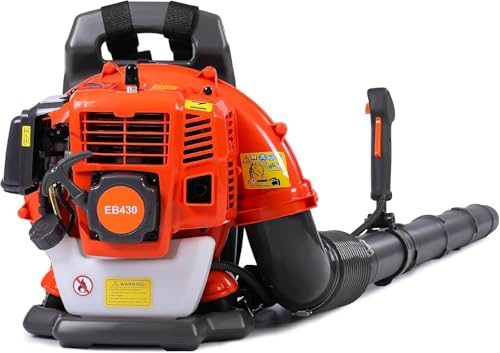
Pros
- Lightweight at 13.6 pounds reduces fatigue compared to heavier pro models
- Strong 550 CFM and 230 MPH airflow handles wet leaves and debris effectively
- Up to 45 minutes of runtime on a full tank lets you cover large areas without stopping
- Reliable starting with two-pull ignition and easy throttle control
Cons
- Noisy operation typical of gas blowers may require hearing protection for extended use
- Two-stroke engine requires mixing oil and gas, which adds a step compared to four-stroke or battery models
- Limited to 230 MPH max airspeed, which is adequate for leaves but may struggle with heavy, wet debris in extreme conditions
The Thalorus 52cc backpack leaf blower is a gas-powered tool designed for homeowners, landscapers, and light commercial users who need to clear leaves, grass clippings, and light snow from large properties. With a 550 CFM and 230 MPH output, it delivers enough force to move wet leaves and stubborn debris quickly, making it a practical choice for those who want to finish yard work fast and get back to other projects.
In real-world use, the blower starts reliably with two pulls, thanks to its efficient ignition system. The thumb throttle and cruise control let you adjust the air stream on the fly, which is handy when switching between open lawns and tight spots around flower beds or driveways. The 1-liter tank provides up to 45 minutes of runtime, so you can cover a half-acre lot without refueling. The lightweight design, at just 13.6 pounds, is a standout feature; it reduces fatigue compared to heavier pro models, and the cushioned harness distributes weight well, minimizing back strain during long sessions.
Build quality feels solid for the price point. The rugged housing and sealed engine are rated to operate in temperatures from 14 to 104 degrees Fahrenheit, which means it can handle early spring cleanups and late fall leaf removal. The low-vibration harness also helps prevent hand numbness, a common issue with smaller handheld blowers. However, like most gas blowers, it is loud, so hearing protection is recommended. Also, the two-stroke engine requires mixing oil and gas, which adds a minor inconvenience compared to four-stroke or battery alternatives.
One realistic limitation is the 230 MPH max airspeed. While it is adequate for leaves and light snow, it may not be as effective on heavy, matted wet debris as higher-end models that push 250 MPH or more. That said, the 550 CFM volume helps compensate, moving large piles efficiently. The blower is best suited for homeowners with one to three acres, landscapers doing routine maintenance, or anyone who values lightweight comfort over raw power.
Overall, the Thalorus 52cc backpack leaf blower offers strong performance, good runtime, and excellent ergonomics at a competitive price. If you need a reliable gas blower for year-round use and want to avoid the weight of pro-grade units, this is a solid buy. Just be prepared for the noise and the two-stroke fuel mixing, and you will have a tool that keeps your property clean without wearing you out.
Engine: 52cc two-stroke gas engine
Airflow: 550 CFM
Air Speed: 230 MPH
Weight: 13.6 pounds (unit only)
Fuel Tank Capacity: 1 liter
Runtime: Up to 45 minutes
Operating Temperature Range: 14 F to 104 F
Dimensions: 15.7 x 68.9 x 17.7 inches
Color: Orange
Harness: Low-vibration cushioned backpack harness
Start System: Two-pull ignition
Controls: Thumb throttle with cruise control
Product Group: Lawn & Patio
This backpack blower is ideal for homeowners with large yards (1-3 acres) who need to clear leaves, grass clippings, and light snow regularly. It also works well for landscapers and light commercial users who want a lightweight, comfortable option for routine maintenance. The 550 CFM and 230 MPH output makes it effective on driveways, patios, and lawns, but it is not designed for heavy construction debris or deep wet snow. Use it for fall cleanups, spring yard prep, and summer trimming blow-away.
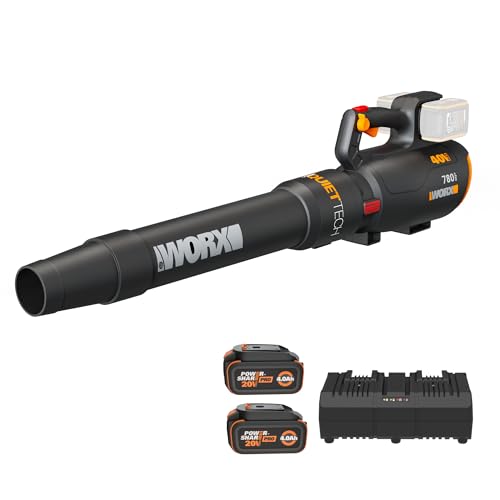
Pros
- Excellent air volume and speed for a cordless blower, rivaling gas models.
- Long runtime with two included high-capacity batteries gives real yard-cleaning time.
- Remarkably quiet – you can work without hearing protection in most settings.
- Comfortable and lightweight for extended use, with good balance and grip.
- Versatile battery system that shares power with other WORX tools.
Cons
- Weight of 8.94 lbs might feel heavy for some users, especially when holding it out for long periods.
- Runtime drops significantly at maximum Turbo speed – expect about 30 minutes combined if using full power continuously.
- Limited to the WORX battery ecosystem; no adapter for other brands exists.
The WORX WG582 is a 40V cordless leaf blower that bridges the gap between gas performance and electric convenience. It’s a brushless, battery-powered blower designed for homeowners, DIYers, and light commercial users who need real power without the noise, exhaust, or maintenance of a gas engine. With 780 CFM and 190 MPH, it moves heavy leaves, grass clippings, and even small debris as well as many 28cc gas blowers, but runs on two included 4.0Ah lithium-ion batteries.
In real-world use, the WG582 feels torquey and responsive. The variable speed trigger lets you dial in the exact airflow, and the cruise control lock holds a steady speed for continuous work. Punch the Turbo button for a few seconds and full power kicks in instantly, perfect for stubborn piles or cleaning out gravel beds. The 57dB noise level is a standout – you can hold a conversation nearby, and your neighbors won’t complain. That quiet operation makes it a strong choice for residential areas or early mornings.
Build quality is solid with a polypropylene housing and rubberized grip. At 8.94 pounds it’s not the lightest cordless blower, but the weight is well-balanced and the handle is comfortable. The tube is not tapered aggressively, which helps maintain air speed. The PowerShare battery system is a plus if you already own other WORX tools – these 40V batteries also work in 20V and 80V platforms by combining two or four batteries respectively. Two 4.0Ah batteries and a dual-port charger are included, so you get a complete setup right out of the box.
No tool is perfect. The WG582 is heavier than some competing 40V blowers (like the 7-pound EGO LB5800), and runtime at Turbo speed drops to roughly 15 minutes per battery – so you’ll get about 30 minutes at full blast before needing a recharge. For typical yard cleanup with moderate speed, expect closer to 45 minutes total. Also, if you’re invested in another battery ecosystem (e.g., DeWalt or Milwaukee), you’ll be locked into WORX unless you buy an adapter.
Overall, the WORX WG582 is a well-rounded cordless leaf blower for homeowners who want gas-like performance without the headaches. It’s especially good for those with medium to large lots, quiet neighborhoods, or who dislike storing fuel and dealing with pull-starts. The power, runtime, and low noise make it a practical, everyday tool. If weight is a concern or you need all-day runtime for commercial use, look at lighter or backpack models, but for most DIYers this blower is a solid buy.

Pros
- Very lightweight at only 4 pounds, easy to use for extended periods.
- Two speed settings provide versatility for different debris types.
- No battery or gas, so it's always ready to go when you plug it in.
Cons
- Cord limits range to distance from an outlet; an extension cord is required for larger areas.
- Motor is only 7-amp, so it won't match the power of higher-end gas or cordless blowers for heavy wet leaves.
The Grasstigon Electric Leaf Blower is a corded handheld model designed for homeowners and DIYers who need an affordable, lightweight tool for routine yard cleanup. With a 7-amp motor pushing 210 MPH and 390 CFM, it’s a solid choice for clearing dry leaves, grass clippings, and light debris from driveways, patios, and walkways.
In real-world use, this blower feels nimble and well balanced. The 4-pound weight makes a big difference when you’re clearing a whole yard or blowing out a garage. The two speed modes work well: low speed for dust and light leaves near flower beds, high speed for tackling piles and stubborn dirt. The airflow is sufficient for medium-sized lots, but heavy wet leaves may require multiple passes or a more powerful unit.
Build quality is decent for the price point. The plastic housing feels sturdy enough, and the nested tube design is clever for compact storage. One minor frustration is the instruction note about the tubes being nested together, which can confuse some users initially. The cord is not included, so plan for a suitable extension cord (14-gauge or heavier recommended). Noise levels are typical for an electric blower, not excessive but loud enough to warrant hearing protection.
The main drawback is the cord dependency. You’re limited to the length of your extension cord, and maneuvering around obstacles can be a bit tricky. For homeowners with small yards or patios, this isn’t a problem. But if you have a large property or lots of landscaping, a cordless or gas model might be more convenient. Also, the 7-amp motor lacks the grunt of higher-priced blowers, so it’s best suited for light-to-moderate duty.
Overall, the Grasstigon leaf blower is a smart buy for budget-conscious homeowners who want a simple, reliable tool for weekly yard maintenance. It’s lightweight, easy to store, and delivers consistent performance without fuel or battery worries. If your yard is small to medium and you don’t mind an extension cord, this blower offers excellent value for the money.
Color: Green
Dimensions: 35.8 x 6.5 x 8.6 inches
Weight: 4 pounds
Product Group: Lawn & Patio
Motor: 7 Amp
Max Airspeed: 210 MPH
Max Airflow: 390 CFM
Speed Modes: High / Low
Power Source: Corded electric
Warranty: 1 year

Pros
- Strong, consistent airflow that rival many mid-range gas blowers without the fuel mess
- Lightweight and well-balanced for comfortable one-handed operation
- 2-speed control offers versatility for light sweeping or heavy-duty blowing
- Cord retention adds reliability during use
Cons
- Corded design limits range; you'll need a heavy-duty extension cord for large yards
- No variable speed trigger, only fixed low and high settings
- Noise level may be higher than some battery-powered blowers (though typical for corded models)
The BLACK+DECKER BEBL750 is a corded electric leaf blower built for homeowners and DIYers who want reliable, no-fuss performance for yard cleanup. It's not a commercial-grade machine, but it punches above its weight with 450 CFM and 140 MPH of airflow - enough to move wet leaves, grass clippings, and light debris across driveways, patios, and lawns.
Who is it for? This blower suits anyone with a small to medium yard who doesn't want to deal with gas engine maintenance or battery charging. It's particularly handy for homeowners, weekend warriors, and DIY landscapers who need a backup tool or a primary blower for regular upkeep. The two-speed control makes it easy to switch between gentle flower bed clearing and aggressive driveway blowing.
In real-world use, the axial fan design delivers steady, concentrated air that feels more powerful than its 7-amp motor suggests. The lightweight build (7 pounds) reduces arm fatigue during longer sessions, and the compact shape allows you to reach under bushes and around tight corners. The cord retention system is a nice touch - it keeps the extension cord securely plugged in, so you don't lose power mid-job. And the built-in scraper on the bottom works well for dislodging stuck leaves from concrete or asphalt.
Build quality is typical BLACK+DECKER: solid plastic housing that feels durable enough for occasional drops and bumps, though not heavy-duty for daily professional use. The ergonomic grip is comfortable, but there's no rubber overmold or vibration damping - something to note if you have sensitive hands. It's also worth mentioning that this is a corded tool, so you'll need a 14-gauge or heavier extension cord for longer runs. Without a cord, you're limited to about 100 feet before performance drops.
Realistic drawbacks: the lack of variable speed trigger (only low and high) means you can't fine-tune airflow like on some premium models. It's also louder than many battery-powered blowers, though in line with typical corded electric units. And if your yard has lots of leaves or wet debris, you might need multiple passes - higher-end blowers offer 600+ CFM. But for the price, the BEBL750 offers great value.
Our recommendation: If you own a small to medium property and want a no-hassle leaf blower that's always ready (no battery charging, no gas mixing), the BLACK+DECKER BEBL750 is a solid choice. It's also a good backup for contractors who already have a cordless system but need a strong, inexpensive blower for stationary work near an outlet. Just invest in a quality extension cord and you'll be set for seasons of reliable cleanup.
Brand: BLACK+DECKER
Model: BEBL750
Type: Corded Electric Leaf Blower
Airflow: Up to 450 CFM
Air Speed: Up to 140 MPH
Speed Settings: 2 (Low / High)
Motor: 7 Amp
Weight: 7 pounds
Dimensions: 8.73 x 5.48 x 18.79 inches
Color: Black
Power Source: Corded electric (requires extension cord)

Pros
- Dual-battery design provides 48V power while keeping your existing 24V batteries and chargers useful
- Brushless motor is efficient and quiet, perfect for early-morning or late-evening yard work
- Variable speed trigger with cruise control gives you fine control over airflow without holding the trigger
- Lightweight at just over 11 pounds, easy to carry and maneuver for extended use
- Comes with two 4.0Ah batteries and a rapid charger so you can keep working while one pack charges
Cons
- Batteries are sold separately if you need extras, and the 48V system uses two 24V packs which adds weight
- Not ideal for heavy wet debris or large commercial jobs - better suited for residential leaf cleanup
- Battery runtime drops significantly on high speed, so you'll want to swap packs for longer sessions
The Greenworks 48V cordless leaf blower is a smart take on cordless yard power. Instead of a single big battery, it uses two 24V batteries in series to deliver 48V of real gas-like performance. That means you get the muscle of a gas blower without the smell, noise, or maintenance. And since it's part of Greenworks' huge 24V platform, your existing batteries and chargers from other tools work here too.
This blower is best for homeowners and DIYers with medium to large yards who want to ditch gas. It's not a commercial-grade machine for daily use on big properties, but for clearing driveways, patios, and lawns, it's more than enough. The 585 CFM and 140 MPH numbers translate to real-world power - you can move dry leaves, grass clippings, and light debris in straight lines without struggling.
Build quality is solid. The brushless motor is the key here - it's quieter, more efficient, and lasts longer than a brushed motor. The variable speed trigger and cruise control are nice touches: you can set the speed you want and lock it in, so your finger doesn't get tired. The cushioned grip helps too, especially if you're using it for a while. At 11 pounds, it's light enough to carry one-handed while you pick up a stray branch.
One realistic drawback: runtime. On high, you'll get about 30 minutes from the two 4.0Ah batteries. That's fine for most yards, but if you have a huge property or lots of heavy wet debris, you might want extra batteries. Also, this system uses two batteries, so it's a bit heavier than a single-pack blower. But the tradeoff is worth it for the extra power.
Overall, this is a great choice if you're already in the Greenworks 24V ecosystem. It's a capable, quiet, and powerful blower that makes leaf cleanup faster and easier. If you're new to cordless tools, it's a solid entry point with room to grow into other yard tools.
Power Source: 48V (two 24V batteries in series)
Motor Type: Brushless
Airflow: 585 CFM
Air Speed: 140 MPH
Batteries Included: Two 4.0Ah 24V lithium-ion
Charger: Dual port rapid charger
Weight: 11.02 lbs
Dimensions: 20.16 x 6.14 x 11.4 inches
Grip: Cushioned overmold
Trigger: Variable speed with cruise control
Compatible Platform: Greenworks 24V (over 200 tools)
This blower runs on the Greenworks 24V battery platform, which means you can use any Greenworks 24V battery or charger with it. The system uses two batteries at once for 48V power, but each is a standard 24V pack. So if you already own Greenworks 24V tools like a trimmer, chainsaw, or drill, your existing batteries will work here. The included dual-port charger can charge two packs at once, so you're never waiting long.
A closely related question is covered in cub mower blade, which may help alongside this section.
Understanding Leaf Blower Power Metrics
To evaluate a blower’s capability, you must look at two distinct but related measurements: airflow volume and air velocity. These metrics provide a complete picture of how the machine performs under different conditions. Manufacturers list these values on the product packaging and specification sheets, allowing for direct comparison between different models and brands.
| Metric | Definition | Primary Use Case |
|---|---|---|
| CFM (Cubic Feet per Minute) | Volume of air moved per minute | Clearing wide areas, large piles |
| MPH (Miles Per Hour) | Speed of the air exiting the nozzle | Pushing heavy debris, tight spaces |
| Decibels (dB) | Noise level of the unit | Residential noise compliance |
| Runtime | Duration of full power output | Task completion without refueling |
CFM represents the total volume of air the blower can move in one minute. A higher CFM rating means the machine can push a larger mass of air, which is essential for moving large quantities of lightweight material like dry leaves or grass clippings. This metric is often the primary indicator of a blower’s overall capacity. If you are clearing a large driveway or a wide lawn, a high-CFM unit will generally finish the job faster because it moves more material per second.
MPH, or air speed, measures how fast the air is traveling as it exits the nozzle. This metric determines the force of the air stream. A high MPH rating allows the blower to push heavier, wetter, or more compact debris that might otherwise stay in place.
For tasks involving stubborn leaves stuck to a patio or wet debris, air speed is often the critical factor. However, a high-speed blower with low volume may struggle to clear large piles efficiently, as it lacks the bulk air movement needed to shift the mass of the debris.
The balance between CFM and MPH varies significantly across different blower types. Gas-powered backpack units often prioritize high air speed to handle dense debris, while handheld electric models may balance both for general use. Understanding this balance helps you identify which metric is more important for your specific cleanup tasks. You do not need the highest numbers in both categories; instead, you need the right combination for your yard’s primary challenges.
How Airflow Volume Impacts Cleanup Speed
Airflow volume is the dominant factor when clearing large, open areas. A blower with a high CFM rating can move a significant amount of air, which helps to lift and transport debris in large sheets rather than small, scattered pieces. This efficiency reduces the time spent on the job and lowers physical fatigue for the user. Many homeowners find that a unit with a moderate air speed but high volume is more effective for general yard cleanup than a high-speed, low-volume model.
When comparing models, look at the CFM rating relative to the blower’s size and power source. Corded electric blowers often provide consistent airflow, while cordless models may see a drop in CFM as the battery depletes. Gas blowers typically maintain high CFM levels as long as they have fuel.
It is important to note that CFM is usually measured at the maximum throttle setting, which may not always be necessary for every part of the job. Variable speed triggers allow you to adjust the output, conserving energy or fuel when less power is needed.
High airflow volume also contributes to a smoother, more continuous stream of air. This consistency helps in directing debris into a specific area, such as a trash can or a pile for later collection. Without sufficient volume, the air stream may break up, causing debris to scatter rather than move in a controlled direction. This can lead to more time spent gathering missed pieces and less time spent on the primary task of clearing the area.
The Role of Air Speed in Debris Removal
Air speed is critical when dealing with heavier or more compact materials. Wet leaves, for example, are much harder to move than dry ones because they stick to surfaces and to each other. A blower with a high MPH rating generates enough force to dislodge these heavier items and push them along the ground. This is particularly useful for clearing patios, sidewalks, and other hard surfaces where debris can become embedded.
However, high air speed can also create more noise and vibration. Gas-powered units with high air speed often produce more noise, which can be a concern in residential areas with noise ordinances. Electric blowers, particularly those with brushless motors, can achieve high air speed with lower noise levels. This makes them a suitable option for early morning or late evening cleanup when noise sensitivity is higher.
It is also worth noting that air speed can be affected by the nozzle design. A narrower nozzle concentrates the air, increasing the speed at the exit point. This can be useful for reaching into tight spaces or targeting specific areas of debris. However, a narrower nozzle may reduce the overall airflow volume, which can impact the blower’s ability to clear large areas quickly. Choosing the right nozzle attachment can help balance these two metrics for specific tasks.
A closely related question is covered in mower blade lawn, which may help alongside this section.
Comparing Power Sources and Their Impact on Metrics
The power source of a leaf blower significantly influences its CFM and MPH ratings. Gas-powered blowers, particularly those with larger engine displacements, often deliver the highest air speed and volume. This makes them suitable for large properties or heavy-duty cleanup tasks. However, they also tend to be heavier, noisier, and require more maintenance, including fuel mixing and oil changes.
Electric blowers, whether corded or cordless, offer a different balance of power and convenience. Corded models provide consistent power and unlimited runtime, as long as you have access to an outlet. They are often lighter and quieter than gas models, making them easier to use for extended periods. Cordless models offer the convenience of portability, but their power output can vary based on battery voltage and capacity. Higher voltage batteries generally provide higher CFM and MPH, but they also increase the weight and cost of the unit.
When comparing power sources, consider the specific tasks you need to perform. For occasional light cleanup, a corded or cordless electric blower may be sufficient and more user-friendly. For frequent, heavy-duty cleanup, a gas-powered blower may provide the necessary power and durability. It is also important to consider the availability of power sources in your yard. If you have limited outlet access, a cordless or gas model may be more practical.
- Check the CFM rating for volume-based clearing tasks.
- Look at the MPH rating for force-based debris removal.
- Consider the noise level if living in a quiet area.
- Verify the runtime or fuel capacity for large jobs.
- Review the weight and ergonomics for user comfort.
- Check for variable speed controls for efficiency.
Understanding these metrics allows you to make a more informed decision about which blower best suits your needs. By focusing on the specific requirements of your yard and the types of debris you typically deal with, you can select a model that offers the right balance of power, efficiency, and usability. This approach helps you avoid overpaying for features you do not need or underbuying a unit that lacks the power for your tasks.
Practical Tips for Measuring and Comparing Models
When comparing different leaf blower models, it is helpful to create a simple comparison chart based on the key metrics. List the CFM and MPH ratings for each model, along with the power source, weight, and noise level. This visual comparison makes it easier to see which models offer the best balance of features for your specific needs. You can also include the price and warranty information to help with the final decision.
It is also important to read user reviews to get a sense of how the blower performs in real-world conditions. Manufacturers’ specifications are measured under controlled conditions, which may not always reflect the actual performance in your yard. User reviews can provide insights into the blower’s reliability, durability, and ease of use. Look for reviews that mention specific tasks, such as clearing wet leaves or large piles, to see if the blower meets those needs.
Finally, consider the availability of replacement parts and accessories. Some blower models have a wide range of compatible nozzles and attachments, which can enhance their versatility. Others may have limited options, which could restrict their use for specific tasks. Checking the availability of parts and accessories can help ensure that you can maintain and customize your blower as needed over time. This long-term perspective is important for making a durable and cost-effective purchase.
- Compare CFM and MPH ratings side by side.
- Consider the power source and its implications.
- Read user reviews for real-world performance insights.
- Check for available accessories and replacement parts.
- Evaluate the warranty and customer support options.
- Assess the total cost of ownership over time.
By applying these practical tips, you can navigate the wide range of leaf blower options with confidence. The key is to focus on the metrics that matter most for your specific situation, rather than being swayed by marketing claims or brand reputation. A systematic approach to measuring and comparing leaf blower power will help you find the right tool for the job, ensuring efficient and effective cleanup every time.
For those interested in maintaining the sharpness of other yard tools, our lawn mower blade sharpening guide offers similar practical advice for keeping your equipment in top condition. This ensures that all your yard tools are ready for the season, from mowing to blowing.
In summary, measuring leaf blower power involves understanding the interplay between CFM and MPH. By focusing on these core metrics and considering your specific yard needs, you can select a blower that delivers the right balance of power and efficiency. This approach ensures that you have the right tool for the job, whether you are clearing a small patio or a large driveway.
A closely related question is covered in power mower blade, which may help alongside this section.





Write Your Review
No reviews yet. Be the first to share your experience!