


Achieving a crisp, manicured lawn often comes down to precise mechanical calibration rather than engine horsepower. When grass looks jagged, stepped, or scalp-marked after mowing, learning how to measure lawn mower blade height is the primary step toward diagnosing cut quality issues. Many homeowners make the mistake of measuring the outer deck shell rather than the actual cutting edge underneath. Consulting a detailed Craftsman mower blade sizing guide can clarify how blade dimensions interact with deck clearance before you begin adjusting height settings. Taking the time to verify actual blade height prevents uneven turf wear and extends the operating life of your mower deck components.
Measuring blade height requires a firm understanding of clearance, level reference planes, and specific deck suspension linkages. Operating a riding mower setup for rough lawns often leads to settled lift rods, worn deck hangers, or uneven tire pressures over a single cutting season. A slight variance of a quarter inch from side to side creates noticeable striping flaws on sensitive turfgrass varieties. By focusing on the exact distance between the sharpened blade tips and a hard, flat surface, you eliminate guesswork from your deck leveling routine.

Pros
- Simple to use, no complex setup or training required.
- Scale markings are clear and easy to read on the job.
- Lightweight and portable, easy to carry between mowers or job sites.
- Affordable price point for a dedicated leveling tool.
Cons
- Plastic construction may not be as durable as metal alternatives over many years of heavy use.
- Scale range limited to 1 1/2 to 5 inches, which may not suit every mower deck or aftermarket blade setup.
- Manual measurement still relies on your eye for true level; best used as a quick reference, not a precision instrument.
The Xhziy Mower Deck Leveling Gauge is a straightforward measuring tool designed to help you set blade height accurately on lawn mowers. It's a pocket-sized plastic gauge that reads from 1 1/2 to 5 inches, giving you a quick visual reference for leveling your deck. No batteries, no electronics, just a simple mechanical tool that gets the job done.
This gauge is best suited for DIY homeowners and lawn maintenance techs who want a faster way to check blade height without dragging out a tape measure or level. If you zero-turn mows every week or you're a contractor who maintains a fleet of mowers, this tool saves time and reduces guesswork. The ergonomic handle makes it easy to use even with greasy fingers or work gloves.
In real-world use, the gauge works as advertised. Place it on the mower deck, line up the scale with the blade tip, and read the height. The markings are clear and easy to interpret. It's robust enough for occasional drops on the lawn or shop floor, though the plastic body won't survive a direct hit from a truck or heavy equipment.
Build quality is decent for the price. The plastic feels solid, and the blue color helps prevent losing it in the grass. At just 2.24 ounces and measuring 12x5x2 inches, it's truly portable. You can stash it in a tool pouch or leave it in the mower's storage compartment. The main drawback is the limited range and the fact it requires manual reading, so you still need some basic understanding of deck leveling. Also, if you have non-standard blades or a deck with unusual geometry, the gauge might not fit perfectly.
Overall, for under ten bucks, the Xhziy Mower Deck Leveling Gauge is a handy addition to any lawn care setup. It won't replace a professional dial indicator or laser level, but for everyday tuning and quick checks, it's a practical, no-fuss tool. I'd recommend it to any homeowner who wants a level cut without the hassle, or to lawn service crews who need a quick reference gauge for multiple mowers.

Pros
- Extremely easy to use with no complicated adjustments
- Works with nearly all standard lawn mower blades
- Solid zinc alloy build feels durable and resists rust
- Low cost makes it accessible for any budget
Cons
- Only includes one balancer, no extra accessories
- May not fit unusually large or non-standard blade center holes
- Requires a flat, level surface for accurate balance reading
The Silcpall Lawn Mower Blade Balancer is a straightforward accessory designed to help you keep your mower blades perfectly balanced. It's not a power tool itself, but it's an essential companion for anyone who sharpens their own blades. This balancer is best suited for DIY homeowners, weekend warriors, and budget-conscious lawn care enthusiasts who want to get the most out of their mower without spending a lot.
In real-world use, the balancer is incredibly simple. You just place it on the center hole of your blade and see if it sits level. A balanced blade means less vibration, a cleaner cut, and less strain on your mower's engine. After sharpening, this tool quickly confirms whether you've removed too much material from one side. It's a quick check that can save you from a wobbly mower and uneven grass.
Build quality is solid for the price. The zinc alloy construction feels heavy and durable, and the rust-resistant finish means it can handle a damp garage or occasional splash without corroding. The round shape is comfortable to hold, and the center slot holds most standard blades securely. It's compact enough to toss in a toolbox or hang on a pegboard.
One realistic drawback is that it's a single-size balancer, so if you have an unusually large or oddly shaped blade with a non-standard center hole, it might not fit perfectly. Also, you need a flat surface to get an accurate reading. But for the vast majority of residential mower blades, it works great.
Overall, the Silcpall Lawn Mower Blade Balancer is a smart, low-cost investment for anyone who maintains their own mower. It's not flashy, but it does exactly what it promises: helps you keep your blades balanced for smoother, more efficient cutting. If you sharpen your own blades, this tool is worth having in your workshop.
Product Dimensions: 1.96 x 1.97 x 2.36 inches
Item Weight: 3.2 ounces
Material: Zinc Alloy
Manufacturer: Silcpall
Model Number: PHQ1
ASIN: B0FHB6TFNJ
Pros
- Affordable and easy to use with clear instructions
- Precise leveling leads to a healthier, more attractive lawn
- Durable plastic design holds up to regular workshop use
- Compatible with a wide range of lawn mower brands and models
Cons
- Requires user to ensure tires are properly inflated before use for accurate leveling
- Plastic construction may not withstand heavy impact if dropped repeatedly
- Only measures blade height; does not include a leveling bubble or digital readout
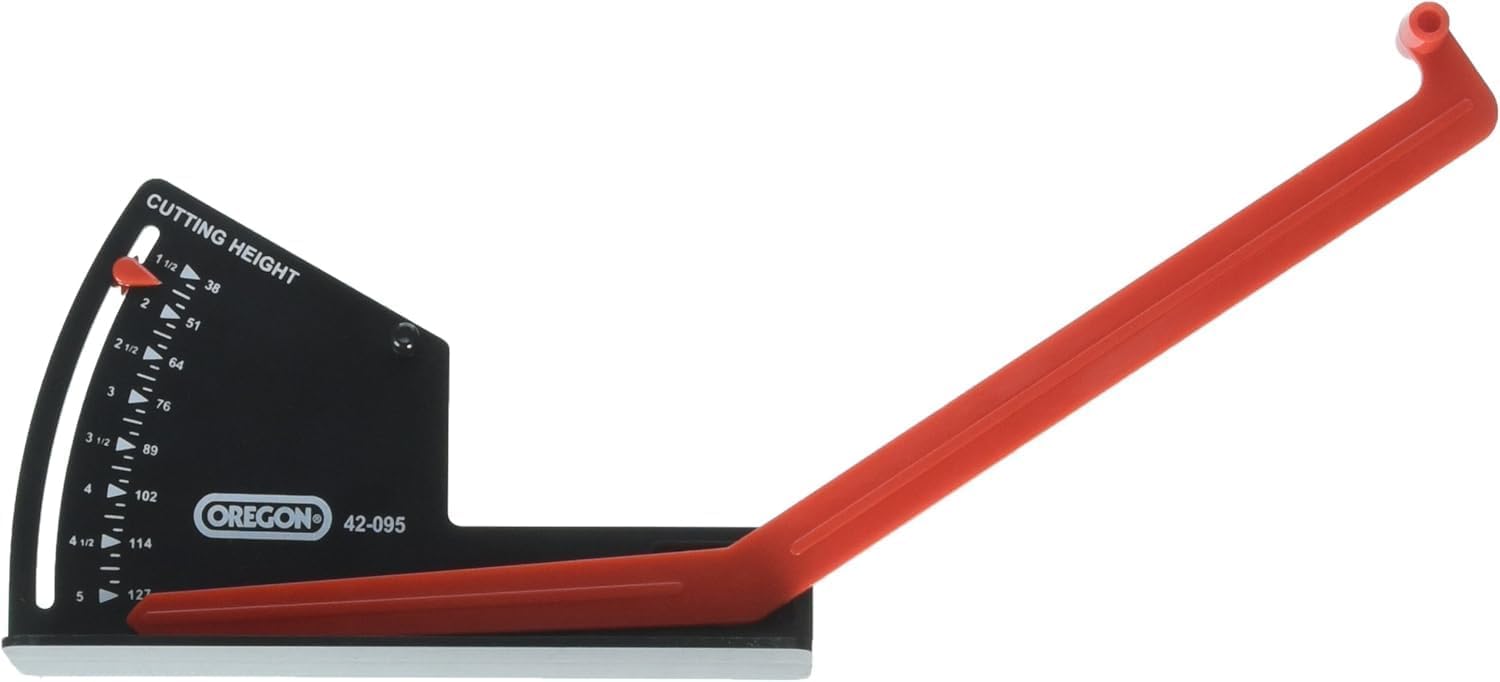
The Oregon Small Engine Deck Leveling Gauge is a straightforward maintenance tool designed to ensure your lawn mower deck sits perfectly level. An unlevel deck causes uneven cutting, scalping, and accelerated wear on blades and spindles. This gauge solves that problem by giving you a quick, accurate way to measure blade tip height from the ground.
This tool is best suited for homeowners and DIY enthusiasts who want a professional-looking lawn without the hassle of trial-and-error adjustments. It's equally useful for small engine mechanics or anyone maintaining a riding mower or push mower. The gauge works on almost any deck style, making it a versatile addition to your workshop.
In real-world use, the gauge is refreshingly simple. Park on level ground, set your mower to the desired cutting height, and place the gauge under each blade tip. The clear markings let you see instantly if both sides are equal and if the front is slightly lower than the back. Adjust the deck hangers until both sides match, and you're done. The pro tip about checking tire pressure before leveling is a practical reminder that saves time.
Build quality is solid for a plastic tool. It's lightweight and won't rust, so you can toss it in a toolbox or hang it in the garage without worry. The only real limitation is that you must have the mower on level ground and tires properly inflated for the reading to be accurate. Also, if you're used to a digital level or bubble gauge, this might feel a bit basic. But for the price, it does exactly what it promises.
Overall, the Oregon Deck Leveling Gauge is a no-nonsense purchase for anyone serious about lawn care. It pays for itself in fewer blade replacements and a noticeably better cut. If you're tired of uneven stripes or patches in your yard, grab this gauge and spend ten minutes leveling your deck. You'll see the difference on the first mow.

Pros
- Measures actual blade height rather than guessing based on outer deck rim position.
- Fits underneath low-clearance decks on popular John Deere, Cub Cadet, and MTD lawn tractors.
- Easy-to-read numbered scale speeds up both side-to-side and front-to-back rake leveling.
- Requires no batteries, electrical connections, or complicated assembly before use.
Cons
- Requires reaching under the cutting deck with protective gloves to position the gauge at the blade tip.
- Molded plastic construction requires careful garage storage to avoid bending or cracking under heavy tools.
- Does not include deck adjustment wrenches or replacement linkage hardware.
The Chamixx Mower Deck Leveling Gauge is a dedicated lawn tractor and riding mower maintenance tool designed to replace OEM parts like John Deere AM130907 and TY15272, as well as Stens 750-442. For suburban homeowners with quarter-acre lawns and rural property owners managing sprawling acreage, keeping a multi-blade cutting deck parallel to the ground is critical. This specialized gauge eliminates the guesswork involved in seasonal deck setup by measuring true blade height from the parking surface rather than relying on uneven deck shell edges.
Maintaining proper deck alignment directly affects grass handling and overall lawn health. When a mower deck hangs unevenly, the blades leave unsightly ridge lines across the turf and can scalp high spots during routine weekend mowing. A leveled deck also ensures the mower maintains the proper front-to-back pitch (typically an eighth to a half-inch lower in the front), which generates the airflow needed for clean mulching, strong side discharge, and efficient bagging without clumping.
The build quality centers around a durable, lightweight molded housing featuring a clear vertical measurement scale. The sliding indicator allows users to slide the tool under the deck lip, place the tip of the blade on the gauge arm, and read the exact height off the scale. Because of its slim profile, the tool slips into place around front anti-scalp wheels and side discharge chutes without forcing the operator to drop the deck assembly off the tractor frame.
Using this gauge is straightforward during routine spring prep or after striking an exposed tree root or rock during yard cleanup. Homeowners simply park the tractor on a flat concrete surface like a garage floor, disconnect the spark plug for safety, and take quick readings at the outer blade tips on both the discharge and trim sides. A few turns on the deck lift links balance the deck, restoring clean cutting performance before the next lawn mowing session.
While the gauge is simple and practical, users should keep realistic expectations regarding its build and function. Because it is molded from lightweight plastic, it should be kept away from excessive heat and stored neatly in a toolbox drawer rather than tossed loose under heavy power equipment. Overall, this gauge represents a cost-effective, practical solution for any DIY lawn care enthusiast or homeowner wanting a golf-course finish without paying dealership service rates.
Before using the leveling gauge, park your lawn tractor or zero-turn mower on a hard, completely flat surface such as a concrete driveway or level garage floor. Check tire pressure across all four tires first, as uneven air pressure will throw off deck alignment measurements before you even begin adjusting mechanical linkages.
Always turn off the engine, set the parking brake, remove the ignition key, and disconnect the spark plug wire to ensure total safety before reaching near the mower deck. Wear heavy work gloves to manually rotate the cutting blades so they point side-to-side across the width of the deck.
Slide the Chamixx gauge under the left side of the mower deck, position the blade tip against the measurement foot, and record the height. Repeat the exact same measurement on the right-hand blade tip. Adjust your tractor deck lift links until both sides match within an eighth of an inch, then rotate the blades front-to-back to verify proper pitch according to your mower operator manual.
This leveling tool serves as a direct functional replacement for John Deere part numbers AM130907 and TY15272, as well as aftermarket equivalents including Stens 750-442, MTD 490-900-0041, and Chamixx MOK30-0015. It is broadly compatible with riding mowers, lawn tractors, and residential zero-turn mowers from John Deere, Cub Cadet, Troy-Bilt, Craftsman, and Yard-Man.
The mechanical gauge design works independently of deck size, making it suitable for 38-inch, 42-inch, 48-inch, and 54-inch decks alike. As long as your mower features standard under-deck blade clearance and adjustable hanger links, this gauge provides the universal reference point needed to restore factory-level cutting geometry.

Pros
- 100% thicker arm than competitors for less flex and greater accuracy
- Stabilizer extension holds the gauge steady during adjustments with no extra hands needed
- Flat, stable base gives consistent readings on different deck surfaces
- Two-pack provides backup or dual measurement capability
Cons
- Requires a weight (like a hammer) to hold the gauge in place on the stabilizer extension
- May not fit all mower deck designs without slight modification
- Plastic construction might not withstand heavy abuse in commercial mowing environments
The HD Switch Deck Leveling Gauge is a simple but well-engineered tool for anyone who mows their own lawn. Instead of wrestling with a wobbly ruler or trying to eyeball blade heights, this gauge lets you set your deck accurately in minutes. It's not a power tool, but it's a workshop essential for lawn care enthusiasts who want a professional-quality cut.
This gauge is best suited for homeowners, DIYers, and even small landscaping businesses that use residential mowers from John Deere, Cub Cadet, Troy-Bilt, Husqvarna, Craftsman, and similar brands. If you care about even grass height and preventing scalping, this tool makes the job noticeably easier. The thicker measurement arm is a real upgrade over cheaper plastic versions it won't bend or flex, so you get the same reading every time you use it.
In practice, the stabilizer extension is the standout feature. You set the gauge on the deck blade, place a weight (like a hammer) on the extension, and the gauge stays put while you make adjustments. This hands-free approach speeds up the process and reduces mistakes. The fully flat base also helps the gauge sit flush against the deck, which is something many competitors overlook. The result is a repeatable measurement that you can trust.
Build quality is good for the price. The plastic feels sturdy enough for regular residential use, but it's not indestructible. If you're a heavy-duty commercial contractor who levels decks daily, you might want a metal alternative. But for the average homeowner or weekend warrior, this two-pack offers excellent value. It's lightweight, easy to store, and simple to use without any instructions needed.
The main drawback is that you need to supply a weight to hold the gauge in place. Also, while the gauge fits many popular mower decks, it may not work perfectly on every model. For most users, though, these are minor tradeoffs. If you want a faster, more accurate way to level your mower deck and are tired of shims and tape measures, the HD Switch kit is a practical upgrade that pays for itself in saved time and better looking grass.
Package Dimensions: 12.95 x 5.39 x 2.56 inches
Item Weight: 4.6 ounces (per gauge)
Material: Durable plastic with reinforced measurement arm
Compatibility: Fits most residential mower decks including John Deere, Cub Cadet, Troy-Bilt, Husqvarna, Craftsman, Snapper, MTD, Ariens, Gravely, and more
Included: 2 deck leveling gauges with stabilizer extensions
Homeowner lawn care: Quickly level your mower deck at the start of the season or after hitting a rock.
DIY mower maintenance: Use during blade sharpening or replacement to ensure even cutting height.
Small landscaping businesses: Keep a set in your truck for on-site adjustments between properties.
Garage workshop: A handy addition for anyone who services their own equipment.

Pros
- Wide compatibility with many mower brands and models
- Stable design with extended base prevents tipping and improves accuracy
- Clear black scale for easy reading in various lighting conditions
- Lightweight and portable at just 14.4 ounces
Cons
- Maximum measuring height of 5 inches may not be enough for some commercial mowers
- Aftermarket part – fit and finish may vary compared to OEM gauge
- No integrated leveling bubble for checking angle
The DVPARTS Upgrade Mower Deck Leveling Gauge is a practical accessory for anyone who owns a lawn mower and wants to maintain a precise, even cut. This tool is essentially a specialized ruler that clips onto the mower blade or deck to help you set the cutting height accurately. It is an aftermarket replacement for OEM part numbers like John Deere AM130907 MTD 490-900-0041 and Stens 750-442, but its compatibility extends much further covering most major zero-turn and garden tractor brands.
This gauge is best suited for homeowners and DIY enthusiasts who take pride in their lawn care. If you have a John Deere, Toro, Exmark, Husqvarna, Craftsman, or similar mower with a deck that allows height adjustments, this tool will save you from guesswork and uneven cuts. The rigid arm and extended base are genuine upgrades over simpler gauges the base resists tipping when you set it down, and the arm holds the gauge steady against the blade for consistent readings every time.
In real-world use, the gauge covers a range of 1-1/2 to 5 inches, which handles most residential cutting needs. The scale is printed in black and is easy to read even in bright sunlight. Setting the deck height becomes a straightforward process: place the gauge on the blade tip (or the deck edge per your mower's design), adjust the deck until the gauge indicates the desired height, and lock it in. The extended base prevents the gauge from falling over, which is especially helpful when working alone.
Build quality feels solid for a plastic and metal composite tool. It is lightweight at 14.4 ounces, so it won't add bulk to your tool kit. However, as an aftermarket part, the fit may not be as tight as OEM on every mower model, but for the price, the versatility is hard to beat. One limitation is that it only measures up to 5 inches, so if you run a commercial mower with extreme deck heights, you might need a longer gauge. Also, there is no built-in level to check the deck angle you will need a separate level for that.
Overall, the DVPARTS Deck Leveling Gauge is a smart buy for anyone who wants a faster, more accurate way to set mower deck height. It is especially valuable for households with multiple mowers or seasonal adjustments. The rigid arm and extended base are thoughtful improvements that make the job easier. If you are tired of eyeballing your deck height or using makeshift measuring sticks, this gauge is a reliable upgrade.
Product Dimensions: 14 x 5.9 x 1.65 inches
Item Weight: 14.4 ounces
Manufacturer: DVPARTS
ASIN: B0DDKW7SWK
Model Number: AM130907
Cutting Height Range: 1-1/2 to 5 inches
Compatible With: John Deere, MTD, Cub Cadet, Stens, Toro, Exmark, Scag, Hustler, Bad Boy, Husqvarna, Craftsman, Dixon, Troy-Bilt lawn mowers, garden tractors, zero-turn mowers
Understanding True Blade Cutting Height and Deck Leveling
Setting your lawn mower to a specific numbered notch on the height adjustment lever rarely reflects the exact cutting height of the spinning steel. Factors such as suspension flex, tire wear, deck hanger looseness, and ground contact alter the true relationship between the cutting edge and the soil. Determining how to measure lawn mower blade height accurately requires measuring directly from the hardened cutting tip to a flat, solid floor. Relying strictly on the deck stamping or dashboard indicator numbers often results in cut quality errors that damage turf health.
Turfgrass health relies heavily on consistent cutting heights to maintain root depth and prevent weed invasion during hot summer months. When mower blades cut lower than intended, grass crowns suffer from excessive heat stress and scalping across subtle turf undulations. Cutting significantly higher than intended can leave thick clumping and ragged leaf blades behind after each pass. Calibrating the cutting edges directly provides dependable mowing height predictability across every section of your yard.
Deck Skirt Height Versus Actual Blade Tip Cutting Height
A common misconception among property owners is that measuring from the bottom edge of the metal mower deck skirt down to the concrete reveals the cutting height. Mower blades do not sit flush with the bottom lip of the deck baffle or outer discharge skirt. In almost every riding mower, lawn tractor, and commercial zero-turn deck, the blades are recessed upward by an inch or more inside the cutting chamber to manage airflow. Measuring the outer rim of the deck gives you a reference point for shell clearance, but it tells you nothing about the plane where cutting occurs.
Airflow management within the mower chamber depends entirely on this planned vertical offset between the blade sail and the housing baffle. High-lift and mulching blades generate powerful suction to stand grass blades upright just before the cutting edge strikes the stalk. If you adjust your deck based purely on the outer lip of the housing, the blades inside may sit at an improper height that disrupts designed vacuum dynamics. Accurate height checks must always target the discharge tip of the blade rather than the painted metal exterior.
Essential Safety Preparation and Workspace Setup
Before reaching underneath any mower deck, personal safety requires rigorous mechanical isolation of the drive and engine systems. Park the machine on a completely flat, hard concrete surface such as a garage bay or smooth workshop apron. Engage the parking brake firmly and switch off the ignition key, removing it from the switch to prevent accidental startup. On gasoline mowers, disconnect the spark plug boot from each spark plug and ground the wire away from the terminal.
Electric and battery-powered mowers require similar strict disconnect protocols before handling cutting hardware underneath. Always remove the safety key and disconnect all primary battery packs before putting your hands near the blade housing. Wearing thick leather work gloves protects your fingers against accidental contact with razor-sharp edges and steel burrs. In addition, checking your blade setup against specialized electric mower blade options ensures the cutting edges remain straight and free from structural deformation before measuring height.
Checking Tire Pressure and Level Surface Foundations
Mower deck height measurements are invalid if the machine sits on an unlevel surface or rests on unevenly inflated tires. Even minor variations in tire pressure drastically alter the tilt of the tractor frame and suspension pick-up points. Use a reliable low-pressure tire gauge to verify that both front tires match the manufacturer specification listed on the tire sidewall or manual. Repeat this check on both rear drive tires, ensuring that left and right pressures are completely identical.
A difference of just two or three pounds per square inch in a rear tire can cause the cutting deck to lean noticeably toward the softer side. Furthermore, performing measurements on gravel, packed dirt, or turf introduces irregular contact points that skew your height readings. A smooth, swept concrete slab ensures that all four tires sit on a shared horizontal plane. Taking the time to establish an even foundation guarantees that any measured deck pitch or slope stems from linkage adjustment rather than uneven ground.
Side-to-Side Blade Height Measurement Procedure
To evaluate side-to-side level, you must measure the cutting tips across the full operating width of the mower deck. Start by lowering the mower deck to your preferred typical cutting height, often around two and a half to three inches. Carefully reach underneath the discharge chute side and rotate the blade so that it aligns perpendicular to the tractor frame, pointing directly outward toward the deck edge. Position your measuring tool directly under the outside cutting tip and record the distance to the concrete.
Next, walk around to the opposite side of the mower deck and align that blade in the exact same perpendicular orientation. Measure the distance from the outer cutting edge on that side down to the hard floor surface using the same gauge orientation. For a clean, uniform cut across the lawn, the variance between the left and right cutting tips should not exceed one-eighth of an inch. If the left and right measurements differ by more than this tolerance, the deck will create stepped ridge marks across the turf during operation.
Front-to-Back Pitch and Mower Blade Rake Calculations
Lawn mower decks are not engineered to sit completely level from front to back during forward mowing passes. Proper cutting dynamics demand a subtle forward rake, commonly referred to as front-to-back pitch. To measure pitch, rotate one of the center or outer blades so that it points straight forward along the center line of machine travel. Measure the height from the concrete up to the forward-facing tip, then rotate the blade 180 degrees and measure the rear-facing tip.
The front cutting edge should normally sit between one-eighth of an inch and one-half inch lower than the rear cutting edge, depending on the manufacturer specification. This pitch ensures that the blade cuts each grass stalk cleanly once as the deck advances across the lawn. If the rear of the blade sits lower than the front, the rear cutting edge will drag through previously cut clippings. That drag wastes engine power, tears grass fibers, and increases clumping within the deck chamber.
Using Dedicated Deck Leveling Gauges and Measurement Tools
While a standard wooden ruler or steel tape measure can provide rough estimates, specialized deck leveling gauges offer far greater accuracy and ease of use. Tools like the Oregon 42-095 small engine deck leveling gauge feature an offset arm specifically engineered to slip beneath the deck skirt. Dedicated gauges provide precise measurement increments from one and a half to five inches, corresponding directly to standard lawn tractor cutting ranges. Models such as the Xhziy blue deck leveling instrument also provide millimeter conversions from 38 to 127 millimeters for metric adjustments.
Stability during adjustment is a major consideration when choosing an alignment tool. Upgrade designs, such as the HD Switch leveler with its stabilizer extension and the DVPARTS deck leveling gauge, incorporate an extended base with a rigid arm. The wide stabilizer base prevents the gauge from tipping over while you reach for wrenches to adjust hanging hardware. Mechanics often set a small weight or wrench on this extension platform, allowing hands-free visual tracking of blade movement as linkage nuts are turned.
Aftermarket tools such as the Chamixx deck leveler are built to serve as direct replacements for standard dealer tools like John Deere AM130907, TY15272, and Stens 750-442. These gauges are listed as compatible with a broad range of machines, including John Deere, Cub Cadet, MTD, Troy-Bilt, and Husqvarna garden tractors. The DVPARTS leveler similarly supports applications across Toro, Exmark, Scag, Hustler, Bad Boy, and Craftsman riding mowers. Using a purpose-built gauge eliminates the parallax error that frequently occurs when trying to eyeball tape measure marks inside a dark mower cavity.
Addressing Blade Balance, Warpage, and Spindle Wear
Accurate height measurements assume that the steel blades and spindle shafts beneath the deck are straight and true. If a blade has struck a hidden tree root or solid landscaping stone, the tip can bend upward or downward independently of the deck shell. If one tip measures significantly higher than the opposite tip on the exact same blade, the steel is deformed and requires replacement. Reviewing a comprehensive mower blade setup guide helps clarify how straight blade geometry impacts consistent cutting results.
Blade balancing is another vital maintenance factor that directly influences cut consistency and deck longevity. An unbalanced blade causes severe high-frequency vibration that loosens deck hanger bolts and wears out spindle bearings over time. Using an affordable metal balancer, such as the Silcpall zinc alloy circular balancer, lets you quickly test blade equilibrium on a workbench. Checking balance after sharpening ensures smooth rotation and prevents vibration-induced deck sagging during demanding yard work.
Adjusting Lift Links and Verifying Cutting Height Accuracy
When your measurements reveal that the blade tips sit outside recommended tolerances, adjustments are made at the suspension linkages. Most riding mowers and lawn tractors utilize threaded lift rods, trunnions, or eccentric cams to manipulate deck orientation. To correct side-to-side height variances, loosen the jam nut on the adjustable lift link located near the rear wheel or deck hanger. Turning the adjustment nut clockwise typically raises that side of the deck, while turning it counterclockwise lowers it toward the ground.
Front-to-back pitch is usually adjusted through a threaded draft rod located at the front center of the tractor frame. Tightening the front draft rod nut raises the front edge of the mower deck, while loosening it allows the front to drop. Make adjustments in small increments of one or two full turns, checking blade tip measurements after each adjustment pass. Once both side-to-side level and forward pitch match manufacturer specifications, firmly tighten all lock nuts to prevent vibrations from altering the setup during mowing.
Troubleshooting Persistent Uneven Cut Patterns and Scalloping
If your lawn still shows stepped cut lines or ragged turf after leveling the blades, several secondary mechanical issues may be present. Worn spindle assemblies can introduce vertical play that allows blades to wobble under cutting resistance, altering effective height. Inspect the spindle bearings by grasping the blade tips with gloved hands and checking for vertical chuck or rocking motion. Any perceptible play indicates worn bearings that will defeat even the most precise static leveling procedure.
Bent deck shell mounting tabs and cracked suspension brackets can also cause the deck to flex under engine load. In multiblade decks with two or three spindles, an unlevel center spindle can cause noticeable scalloping in wide turns. Compare the height of the center blade tips against the outer blade tips to verify that all cutting edges operate on a unified plane. Regular static measurements combined with routine hardware inspections will ensure that your lawn mower consistently delivers a smooth, carpet-like finish.






Write Your Review
No reviews yet. Be the first to share your experience!