


Excessive deck vibration and uneven turf tips often signal that your cutting assembly is spinning off center. When you sharpen or service your cutting deck, understanding how do you balance lawn mower blades keeps your equipment running smoothly and prevents costly mechanical breakdowns. An uneven rotary blade acts like an unbalanced tire on a highway, sending harsh oscillations through the spindle shaft directly into the mower deck and engine crankcase. Proper service begins with safe blade detachment, which you can review in our practical guide on removing a lawn mower blade safely before inspecting the steel.
Restoring proper equilibrium requires clean metal surfaces, stable support fixtures, and measured material removal from the heavier wing. Homeowners and property managers can choose between simple tiered cone fixtures, drill-powered sharpening kits, or heavy magnetic wall brackets to verify true horizontal balance. Reliable accessories from established brands like Oregon and Arnold help you isolate bent wings from unequal cutting edge weight without guessing. Mastering this routine maintenance step improves your turf quality, protects vital spindle bearings, and delivers smoother mowing throughout the growing season.

Pros
- Extremely affordable and widely compatible with most residential mower blades.
- Simple to use: just chuck it in a drill and run along the blade edge.
- Including both sharpener and balancer means you get a complete blade maintenance solution.
- Lightweight and portable, perfect for small workshops and home garages.
Cons
- Requires a drill to operate, so you need one on hand.
- Manual balancing takes a bit of patience to get right compared to electronic balancers.
- Not ideal for heavy commercial use or high-volume shops where speed is critical.
The Arnold BSK-1 is a straightforward sharpening and balancing kit designed for lawn mower blades. It turns your regular electric drill into a reliable sharpening tool, making it easy to maintain a clean cutting edge without investing in a dedicated grinder. The kit includes a cone-shaped sharpening stone and a simple static balancer, both built to handle blades from walk-behind mowers, lawn tractors, and zero-turn machines.
This kit is best suited for homeowners and DIYers who prefer to handle their own mower maintenance rather than taking blades to a shop. It's also useful for small engine mechanics who need an affordable backup method. But if you're a professional landscaper sharpening dozens of blades a week, you'll likely want a faster, more automated system.
In real-world use, the sharpener works quickly. Chuck it into a drill, run the stone along the blade's edge at a shallow angle, and you'll see burrs form within seconds. The vibration-free claim holds up -- the stone spins smoothly, which helps avoid gouging the blade. The balancer is straightforward: hang the blade on the cone and see which side drops. Rotate a few times to confirm. It's not fancy, but it effectively reveals if the blade is heavy on one side.
Build quality is typical for a budget tool. The sharpening stone is abrasive and should last through several sharpenings. The balancer is made of plastic and a metal cone. It's lightweight (just over two ounces) and stores easily in a drawer. For the price, durability is acceptable for occasional weekend usage. You won't hesitate to toss it in a toolbox or tool bag.
The main drawback is that you need a drill, and the process is manual. Balancing requires patience -- you'll have to grind off material from the heavy side and recheck. It's not as precise as a professional blade balancer, but it's more than enough to get a decently balanced blade. Overall, the Arnold BSK-1 is a smart buy for anyone who wants to keep their mower cutting cleanly on a budget. It's a practical addition to any workshop, especially if you already own a drill.
Color: Black
Dimensions: 3 x 7 x 10 inches
Weight: 0.24 pounds
Product Group: Outdoors
Binding: Lawn & Patio
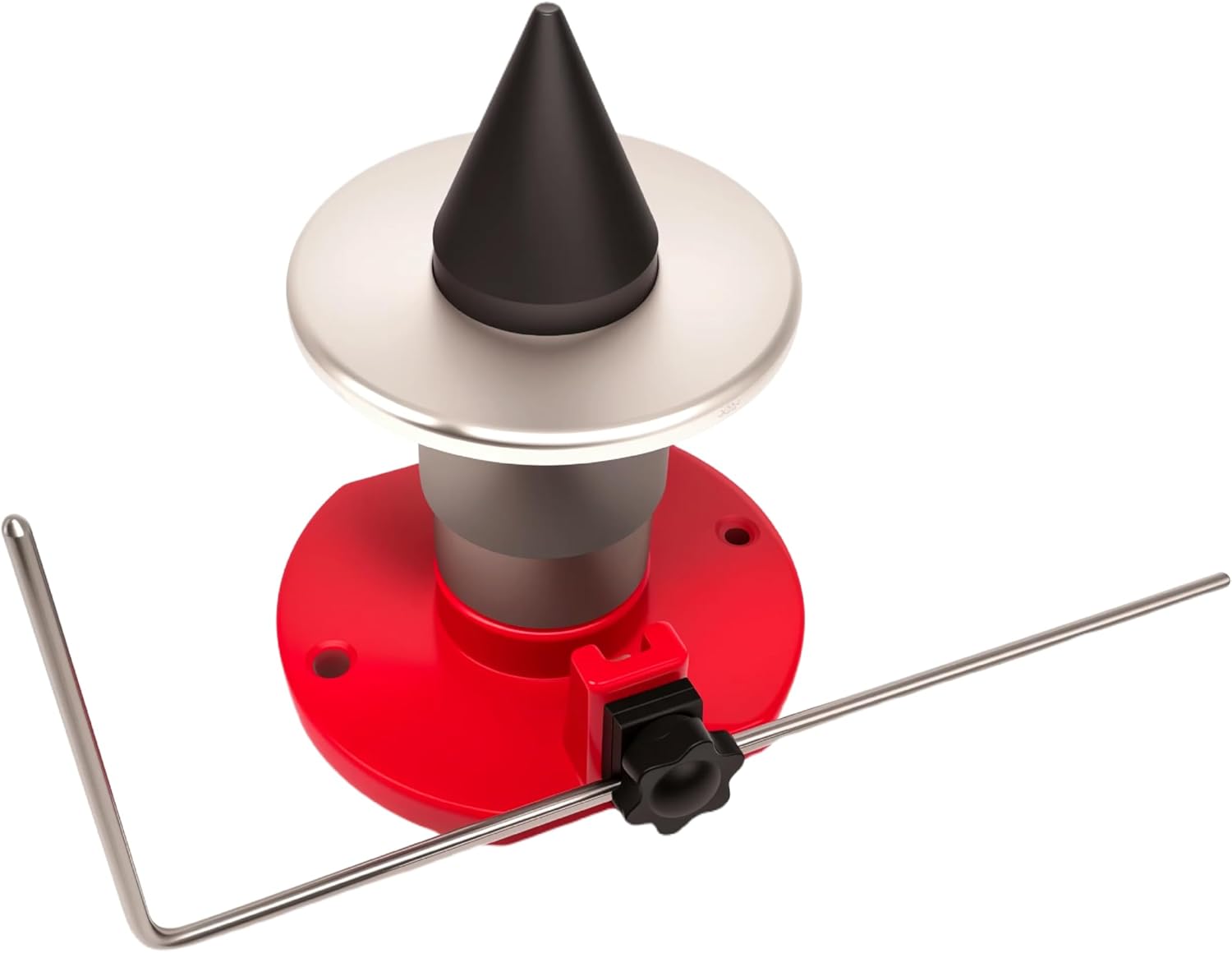
Pros
- Magnetic hold is strong and secure, eliminating fumbling during blade mounting
- Ball bearing spins freely for accurate balancing, as confirmed by multiple reviewers
- Works with a wide variety of blade center hole shapes, including non-round holes
- Durable build quality at a fraction of the cost of premium brands like Oregon
Cons
- The steel rod is slightly smaller in diameter than some competitor models, which may affect fitment with very large center holes
- A few users reported that the instructions could be clearer, especially regarding the embedded magnets
- The bearing can feel a bit rough if not handled carefully; tapping the wall improves accuracy
If you sharpen your own lawn mower blades, you know that balancing them is just as important as getting the edge right. An unbalanced blade shakes the mower, wears out the spindle bearings, and leaves a ragged cut. The DPHXF Magnetic Wall Mount Blade Balancer is a simple but effective tool that makes this job far more reliable than balancing on a nail or a cone.
This balancer is ideal for homeowners and DIYers who maintain a few mowers, as well as small landscaping crews. It hangs on your wall, always ready to use. The strong magnet holds the blade firmly in place, and the ball bearing spindle allows the blade to rotate with almost no friction. That smooth rotation is key: you can clearly see which side is heavy and grind it down until the blade sits perfectly horizontal.
Build quality is solid. The housing is heavy-duty steel with a red powder coat that resists corrosion. The improved version addressed earlier complaints about bearing slop, and reviews confirm that this one spins freely and repeats well. It fits blades with center holes up to 1.5 inches, including the star-shaped or S-shaped holes found on many residential decks. This versatility means you can use it on different mowers without buying adapters.
One potential drawback: the steel rod that centers the blade is a bit smaller than what you might find on the expensive Oregon model. For most home-size blades, this isn't an issue, but if you have a very large or heavy commercial blade, it might not seat as snugly. Also, the magnets are embedded beneath the plastic housing, so don't expect to see them like in some older designs. A light tap on the wall can help settle the blade for a more accurate reading.
Overall, the DPHXF Magnetic Wall Mount Blade Balancer delivers impressive precision for the price. It saves you time and protects your mower from vibration damage. If you sharpen your own blades and want a reliable, easy-to-use balancing tool that stays put on the wall, this is a smart buy. Just make sure you have enough clearance on either side so the blades can spin a full 360 degrees without hitting anything.
Product Dimensions: 7 x 4.5 x 6.5 inches
Item Weight: 2.38 pounds
Manufacturer: DPHXF
ASIN: B0F2F46C7H
Item Model Number: 42-047
Compatible Blade Center Holes: Up to 1-1/2 inches
Mounting: Wall-mount with included hardware

Pros
- Sturdy metal build that won't crack or warp like plastic balancers.
- Accurately detects even small imbalances for improved cut quality.
- Works with a wide variety of blade center hole sizes thanks to the stepped cone design.
- Easy to use: place blade, watch gravity, and remove material from the heavy side.
Cons
- Some users report that the cone steps may not fit every blade perfectly, though most find a suitable step.
- Requires a bit of trial and error to center the blade precisely on the cone.
- The balancer itself has a narrow base that can tip if bumped during use.
The Oregon Precision Mower Blade Balancer (model 42-100) is a simple, no-fuss tool that belongs in every mower maintenance kit. After you sharpen your blade, tossing it back on the mower without checking balance is a gamble. Even a tiny imbalance can cause excessive vibration, rough cutting, and accelerated wear on your mower's engine and spindle bearings. This compact metal balancer solves that problem with a straightforward gravity-based design.
Best suited for homeowners who sharpen their own blades as well as professional landscapers, the balancer works with virtually any rotary mower blade. The stepped metal cone accommodates different center hole sizes, so it fits push mowers, riding mowers, and zero-turn machines from brands like Stihl, Husqvarna, Troy-Bilt, and more. The zinc die-cast body feels solid and substantial easily outlasting cheap plastic alternatives that can crack or warp over time.
Using the Oregon balancer is refreshingly simple. Place the blade flat on the cone, let it settle, and gravity will tell you if one side is heavier. If the blade dips, grind a bit more material off that side and recheck. The process takes only a minute or two but makes a real difference in how your mower runs. Users consistently report noticeably less vibration and a cleaner, more even cut after balancing.
One realistic limitation is that the cone steps might not align perfectly with every blade's center hole, though most users find a step that works. Also, the balancer has a narrow base, so you'll want to set it on a stable surface to avoid tipping. But these are minor tradeoffs for a tool that costs under ten dollars and can extend the life of your mower's engine and deck.
If you maintain your own mower blades, the Oregon Precision Blade Balancer is a smart, low-cost investment. It helps you get professional-level results at home, reduces vibration that leads to premature wear, and keeps your lawn looking its best. For the price and performance, there's little reason not to add one to your workshop gear.
Brand: Oregon
Model: 42-100
Material: Zinc die-cast metal
Weight: 0.2 pounds
Dimensions: 10 x 6 x 1 inches
Power Source: Manual
Color: Original Version
Compatibility: Fits most push mower and riding mower blades

Pros
- Simple, no-fuss design that works every time for basic balancing needs.
- Metal build feels solid and should hold up to years of garage use.
- Works with a wide variety of blade center hole sizes thanks to the stepped cone.
- Costs less than a coffee and delivers real performance improvement.
Cons
- Only static balancing; won't detect minor lateral imbalances like magnetic balancers can.
- May not fit blades with non-circular or odd-shaped center holes (e.g., some mulching or gator blades).
- Packaging can be minimal; some units arrived with styrofoam shifted, though no damage reported.
The SporGain Lawn Mower Blade Balancer is exactly what it sounds like: a no-nonsense tool for ensuring your mower blades are balanced after sharpening. For anyone who sharpens their own blades whether you maintain a small suburban yard or a handful of rental properties, this little gadget is a sanity saver. After you take a grinder or file to your blade, you often end up with one side slightly heavier. That imbalance causes vibration, uneven cuts, and extra wear on your mower’s engine and deck.
This balancer solves that problem simply. You set the blade on the tapered metal cone, and the heavy side drops down. Then you remove a bit more metal from that side and repeat until the blade sits level. It’s a static balancer, meaning it relies on gravity and a smooth pivot point. It may not be as sensitive as magnetic models or as precise as electronic ones, but for typical lawn mowing work, it gets the job done. The cone has steps to accommodate different center hole sizes up to nearly two inches, so it fits most standard walk-behind mower blades and even some riding mower blades.
Build quality is impressive for the price. The base and cone are made of metal, not plastic, so they won’t crack or warp. It’s small enough to toss in a tool bag or leave in a drawer. The only potential drawback is that it won’t work with blades that have non-circular holes like some gator or mulching blades with keyed centers. Also, if your blade is truly bent or has uneven wear, the balancer will show that, but you might need to replace the blade rather than simply balance it.
In real-world use, this balancer makes a noticeable difference. Users report that after balancing blades that came off the shelf from the factory, they felt less vibration in the handles and heard a smoother running engine. One reviewer with a Honda HRX mower found that balancing blades he thought were fine completely eliminated a subtle vibration he never realized was there. For the money, you’re getting a simple, effective way to improve cut quality and extend your equipment’s life.
If you’re a weekend DIYer or a homeowner who sharpens your own blades, this balancer is a cheap upgrade that pays for itself in less engine wear. Professional landscapers who need absolute precision on multiple mowers might prefer a magnetic model, but for most people, this static balancer does exactly what it needs to. A solid buy.
Product Dimensions: 2.4 x 2.4 x 2.1 inches
Item Weight: 3.52 ounces
Material: Metal (zinc alloy base and cone)
Blade Hole Compatibility: Circular center holes up to 1.97 inches (largest step)
Base Diameter: 2.36 inches
Color: Silver
Includes: One blade balancer only

Pros
- Strong magnetic hold keeps blades in place during balancing.
- Free-spinning ball bearing provides consistent and repeatable results.
- Built-in bent rod gauge helps identify warped blades before installation.
- Wall mount design saves bench space and keeps the tool accessible.
Cons
- Mounting screws are not included, so you will need to supply your own.
- Some units may have a slightly unbalanced spindle, which can affect accuracy and require careful setup.
- Instructions are minimal and not very clear, though the tool is straightforward to use if you have some experience.
The LDMINDA Magnetic Wall Mount Blade Balancer is a practical tool for anyone who sharpens their own lawn mower blades. It is designed for DIY homeowners and hobbyists who want to reduce mower vibration and achieve a cleaner, more even cut without investing in expensive shop equipment. This balancer replaces popular models like the 42-047 and 339075B, and it delivers solid performance for the price.
In real-world use, the six magnets hold the blade firmly in place, so you can spin it freely to check balance. The ball bearing spindle rotates smoothly, giving you a clear visual of which side is heavier. The included bent rod gauge is a nice touch, letting you quickly tell if the blade is warped before you even balance it. This feature alone can save you from reinstalling a blade that will cause vibration and uneven cutting. The wall mount design is a space-saver, and once mounted on a level surface, the balancer works consistently.
Build quality is mostly metal, with a solid feel that should hold up to regular use in a garage or shed. The knob and cone are plastic, but they are not load-bearing parts. Some users have reported that the spindle itself can be slightly out of balance, which may lead to variable results. This is a known issue with budget balancers, and while it does not affect every unit, it is something to be aware of. If you get a good one, it works just as well as the expensive name-brand versions.
On the downside, the balancer does not come with mounting screws, and the printed instructions are minimal. For someone experienced with blade balancing, this is not a problem, but beginners may need to look up a quick video or guide. The lack of calibration from the factory means you should test the spindle before use. If it spins unevenly, you may need to return it for a replacement.
Overall, the LDMINDA Magnetic Wall Mount Blade Balancer is a solid choice for the budget-conscious DIYer. It offers most of the functionality of pricier balancers at a lower price point. If you are already sharpening your own blades and want to improve cut quality and reduce mower vibration, this tool is worth picking up. Just be prepared to supply your own hardware and verify the spindle balance before relying on it for critical jobs.
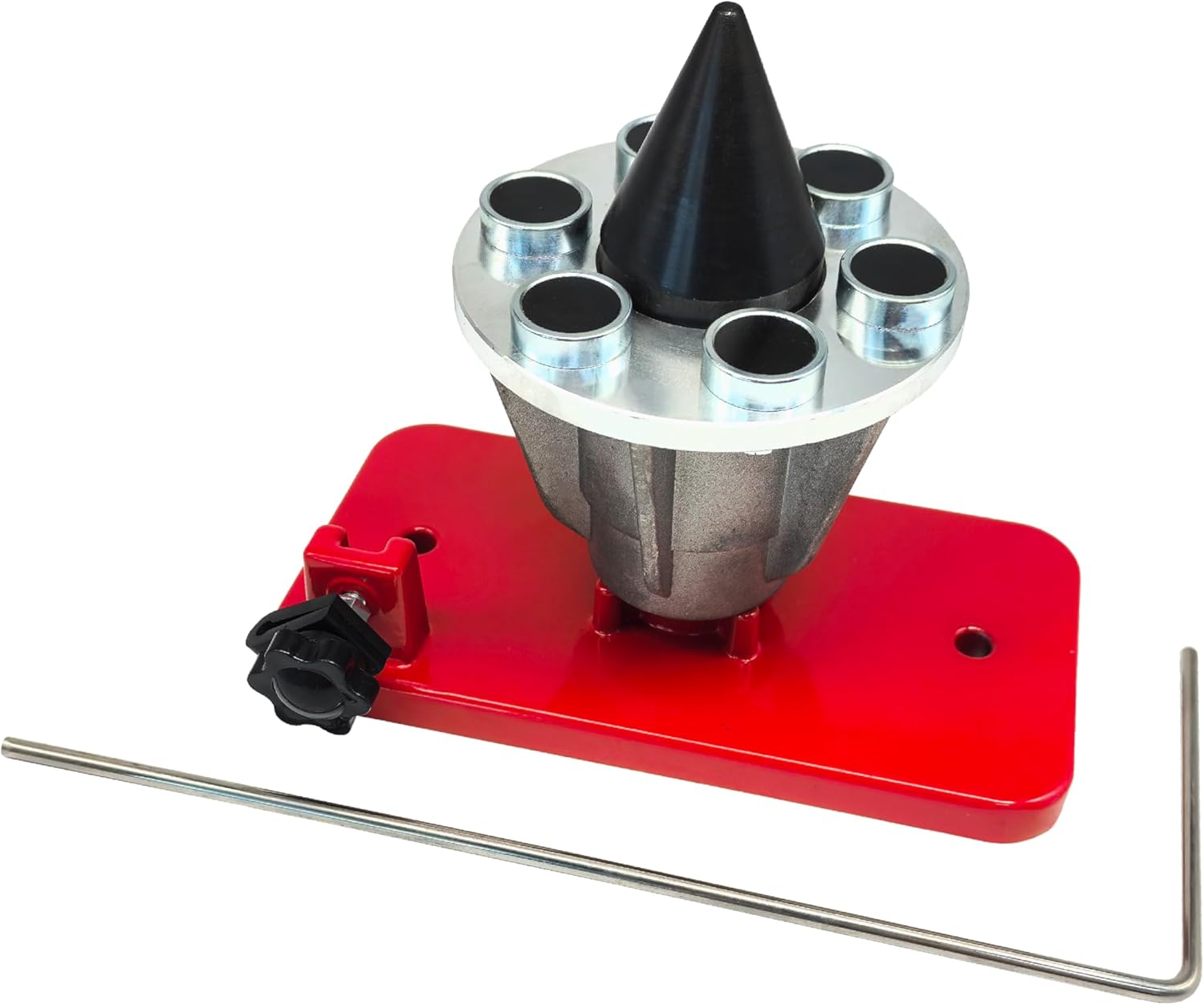
Pros
- Simple, intuitive operation that requires no special skills or tools to get accurate results.
- Magnetic wall mount doubles as a storage solution, keeping the balancer and nearby blades organized.
- Works with both standard and odd-shaped blades that don't fit cone balancers, thanks to the flat magnetic surface.
- Smooth bearing allows the blade to rotate freely, making it easy to detect even slight imbalances.
Cons
- Some units may have a slightly unbalanced spindle out of the box, requiring a minor adjustment with a small counterweight or magnet.
- The nut on the back of the spindle may arrive loose and needs to be tightened before first use.
- Not designed for extremely heavy or commercial-grade blades, as the magnetic hold may be insufficient for blades over a few pounds.
The LAMBIS Lawn Mower Blade Balancer is a simple but effective tool designed to help you keep your mower blades perfectly balanced. After sharpening, an unbalanced blade can cause excessive vibration, uneven cuts, and premature wear on your mower's spindle bearings. This balancer lets you check for imbalances quickly and correct them before reinstalling the blade.
This balancer is best suited for DIY homeowners who sharpen their own mower blades, as well as small engine mechanics and lawn care enthusiasts. It works with a wide range of blades, including those with a five-star center hole pattern that often don't fit traditional cone balancers. The magnetic mount holds the blade securely while allowing it to spin freely on a smooth bearing, so you can see exactly where the heavy side is.
In real-world use, the balancer performs well once set up correctly. A few users reported that the spindle itself was slightly out of balance from the factory, but this is easily fixed by adding a small counterweight like a craft magnet. Also, the nut on the back of the spindle may need to be tightened before first use. After addressing these minor quality control issues, the balancer works consistently and accurately.
Build quality is decent for the price. The aluminum frame and steel bearing feel sturdy enough for regular home use. The magnetic wall mount is a nice touch, keeping the balancer off the workbench and within easy reach. Its compact size means it won't take up much space in your garage or shed. However, heavier commercial blades may exceed the magnetic hold, so this is best for standard residential mower blades.
Overall, the LAMBIS Blade Balancer is a practical and affordable solution for anyone who maintains their own lawn equipment. If you're willing to spend a few minutes checking the initial balance and tightening the nut, you'll get a tool that works just as well as more expensive options. It's a solid buy for DIYers who want a cleaner cut and a smoother-running mower.
Product Dimensions: 7 x 6.5 x 4.6 inches
Item Weight: 2.68 pounds
Material: Aluminum and steel with magnetic surface
Mount Type: Magnetic wall mount
Compatibility: Works with most lawn mower blades, including 339075B model
Color: Red
Manufacturer: LAMBIS
This blade balancer is ideal for:
- Checking blade balance after sharpening with a file, grinder, or sharpening kit.
- Verifying that new replacement blades are balanced before installation.
- Identifying bent or warped blades that cause vibration and poor cut quality.
- Homeowners who maintain a single mower or a small fleet of lawn equipment.
- Small engine repair shops that need a quick, reliable balancing solution for standard residential blades.

Pros
- Wide compatibility with multiple blade hole types and brands
- Helps achieve smoother cutting and less vibration after sharpening
- Lightweight and easy to store in any workshop or garage
- Affordable price point for hobbyists and homeowners
Cons
- Plastic adapters may fit loosely on some balancer spindles, affecting precision
- Requires a level surface and careful visual inspection for accurate results
- Not as robust as metal balancing tools for heavy-duty commercial use
The LIZEWEI Lawn Mower Blade Balance Adapter Set is a practical accessory for anyone who sharpens their own mower blades. It includes a universal precision blade balancer plus five plastic adapters designed to fit different blade hole patterns: 5-point star, 6-point star, 7-point star, T-shirt holes, and bowtie holes (which also fit rectangular openings). This solves the common frustration of blades that won't center properly on the balancer's rounded steps, allowing for accurate balancing after sharpening.
This set is best suited for DIY homeowners, weekend lawn care enthusiasts, and small-scale property maintainers. If you regularly sharpen your reel or rotary mower blades and want to reduce vibration and engine wear, this kit provides a straightforward solution. It is not designed for high-frequency commercial use but handles typical residential lawn maintenance tasks with ease.
In real-world use, the system works as intended on a level surface. Place the appropriate adapter on the balancer spindle, set the blade on top, and observe if one end drops lower than the other. That indicates the heavier side needs more material removed. Several verified buyers report success balancing blades for brands like John Deere, Troy-Bilt, and Cub Cadet. The adapters effectively center the blade, making the process faster than balancing on a nail or screw.
Build quality is adequate for the price. The balancer is a simple tapered cone, and the plastic adapters feel reasonably sturdy. However, some users note that the adapters can have a slight slop on the balancer spindle, which may introduce minor inaccuracies. For the average homeowner, these tolerances are acceptable, but perfectionists might want to check fitment before purchase. The compact size (3.4 x 3.4 x 2.5 inches) makes it easy to store in a tool bag or drawer.
Overall, the LIZEWEI set offers good value for money. It addresses a specific pain point in blade maintenance and delivers on its promise of easier, more consistent balancing. If you are tired of guessing the center or using improvised methods, this inexpensive kit is a worthwhile addition to your workshop. Just be sure to use it on a stable, level workbench for best results.
Package Dimensions: 3.43 x 3.43 x 2.52 inches
Item Weight: 5 ounces
Manufacturer: LIZEWEI
ASIN: B0CHDH1QPL
Compatible Brands: Stihl, Oregon, Troy-Bilt, Cub Cadet, Honda, Lawn-Boy, Lawnmaster, Scotts, Snapper, Toro, and more
1 x 5-point star adapter
1 x 6-point star adapter
1 x 7-point star adapter
1 x T-shirt hole adapter
1 x Bowtie hole adapter (also fits rectangular holes)
1 x Universal precision mower blade balancer
Balancing Lawn Mower Blades: Practical Techniques and Maintenance Methods
To balance a lawn mower blade correctly, you must clean away all grass debris, mount the blade level on a static or magnetic balancer, observe which side drops, and file metal evenly from the heavy end until the blade rests horizontally. This process restores rotational equilibrium so the spinning blade does not wobble or place destructive radial loads on your spindle assembly. Achieving this balance requires removing material from the trailing sail or back edge rather than blunting the cutting edge itself. Using dedicated balancing fixtures ensures that both blade tips rotate on the exact same plane at full operating throttle.
Why Blade Balance Directly Protects Your Mower and Engine
Rotary mower blades typically spin between 2,800 and 3,600 revolutions per minute during normal yard care. At these high velocities, an imbalance of even a fraction of an ounce generates substantial centrifugal force against the spindle housing. This persistent vibration travels upward through the mounting deck, eventually loosening structural hardware and stressing the engine crankshaft or electric motor shaft. Over several mowing sessions, uncorrected imbalance degrades internal spindle ball bearings, leading to noisy operation and premature mechanical failure.
Beyond protecting machine components, balanced cutting blades produce noticeably cleaner turf finishes across your lawn. An unbalanced blade wobbles vertically as it sweeps across the turf canopy, creating an uneven, stepped cutting height that leaves ragged grass tips. Ragged grass blades lose moisture faster and turn brown, increasing susceptibility to lawn diseases and pest pressure. Keeping the cutting wings balanced allows both cutting edges to strike grass blades at uniform heights, leaving behind crisp, clean yard stripes.
Crucial Preparation Steps Before Testing Blade Equilibrium
Accurate balancing is impossible if you attempt to check a dirty, grass-caked blade straight from the deck. Dried lawn clippings, sap, and hardened soil form dense patches on the underside of mower blades, especially along the uplift sails. This accumulated organic matter easily adds enough weight to tilt a balanced blade or disguise an actual steel imbalance. Before setting any blade on a balancing tool, scrape all residue clean with a stiff putty knife and brush the surface with a wire wheel or solvent cleaner.
Safety must remain your primary focus whenever you handle sharp rotary mower steel. Always disconnect the mower spark plug boot or pull the safety key and battery pack before removing or servicing cutting components. Heavy leather work gloves protect your hands from sharp cutting edges and metal burrs created during sharpening passes. Inspect the clean blade under bright light for structural cracks, severe rock gouges, or twisted metal along the center mounting flat before proceeding with balancing tests.
Static Step-Cone Balancers Versus Magnetic Wall-Mount Balancers
Static step-cone balancers represent one of the most accessible and reliable tools for residential lawn maintenance. Models like the Oregon Precision Mower Blade Balancer, crafted from zinc die-cast metal, feature tiered circular steps that fit standard circular center mounting holes. You rest the balancer on a level workbench, set the blade center hole over the appropriate step, and watch for horizontal equilibrium. Budget metal step fixtures, such as the SporGain cone balancer with its wide stable base, deliver consistent static checks when operated on a completely level surface.
Magnetic wall-mount balancers offer an alternative designed for enhanced sensitivity and convenience in busy workshops. Units such as the DPHXF, LDMINDA, and LAMBIS balancers replicate popular replacement designs for models like 42-047 and 339075B. These fixtures mount securely to a wall stud and use strong magnet arrays to suspend the blade against a precision ball-bearing spindle. Because magnetic wall mounts reduce physical friction, they reveal minute weight variations that basic resting cones might occasionally mask.
Choosing between static cones and magnetic spindles usually comes down to your workspace layout and how frequently you sharpen blades. Static cones require zero permanent wall space and store easily inside a standard toolbox between seasonal tune-ups. Complete sharpening kits, such as the Arnold BSK-1 setup, combine a static balancer with a drill-mounted grinding stone for quick weekend touch-ups. Magnetic wall-mount units stay mounted permanently above your sharpening bench, providing immediate verification whenever you sharpen riding or push mower blades.
Accommodating Proprietary Star and Shaped Center Holes
Modern riding mowers, lawn tractors, and commercial zero-turn decks frequently feature proprietary center-hole patterns instead of standard round holes. Many modern manufacturers equip their spindles with five-point, six-point, or seven-point star mounts, as well as bowtie or rectangular drive hubs. Standard round-step cone balancers cannot self-center on these shaped openings because the pointed star valleys fail to seat evenly on circular ridges. Forcing a star-center blade onto a round cone results in an off-center pivot point, producing false imbalance readings that ruin your blade tuning.
Specialty adapter sets resolve this centering dilemma by converting proprietary hub shapes into true concentric circular reference points. The LIZEWEI five-piece balance adapter kit supplies dedicated inserts for five-point, six-point, and seven-point stars, alongside bowtie and rectangular configurations. Placing the matching adapter insert into the blade center hole allows standard precision cone balancers to hold the blade exactly along its true rotational axis. Verifying center alignment ensures that your balance readings reflect actual steel weight rather than an eccentric mounting position.
Step-by-Step Technique for Correcting an Unbalanced Blade
Begin by placing your thoroughly cleaned and sharpened blade onto your chosen balancing tool. If using a wall-mount magnetic fixture, position the center hole against the magnet face so the blade rests horizontally across the bearing spindle. For cone balancers, ensure the base rests on a workbench verified level with a bubble spirit level. Release the blade gently with your fingers and observe whether it remains horizontal or tilts steadily toward one side.
When one side consistently dips downward, that dipping end is the heavy side requiring precise metal removal. Never grind away steel from the outer tip of the blade, as reducing blade length ruins the cutting overlap and deck clearance. Furthermore, avoid grinding the sharp cutting edge itself, which blunts the blade and wastes the sharpening profile you just established. Instead, remove metal from the back trailing edge or the upward sail wing where metal thickness remains uniform and structurally sound.
Use a flat hand file or an angle grinder fitted with a medium-grit flap disc to take light, controlled passes along the heavy wing. Take only two or three smooth passes before returning the blade to the balancer to check progress. Aggressive grinding risks removing too much material at once, forcing you to remove steel from the opposite side and creating unnecessary blade wear. Once the blade rests level without dipping toward either cutting wing, your blade has achieved proper static balance.
Distinguishing Unbalanced Blades from Bent or Warped Steel
A blade that refuses to balance despite repeated grinding may suffer from physical bending rather than simple weight disparity. When a mower blade strikes an exposed tree root or buried surveyor pipe, the impact often bends one wing upward or downward relative to the center flat. Bent steel alters the aerodynamic lift and rotational tracking of the blade, creating severe deck vibrations that balancing cannot cure. You can identify bent blades on precision tools like the Oregon 42-100 or magnetic wall fixtures by noting whether both tips track through the same horizontal line.
Attempting to straighten a bent mower blade with a hammer or shop press creates serious hidden safety hazards. High-carbon mower blade steel undergoes specialized heat treatment during manufacturing to maintain a tough, fracture-resistant core. Bending the steel cold introduces microscopic stress cracks, while heating it with a torch destroys the factory heat treatment and weakens the metal. If your inspection reveals bent wings or twisted mounting flats, retire the damaged blade immediately to prevent catastrophic in-use blade shattering.
Common Mistakes to Avoid During Lawn Mower Blade Balancing
One frequent mistake during blade maintenance is balancing the metal before completing the edge sharpening process. Sharpening always removes steel as you grind away rock nicks and restore the correct factory bevel angle along the cutting edge. If you balance the blade first and then sharpen an edge with deep gouges, that sharpening pass will immediately throw the blade out of balance again. Always clean the blade first, complete all necessary sharpening passes on both cutting wings, and perform final balancing as the finishing step.
Relying on crude workshop shortcuts, such as hanging a blade from a framing nail driven into a wall stud, represents another common pitfall. A stationary nail creates friction against the blade center hole, preventing light weight differences from tipping the blade accurately. In addition, irregular center-hole stamping often binds against the nail shank, giving a false impression that an unbalanced blade is level. Investing in a low-friction cone or ball-bearing magnetic balancer ensures repeatable, reliable readings that preserve your equipment.
Many owners also overlook the balance of brand new replacement blades fresh from the box. While buyers often wonder if factory sharpened mower blades arrive ready for immediate installation, factory coatings and mass-production stamping can occasionally introduce slight weight variances. A thick layer of powder coating or protective paint pooled along one lift sail can tip an otherwise straight blade. Checking brand new replacement steel on a balancer takes only a minute and ensures optimal smoothness before your first seasonal mowing run.
Knowing When to Balance Versus When to Replace Your Mower Blade
Routine balancing keeps lawn mower blades functional through many mowing seasons, but every cutting blade has an absolute service lifespan. Continuous sharpening gradually eats away the cutting edge, moving the bevel closer to the center mounting plate. At the same time, sandy soils and abrasive turf debris act like continuous sandblasting against the upward lift wings. Once the trailing sail thins down noticeably or develops small holes, the blade loses structural integrity and must be discarded.
Evaluating your overall maintenance investment helps you decide between further grinding and ordering a fresh blade set. Reviewing realistic replacement lawn mower blade costs helps homeowners see that replacing worn steel remains an affordable preventative measure compared to replacing damaged deck spindles. When deep gouges require grinding away extensive metal to balance the wings, replacing the blade preserves safer cutting performance. A fresh blade restores original lift airflow, clean grass discharge, and reliable structural strength across your mowing deck.
Balancing your lawn mower blades after every sharpening session takes only a few minutes but delivers lasting protection for your outdoor power equipment. Whether you select a compact static cone balancer or a sensitive magnetic wall-mounted fixture, taking time to verify true horizontal balance eliminates destructive vibration and uneven turf cuts. Always remove metal gradually from the heavy sail wing, avoid touching the sharp cutting edge during correction passes, and retire bent steel without hesitation. By making blade balancing a regular maintenance habit, you ensure a smoother operating deck, healthier turf tips, and reliable mowing performance all season long.






Write Your Review
No reviews yet. Be the first to share your experience!