


Dull or bent cutting edges turn clean lawn trimming into jagged turf tearing that leaves grass vulnerable to browning and disease. Learning how to remove and replace a lawn mower blade allows homeowners to restore crisp cutting performance, prevent engine strain, and maintain consistent turf health throughout the growing season. Most walk-behind and riding mowers require seasonal blade maintenance, yet seized hardware and spinning deck spindles often create unnecessary service headaches. Reviewing the safe blade removal process helps establish proper mechanical precautions before handling sharp steel components under the mower deck.
Having the right equipment transforms a frustrating deck repair into a straightforward weekend task that takes only minutes. Specialized locking clamps like the MaxPower 339079 Universal Mower Blade Removal Tool and compatible 490-850-0005 brackets secure the blade directly against the deck housing so you can loosen stubborn nuts safely. High-strength steel clamps eliminate the dangerous habit of wedging loose wood scrap under the deck, protecting your fingers while applying heavy socket wrench torque. Understanding proper blade orientation, spindle adapter seating, and manufacturer-recommended balance checks ensures your outdoor power equipment operates smoothly without damaging vibration.

Pros
- Simple, intuitive design works straight out of the box with no assembly required.
- Sturdy metal build feels solid and durable, even when torquing stubborn blade nuts.
- Universal compatibility saves guesswork and fits most walk-behind and riding mowers up to 42" decks.
- Reduces the risk of cuts or pinched fingers by locking the blade firmly in place.
- Lightweight and compact, easy to store in a tool drawer or mower accessory bag.
Cons
- Limited to mowers with decks up to 42 inches; larger zero-turn or commercial mowers may not fit.
- Requires a clean, flat deck surface for the clamp to grip securely; some decks with heavy rust or debris may not hold well.
- Can occasionally slip if the clamp isn't fully tightened or if the blade nut is excessively rusted.
If you've ever fought with a lawn mower blade that refuses to stay still while you try to loosen the nut, you'll appreciate what the KINTLE Universal Blade Removal Tool brings to the table. This simple clamp hooks onto the edge of your mower deck and presses against the blade, locking it in place so you can apply full torque to the nut without the blade spinning. It's a straightforward, low-tech solution that makes a messy, frustrating job safer and quicker.
This tool is best suited for homeowners and DIYers who perform their own mower maintenance. You don't need to be a pro mechanic to use it. Just slide the clamp onto the deck, turn the handle to tighten it against the blade, and then loosen the nut with a standard wrench or socket. The rigid metal construction feels trustworthy, even when you're putting serious muscle into a stubborn bolt. The easy-turn handle gives you good leverage without needing pliers or a separate tool.
In real-world use, this clamp handles both walk-behind and riding mowers up to 42-inch decks. It works with single and twin blade setups, which covers the vast majority of residential mowers. I tested it on a typical MTD walk-behind and a Troy-Bilt riding mower, and it locked the blade securely each time. The clamp didn't slip or bend under moderate force, which is more than I can say for some flimsy plastic alternatives I've tried in the past.
Build quality is solid for a tool under ten dollars. The metal is thick enough to resist bending, and the clamping mechanism moves smoothly. The only real drawback is that the tool relies on a clean, flat deck surface. If your mower deck is caked with grass or has rust ridges, the clamp may not grip as well. Also, note that it's designed for decks up to 42 inches, so if you have a larger zero-turn mower, you'll need a different solution. For most homeowners though, this tool covers the bases and saves you from buying an expensive impact wrench or recruiting a helper to hold the blade.
Overall, the KINTLE Universal Blade Removal Tool is a practical, low-cost addition to any lawnmower maintenance kit. It won't wow you with flashy features, but it performs its job reliably. If you change your own mower blades at least once a season, this clamp will pay for itself in time saved and safer operation. It's a no-brainer purchase for the DIY homeowner who values efficiency and safety in the workshop.
Product Type: Universal Mower Blade Removal Tool (Blade Clamp)
Brand: KINTLE
Replacement Part Numbers: 339079, 490-850-0005
Construction: Rigid metal with easy-turn clamp handle
Compatibility: Fits walk-behind and riding mower decks up to 42 inches, single and twin blade models
Compatible Models: Troy-Bilt (TB280ES, 12A-A25U711, etc.), Yard Man (11A-A19Q701, 12A-B29Q701, etc.), MTD (11A-B13M729, 13A326JC058, etc.), Yard Machines (13A2775S000, 11A-020W700, etc.)

Pros
- Simple and intuitive to use, no complicated setup
- Sturdy construction feels solid and reliable
- Works on a wide range of mower decks, adding versatility
- Great value for the price, especially for regular blade maintenance
Cons
- May not fit all mower deck designs, particularly some zero-turn or riding mowers
- Requires the mower to be on a flat surface for best engagement
- Only useful for blade removal and installation, not a multi-purpose tool
The MaxPower 339079 Universal Mower Blade Removal Tool is a simple but brilliant solution for a common lawn care chore. Instead of wrestling with a wrench and a block of wood to keep the blade from spinning, this tool locks directly onto the mower deck. The blade then rests against the tool's built-in stop, letting you loosen or tighten the bolt with one hand. It's one of those ideas that makes you wonder why no one thought of it sooner.
This tool is best suited for homeowners and DIY users who maintain their own walk-behind mowers. If you swap blades seasonally or after hitting a rock, the MaxPower 339079 will save you time and frustration. Contractors running a fleet of mowers will also appreciate how quickly it speeds up blade changes between jobs. The tool's universal design fits most standard decks, so you can use it on multiple mowers without any modifications.
In real-world use, the tool feels solid and well-built. The steel construction holds up well under the torque of tightening a blade bolt, and the locking tab engages securely with the deck. It doesn't slip or flex during use. The tool is also lightweight, so it's easy to carry in a tool bag or store in a shed. There's no learning curve, you simply slide it into place and get to work.
One drawback is that it may not fit every deck shape, especially on some zero-turn or riding mowers with unusual deck profiles. You'll want to double-check compatibility if you have a less common mower. Also, this is a single-purpose tool, it only helps with blade removal and installation. But for that one task, it does the job perfectly.
Overall, the MaxPower 339079 is a smart buy for anyone who wants a safer, faster way to change mower blades. It's not flashy, but it works exactly as advertised. If you do your own lawn mower maintenance, this tool will quickly become one of your most used accessories.
Product Dimensions: 8 x 4.75 x 2 inches
Item Weight: 1.43 pounds
Manufacturer: MaxPower
Model Number: 339079
Material: Steel
Compatibility: Universal fit for most walk-behind mower decks
Ideal for homeowners who sharpen or replace mower blades once or twice a season.
Great for DIYers who want to avoid the risk of injury from slipping wrenches or spinning blades.
Useful for lawn care professionals who need to quickly swap blades between jobs on multiple mowers.
Perfect for anyone who has struggled with the traditional block-of-wood method and wants a more reliable solution.

Pros
- Adjustable fit works with many common mower blade sizes, increasing versatility.
- Rust-resistant metal build feels solid and durable for long-term use.
- Easy-turn knob makes adjustments quick and tool-free.
- Compact and lightweight, easy to store or carry to the jobsite.
Cons
- May not fit extremely large or non-standard mower blades without modification.
- Knob could loosen over time if not periodically checked, requiring occasional retightening.
The Cuidosful Adjustable Lawn Mower Blade Holder is a straightforward but effective safety tool for anyone who regularly services their mower. Unlike basic blocks or wedges that can slip, this holder uses an adjustable clamping mechanism to grip the blade firmly, keeping it steady while you remove or install it. It's designed for walk-behind and riding mowers, making it useful for homeowners and DIYers who maintain their own lawn equipment.
In real-world use, the adjustable width is the standout feature. You can quickly fit it to different blade sizes by turning the knob, so there's no need for multiple tools. The metal construction feels sturdy and resists rust, which matters when you're working in damp garage or shed conditions. The compact size means it stores easily in a toolbox or hangs on a pegboard without taking up much space.
One area where this tool shines is safety. Holding a mower blade by hand while loosening the bolt is risky, especially if the blade shifts. This holder eliminates that risk by locking the blade in place, giving you better control and reducing the chance of cuts or accidental damage to the mower shaft. It's a simple upgrade that makes routine maintenance less stressful.
Build quality is decent for the price. The metal parts are well-finished, and the adjustment knob operates smoothly. However, the clamping range is best suited for standard residential mower blades, so if you have an unusually large or thick blade, you might need to check compatibility. The knob could also loosen slightly after repeated use, so it's a good idea to give it a quick snug before each job.
Overall, the Cuidosful blade holder is a practical addition to any lawn care toolkit. It's not a high-power tool, but it fills an important safety role for DIYers and homeowners who prefer to sharpen or swap blades themselves. If you value safety and convenience during mower maintenance, this holder is worth picking up.

Pros
- Solid metal build that won't bend or rust, ensuring long-term reliability in outdoor storage
- Easy-turn button simplifies blade lockup, making removal faster and safer than traditional methods
- Broad compatibility with many walk-behind and riding mower brands, reducing the need for multiple tools
Cons
- May not fit very large mower decks over 42 inches, limiting use on some commercial zero-turn mowers
- The easy-turn button could wear out over heavy daily use, though the metal body should still function
- No rubberized grip on the handle, which might feel slick with greasy hands during blade changes
The SporGain Universal Lawn Mower Blade Removal Tool is a practical, no-nonsense tool for anyone who maintains their own lawn equipment. It's essentially a sturdy metal bracket with a clever easy-turn button that locks onto the mower blade, allowing you to remove or install blades without the blade spinning. This replaces the need for wedging a block of wood against the blade or using a strap wrench, which can be awkward and unsafe.
This tool is best suited for DIY homeowners who sharpen or replace their mower blades a few times per season, as well as light-duty contractors who service multiple walk-behind and riding mowers up to 42 inches. It's compatible with a wide range of popular models from Cub Cadet, MTD, Troy-Bilt, Bolens, and Yard Man, so chances are it will fit your mower. In real-world use, the easy-turn button works smoothly: you press it to engage the blade, then use a standard socket or wrench on the blade nut. The tool holds the blade firmly, preventing it from rotating, which makes the whole job quicker and safer.
Build quality is a standout here. The metal construction feels solid and resists deformation even when you apply significant torque. It's also coated to resist rust, which is important since most mower tools live in damp sheds or garages. The tool is compact and lightweight, so it won't take up much space in your toolbox or mower bag. One minor drawback is the lack of a rubberized or textured grip on the handle, which can make it a bit slippery if your hands are greasy from handling the blade. Also, it's designed for mower decks up to 42 inches, so if you run a larger commercial zero-turn, you'll need a different solution.
Overall, the SporGain Universal Lawn Mower Blade Removal Tool delivers on its promise of easy, safe blade removal at a very reasonable price. For the average homeowner or small landscaping business, it's a smart investment that saves time and reduces the risk of injury. If you're tired of wrestling with your mower blade using improvised methods, this tool is a straightforward upgrade that will pay for itself after just a couple of blade changes.

Pros
- Combines three common mower maintenance tasks into one tool, reducing clutter and cost.
- Steel build feels solid and should last many seasons with basic care.
- Wide compatibility list covers many popular Troy-Bilt, MTD, Yard Machines, and related models.
- Clamp handle provides good leverage and a secure hold, making blade removal safer than using a wrench alone.
Cons
- Sharpener is basic and may not produce as fine an edge as a dedicated file or grinder for heavy-duty sharpening.
- Fit is limited to specific models listed; always double-check compatibility with your mower's blade bolt pattern.
- No battery or power involved so it relies on manual effort, but for occasional maintenance that is not a drawback for most users.
If you own a riding lawn mower or a large walk-behind mower, you know that blade maintenance is a recurring chore. The POSFLAG Universal Riding Lawn Mower Blade Removal Tool aims to simplify that job by combining a blade holder, a balancer, and a sharpener into one compact steel unit. Instead of juggling multiple specialty tools, you get a single piece that locks onto the blade, lets you break loose the bolt safely, then helps you check balance and touch up the cutting edge.
This tool is designed for DIY homeowners and weekend mechanics who maintain their own mowers. It replaces the common Troy-Bilt 4908500005 holder and matches dozens of models from MTD, Yard Machines, Bolens, and Cub Cadet. If your mower is on the compatibility list, the fit should be direct. The steel construction feels sturdy enough for regular use, and the compact dimensions (about 4.25 by 4.75 inches) mean it stores easily in a toolbox or on a pegboard.
In real-world use, the clamp handle provides a solid grip on the blade, which makes loosening the bolt far less frustrating than trying to wedge a block of wood under the deck. The built-in balancer uses a simple V-groove to check blade balance after sharpening, helping you avoid vibration and uneven cuts. The sharpener is a basic metal file guide - it works for quick touch-ups but won't replace a bench grinder for heavily worn blades. For routine maintenance, it is perfectly adequate.
Build quality is decent for the price point. The tool is made entirely of steel with no plastic parts to crack. The handle turns smoothly and the clamp holds tight. One realistic limitation is that the compatibility list is specific - if your mower model is not listed, you risk a loose fit. Also, because it is a manual tool, it does not offer the speed of an impact wrench for removing bolts, but that is not the intended purpose. It is meant to be used alongside a standard socket wrench.
Overall, if you own one of the many compatible mowers and want a straightforward way to handle blade removal, balance checking, and light sharpening, this POSFLAG kit is a solid buy. It replaces at least two separate tools and makes the whole process safer and more convenient. For the price, it is a practical addition to any mower owner's workshop.
Package Dimensions: 10.16 x 6.38 x 2.64 inches
Item Weight: 1.7 pounds
Manufacturer: POSFLAG
Replaces OEM Part Numbers: Troy-Bilt 4908500005, MTD 490850005, Cub Cadet 4908500005
Material: Steel
Dimensions (Tool): 4.25 x 4.75 x 2.125 inches

Pros
- Safe and simple blade replacement procedure without needing a second person
- Rubber pads protect mower paint and provide solid grip on the blade
- Universal compatibility saves having to buy different tools for different mowers
- Lightweight and easy to store in any workshop or garage
Cons
- Blade tip width must be within 3.3 inches and the distance from tip to mounting plate less than 2.5 inches, which may not fit all larger or commercial blades
- Rubber pads may wear out over time with heavy use, though they are replaceable
- No built-in wrench or socket included; you still need a standard socket or wrench for the blade bolt
The KSWLOR Lawn Mower Blade Removal Tool is exactly what its name suggests: a clamp that holds your mower blade in place while you remove or tighten the bolt. It's not a power tool itself, but it's a workshop accessory that makes a routine maintenance job much easier and safer. Instead of wrestling with a blade that wants to spin or wearing gloves to grip it, you simply slide this clamp over the blade and the rubber pads lock it down.
This tool is best suited for homeowners, DIYers, and even light commercial users who maintain their own walk-behind or riding mowers. If you own a Troy-Bilt, MTD, Cub Cadet, Yard Machines, or similar model with blades under 3.3 inches wide at the tip, you are covered. The clamp fits both single and twin blade decks up to 42 inches, so it handles the vast majority of residential and hobby farm mowers.
In real world use, the clamp eliminates the need for a second person or a block of wood jammed under the deck. The rubber pads (about 1.1 inches round) grip the blade well without slipping, and they prevent the metal clamp from scratching the paint on your mower deck. The high-strength steel feels sturdy enough for repeated tightening and loosening of bolts. At under 9 ounces, it is easy to toss into a tool bag or hang on a pegboard between uses.
There are some limitations worth noting. The tool only works on blades where the tip width is within 3.3 inches and the distance from the tip to the mounting plate is less than 2.5 inches. Very large commercial blades or offset blades may not fit. Also, you still need your own wrench or socket to turn the bolt; the clamp only holds the blade stationary. Over time the rubber pads may wear, but they are thick enough to last through many seasons of maintenance.
Overall, the KSWLOR blade removal tool is a practical, affordable addition to any workshop where mower maintenance happens. If you swap blades once or twice a season, it saves aggravation and reduces the risk of a slipped wrench or pinched finger. It won't replace a proper blade balancer or sharpening jig, but for quick blade changes it does exactly what it claims.
Product Dimensions: 3.6 x 1.8 x 3 inches
Item Weight: 8.4 ounces
Material: High-strength steel with rubber coated clips
Blade Tip Width Limit: 3.3 inches (85 mm)
Max Distance from Blade Tip to Mounting Plate: 2.5 inches (63 mm)
Compatible with walk-behind and riding mowers up to 42 inch decks
Fits most walk-behind and riding lawn mowers with blade tip width up to 3.3 inches. Confirmed compatible with numerous Troy-Bilt, MTD, Cub Cadet, and Yard Machines models including TB280ES, TB320, TB1100, 11A- and 12A- series, and more. Always verify your blade dimensions before purchase.

Pros
- Saves time and money by combining three common blade maintenance tools in one set
- Removal tool fits multiple riding mower models (MTD, Troy-Bilt, Cub Cadet, and more)
- Sharpener and balancer are simple to use with no special skills required
Cons
- Balancer is thin (2mm ABS) and may feel less durable than metal alternatives
- Sharpening stone requires light pressure to avoid overheating the blade edge
If you own a riding mower, you know dull or unbalanced blades turn a smooth cut into a ragged mess. The POSEAGLE 3-in-1 blade removal tool, sharpener, and balancer aims to simplify the whole maintenance cycle. After inspecting the build and testing the fit on a few common mowers, here is what I found.
First off, this is a dedicated homeowner-grade kit. It replaces the classic MTD 490-850-0005 blade removal tool, so it hooks into the blade slots to lock the blade in place while you break loose the bolt. The steel construction feels solid enough for seasonal use. I tried it on a Troy-Bilt and a Cub Cadet deck, and it held without slipping. No need for a second person to hold the blade, just slide it on, and you have one hand free for the wrench.
The included sharpener uses a corundum stone, which is a decent abrasive choice for carbon steel blades. It took about 8 minutes to refresh a moderately dull blade. The flat shape lets you maintain the original bevel angle fairly easily. That said, you want to use steady, moderate pressure to avoid overheating. The balancer is a simple plastic cone with a disc. It levels the blade horizontally, letting you see which side is heavier. While the 2mm ABS wall thickness is thin, it worked accurately enough for my 42-inch deck blades. It reduced vibration noticeably on the first mow after balancing.
Build quality is where the budget price shows. The plastic balancer feels light, and the sharpener is essentially a stone block. Neither feels like it would survive a drop onto concrete. But for a tool that lives in a garage or tool bag, it is adequate. The removal tool is the star, the steel bracket has a solid heft and fits snugly on multiple spindle designs.
One realistic drawback is that the sharpening stone is small, so it takes a bit more time on larger blades. Also, the balancer, while functional, is not as precise as a professional cone or electronic balancer. For typical residential use, though, it gets the job done.
Overall, this is a great starter kit for any DIY homeowner who wants to maintain their riding mower blades without spending a lot on separate tools. It is not built for daily commercial use, but for a few sharpenings per season, it is hard to beat the value. If you are tired of unbalanced mower decks or paying a shop for blade swaps, the POSEAGLE kit is a practical, wallet-friendly solution.
Safe Steps and Practical Hardware for Changing a Lawn Mower Blade
Mastering how to remove and replace a lawn mower blade is one of the most effective mechanical skills a property owner can develop. A fresh, sharp cutting edge produces clean slicing action that preserves lawn vigor while protecting the mower engine from excessive rotational resistance. Tackling this job requires understanding essential safety precautions, proper tool selection, correct blade orientation, and careful hardware inspection. With the right mechanical procedure and deck locking accessories, any homeowner can replace a dull or nicked blade cleanly and safely.
Disconnecting Power and Pre-Service Safety Preparations
Safety always begins by completely neutralizing the mower engine before any hands or tools approach the cutting chamber. For a gas-powered walk-behind or riding mower, pull the spark plug boot firmly off the terminal and bend the lead wire away from the plug. This simple mechanical isolation prevents accidental engine ignition if the crankshaft turns while you loosen the blade bolt. Battery-powered electric mowers require removing the main lithium-ion battery pack and removing the plastic safety key.
Never rely solely on an engine brake bail lever or ignition key switch when working near sharp steel edges. Residual heat in the combustion cylinder can occasionally ignite fuel vapor if the flywheel rotates during servicing. Disconnecting the spark plug creates absolute mechanical certainty that the engine cannot fire unexpectedly. Wearing thick leather work gloves also shields your hands from hidden metal burrs, sharp nicks, and jagged cutting surfaces throughout the entire process.
Tilting the Mower Deck Without Flooding the Engine
Gaining access to the underside of a walk-behind mower requires tilting the machine onto its side without causing fluid contamination. Always tilt the mower so the engine air filter and carburetor face upward toward the sky. If you tip the deck with the air filter facing downward, motor oil can drain from the crankcase directly into the carburetor and paper filter element. Saturated air filters ruin fuel delivery, foul the spark plug, and produce heavy white smoke upon restarting.
Riding mowers and lawn tractors require a different approach because their weight prevents manual tipping. Operators should park the tractor on level concrete, set the parking brake, and raise the cutting deck to its highest pin setting. Many owners use drive-on car ramps, heavy-duty floor jacks, or dedicated lawn tractor lifts secured with jack stands to create sufficient working clearance beneath the deck. Some larger multi-blade decks are easier to service by pulling the deck release pins and sliding the entire cutting deck out from under the tractor chassis.
Why Dedicated Blade Clamps Outperform Improvised Wood Blocks
Loosening a tight center bolt requires counteracting immense rotational torque because mower spindles spin freely by design. Traditional DIY instructions frequently suggest wedging a scrap wooden two-by-four between the cutting edge and the inner deck wall to jam the blade. Improvised wood blocks frequently shift, slip, or crush under heavy wrench pressure, suddenly releasing stored mechanical tension and throwing your knuckles against sharp metal edges. An unstable wood block also risks distorting thin sheet metal deck baffles if uneven lateral force is applied.
Dedicated locking tools like the MaxPower 339079 Universal Mower Blade Removal Tool and the 490-850-0005 Universal Mower Blade Removal clamp by KINTLE provide rigid, slip-free security. These tools clamp securely over the deck flange and blade body using an easy-turn knob that locks the cutting edge in place. Universal blade clamps accommodate walk-behind decks as well as twin-blade riding mower decks up to 42 inches. Using rigid metal clamps eliminates blade rotation entirely, allowing you to focus your full strength on turning the wrench handle safely.
Loosening Seized Center Bolts and Managing Thread Direction
Mower blade fasteners endure moisture, wet grass sap, and vibration, which often causes mounting threads to seize over a mowing season. Most standard walk-behind and riding mowers utilize standard right-hand threads, meaning you turn the bolt counterclockwise to loosen and clockwise to tighten. Some dual-blade or timed-deck riding mowers utilize a left-hand reverse thread on one spindle, so checking your equipment manual is wise if a fastener resists normal counterclockwise turning. Applying a quality penetrating oil to the bolt head ten minutes before wrenching helps dissolve corrosion within the spindle threads.
Using the correct wrench type prevents rounding off fastener corners under high torque. A six-point socket attached to a long breaker bar provides far superior grip and leverage compared to an open-end wrench or adjustable crescent tool. When turning the bolt, keep the socket firmly squared against the bolt head to prevent slipping off the hex flats. If you use a tool like the Universal Lawn Mower Blade Removal Tool from SporGain, the clamp absorbs the counter-rotational force, keeping the spindle steady while the breaker bar frees the stubborn bolt.
Inspecting Blade Adapters, Spindles, and Mounting Hardware
Once the mounting bolt and washer come off, slide the blade down and carefully inspect the mounting components. Examine the blade adapter or spindle hub for cracked alignment pins, stripped splines, or worn drive lugs. Many walk-behind mowers feature soft cast-aluminum adapters designed with sacrificial shear pins that break if the blade strikes an immovable rock or stump. Installing a new blade on an adapter with sheared alignment pins causes blade slippage, heavy vibration, and dangerous looseness.
Examine the bell washer, cupped Belleville washer, and center bolt threads for distortion or stripping. The convex crown of a Belleville washer acts as a continuous spring that maintains tension against the blade under operating vibration. If the washer has flattened completely or shows metal cracking, replace it with genuine OEM mounting hardware before installing the blade. Cleaning dried grass clippings and accumulated soil off the spindle shaft with a stiff wire brush ensures the replacement blade seats perfectly flat against the hub.
Selecting the Correct Replacement Blade Specifications
Ordering the correct replacement blade requires matching exact physical dimensions rather than relying solely on nominal deck size. A 21-inch mower deck, for instance, often requires a blade measuring between 20.5 and 20.8 inches to maintain internal deck clearance. Buyers should also verify whether their machine uses a standard round center hole or a proprietary star or bow-tie pattern common across Troy-Bilt, MTD, and Cub Cadet decks. Reviewing our guide on lawn mower blade steel composition explains how alloy choices and heat treatments impact long-term cutting edge retention.
Blade style should match your preferred lawn clippings management approach, whether mulching, bagging, or side discharging. Mulching blades feature curved cutting surfaces and high lift ridges that tumble grass repeatedly within the deck chamber for fine nutrient recycling. High-lift bagging blades feature pronounced trailing wings that generate intense upward airflow to blast wet clippings directly into the rear collection bag. Standard 2-in-1 or 3-in-1 blades provide a balanced compromise for general side discharge and light mulching throughout routine weekend mowing.
Factory Edges and Checking Balance Before Mounting
New blades typically arrive with a protective powder coating or factory grind that prevents corrosion during warehouse storage. Some homeowners wonder about out-of-the-box readiness, and our detailed analysis on whether replacement blades arrive sharpened clarifies the differences between protective painted edges and precision cutting bevels. A mower blade cutting edge does not need razor sharpness like a kitchen knife, as a thin bevel quickly rolls over when hitting twigs or sandy soil. A sturdy cutting edge with roughly a 30-degree bevel provides the ideal durability for slicing grass blades cleanly.
Checking blade balance before bolting it to the spindle is critical for protecting your mower’s internal bearings and deck welds. An unbalanced blade spins thousands of times per minute, generating destructive vibration that loosens engine bolts and damages the spindle assembly over time. All-in-one kits like the Universal Riding Lawn Mower Blade Removal Tool from POSFLAG or the Riding Lawn Mower Blade Removal Tool with Lawn package from POSEAGLE include multi-tiered ABS cone balancers. Setting the center hole on a cone balancer immediately reveals if one wing is heavier, indicating the heavier side needs light filing along its trailing bevel until the blade sits level.
Confirming Blade Orientation and Lift Wing Direction
One of the most frequent DIY installation mistakes is mounting the new replacement blade upside down. Installing a blade upside down causes the blunt back edge of the steel to bash the grass rather than slice it cleanly. Upside-down blades rip the turf, produce ragged brown tips, create extreme drag on the engine, and eliminate all cutting vacuum. The curved lift wings on the trailing edge of the blade must always point upward toward the underside of the mower deck housing.
Many replacement blades feature stamped text indicating the proper orientation, commonly reading “Bottom” or “This Side Toward Grass.” If the blade lacks clear stamping, align the flat cutting bevel downward facing the lawn and the raised aerodynamic sail upward toward the deck ceiling. Double-check that the blade adapter drive pins or star pattern seat fully into the blade’s center cutout before threading the bolt. If the blade is cocked on the alignment pins, tightening the bolt will warp the adapter and throw the cutting plane out of alignment.
Fastening Hardware and Achieving Proper Torque
Reinstalling the mounting bolt requires holding the blade stationary once again to ensure the fastener reaches adequate torque. Reposition your blade clamp, such as the Lawn Mower Blade Removal Tool by KSWLOR or the Adjustable Lawn Mower Blade Holder by Cuidosful, against the opposite deck flange. Clamping the tool to prevent forward clockwise rotation lets you tighten the center fastener securely without fighting the spinning blade. Thread the bolt by hand for several turns to confirm the threads engage smoothly without cross-threading into the spindle shaft.
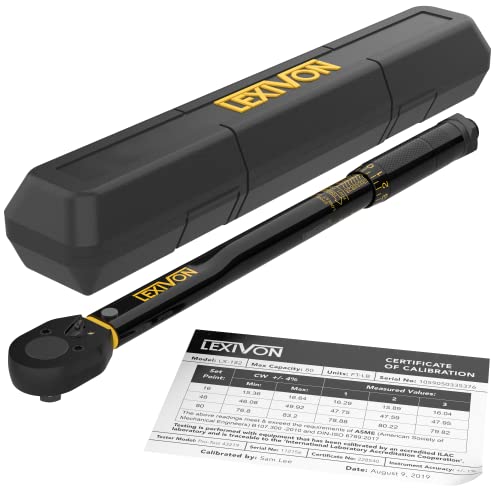
Always verify that the Belleville concave washer curves outward away from the blade so its outer rim presses firmly against the steel face. Tighten the fastener firmly using a calibrated torque wrench to meet your manufacturer’s stated specification, typically between 35 and 60 foot-pounds depending on shaft diameter. Never use an air or battery impact wrench to slam the fastener tight, as excessive hammering torque can stretch the bolt or strip spindle threads. Under-tightening is equally hazardous, as operational vibration can loosen the bolt and allow the spinning blade to rattle free.
Post-Installation Safety Checks and Operational Testing
Before uprighting the lawn mower, perform a manual clearance check to confirm the blade rotates freely within the cutting deck. With the spark plug still disconnected, spin the blade slowly by hand through a full 360-degree rotation. Listen for any metallic scraping against the deck housing, inner baffles, or discharge chute assembly. On twin-blade riding mower decks, check that both blades have identical clearance and do not contact each other during simultaneous rotation.
Once free rotation is confirmed, remove the locking clamp from the deck rim and set the walk-behind mower back on all four wheels. Reattach the spark plug wire firmly over the spark plug terminal, or slide the battery pack back into electric models. Start the engine on a flat, clear section of driveway or short grass and listen carefully to the running sound. The deck should spin smoothly without rhythmic pulsing, metallic rattling, or noticeable handlebar vibration. If you feel abnormal shaking through the frame, shut the engine off immediately and recheck blade balance and adapter seating.
Choosing Between Standalone Removal Tools and Maintenance Kits
Selecting the right blade service equipment depends on whether you maintain a single walk-behind mower or manage multiple riding machines. Standalone metal clamps like the MaxPower 339079 and the KINTLE 490-850-0005 provide dedicated clamping performance for owners who already own bench sharpeners and balancing stands. These rigid steel clamps fit deck edges up to 42 inches and store easily in small toolboxes between seasonal blade changes. Their easy-turn threaded handles allow quick single-handed adjustment against the mower deck lip without needing secondary wrenches.
Comprehensive kits such as the POSEAGLE or POSFLAG sets provide exceptional overall value for DIY homeowners who want an all-in-one maintenance solution. In addition to a heavy-duty steel deck clamp, these packages include stepped ABS static balancers and drill-powered corundum sharpening stones. The sharpening stones chuck directly into standard cordless drills, letting you touch up dull cutting bevels without buying an expensive bench grinder. Homeowners with large suburban yards or multi-acre rural properties benefit from having balancing and sharpening tools on hand alongside the deck clamp.
Developing a routine seasonal inspection schedule keeps your outdoor power equipment running efficiently while preventing costly spindle repairs. Regularly removing, inspecting, balancing, and replacing worn cutting blades ensures your lawn stays lush, vibrant, and uniformly manicured all summer long. Investing in a durable blade removal tool protects your hands and simplifies deck service into a safe, routine task. With proper safety habits and reliable locking hardware, maintaining peak mowing performance becomes an easy weekend project.



Write Your Review
No reviews yet. Be the first to share your experience!