


Maintaining a crisp lawn cut depends heavily on having properly aligned cutting edges and a balanced cutting deck. Dull, uneven, or improperly pitched blades often shred grass tips rather than slicing cleanly, which can leave turf looking brown and stressed after mowing. Dialing in an automatic mower blade setup ensures that robotic cutters, traditional rotary blades, or precision reel units operate at their intended cutting heights with minimal resistance. Homeowners seeking reliable performance often rely on specialized deck gauges, static balancers, and fresh cutting discs to keep their equipment running smoothly.
Whether you maintain a battery-powered robot or a walk-behind machine, matching components to your exact mower model prevents unnecessary spindle wear and reduces unwanted deck vibration. Small setup errors, such as a tilted cutting deck or an unbalanced rotary blade, can strain drive motors and shorten hardware lifespan. For robotic systems, checking your cutting disc and consulting resources like our robotic blade configuration guide can help ensure clean passes across the yard. Taking the time to inspect your cutting deck alignment and hardware specifications before the growing season begins protects both your turf and your equipment investment.

Pros
- Simple to use, no complex setup or training required.
- Scale markings are clear and easy to read on the job.
- Lightweight and portable, easy to carry between mowers or job sites.
- Affordable price point for a dedicated leveling tool.
Cons
- Plastic construction may not be as durable as metal alternatives over many years of heavy use.
- Scale range limited to 1 1/2 to 5 inches, which may not suit every mower deck or aftermarket blade setup.
- Manual measurement still relies on your eye for true level; best used as a quick reference, not a precision instrument.
The Xhziy Mower Deck Leveling Gauge is a straightforward measuring tool designed to help you set blade height accurately on lawn mowers. It's a pocket-sized plastic gauge that reads from 1 1/2 to 5 inches, giving you a quick visual reference for leveling your deck. No batteries, no electronics, just a simple mechanical tool that gets the job done.
This gauge is best suited for DIY homeowners and lawn maintenance techs who want a faster way to check blade height without dragging out a tape measure or level. If you zero-turn mows every week or you're a contractor who maintains a fleet of mowers, this tool saves time and reduces guesswork. The ergonomic handle makes it easy to use even with greasy fingers or work gloves.
In real-world use, the gauge works as advertised. Place it on the mower deck, line up the scale with the blade tip, and read the height. The markings are clear and easy to interpret. It's robust enough for occasional drops on the lawn or shop floor, though the plastic body won't survive a direct hit from a truck or heavy equipment.
Build quality is decent for the price. The plastic feels solid, and the blue color helps prevent losing it in the grass. At just 2.24 ounces and measuring 12x5x2 inches, it's truly portable. You can stash it in a tool pouch or leave it in the mower's storage compartment. The main drawback is the limited range and the fact it requires manual reading, so you still need some basic understanding of deck leveling. Also, if you have non-standard blades or a deck with unusual geometry, the gauge might not fit perfectly.
Overall, for under ten bucks, the Xhziy Mower Deck Leveling Gauge is a handy addition to any lawn care setup. It won't replace a professional dial indicator or laser level, but for everyday tuning and quick checks, it's a practical, no-fuss tool. I'd recommend it to any homeowner who wants a level cut without the hassle, or to lawn service crews who need a quick reference gauge for multiple mowers.

Pros
- Extremely affordable and widely compatible with most residential mower blades.
- Simple to use: just chuck it in a drill and run along the blade edge.
- Including both sharpener and balancer means you get a complete blade maintenance solution.
- Lightweight and portable, perfect for small workshops and home garages.
Cons
- Requires a drill to operate, so you need one on hand.
- Manual balancing takes a bit of patience to get right compared to electronic balancers.
- Not ideal for heavy commercial use or high-volume shops where speed is critical.
The Arnold BSK-1 is a straightforward sharpening and balancing kit designed for lawn mower blades. It turns your regular electric drill into a reliable sharpening tool, making it easy to maintain a clean cutting edge without investing in a dedicated grinder. The kit includes a cone-shaped sharpening stone and a simple static balancer, both built to handle blades from walk-behind mowers, lawn tractors, and zero-turn machines.
This kit is best suited for homeowners and DIYers who prefer to handle their own mower maintenance rather than taking blades to a shop. It's also useful for small engine mechanics who need an affordable backup method. But if you're a professional landscaper sharpening dozens of blades a week, you'll likely want a faster, more automated system.
In real-world use, the sharpener works quickly. Chuck it into a drill, run the stone along the blade's edge at a shallow angle, and you'll see burrs form within seconds. The vibration-free claim holds up -- the stone spins smoothly, which helps avoid gouging the blade. The balancer is straightforward: hang the blade on the cone and see which side drops. Rotate a few times to confirm. It's not fancy, but it effectively reveals if the blade is heavy on one side.
Build quality is typical for a budget tool. The sharpening stone is abrasive and should last through several sharpenings. The balancer is made of plastic and a metal cone. It's lightweight (just over two ounces) and stores easily in a drawer. For the price, durability is acceptable for occasional weekend usage. You won't hesitate to toss it in a toolbox or tool bag.
The main drawback is that you need a drill, and the process is manual. Balancing requires patience -- you'll have to grind off material from the heavy side and recheck. It's not as precise as a professional blade balancer, but it's more than enough to get a decently balanced blade. Overall, the Arnold BSK-1 is a smart buy for anyone who wants to keep their mower cutting cleanly on a budget. It's a practical addition to any workshop, especially if you already own a drill.
Color: Black
Dimensions: 3 x 7 x 10 inches
Weight: 0.24 pounds
Product Group: Outdoors
Binding: Lawn & Patio

Pros
- Sturdy metal build that won't crack or warp like plastic balancers.
- Accurately detects even small imbalances for improved cut quality.
- Works with a wide variety of blade center hole sizes thanks to the stepped cone design.
- Easy to use: place blade, watch gravity, and remove material from the heavy side.
Cons
- Some users report that the cone steps may not fit every blade perfectly, though most find a suitable step.
- Requires a bit of trial and error to center the blade precisely on the cone.
- The balancer itself has a narrow base that can tip if bumped during use.
The Oregon Precision Mower Blade Balancer (model 42-100) is a simple, no-fuss tool that belongs in every mower maintenance kit. After you sharpen your blade, tossing it back on the mower without checking balance is a gamble. Even a tiny imbalance can cause excessive vibration, rough cutting, and accelerated wear on your mower's engine and spindle bearings. This compact metal balancer solves that problem with a straightforward gravity-based design.
Best suited for homeowners who sharpen their own blades as well as professional landscapers, the balancer works with virtually any rotary mower blade. The stepped metal cone accommodates different center hole sizes, so it fits push mowers, riding mowers, and zero-turn machines from brands like Stihl, Husqvarna, Troy-Bilt, and more. The zinc die-cast body feels solid and substantial easily outlasting cheap plastic alternatives that can crack or warp over time.
Using the Oregon balancer is refreshingly simple. Place the blade flat on the cone, let it settle, and gravity will tell you if one side is heavier. If the blade dips, grind a bit more material off that side and recheck. The process takes only a minute or two but makes a real difference in how your mower runs. Users consistently report noticeably less vibration and a cleaner, more even cut after balancing.
One realistic limitation is that the cone steps might not align perfectly with every blade's center hole, though most users find a step that works. Also, the balancer has a narrow base, so you'll want to set it on a stable surface to avoid tipping. But these are minor tradeoffs for a tool that costs under ten dollars and can extend the life of your mower's engine and deck.
If you maintain your own mower blades, the Oregon Precision Blade Balancer is a smart, low-cost investment. It helps you get professional-level results at home, reduces vibration that leads to premature wear, and keeps your lawn looking its best. For the price and performance, there's little reason not to add one to your workshop gear.
Brand: Oregon
Model: 42-100
Material: Zinc die-cast metal
Weight: 0.2 pounds
Dimensions: 10 x 6 x 1 inches
Power Source: Manual
Color: Original Version
Compatibility: Fits most push mower and riding mower blades
Pros
- Quiet and emission-free, great for early morning or late evening mowing without disturbing neighbors
- Very easy to assemble and requires almost no ongoing maintenance
- Cuts grass cleanly without shredding, leading to a healthier lawn appearance
- Lightweight and easy to store, takes up minimal garage or shed space
Cons
- Not suitable for tall or wet grass; requires frequent mowing when grass is dry and under 4 inches
- Limited cutting width of 14 inches means more passes on larger lawns, best for small to medium yards
- No power assist, so uneven or hilly terrain can make pushing more difficult
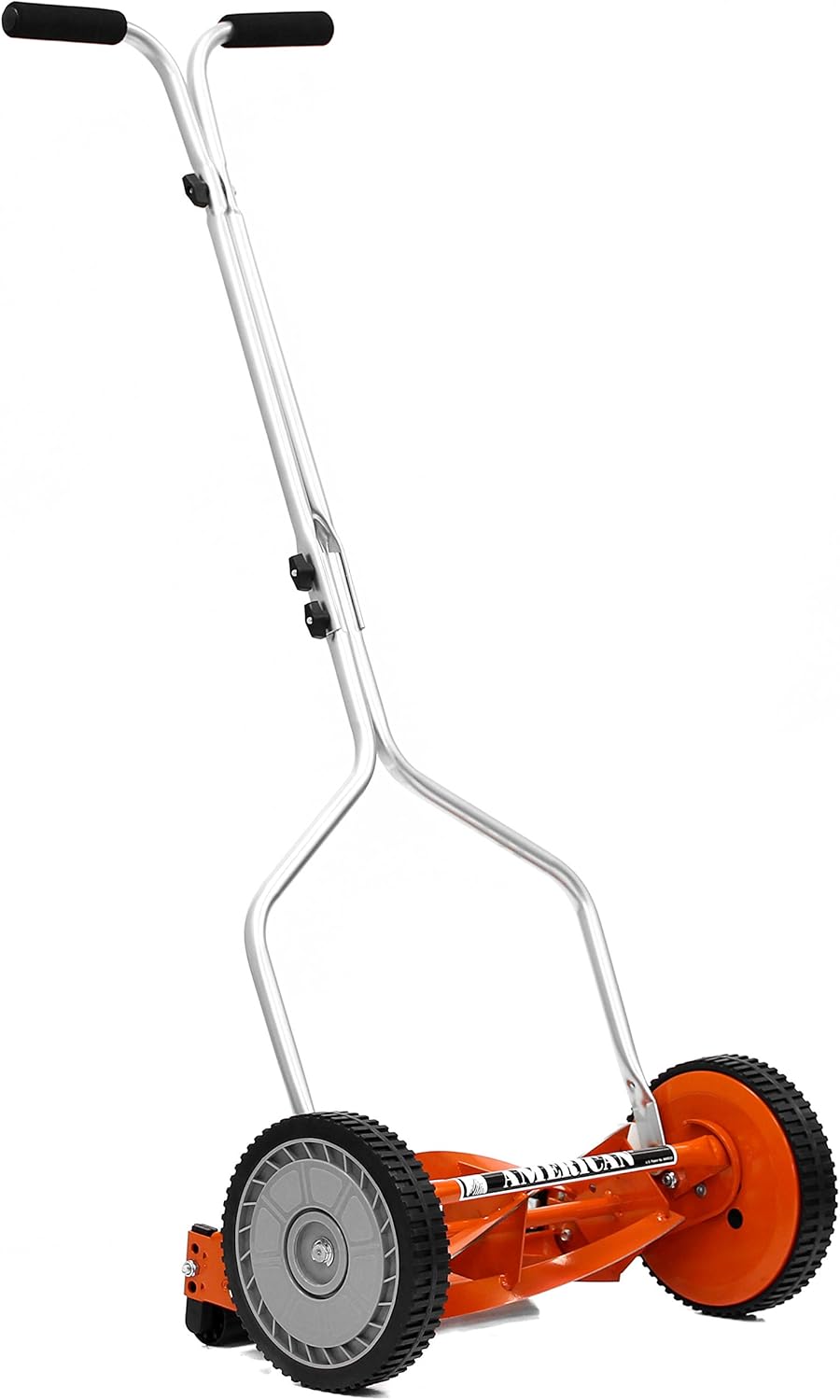
The American Lawn Mower Company 1204-14 is a classic push reel mower that brings back the simplicity of manual lawn care. Unlike gas or electric mowers, this tool relies entirely on your own muscle power to spin the reel and cut grass. It's a straightforward, no-nonsense machine designed for homeowners who prioritize quiet operation, zero emissions, and low maintenance over speed and brute force.
This mower is best suited for small, flat lawns with cool-season grasses like bluegrass, fescue, and rye. It's ideal for DIY homeowners who enjoy a bit of exercise while taking care of their yard. If you have a quarter acre or less and don't mind mowing more frequently during the growing season, this reel mower can deliver a clean, precise cut that actually promotes a healthier lawn by slicing rather than shredding the grass blades.
In real-world use, the 1204-14 performs best when you stay on top of your mowing schedule. It handles grass up to 4 inches tall, but for the best results, you should mow when the grass is dry and no more than about 3 inches high. The adjustable cutting height ranges from 0.5 to 1.75 inches, giving you good control over lawn appearance. The 8.5-inch polymer wheels roll smoothly on flat ground, but the mower can struggle on uneven or bumpy terrain. You'll need to make multiple passes if the grass is on the taller side, and wet grass will clog the reel and leave an uneven cut.
Build quality is decent for the price point. The frame is made of steel, and the reel blades are heat-treated alloy steel that stay sharp for years with minimal care. Assembly is straightforward and can be done in about 15 minutes with basic tools. The cushioned T-handle is comfortable for most users, though taller individuals might find it a bit low. At just 19 pounds, the mower is easy to lift and store, and it takes up very little space in a garage or shed.
One realistic drawback is that this mower won't replace a gas or electric model for larger or more demanding lawns. If you have a half-acre or more, or if your yard has hills, you'll likely find the manual effort tiring and time-consuming. Also, the 14-inch cutting width means more passes compared to a 21-inch power mower. But for its intended use - small, flat lawns - the American Lawn Mower 1204-14 is a reliable, eco-friendly, and cost-effective choice that gets the job done without noise, fumes, or ongoing fuel costs.

Pros
- Extremely quiet operation - no engine noise or exhaust fumes, perfect for early morning or noise-sensitive neighborhoods
- Promotes healthier turf by cutting grass cleanly, reducing stress and weed pressure
- Lightweight and easy to maneuver, especially for smaller lawns and tight spaces
- Minimal maintenance - no oil changes, filter replacements, or fuel to manage
Cons
- Not effective on tall, overgrown grass - requires regular mowing to maintain ideal height
- Best suited for flat, even lawns; may struggle on hilly or uneven terrain
- No grass catcher included or available, leaving clippings on the lawn (which can be beneficial for mulching)
The Earthwise 1715-16EW is a 16-inch manual push reel mower that brings back the simplicity of lawn care without sacrificing performance. Instead of a gas engine or battery motor, you power this mower yourself - just push and the seven-blade reel spins, snipping grass like a pair of scissors. It's designed specifically for fine-bladed turf grasses such as Bermuda, Zoysia, Centipede, St. Augustine, and Kentucky bluegrass, where a lower, cleaner cut promotes a denser, healthier lawn.
This mower is ideal for homeowners with small to medium-sized, relatively flat lawns - think 2,000 to 5,000 square feet. If you have a bumpy or sloping yard, you might find it bounces or scalps in places, but on even ground it glides smoothly. Assembly is straightforward and tool-free, taking about 10 minutes. The T-shaped handle has a cushioned grip that feels comfortable, though some users have wished the handle was wider or less angled.
Performance-wise, the seven-blade design means you get a finer cut per pass compared to mowers with fewer blades. The reel turns faster for the same walking pace, which can reduce the need for double-cutting. The adjustable cutting height ranges from 0.5 to 2.5 inches, giving you flexibility to adapt to seasonal growth or your preferred lawn height. Because the cutting bed is centered between the wheels, the mower stays level on edges and over landscape curbing without dragging.
Build quality is solid for the price point. The steel side plates and alloy blades resist rust, and the 10-inch composite wheels roll well over turf. A light application of oil or WD-40 on the bed knife before each mow keeps the operation quiet and smooth. That said, the plastic wheel hubs have drawn some comments about long-term durability, but with regular maintenance the mower holds up well. It weighs only 22 pounds, so carrying it to and from storage is easy.
If you're looking for a gas-free, quiet, low-maintenance alternative for a small, flat lawn, the Earthwise 1715-16EW is a solid choice. It won't handle overgrown grass or steep slopes, but for regular maintenance of warm-season turf, it's hard to beat the price and simplicity. Backed by a 5-year protection plan, this reel mower is a practical investment for eco-conscious homeowners who want a healthy, manicured lawn without the hassle of engines or batteries.
Brand: Earthwise
Model: 1715-16EW
Type: Push Reel Lawn Mower
Cutting Width: 16 inches
Number of Blades: 7 (alloy steel)
Cutting Height Range: 0.5 to 2.5 inches
Wheel Size: 10 inches (composite)
Weight: 21.83 pounds
Handle Style: T-handle with cushioned grip
Material: Steel side plates, alloy steel blades
Color: Gray
Assembly: Tool-free required
Dimensions: 45.87 x 21.85 x 27.76 inches
The Earthwise 1715-16EW excels in small, flat, and well-maintained lawns. Its seven-blade reel is perfect for warm-season grasses like Bermuda, Zoysia, Centipede, St. Augustine, and Seashore paspalum, which thrive with a clean, low cut. It's also a great fit for homeowners who value quiet operation and zero emissions, especially in noise-sensitive neighborhoods or for early morning mowing. Use it for routine weekly cuts to keep your lawn looking manicured and healthy. Avoid using it on tall, weedy, or overgrown grass - it's designed for regular maintenance, not rescue missions.
The Earthwise 1715-16EW ships with the main mower body, a T-style handle with cushioned grip, and all necessary hardware for assembly. No grass catcher or sharpening tools are included. A separate sharpening kit and a grass catcher (if compatible) are available as optional add-ons. The mower comes with a 5-year Reel-Deal Manufacturer Protection Plan that covers damage or broken parts.

Pros
- Durable 0.9mm stainless steel build with a listed 52HRC hardness rating
- Dual-edge design doubles operational life on bidirectional mower cutting discs
- Bulk 24-piece count supports multiple routine maintenance cycles across the season
- Direct replacement fit designed specifically for RoboUP robotic platforms
Cons
- Engineered specifically for RoboUP models, limiting cross-brand compatibility
- Listing data provides package dimensions rather than individual blade measurements
- Specific mounting screw thread dimensions are not broken out in the technical specifications
The RoboUP 24-Piece Robotic Lawn Mower Replacement Blade Set is a dedicated maintenance pack designed specifically for homeowners and property managers operating RoboUP autonomous lawn mowers. Keeping sharp cutting edges on a robotic mower is critical for lawn health, as dull cutting elements tend to tear rather than slice grass, leading to frayed, brown tips and increased electrical load on the drive motor. This bulk bundle supplies 24 individual replacement blades, making it a practical option for routine seasonal blade rotation.
In terms of material construction, the manufacturer specifies that these blades are made from high-strength stainless steel featuring a thickness of 0.9mm and a hardness rating reaching up to 52HRC. The 0.9mm profile provides necessary rigidity during grass contact while maintaining the toughness needed to handle dense turf. Stainless steel also provides inherent resistance against rust and corrosion caused by wet grass clippings, acidic plant juices, and damp morning lawns.
A notable functional feature of this blade set is its dual-direction rotation design. Robotic mowers often alternate between clockwise and counter-clockwise disc spinning during automated mowing cycles. Because both edges of each blade are precision ground, the cutting surfaces experience balanced wear over time, effectively extending the working life of each unit before a replacement is required. This symmetrical geometry helps maintain an even, manicured turf finish throughout daily cutting schedules.
From an ownership standpoint, the 24-pack format provides substantial convenience for scheduled maintenance. With a total listed weight of 0.13 pounds, the set is compact, lightweight, and easy to store near your charging station or inside a tool cabinet. Replacing robotic mower blades on a regular cadence keeps the cutting disc operating smoothly, minimizes motor resistance, and helps preserve overall battery efficiency during continuous lawn care routines.
Buyers should keep in mind that these blades are designed exclusively for RoboUP robotic lawn mowers, meaning owners of other robotic brands should verify physical clearances and hole geometry against their equipment before purchasing. When servicing mower discs, owners should always consult their mower documentation and follow safe handling practices. For RoboUP owners looking to maintain clean cutting performance and keep fresh spares on hand, this 24-blade stainless steel package offers strong long-term utility.
The RoboUP replacement blades are constructed from high-strength stainless steel engineered to withstand the continuous friction of automatic lawn cutting. A listed material hardness of up to 52HRC provides enhanced resistance to abrasive wear from sand and dense turf stems.
At 0.9mm in thickness, the blades balance structural firmness with lightweight efficiency, avoiding unnecessary inertia on the cutting disc. The stainless steel composition also helps resist corrosion caused by standing moisture and grass sap during damp mowing conditions.
This 24-piece blade set is engineered exclusively for RoboUP robotic lawn mowers, ensuring appropriate alignment with the factory cutting disc interface. Owners should confirm model compatibility with their existing RoboUP equipment prior to installation.
The bidirectional cutting edges take advantage of alternating mower disc rotation, providing even wear across both sides. Regular inspection and routine blade replacement according to manufacturer service guidelines ensure clean grass trimming and help prevent undue strain on the robotic mower motor.

Pros
- 15-piece blade quantity provides multiple replacements for automated mowing seasons
- Specifically designated for ANTHBOT Genie and Pion series robot lawn mowers
- Direct factory-style replacement design ensures straightforward compatibility verification
- Multi-blade pack enables balanced complete-set changes on rotating cutting discs
Cons
- Compatibility is restricted to ANTHBOT Genie and Pion series models rather than universal robotic mowers
- Product listing does not explicitly state whether replacement mounting screws are included in the package
- Specific blade steel grade, hardness rating, and thickness dimensions are not detailed in the listing
The ANTHBOT Genie Pion Series Blades Set is a specialized 15-piece replacement blade pack designed specifically for automated robotic lawn mowers in the ANTHBOT Genie and Pion product lines. Robotic mowers operate on frequent, automated schedules that gradually wear down their small pivoting cutting edges, making regular blade rotation essential for maintaining a clean grass tip cut. This pack is best suited for robotic lawn mower owners, smart yard equipment maintainers, and DIY homeowners who want an exact-fit replenishment set to keep their compatible ANTHBOT robotic mower operating at standard efficiency throughout the growing season.
Compatibility verification is the most critical step before purchasing replacement robotic mower blades. The manufacturer lists this 15-pack for the ANTHBOT Genie and Pion series, establishing a dedicated relationship with those specific robotic cutting decks. Robotic mower cutting discs require precise blade dimensions, mounting holes, and swing clearance so that the blades can pivot freely when encountering small obstacles like sticks or stones. While universal blades exist on the market, choosing a set explicitly designated for the Genie and Pion series helps eliminate fitment guesswork regarding center-hole sizing and rotating disk clearance.
The set is supplied in a gray finish and provides 15 individual blades, allowing multiple maintenance cycles before needing to restock. Most robotic mowers use a three-blade or multi-blade cutting disc setup where all cutting edges should be replaced simultaneously to maintain balanced rotation and prevent excessive spindle vibration. Having 15 blades on hand allows homeowners to complete multiple balanced changes across the spring and summer months. However, the listing does not explicitly state whether fresh mounting screws are bundled with the blades, so owners should verify their existing hardware or confirm package contents prior to installation.
Routine maintenance on robotic mowers should always be performed with safety at the forefront, ensuring the machine is completely powered off with the safety key or switch removed before handling the cutter disc. For owners of ANTHBOT Genie and Pion robotic mowers, this 15-piece replacement pack represents a practical, routine maintenance asset that simplifies upkeep. As long as buyers confirm their mower model against the Genie and Pion series requirements and inspect their mounting hardware upon arrival, this set provides a reliable way to keep an automated yard care system running with sharp cutting edges.
This replacement blade set is explicitly designated for ANTHBOT Genie and Pion series robot lawn mowers. Robotic mower discs require specific blade hole diameters and lengths to pivot freely and balance properly during operation. Homeowners should verify their ANTHBOT model name and series documentation prior to purchasing to ensure correct fitment.
Always power off the robotic mower and disengage the safety key or battery disconnect before inspecting or replacing cutting blades. Robotic mower blades should be changed as a complete set on the rotating disc to ensure proper balance and prevent unnecessary motor spindle wear. Inspect mounting screws during every blade swap and refer to the mower manual for proper tightening instructions.
Optimizing Your Automatic Mower Blade Setup for Precision Cutting
A properly calibrated automatic mower blade setup directly dictates cut quality, turf health, and drive system longevity. When cutting edges become misaligned, blunt, or unbalanced, mowers consume more energy while tearing rather than cleanly slicing grass blades. Whether your equipment uses autonomous robotic cutting discs, traditional tractor decks, or walk-behind reels, precise physical alignment remains essential. Understanding how blade height, pitch, and rotational balance interact helps prevent uneven turf striping and premature spindle wear.
The Mechanics Behind Modern Automated and Rotary Blade Assemblies
Lawn mowing equipment relies on different blade designs depending on the machine’s drive configuration and operating schedule. Autonomous robotic mowers generally use lightweight rotating discs fitted with small razor-style blades that pivot on shoulder screws. Traditional riding tractors and push mowers utilize heavy forged steel bars engineered to create aerodynamic lift while spinning at high speeds. Precision turf equipment often employs multi-blade cylindrical reels that shear grass against a stationary lower bedknife. Identifying which cutting principle your mower uses is the first step in establishing an accurate blade setup.
Rotational mass and cutting frequency define how each blade style interacts with the grass canopy. Heavy rotary blades rely on kinetic momentum to slice through dense turf and discharge clippings across the yard. Robotic mowers operate on a continuous schedule where tiny razor blades trim grass tips daily, requiring minimal motor torque. Helical reels rely on tight clearances between rotating blades and a bedknife to shear grass cleanly. Maintenance procedures must match the mechanical needs of each specific cutting deck.
Measuring Deck Level and Blade Pitch with Calibrated Gauges
Achieving a clean cut begins with measuring cutting height relative to the ground rather than relying on deck shell positioning. Stamped mower decks can flex over time, meaning the outer shell may not sit parallel to the spinning blades inside. Utilizing a dedicated tool such as the Xhziy blue plastic mower deck leveling gauge allows operators to read tip-to-ground measurements accurately. Manufacturer details list this gauge with scales from 1 1/2 to 5 inches, corresponding to 38 to 127 millimeters. Measuring directly from the cutting tip eliminates errors caused by warped deck housings or uneven tire pressures.
Proper deck alignment requires establishing a slight front-to-back rake rather than maintaining a completely flat horizontal plane. In most rotary mowing decks, manufacturer guidelines recommend setting the front blade tip roughly 1/8 to 1/4 inch lower than the rear tip. This forward pitch ensures that the front edge cuts the grass once, allowing clippings to circulate freely without dragging against the rear edge. If the rear sits lower, blades repeatedly strike cut grass, increasing engine strain and leaving torn turf tips. Verifying pitch on a flat concrete surface ensures that both sides of the mower track evenly.
Side-to-side deck leveling is equally critical to prevent stepped patterns or ridges across your lawn. To check lateral balance, rotate both outer blade tips perpendicular to the mower chassis and measure each tip distance to the floor. If the measurements differ by more than 1/8 inch, adjust the deck hanger linkages according to your mower’s service manual. Checking tire pressures beforehand is necessary, as an underinflated tire can mimic a misaligned linkage. Once the deck sits level laterally with a slight forward pitch, the cutting assembly delivers optimal airflow and even clipping dispersion.
Rotary Blade Balancing and Sharpening to Protect Spindle Assemblies
Maintaining rotary cutting blades requires regular sharpening and balancing to prevent damaging vibrations from reaching spindle bearings. When blades strike twigs, stones, or hard soil, metal wears unevenly, shifting the center of gravity away from the mounting hole. Spinning an unbalanced blade at high speed generates harmonic vibration that can ruin spindle bearings, loosen bolts, and crack the mower deck. Homeowners who service commercial equipment or scag replacement mower blades know that balance is just as vital as a sharp edge. Routine checks on a balancing tool should follow every sharpening session.
Sharpening rotary edges can be accomplished with dedicated grinding tools or drill-mounted kits designed for home maintenance. The Arnold BSK-1 kit includes a universal blade sharpener compatible with standard 1/4 inch and 3/8 inch drill chucks alongside a static blade balancer. Maintaining the original factory bevel angle, which typically measures between 30 and 35 degrees, prevents the cutting edge from chipping prematurely. Grinding metal evenly from both cutting edges preserves balanced weight across the blade. If one side drops during static tests, remove additional material from the heavy trailing wing rather than the cutting bevel.
For sensitive balancing, precision metal cones offer greater reliability than lightweight plastic cones. The Oregon 42-100 precision mower blade balancer uses a zinc die-cast cone design engineered to support universal rotary blades across multiple equipment brands. Its solid metal construction provides concentric seating, allowing users to verify whether blades are bent, twisted, or heavy on one side. Placing the blade onto the cone reveals subtle weight discrepancies that simple hanging nails often fail to detect. Correcting these minor weight differences before reinstalling the blade protects engine crankshafts and electric motor shafts from fatigue.
Robotic Mower Blade Systems: Multi-Disc Geometry and Razor Setups
Robotic lawn mowers utilize an automated cutting setup that relies on high-speed rotating discs carrying multiple pivoting razor blades. Because the cutting disc spins with minimal mass compared to a heavy steel bar, the system operates with exceptional battery efficiency. The blades pivot freely on specialized shoulder screws, allowing them to swing inward when striking solid yard debris such as stones or roots. This pivoting action prevents motor stalls, protects internal drive gears, and extends blade sharpness over longer working intervals. Ensuring that every razor blade pivots smoothly is an essential check during routine maintenance.
Blade material specifications and thickness directly affect robotic cutting consistency and service intervals. For example, the RoboUP replacement blades are crafted from stainless steel with an upgraded hardness rating of up to 52 HRC and a thickness of 0.9 millimeters. Product specifications emphasize dual-direction rotation support, meaning the cutting disc alternates between clockwise and counter-clockwise mowing cycles. This alternating spin ensures that both sharpened sides of each blade wear evenly, effectively doubling the usable life of the cutting set. Upgrading to durable stainless steel blades helps maintain razor sharpness across extended mowing schedules.
Matching replacement blades to your specific robotic model is essential for proper cutting balance and operating safety. Packages such as the ANTHBOT Genie Pion series 15-piece blade set are designed to match the mounting tolerances and screw dimensions of compatible robotic disc systems. Robotic discs require evenly matched blade weights; mixing old, worn blades with brand-new ones can introduce rotational vibration and motor strain. Always replace all cutting blades and their mounting screws simultaneously to maintain uniform mass across the disc. Inspecting the underside regularly prevents wet clippings from packing around pivot screws and locking blades in place.
Push Reel Mower Cutting Dynamics: Cylinder and Bedknife Setup
Reel mower setups provide an exceptionally clean turf cut when properly adjusted, functioning like a high-speed pair of grass shears. Instead of tearing grass through impact velocity, a reel cylinder rotates curved blades against a stationary bottom bedknife to shear grass cleanly. Achieving this clean cut requires setting precise blade-to-bedknife clearance across the full width of the reel. If the reel is adjusted too tightly against the bedknife, the metal edges will bind, causing rapid wear, excessive pushing effort, and premature dulling. If the clearance is set too wide, grass blades will fold over uncut, leaving an uneven lawn surface.
Selecting the proper reel configuration depends largely on your turf species and target cutting height. The Earthwise 1715-16EW push reel mower features a 16-inch cutting width with a 7-blade ball bearing reel and durable steel side plates. Its 7-blade design is highlighted for cutting dense bent grasses such as Bermuda, Zoysia, and St. Augustine at adjustable heights from 0.5 to 2.5 inches. In comparison, the American Lawn Mower Company 1204-14 utilizes a 4-blade reel with a 14-inch cutting width and lightweight 8.5-inch polymer wheels. The 4-blade setup handles grass up to 4 inches tall with an adjustable range of 0.5 to 1.75 inches, suiting smaller properties.
Fine-tuning the bedknife clearance on a reel mower is easily accomplished using the classic paper cut test. Cut a piece of standard printer paper into strips and insert them between the reel blades and bedknife while rotating the cylinder by hand. The reel should cleanly slice the paper along the full length of each blade without binding or ripping the sheet. If the reel fails to cut cleanly, adjust the side screws slightly until uniform contact is achieved across the bar. Applying a light coat of protective lubricant after adjustment keeps the alloy steel surfaces protected against surface rust during humid storage periods.
Mounting Geometry, Hardware Integrity, and Spindle Compatibility
Correct mounting geometry is critical for safe blade installation across both residential tractors and commercial decks. Center-hole shapes vary widely across equipment brands, featuring round holes, 5-point stars, 6-point stars, and proprietary splines. Buyers considering alternatives like aftermarket vevor mower blades must confirm that the mounting pattern matches their spindle shafts precisely. Never attempt to modify or force an incompatible blade onto a star spindle, as poor seating causes blade slippage and severe spindle damage. Checking center hole dimensions, outer hole patterns, and deck clearances before purchasing prevents dangerous fitment issues.
Hardware condition is just as important as blade sharpness when completing a cutting deck assembly. Mower blade bolts, cupped washers, and Belleville spring washers endure substantial clamping force and cyclical stress during operation. When mounting rotary blades, always utilize a torque wrench to tighten fasteners to the specific foot-pound ratings listed in your operator manual. Robotic cutting discs require equally strict hardware attention; their specialized shoulder screws allow the blades to swing freely without binding against the disc. Replacing worn screws with fresh hardware included in replacement packs ensures that blades pivot smoothly and stay securely attached during operation.
Routine Inspection Protocols and Post-Maintenance Verification
Establishing a regular inspection routine keeps your cutting setup performing reliably throughout the entire mowing season. Always disconnect the power source before inspecting or handling any mower blade assembly to eliminate the risk of accidental startup. On gas mowers, disconnect the spark plug wire and secure it away from the terminal. For electric walk-behind or robotic mowers, remove the safety key, disconnect the battery pack, or toggle the master isolation switch. Taking these safety precautions ensures that you can safely measure clearances, inspect edges, and clean cutting components without risk.
Visual inspections should focus on identifying damaged cutting edges, bent blade wings, and compacted grass clippings beneath the deck. On rotary decks, inspect blade tips for rock damage or bent trailing edges that alter cutting height and disrupt discharge airflow. On robotic units, clear away dried grass clippings that can pack around the rotating disc and lock the pivoting blades. For reel mowers, examine the cylinder edges for small burrs that can be smoothed with a fine file to restore clean scissor contact. Catching minor wear early prevents uneven mowing performance and protects mower drive components from strain.
After completing any blade replacement, deck leveling, or balancing adjustment, conduct a brief test run to verify the setup. Run the mower over a clean, flat surface and listen closely for unusual humming, rattling, or deep harmonic vibration. Smooth operation confirms that blades are balanced, fasteners are torqued, and deck linkages remain properly secured. Make a short test pass across your turf to evaluate the cut quality and confirm that the deck leaves an even, unmarred finish. Taking time to verify your setup guarantees clean mowing performance while safeguarding your lawn equipment throughout the season.
Practical Takeaways for Long-Term Setup Consistency
Achieving dependable cutting performance requires maintaining verified hardware compatibility, balanced cutting edges, and accurate ground clearance measurements. Utilizing dedicated deck leveling gauges, checking static balance after sharpening, and following manufacturer hardware guidelines prevents uneven turf shearing and mechanical strain. Whether you program an automated robotic mower, maintain a heavy lawn tractor, or guide a push reel mower across your lawn, consistent setup practices keep your equipment running smoothly and your grass looking pristine.



Write Your Review
No reviews yet. Be the first to share your experience!