


Most homeowners need to locate the serial number on their mower for warranty claims, registration, or technical support. The exact location varies by product line, but it is typically found on a durable label attached to the frame, deck, or base of the unit. For where is the serial number on worx lawn mower owners, knowing this specific spot saves time during service calls or when verifying model compatibility for accessories.
WORX manufactures several distinct categories of lawn equipment, including cordless walk-behind mowers and robotic systems. Each category has a different physical layout, which dictates where the manufacturer places the identification plate. Understanding these distinctions helps you find the number quickly without disassembling parts. If you are also checking maintenance items, our lawn mower blade bolt guide offers related mechanical insights for safe servicing.
Pros
- Compact and lightweight for easy handling and storage in small sheds or garages.
- Cut-to-edge design eliminates most of the edging work, saving time on finish trimming.
- Brushless motor maximizes runtime and battery life, perfect for a 1/8 acre lot.
- 6-position height adjustment with a single lever makes it simple to set the perfect cut height.
Cons
- 14" deck is small for larger lawns, so it's not suitable for over 1/4 acre without multiple charges.
- Batteries and charger sold separately, which adds to the initial cost if you don't already own Worx 40V batteries.
- Plastic deck may feel less durable than steel, but it keeps weight down and won't rust.
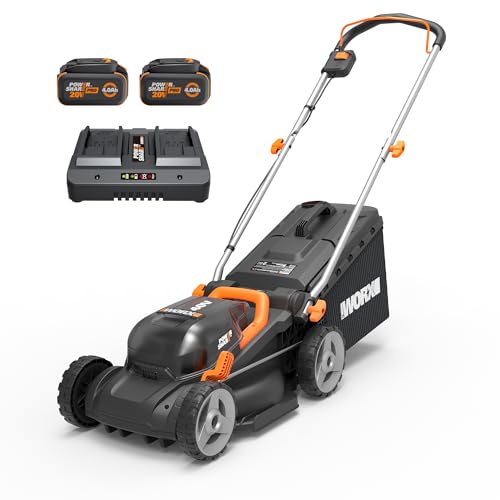
The Worx WG735 40V cordless lawn mower is a compact, 14-inch 2-in-1 machine designed for small yards and tight spaces. It's best suited for homeowners with a 1/8 acre or less who want a lightweight, nimble mower that reduces the need for a separate trimmer. The cut-to-edge design is a standout feature, allowing you to mow right up to fences, flower beds, and garden borders, which saves you from having to go back with a string trimmer.
Performance-wise, the brushless motor provides ample power for typical residential grasses. The six-position height adjustment (0.8 to 3 inches) is easy to use with a single lever, so you can quickly change settings for different grass conditions or seasonal growth. On a full charge, the mower handles up to 1/8 acre, which is realistic for a small lawn. The 2-in-1 functionality lets you switch between bagging and mulching easily, and the mulching performance is good, breaking clippings down fine enough to feed the lawn naturally.
Build quality is solid for a plastic-deck mower, with the emphasis on lightweight portability over heavy-duty construction. At 27.7 pounds, it's easy to push and maneuver, even around tight corners. The folding handle makes storage compact, fitting into small garage spaces. The battery platform is part of Worx's Power Share system, so you can use the same 20V or 40V batteries across other tools, which is a big plus if you already own Worx gear.
One realistic drawback is the 14-inch cutting width, which means more passes on even a modest lawn. It's fine for a postage-stamp yard, but if you have a quarter acre, you'll be swapping batteries. Also, the batteries and charger are sold separately, so factor that into your budget. The plastic deck is durable enough for typical use, but it won't stand up to abuse like steel would.
Overall, the Worx WG735 is a great choice for homeowners who want a quiet, easy-to-use, and highly maneuverable mower for a small lawn. It excels in tight spaces and reduces trimming time. If you already have Worx 40V batteries, it's an even better value. For larger lawns or more rugged terrain, look for a bigger deck and more power. But for the 1/8 acre crowd, this mower is a practical, efficient tool.
Color: Black and Orange
Dimensions: 49.7 x 15.4 x 41.1 Inches
Weight: 27.71 Pounds
Motor: Brushless
Cutting Width: 14 Inches
Cutting Height: 0.8 to 3 Inches (6 positions)
Deck Material: Plastic
Function: 2-in-1 (Bagging and Mulching)
Battery: 40V Power Share (batteries sold separately)
Runtime: Up to 1/8 Acre per charge
Product Group: Lawn and Patio
This mower uses the Worx Power Share battery system, which allows you to combine 20V batteries to create 40V or even 80V for higher-demand tools. The 40V battery pack is compatible with all other Worx 40V tools, and the charger is shared across the platform. If you already own Worx 20V or 40V tools, you can share batteries and chargers, saving money and reducing clutter. The system is designed for flexibility, especially for homeowners who want a single battery ecosystem for their lawn and garden tools.

Pros
- All-weather protection keeps mower safe from rain, snow, and UV rays.
- Easy assembly with clear instructions and included hardware.
- Sturdy build that holds up to wind and outdoor conditions.
- Attractive design that doesn't look out of place in a well-kept yard.
- Compatible with a wide range of WORX robotic mower models.
Cons
- Only works with specific WORX Vision Cloud models, not universal.
- Price may be higher than some DIY alternatives, but adds convenience.
- May need to be secured to the ground in very windy areas.
If you own a WORX robotic lawn mower, you already know how convenient it is to have your grass cut automatically. But leaving that mower out in the elements day after day can take a toll on its electronics and body. The WORX WA0828 robotic mower garage is a weatherproof shelter designed specifically for compatibly WORX models, giving you a simple way to protect your investment.
This garage is best suited for homeowners who have invested in a WORX robotic mower and want to keep it running smoothly for years. It’s also a great fit for suburban lawn owners who want a tidy, organized look without a bulky shed. The all-weather shelter shields your mower from scorching heat, heavy rain, and strong winds, which helps prevent rust, fading, and electrical issues. Many users find that a covered mower stays cleaner and requires less frequent maintenance.
Build quality is solid for the price. The shelter uses durable materials that stand up to everyday outdoor use. Assembly is straightforward - you just screw the parts together following the instructions. It’s not a complicated project, and most people can have it ready in under 30 minutes. The black finish looks clean and modern, blending into most lawns without being an eyesore.
In terms of practicality, the garage is designed to hold your mower securely while allowing easy access for charging and maintenance. The dimensions (19.55 x 5.46 x 28.59 inches) are compact enough to fit on a small patio or in a corner of the yard. It does require a flat, level spot to sit firmly. For windy areas, you might want to anchor it down, but the included fastenings help keep it stable.
A realistic limitation is that this garage is only compatible with specific WORX Vision Cloud models (WR310, WR320, WR340, and similar). If you have a different brand or older model, it won’t work. Also, the price may be a bit higher than a simple plastic cover, but the rigid structure offers better protection and longevity.
Overall, the WORX WA0828 is a practical accessory for anyone who wants to extend the life of their robotic mower. It’s easy to set up, looks good, and provides real protection. If you’re already using a WORX mower, this garage is a smart add-on that keeps your equipment in top shape for the long haul.
Pros
- No perimeter wire or separate RTK base antenna required in your yard
- Impressive 4WD slope climbing ability that manages hilly or uneven turf with ease
- Vision AI avoids obstacles and smoothly maneuvers around toys, hoses, and pets
- Cut-to-edge blade offset minimizes secondary string trimming along borders
- Built-in cellular and GPS anti-theft tracking provides peace of mind
Cons
- Coverage capacity is limited to lawns up to a quarter-acre in total mowing area
- Higher initial investment compared to conventional walk-behind push mowers
- Requires reliable cellular network reception across the property for full cloud RTK functionality
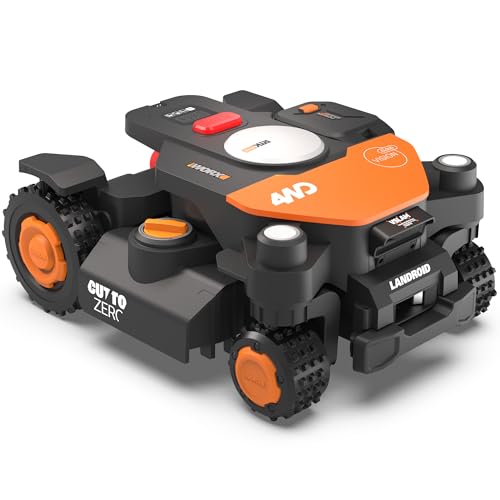
The WORX WR341 is an advanced robotic lawn mower engineered specifically for residential properties up to a quarter-acre. Designed without the need for cumbersome perimeter wires or standalone base antennas, this electric mower caters to busy suburban homeowners, elderly property owners seeking relief from weekly yard pushing, and lawn care enthusiasts who want consistent turf height without burning gas. By integrating all-wheel drive with cloud-based RTK technology, it aims to eliminate traditional robotic mower setup headaches while delivering consistent, automated manicuring across complex terrain.
Grass cutting performance relies on an intelligent offset blade design known as Cut-to-Zero, which positions the cutter closer to outer borders to minimize leftover fringe grass along garden edges, walkways, and patio boundaries. Because robotic mowers operate continuously to take fine grass clippings off the top, the mower returns nutrient-rich mulch back into the soil rather than collecting clippings in a bulky bag. The four-wheel-drive system provides remarkable traction on hilly yards, managing grades up to 84 percent (roughly 40 degrees) where standard push mowers struggle. Its terrain-adaptive chassis articulates over bumps and dips to prevent scalping, while front-wheel steering prevents the aggressive wheel slip that often damages wet turf during directional changes.
Underneath its durable, weather-sealed polymer housing, the WR341 houses an AI vision system capable of processing real-time yard conditions at up to ten trillion operations per second. This neural network actively identifies garden hoses, toys, outdoor furniture, and family pets, navigating smoothly around them instead of running into obstacles. For yards with dense tree canopies where satellite signals might weaken, the system combines cloud-delivered RTK with V-SLAM sensor fusion, maintaining centimeter-level accuracy without halting in the shade. Built-in GPS and cellular connectivity allow owners to track the mower via the Find My Landroid security suite, complete with remote locking capabilities to prevent theft.
Day-to-day operation is streamlined through a comprehensive companion app, letting users assign unlimited mowing zones, designate no-go areas around delicate flower beds, and choose custom striping patterns like checkerboard or parallel bands. Maintaining the unit is relatively simple compared to gas engines: there are no spark plugs to clean, air filters to blow out, or engine oil to dispose of. Routine care involves wiping down the underside, checking the rotating blades for sharpness, and keeping the charging base clear of debris. However, property owners should keep in mind that this specific model is tailored for quarter-acre properties; yards exceeding this footprint will require multiple units or larger-capacity robotic models. Additionally, cloud-based RTK navigation depends on reliable cellular network access across your property.
For homeowners looking to retire their Saturday morning push-mower routine, the WORX WR341 offers a dependable, low-maintenance path to a manicured lawn. Its combination of aggressive 4WD slope capability, wire-free boundary mapping, and tight edge cutting makes it an outstanding fit for uneven suburban yards, sloping front lawns, and properties with intricate landscaping features. If your yard fits within the quarter-acre boundary and you value hands-off convenience backed by intelligent obstacle avoidance, this robotic mower delivers exceptional long-term utility.
The four-wheel-drive platform is engineered specifically for properties with irregular contours, raised lawn borders, and steep hillsides that defeat ordinary two-wheel-drive robot mowers. Capable of tackling inclines up to 84 percent (around 40 degrees), the articulated chassis ensures all four contact patches remain firmly planted on uneven ground.
Unlike skid-steer robotic mowers that lock one side to pivot, this model utilizes dedicated front-wheel steering. This mechanical geometry allows the mower to trace graceful, controlled curves and sharp turns without grinding into the root zone, keeping sensitive grass healthy even after frequent turns on damp soil.
Navigation is anchored by cloud RTK positioning, which delivers centimeter-level mowing accuracy without forcing you to bolt an unsightly antenna to your roof or stake a reference station in your flower beds. The mower receives high-precision correction signals over cellular networks, enabling clean, straight mowing lines and striping options such as diamond or natural patterns.
When operating beneath heavy shade trees or along tall fences where satellite lines of sight are partially obscured, an onboard V-SLAM optical system seamlessly fills the gap. Combined with rapid AI obstacle recognition, the mower makes real-time steering adjustments around yard debris, patio furniture, and pets without interrupting its regular mowing cycle.
Pros
- No perimeter wire required, making installation simple and flexible.
- Excellent traction and stability on steep slopes and uneven lawns.
- Intelligent obstacle detection avoids toys, pets, and garden features.
- App control offers detailed zone management and remote monitoring.
- Cut-to-zero blade reduces edge trimming work significantly.
Cons
- Premium price point may be high for budget-conscious buyers.
- Requires stable cellular and GPS signal for full functionality.
- Initial setup and mapping may take some time to optimize.
The WORX WR342 Vision Cloud robot lawn mower is a sophisticated, wire-free mowing solution designed for homeowners with lawns up to 1/2 acre. It represents a significant leap in robotic mowing technology, combining commercial-grade RTK GPS with advanced Vision AI to deliver precise, autonomous lawn care without the hassle of installing perimeter wires. This mower is best suited for tech-savvy homeowners who want a hands-off approach to lawn maintenance and are willing to invest in a premium, feature-rich machine.
In terms of real-world lawn care performance, the WORX WR342 excels. The RTK cloud GPS provides centimeter-level accuracy, ensuring straight, evenly spaced mowing patterns like parallel, checkerboard, or diamond stripes. The Vision AI system recognizes and avoids obstacles such as toys, garden hoses, and flower beds, making it safe to run unattended. The 4WD system with a terrain-adaptive chassis provides excellent traction on steep slopes up to 84% (40 degrees) and uneven ground, so it can handle many suburban and rural lawns. The cut-to-zero offset blade trims grass close to edges, significantly reducing the need for manual string trimming. However, in very thick or wet grass, the mulching performance may require occasional manual attention to prevent clumping.
Build quality is impressive. The mower features a durable polymer deck that resists rust and corrosion, along with heavy-duty wheels designed for rough terrain. The chassis is built to handle the rigors of outdoor use, and the RTK and AI components are weather-sealed. The app interface is intuitive, allowing you to set up zones, no-go areas, and adjust mowing schedules from your smartphone. The mower also includes GPS tracking and cellular connectivity for security, letting you locate it if moved or stolen.
Setup is straightforward but does require some initial configuration. You need to place the mower on the lawn, connect it to your Wi-Fi and cellular network, and let it map your yard. The auto mapping feature uses Vision AI to understand boundaries and lawn shape, so no perimeter wire is needed. Once mapped, you can customize zones and schedules. The mower returns to its charging station automatically when the battery is low. Storage is compact since the mower docks on its charging base, and the unit is relatively lightweight for a 4WD robot mower.
One realistic limitation is the price. At around $2,300, this is a significant investment, and it may not be practical for budget-conscious shoppers or those with very small lawns. Additionally, the mower relies on a stable cellular and GPS signal; in areas with poor coverage, performance may be affected. The initial mapping process can also take some time to get right, and you may need to make adjustments to zones or boundaries after the first few mows.
Overall, the WORX WR342 Vision Cloud is a top-tier choice for homeowners who want a truly hands-off, wire-free robotic mowing experience. It is ideal for medium-sized lawns with slopes and obstacles, and its advanced features justify its premium price for those who value convenience and cutting-edge technology. For anyone ready to let a robot handle the weekly mow, this is one of the most capable options available.
The WORX WR342 uses a floating deck with a cut-to-zero offset blade that trims grass close to edges, reducing the need for string trimming. The RTK GPS navigation ensures straight, even stripes in parallel, checkerboard, or diamond patterns. The mower automatically adjusts cutting height (range not specified, but typically 1-3 inches) and can handle slopes up to 84%. The mulching system is designed for fine clippings that return nutrients to the lawn, but in heavy or wet conditions, you may need to manually clear the deck occasionally.
This robot mower features 4WD with a terrain-adaptive chassis that keeps all four wheels planted on uneven ground, raised borders, and transitions. It can handle slopes up to 84% (40 degrees), making it suitable for many hilly suburban and rural lawns. The front-wheel steering provides smooth, precise turns without tearing turf. The mower also handles transitions between different grass types and surfaces well, though very rough or rocky terrain may still pose challenges.
Pros
- Lightweight and easy to push, even for elderly users or those with limited strength
- Cut-to-edge feature minimizes the need for a string trimmer along borders
- Brushless motor provides reliable performance and longer battery life
- 6 height adjustments offer flexibility for different grass types and seasons
- 2-in-1 functionality allows quick switch between bagging and mulching
Cons
- 14-inch cutting width is slower for larger lawns, best suited for small to medium yards
- 20V battery may need frequent recharging for larger areas; runtime depends on grass conditions
- No self-propelled drive, so it requires manual pushing on all terrain
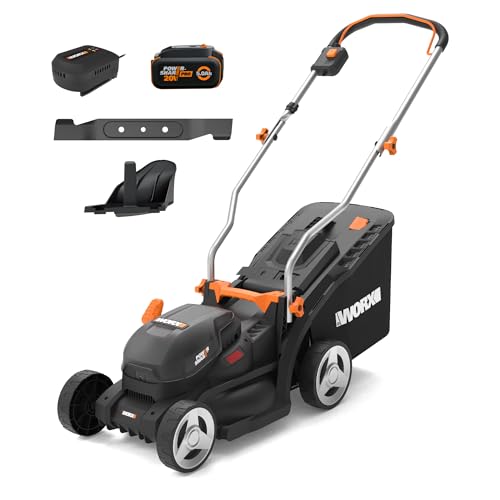
The Worx WG733.1 is a cordless electric lawn mower designed for homeowners who value convenience and quiet operation. With a 14-inch cutting deck and a 2-in-1 system that switches between bagging and mulching, it is an excellent choice for small to medium yards, apartment dwellers with patios, or first-time mower buyers looking for a budget-friendly option.
When it comes to cutting performance, this mower delivers a clean, even cut thanks to its sharp blade and brushless motor. The cut-to-edge design lets you mow close to fences, flower beds, and garden borders, reducing the need for extra trimming. The 6-position single-lever height adjustment (ranging from 1 to 3 inches) makes it easy to adapt to seasonal grass growth, whether you are cutting short in summer or leaving a bit more length in spring.
Build quality is practical for its price point. The deck is lightweight (just over 21 pounds) and the compact frame allows for easy maneuvering in tight spots. The PowerShare battery system is a standout feature, as it lets you use the same 20V battery across other Worx tools. While the mower does not have a foldable handle, its overall size makes storage manageable in a garage or shed. The brushless motor is more efficient and requires less maintenance than a brushed motor.
Ease of use is a strong point. The mower is simple to start with a push button, and the single-lever height adjustment is tool-free. The grass bag is easy to empty, though the capacity is modest. For maintenance, the brushless motor means no oil changes or spark plug checks, and the blade can be replaced with basic tools. The mower runs quietly, making it suitable for early morning or late evening mowing without disturbing neighbors.
Realistic limitations include the 14-inch cutting width, which means more passes on larger lawns. The 20V battery may only provide enough runtime for a small yard (under 1/4 acre) on a single charge, especially if the grass is thick or wet. There is no self-propelled drive, so you will be pushing it manually. These factors make it less ideal for rural property owners with expansive lawns.
Overall, the Worx WG733.1 is a solid choice for suburban homeowners with small yards, renters with limited outdoor space, or anyone seeking an eco-friendly, low-maintenance mower. It offers good value for its price and is particularly well-suited for budget-conscious shoppers who want cordless convenience without the hassle of gas or cords.
The Worx WG733.1 uses a 20V PowerShare battery (not included) that can be combined with other batteries to increase power or runtime. Based on typical use, a single 20V 4Ah battery may provide around 20–30 minutes of runtime on a full charge, depending on grass thickness and cutting height. The brushless motor helps maximize efficiency, but for larger yards, you may need a spare battery. The PowerShare system is compatible with all Worx 20V, 40V, and 80V tools, making it easy to share batteries across your tool collection.
This mower's 14-inch cutting deck is ideal for small, tight spaces. The 2-in-1 functionality allows you to choose between bagging clippings for a clean finish or mulching to return nutrients to the lawn. The cut-to-edge design is a practical feature that lets you mow right up to borders, reducing the need for a string trimmer. The 6-position height adjustment (1 to 3 inches) gives you control over grass length, though the range may not be sufficient for very tall or overgrown grass. The brushless motor provides consistent power, but the cutting performance is best suited for regular maintenance rather than heavy-duty clearing.
Pros
- Quiet operation allows early morning or late evening mowing without disturbing neighbors.
- Easy assembly with minimal tools and intuitive controls for quick setup.
- Good runtime for small to medium yards; many users report 30-45 minutes on a charge.
- Lightweight and easy to maneuver, especially compared to gas mowers.
- LED headlight enables mowing in low light conditions.
Cons
- Battery life may fall short of advertised 50 minutes in thick or tall grass, especially with frequent Intellicut engagement.
- Plastic deck can scratch against brick edging or curbs, though it won't rust.
- Proprietary safety key is essential for startup; losing it can be a hassle to replace.
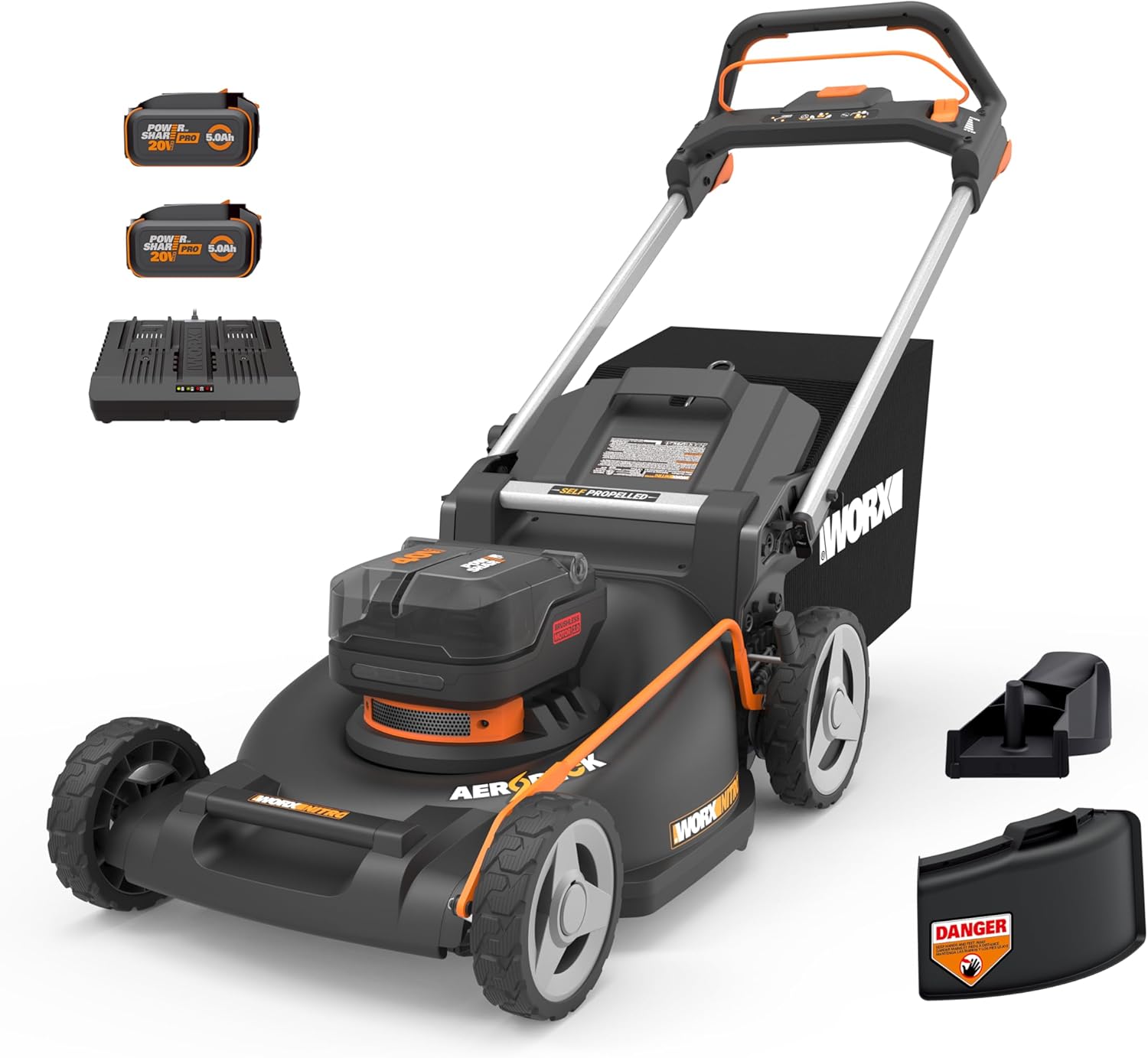
The WORX Nitro 40V 21 inch cordless lawn mower (model WG760) is a battery-powered walk-behind mower designed to replace gas models for homeowners with small to medium lawns. It targets DIYers and homeowners who want the convenience of electric power without sacrificing performance. With a self-propelled drive, variable speed control, and smart cutting features, this mower is built for everyday lawn care.
Real-world performance is impressive for a cordless mower. The brushless motor 2.0 provides enough torque to handle thick grass, and the Intellicut technology automatically adjusts blade speed as conditions change. In typical use on a quarter-acre lawn, the included 5.0Ah batteries deliver about 30-40 minutes of runtime, which is sufficient for most yards. The self-propelled system works smoothly on slopes, and the variable speed lets you match your walking pace. The Aerodeck design reduces clumping and improves bagging efficiency, leaving a clean cut.
Build quality is solid for a polymer deck mower. The plastic deck is lightweight and won't rust, but it can scratch against hard surfaces like brick edging. The handle collapses for vertical storage, a big plus for tight sheds. The LED light is handy for evening mows. Assembly is straightforward, taking about 30 minutes. Some users report the handle cushion wrap may wear over time, but overall durability is good for the price point.
Drawbacks include battery life that can be shorter than advertised in very thick or wet grass. The proprietary safety key is essential, so keep it safe. The plastic wheels are adequate but not as rugged as steel. Also, the mower deck extends slightly beyond the wheels, which can scrape against landscape edging. These are minor trade-offs for the weight savings and corrosion resistance.
Overall, the WORX Nitro WG760 is a strong choice for homeowners with up to half an acre who want a quiet, easy-to-use mower with no gas or oil. It's especially good for those already invested in the WORX PowerShare battery system. While it won't replace a heavy-duty gas mower for large commercial lawns, it delivers excellent value for residential use. If you prioritize convenience, low maintenance, and decent power, this mower is worth considering.

Pros
- No perimeter wire required, saving installation time and effort
- Advanced AI obstacle avoidance reduces the risk of collisions and damage
- RTK + V-SLAM fusion provides accurate navigation even in shaded areas
- App offers full control over mowing zones, patterns, and schedules
Cons
- Premium price point may not suit budget-conscious buyers
- Two-wheel drive may struggle on steep slopes compared to four-wheel models
- Zero reviews at launch makes real-world performance unverified
The WORX WR320 is a robotic lawn mower designed to handle up to half an acre without the hassle of burying perimeter wire. It uses a combination of commercial-grade RTK (Real-Time Kinematic) cloud technology and Vision AI to map your yard, avoid obstacles, and deliver precise cuts. This mower is best suited for suburban homeowners who want a truly hands-off mowing experience and are willing to invest in advanced automation.
In real-world lawn care, the WR320 aims to deliver reliable cutting performance with centimeter-level accuracy. The RTK cloud system provides base positioning, while V-SLAM sensor fusion takes over in shaded areas to maintain navigation. According to product specifications, the Vision AI recognizes objects and understands their context, so it can avoid a garden hose or a child’s toy without stopping. The mower offers four mowing patterns (Parallel, Checkerboard, Diamond, and Natural) that you can switch via the app, giving you control over the final look of your lawn.
Build quality appears solid, with a 44.5-pound weight and dimensions of 22.7 x 18.1 x 11.3 inches. The two-wheel drive system provides traction on flat to gently sloping terrain, though steep hills may be challenging. The unit is weather-resistant, and the RTK antenna is cloud-based, so no local antenna installation is needed. The app allows you to define unlimited mowing zones, set no-go areas, and edit maps, making it easy to tailor the mowing schedule to your yard’s layout.
Setup is straightforward thanks to the wire-free design: you simply place the mower in your yard, let it create a map, and define boundaries in the app. No perimeter wire or stakes means less time installing and more time enjoying a manicured lawn. Maintenance is minimal, typical of robotic mowers—keep the blades sharp, clean the underside, and ensure the charging station is accessible. The RadioLink connectivity extends Wi-Fi and Bluetooth range, so even larger properties stay connected.
One realistic limitation is the price; at over $1,100, it’s an investment. Also, with zero customer reviews at launch, you’re relying on WORX’s reputation and the product specs. For budget-conscious shoppers or those with very small lawns (under 1/4 acre), a simpler robotic mower might suffice. However, for suburban homeowners who want a premium, wire-free solution with intelligent obstacle avoidance and customizable patterns, the WORX WR320 offers a compelling package.
Overall, this mower is best for tech-savvy lawn care enthusiasts who value convenience and a clean, evenly cut lawn without weekly manual effort. If you have a half-acre lot, a relatively flat terrain, and a desire to automate your mowing, the WR320 is worth considering.

Pros
- Light and easy to maneuver, even on slopes or bumpy terrain.
- Brushless motor delivers strong cutting power and longer tool life with less maintenance.
- Cut-to-edge design significantly reduces the need for a separate trimmer.
- Battery charge indicator on the mower lets you monitor power level at a glance.
- Quiet operation and zero emissions make it neighborhood-friendly and safe for use near pets.
Cons
- May struggle with very tall or thick grass if set too low; might require a second pass or higher cut height.
- Battery recharge time is around 3-5 hours, so planning ahead for back-to-back mowing sessions is needed.
- The 17" deck is narrower than many gas or larger electric models, so it takes a bit longer to cover bigger lawns.
The WORX WG745 17" cordless lawn mower is a practical, lightweight alternative to gas-powered mowers for homeowners with small to medium-sized lawns. It runs on two 20V 4.0Ah PowerShare batteries (giving it 40V total) and features a brushless motor that provides enough torque for typical residential grass. This mower is best suited for those who value convenience over brute force: it requires no gas, oil, or spark plugs, and the fold-down handles and 40-pound weight make it a breeze to store and carry.
In real-world use, the mower performs well on well-maintained grass up to about 4 inches tall. The Intellicut technology constantly adjusts the blade speed, which helps extend battery life when the grass is thin and boosts power when it gets thick. The cut-to-edge deck is a standout feature - it lets you cut within an inch of fences and planters, drastically reducing the follow-up trimming. The single-lever height adjustment is quick and gives you six settings from 1.5 to 4 inches. Mulching works well, leaving fine clippings that disappear into the lawn; bagging is also effective with the included 45-liter rear bag.
Build quality feels solid for a plastic-deck mower, and the batteries lock securely. The included dual charger can replenish both batteries at once, but the charge time is on the longer side (around 3-5 hours). Runtime is adequate for up to a quarter acre, though heavier grass will drain the batteries faster. Some users report that the mower can stall in thick or overgrown grass, especially if set too low. The wheel retention clips are a known weak point - they can pop off if not seated properly, so it's worth checking them before use.
Overall, the WORX WG745 is a reliable cordless mower for the homeowner who wants an easy, low-hassle mowing experience. It won't replace a high-end gas mower for large, demanding lawns, but it excels on smaller properties and those with lots of obstacles. The battery compatibility with WORX's PowerShare system adds extra value if you already own other WORX tools. If you're willing to work within its limits and keep the grass from getting too long, this mower will deliver clean cuts with minimal effort.
Brand: WORX
Model: WG745
Deck Width: 17 inches
Power Source: 40V (2 x 20V) battery
Battery Included: 2 x 20V 4.0Ah PowerShare
Charger Included: Dual charger
Motor Type: Brushless 2.0
Drive Type: Push (manual)
Cutting Height: 1.5" to 4" (6 positions)
Mulching / Bagging: 2-in-1
Bag Capacity: 45 liters
Weight: 39.7 lbs
Deck Material: Plastic (polypropylene)
Handle: Collapsible for vertical/horizontal storage
Intellicut: Yes - auto-adjusts speed
Cut-to-Edge: Yes
Recommended Yard Size: Up to 1/4 acre
The WORX WG745 uses two 20V PowerShare batteries (4.0Ah each) that work as a 40V system. These batteries are part of the Worx PowerShare platform, which is compatible with over 140 different tools including trimers, blowers, chainsaws, drills, and more. This means you can share batteries across your entire WORX collection, reducing clutter and cost. The included dual charger can charge both batteries at once, but expect about 3-5 hours for a full charge. The batteries also feature a charge indicator on the mower itself, so you can easily check remaining power while working.
Locating the Serial Number on WORX Mowers
The serial number serves as the unique identifier for your specific unit, distinct from the model number, and is essential for warranty validation, firmware updates for robotic units, and ordering exact replacement parts.
- The placement of this label is designed to withstand weather exposure and physical impact, so it is usually affixed to a structural component rather than a removable plastic cover.
- For cordless walk-behind mowers, the label is most commonly found on the underside of the cutting deck or on the frame near the rear axle assembly.
- You may need to tilt the mower carefully to see this area, ensuring the blade is secured and the unit is stable on a flat surface.
| Mower Type | Typical Label Location | Access Method |
|---|---|---|
| Cordless Walk-Behind | Underside of deck or rear frame | Tilt mower, check near axle |
| Robotic Mower | Bottom of chassis or inside battery bay | Lift unit, check base plate |
| Robotic Garage | Underside of base or side panel | Check structural base |
Before searching for the label, ensure you have the correct model designation. The model number is often printed on the main body or handle, while the serial number is a longer alphanumeric string. Confusing these two can lead to incorrect support tickets or warranty denials. The serial number usually begins with a specific prefix indicating the manufacturing year and facility, followed by a unique sequence. This format helps the manufacturer trace the unit’s production history and verify its authenticity.
For robotic lawn mowers, the serial number is frequently located on the bottom of the chassis, near the wheel assemblies or the central drive mechanism. Some models place it inside the battery compartment, requiring you to remove the battery pack to view the label.
This placement protects the number from rain and debris while the unit operates. If you are using a robotic garage, the garage itself may have a separate serial number for its own warranty, which is distinct from the mower’s number. Keep both numbers recorded in your purchase documentation for easy reference.
Visibility can be an issue if the label has been exposed to dirt, grass clippings, or UV degradation over time. A soft brush or a damp cloth can gently clean the area to reveal the text. Avoid using abrasive materials or solvents that might damage the label or the surrounding plastic.
If the label is completely illegible, contact the retailer where you purchased the unit. They can often retrieve the serial number from their sales records using your purchase date and model information. This step is crucial if you need to register the product or claim a warranty after the label has deteriorated.
Identifying the Model Number vs. Serial Number
Many users mistake the model number for the serial number, which can cause confusion during support interactions. The model number identifies the product type, such as WG735 or WR341, and is often visible on the side of the deck or the front of the robotic unit.
The serial number, however, is unique to each individual unit and is required for warranty verification. It is typically longer and contains a mix of letters and numbers that do not match the standard model naming convention. Always double-check which number you are providing when contacting customer service.
The model number is useful for finding user manuals, replacement parts, and accessories that are compatible with your specific mower. For example, knowing you have a WG760 helps you find the correct battery type or blade replacement. The serial number, on the other hand, is used to verify that the unit is genuine and to track its manufacturing batch.
If you are buying a used mower, verifying the serial number against the seller’s records can help ensure you are not purchasing a stolen or refurbished unit without proper documentation. This verification step adds a layer of security to your purchase.
Some WORX products have both numbers printed on the same label, while others separate them onto different parts of the machine. On cordless mowers, the model number is often on the side of the deck, while the serial number is on the underside.
On robotic mowers, the model number may be on the top or front, while the serial number is on the bottom. Understanding this distinction helps you locate the correct information quickly. If you are unsure which number you are looking at, compare it with the format described in your user manual or on the manufacturer’s website.
Accessing the Label on Cordless Walk-Behind Mowers
For cordless walk-behind mowers like the WG735 or WG760, the serial number is typically located on the underside of the cutting deck. To access this area, you must tilt the mower onto its side or rear, depending on the design.
Always ensure the blade is secured or removed before tilting the mower to prevent accidental engagement. Place the mower on a flat, stable surface to avoid tipping or damage. The label is usually a white or silver sticker with black text, affixed to the metal or plastic frame near the rear axle or the battery compartment.
If the label is not visible on the underside of the deck, check the frame near the handle attachment point. Some models place the serial number on a small plate attached to the main frame, which is visible when you look down from the handle.
This location is less likely to be damaged by grass or debris, making it a durable option for long-term identification. The text on the label should be clear and legible, with the serial number prominently displayed. If the label is faded or damaged, use a flashlight to improve visibility and a soft cloth to clean the area gently.
When tilting the mower, be mindful of the battery position. Ensure the battery is fully seated and locked in place to prevent it from falling out during the tilt. This is especially important for models with multiple batteries, such as the WG760, which uses two 20V batteries.
A falling battery can be damaged or cause a short circuit if it contacts metal parts. After locating the serial number, return the mower to its upright position and ensure the handle is locked securely before storing or using the unit. This careful handling protects both the mower and the user from potential hazards.
Finding the Serial Number on Robotic Mowers
Robotic lawn mowers, such as the WR341 or WR320, have a different physical layout that places the serial number in a protected area. The most common location is on the bottom of the chassis, near the central drive mechanism or the wheel assemblies.
To access this area, you must lift the mower off the ground and turn it over. The label is usually a durable sticker or engraved plate that is resistant to water and dirt. This placement ensures the number remains legible even after years of outdoor use and exposure to various weather conditions.
Some robotic models place the serial number inside the battery compartment. To access this area, you must remove the battery pack from the mower. This is a simple process that involves releasing the latch or sliding the battery out of its slot.
Once the battery is removed, look for a label on the interior wall of the battery bay. The serial number is often printed on a small plate or sticker that is visible only when the battery is out. This location protects the number from direct exposure to rain and debris, ensuring long-term legibility.
If you are using a robotic garage, such as the WA0828, the garage itself may have a separate serial number. This number is used for the garage’s warranty and is distinct from the mower’s serial number. The garage’s serial number is typically located on the underside of the base or on a side panel.
Keep both numbers recorded in your documentation to avoid confusion during support calls. The mower’s serial number is required for firmware updates and warranty claims, while the garage’s number is needed for any issues related to the shelter itself. Having both numbers ready speeds up the support process and ensures you receive the correct assistance.
Why the Serial Number Matters for Warranty and Support
The serial number is the primary key for validating your warranty claim. When you contact customer service, they will ask for this number to verify that your unit is within the warranty period and that it is a genuine product. Without the serial number, the support team may not be able to process your claim or provide the necessary assistance.
This is why it is important to record the number at the time of purchase and keep it with your other documentation. A missing or illegible serial number can delay the resolution of your issue and cause unnecessary frustration.
For robotic mowers, the serial number is also used for firmware updates and software support. The manufacturer uses this number to identify the specific hardware configuration of your unit and ensure that the firmware update is compatible. This is crucial for maintaining the performance and security of the mower, especially as new features and security patches are released.
If you are experiencing software issues or connectivity problems, providing the serial number helps the support team diagnose the issue more accurately. It allows them to check for known bugs or compatibility issues specific to your unit’s production batch.
The serial number also helps in ordering exact replacement parts. If a component fails, the support team can use the serial number to determine the correct part number and ensure that the replacement is compatible with your specific model.
This is especially important for models with multiple revisions or variations, where parts may not be interchangeable. By providing the serial number, you ensure that you receive the correct part the first time, saving time and money. This precision is a key benefit of using the serial number for support and maintenance purposes.
Protecting the Label and Ensuring Long-Term Legibility
Protecting the serial number label is essential for maintaining long-term legibility against environmental factors like rain, sun, dirt, and grass clippings that cause fading, peeling, or obscuring.
- Avoid using high-pressure water or abrasive cleaning tools on the area where the label is located to prevent damage.
- Instead, use a soft cloth and mild soap to gently clean the area, ensuring that the text remains clear and readable.
- Regular maintenance of the label helps ensure that you can access the serial number when needed for identification.
If the label is already damaged or faded, consider applying a clear protective coating over the area. This can help prevent further degradation and keep the text legible for a longer period. However, be careful not to cover the text with the coating, as this can make it difficult to read.
Alternatively, you can take a high-resolution photo of the label and store it in a safe place. This digital backup ensures that you have a record of the serial number even if the physical label becomes illegible. This simple step can save you time and hassle in the future.
When storing the mower for the season, ensure that the label is protected from extreme temperatures and moisture. Store the mower in a dry, cool place to prevent damage to the label and other components. If you are using a robotic garage, ensure that the garage is properly sealed to protect the mower from the elements.
This protection helps maintain the integrity of the serial number label and ensures that it remains legible throughout the storage period. Proper storage is a key part of maintaining the longevity and functionality of your mower.
Common Mistakes to Avoid When Locating the Serial Number
One common mistake is confusing the model number with the serial number. The model number identifies the product type, while the serial number is unique to each unit. Always double-check which number you are providing when contacting support. Another mistake is failing to clean the label before reading the number.
Dirt and debris can obscure the text, making it difficult to read. Use a soft cloth to gently clean the area before attempting to read the serial number. This simple step can prevent errors and ensure that you provide the correct information to the support team.
Another common mistake is tilting the mower incorrectly, which can cause damage or injury. Always ensure the blade is secured or removed before tilting the mower. Place the mower on a flat, stable surface to avoid tipping. If you are unsure how to tilt the mower safely, consult the user manual or contact customer service for guidance. Safety should always be the top priority when accessing the serial number. By following these precautions, you can avoid common mistakes and ensure that you locate the serial number safely and accurately.
Finally, do not assume that the serial number is in the same location for all WORX mowers. Different models and product lines have different physical layouts, which dictate where the label is placed. Always refer to the user manual or the manufacturer’s website for specific instructions on locating the serial number for your model. This ensures that you are looking in the right place and avoids unnecessary frustration. By understanding the specific layout of your mower, you can locate the serial number quickly and efficiently.
Knowing where to find the serial number on your WORX lawn mower is a simple but important task for any owner. Whether you are using a cordless walk-behind mower or a robotic system, the location of the label varies by model. By understanding the typical placement and taking steps to protect the label, you can ensure that you have access to this critical information when needed.
If you are still having trouble locating the number, consider contacting the retailer or manufacturer for assistance. They can often retrieve the information from their records, ensuring that you have the correct details for warranty and support purposes.
For further guidance on maintaining your mower, our blade removal guide provides useful tips for safe servicing. Keeping your mower in good condition not only extends its lifespan but also ensures that the serial number label remains legible and accessible. By following these best practices, you can enjoy a reliable and efficient mowing experience for years to come.


Write Your Review
No reviews yet. Be the first to share your experience!