


The first practical lawn mower was patented in 1830 by Edwin Beard Buddic, marking the beginning of mechanical grass cutting. While what year was the lawn mower invented is a specific historical fact, understanding the context helps explain why today’s mowers look so different from that original hand-pushed reel. The invention shifted yard maintenance from manual scything to a more efficient, repeatable process that could handle suburban lawns with less physical strain.
This timeline is important because it highlights how quickly the technology advanced. Within decades, the basic reel design was refined, and later engines were added to reduce human effort. Knowing these origins provides a useful baseline when comparing modern features like self-propulsion, electric motors, or automated navigation. For a broader look at current options, see our lawn mower for sale guide which covers the latest models available today.

Pros
- Eliminates the frustration of collapsing paper bags during solo lawn cleanup
- Tough corrugated plastic stands up to moisture and heavy packing pressure
- Stores completely flat to save valuable floor space in small workshops or sheds
- Pulls out smoothly once the bag is full without spilling debris
Cons
- Lightweight build can catch strong winds until weighted down with initial debris
- Designed specifically for 30-gallon paper bags rather than oversized poly contractor bags
- Repeated hard folding along pre-creased seams can cause wear over multiple seasons
Anyone who runs outdoor power equipment like leaf blowers, mowers, or shredders knows the aggravation of wrestling with floppy 30-gallon paper yard bags. The Luster Leaf A650 Leaf and Lawn Chute acts as an internal structural sleeve, turning weak paper sacks into rigid containers that stay open on their own. Formed from a single piece of corrugated plastic, it inserts cleanly into the bag to provide a stable, wide-mouth funnel for rake-ins and direct chute dumping.
This tool is best suited for homeowners handling seasonal fall cleanup, DIY gardeners clearing thick brambles, and light landscaping crews looking to streamline disposal. Because the plastic sleeve shields the inner bag, you can compress leaves and hedge trimmings down firmly without poking holes through the sides. That extra leverage lets you fit roughly 20 percent more material into each sack, reducing bag usage and disposal runs.
Jobsite practicality is high thanks to the moisture-resistant material. Wet turf, soaked autumn foliage, and damp soil wipe clean easily and will not degrade the corrugated plastic. The chute weighs around 1.5 pounds, so carrying it across a property alongside your blower or rake is effortless. Once the bag is packed, the chute slides straight up and out without snagging on the contents, ready for the next bag.
The primary trade-off is stability in open, breezy areas before any material is loaded. Because it is so light, a gust of wind can tip an empty bag over before you drop in the first armful of clippings. It is also tailored specifically for standard 30-gallon paper lawn bags, meaning it will not fit oversized plastic contractor drums or small trash pails. For routine yard maintenance, it delivers solid utility and folds completely flat to hang cleanly on a workshop wall.
Fall Leaf Cleanup: Place the chute into a standard bag to easily dump leaf blower collection bags or rake debris directly into the opening without bag blow-overs.
Hedge Trimming and Brush Clearing: Protects paper bag walls from punctures when disposing of stiff branches, thorn clippings, and woody yard refuse.
Mower Bag Emptying: Creates a wider, structured target so you can dump full lawn mower grass catchers cleanly without spilling clippings across the lawn.
Pros
- Helps you stay organized with a clear, structured log format
- Affordable way to protect your investment in lawn and garden equipment
- Useful for both gas and battery-powered mowers and tools
Cons
- Only covers one type of equipment per log; you may need separate books for each tool
- Paperback binding may not hold up to heavy shop abuse over time
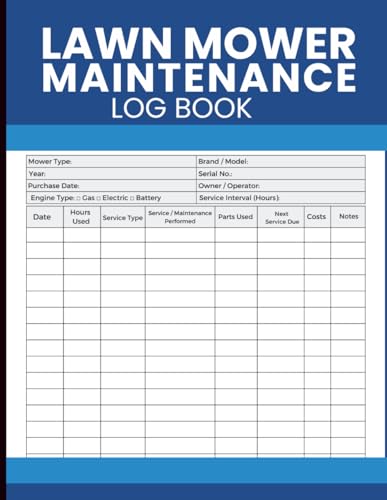
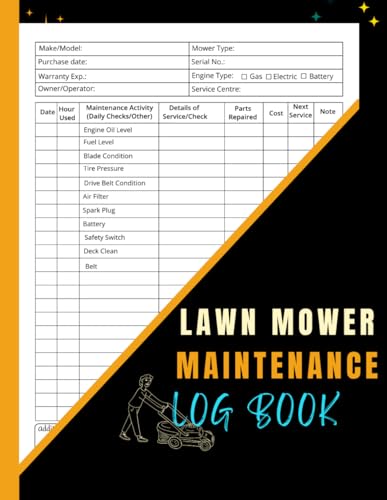
This Lawn Mower Maintenance Log Book is a straightforward, no-frills tool for anyone who wants to keep their outdoor power equipment running reliably season after season. Whether you own a push mower, riding mower, string trimmer, or leaf blower, tracking service intervals and repairs is key to avoiding unexpected downtime. This log book gives you dedicated pages to record usage hours, oil changes, blade sharpening, spark plug replacements, and other routine tasks.
For the DIY homeowner or weekend warrior, this book is a practical addition to your workshop or garage. It helps you remember when you last serviced your mower and what parts you used, which is especially helpful if you maintain multiple machines. The layout is simple and intuitive with plenty of space to jot down dates, hours, costs, and notes. You don't need to be a mechanic to use it effectively.
One of the biggest advantages is the cost tracking section. By logging parts and repair expenses, you can see exactly how much you've invested in keeping your equipment running. This is useful for budgeting and can even help you decide when it's time to replace a machine rather than keep repairing it. The book also includes a scheduling section so you can plan ahead for upcoming maintenance tasks.
On the downside, this log book is specific to lawn mowers and similar outdoor gear. If you have a workshop full of power tools like chainsaws, pressure washers, or generators, you'll need separate logs for each. The paperback cover is fine for a shelf or drawer but might not withstand being tossed around a dirty shop floor. Still, at this price point, it's a worthwhile investment for staying organized.
Overall, this maintenance log book is a solid choice for homeowners and DIYers who want to extend the life of their lawn mower and other outdoor power equipment. It's affordable, easy to use, and encourages good habits that save you time and money in the long run. Pair it with your regular tool maintenance routine and you'll always know what your equipment needs.
Dimensions: 8.5 x 0.28 x 11 inches
Product Group: Book
Binding: Paperback
Publisher: Independently published


Pros
- Appeals to children obsessed with lawn mowers and yard equipment
- Positive moral message about perseverance and kindness
- High customer rating with many 5-star reviews from parents
- Affordable price point for a children's book
Cons
- Some sentences can feel awkward or overly complex for very young readers
- At 40 pages, it may be too long for some toddlers' attention spans
- Limited appeal for children not already interested in lawn mowers
The Little Mower That Could is a charming children's book that cleverly adapts the classic 'Little Engine That Could' story for the world of lawn mowers. Written by Yvonne Jones and published by LHC Publishing, this 40-page paperback is aimed at kids ages 2 to 6. It features a little ball stuck in tall grass, and after several mowers pass by, a small green electric mower agrees to help, demonstrating that size and power aren't everything.
This book is best suited for parents and caregivers of toddlers and preschoolers who are fascinated by lawn mowers, tractors, and yard equipment. The illustrations are bright and clear, showing different types of mowers like a riding mower, push mower, reel mower, and a modern electric model. The story also includes brief mentions of other yard tools like weed whackers and leaf blowers, which adds to the appeal for little equipment enthusiasts.
In terms of real-world performance as a children's book, it delivers on engagement. Many parents report their kids asking to read it repeatedly, which is a strong sign. The moral of perseverance and kindness comes through clearly, and the connection to the beloved classic makes it easy for adults to read with enthusiasm. However, some reviewers note that certain sentences feel a bit awkward or use vocabulary that may be too advanced for the youngest listeners, like 'otherwise sparsely lit area.'
Build quality is standard for a paperback children's book. The pages are sturdy enough for little hands, and the 8.5 x 8.5 inch size is comfortable for lap reading. It weighs only 4.2 ounces, so it's easy to carry around or toss in a diaper bag. The main drawback is that the text can be a bit lengthy for very young toddlers, and the book's niche subject means it might not hold the attention of kids who aren't already into lawn mowers.
Overall, The Little Mower That Could is a solid choice for families with a child who loves lawn equipment and enjoys being read to. It offers a positive message, cute illustrations, and a fun twist on a classic story. If your little one is obsessed with mowers or you want to introduce them to the idea of helping others, this book is worth picking up. Just be prepared for some slightly clunky sentences and a story that may require a bit of patience from very young listeners.


Pros
- Thick cardboard pages resist creasing and tearing
- Lightweight and compact profile makes it easy for kids to carry
- Clear, colorful illustrations explain basic outdoor yard care routines
Cons
- Aimed strictly at toddlers with very basic story content
- Does not detail actual tool mechanics or equipment safety procedures
While it does not run on gas or battery power, Lawn-Mowing Day! by Little Simon serves as an introductory piece of gear for the smallest helpers on your yard crew. Published under the Little Landscapers series, this compact board book walks toddlers and young kids through the basic steps, sights, and sounds of weekend lawn care.
This book is best suited for DIY homeowners, professional landscapers, and groundskeepers who want to get their children excited about outdoor work. It helps demystify noisy outdoor equipment, showing little ones that mowing the grass is part of a healthy, regular home upkeep routine.
Build quality matches what you need around a busy household or garage. The thick cardboard pages resist tearing, bending, and casual spills, holding up far better than standard paper books. At roughly 0.42 pounds and measuring 7 by 6 inches, it packs easily into a tool bag, truck console, or stroller pocket for reading on the go.
The obvious trade-off is the depth of content. This is a simple storybook tailored to toddlers, so you will not find technical lawn care advice or step-by-step equipment safety instructions. Even so, it works well as a fun, durable bridge between your workshop tools and family time.
Format: Board book
Publisher: Little Simon
Dimensions: 7 x 0.6 x 6 inches
Weight: 0.42 pounds
Target Audience: Toddlers, preschoolers, and young future landscapers
Perfect for reading with young children before heading outside to tackle Saturday morning lawn care.
Works great as a themed gift for DIY parents, landscapers, carpenters, or mechanics with toddlers at home.
History and Evolution of Lawn Mower Technology
The core answer to the inquiry is that the mechanical lawn mower entered practical use in the early 19th century. Edwin Beard Buddic received a patent in 1830 for a design that used a rotating cylinder of blades to cut grass against a fixed counter-blade.
This mechanism is still the fundamental principle behind many modern reel mowers, proving the durability of the original concept. The shift from animal-drawn or hand-held scythes to a wheeled machine allowed for a more uniform cut and reduced the time required to maintain a standard residential lawn.
| Milestone | Year | Key Development |
|---|---|---|
| First Patent | 1830 | Edwin Beard Buddic patents the rotating blade cylinder design. |
| Commercial Production | 1831 | Buddic begins manufacturing and selling the mower in England. |
| Widespread Adoption | 1850s | Mowers become common in Victorian gardens and estates. |
| Power Addition | 1890s | Internal combustion engines begin to replace manual pushing. |
| Modern Era | 1920s+ | Self-propelled drives and electric motors are introduced. |
Understanding the mechanical foundation helps buyers appreciate why certain features, like cutting height adjustments, have remained consistent for over a century. The original design focused on the relationship between the rotating cylinder and the fixed blade, a geometry that still determines cutting quality in many current models.
This historical continuity means that maintenance practices, such as keeping blades sharp and free of debris, have not changed significantly since the invention. The progression from manual to powered units reflects a broader trend in garden tools toward reducing physical labor while maintaining precision.
Several factors contributed to the rapid adoption of the mower after its invention. The industrial revolution provided the manufacturing capabilities to produce metal parts at scale, making the machines accessible to a wider audience. Additionally, the rise of suburban living in the late 19th and early 20th centuries created a demand for efficient lawn care solutions.
Homeowners with larger plots of land found that mowing by hand was impractical, driving the shift toward mechanical assistance. This demand eventually led to the development of the gas-powered push mower, which became the standard for residential use in the mid-20th century.
- The 1830 patent established the basic reel mower mechanism still used today.
- Commercial production began in 1831, making the device available to the public.
- Victorian gardens saw widespread adoption, establishing the lawn as a status symbol.
- Engine integration in the late 19th century reduced the physical effort required.
- Modern electric and robotic mowers build on this century-long evolution of efficiency.
From Manual Reels to Powered Machines
The transition from manual to powered mowers was a gradual process driven by technological advancements in engine design. Early attempts to attach steam engines to mowers were too heavy and impractical for residential use. It was not until the development of small, lightweight internal combustion engines in the late 1800s that powered mowing became viable.
This shift allowed for the creation of the push mower, which could be easily stored and transported, unlike its steam-powered predecessors. The introduction of self-propulsion features later further reduced the physical burden on the user, making mowing accessible to a broader demographic.
Today, the power source for mowers varies significantly, with options including gas, electric, and battery-powered motors. Each type offers distinct advantages depending on the user’s needs and local regulations. Gas mowers provide high power and long runtime, making them suitable for larger properties, while electric mowers offer quieter operation and lower maintenance requirements.
Battery-powered models have gained popularity due to their convenience and environmental benefits, although they may require more frequent recharging for extensive yards. The choice of power source often depends on the size of the lawn and the frequency of mowing, with many homeowners opting for a hybrid approach.
The evolution of cutting technology has also influenced the design of mower decks and blades. Modern mowers feature more sophisticated blade geometries that improve mulching and bagging capabilities. These advancements allow users to choose how they want to manage grass clippings, whether by returning them to the lawn as fertilizer or collecting them in a bag.
The ability to adjust cutting height with precision has also improved, enabling users to maintain their lawns at optimal levels for different seasons and grass types. These features reflect the ongoing innovation in mower design, building on the foundational principles established in the 19th century.
Key Milestones in Mower Development
Several key milestones have shaped the lawn mower industry over the past two centuries. The initial patent in 1830 was just the beginning, with subsequent innovations focusing on durability, ease of use, and efficiency. The introduction of the self-propelled mower in the early 20th century was a significant step forward, as it reduced the physical effort required to mow.
Later, the development of mulching kits and bagging systems allowed for greater flexibility in lawn care routines. These innovations have made mowing a more manageable task for homeowners, contributing to the popularity of well-maintained lawns in suburban areas.
The rise of robotic mowers in the 21st century represents the latest chapter in this history. These autonomous devices use sensors and navigation systems to mow lawns without human intervention, offering a hands-free solution for busy homeowners.
While they are a relatively recent development, they build on the same basic principles of mechanical cutting that were established over 190 years ago. The integration of smart technology has opened new possibilities for lawn care, including automated scheduling and real-time monitoring. This evolution continues to push the boundaries of what is possible in residential lawn maintenance.
- Self-propulsion reduced physical strain, expanding the user base for mowers.
- Mulching kits improved nutrient recycling by returning clippings to the soil.
- Battery technology enabled quieter, emission-free mowing options for residential use.
- Robotic mowers introduced autonomous operation, reducing the need for manual labor.
- Smart connectivity allows for remote monitoring and automated mowing schedules.
Impact on Residential Lawn Care
The invention of the lawn mower had a profound impact on residential lawn care practices. Before mechanical mowers, maintaining a neat lawn was a labor-intensive task that required significant time and effort. The introduction of the mower made it possible to maintain larger areas of grass with less physical strain, leading to the expansion of suburban lawns. This change in capability also influenced landscaping trends, with homeowners investing more in their outdoor spaces. The mower became a standard tool for property maintenance, reflecting a broader cultural shift toward outdoor living.
Today, the choice of mower often reflects personal preferences and lifestyle factors. Some homeowners prefer the quiet operation of electric mowers, while others value the power and versatility of gas models. The availability of different types of mowers allows users to select a machine that best fits their needs and preferences. This diversity in options is a direct result of the continuous innovation that has followed the original 1830 invention. As technology continues to advance, we can expect further improvements in mower design and functionality.
For those interested in understanding the technical aspects of mower maintenance, our push mower blade replacement guide provides detailed instructions on keeping your equipment in top condition. Proper maintenance is essential for ensuring that your mower performs well and lasts for many years. By understanding the history and evolution of lawn mowers, you can make more informed decisions about which type of mower is right for your property. The journey from the 1830 patent to today’s smart mowers illustrates the remarkable progress in garden tool technology.


Write Your Review
No reviews yet. Be the first to share your experience!