


Most riding lawn mower owners consider the engine to be at a high mileage point once it reaches 500 to 700 hours. This range marks the transition from normal early-life operation to a stage where routine wear on internal components becomes more apparent. The specific number depends heavily on the engine manufacturer, the type of work performed, and the consistency of oil changes. Understanding this threshold helps homeowners anticipate when to inspect belts, filters, and the fuel system more closely.
Many residential mowers are designed to last well beyond 1,000 hours with proper care, but the initial 500-hour mark is often when the first significant maintenance decisions arise. Factors like mowing thick grass, frequent idling, and hot weather can accelerate wear on the piston rings and valves. For those keeping a detailed log, tracking these hours allows for better budgeting for future repairs or upgrades. If you are evaluating how your current machine compares to other options, our lawn mower for a small yard guide offers context on different usage intensities.


Pros
- Quiet and emission-free, great for early morning or late evening mowing without disturbing neighbors
- Very easy to assemble and requires almost no ongoing maintenance
- Cuts grass cleanly without shredding, leading to a healthier lawn appearance
- Lightweight and easy to store, takes up minimal garage or shed space
Cons
- Not suitable for tall or wet grass; requires frequent mowing when grass is dry and under 4 inches
- Limited cutting width of 14 inches means more passes on larger lawns, best for small to medium yards
- No power assist, so uneven or hilly terrain can make pushing more difficult
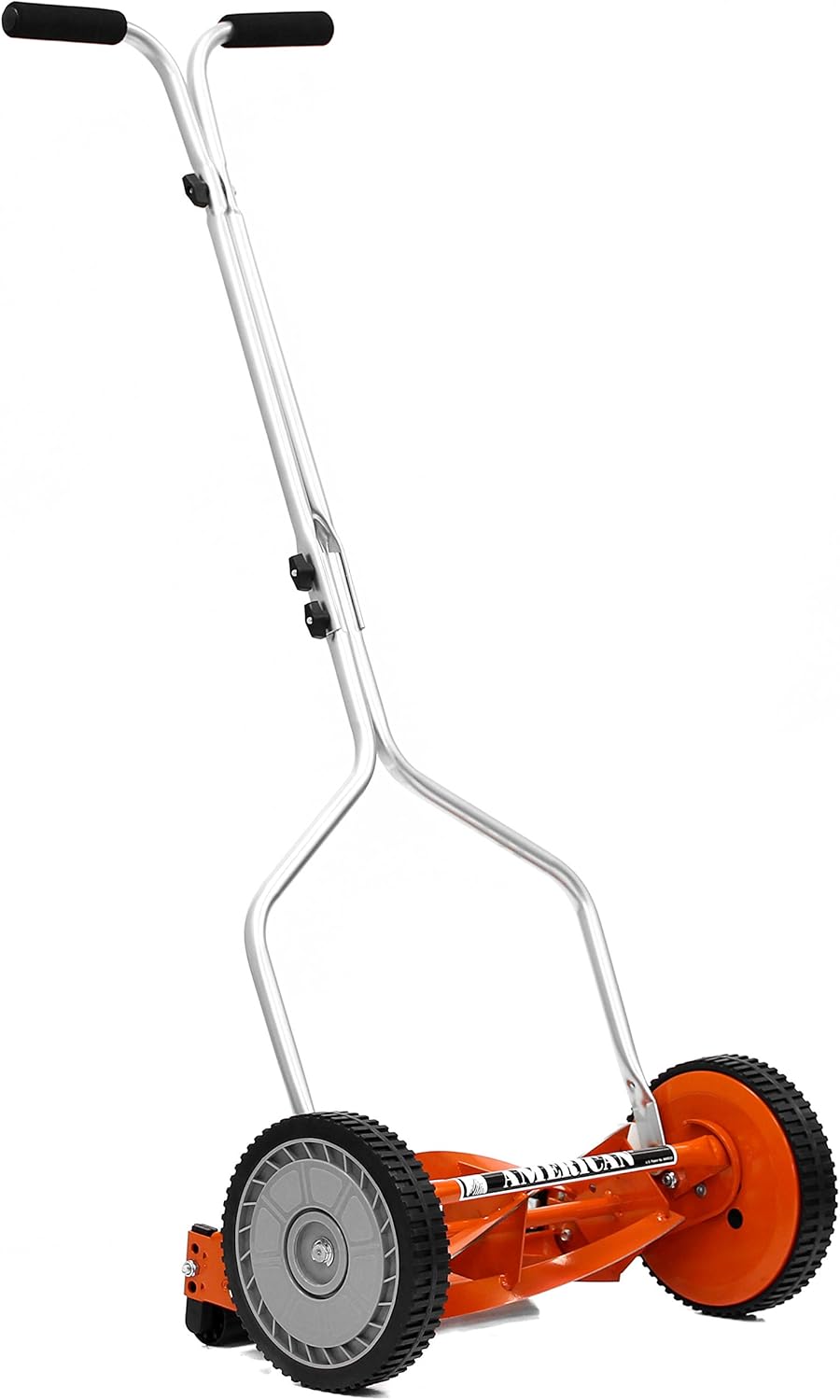
The American Lawn Mower Company 1204-14 is a classic push reel mower that brings back the simplicity of manual lawn care. Unlike gas or electric mowers, this tool relies entirely on your own muscle power to spin the reel and cut grass. It's a straightforward, no-nonsense machine designed for homeowners who prioritize quiet operation, zero emissions, and low maintenance over speed and brute force.
This mower is best suited for small, flat lawns with cool-season grasses like bluegrass, fescue, and rye. It's ideal for DIY homeowners who enjoy a bit of exercise while taking care of their yard. If you have a quarter acre or less and don't mind mowing more frequently during the growing season, this reel mower can deliver a clean, precise cut that actually promotes a healthier lawn by slicing rather than shredding the grass blades.
In real-world use, the 1204-14 performs best when you stay on top of your mowing schedule. It handles grass up to 4 inches tall, but for the best results, you should mow when the grass is dry and no more than about 3 inches high. The adjustable cutting height ranges from 0.5 to 1.75 inches, giving you good control over lawn appearance. The 8.5-inch polymer wheels roll smoothly on flat ground, but the mower can struggle on uneven or bumpy terrain. You'll need to make multiple passes if the grass is on the taller side, and wet grass will clog the reel and leave an uneven cut.
Build quality is decent for the price point. The frame is made of steel, and the reel blades are heat-treated alloy steel that stay sharp for years with minimal care. Assembly is straightforward and can be done in about 15 minutes with basic tools. The cushioned T-handle is comfortable for most users, though taller individuals might find it a bit low. At just 19 pounds, the mower is easy to lift and store, and it takes up very little space in a garage or shed.
One realistic drawback is that this mower won't replace a gas or electric model for larger or more demanding lawns. If you have a half-acre or more, or if your yard has hills, you'll likely find the manual effort tiring and time-consuming. Also, the 14-inch cutting width means more passes compared to a 21-inch power mower. But for its intended use - small, flat lawns - the American Lawn Mower 1204-14 is a reliable, eco-friendly, and cost-effective choice that gets the job done without noise, fumes, or ongoing fuel costs.
Defining High Hours on a Riding Lawn Mower
The term “high hours” is not a single fixed number but a relative measure based on the machine’s intended lifespan. For most consumer-grade riding mowers, the engine is the primary determinant of this threshold. Manufacturers typically rate small engines for a specific life expectancy under standard operating conditions.
When a mower approaches half of that rated life, it is generally considered to have accumulated high hours. This does not mean the machine is failing, but it does indicate that it has moved past its “break-in” period and is now in its mature operational phase.
| Hour Range | Classification | Typical Maintenance Focus |
|---|---|---|
| 0 – 250 | Low / Break-in | Initial oil changes, air filter checks, blade sharpening |
| 250 – 500 | Medium | Regular service, spark plug replacement, belt inspection |
| 500 – 700 | High | Throttle cable check, fuel system cleaning, valve adjustment |
| 700+ | Veteran / Extended | Comprehensive overhaul, potential engine rebuild, major component replacement |
Several factors influence where a specific mower falls on this scale. A mower used for light seasonal mowing in a flat, open yard may reach 500 hours in ten years, while a commercial-grade unit or one used on a large property with thick brush may reach that number in two to three years.
The engine type also plays a role; a 4-stroke engine generally has a longer potential lifespan than a 2-stroke, though 2-strokes are less common in modern riding mowers. The condition of the air filter and the quality of the fuel used also impact how quickly wear accumulates.
Owners should not rely solely on the hour meter, which can sometimes be inaccurate or disconnected. Keeping a manual log of mowing sessions and total time spent is a more reliable method for tracking usage. This practice helps in planning maintenance intervals and assessing the overall health of the machine. If the hour meter is missing or non-functional, estimating based on seasons of use is a common alternative, though less precise.
Factors That Accelerate Engine Wear
Not all hours are created equal. The intensity of use significantly affects how quickly a riding mower reaches a state of high wear. Several specific conditions can cause the engine to work harder than it would during standard mowing, leading to faster degradation of internal parts. Understanding these stressors helps owners adjust their maintenance schedules accordingly.
- Mowing wet or very thick grass increases engine load and heat
- Frequent idling while making turns or waiting for gates to open
- Operating in high ambient temperatures reduces engine efficiency
- Using low-quality or stale fuel causes carbon buildup in the engine
- Neglecting air filter changes leads to a rich fuel mixture
- Driving over rocks or debris can damage the undercarriage and engine mounts
Among these factors, fuel quality and air filtration are the most controllable by the owner. Using fresh, stabilized fuel for storage and ensuring the air filter is clean and free of debris are simple steps that can extend the life of the engine. Heat management is also critical; a clogged radiator or cooling fan can cause the engine to overheat, which accelerates wear on the cylinder head and gaskets. Regularly checking the coolant levels and ensuring the cooling system is unobstructed is a vital part of maintenance for high-hour machines.
Signs That a Mower Has Reached High Hours
As a riding mower accumulates hours, certain symptoms become more common. These signs are not always indicative of immediate failure, but they suggest that the machine is entering a phase where more frequent inspection is necessary. Paying attention to these indicators can help prevent minor issues from becoming major repairs.
- Increased oil consumption between scheduled change intervals
- Difficulty starting the engine, especially when cold
- Loss of power when mowing uphill or through thick grass
- White or blue smoke from the exhaust during operation
- Unusual noises such as knocking or ticking from the engine
- Visible wear on the drive belts and pulleys
Oil consumption is often one of the first signs of wear. As piston rings wear, they do not seal as tightly, allowing oil to burn in the combustion chamber. This is particularly noticeable in older engines that have passed the 500-hour mark. Blue smoke indicates oil burning, while white smoke can indicate coolant leakage or unburned fuel. Both require prompt attention to avoid further engine damage. Loss of power is another common symptom, often due to carbon buildup in the valves or a worn fuel pump.
Drive system components also show wear as the machine ages. The belts that transfer power from the engine to the wheels and deck can stretch, crack, or fray. Inspecting these belts for signs of wear is a simple task that can prevent a breakdown in the middle of a mowing session. The pulleys should also be checked for excessive play or noise, which can indicate bearing failure. Replacing these components proactively is often less expensive than dealing with a sudden failure.
Maintenance Strategies for High-Hour Mowers
Once a riding mower reaches the high-hour threshold, the maintenance strategy should shift from routine service to proactive preservation. The goal is to maximize the remaining lifespan of the engine and other critical components. This involves a more detailed inspection schedule and a focus on parts that are prone to wear.
Oil changes should be done at regular intervals, and the oil should be checked frequently between changes. Using the correct grade of oil as specified by the manufacturer is crucial for proper lubrication and heat dissipation. The air filter should be inspected every 25 hours and cleaned or replaced as needed. A dirty air filter forces the engine to work harder and can lead to a rich fuel mixture, which causes carbon buildup.
The fuel system should be cleaned periodically to remove varnish and gum deposits. Using a fuel stabilizer during storage is recommended to prevent these deposits from forming. The spark plugs should be inspected and replaced every 100 hours or as recommended by the manufacturer. Worn spark plugs can cause misfires, which lead to incomplete combustion and further engine wear. The throttle cable should also be checked for smooth operation and replaced if it is sticking or frayed.
For mowers with hydrostatic drives, the fluid should be checked and topped off as needed. The drive belts should be inspected for tension and wear. The deck blades should be sharpened and balanced to ensure a clean cut and reduce vibration. Vibration can loosen bolts and mounts, leading to further damage. If you are considering a different type of mower for your property, our lawn mower for slopes guide discusses how terrain affects equipment choice and wear.
When to Consider Replacement
Deciding when to replace a high-hour riding mower is a personal financial decision. There is no single rule that applies to every situation. However, certain economic and practical factors can help guide the decision. If the cost of repairs exceeds a significant portion of the machine’s remaining value, replacement may be the more sensible option.
Consider the frequency of breakdowns and the cost of parts. If the engine requires a major overhaul, such as a rebuild or replacement, the cost can be substantial. Compare this cost to the price of a new mower with a warranty. A new mower often comes with modern features, better fuel efficiency, and improved reliability. The resale value of a high-hour mower is typically low, which means that investing in major repairs may not provide a good return on investment.
On the other hand, if the mower is in good mechanical condition and only requires routine maintenance, it may be worth keeping for several more years. A well-maintained engine can last well beyond 1,000 hours. The key is to stay on top of maintenance and address minor issues before they become major problems. Keeping a detailed record of all repairs and maintenance costs can help in making this decision.
Ultimately, the decision to replace a riding mower depends on the owner’s budget, the condition of the machine, and their mowing needs. A high-hour mower is not necessarily a bad mower, but it does require more attention and care. By understanding the factors that contribute to high hours and the signs of wear, owners can make informed decisions about maintenance and replacement.
Tracking your mower’s hours and performing regular inspections is the best way to extend its life. Whether you choose to keep your current machine or upgrade to a new one, staying informed about maintenance needs will help you get the most out of your equipment. For those looking to optimize their yard care routine, understanding the relationship between usage and wear is essential for long-term satisfaction.




Write Your Review
No reviews yet. Be the first to share your experience!