


Introduction
Sloped lawns make mower choice about more than cutting width or engine size. The machine needs to suit the terrain, and the person operating it needs to remain in control while mowing. A self-propelled drive may reduce the amount of pushing, but drive type alone does not establish how safely or effectively a mower can handle a particular slope. That is why which lawn mower is best for hills depends first on the steepness and shape of the property, then on the mower’s documented features and the manufacturer’s operating limits.
The options below include self-propelled and push mowers, gas and battery models, and manual reel mowers. Their specifications can help narrow the field: the WORX Nitro lists variable-speed self-propulsion, while the YARDMAX lists front-wheel drive and a six-speed CVT. Those details describe different operating setups, not proof that either mower is suitable for every hill. If your property has steeper sections, compare this discussion with our mower options for sloped yards, and consider whether a compact mower for a small yard better fits tight turns or limited storage.
Product Shortcode

Pros
- Environmentally friendly with zero emissions and noise pollution
- Simple, reliable construction with minimal maintenance requirements
- Lightweight and easy to push, even on uneven terrain
- Included sharpener keeps blades in top condition without extra cost
Cons
- Not ideal for tall or overgrown grass; requires frequent mowing to maintain best results
- Manual operation may be tiring on larger lawns over 1/4 acre
- Cutting height adjustment can be less convenient than gas or electric mowers
The American Lawn Mower Company 1415-16SK2 is a manual push reel mower that brings back the simplicity of lawn care. It runs entirely on human power, so there is no gas, no oil, and no spark plugs to mess with. This mower is best suited for homeowners with small to medium-sized lawns who value a clean, quiet cut and want to reduce their environmental footprint.
In real-world use, this mower delivers a precise scissor-like cut that leaves grass looking tidy without the shredded tips common with rotary mowers. The 5-blade reel and 16-inch cutting width handle typical turf with ease, as long as you keep up with regular mowing. It works best when you cut no more than one-third of the grass blade at a time, which promotes deeper root growth and a healthier lawn. The included hand sharpener is a nice bonus, letting you keep the blades in top shape without a trip to the shop.
Build quality is solid for a manual mower. The alloy steel frame feels durable, and the 10-inch polymer wheels roll smoothly over most terrain. At 20.9 pounds, it is light enough to carry to the shed or lift over a garden edge. Assembly is required, but it is straightforward and takes about 20 minutes. The compact footprint means it stores easily in a corner of the garage or under a workbench.
There are some realistic drawbacks. This mower struggles with tall or thick grass, so you need to mow frequently in the growing season. On lawns larger than a quarter acre, the manual effort can become tiring. Also, cutting height adjustments are not as quick or precise as on gas or electric mowers, but they are adequate for most home lawns.
Overall, the American Lawn Mower Company 1415-16SK2 is a great choice for eco-conscious homeowners who want a low-maintenance mower for a small to medium yard. It is quiet, reliable, and easy to maintain. If you prefer a workout with your lawn care and want to skip the fumes and noise, this reel mower delivers.
Brand: American Lawn Mower Company
Model: 1415-16SK2
Power Source: Manual
Material: Alloy Steel
Color: Blue
Style: Reel Mower
Item Weight: 20.9 Pounds
Cutting Width: 16 Inches
Operation Mode: Manual
Product Dimensions: 22 inches deep x 27 inches wide x 45 inches high
Assembly Required: Yes
This reel mower is best for homeowners with small to medium-sized lawns under a quarter acre. It excels in quiet neighborhoods where noise restrictions are a concern. It is also ideal for organic lawn care enthusiasts who want to avoid gas fumes and chemical treatments. Use it for regular weekly mowing to keep grass at a healthy height, and it will reward you with a clean, manicured look.

Pros
- Strong 60V 6.0Ah battery platform provides clean, gas-like cutting power with far less noise.
- Full 21-inch cutting deck makes short work of standard suburban front and back yards.
- Complete 3-in-1 capability includes mulching plug, side chute, and a 1.7-bushel bag right out of the box.
- Single-lever height adjustment makes changing between 1.5 and 4 inches fast and effortless.
- Simple one-touch start eliminates the shoulder strain of traditional pull cords.
Cons
- Manual push design requires physical effort when working across steeper slopes or rolling terrain.
- Lawns exceeding a half-acre may require an extra battery to complete mowing in one continuous pass.
- Initial charge time requires planning ahead before taking the mower out for its first seasonal cut.
The SENIX 60 Volt Max 21-Inch Cordless Push Lawn Mower is a walk-behind battery-powered mower engineered to deliver quiet, emission-free yard care. Combining a robust 60V 6.0Ah lithium-ion battery with a wide 21-inch cutting deck, this machine serves as a direct alternative to traditional gas push mowers. It eliminates the frustration of storing flammable fuel, checking motor oil, and pulling stubborn starter cords, giving property owners a hassle-free route to routine lawn maintenance.
Suburban homeowners, eco-conscious consumers, and first-time buyers will find this model well suited for standard residential lots up to a half-acre. Gardeners and busy parents who prefer to trim the grass early on Saturday morning without waking the neighborhood will appreciate the quiet electric motor. Its manageable 54-pound weight also makes it accessible for elderly users and budget-conscious homeowners who want a cleaner, lighter mower, provided they are comfortable with a manual push setup.
In terms of lawn care performance, the mower provides practical 3-in-1 versatility to handle diverse yard tasks throughout the year. Homeowners can insert the mulching plug to recycle finely chopped clippings back into the turf during hot summer stretches, attach the 1.7-bushel bag for collecting fall leaves, or use the side discharge chute when conquering overgrown grass after heavy rain. The 7-position height adjustment lever ranges from 1.5 inches up to 4 inches, making it easy to raise the deck during dry weather to prevent turf stress or drop it down for a manicured spring appearance.
The build quality focuses on functional residential practicality. Its durable composite housing offers impact resistance against hidden yard debris while keeping total equipment weight low. Smooth-rolling wheels help the machine glide neatly around garden beds, fences, and sidewalk edges. In addition, the integrated battery charge indicator lets you track reserve power at a glance, and an intelligent power management system protects the battery cells from excessive heat and sudden drain under heavy cutting loads.
A few realistic operational limitations should be kept in mind before purchasing. Because this is a push mower rather than a self-propelled unit, mowing across hilly terrain or tackling thick, wet turf will demand noticeable physical pushing effort. Furthermore, property owners with sprawling rural acreage will likely need a backup battery to finish their entire yard without stopping to recharge mid-session.
The SENIX 60V Max 21-Inch Cordless Push Mower stands out as a dependable, user-friendly choice for routine lawn care. It strips away the routine headaches of small gas engines while retaining the cutting swath and multi-function capabilities essential for pristine curb appeal. For homeowners seeking reliable starts, quiet operation, and minimal seasonal maintenance, this cordless mower offers solid value and straightforward usability.
Powered by a 60V 6.0Ah lithium-ion battery, this mower provides clean, consistent output designed to tackle medium-sized yards on a single charge. The intelligent onboard power management system continuously regulates cell output to maximize efficiency, allowing the motor to draw extra energy only when powering through thicker patches of grass.
A built-in charge status indicator ensures you always know how much runtime remains before starting a mowing run. Because the battery is part of the SENIX X6 system, it can be swapped with other compatible outdoor power equipment from the brand, adding convenience for homeowners looking to expand their cordless tool lineup.
This mower includes complete 3-in-1 functionality straight out of the box, adapting easily to shifting seasonal yard demands. The included mulching plug keeps clippings suspended under the deck for multiple cuts, returning essential nitrogen and moisture to your turf for a greener, healthier lawn.
When a manicured look is required before a family gathering or backyard barbecue, the 1.7-bushel rear collection bag attaches smoothly to collect trimmings and stray leaves. A built-in bag storage hook helps keep the attachment neatly organized in your shed or garage when using the side discharge mode for taller, thicker growth.
Maintenance requirements are minimal compared to traditional gas equipment. With no engine oil to drain, no air filters to scrub, and no spark plugs to gap, routine upkeep consists mostly of wiping down the deck and keeping the cutting blade sharp for clean grass cuts.
The quick-folding handle design allows the mower to collapse into a compact profile, freeing up valuable floor space in small sheds or crowded two-car garages. Its light 54-pound footprint also makes moving the mower through narrow side gates or lifting it over raised garden borders manageable.

Pros
- Lightweight at just over 30 pounds, easy to push and lift for storage.
- Brushless motor requires minimal maintenance, no gas, oil, or pull cords.
- Quiet operation lets you mow early without upsetting neighbors.
- Foldable handle and compact design fit in small storage spaces.
Cons
- 14-inch cutting deck is narrow for larger lawns, requiring more passes.
- Battery runtime around 30 minutes may not finish a full yard if it's over 3000 sq ft.
The Litheli Cordless Lawn Mower 14 Inch is a compact electric push mower designed for small to mid-sized yards up to 3,000 square feet. It runs on a brushless motor powered by a 5.0Ah lithium-ion battery, offering cord-free convenience without the hassle of gas or extension cords. This mower is particularly well-suited for homeowners with modest lawns, apartment dwellers maintaining a patio or small green space, and seniors or first-time mower buyers who want a lightweight, easy-to-use machine.
When it comes to cutting performance, the 14-inch steel blade delivers a clean, even cut on typical grass types. The five-position height adjustment, controlled by a single lever, lets you switch between 1 and 2.5 inches to match the season - trim low in spring, keep it longer during summer heat. The included 9-gallon grass bag collects clippings efficiently, so you can skip the raking. For those who prefer mulching, you can let the clippings fall back onto the lawn as natural fertilizer, though the mower does not include a dedicated mulching plug per the description. The side discharge opening is not explicitly mentioned, but the bagging system handles most grass nicely.
Build quality is practical for its price point. The deck appears to be a durable polymer or steel material (the description doesn't specify, but typical for this class). The frame feels sturdy enough for regular use on flat terrain. The handle is adjustable and folds down quickly for storage, a big plus for anyone with limited garage or shed space. The battery is removable and can also serve as a power bank for charging devices, a thoughtful extra. Assembly is straightforward - most users can have it ready to mow in under 15 minutes with basic tools.
Ease of use is a strong suit. The push-button start eliminates the fuss of pull cords, and the mower is remarkably quiet compared to gas models. You can mow early Saturday morning without waking the household. The lightweight design (around 30 pounds) makes it easy to maneuver around flower beds, garden hoses, and tight corners. Storage is a breeze: fold the handle, and it stands upright, taking up very little floor space. Maintenance is minimal - just keep the blade sharp and the battery charged. No oil changes, no spark plugs, no fuel mixing.
That said, the 14-inch deck is narrower than standard 20-inch mowers, so you'll need more passes to cover the same area. The battery runtime is rated at 30 minutes, which is adequate for the claimed 3,000 sq ft, but if your lawn is slightly larger or the grass is thick, you might need a second charge. Also, the mower is a push model, not self-propelled, so on slopes or thick grass, it requires some effort. For small, flat yards, this is a non-issue. Overall, the Litheli is a solid choice for budget-conscious buyers who want a reliable, low-maintenance electric mower for light-duty lawn care. It's especially ideal for apartment dwellers, suburban homeowners with small yards, and eco-conscious users looking to reduce emissions and noise.

Pros
- Auto choke simplifies startup, especially for beginners or users who don't want to fiddle with manual controls
- Steel deck feels sturdier than plastic competitors and can handle occasional bumps or debris
- Height adjustment is quick and tool free from the rear, letting you adapt to different grass lengths on the fly
- Mulching performance effectively chops clippings fine, returning nutrients to the lawn without clumping
Cons
- Side discharge chute can be a bit finicky to attach and remove, and may clog in thick, wet grass
- Engine vibrates noticeably at higher RPMs compared to more expensive brands, but still operates fine for its class
- Pull cord can be stiff initially, requiring a few strong tugs to break in the engine
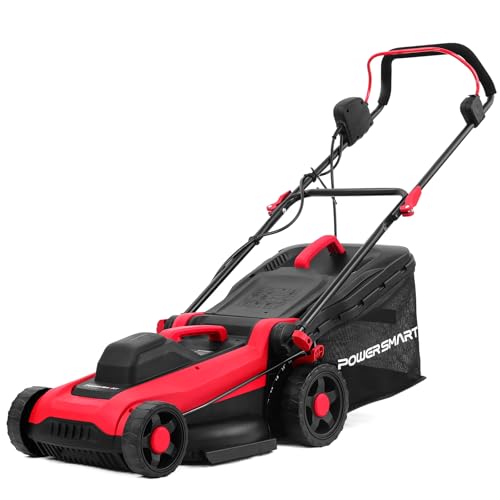
The PowerSmart 21 inch gas lawn mower is a straightforward push mower designed for homeowners who need a reliable cutting tool for smaller lawns. It's best suited for DIY homeowners with flat, fenced yards of about a quarter acre or less. This isn't a self propelled model, so you'll be doing the pushing, but on level ground the large wheels and manageable 59 pound weight make it reasonably easy to maneuver around flower beds and trees.
Performance wise, the 144cc OHV engine delivers enough torque to power through typical grass without bogging down. The auto choke is a standout feature that eliminates the classic pull start frustration. Pull the cord and it starts on the first or second try, even after sitting for weeks. The 21 inch cutting width is a standard sweet spot for this size lawn, letting you make decent passes without too much back and forth. The six position height adjustment lever at the rear is easy to reach and click into place, giving you solid control over cut length from 1.5 to 3.9 inches. Mulching chops clippings fine enough to feed the lawn, and the side discharge works well when grass is longer than average.
Build quality centers on an all steel 15 gauge deck that feels substantial for the price point. It's not a fabricated deck like on commercial mowers, but it's far more durable than the plastic decks found on similar budget push mowers. The folding handle collapses for compact storage, which is a real plus if you're short on shed space. Assembly out of the box is minimal; just unfold the handle and add oil and fuel. The manual does recommend 10W 30 oil, and the fuel tank holds only 0.21 gallons, enough for a full yard on a single tank if you're efficient.
That said, there are a few realistic drawbacks. The side discharge chute can feel flimsy during attachment and removal, and it may clog if you're cutting wet or overly thick grass. The engine does produce a fair amount of vibration compared to higher end models, but it's not a deal breaker for occasional weekly mowing. The pull cord required some muscle for the first few starts before loosening up. Additionally, the manual operation means you'll be doing all the pushing, so hills or steep slopes will be a workout.
Overall, the PowerSmart 21 inch gas lawn mower offers solid value for the budget conscious homeowner who doesn't want to overspend on a premium self propelled model. It's a practical choice for flat lawns, easy starting, and reliable cutting performance. If your yard is under a quarter acre and you're comfortable with a push mower, this will handle the job without breaking the bank. For larger or sloped properties, you'll want to look at a self propelled version or a model with a bigger engine.
Engine: 144cc OHV 4 stroke, auto choke
Power Type: Gasoline, pull cord start
Cutting Width: 21 inches
Deck Material: 15 gauge steel
Cutting Height: 6 positions, 1.5 to 3.9 inches
Cutting Options: Mulch, side discharge
Wheel Size: Front 7 inch, Rear 10 inch
Fuel Tank Capacity: 0.21 gallons
Recommended Oil: SAE 10W 30
Dimensions (open): 56 D x 22 W x 42 H inches
Folded Size: 33 H x 22 W x 17 D inches
Weight: 59.4 pounds
Recommended Lawn Size: Up to 1/4 acre
Terrain: Flat
Before buying a push gas mower, consider your lawn size and terrain. The PowerSmart 21 inch is best for flat, smaller yards. If you have hills or a larger lawn, a self propelled model will save you effort. Check your grass type to see if the 1.5 to 3.9 inch height range covers your needs. Also, remember you'll need to buy SAE 10W 30 oil and gasoline separately. The folding storage is a big plus if space is tight.
Pros
- Quiet operation allows early morning or late evening mowing without disturbing neighbors.
- Easy assembly with minimal tools and intuitive controls for quick setup.
- Good runtime for small to medium yards; many users report 30-45 minutes on a charge.
- Lightweight and easy to maneuver, especially compared to gas mowers.
- LED headlight enables mowing in low light conditions.
Cons
- Battery life may fall short of advertised 50 minutes in thick or tall grass, especially with frequent Intellicut engagement.
- Plastic deck can scratch against brick edging or curbs, though it won't rust.
- Proprietary safety key is essential for startup; losing it can be a hassle to replace.
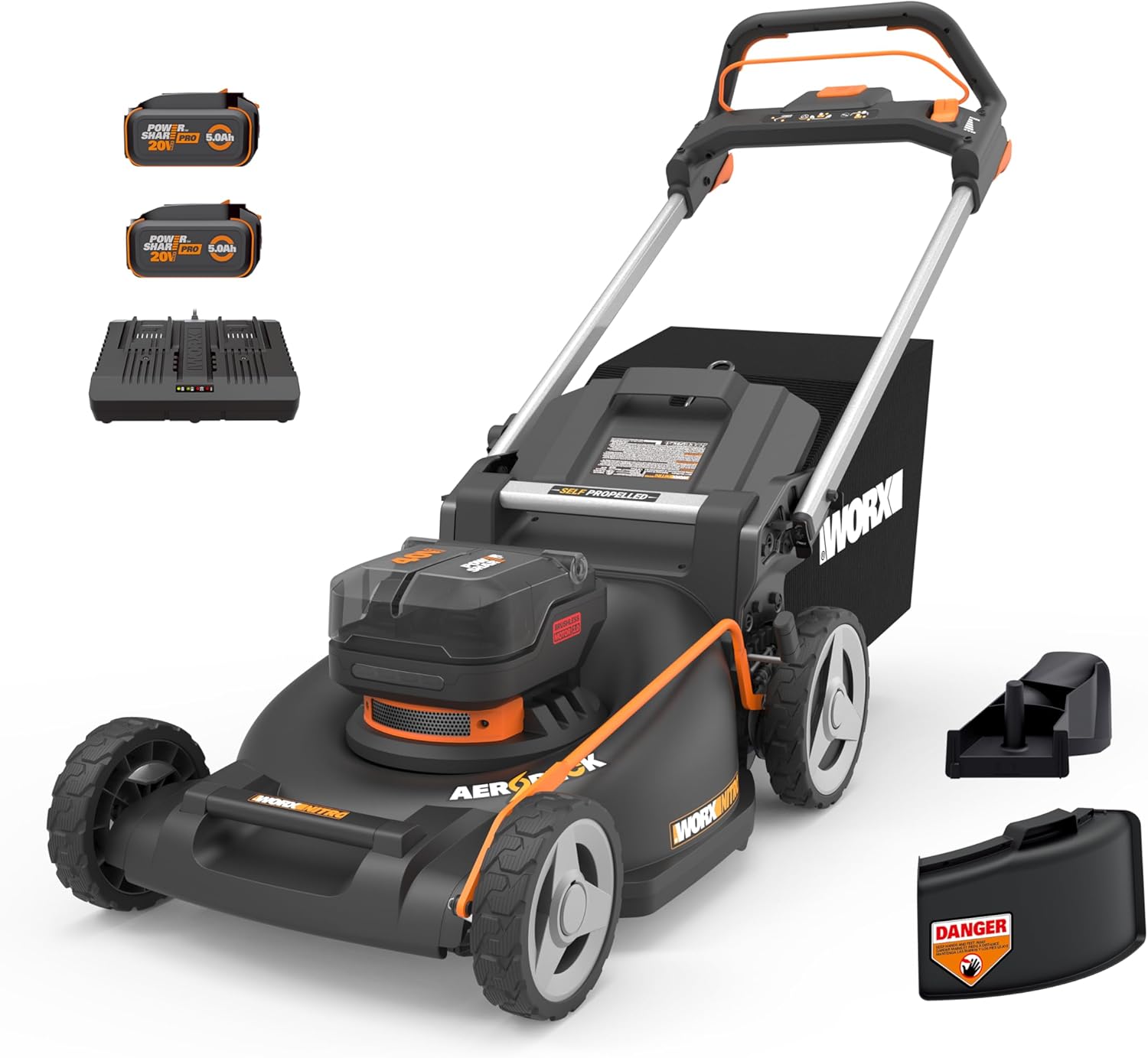
The WORX Nitro 40V 21 inch cordless lawn mower (model WG760) is a battery-powered walk-behind mower designed to replace gas models for homeowners with small to medium lawns. It targets DIYers and homeowners who want the convenience of electric power without sacrificing performance. With a self-propelled drive, variable speed control, and smart cutting features, this mower is built for everyday lawn care.
Real-world performance is impressive for a cordless mower. The brushless motor 2.0 provides enough torque to handle thick grass, and the Intellicut technology automatically adjusts blade speed as conditions change. In typical use on a quarter-acre lawn, the included 5.0Ah batteries deliver about 30-40 minutes of runtime, which is sufficient for most yards. The self-propelled system works smoothly on slopes, and the variable speed lets you match your walking pace. The Aerodeck design reduces clumping and improves bagging efficiency, leaving a clean cut.
Build quality is solid for a polymer deck mower. The plastic deck is lightweight and won't rust, but it can scratch against hard surfaces like brick edging. The handle collapses for vertical storage, a big plus for tight sheds. The LED light is handy for evening mows. Assembly is straightforward, taking about 30 minutes. Some users report the handle cushion wrap may wear over time, but overall durability is good for the price point.
Drawbacks include battery life that can be shorter than advertised in very thick or wet grass. The proprietary safety key is essential, so keep it safe. The plastic wheels are adequate but not as rugged as steel. Also, the mower deck extends slightly beyond the wheels, which can scrape against landscape edging. These are minor trade-offs for the weight savings and corrosion resistance.
Overall, the WORX Nitro WG760 is a strong choice for homeowners with up to half an acre who want a quiet, easy-to-use mower with no gas or oil. It's especially good for those already invested in the WORX PowerShare battery system. While it won't replace a heavy-duty gas mower for large commercial lawns, it delivers excellent value for residential use. If you prioritize convenience, low maintenance, and decent power, this mower is worth considering.
Pros
- Quiet and emission-free, great for early morning or late evening mowing without disturbing neighbors
- Very easy to assemble and requires almost no ongoing maintenance
- Cuts grass cleanly without shredding, leading to a healthier lawn appearance
- Lightweight and easy to store, takes up minimal garage or shed space
Cons
- Not suitable for tall or wet grass; requires frequent mowing when grass is dry and under 4 inches
- Limited cutting width of 14 inches means more passes on larger lawns, best for small to medium yards
- No power assist, so uneven or hilly terrain can make pushing more difficult
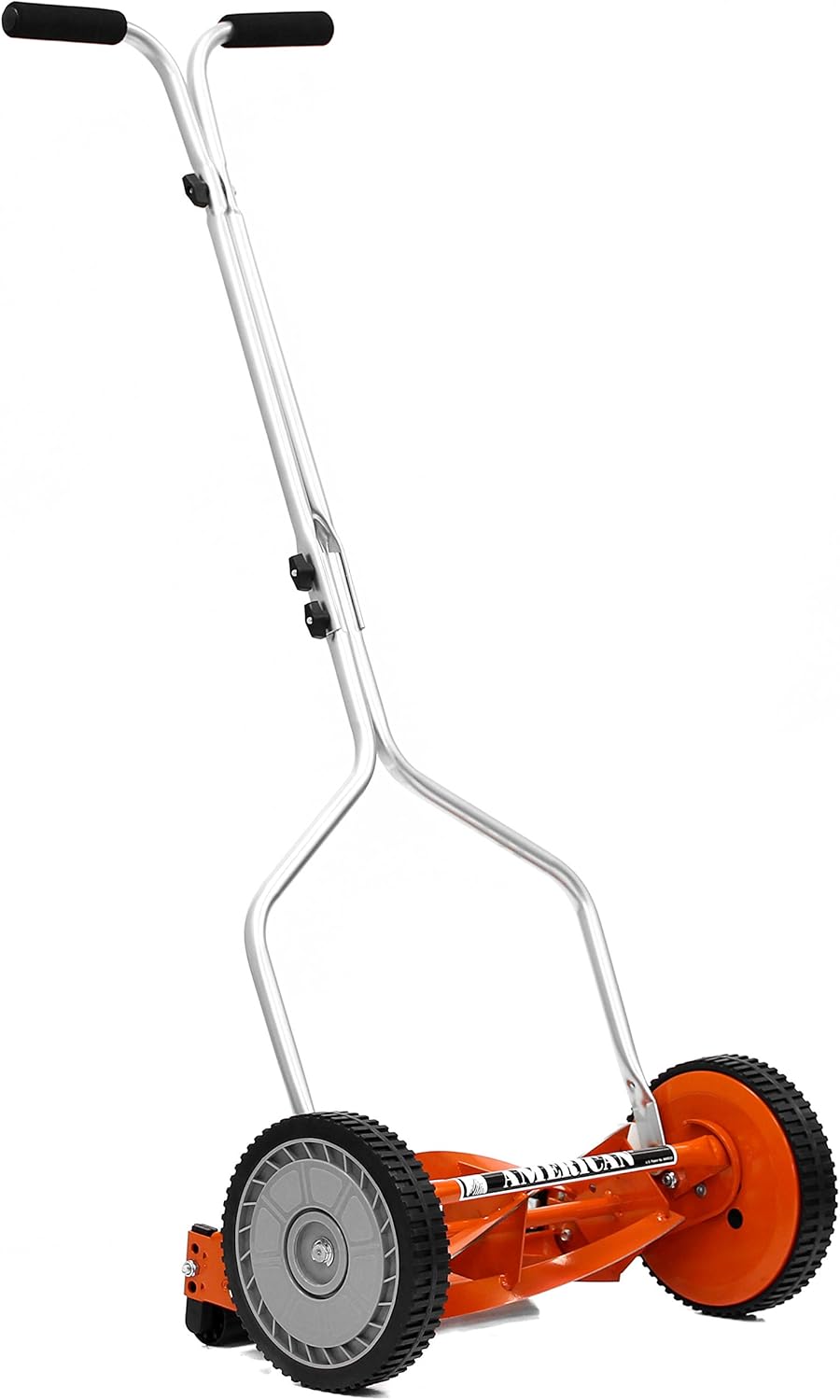
The American Lawn Mower Company 1204-14 is a classic push reel mower that brings back the simplicity of manual lawn care. Unlike gas or electric mowers, this tool relies entirely on your own muscle power to spin the reel and cut grass. It's a straightforward, no-nonsense machine designed for homeowners who prioritize quiet operation, zero emissions, and low maintenance over speed and brute force.
This mower is best suited for small, flat lawns with cool-season grasses like bluegrass, fescue, and rye. It's ideal for DIY homeowners who enjoy a bit of exercise while taking care of their yard. If you have a quarter acre or less and don't mind mowing more frequently during the growing season, this reel mower can deliver a clean, precise cut that actually promotes a healthier lawn by slicing rather than shredding the grass blades.
In real-world use, the 1204-14 performs best when you stay on top of your mowing schedule. It handles grass up to 4 inches tall, but for the best results, you should mow when the grass is dry and no more than about 3 inches high. The adjustable cutting height ranges from 0.5 to 1.75 inches, giving you good control over lawn appearance. The 8.5-inch polymer wheels roll smoothly on flat ground, but the mower can struggle on uneven or bumpy terrain. You'll need to make multiple passes if the grass is on the taller side, and wet grass will clog the reel and leave an uneven cut.
Build quality is decent for the price point. The frame is made of steel, and the reel blades are heat-treated alloy steel that stay sharp for years with minimal care. Assembly is straightforward and can be done in about 15 minutes with basic tools. The cushioned T-handle is comfortable for most users, though taller individuals might find it a bit low. At just 19 pounds, the mower is easy to lift and store, and it takes up very little space in a garage or shed.
One realistic drawback is that this mower won't replace a gas or electric model for larger or more demanding lawns. If you have a half-acre or more, or if your yard has hills, you'll likely find the manual effort tiring and time-consuming. Also, the 14-inch cutting width means more passes compared to a 21-inch power mower. But for its intended use - small, flat lawns - the American Lawn Mower 1204-14 is a reliable, eco-friendly, and cost-effective choice that gets the job done without noise, fumes, or ongoing fuel costs.

Pros
- Powerful 201cc engine handles thick grass without bogging down.
- Easy no-choke, no-primer starting system works reliably.
- Versatile 3-in-1 deck adapts to mulching, bagging, or side discharge.
- 8-position height adjustment gives you control over lawn finish.
- Smooth-rolling wheels and comfortable handle reduce operator fatigue.
Cons
- Not designed for slopes over 15 degrees, limiting use on hilly properties.
- At nearly 74 pounds, it can be heavy to maneuver in tight spaces or over uneven ground.
- Manual push operation requires more physical effort compared to self-propelled models.
The BILT HARD 21 Inch 201cc Gas Push Lawn Mower is a solid entry-level gas mower built for homeowners who need reliable cutting power on flat to gently sloping lawns. Powered by a 201cc 4-cycle OHV engine that delivers 9.0 ft-lb of torque, this mower handles thick grass and moderate growth without bogging down. The 21-inch steel deck offers three mowing options: mulching, rear bagging, or side discharge, giving you flexibility based on your lawn care routine.
This mower is best suited for DIY homeowners with medium to large flat yards who want an affordable gas alternative to battery-powered models. The no-choke, no-primer starting system is a real plus, letting you get to work quickly without fussing with fuel valves or priming bulbs. The single-lever 8-position height adjustment allows you to change cutting height from 1.2 to 3.75 inches in seconds, so you can adapt to seasonal grass growth or preferred lawn height.
Build quality is decent for the price point. The steel deck feels sturdy, and the large 9.5-inch rear wheels with double ball bearings roll smoothly over uneven ground, reducing pushing effort. The foam-wrapped handle is comfortable and angled to reduce wrist strain during longer mowing sessions. However, at 73.8 pounds, this is a heavy push mower, and it can be tiring to maneuver in tight spots or over thicker grass. The mower is not designed for slopes over 15 degrees, so hilly properties will need a different machine.
Realistically, the main drawbacks are the weight and lack of self-propulsion. If you have a large, flat lawn and don't mind pushing, this mower offers great value. The bagger collects clippings effectively, though it fills up quickly in tall grass. Mulching performance is decent but may require slower mowing in heavy conditions. Side discharge works well for quick passes when you don't want to stop and empty the bag.
Overall, the BILT HARD 21 Inch Gas Mower is a capable, budget-friendly choice for homeowners with flat lawns who want reliable gas power without complex starting procedures. It's not for pros or hilly terrain, but for regular weekly mowing on level ground, it gets the job done efficiently. If you need a simple, durable mower with versatile cutting options and easy height adjustments, this is a solid pick.

Pros
- Easy, predictable starting thanks to the no-choke, no-primer engine design.
- Self-propelled rear-wheel drive provides good traction on hills and uneven ground.
- 8 cutting height options give you precise control over lawn appearance.
- 3-in-1 versatility saves time by letting you choose the best disposal method for the season.
Cons
- At 89 pounds, this mower is heavier than some electric models, which can be a drawback for storage or transport.
- Single-speed self propel may not be fast enough for some users who prefer a variable speed control.
- The foam handle, while comfortable, may absorb moisture and degrade over time if left in the rain.
The BILT HARD 21" self propelled gas lawn mower is a straightforward, no-nonsense machine built for homeowners who need reliable cutting power without complicated electronics. Its 201cc OHV engine provides solid torque for tackling thick, tall grass, and the 3-in-1 deck lets you bag, mulch, or side discharge clippings as needed. This is a traditional gas mower that trades fancy features for proven performance and ease of use.
Best suited for owners of medium to large lawns, this mower excels when you have a mix of flat areas and gentle slopes. The rear-wheel drive self propel pulls the mower forward consistently, reducing the effort required to push it across the yard. The single lever height adjustment is a real time saver – you can quickly change the cut from a low 1.2 inches for a golf course look to a tall 3.75 inches for drought stressed grass. The no-choke, no-primer starting system is a welcome convenience; a simple pull of the rope usually gets the engine running on the first or second try.
Build quality is decent for the price point. The steel deck feels sturdy enough for regular use, and the foam wrapped handle is comfortable, though it may not hold up as well as rubber grips if left in the elements. The 89 pound weight gives it a solid feel, but it also means you'll need some muscle to lift it over curbs or into a shed. The single speed self propel is adequate for casual mowing, but power walkers might find it a bit slow.
One realistic drawback is the lack of a washout port for cleaning the deck – you'll need to scrape off clippings manually. Also, there are no reviews yet, so long term reliability is unproven. However, BILT HARD offers customer support, and the engine is a common 201cc platform that should be easy to maintain.
Overall, if you want a dependable gas mower that doesn't overcomplicate things, this BILT HARD model is a solid value. It's especially good for homeowners who prefer gas over electric and appreciate a self propel feature that reduces fatigue. Just be prepared for the weight and the single speed limitation.
Engine: 201cc 4-cycle OHV, 9.0 ft-lb torque
Deck: 21 inch steel, 3-in-1 (bag, mulch, side discharge)
Drive: Rear-wheel drive, single speed self propelled
Cutting Height: 8 positions, 1.2" to 3.75"
Start: Recoil, no choke, no primer
Weight: 89.15 pounds
Wheel Size: Not specified, but typical for 21" mowers
Handle: Foam wrapped, angled
This mower works best for homeowners with medium to large lawns (quarter acre to half acre) that have gentle slopes. The self propel feature makes it suitable for yards where pushing a manual mower would be tiring. It's also a good choice for those who want the flexibility of bagging, mulching, or side discharge depending on the season. Not ideal for very small yards where a push mower or electric corded model would be lighter and more maneuverable.

Pros
- Smooth variable-speed CVT adapts to your walking speed without jerky starts or stops.
- Automatic choke and reliable starting save time and frustration compared to traditional mowers.
- Deck washout port and foldable design simplify maintenance and storage.
- High rear wheels with deep tread handle rough terrain and damp grass better than standard wheels.
- Good value for the price, offering features typically found on more expensive models.
Cons
- Some users report the drive belt can slip or come off after several seasons, requiring repair.
- Front-wheel drive (FWD) loses traction on steep slopes or very uneven lawns; rear-wheel drive may be better for rough ground.
- Mower is relatively heavy at 84.9 pounds, which can be tiring to maneuver when not self-propelled.
The YARDMAX YG2860 is a 22-inch gas self-propelled walk-behind mower designed for homeowners who want a reliable, easy-to-use machine without the premium price tag. It packs a 201cc OHV engine that delivers ample power for cutting thick grass on medium to large lawns. The standout feature is the continuously variable transmission (CVT) which offers six speed selections. You simply shift the lever and the mower smoothly adjusts its pace to match your walking speed. No more constant tweaking of a traditional drive control.
This mower is best suited for homeowners with relatively flat lawns who value convenience. The automatic choke system eliminates the need to prime or choke the engine, so starting is as simple as pull and go. The 3-in-1 capability allows you to mulch, bag, or side-discharge clippings, giving you flexibility depending on the season or your lawn care routine. The MaxFlow deck design keeps clippings suspended longer, which improves mulching quality and reduces clumping.
Build quality is decent for the price range. The steel deck feels sturdy, and the high rear wheels with aggressive tread provide solid traction on dry grass and gentle slopes. However, the front-wheel drive system is less effective on steep hills or very uneven terrain. Some long-term reviews mention the drive belt can slip or require periodic adjustment, so plan for occasional maintenance. At nearly 85 pounds, the mower is heavy to push if you lose power, but the self-propelled system handles most of the work.
Ergonomically, the handle adjusts to your height, and the single-lever height adjustment is easy to use. The deck washout port is a real time-saver just attach a hose and flush out grass buildup. The mower also folds for compact storage, a nice bonus for small garages.
Overall, the YARDMAX YG2860 is a solid choice for the budget-conscious homeowner who wants a self-propelled mower with easy starting and variable speed control. It is not built for heavy commercial use, and the FWD design limits its performance on steep slopes. But for flat to gently rolling lawns, it delivers a clean, even cut with less effort than a push mower. If you are willing to handle minor drive system maintenance, this mower offers great value for the money.
Engine: 201cc OHV Yardmax engine with automatic choke
Cutting Width: 22 inches
Drive System: Front-wheel drive with 6-speed CVT
Height Adjustment: Single lever, 7 positions from 1.38 to 3.55 inches
Deck Type: 3-in-1 (mulch, bag, side discharge)
Wheels: High rear wheels with aggressive tread, double ball bearings
Weight: 84.9 pounds
Dimensions: 69 x 22.9 x 35.9 inches (folded for storage)
Warranty: 5 years on engine, 2 years on mower
Best for flat to gently sloping lawns up to 1/2 acre that are not overly rough or steep. Ideal for homeowners who want the convenience of self-propelled motion with variable speed control. Works well for regular weekly mowing of medium-density grass in suburban settings. Not recommended for commercial use or for yards with sharp inclines where front-wheel drive may struggle.
When choosing a self-propelled mower, consider your lawn's terrain and your comfort with maintenance. The YARDMAX YG2860 offers features like automatic choke and CVT that simplify operation. However, front-wheel drive is less capable on steep slopes than rear-wheel drive. If your lawn has hills, consider the RWD version (YG2861). Also budget for occasional drive belt service. For the price, this mower provides solid value for flat to moderate terrain.

Pros
- Strong cutting performance with a brushless motor that handles thick grass and weeds without bogging down
- Sensing mode automatically adjusts power based on grass density for efficient battery use and clean cuts
- Two included 7.5Ah batteries provide ample runtime for most small to medium yards
- Easy vertical storage and transport with a foldable handle that locks in place
Cons
- Weighs 102 pounds so maneuvering in tight spaces or backing up requires effort even with self-propulsion
- Some users report difficulty with the self-propel system always engaged, making it harder to push manually when needed
- Battery charger and replacement batteries are expensive if you need extras beyond the two included
The Husqvarna Lawn Xpert LE-322R is a cordless self-propelled mower designed for homeowners who want a cleaner, quieter alternative to gas without giving up cutting muscle. It runs on a 40V brushless motor and comes with two 7.5Ah batteries plus a charger right in the box, so you are ready to mow from the start. This mower targets yards between 1/4 and 1/2 acre, which is where its battery platform and runtime really shine.
For real-world performance, the brushless motor provides strong torque that chews through thick grass and even moderate weeds without stalling. Husqvarna claims a 30% easier cut through dense grass compared to similar mowers, and user feedback backs that up with reports of clean cutting and good mulching. The sensing mode is a standout feature: it adjusts power automatically based on grass thickness so you are not wasting battery on light trimming. You also get a max power mode for tough patches and a dedicated mulching mode. The variable self-propel speed is a nice touch since you can dial it up to 4 mph and keep a comfortable walking pace across the yard.
Build quality is solid with a metal deck and sturdy components, but at 102 pounds this is a heavy machine. The self-propelled drive helps a lot, but if you need to back up or turn in tight spots you will feel the weight. Several users note that the drive system seems to stay engaged even when you want to push manually, which can make maneuvering around flower beds and trees a bit awkward. The height adjustment is tool-free and easy to use across a range from about 2.75 to 3 inches, though that top height is somewhat limited for very tall grass. The folding handle lets the mower stand upright for storage, which is a big plus if your shed or garage is tight on floor space.
Battery life is where this mower really delivers for its intended yard size. With both 7.5Ah packs installed, you can easily get through a 1/4 acre lawn on a single charge, and many owners report finishing a half-acre with careful use of the sensing mode. The active cooling system in the batteries helps them run longer and handle hot summer mowing without thermal shutdowns. On the downside, the included charger is not rapid, so if you drain both batteries you are looking at a few hours before the next session. This is fine for most homeowners but could frustrate someone with a larger yard who needs quick turnaround.
Overall, the Husqvarna LE-322R is a capable electric mower that competes well with gas models in the same class. It is best suited for homeowners with small to medium lots who prioritize zero emissions, low noise, and easy starting. The biggest drawbacks are the heavy weight and occasional fit-and-finish issues reported by a few buyers. If you want a battery mower that cuts like a gas machine and integrates into the Husqvarna 40V tool family, this is a strong pick. Just be aware that it works best on relatively flat, open lawns and may frustrate you on complex terrain with lots of obstacles.
Power Source: 40V lithium-ion battery (included)
Motor Type: Brushless
Self-Propelled Speed: Variable up to 4 mph
Cutting Width: 21 inches
Cutting Height Range: 2.75 to 3 inches (adjustable)
Battery Capacity: Two 7.5Ah BLi30 batteries included
Runtime: Up to 75 minutes with both batteries
Charger: Included, standard speed
Weight: 102 pounds
Dimensions: 43 inches deep x 22 inches wide x 18 inches high
Wheel Size: 8 inches
Deck Material: Metal
Mowing Modes: Sensing, mulching, max power
Foldable Handle: Yes, for upright storage
Additional Features: LED headlights, side discharge chute, mulching plug, grass bag included
Model Number: 970607602
UPC: 193028587315
This mower runs on Husqvarna's 40V battery platform, which includes a growing lineup of outdoor tools like string trimmers, chainsaws, leaf blowers, hedgers, and pole saws. The two included 7.5Ah batteries give you runtime for mowing and can be swapped across compatible tools. The active cooling system helps maintain power during heavy use and extends overall battery life. All Husqvarna 40V batteries are interchangeable within the platform, so you can expand your tool collection without buying extra battery packs.
How to choose a mower for hilly ground
For hills, begin with the mower’s operating guidance and the actual terrain, not a broad claim that a model handles slopes. The supplied product listings do not provide a maximum slope angle or a tested slope rating for these mowers. They also do not document comparative traction results on inclines. As a result, no single mower in this selection can be declared safe or best for every hillside based on the available specifications.
A sensible starting point is to identify the steepest sections, uneven areas, narrow passages, and places where the mower must turn. Then check the owner’s manual for the exact model’s slope restrictions and operating instructions. A mower’s engine size, battery voltage, cutting width, or advertised terrain language cannot replace those limits. If the manufacturer does not approve the intended terrain, choose another mowing approach rather than assuming extra power makes the slope suitable.
Why drive type matters, but does not settle the question
A self-propelled mower supplies wheel drive, so the operator guides the machine rather than providing all forward motion by pushing. That can be a useful distinction on a larger property or where pushing effort is a concern. It does not establish that the mower will maintain traction on a particular hill, or that it is appropriate for that slope. The manual’s direction about terrain and operation remains the controlling information.
The WORX Nitro 21-inch cordless mower is listed as self-propelled with variable speed up to 3.7 mph. Its supplied description says it uses two 20V, 5.0Ah PowerShare Pro batteries, with a 40V system designation, and includes a charger, collection bag, side-discharge chute, and mulch plug. Those details identify its propulsion and package contents; they do not specify a slope rating. A buyer should separately verify the manual’s allowed operating conditions and whether the property’s tight turns suit the mower’s overall footprint.
The BILT HARD 21-inch self-propelled gas mower is listed with rear-wheel drive and single-speed self-propulsion. The product information also lists a 201cc four-stroke OHV engine, a 3-in-1 deck, and a synchronized cutting-height adjustment from 1.2 to 3.75 inches. Rear-wheel drive and one travel speed are meaningful characteristics to compare with variable-speed designs, but the supplied listing does not establish hill traction or safe slope limits. Buyers should not treat the engine displacement as evidence of incline performance.
The YARDMAX 22-inch mower uses front-wheel drive and a six-speed CVT, according to the supplied product information. Its listed rubber tires have an aggressive tread pattern, and the description presents that tread as intended to increase traction and maneuverability. This remains a manufacturer claim, not a measured result on hills. Front-wheel drive can also feel different from rear-wheel drive during turns and operation, so the user manual and a careful assessment of the terrain matter more than a general assumption that one configuration is universally better.
A push mower avoids a powered drive system, but the operator must supply the pushing force. That may be manageable on a modest, gently sloped area, depending on the person, grass, and mower, but the supplied data does not establish that it will be manageable for a specific buyer. Reel mowers require the operator to push the cutting mechanism through the grass, and they are not a substitute for a self-propelled mower where pushing control or physical effort is a concern. Match the design to both the terrain and your ability to control the machine within manufacturer guidance.
Battery and gas choices for inclined lawns
Battery power can remove fuel and engine-starting tasks, but battery voltage alone does not tell a buyer how long a mower will run on a hill. Runtime depends on factors the supplied information does not quantify for these products, including the actual mowing conditions and battery configuration. The SENIX 60V push mower comes with a listed 60V, 6.0Ah battery and supports mulching, bagging, and side discharge. Its listing describes slope use as a capability, but does not give a tested slope limit, so that wording should not override the manual.
The Husqvarna Lawn Xpert LE-322R is a battery-powered self-propelled mower with a brushless motor, variable speed up to 4 mph, and two 7.5Ah BLi30 batteries listed in the package. The product description positions it for lawns of one-quarter to one-half acre and claims longer runtime under its stated comparison. That acreage positioning is not a guarantee for a hilly lawn, where the actual mowing conditions may differ. It also does not document an incline rating, so the model’s exact operating instructions still need checking.
Gas models do not require battery charging, but they bring an engine and fuel-related ownership tasks. The PowerSmart 21-inch mower lists a 144cc four-stroke OHV engine, push operation, and mulching and side-discharge modes. The BILT HARD push mower lists a 201cc four-stroke engine, rear bagging, mulching, and side discharge. These specifications help distinguish the products, but engine displacement should not be used as a stand-in for slope suitability, control, or measured cutting performance.
Manual reel models need no battery or gasoline, but their listed cutting range and intended use matter. The American Lawn Mower Company 1415-16SK2 has a 16-inch, five-blade reel and 10-inch polymer wheels; the 1204-14 has a 14-inch, four-blade reel, weighs 19 pounds according to its listing, and is described for small lawns. The 1204-14 listing says it is less effective on taller grass. Neither product listing establishes suitability for hills, and a manual mower’s light weight does not prove secure footing or easy control on an incline.
Match the mower to the shape of the property
A hillside rarely behaves like one uninterrupted plane. A property can have a gentle bank, a steep edge, a drainage swale, and a level area in the same lawn. Walk the planned mowing area and note where a mower must turn, where the ground changes, and whether obstacles could constrain control. Then compare those realities with the manufacturer’s limits for the exact mower model, rather than choosing from a general category label.
Cutting width influences how much ground the deck covers on a pass, but it is not the mower’s overall width. A 21-inch cutting path does not tell you whether the machine fits through a gate or can be turned comfortably beside landscaping. The 14-inch and 16-inch reel mowers have narrower listed cutting widths than the 21-inch and 22-inch walk-behind models. A narrower path may be easier to place around small features, but it also requires more passes, and neither point establishes safe hill handling.
Storage and access are part of the decision, especially if the mower must pass through a side gate or be kept in a crowded shed. The WORX product listing says its handle collapses for vertical storage, and the Husqvarna listing describes folding and standing storage. Those claims may help buyers compare storage arrangements, but the supplied data does not give folded dimensions. Measure the actual access route and storage space, then confirm the full product dimensions and storage instructions in the manufacturer’s documentation.
Uneven ground can also make cutting-height adjustment relevant. The SENIX mower lists seven positions from 1.5 to 4 inches; the WORX listing gives seven positions from 1.5 to 4 inches; and the YARDMAX listing describes a single-lever deck adjustment without a numeric range in the supplied details. These are documented height features, not evidence that a mower can safely cross rough ground or cut a steep bank. Check the exact manual for recommended cutting height and operation on the lawn conditions you have.
Clipping options and grass conditions
Mulching, bagging, and side discharge affect how clippings are managed, not whether a mower is rated for hills. The WORX and SENIX listings describe all three modes, while the PowerSmart listing describes mulching and side discharge. The BILT HARD 201cc push mower and the self-propelled BILT HARD model are listed with bagging, mulching, and side discharge. A listed mode means the mower supports that option; it does not prove a particular collection result or cutting quality.
Grass height and moisture can change the work involved in mowing, but the available product data does not provide comparative performance on wet or steep grass. The American Lawn Mower Company reel-mower descriptions advise against mowing wet grass and recommend cutting no more than one-third of the grass blade for best results. Those are product-specific recommendations in the listings and should be followed alongside each mower’s instructions. Avoid assuming a larger engine or wider deck resolves difficult grass conditions on an incline.
A bag can add a collection workflow that matters on a sloped property: the operator must account for the mower, the bag, and the route for emptying clippings. The SENIX listing gives a 1.7-bushel bag capacity, while the Litheli 14-inch battery mower lists a 9-gallon grass bag. These figures use different units and describe different products, so they should not be compared as if they were a standardized test. Neither capacity establishes how often a bag will need emptying on a particular lawn.
Read product claims with the right limits
Marketing descriptions sometimes use broad phrases such as “handles slopes” or “all terrains.” Treat these as product claims, not a quantified maximum incline, traction test, or permission to mow any slope. The supplied listings do not provide comparable slope angles, surface conditions, or test methods for the products covered here. If slope use is central to the purchase, ask the manufacturer or consult the exact model manual for a clear operating limit before buying.
Similarly, “self-propelled” describes powered wheel movement, but it does not promise that steering, turning, or stopping will feel effortless. Variable speed provides a way to select a pace on the WORX and Husqvarna models, while the BILT HARD self-propelled model is listed as single-speed. The YARDMAX’s six-speed CVT is another speed-control arrangement. These differences can help a buyer identify a preferred control style, but none independently proves the mower’s stability or traction on a specific incline.
Battery claims also need to stay tied to their configuration. The SENIX listing specifies one 60V, 6.0Ah battery, while the WORX listing specifies two 20V, 5.0Ah batteries for its 40V system and includes a dual charger. The Husqvarna package lists two 7.5Ah BLi30 batteries. Voltage, amp-hour capacity, battery quantity, and platform are distinct details; none alone establishes runtime on hills. Do not assume batteries or chargers interchange across brands or platforms unless compatibility is explicitly documented.
User ratings, where supplied, are another limited signal. They reflect user feedback associated with a listing, not technical slope testing or a controlled comparison. Some products in this selection have no review count supplied, and an overall rating does not establish suitability for your terrain. A buyer should weigh model-specific operating instructions and clearly documented features more heavily than a general rating when the central concern is hill use.
When a walk-behind mower may not be the right tool
If the steepest area falls outside the mower manufacturer’s stated limits, do not try to make the mower suitable by choosing a larger engine, heavier deck, or more aggressive tread description. Those features do not replace an approved operating envelope. The supplied products are walk-behind mowers, and the supplied information does not establish that any one of them is appropriate for a particular steep slope. The safer decision may be a different maintenance method or professional help, depending on the site and manufacturer guidance.
Riding mowers and other mower categories are not represented by the products listed here, so this article cannot recommend a specific riding model for steep terrain. A different mower category should not be assumed safer simply because it has a seat or a wider cutting deck. Terrain limits, center of gravity, drive layout, and the manufacturer’s operating instructions are model-specific considerations. Verify those details for any alternative before purchase or use.
For a lawn with only modest slopes, the practical shortlist may come down to whether powered propulsion is useful, what cut width fits the property, and which power source matches your ownership preferences. Compare the manual’s terrain restrictions first, then consider speed control, battery and charger inclusion, clipping modes, and storage. A self-propelled mower can reduce pushing effort, but it is not an automatic solution to a steep or unsafe area. If there is uncertainty about whether a section is within the mower’s allowed conditions, do not mow it with that machine until the manufacturer’s guidance resolves the question.
Practical decision points before buying
Start by confirming the exact model number and finding its owner’s manual. Look for the stated slope limits and the manufacturer’s direction on operation, turning, and the specific ground conditions permitted. The supplied product summaries do not answer those questions consistently, so the manual is an essential verification step rather than a detail to leave until after purchase. If the instructions are unclear, contact the manufacturer for model-specific guidance.
Next, evaluate handling needs without turning a feature into a promise. A self-propelled drive may help with forward movement, and variable speed may let an operator select a pace, but the operator still has to guide the machine and remain in control. A narrow deck can suit tight spaces but takes more passes across open lawn. A wider deck covers a broader cutting path but does not necessarily make a mower easier to maneuver around obstacles.
For a battery mower, verify which batteries and charger are included, the exact platform, and whether the manufacturer publishes runtime under a configuration relevant to your use. Do not treat a listed acreage as guaranteed coverage on a sloped property. For a gas model, consider the engine type and routine ownership requirements described in its manual, without assuming that displacement proves hill performance. For a reel mower, consider the narrower cutting path and the operator-powered design, along with the listing’s limitations for taller grass.
Finally, check the whole package and the property fit. Confirm whether a grass bag, mulch plug, discharge chute, battery, and charger are included rather than merely supported. Check mower dimensions separately from cutting width, especially if access and storage are tight. The available listings establish some included equipment and storage features, but not every dimension or accessory detail. Confirm any unanswered point on the manufacturer’s product page or in the manual before placing an order.
Use related mower information to narrow the choice
Hills are only one part of a mower decision. If a cordless option is still under consideration, our guide to affordable cordless mowers offers a related comparison angle, while an overview of rechargeable electric mowers can help frame battery ownership questions. Neither topic substitutes for checking the slope limits of a specific mower. Use related reading to compare power-source priorities, then return to the exact model documentation for terrain suitability.
The most defensible answer is conditional: a mower with self-propelled drive may be worth considering when pushing effort matters, but the available product data does not identify a universally best mower for hills. Match the mower to the actual incline only after checking the exact model’s operating limits. Then weigh propulsion, control features, cutting width, clipping options, battery or engine ownership, and storage against the layout of the property. If the manual does not support the intended terrain, choose another approach rather than relying on marketing language or a specification that does not measure slope safety.





Write Your Review
No reviews yet. Be the first to share your experience!