


There is no single universal number that defines a high hour count for every riding mower, but most manufacturers consider 300 to 500 engine hours as the threshold where significant wear begins to appear in critical components. The actual lifespan depends heavily on the specific model, the type of terrain you mow, and how consistently you perform scheduled maintenance.
A residential mower used lightly on flat grass may last well beyond 500 hours, while a commercial unit on rough terrain might show heavy wear at 300. Understanding these variables helps you plan for repairs or replacement before a breakdown occurs.
Tracking engine hours is one of the most reliable ways to assess the health of a riding mower. Unlike calendar years, which ignore usage intensity, hour meters reflect the actual mechanical stress placed on the engine, transmission, and deck. Many homeowners find that checking the hour meter during seasonal maintenance provides a clear snapshot of the machine’s condition.
If you are considering buying a used unit or planning a major service interval, knowing how to interpret these numbers is essential. Our guide on metal mower blade setup can also help you maintain the cutting deck, which is another area where usage hours directly impact performance and safety.

Pros
- Noticeably quieter transmission operation, as reported by many users.
- Smoother and more consistent performance under heavy mowing conditions.
- Extended drain intervals save time and money on maintenance.
- Wide compatibility covers most popular zero-turn mower brands.
Cons
- Only available in a 1-gallon jug; some mowers may require more than a gallon for a full service, necessitating a second purchase.
- Premium pricing compared to conventional transmission oils, though the synthetic formula justifies the cost.
- Not suitable for mowers that require a different viscosity grade; always verify your owner's manual.
TRIAX Trans Zero 20W-50 is a full synthetic hydrostatic transmission oil formulated specifically for zero-turn mowers. Unlike generic hydraulic fluids, this oil is engineered to meet the demands of modern hydrostatic drives found on commercial and residential mowers. It is not a power tool itself but a critical maintenance product that ensures your mower's transmission operates at peak efficiency.
This oil is best suited for contractors, landscapers, and homeowners who own zero-turn mowers from brands like Toro, Scag, Ferris, Cub Cadet, Husqvarna, and others. If you have a mower with a Hydro-Gear or similar transmission that calls for 20W50 or high-viscosity fluid, this is an excellent choice. DIY users who perform their own maintenance will appreciate the ease of use and the noticeable improvement in performance.
Real-world performance is where this oil shines. Many users report a significant reduction in transmission whine and noise after switching to TRIAX Trans Zero. The high zinc additive package protects gears from scuffing and glazing, even under heavy loads like thick grass or hilly terrain. The oil maintains consistent viscosity across a wide temperature range, so your mower operates smoothly in both hot summer conditions and cooler spring days. The extended drain interval (up to 3 times OEM) means less frequent fluid changes, which is a big plus for high-use commercial mowers.
Build quality is top-notch. TRIAX is a reputable lubricant brand known for high-performance products. The oil is packaged in a sturdy 1-gallon jug with a convenient pour spout. The fluid has excellent corrosion prevention properties, lasting up to two years in storage, which is ideal for seasonal equipment. While the price is higher than conventional oils, the synthetic formulation and performance benefits justify the investment. The only realistic drawback is that some mowers require more than a gallon for a full service, so you may need to buy a second jug or top off with a compatible fluid. Also, it is only for 20W50 applications, so always check your owner's manual.
Overall, TRIAX Trans Zero 20W-50 is a top-tier choice for anyone looking to extend the life of their zero-turn mower's hydrostatic transmission. If you want quieter operation, smoother performance, and longer fluid life, this oil delivers. It is a smart upgrade for both commercial operators and serious DIYers who maintain their own equipment.
Viscosity: 20W50
Brand: Triax
Vehicle Service Type: Lawn Mower
UPC: 850023978073
Automotive Fit Type: Universal Fit
Manufacturer: TRIAX Lubricants LLC
Size: 1 Gallon
Item Weight: 7.81 pounds
Product Dimensions: 7.48 x 12.6 x 3.94 inches
Item Model Number: HYD20W50
Liquid Volume: 3.79 Liters
Package Information: Drum
Pros
- Quiet and emission-free, great for early morning or late evening mowing without disturbing neighbors
- Very easy to assemble and requires almost no ongoing maintenance
- Cuts grass cleanly without shredding, leading to a healthier lawn appearance
- Lightweight and easy to store, takes up minimal garage or shed space
Cons
- Not suitable for tall or wet grass; requires frequent mowing when grass is dry and under 4 inches
- Limited cutting width of 14 inches means more passes on larger lawns, best for small to medium yards
- No power assist, so uneven or hilly terrain can make pushing more difficult
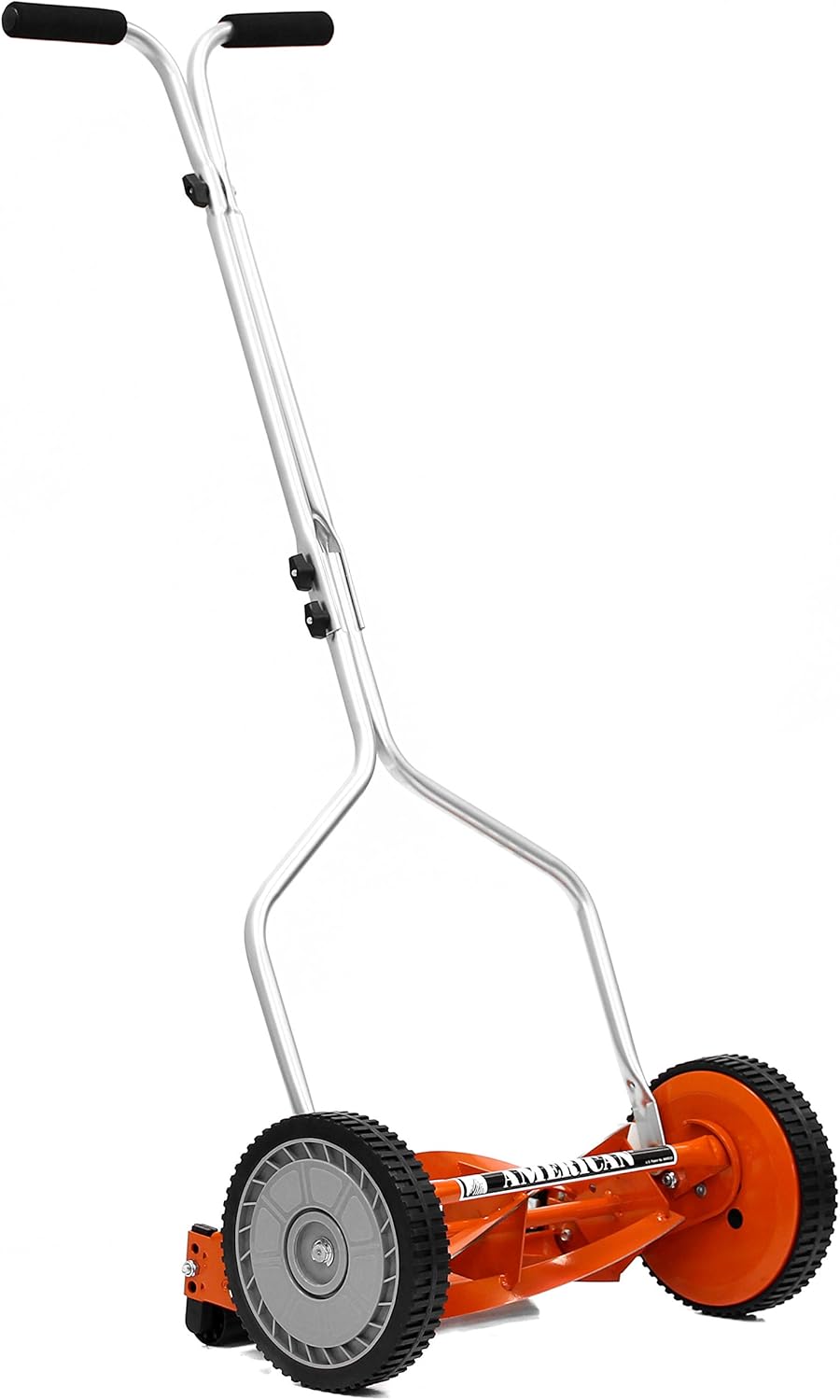
The American Lawn Mower Company 1204-14 is a classic push reel mower that brings back the simplicity of manual lawn care. Unlike gas or electric mowers, this tool relies entirely on your own muscle power to spin the reel and cut grass. It's a straightforward, no-nonsense machine designed for homeowners who prioritize quiet operation, zero emissions, and low maintenance over speed and brute force.
This mower is best suited for small, flat lawns with cool-season grasses like bluegrass, fescue, and rye. It's ideal for DIY homeowners who enjoy a bit of exercise while taking care of their yard. If you have a quarter acre or less and don't mind mowing more frequently during the growing season, this reel mower can deliver a clean, precise cut that actually promotes a healthier lawn by slicing rather than shredding the grass blades.
In real-world use, the 1204-14 performs best when you stay on top of your mowing schedule. It handles grass up to 4 inches tall, but for the best results, you should mow when the grass is dry and no more than about 3 inches high. The adjustable cutting height ranges from 0.5 to 1.75 inches, giving you good control over lawn appearance. The 8.5-inch polymer wheels roll smoothly on flat ground, but the mower can struggle on uneven or bumpy terrain. You'll need to make multiple passes if the grass is on the taller side, and wet grass will clog the reel and leave an uneven cut.
Build quality is decent for the price point. The frame is made of steel, and the reel blades are heat-treated alloy steel that stay sharp for years with minimal care. Assembly is straightforward and can be done in about 15 minutes with basic tools. The cushioned T-handle is comfortable for most users, though taller individuals might find it a bit low. At just 19 pounds, the mower is easy to lift and store, and it takes up very little space in a garage or shed.
One realistic drawback is that this mower won't replace a gas or electric model for larger or more demanding lawns. If you have a half-acre or more, or if your yard has hills, you'll likely find the manual effort tiring and time-consuming. Also, the 14-inch cutting width means more passes compared to a 21-inch power mower. But for its intended use - small, flat lawns - the American Lawn Mower 1204-14 is a reliable, eco-friendly, and cost-effective choice that gets the job done without noise, fumes, or ongoing fuel costs.

Pros
- All-season performance with wide temperature range (-50F to high heat) for reliable operation year-round.
- High zinc and shear-resistant formula protects against gear wear and glazing in demanding commercial use.
- Extended drain intervals (up to 3x OEM) save time and money on maintenance.
- Compatible with dozens of popular zero-turn mower brands, making it a versatile replacement fluid.
Cons
- Priced higher than conventional hydrostatic oils, which may not appeal to budget-conscious DIY homeowners.
- Only available in 1-quart bottles; larger containers would be more convenient for high-volume commercial users.
- Limited user reviews available, so long-term real-world performance data is still emerging.
The TRIAX Trans Zero 20W-50 is a full synthetic hydrostatic transmission oil engineered for zero-turn mowers. This isn't just another generic fluid; it's a commercial-grade lubricant designed to handle the high-stress conditions that come with mowing on slopes, heavy grass, and rough terrain. Whether you're a professional landscaper running a fleet of mowers or a homeowner with a premium zero-turn, this oil aims to keep your transmission running smoothly and reliably.
Best suited for commercial operators and serious DIY users who push their equipment hard, the Trans Zero delivers where conventional oils fall short. Its high zinc concentration provides exceptional anti-wear protection, preventing gear scuffing and glazing that can lead to costly repairs. The full synthetic base also offers outstanding shear resistance, meaning the oil maintains its viscosity even under extreme load and heat. That translates to consistent mower speed and responsive control, even when you're cutting thick grass on a hot summer afternoon.
Build quality is top-notch, with a formulation that stays stable from -50F all the way up to high operating temperatures. This all-season capability is a big plus for those who store their mower in unheated sheds or run it in early spring and late fall. The oil's oxidation stability and corrosion prevention also mean it can protect transmission components during long storage periods, up to two years. That's a practical advantage for seasonal users who park their mower for months at a time.
On the downside, the price is higher than conventional hydrostatic fluids, which might give budget-minded homeowners pause. Also, the 1-quart bottle size is fine for topping off, but commercial users who need multiple quarts for a full system change might wish for a gallon option. Since this is a relatively new product with limited reviews, there's less long-term field data compared to established brands. However, TRIAX has a solid reputation for high-performance lubricants, so early adopters can be confident in the formulation.
Overall, the TRIAX Trans Zero 20W-50 is a strong choice for anyone who wants maximum protection and extended drain intervals from their zero-turn mower's hydrostatic transmission. If you run a commercial mowing crew or own a high-end residential machine and value reliability over upfront cost, this oil is worth the investment. For casual homeowners with older or lower-use mowers, a conventional fluid might suffice, but the Trans Zero's durability and all-season versatility make it a compelling upgrade.
What Is a Lot of Hours on a Riding Mower?
The definition of “high hours” varies by mower category, but general industry benchmarks provide a useful starting point for most buyers and owners. These figures are based on typical manufacturer service intervals and common failure points in residential and light commercial equipment. The table below summarizes the expected lifespan ranges for different types of riding mowers, helping you contextualize the hour meter reading on your specific machine.
| Mower Type | Low Hours | Moderate Hours | High Hours | Typical Lifespan |
|---|---|---|---|---|
| Residential Walk-Behind | 0-100 | 100-200 | 200+ | 10-15 years |
| Residential Riding | 0-150 | 150-300 | 300-500 | 10-15 years |
| Zero-Turn Residential | 0-150 | 150-300 | 300-400 | 8-12 years |
| Light Commercial | 0-300 | 300-600 | 600-1000 | 5-8 years |
| Heavy Commercial | 0-500 | 500-1000 | 1000+ | 3-5 years |
These ranges are not absolute guarantees, but they offer a framework for evaluating machine condition. A residential riding mower with 250 hours is generally considered to be in its prime, with most major components still within their expected service life. However, a zero-turn mower with the same hour count might be approaching the point where transmission fluid changes and hydraulic inspections become critical. The key is to compare the hour count against the specific maintenance schedule provided in the owner’s manual for your model.
Several factors influence how quickly a mower accumulates “high” hours relative to its actual wear. Terrain, grass height, and mowing frequency all play a role in determining the mechanical load on the engine and drivetrain. A mower used on hilly, rocky terrain will experience more stress per hour than one used on flat, well-maintained suburban lawns. Similarly, mowing tall, wet grass requires more engine power and places greater strain on the transmission and deck components.
Factors That Accelerate Wear
Not all hours are created equal. The conditions under which you mow can significantly impact the longevity of your riding mower. Understanding these factors helps you adjust your maintenance schedule and anticipate potential issues before they become costly repairs. Here are the primary conditions that accelerate wear on a riding mower:
- Hilly or uneven terrain increases engine load and transmission stress.
- Mowing wet or very tall grass strains the deck and engine.
- Operating in high temperatures reduces cooling efficiency.
- Infrequent oil changes lead to accelerated internal wear.
- Aggressive mowing patterns with frequent turns wear the drivetrain.
- Using the mower for tasks other than mowing, like towing.
For example, a mower used on a large, hilly property may reach 300 hours in three years, while a mower on a small, flat lawn might take five years to reach the same count. The former machine will likely require more frequent transmission service and may show signs of wear earlier. This is why hour count alone is not enough; you must also consider the operating environment. If you are unsure about your mower’s condition, a professional inspection can provide a more detailed assessment of component health.
Residential vs. Commercial Usage Patterns
The distinction between residential and commercial usage is critical when interpreting hour counts. Residential mowers are typically designed for intermittent use, with long periods of storage between mowing seasons. Commercial mowers, on the other hand, are built for continuous, high-intensity use over many hours per day. This difference in design intent means that a residential mower with 400 hours may be nearing the end of its useful life, while a commercial mower with the same hour count may still have several years of service remaining.
Commercial mowers often feature more robust components, such as heavier-duty transmissions, larger fuel tanks, and enhanced cooling systems. These features allow them to handle the higher stress levels associated with professional use. However, they also come with a higher initial cost and more complex maintenance requirements. For homeowners, the focus should be on maximizing the lifespan of a residential unit through careful maintenance and appropriate usage. This includes avoiding overloading the deck, keeping the engine well-tuned, and storing the mower properly during the off-season.
Impact of Maintenance on Hour Count
Maintenance is the single most important factor in determining how long a riding mower lasts. A well-maintained mower can often exceed its expected lifespan, while a neglected one may fail prematurely. Regular oil changes, air filter replacements, and blade sharpening are basic tasks that help keep the engine and deck running smoothly. More advanced maintenance, such as transmission fluid changes and hydraulic system inspections, is critical for zero-turn mowers and other high-performance models.
Many homeowners overlook the importance of transmission maintenance, assuming that it is only necessary for commercial units. In reality, the hydrostatic transmission in a zero-turn mower is one of the most expensive components to repair, and neglecting fluid changes can lead to catastrophic failure.
The manufacturer lists specific intervals for transmission fluid changes, and following these guidelines is essential for long-term reliability. If you are using a synthetic fluid like the one listed in our product section, you may be able to extend the drain interval, but you should always verify this with the manufacturer’s recommendations.
Signs of High-Hour Wear
As a riding mower accumulates hours, certain signs of wear become more common. Recognizing these signs early can help you address issues before they lead to major breakdowns. Some of the most common indicators of high-hour wear include reduced engine power, increased fuel consumption, and unusual noises from the transmission or deck. These symptoms can be caused by a variety of factors, including worn piston rings, clogged fuel injectors, or worn transmission gears.
Another common sign of high-hour wear is difficulty in starting the engine. This can be caused by a weak battery, a faulty starter motor, or a carburetor that needs cleaning. While these issues are often minor, they can be more difficult to diagnose and repair in older mowers. If you are experiencing starting problems, it is a good idea to have the engine inspected by a qualified technician. They can check the compression, fuel system, and electrical components to determine the root cause of the issue.
When to Consider Replacement
Deciding when to replace a riding mower is a personal financial decision, but there are several factors to consider. If the cost of repairs exceeds 50% of the value of the mower, it may be more economical to replace it. This is especially true if the mower is older than 10 years or has more than 500 hours. However, if the mower is in good condition and the repairs are minor, it may be worth investing in the repair to extend its life.
Another factor to consider is the availability of parts. As mowers age, parts can become harder to find and more expensive. This can make repairs more costly and time-consuming. If you are having trouble finding parts for your mower, it may be a sign that it is nearing the end of its useful life.
In this case, it may be worth considering a new model with better availability of parts and a longer warranty. You might also look into how to file a lawn mower blade to keep your current deck efficient, as a sharp blade reduces the strain on the engine during high-hour usage.
Maximizing Lifespan Through Proper Storage
Proper storage is often overlooked, but it is a critical factor in maximizing the lifespan of a riding mower.
- Storing a mower in a damp or unheated garage can lead to rust and corrosion, which can shorten its life.
- It is best to store the mower in a dry, well-ventilated area, such as a garage or shed.
- Before storing the mower for the winter, you should change the oil, clean the air filter, and add a fuel stabilizer to the tank.
Additionally, you should disconnect the battery to prevent it from draining over the winter. A dead battery can make it difficult to start the mower in the spring, and it can also damage the battery if left disconnected for too long. By following these simple storage tips, you can help ensure that your riding mower is ready to go when the mowing season begins. This proactive approach to maintenance and storage can add several years to the life of your mower, making it a worthwhile investment for your property.
Ultimately, the number of hours on a riding mower is just one piece of the puzzle. By understanding the factors that influence wear, maintaining your equipment properly, and recognizing the signs of high-hour damage, you can make informed decisions about when to service or replace your mower.
Whether you are a homeowner or a commercial user, taking care of your equipment is the best way to ensure it serves you well for years to come. Regular inspections and timely maintenance are the keys to extending the life of your riding mower and avoiding costly surprises.





Write Your Review
No reviews yet. Be the first to share your experience!