


For a standard 10 amp electric lawn mower, the correct extension cord gauge depends entirely on the distance between the power source and the mower. A 16-gauge (16 AWG) cord is typically sufficient for runs up to 50 feet, ensuring the motor receives adequate voltage to start and run efficiently.
However, if you need to reach a distant outlet or traverse a large yard, extending the cord beyond 50 feet with a 16 AWG wire can cause voltage drop, leading to a weak motor start or overheating. In those cases, stepping up to a 10-gauge (10 AWG) cord is the practical solution to maintain full power delivery. Choosing the right gauge is not just about reaching the plug; it is about protecting the mower’s motor and ensuring safe operation on your property.
Many homeowners assume that any outdoor cord will work, but electrical resistance increases with length. A thicker wire, indicated by a lower AWG number, offers less resistance and handles the current draw of a mower more effectively. When selecting a cord, consider the specific layout of your yard, the location of your outdoor outlets, and the type of mower you are using. Whether you are using a push mower or a self-propelled model, the electrical load remains consistent, but the physical constraints of your property dictate the necessary wire thickness.
Understanding these basics prevents common issues like tripped breakers or sluggish performance, making your mowing sessions smoother and safer. For context on other power tools, you might also check our electric chainsaw performance guide to see how similar power dynamics apply to different equipment.


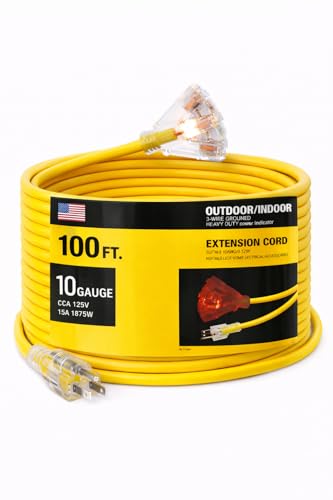

The core answer to the question of what gauge extension cord for a 10 amp lawn mower is straightforward: match the wire thickness to the cord length. Electrical power must travel through the cord to reach the mower, and every foot of wire adds resistance. This resistance causes a drop in voltage, which can prevent the mower’s motor from spinning up to full speed.
For short distances, a standard household-grade cord works well, but as the distance grows, the wire must be thicker to compensate for the loss. The following table provides a quick reference for selecting the appropriate gauge based on common cord lengths.
| Cord Length | Recommended Gauge | Typical Use Case |
|---|---|---|
| Up to 25 feet | 16 AWG | Small yards, close to garage |
| 25 to 50 feet | 16 AWG | Medium yards, standard reach |
| 50 to 100 feet | 10 AWG | Larger properties, distant outlets |
| Over 100 feet | 10 AWG or 8 AWG | Very large lots, industrial use |
This reference helps you avoid the common mistake of using a thin cord for a long run. A 16-gauge wire is the most common size found in households, but it has limits. When you stretch a 16 AWG cord to its maximum capacity, the voltage drop becomes significant enough to affect motor performance. A 10-gauge wire, being thicker, has lower resistance and can push the same 10 amps of current over a much longer distance without losing power.
This distinction is critical for maintaining the health of your lawn mower’s motor, which relies on consistent voltage to operate correctly. If you are unsure about your yard’s dimensions, it is always safer to choose the thicker wire, as it will handle shorter runs without issue and protect your equipment during longer ones.
Understanding Voltage Drop and Wire Resistance
Voltage drop is the decrease in electrical voltage as it travels through a conductor, which can cause a lawn mower motor to struggle during startup when current demand is highest.
- If voltage is too low, the motor may hum but fail to spin, or it may spin slowly, reducing cutting efficiency.
- Wire resistance is the primary cause of this drop, and it is directly related to the gauge of the wire.
- A lower AWG number means a thicker wire with less resistance, so a 10 AWG wire maintains voltage stability over longer runs.
- For a 10 amp load, 16 AWG wire resistance is acceptable for short distances, but it becomes problematic as length increases.
- Electrical codes and manufacturer recommendations often specify thicker wires for longer extension cords to prevent these issues.
Many users do not realize that the gauge of the cord affects the amperage the device actually receives. If a mower is rated for 10 amps but the cord causes a 10% voltage drop, the motor may draw more current to compensate, leading to overheating. This overheating can shorten the lifespan of the motor and increase the risk of electrical failure.
By choosing the correct gauge, you ensure that the mower operates within its designed parameters. This is not just a theoretical concern; it is a practical issue that affects performance and safety. Understanding this relationship helps you make an informed decision when shopping for an extension cord, ensuring that you are not just buying length, but also buying the right capacity.
It is also important to consider the ambient temperature because cords operate in outdoor environments where temperatures can fluctuate.
- In extreme heat, wire resistance can increase slightly, which can exacerbate voltage drop issues.
- In cold temperatures, the wire may become less flexible, but the electrical properties remain relatively stable.
- However, the insulation must be rated for outdoor use to withstand these conditions.
- Look for cords with SJTW or SJOOW ratings, which indicate they are suitable for outdoor and wet conditions.
- These cords are designed to handle the physical stresses of outdoor use, including exposure to sunlight, rain, and temperature changes.
- Choosing a cord with the right rating ensures that it remains safe and functional over time.
Comparing 16 AWG and 10 AWG Cords for Mowers
The choice between 16 AWG and 10 AWG often comes down to cost, weight, and convenience. A 16 AWG cord is lighter, more flexible, and generally less expensive. It is the standard choice for most household extension needs and is sufficient for the majority of residential lawns.
If your mower is used within 50 feet of an outlet, a 16 AWG cord is likely the best fit. It is easy to store, easy to carry, and provides adequate power for the task. Many homeowners find that a 16 AWG cord meets their needs without the added bulk or cost of a thicker wire. This makes it a popular choice for those who do not have extensive property to cover.
On the other hand, a 10 AWG cord is heavier, stiffer, and more expensive. However, it offers significantly better power delivery over longer distances. If your property requires a cord longer than 50 feet, the 10 AWG wire becomes the practical choice. It can handle the 10 amp load of a lawn mower without significant voltage drop, ensuring that the motor runs at full power.
The added weight and stiffness are trade-offs for the improved performance. For larger properties or those with outlets located far from the mowing area, the 10 AWG cord provides the reliability needed to maintain consistent performance. It is a more robust solution that can also handle other power tools that may require higher amperage.
When comparing these two options, consider the specific layout of your yard. If you have a small, compact lawn, the convenience of a 16 AWG cord may outweigh the benefits of a thicker wire. However, if you have a larger property with obstacles or distant outlets, the 10 AWG cord is the safer bet.
It provides a margin of safety that protects your mower and ensures that you do not experience performance issues. This is especially important if you plan to use the cord for other purposes, such as powering a leaf blower or a pressure washer, which may have higher power demands. A 10 AWG cord is a versatile investment that can serve multiple needs around your property.
Safety Considerations for Outdoor Extension Cords
Safety is the top priority when using extension cords outdoors. The cord must be rated for outdoor use, which means it should have a weather-resistant jacket that can withstand moisture, UV exposure, and temperature fluctuations. Look for cords with an SJTW or SJOOW rating, which are designed for these conditions.
These cords are also typically more durable and resistant to abrasion, which is important when the cord is dragged across grass or pavement. Using an indoor-rated cord outdoors can lead to insulation breakdown, which creates a risk of electrical shock or fire. Always inspect the cord for any signs of damage before use, and replace it if you notice any fraying, cracks, or exposed wires.
Another critical safety aspect is the use of grounded plugs. A 3-prong cord with a ground pin provides an additional layer of safety by directing any fault current to the ground, rather than through the user or the equipment. This is especially important for power tools like lawn mowers, which have motors that can generate heat and may have potential electrical faults.
Never use an adapter to convert a 3-prong plug to a 2-prong outlet, as this bypasses the grounding protection. If your outlet is not grounded, consult an electrician to install a grounded outlet. This ensures that your mower and the extension cord are used in a safe and compliant manner. Grounding is a fundamental safety feature that should never be compromised.
Proper storage and handling of the extension cord also contribute to safety. Avoid coiling the cord tightly, as this can cause the wires to twist and break over time. Instead, use a cord wrap or a hook to store the cord loosely. This prevents damage to the insulation and maintains the integrity of the wire.
Additionally, ensure that the cord is not run across walkways or high-traffic areas where it could be tripped over. Use cord covers or place the cord in a safe location to prevent accidents. By following these simple practices, you can extend the life of your cord and reduce the risk of electrical hazards. Safe handling is just as important as choosing the right gauge.
Factors to Consider When Selecting the Right Cord
When selecting an extension cord for your lawn mower, several factors beyond gauge and length should be considered. The first is the type of plug and outlet. Ensure that the cord has a 3-prong grounded plug that matches your outdoor outlet. Most residential outdoor outlets are 3-prong, so this should be a standard feature.
However, if you are using an older home with 2-prong outlets, you will need to address the grounding issue. The second factor is the flexibility of the cord. A thicker wire is less flexible, which can make it harder to manage in tight spaces. If you have a small yard or limited storage space, consider the manageability of the cord.
Another important factor is the brand and quality of the cord. Reputable brands often use higher-quality copper and more durable insulation, which can affect the cord’s performance and longevity. Look for cords that are UL listed or ETL certified, which indicates that they have been tested for safety and performance.
These certifications provide peace of mind that the cord meets industry standards. Additionally, consider the warranty offered by the manufacturer. A good warranty can protect your investment if the cord fails prematurely. By choosing a high-quality cord from a reputable brand, you can ensure that you are getting a product that will perform reliably and safely.
Finally, consider the cost and value of the cord. While a thicker wire is more expensive, it may be a better value if it allows you to use a longer cord without performance issues. A cheaper 16 AWG cord that fails to provide adequate power over a long distance is not a good value, as it may damage your mower or require you to buy a new cord.
Invest in a cord that meets your specific needs, and you will avoid the hassle and cost of replacements. This is a practical consideration that helps you make a balanced decision. By weighing these factors, you can select an extension cord that is safe, reliable, and well-suited to your lawn mowing needs.
Common Mistakes to Avoid with Extension Cords
One of the most common mistakes is using a cord that is too thin for the distance. This can lead to voltage drop, motor overheating, and reduced performance. Always check the length of the cord you need and match it with the appropriate gauge. Another mistake is using an indoor-rated cord outdoors.
This can lead to insulation breakdown and electrical hazards. Always use a cord rated for outdoor use, with a weather-resistant jacket. These mistakes are easy to avoid with a little knowledge and attention to detail. By understanding the basics of electrical safety and cord selection, you can ensure that your lawn mower operates safely and efficiently.
Another mistake is ignoring the condition of the cord. Regularly inspect the cord for any signs of damage, such as fraying, cracks, or exposed wires. If you notice any damage, replace the cord immediately. Do not attempt to repair a damaged cord with tape or other makeshift fixes. This is a serious safety hazard that can lead to electrical shock or fire.
Additionally, avoid running the cord across high-traffic areas where it can be tripped over. Use cord covers or place the cord in a safe location to prevent accidents. By taking these precautions, you can reduce the risk of electrical hazards and extend the life of your cord. Regular maintenance and inspection are key to safe and reliable performance.
Finally, avoid using multiple extension cords in series to reach a distant outlet. This increases resistance and can lead to significant voltage drop. It also creates a tripping hazard and increases the risk of electrical issues. Instead, use a single cord of the appropriate length and gauge.
If you need a longer cord, buy one that is designed for that length. This is a safer and more reliable solution. By avoiding these common mistakes, you can ensure that your lawn mower is powered safely and efficiently. These practices are simple but important, and they can make a significant difference in the performance and safety of your equipment.
Practical Tips for Mower Cord Management
Managing your extension cord effectively can make your mowing sessions smoother and safer. Start by planning the path of the cord before you begin mowing. Ensure that the cord is not in the way of the mower’s wheels or blades. Use a cord hook or a stake to keep the cord off the ground and out of the mowing path.
This prevents damage to the cord and reduces the risk of tripping. Additionally, keep the cord coiled loosely to prevent tangling. A tangled cord can be difficult to manage and can cause stress on the wires. By planning ahead and managing the cord properly, you can ensure a safe and efficient mowing experience.
Another tip is to store the cord properly when not in use. Avoid coiling the cord tightly, as this can cause the wires to twist and break over time. Instead, use a cord wrap or a hook to store the cord loosely. This prevents damage to the insulation and maintains the integrity of the wire.
Additionally, store the cord in a dry, cool place to protect it from moisture and extreme temperatures. This extends the life of the cord and ensures that it remains safe and functional. Proper storage is a simple but important step in maintaining your extension cord. By following these tips, you can ensure that your cord is ready for use whenever you need it.
Finally, consider investing in a cord organizer or a cord reel. These tools can help you manage long cords more easily and safely. A cord reel allows you to wind the cord neatly and compactly, making it easier to store and transport. A cord organizer can help you keep the cord off the ground and out of the way while you mow.
These tools can make a significant difference in the convenience and safety of your mowing sessions. By investing in the right tools, you can make the most of your extension cord and ensure that it remains in good condition. This is a practical investment that can save you time and hassle in the long run.
Choosing the right extension cord for your 10 amp lawn mower is a matter of matching the wire gauge to the cord length and ensuring safety. A 16 AWG cord is sufficient for short runs, while a 10 AWG cord is better for longer distances. By understanding the basics of voltage drop and wire resistance, you can make an informed decision that protects your mower and ensures reliable performance.
Always prioritize safety by using outdoor-rated cords with grounded plugs and inspecting them regularly for damage. With the right cord and proper management, you can enjoy safe and efficient lawn mowing for years to come. For more tips on maintaining your lawn equipment, consider exploring our guide for small yard mowers to see how equipment selection fits into your overall lawn care routine.


Write Your Review
No reviews yet. Be the first to share your experience!