


Ragged brown tips across a freshly cut lawn often signal a dull blade rather than an issue with the mower deck. Homeowners looking for a quick and controlled sharpening solution frequently turn to rotary tools because they provide precise control without requiring massive grinding benches. Learning how to sharpen mower blades with a dremel gives DIY enthusiasts an accessible way to restore a crisp cutting edge right at the workbench. Before starting any edge work, removing the mower blade safely ensures you can inspect the metal for deep gouges or structural fatigue.
Rotary tools spin at high speeds, so understanding wheel selection, angle alignment, and blade balance remains essential for achieving clean grass cuts. While dedicated rotary sharpening guides help maintain a consistent bevel angle, comparing rotary attachments against standard drill grinding stones or bench machines helps clarify which method fits your seasonal workload. Proper blade maintenance not only protects turf health but also reduces strain on the mower engine and spindle assemblies. Taking the time to dress the cutting edge smoothly prevents excessive metal removal and extends the working life of your outdoor equipment.

Pros
- Fast 10-second chuck installation works with standard drill chucks
- Double-layer corundum grinds steel evenly with minimal pressure
- Four-pack setup delivers excellent spare backup value for the shop
- Lightweight and compact enough to store inside any field tool tote
Cons
- Guide disc can get scored if pressed too aggressively against sharp metal
- Not intended for heavily gouged, warped, or cracked commercial blades
- Requires high drill RPM to achieve smooth, chatter-free grinding
The Bneykrir 4-Piece Lawn Mower Blade Sharpener is a specialized drill attachment designed to take the headache out of seasonal lawn equipment maintenance. Instead of wrestling blades on a heavy stationary bench grinder or risking uneven hand-filing, this tool uses a double-layer corundum wheel that mounts right into your drill chuck. It is aimed squarely at homeowners, DIYers, and small-property groundskeepers who want clean, healthy grass cuts without spending shop fees on blade balancing and sharpening.
In practical workshop use, setting up the sharpener takes only a few seconds. Chuck the metal shaft into an 18V or 20V cordless drill, clamp your lawn mower blade securely into a bench vise, and bring the drill up to speed. The abrasive corundum stone cuts through mild surface oxidation, dull bevels, and small turf nicks smoothly. The plastic guide disc rests along the flat underside of the blade, keeping the abrasive angled against the factory bevel without demanding pinpoint freehand steadying.
Build quality is suited well for light to medium maintenance runs. The corundum material holds up to standard lawn tractor and push mower steel, though users should avoid leaning too heavily into the work. Applying steady, moderate passes keeps heat buildup low and avoids burning the temper on thin steel. The four-pack arrangement is practical, giving you plenty of abrasive material to work through multiple seasonal tune-ups, tiller blades, and utility yard tools.
There are a few trade-offs to keep in mind. The plastic collar can wear down if it drags forcefully against jagged metal edges, and deep gouges from rocks will still require an angle grinder with a flap disc first. That said, for routine seasonal maintenance and quick edge touch-ups, this four-piece kit provides straightforward functionality and solid value for any home garage.
Routine edge touch-ups on standard residential walk-behind and riding lawn mower blades.
Cleaning and sharpening curved garden tools, rototiller tines, sickle cutters, and axes.
Pre-season garage tune-ups where removing the blade for quick bench vise work is preferred.
Home toolkits where space or budget does not justify a dedicated stationary grinder.

Pros
- Powerful 700W motor handles tough blade restoration quickly.
- Integrated dust collection keeps metal shavings contained for a cleaner workspace.
- Includes three grit sandpapers for complete sharpening stages.
- Heavy steel base provides stability and reduces vibration during use.
Cons
- No blade holder or guide included, requiring careful hand positioning.
- Some assembly and setup may be needed before first use.
The WEWEAL 7-Inch Lawn Mower Blade Sharpener is a benchtop grinder designed specifically for restoring dull, chipped, or damaged mower blades to a sharp edge. Unlike manual files or angle grinders, this dedicated sharpener offers a more controlled and efficient process, making it a valuable tool for homeowners who prefer to maintain their own equipment. With a 700W motor, built-in dust collection, and a set of three sandpaper grits, it aims to simplify blade maintenance while keeping your workspace clean.
This sharpener is best suited for homeowners, lawn care enthusiasts, and gardeners who regularly mow their lawns and want to keep their blades cutting cleanly. It's also a practical option for budget-conscious shoppers who prefer to sharpen blades themselves rather than pay for professional sharpening or replace blades frequently. The product description highlights compatibility with a wide range of blade types, including high lift, low lift, gator, and flat designs, so it should work with most standard walk-behind mowers and some riding mower blades.
In terms of real-world performance, the 700W motor provides ample power for grinding through hardened steel. The included 60-grit disc handles coarse grinding on heavily damaged edges, while the 120-grit refines the edge, and the 320-grit produces a smooth finish. The hook-and-loop system allows quick sandpaper changes, which is convenient when moving between stages. The built-in dust collection case captures most metal shavings, reducing mess and making cleanup easier. According to the manufacturer, it captures up to 99% of particles, which is a significant advantage over open bench grinders.
Build quality appears solid with a heavy-duty steel base that adds stability and helps minimize vibration. The ceramic wheel is designed for longevity and consistent sharpening. The detachable dust box is a thoughtful feature that allows you to empty shavings without stopping work. The overall dimensions (13 x 9.3 x 10.4 inches) mean it will occupy a permanent spot on your workbench, but it's not overly large.
Ease of use is straightforward: mount the sharpener on a stable surface, attach the desired sandpaper disc, and guide the blade along the wheel. However, there is no included blade guide or holder, so you'll need to manually control the angle and pressure. This requires a steady hand, especially for beginners. Maintenance of the sharpener itself is minimal: occasional cleaning of the dust box and replacement of sandpaper discs as they wear. The product does not include a blade holder, which some users may find as a limitation.
Realistic limitations include the price point, which is higher than manual sharpening tools but lower than industrial-grade sharpeners. Also, the sharpener is not designed for very wide blades or those with complex profiles. For most standard mower blades, it should work well. Overall, if you value a clean workspace, consistent results, and have multiple blades to maintain, the WEWEAL 7-Inch Lawn Mower Blade Sharpener is a worthwhile investment for your lawn care toolkit.
The WEWEAL sharpener uses a 700W motor to drive a ceramic wheel at high speed, allowing it to grind through steel efficiently. The three included sandpaper grits (60, 120, 320) cover the full sharpening cycle: coarse grinding to reshape the edge, medium sharpening to refine it, and fine finishing to polish. The hook-and-loop attachment makes switching between grits quick, so you can move through the stages without delay. The dust collection system is a standout feature, capturing most metal particles and keeping your bench clean. For homeowners who sharpen blades seasonally, this system reduces cleanup time significantly.
The sharpener features a reinforced steel base that adds weight and stability, reducing vibration during operation. The ceramic wheel is durable and resists wear, maintaining its shape over many sharpening sessions. The housing appears to be impact-resistant, and the detachable dust box is made of sturdy plastic. Overall, the build quality seems designed for regular use in a home workshop. The product dimensions are compact enough to fit on most benches, and the base has mounting holes if you want to secure it permanently. The manufacturer provides a standard warranty, though the exact length is not specified in the product data.


Pros
- Extremely affordable and widely compatible with most residential mower blades.
- Simple to use: just chuck it in a drill and run along the blade edge.
- Including both sharpener and balancer means you get a complete blade maintenance solution.
- Lightweight and portable, perfect for small workshops and home garages.
Cons
- Requires a drill to operate, so you need one on hand.
- Manual balancing takes a bit of patience to get right compared to electronic balancers.
- Not ideal for heavy commercial use or high-volume shops where speed is critical.
The Arnold BSK-1 is a straightforward sharpening and balancing kit designed for lawn mower blades. It turns your regular electric drill into a reliable sharpening tool, making it easy to maintain a clean cutting edge without investing in a dedicated grinder. The kit includes a cone-shaped sharpening stone and a simple static balancer, both built to handle blades from walk-behind mowers, lawn tractors, and zero-turn machines.
This kit is best suited for homeowners and DIYers who prefer to handle their own mower maintenance rather than taking blades to a shop. It's also useful for small engine mechanics who need an affordable backup method. But if you're a professional landscaper sharpening dozens of blades a week, you'll likely want a faster, more automated system.
In real-world use, the sharpener works quickly. Chuck it into a drill, run the stone along the blade's edge at a shallow angle, and you'll see burrs form within seconds. The vibration-free claim holds up -- the stone spins smoothly, which helps avoid gouging the blade. The balancer is straightforward: hang the blade on the cone and see which side drops. Rotate a few times to confirm. It's not fancy, but it effectively reveals if the blade is heavy on one side.
Build quality is typical for a budget tool. The sharpening stone is abrasive and should last through several sharpenings. The balancer is made of plastic and a metal cone. It's lightweight (just over two ounces) and stores easily in a drawer. For the price, durability is acceptable for occasional weekend usage. You won't hesitate to toss it in a toolbox or tool bag.
The main drawback is that you need a drill, and the process is manual. Balancing requires patience -- you'll have to grind off material from the heavy side and recheck. It's not as precise as a professional blade balancer, but it's more than enough to get a decently balanced blade. Overall, the Arnold BSK-1 is a smart buy for anyone who wants to keep their mower cutting cleanly on a budget. It's a practical addition to any workshop, especially if you already own a drill.
Color: Black
Dimensions: 3 x 7 x 10 inches
Weight: 0.24 pounds
Product Group: Outdoors
Binding: Lawn & Patio


Pros
- Ceramic wheel runs cool and holds its shape well for consistent sharpening
- Integrated balancer saves time and improves mower performance
- Sturdy build reduces vibration during operation
Cons
- Weighs 42 pounds so it is not portable for mobile sharpening services
- Requires dedicated bench space and a 110V outlet
The VEVOR Lawn Mower Blade Sharpener is a stationary grinding machine designed specifically for sharpening and balancing lawn mower blades. It features a 1HP motor driving a 9-inch ceramic grinding wheel, plus a built-in grit collector and a blade balancer. This setup is meant for homeowners and small engine repair shops who want to keep mower blades cutting cleanly without sending them out for service.
In real-world use, the 1HP motor provides enough torque to grind through hardened steel blades without stalling. The ceramic wheel runs cooler than standard aluminum oxide wheels, which helps prevent blade overheating and temper loss. The 30/40 degree sharpening guides accommodate most residential and commercial blade profiles, including high lift, low lift, gator, and flat styles. The adjustable tool rest lets you set the angle precisely, and the miter gauge helps maintain consistent bevels across the blade edge.
After sharpening, the included balancer is a practical addition. You mount the blade on the cone and see which side drops. Grind a little more off the heavy side until it balances. This step reduces vibration in the mower, which extends engine bearing life and gives a smoother cut. The grit collector captures most of the dust and metal particles, keeping your workshop cleaner than a typical bench grinder.
Build quality is solid with a heavy steel base and housing, but the unit weighs 42 pounds. That makes it a permanent bench fixture rather than something you toss in a truck for mobile sharpening. It also requires a standard 110V outlet, so it fits most home garages. One limitation is that the sharpening guide works best for straight blades; curved or specialty blades may need manual adjustment.
Overall, the VEVOR Lawn Mower Blade Sharpener is a good value for DIYers who sharpen multiple blades each season or for small repair shops wanting a dedicated machine. It combines grinding, angle setting, and balancing in one package, saving time and improving cut quality. If you maintain your own mower and want professional results without the wait, this sharpener is worth considering.
Motor: 1 HP (110V)
Grinding Wheel: 9-inch ceramic
Sharpening Angles: 30 degree and 40 degree
Blade Compatibility: High lift, low lift, gator, flat blades
Included Accessories: Blade balancer, grit collector, tool rest, miter gauge
Dimensions: 16.93 x 12.4 x 10.43 inches
Weight: 42.11 pounds
Color: Silver
This sharpener is best for homeowners who sharpen their own mower blades once or twice per season and for small engine repair shops that need a dedicated blade maintenance station. It handles standard residential blades up to about 22 inches long. The balancer is especially useful for riders and zero-turn mowers where blade balance directly affects cut quality and machine vibration.
Step-by-Step Guide to Sharpening Mower Blades with a Rotary Tool
Restoring a clean cutting edge on a lawn mower blade does not always require heavy industrial machinery or trip to a repair shop. A high-speed rotary tool paired with the right grinding stone offers the fine control needed to dress minor nicks and refresh dull bevels. Working with a rotary tool allows homeowners to match original factory angles without taking off excessive amounts of metal. Taking a measured approach keeps the blade balanced, protects the temper of the steel, and ensures healthy grass recovery after every weekend mow.
Rotary Tool Setup and Stone Selection
Rotary tools operate at significantly higher rotational speeds than standard household drills, typically ranging between ten thousand and thirty thousand revolutions per minute. Because of this high velocity, selecting the correct grinding attachment prevents premature abrasive wear and reduces heat transfer into the blade. Aluminum oxide grinding stones with a cylindrical or slightly conical profile generally provide the most consistent contact surface along straight cutting edges. Coarse stones remove material quickly to address small dents, while medium-grit stones refine the cutting bevel into a clean, uniform profile.
Sharpening attachments designed specifically for rotary units help simplify the process by locking the tool at a fixed cutting angle. For example, specialized attachments like the MAVOREXA rotary sharpener guide feature an improved flat contact design that rests directly on the blade face. This flat guide stabilizes the rotary housing and prevents the spinning stone from chattering across the steel. Homeowners using freehand stones without a guide attachment must maintain hand stability manually, which requires steady wrist positioning and smooth passes across the edge.
Speed regulation on your rotary tool plays an equally vital role during setup. Running the tool at maximum RPM might seem faster, but excessive speed can cause the small stone to glaze over or burn the blade surface. Setting the tool to a moderate speed range gives you better tactile feedback against the resistance of the metal. Lower speeds also give you greater reaction time to maintain a straight stroke along the entire length of the cutting surface.
Blade Preparation and Structural Inspection
Thorough surface preparation must take place before any grinding stone touches the blade. Hardened grass clippings, dried mud, and sap frequently coat the underside of the mower deck and adhere tightly to the steel. Scraping the blade clean with a stiff putty knife or wire brush reveals the actual condition of the cutting bevel. Wiping the cleared surface with a shop rag also removes gritty debris that could otherwise clog the pores of your rotary grinding stone.
Once the bare metal is visible, inspecting the blade for structural defects is critical for operator safety. A rotary tool can sharpen dull edges, but it cannot repair warped blades, bent lift wings, or stress cracks near the center mounting hole. Striking hidden rocks, tree roots, or buried metal debris can induce micro-fractures in the steel that compromise the integrity of the component. If a blade shows visible cracks, bends along its main spine, or severe gouges deeper than one-quarter of an inch, replacement becomes the only safe decision.
Preserving Factory Bevel Angles
Lawn mower blades do not require a razor-sharp kitchen knife edge to cut turf effectively. In fact, grinding the cutting bevel to a razor-thin point weakens the edge, causing it to roll over or chip the first time it contacts an acorn or twig. Most manufacturers grind their blade edges to an angle between thirty and forty degrees. This bevel angle provides sufficient sharpness to slice grass leaves cleanly while leaving enough steel behind the edge to withstand abrasive debris.
Understanding the steel used to make mower blades helps explain why maintaining this geometry matters over consecutive seasons. Most manufacturers utilize medium-carbon or alloy steel that balances hardness against shatter resistance under impact. Altering the bevel angle dramatically alters how the blade cuts, often increasing drag on the engine or tearing grass fibers instead of slicing them. Following the original slope established by the factory ensures the blade retains its intended strength profile across normal cutting cycles.
Guiding your rotary attachment evenly along the existing bevel prevents changing the primary slope of the edge. If using a dedicated guide, align the flat guide surface flush against the unground back side of the blade. The guide automatically holds the grinding stone at the proper angle relative to the cutting plane. If working freehand, hold the rotary tool body so the grinding stone matches the original incline precisely before applying downward contact.
Grinding Strokes and Thermal Management
Clamping the blade securely in a bench vise prevents movement and keeps both hands free to steady the rotary tool. Position the blade horizontally with the cutting edge pointing upward and toward your working side. Begin your stroke at the inside corner of the cutting edge and move smoothly outward toward the blade tip. Moving in one consistent direction rather than scrubbing back and forth yields a much flatter, cleaner finish along the working edge.
Light contact pressure is essential when working with rotary tools. Pressing the stone hard against the blade removes metal unevenly and generates localized friction heat. When steel gets excessively hot, it can lose its heat treatment, turning a dull blue color that indicates the metal has softened. A softened cutting edge dulls rapidly during mowing, requiring frequent touch-ups to maintain performance. Make light, fluid passes across the edge and allow the steel to cool if you feel heat radiating from the work area.
Grinding the top bevel inevitably pushes a thin metal burr onto the flat bottom side of the blade. This burr feels rough to the touch and can create jagged tears in grass blades if left unaddressed. To clean this up, flip the blade over or reach underneath with your rotary tool turned off. Lightly polish the bottom face with a handheld whetstone or run the rotary stone flat against the surface just enough to remove the wire edge without beveling the underside.
Blade Balancing and Vibration Prevention
Sharpening removes physical metal, which means uneven grinding can easily leave one side of the blade heavier than the other. An unbalanced blade spinning at three thousand RPM produces high-frequency vibrations that travel directly into the spindle assembly, deck housing, and mower engine. Over time, persistent vibration accelerates bearing wear, loosens deck fasteners, and creates an uneven cut pattern across the lawn. Checking balance after sharpening is just as important as restoring the cutting edge itself.
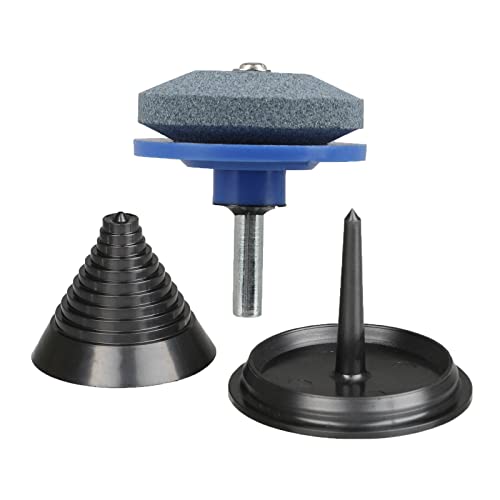
A static cone balancer provides a simple, accurate method for checking horizontal equilibrium in home workshops. Sharpening accessory packages, such as the Arnold BSK-1 kit or the jtfrkope balancer set, include stepped static cones that support various center-hole diameters. Place the cone on a flat workbench, seat the blade center hole over the stepped tiers, and release the blade carefully. If one cutting end dips toward the table, that side contains excess steel that requires further attention.
Correcting an unbalanced blade requires removing small amounts of metal from the heavy end. Crucially, do not grind metal off the newly sharpened cutting edge to balance the blade. Doing so changes the bevel width and alters the cutting reach relative to the opposing tip. Instead, grind material from the blunt trailing edge, the back spine, or the lift sail on the heavy side until the blade rests horizontally on the balancer cone.
Comparing Rotary Sharpening to Alternative Shop Tools
Rotary tools offer notable advantages for routine touch-ups, but evaluating other sharpening tools helps set realistic expectations. Drill-mounted sharpeners, such as the double-layer corundum stones from Bneykrir or Eoppen, feature one-quarter-inch shanks that fit standard power drills. These rotary drill stones feature wider abrasive discs that cover more surface area in a single pass. While drill stones work faster on moderate dulling, they offer less tactile precision around tight corners or contoured mulching curves than compact rotary accessories.
Dedicated bench grinders and specialized blade sharpeners represent the heavy-duty tier of blade maintenance. Equipment like the WEWEAL 7-inch sharpener with its 700-watt motor or the VEVOR 1-horsepower machine utilizes wide ceramic grinding wheels and preset angle brackets. These machines restore severely chipped commercial blades in seconds and capture metal shavings through integrated dust collection ports. However, their stationary footprint and substantial investment make them better suited for high-volume landscapers rather than typical suburban homeowners maintaining a single mower.
A rotary tool sits in a practical middle ground for routine residential upkeep. Homeowners who already own a rotary tool can add a simple sharpening guide attachment to keep their blades serviceable without filling workbench space. Rotary tools handle light seasonal dressing, edge cleanup, and minor burr removal with exceptional finesse. For blades with deep impact gashes or heavily eroded lift wings, transitioning to a bench grinder or investing in replacement blades becomes more practical.
Recognizing When to Sharpen Versus Replace
Sharpening a blade repeatedly will eventually wear down the structural profile of the steel. Every mower blade features a working life determined by overall blade width, sail thickness, and metal fatigue. Checking the trailing lift sail is especially critical on high-lift and mulching blades, where abrasive soil and sand wear the metal thin. If the upward curve of the sail has thinned to the thickness of a butter knife, the blade risks throwing metal fragments under high rotational stress.
Knowing whether new mower blades come sharpened helps homeowners decide whether to spend time dressing an old blade or simply installing fresh equipment. Replacement blades arrive with a protective coating and a factory-machined bevel designed to fit specific mower decks and spindle configurations. If your existing blade has lost more than one-third of its original cutting width from seasons of grinding, replacing it restores the correct cutting swath and ensures proper grass discharge into the deck chute.
Mismatched center-hole shapes or bent hub areas also demand immediate blade replacement. A rotary tool cannot correct a distorted mounting star or an enlarged round center hole. Reinstalling a blade that does not seat squarely on the spindle hub causes continuous wobble, uneven mowing stripes, and premature spindle bearing failure. Verifying the physical integrity of the hub area before sharpening guarantees your maintenance effort yields a dependable, balanced cut.
Reinstallation and Safe Workspace Procedures
Reinstalling the sharpened blade requires careful attention to mounting hardware and blade orientation. The cutting bevel must face the direction of rotation, while the curved lift wings must point upward toward the mower deck housing. Installing a blade upside down is an easy mistake that causes the dull back edge to batter grass blades instead of cutting them. Clean the spindle face with a dry cloth to prevent trapped debris from tilting the blade during tightening.
Always consult your mower operator manual for the correct blade bolt torque specification. Under-tightening the mounting bolt can allow the blade to slip or wobble during operation, while over-tightening can strip spindle threads or crack retaining washers. Use a wooden block wedged between the blade tip and the deck wall to prevent blade rotation while applying final torque with a calibrated wrench. Inspect the mounting washer for dish distortion, replacing worn hardware whenever the clamping tension feels inconsistent.
Sharpening mower blades with a rotary tool provides an efficient, cost-effective maintenance habit that pays dividends in lawn appearance and turf vitality. By adhering to factory bevel angles, controlling tool speed to prevent heat buildup, and verifying balance with a static cone, homeowners can maintain clean cutting performance season after season. When blades show structural fatigue, excessive metal loss, or damaged mounting hubs, retiring the blade in favor of a fresh replacement keeps your mowing routine safe and productive.


Write Your Review
No reviews yet. Be the first to share your experience!