


Dull cutting edges tear grass blades rather than slicing them cleanly, leaving brown tips across your turf after every weekend pass. Homeowners looking to avoid dismantling heavy deck hardware often wonder how to sharpen mower blades while still on mower assemblies to save time during peak cutting season. While checking factory edge sharpness on replacement blades can solve severe cutting issues, restoring an existing edge right on the machine remains an appealing shortcut. Understanding the physical boundaries of on-deck maintenance helps protect your equipment and ensures grass receives a healthy, crisp cut.
The practicality of sharpening a blade in place depends largely on whether your machine uses a rotary cutting disc or a cylindrical reel mechanism. Manual reel mowers are frequently tuned without disassembly using specialized guide sharpeners or abrasive compounds, whereas rotary decks require strict safety precautions to prevent accidental engine starts or uneven metal removal. Although complete deck service typically involves removing mower blades for bench sharpening and balancing, controlled touch-ups while mounted can smooth out minor edge burrs between full seasonal tune-ups. Evaluating your mower style, edge damage, and balancing limits will help you decide when on-mower sharpening makes practical sense.

Pros
- Easy to use with straightforward instructions included
- Affordable alternative to professional sharpening services
- Works on both the reel blades and the bed knife in one kit
- Compact size makes it easy to store in a toolbox or drawer
Cons
- Requires manual effort and some elbow grease to get good results
- Best suited for reel mowers only, not compatible with rotary or power mowers
- May not work on all reel mower models, check compatibility before buying
The American Lawn Mower Co. SK-2 Reel Lawn Mower Hand Sharpener is a purpose-built tool for anyone who uses a reel push mower. If you own a manual reel mower from brands like Great States, American Lawn Mower, Scotts, or Earthwise, this sharpener is designed to keep your blades cutting cleanly season after season. It is a handheld kit that sharpens both the spinning reel blades and the stationary bed knife, restoring the scissor-like action that gives a precise cut.
This sharpener is best suited for homeowners with small to medium lawns who prefer the quiet, eco-friendly operation of a reel mower. It is also a smart buy for DIYers who want to handle their own mower maintenance without spending money on professional sharpening. The kit includes two sharpening stones, one for the reel blades and one for the bed knife, plus a small brush for applying the included grinding compound. The process is straightforward: you apply the compound, then run the appropriate stone back and forth along the blade surface. It takes some time and a bit of patience, but the results are noticeable. Users report that after sharpening, their mower cuts more cleanly and requires less effort to push through grass.
Build quality is solid for the price. The plastic housing is lightweight but feels durable enough for occasional seasonal use. The sharpening stones are coarse enough to remove dull edges without being overly aggressive. At just 1.72 ounces, the entire kit is easy to toss in a tool bag or store on a shelf. One thing to keep in mind is that this is a manual tool. It requires physical effort to get a good edge, especially if your blades are very dull or have never been sharpened. Some users have found it helpful to use a drill with a socket attachment to speed up the process, but that is not included and requires some improvisation.
A realistic drawback is that this sharpener only works on reel mowers. If you also own a rotary or power mower, you will need a different sharpening system. Also, the instructions could be clearer regarding disassembly steps, particularly when removing the wheel clip. A few users mention that the included directions are basic, but with a little common sense and the tips found in online reviews, most people can get the job done. Overall, this is a practical, low-cost maintenance tool that extends the life of your reel mower and improves your lawn cutting experience.
If you want to keep your reel mower performing at its best without spending a lot of money, the American Lawn Mower Co. SK-2 is a solid choice. It is not a power tool, but it is a valuable workshop accessory for anyone who values a sharp, even cut from a manual mower. For the price, it delivers real value and is a worthwhile addition to any homeowner's tool collection.
On-Mower Blade Sharpening: Methods, Safety, and Mechanical Limits
Sharpening cutting edges without removing deck hardware is an enticing prospect for busy homeowners looking to maintain a tidy lawn. Removing frozen spindle bolts or maneuvering bulky mower decks often discourages timely blade care. However, understanding whether on-machine sharpening is practical requires examining the design of your specific cutting deck. For cylinder reel mowers, in-place sharpening is standard procedure, whereas rotary mowers present distinct mechanical and safety hurdles that restrict what can be accomplished while the blade remains bolted to the spindle.
Taking maintenance shortcuts with high-speed cutting tools introduces tradeoffs that every property owner should weigh carefully. Removing metal underneath a mower deck makes verifying dynamic rotational balance nearly impossible without dismounting the blade. Furthermore, cramped working clearances under the deck shell limit file stroke angles and increase personal injury risks. Evaluating these mechanical realities ensures you achieve crisp grass cuts while protecting your equipment from premature bearing failure and hazardous vibration.
Rotary Mowers vs Reel Mowers: Mechanical Feasibility
Rotary decks and manual reel mowers operate through completely different mechanical actions that dictate whether in-place sharpening works. A rotary mower spins a heavy horizontal blade at high velocities, using raw impact energy to sever grass stalks. Reel mowers, by comparison, spin a cylindrical cage of helical blades against a stationary lower bed knife, creating a precise scissor shearing action. Because reel blades rely on tight, continuous tolerance with the bed knife, removing the entire cylinder for routine sharpening is neither practical nor necessary.
For reel mowers, sharpening while mounted is supported by dedicated maintenance accessories like the American Lawn Mower Co. SK-2 Reel Lawn Mower Hand sharpener. This handheld tool allows users to hone helical edges directly against the chassis without dismantling gear drives or wheels. Rotary mowers, however, fasten the cutting blade directly to a vertical engine shaft or spindle assembly. Performing aggressive grinding while mounted on a rotary spindle invites uneven metal removal and poses serious risks to balance, making mounted rotary work suitable only for light edge touch-ups.
Safety Protocols and Equipment De-Energization
Personal safety must remain the foremost consideration before placing hands or steel tools anywhere near a mounted mower blade. On gasoline-powered walk-behind or riding mowers, always pull the spark plug boot off the spark plug and position the wire away from metal engine components. Manually rotating a cutting blade turns the engine crankshaft, which can trigger an accidental combustion stroke if residual fuel and compression align. For battery-powered cordless mowers, remove the safety interlock key and disconnect the battery pack before attempting any underside inspection.
Securing the blade mechanically is just as vital as electrical de-energization before applying abrasive tools. A thick wooden block wedged firmly between the blade tip and the inner deck baffle prevents the blade from spinning unexpectedly during filing. Heavy leather work gloves protect hands from razor-sharp burrs, tool slippage, and sudden blade shifts against the stops. Never attempt to steady a mower blade using one bare hand while filing with the other, because unexpected shifts can cause severe lacerations.
Proper deck orientation prevents costly mechanical damage when accessing the underside of a walk-behind lawn mower. Always tilt a walk-behind gas mower so that the carburetor and air filter face upward toward the sky. Tilting the mower with the carburetor pointing downward allows engine oil to flood the air filter, saturate internal intake passages, and foul the spark plug. For riding tractors and zero-turn mowers, secure mechanical locking floor jacks or drive-on service ramps before reaching under the elevated deck shell.
Sharpening Reel Mowers While Assembled on the Frame
Manual reel mowers represent the ideal application for sharpening blades while they remain installed on the mower chassis. The American Lawn Mower Co. SK-2 Reel Lawn Mower Hand sharpener is specially engineered for reel mowers, providing documented compatibility with American Lawn Mower, Great States, Scotts, and Earthwise models. Packaged in a fitted box with a detailed instruction manual, this hand tool secures against the reel structure to restore dull cutting edges. Using its abrasive guide surface, owners can sharpen reel blades at home without complex mechanical disassembly.
Operating a reel hand sharpener involves sliding the abrasive stone evenly along each individual blade while rotating the reel assembly manually. The tool maintains consistent contact angle along the curved blade edge, smoothing rounded shoulders without distorting the shearing face. Because reel mowers slice grass against a stationary bed knife, uniform metal contact across the entire width of the reel is critical for clean operation. Applying steady, gentle pressure during several longitudinal strokes restores the crisp shearing corner required for cutting fine turf grasses.
Reel mower owners also use backlapping compound as a complementary method for honing assembled blades against the bed knife. Applying an abrasive water-soluble compound to the blades while cranking the reel in reverse laps the mating surfaces together perfectly. This process sharpens both the rotating reel blades and the fixed bed knife simultaneously without changing factory tolerances. After completing the sharpening and rinsing away grit residue, wiping the blades with lightweight machine oil prevents surface oxidation and preserves smooth cutting action.
Step-by-Step Touch-Up Procedure for Mounted Rotary Blades
When performing a light touch-up on a mounted rotary blade, preparation ensures consistent results without damaging edge geometry. After confirming the spark plug is disconnected and wedging a wooden block against the blade, clean accumulated debris from the cutting chamber. Use a stiff wire brush and putty knife to scrape away dried grass clippings, hardened soil, and sticky sap from both blade wings. Removing this debris clarifies the actual metal edge condition and prevents file teeth from clogging during the sharpening process.
Align a flat mill bastard file with the existing factory bevel on the upper cutting edge of the blade. Push the file forward across the cutting face in smooth, single-direction strokes, working from the inner edge outward toward the blade tip. Always lift the file completely off the steel on the return stroke, as dragging the file backward dulls its cutting teeth and chatters the blade surface. Count your file strokes carefully on the first cutting wing so that you can match the exact stroke count on the opposite wing.
Avoid filing the flat bottom surface of a rotary mower blade during this on-deck maintenance touch-up. The underside of the blade must remain straight and flat to maintain proper aerodynamic suction and lift inside the mower deck. If filing the top bevel creates a thin burr along the bottom edge, lay the file completely flat against the underside and make one gentle pass to shave the burr away. Limiting your mounted work to three to five light strokes per side preserves edge symmetry and prevents excessive metal removal.
Tool Selection: Files, Rotary Grinders, and Hand Sharpeners
Selecting the appropriate sharpening tool dictates whether on-mower work improves cutting performance or ruins blade temper. A standard ten-inch or twelve-inch mill bastard file is the most dependable option for on-deck rotary touch-ups. Hand files remove steel gradually and generate zero frictional heat, preserving the metallurgical properties of the blade. The composition of typical lawn mower blade steel responds predictably to carbon steel file teeth without galling or grooving the cutting face.
High-speed rotary accessories and drill-mounted grinding stones are sometimes marketed for rapid on-mower sharpening, but they require caution. In confined deck spaces, small electric stones can bounce along the edge, creating gouges and altering the factory bevel angle. Furthermore, friction from high-speed power grinding generates intense heat that can draw the temper out of hardened blade steel. If the steel turns blue or brown, it softens permanently and will lose its sharpness quickly during routine lawn care.
The Rotational Balance Problem on Rotary Spindles
Dynamic and static balance represents the single greatest limitation of attempting to sharpen rotary blades while mounted on the machine. A typical rotary blade spins at three thousand revolutions per minute, producing massive centrifugal forces at the outer wing tips. If one blade wing loses slightly more metal during filing than the other, the resulting weight difference causes high-frequency vibration across the cutting deck. This ongoing vibration places severe strain on spindle bearings, deck welds, and engine crankshaft seals, leading to expensive mechanical breakdowns.
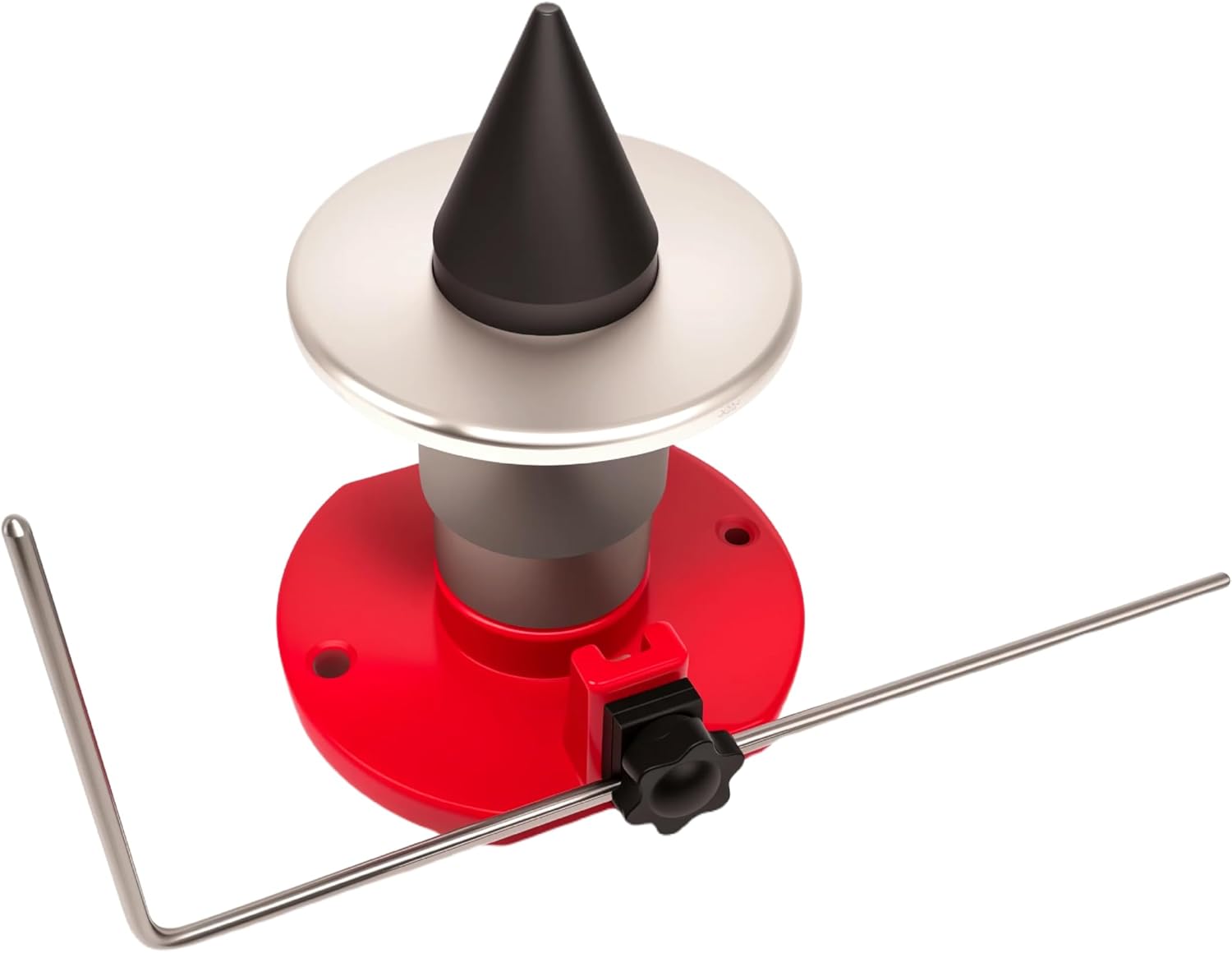
Mounted sharpening eliminates any possibility of placing the blade on a wall-mounted cone balancer or magnetic balancing tool. While counting file strokes helps maintain rough equality, it cannot compensate for uneven metal wear from prior stone strikes or localized blade pitting. If one cutting edge sustained a small nick, filing away that defect while the blade is mounted removes extra material from that single wing. Equipment owners should recognize that on-deck filing remains an interim measure, requiring periodic blade removal for accurate balance verification.
Maintaining Proper Cutting Bevels and Edge Thickness
Preserving the original factory bevel angle is vital for achieving a healthy lawn cut that resists rapid dulling. Most lawn mower manufacturers grind cutting edges at an angle between thirty and thirty-five degrees relative to the flat bottom blade plane. Creating an edge steeper than forty degrees produces a blunt, club-like profile that mashes grass tips instead of slicing them cleanly. Sharpening the bevel shallower than twenty-five degrees leaves an edge that is too thin, causing the steel to roll or chip when striking dense weeds.
A mower blade should never be sharpened to a razor-like edge similar to a household kitchen knife. High-speed grass cutting requires an edge that retains structural mass behind the cutting corner to withstand dirt, sand, and woody stems. The target cutting profile should leave a blunt leading flat roughly the thickness of a standard business card. Maintaining this durable thirty-degree bevel under the restricted confines of a mower deck demands steady hand placement, good lighting, and continuous attention to file orientation.
Damage Boundaries: When on-Deck Sharpening Is Not Enough
Heavy cutting damage quickly exceeds the capabilities of manual on-deck filing touch-ups. If a rotary blade strikes rocks, exposed tree roots, or buried metal pipes, deep notches and gouges cannot be smoothed away with a hand file. Grinding out deep gouges requires removing substantial metal, which must be equalized across the entire length on a workshop bench. Comparing the effort required against standard replacement mower blade costs often proves that installing a fresh blade is the safer and more economical option.
Blades displaying bends, twists, or thinned lift sails must be replaced immediately rather than sharpened on or off the machine. Operating a bent blade creates severe deck vibration and uneven cutting heights across your lawn. Furthermore, metal fatigue along the trailing lift sail can lead to catastrophic blade failure under load, ejecting metal fragments from the deck. When a blade has lost more than one-third of its original width from successive sharpening sessions, retire the blade and install a properly matched replacement.
Post-Sharpening Verification and Practical Maintenance Rhythm
Establishing a dependable blade inspection rhythm ensures your lawn equipment consistently cuts grass tips cleanly without tearing turf foliage. Using on-deck touch-ups during rapid summer growing periods provides a quick, convenient method for smoothing out minor blade roughness between major services. For manual reel mowers, periodic maintenance with the American Lawn Mower Co. SK-2 Reel Lawn Mower Hand sharpener preserves precise scissor cutting throughout the season. Testing reel blades with a strip of paper confirms that the reel shears cleanly across the bed knife from side to side.
Whenever you complete an on-deck touch-up on a rotary mower, remove all blocks, reconnect the spark plug boot, and start the engine on level turf. Pay close attention to handle vibration and deck acoustics during the first minute of operation. If you notice any unusual shuddering or humming that was absent before the touch-up, shut off the engine immediately and remove the blade for proper bench balancing. Balancing convenience against mechanical longevity ensures your lawn remains healthy while keeping your mowing equipment operating smoothly and safely.




Write Your Review
No reviews yet. Be the first to share your experience!