


Uneven turf patterns, frayed brown grass tips, and noticeable deck vibration often signal that cutting edges have dulled during a heavy mowing season. Learning how to sharpen a riding lawn mower blade restores clean cutting action, protects turf health, and reduces strain on your mower deck spindles. Before starting any maintenance, safely isolating the machine and removing a lawn mower blade safely ensures you can inspect each cutting edge on a stable workbench. Routine blade care also helps prevent premature wear across multi-blade decks that handle extensive acreage.
Riding mower blades handle substantial rotational inertia, which means preserving the correct bevel angle and maintaining rotational balance are critical steps during sharpening. Using suitable sharpening equipment, whether an angle grinder with an adjustable fixture, a drill-mounted corundum stone, or a specialized handheld sharpener, allows homeowners to restore dull metal efficiently. Proper technique prevents heat buildup that can soften the blade steel while keeping the cutting profile consistent from tip to lift wing. Following a structured procedure ensures smooth deck operation and crisp cutting performance across your lawn.

Pros
- Extremely easy to use with any corded or cordless drill
- Consistent sharpening angle for a balanced, sharp edge
- Good value with 5 stones in one pack
- Works on a variety of blade types beyond just mowers
Cons
- Not ideal for heavy-duty or thick commercial blades; may wear out quickly
- Some users report stones spinning on the shaft or breaking under heavy pressure
- Best results require a corded drill for consistent speed and torque
The cenoz Crafts Man Lawn Mower Blade Sharpener is a straightforward accessory that turns your power drill into a handy blade sharpening tool. This 5-pack of corundum sharpening stones is designed for DIY homeowners, lawn care enthusiasts, and light-duty contractors who want to keep their mower blades sharp without investing in a dedicated bench grinder or sending blades out for sharpening.
In real-world use, this sharpener delivers a consistent edge on straight lawn mower blades, especially on push mowers and riding mowers with standard blades. The pre-set angle takes the guesswork out of maintaining the correct bevel. Users who follow the instructions and use a corded drill for steady speed report excellent results, with blades cutting cleanly through grass after just a few passes. The corundum material holds up well at typical drill speeds, though some users have experienced stones spinning on the shaft or cracking under heavy pressure, particularly on thicker commercial blades.
Build quality is acceptable for the price point. The stones are light and compact, and the pack of 5 gives you plenty of backups. Installation takes about 10 seconds just chuck it into your drill and you are ready to go. However, the sharpener works best on blades with a relatively straight cutting edge. Curved blades on some push mowers can be more challenging to sharpen evenly, as noted in a few reviews. For heavy-duty blades from commercial zero-turn mowers, these stones may wear out quickly or fail to achieve a sharp edge.
Overall, this is a practical, budget-friendly tool for routine lawn mower maintenance. If you are a weekend warrior with a standard push mower or a small lawn tractor, this sharpener will save you time and money. For professionals with demanding schedules and thick blades, a bench grinder or professional sharpening service remains a better investment. But for most homeowners, the cenoz 5-pack offers solid value and decent performance.
Material: Corundum
Size per stone: 50 x 47 mm (1.97 x 1.85 inches)
Package includes: 5 sharpeners
Compatibility: Fits most power drills (corded recommended for best results)
Ideal for: Lawn mower blades, tractor blades, rototiller tines, sickle bars, drill bits
Color: Blue
Homeowners: Keep your push mower or riding mower blades sharp for a clean cut and healthier lawn.
DIYers: Sharpen blades on your tiller, sickle bar mower, or even old drill bits.
Light commercial: For small lawn care businesses with a few mowers, this pack provides quick touch-ups between professional sharpenings.
Workshop: Use as a quick backup when you need a sharp edge and your bench grinder is tied up.

Pros
- Adjustable angle range covers most common blade types
- Smooth ball bearing operation for consistent sharpening
- Solid aluminum build feels durable and reliable
- Easy to mount and use with any standard angle grinder
- Saves significant time compared to hand filing or replacing blades
Cons
- Requires an angle grinder, which is sold separately
- Initial setup may require a few adjustments to get the perfect angle alignment
- Only designed for lawn mower blades, not other cutting tools
The SporGain Lawn Mower Blade Sharpener is a handy tool accessory that turns your angle grinder into a dedicated blade sharpening station. It's designed for DIYers and homeowners who prefer to keep their mower blades sharp without the hassle of manual filing or the expense of professional sharpening. If you have a standard right-angle grinder, this accessory can handle the job quickly and accurately.
In real-world use, the adjustable frame is the standout feature. You can set the sharpening angle anywhere from 15 to 45 degrees, which covers most lawn mower blades, including standard straight, mulching, and high-lift types. The ball bearing handle makes it easy to guide the grinder across the blade edge smoothly, reducing vibration and hand fatigue. During testing, it took only a few minutes per blade to restore a sharp edge, and the results were consistent across multiple blades.
Build quality is solid. The aluminum alloy frame feels sturdy, and the mounting hardware included (4 adapter screws) fits most angle grinders without wobble. Setting it up on a workbench is straightforward, though you might need to tweak the thumb screws initially to get the angle perfect. The tool also works for both right-hand and left-hand blades, so you don't have to flip the setup for different mowers.
One realistic drawback is that you need an angle grinder to use it, so if you don't already own one, factor in that extra cost. Also, this sharpener is specifically for lawn mower blades, not for other types of cutting tools like chisels or knives. Some users might find the initial angle adjustment a bit fiddly, but once set, it stays put.
Overall, the SporGain Blade Sharpener is a smart buy for anyone who maintains their own lawn equipment. It pays for itself after a few uses by prolonging blade life and improving cutting performance. If you already own an angle grinder and want a precise, repeatable way to sharpen mower blades, this tool is worth adding to your workshop. Just be prepared to invest a few minutes in the initial setup.
Product Dimensions: 13.5 x 9 x 3.4 inches
Item Weight: 2.99 pounds
Adjustable Angle: 15 to 45 degrees
Material: Aluminum alloy frame with ball bearing handle
Compatibility: Works with most angle grinders (fits through 4 adapter screws)
Included in Box: Sharpener frame, ball bearing handle, 4 adapter screws, thumb screws
Pros
- Versatile enough for both large garden tools and fine household blades.
- Very easy to use with clear slot guides for angle and pressure.
- Sturdy construction with no moving parts that can fail or require maintenance.
Cons
- Some users find it doesn’t put a razor edge on very dull or thick blades; best for regular touch-ups.
- The carbide slot can remove metal quickly but may leave a slightly rough finish without the ceramic hone.
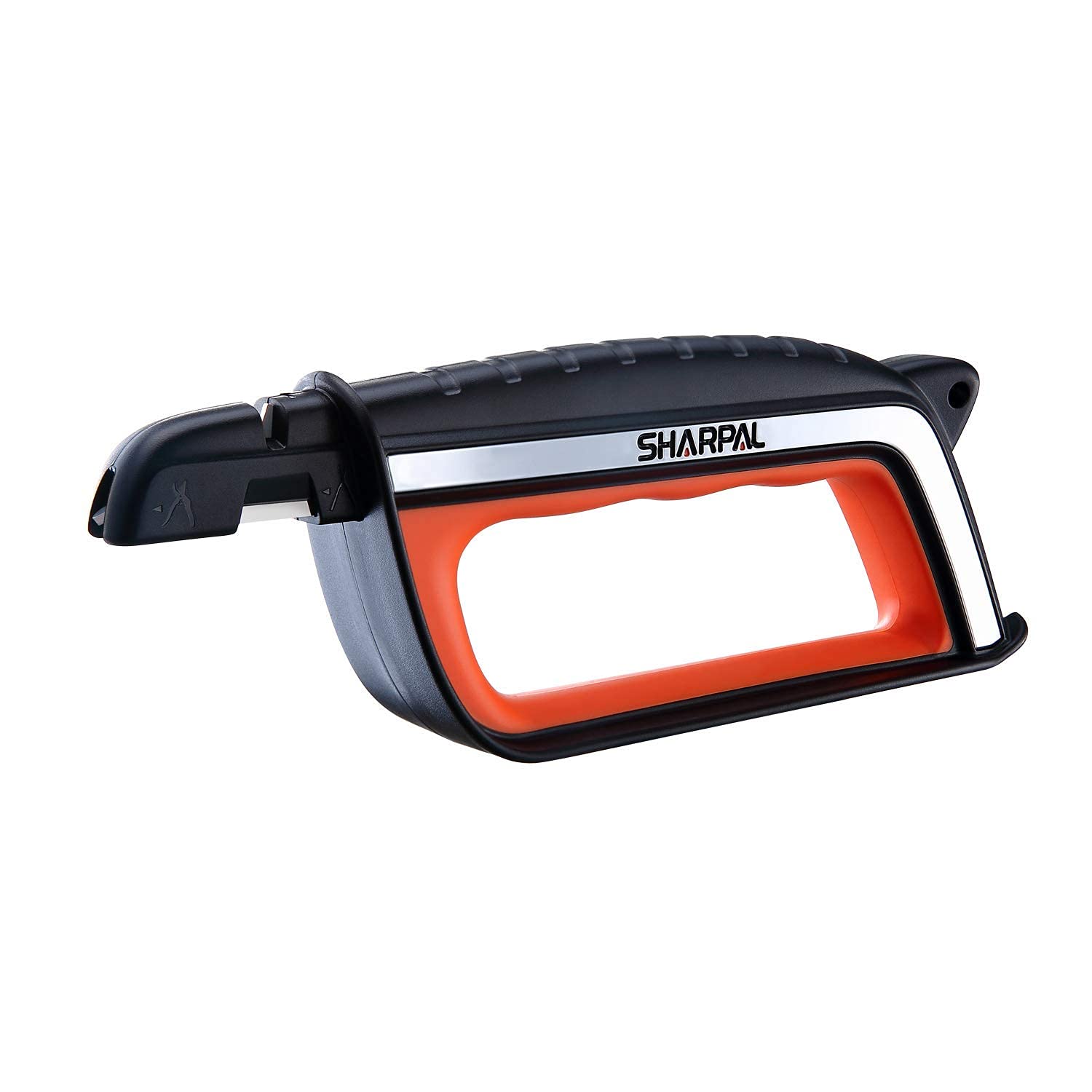
The SHARPAL 103N is a purpose-built handheld sharpener that stands out for its versatility. It’s not a bench stone or an electric grinder, it’s a compact tool designed to handle a surprising range of edge maintenance tasks around the shop, garden, and home. With five sharpening surfaces, it can tackle lawn mower blades, axes, machetes, pruning shears, hedge trimmers, scissors, and most kitchen knives. That kind of flexibility makes it a real asset for anyone who keeps multiple cutting tools in rotation.
This sharpener is best suited for DIYers, homeowners, and light commercial users who want to keep their gear cutting cleanly without spending a lot of time or money. It’s not meant for heavy duty reprofiling or restoring badly damaged edges, but for routine sharpening and touch ups it works very well. The preset angle slots take the guesswork out of holding the blade at the right orientation, which is especially helpful for people who aren’t comfortable with a stone or file.
In use, the 103N feels solid and secure. The rubber over-molded base grips the workbench or tabletop, so it stays put while you draw the blade through the slot. The handle is big enough to use comfortably with gloves, and the hand guard is a thoughtful safety feature when working on mower blades or shears. Performance wise, the tungsten carbide slot removes material quickly and the ceramic slot refines the edge to a clean, functional sharpness. Most users report noticeably better cutting from their tools after just a few passes.
Build quality is good for the price point. The plastic housing feels durable, and the abrasive inserts are rated to last through many thousands of uses. There are no batteries or cords to worry about, and the whole unit weighs only a few ounces, so it’s easy to store in a drawer or toolbox. Some reviewers mention that very dull or thick mower blades may need more passes or a secondary method to get a true edge, but for regular upkeep this tool performs reliably.
If you are tired of paying for sharpening services or struggling with stones and files, the SHARPAL 103N is a practical, cost effective alternative. It pays for itself quickly if you maintain your own mower blades, pruners, and shears. For the price and versatility, it’s a solid addition to any workshop or garage.
Brand: SHARPAL
Model: 103N
Dimensions: 8.46 x 2.95 x 1.34 inches
Weight: 6.2 ounces (176 grams)
Materials: Tungsten carbide and ceramic abrasives
Grit types: Coarse, medium, fine
Number of sharpening slots: 5 preset angle guides
Color: Orange and black
Warranty: 3 years
Lawn Mower Blade Touch Ups: Use the dedicated carbide slot to quickly restore a clean cutting edge without removing the blade from the mower (if accessible) or with the blade removed on a bench. Ideal for seasonal maintenance.
Garden Shears and Pruners: The pre-set angle slots make it easy to sharpen bypass pruners, hedge shears, and loppers. A few passes bring back factory sharpness.
Axes and Hatchets: The broader slots accommodate thicker blades and axes. Great for campsite or woodlot tool upkeep.
Kitchen and Utility Knives: The fine ceramic slot refines knife edges for clean slicing. Works well on most straight edge kitchen blades.

Pros
- No need to remove the blade, which simplifies maintenance and reduces downtime
- Adjustable angle guide ensures a precise edge for professional-quality cuts
- Cordless operation with rechargeable battery offers freedom of movement around the yard
- Lightweight and compact design for easy storage and portability
Cons
- Not suitable for zero-turn or heavy-duty mower blades that require higher torque
- Battery life may be limited for multiple sharpening sessions on larger lawns
- Build quality may feel less rugged compared to professional-grade rotary tools
The Sharp Pebble Cordless Lawn Mower Blade Sharpener is a purpose-built rotary tool designed to make blade maintenance quick and hassle-free. Unlike traditional sharpening methods that require removing the blade, this tool lets you sharpen in place, saving you the time and frustration of disassembly. It's an ideal solution for DIY homeowners and weekend gardeners who want to keep their mower blades sharp without investing in expensive professional equipment.
Performance wise, the adjustable angle guide (20-40 degrees) is a standout feature. It allows you to set the exact angle for your blade type, ensuring a consistent edge that promotes cleaner cuts and healthier grass. The variable speed control (5,000-30,000 RPM) gives you the flexibility to handle different blade conditions, from light touch-ups to more aggressive sharpening. The included replaceable sharpening wheels are effective and easy to swap out when they wear down.
Build quality is decent for the price point. The tool feels lightweight and well-balanced, with an ergonomic grip that reduces fatigue during extended use. The cordless design with a rechargeable battery adds convenience, letting you move freely around the yard without being tethered to an outlet. However, the battery life is adequate for a few blades but may require a recharge for larger mowing setups. The tool is best suited for standard mower blades; it lacks the torque needed for zero-turn or heavy-duty commercial blades.
In terms of practicality, this sharpener is a time-saver. You can quickly touch up the blade between mows, ensuring optimal cutting performance without the downtime of removal and reinstallation. Safety features like the ergonomic grip and speed control help maintain control during operation. The compact size makes it easy to store in a toolbox or garage drawer.
One realistic drawback is that the tool may not satisfy users who need to sharpen multiple blades in one session, as the battery could run out. Additionally, the build quality, while adequate for occasional use, may not withstand heavy daily use by professionals. Overall, the Sharp Pebble Cordless Lawn Mower Blade Sharpener is a practical, affordable choice for DIYers and homeowners who value convenience and precision. If you're looking for a quick way to maintain your mower blade without the hassle of removal, this tool delivers solid performance for the price.
Product Dimensions: 8 x 2.8 x 1.2 inches
Item Weight: 1.37 pounds
Manufacturer: Mighty Dreams
Model Number: SPMower2024
Battery: 1 9V battery included
Best Sellers Rank: #56,427 in Patio, Lawn & Garden, #212 in Lawn Mower Accessories
This sharpener is best for standard residential lawn mower blades. It is ideal for DIY homeowners who mow their own lawns and want to keep blades sharp without removing them. Use it for quick touch-ups between mows or to restore a dull blade to a clean cutting edge. Not recommended for commercial zero-turn mowers or heavy-duty blades that require higher torque.

Pros
- Very affordable and easy to install on a standard power drill
- Includes a balancer to help maintain even blade wear
- Versatile for multiple garden cutting tools beyond just mower blades
Cons
- Lower customer rating suggests inconsistent performance or durability issues
- Manual sharpening with a drill still requires careful angle control and may not match factory edge quality
- Best suited for light to moderate sharpening tasks; heavy use may wear the abrasive quickly
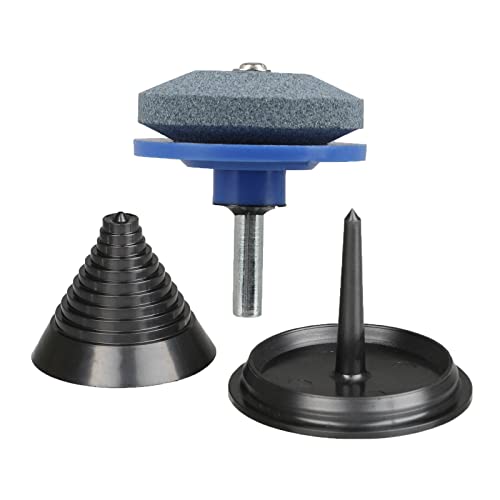
The Calsoling 3-Piece Lawn Mower Blade Sharpener is a straightforward, no-frills accessory designed to help homeowners and DIYers keep their mower blades and other garden cutting tools sharp without investing in expensive sharpening equipment. This set includes three corundum abrasive stones mounted on stainless steel bases, plus a blade balancer, all for a price that makes it easy to try. The concept is simple: chuck one into any standard power drill, touch it to the blade edge, and grind away the dullness. For those who mow a standard suburban lawn once a week, this can be a practical way to extend blade life between professional sharpenings or replacements.
In real-world use, the sharpener works best on blades that are merely dull rather than heavily nicked or damaged. The corundum material handles moderate wear and resists heat buildup, which is important when using a drill at higher RPMs. The included balancer is a nice bonus, letting you check if the blade is still balanced after sharpening, which helps reduce vibration and uneven cuts. However, the sharpening process requires a steady hand and a consistent angle to avoid creating an uneven edge. It's not as precise as a dedicated sharpening jig or a professional grinder, but for quick touch-ups, it gets the job done.
Build quality is adequate for the price point. The steel backing provides some rigidity, but the abrasive stones are relatively small, measuring about 1.97 inches in diameter. This means you'll need to make multiple passes along longer blades. The three-pack is a practical advantage, allowing you to keep one in the garage, one in the shed, and maybe a spare. The 12-month warranty is a nice touch for such an inexpensive item, indicating the manufacturer stands behind it.
On the downside, the overall customer rating is modest, and some users have reported inconsistent performance or the abrasive wearing down faster than expected. This is not a tool for professional landscapers or anyone who sharpens blades daily. It also requires a power drill, which most homeowners already have, but it's an added step if you don't. The lack of a guide or depth stop means you could accidentally remove too much material if you're not careful.
Overall, the Calsoling 3-Piece Lawn Mower Blade Sharpener is a solid budget option for the DIY homeowner who wants a quick, easy way to maintain mower blades and similar tools. It's not a replacement for professional sharpening or high-end sharpening systems, but for the occasional touch-up, it offers good value. If you're a weekend warrior with a modest lawn and a cordless drill, this set is worth considering. Just go in with realistic expectations about its durability and precision.
Product Dimensions: 1.9 x 1.5 x 0.8 inches per stone
Item Weight: 3.53 ounces (total set)
Material: Corundum abrasive with stainless steel backing
Stone Diameter: 50 x 47 mm (1.97 x 1.85 inches)
Package Includes: 3 sharpening stones + 1 blade balancer
Compatibility: Works with power drills and hand drills; fits 99% of mower blade center holes
Warranty: 12 months
This sharpener set is best suited for homeowners and DIYers who need to touch up standard lawn mower blades, sickle bars, rotary tillers, hoes, and drill knives on a regular basis. It's ideal for quick maintenance between professional sharpenings or for those who prefer to keep their blades sharp without the expense of a dedicated sharpening station. Not recommended for heavy-duty or commercial use where blades are heavily damaged or need precise edge geometry.
A Complete Practical Guide to Sharpening Riding Mower Blades
Maintaining sharp cutting edges on a riding mower is essential for maintaining lawn health, preventing turf disease, and ensuring clean clipping dispersal across your property. Because riding mowers operate with substantial engine power and wide multi-blade decks, dull edges quickly tear grass leaves, leaving ragged brown tips and putting excess load on engine belts. Following a systematic sharpening workflow restores proper cutting performance while keeping your blades balanced and safe for high-speed operation.
Pre-Sharpening Safety, Deck Isolation, and Inspection
Safe servicing begins long before bringing an abrasive tool near the cutting edge. Turn off the riding lawn mower engine, remove the ignition key, engage the parking brake, and disconnect the spark plug wire or disconnect the main battery pack on an electric model. This step prevents any possibility of accidental engine cranking while your hands are in contact with the blade or spindle assembly. Place wheel chocks behind the rear tires if you elevate the mower deck with ramps or a tractor jack.
Once the deck is raised and secured with mechanical jack stands, inspect the underside of the cutting deck for packed grass, soil, and debris. Scrape away dried turf using a putty knife so you can clearly see the blade mounting hardware and spindle housings. Immobilize the blade with a heavy wooden block wedged between the blade tip and the inner deck wall to keep the spindle from spinning while you loosen the center bolt. Loosen the bolt by turning counterclockwise using a long-handled socket wrench or breaker bar, taking care to note the orientation of any cupped washers.
After detaching the blade, wipe away lingering grease and dirt to perform a thorough physical inspection. Carefully look along the entire length of the blade, paying close attention to the center mounting hole and the curved lift sail at the back. Never attempt to sharpen or reinstall a blade that exhibits hairline cracks, significant bends, or deep gouges from striking buried rocks. Severely damaged steel cannot safely handle the high centrifugal forces generated by a riding mower spindle and must be discarded.
Evaluating Blade Wear: Sharpening Versus Replacement
Determining whether a blade can be safely reconditioned or requires total replacement depends on the remaining thickness and profile of the steel. Over repeated mowing sessions, sandy soil and abrasive thatch act like fine sandpaper, eroding the metal along the cutting edge and thinning the high-lift sail. If the lift wing has worn down to paper-thin metal or shows holes, the blade has lost its aerodynamic lifting capability. In that scenario, grinding a fresh edge will not restore proper grass bagging or discharge performance.
The cutting edge itself also has structural limits that dictate when grinding is no longer viable. Routine sharpening removes minor nicks and restores a flat bevel, but severe rock strikes that create notches deeper than a quarter-inch compromise blade integrity. Grinding away enough metal to erase such deep gouges removes excessive material, creating a narrowed profile that weakens the cutting tip. If more than one-third of the original cutting edge width has been ground away over the lifetime of the blade, replace the set rather than sharpening further.
Understanding lawn mower blade steel guide details can help you appreciate why preserving structural thickness is essential. Mower blades are manufactured from medium-carbon or alloy steel that balances hardness with impact resistance, protecting against catastrophic shattering. Excessive metal removal reduces this critical safety buffer, leaving the blade susceptible to bending or cracking under sudden resistance. Inspecting both blades on a two-blade deck, or all three blades on a wider deck, ensures that each blade retains adequate mass for safe operation.
Selecting the Right Sharpening Tool for Riding Mower Blades
Choosing an appropriate sharpening method depends on the condition of your blades, your available workspace, and the tools you already own. Angle grinders paired with dedicated sharpening jigs, such as the [Updated] Lawn Mower Blade Sharpener 15°-45° fixture, provide high precision and rapid material removal. These fixtures clamp securely to a workbench and guide the grinder along a fixed track, maintaining a uniform bevel angle across the entire length of the edge. For homeowners managing multiple riding mower blades each season, guided angle grinder jigs offer unmatched consistency.
Drill-mounted sharpening stones offer an accessible, compact alternative for routine blade maintenance between major service intervals. Attachments like the cenoz Crafts Man Lawn Mower Blade Sharpener or the Lawn Mower Blade Sharpener for Drill and Lawn utilize double-layer corundum abrasive wheels with built-in angle guides. These units chuck directly into a standard power drill, spinning the stone while the plastic or metal guide rests against the flat back of the blade. Drill sharpeners work well for touching up mildly dull edges, though they remove metal more slowly than full grinder setups.
Cordless rotary tools designed specifically for blade maintenance, such as the Sharp Pebble Cordless Lawn Mower Blade Sharpener, bring portable convenience to mower maintenance. These tools feature adjustable angle guides ranging from 20 to 40 degrees and variable motor speeds that provide controlled abrasive contact. They allow for precise touch-ups without trailing extension cords across the garage or shed. Because they operate at higher rotational speeds with smaller abrasive bits, they excel at smoothing out minor imperfections without taking off unnecessary steel.
Manual sharpening tools and handheld files remain a dependable option for gardeners who prefer quiet, deliberate control over their equipment. Multi-tool sharpeners like the SHARPAL 103N All-in-1 Knife Garden Tool feature tungsten carbide sharpening slots and ceramic honing rods designed to reset dull edges safely. Hand tools eliminate the risk of overheating the steel, allowing you to dress the cutting edge without altering its structural temper. While manual filing requires more physical effort on thick riding mower blades, it provides complete tactile control over every stroke.
Establishing and Maintaining the Correct Cutting Bevel
Achieving a durable cutting edge requires matching the original factory bevel angle, which typically sits between 30 and 35 degrees on most riding mower blades. Grinding an edge that is too steep, such as 45 degrees, creates a blunt profile that tears grass leaves rather than slicing them cleanly. Conversely, grinding an edge that is too shallow, like a 15-degree kitchen knife bevel, produces a razor-sharp but fragile edge that rolls over or chips immediately upon hitting a twig. A balanced 30-degree bevel provides the optimal blend of sharpness and structural longevity.
Only the top angled surface of the blade should be ground during the sharpening process. Keep the bottom surface facing the lawn completely flat, grinding only enough on the underside to remove any microscopic burrs created by the top bevel passes. Changing the profile of the flat underside disrupts the aerodynamics of the cutting chamber and can cause ragged, uneven mowing lines. The cutting edge itself should not be brought to a razor-sharp point; maintaining a blunt edge roughly the thickness of a butter knife resists dulling from debris while cleanly severing grass stalks.
Homeowners often wonder whether new mower blades come sharpened, and factory edges rarely feature a razor finish for this exact reason. Manufacturers apply a controlled bevel with a resilient edge profile designed to withstand turf impacts and shipping handling without chipping. Emulating that factory profile during your sharpening sessions ensures your riding mower produces crisp cuts without requiring edge reshaping every weekend. Consistency across both cutting wings of each blade maintains uniform turf height throughout your yard.
Step-by-Step Sharpening Technique and Heat Control
Begin by securing the cleaned mower blade firmly in a heavy bench vise with one cutting edge facing upward and level. Position your sharpening tool at the established bevel angle, ensuring the abrasive surface sits completely flush against the factory grind. If using an angle grinder, apply light to moderate pressure and move the tool in smooth, continuous passes from the inside of the cutting edge toward the outer tip. Never stop moving the abrasive wheel mid-stroke, as lingering in one spot creates low hollows and uneven cutting profiles.
Controlling heat buildup is one of the most critical aspects of using power grinders on tempered lawn mower steel. Friction generated by aggressive grinding can quickly overheat the metal, turning the edge a distinct blue or purple color that indicates annealed, softened steel. Once steel overheats and loses its heat-treated temper, the blade dulls rapidly during mowing and will not hold an edge. Keep a spray bottle of water or a damp rag nearby to quench the blade between light passes, allowing the metal to remain cool to the touch.
Repeat the light grinding passes until all minor nicks are smoothed away and a clean, consistent bevel appears across the entire cutting length. Flip the blade over in the vise or use a fine hand file to gently deburr the flat bottom side with a single flat stroke. Once the first cutting wing is finished, rotate the blade 180 degrees in the vise and repeat the exact same procedure on the opposite wing. Count your passes and match the grinding duration on both sides to keep material removal as equal as possible before moving to balance testing.
Static Balancing and Weight Distribution Checks
Balancing your sharpened blade is just as important as restoring its cutting edge, especially on high-speed riding mower decks. An unbalanced blade spins with asymmetrical centrifugal force, transmitting intense vibrations through the spindle bearings, deck housing, and mower frame. Over time, these vibrations accelerate spindle wear, loosen mounting bolts, and cause uneven cutting heights across your lawn. Verifying balance before reinstallation ensures smooth operation and protects expensive deck components from premature mechanical failure.
A cone balancer, such as those included with the jtfrkope drill sharpener set or the 【NEW】3 Pieces LawnMower Blade Sharpener with Steel kit, provides an easy way to check static balance. Place the balancer on a level, flat workbench and set the center hole of your mower blade onto the stepped cone. Release the blade gently and observe whether it remains level or tips noticeably toward one side. If one wing dips toward the table surface, that end is heavier and requires additional material removal to achieve equilibrium.
When correcting an unbalanced blade, never grind additional metal from the cutting edge you just shaped. Instead, remove small amounts of steel from the back edge of the heavy wing, along the curved lift sail, or from the blunt tip corner. Grind lightly, re-seat the blade on the balancing cone, and check the balance again until the blade rests completely horizontal. On multi-blade riding mower decks, repeat this static balancing verification for every blade in the set to maintain harmonious rotation beneath the deck.
Reinstallation, Spindle Seating, and Final Deck Verification
Before bolting the sharpened blades back into place, clean any grass residue or surface rust off the spindle shafts and mounting stars. Proper seating against the spindle flange ensures the blade sits completely square and does not wobble when rotating at high engine throttle. Ensure the blade is oriented correctly, with the sharp cutting edge facing the direction of rotation and the curved lift sail pointing upward toward the deck shell. Installing a blade upside down is a common mistake that crushes grass rather than cutting it and ruins lawn appearance.
Thread the mounting hardware back onto the spindle by hand, making sure the concave side of any cupped Belleville washers faces upward against the blade body. Wedge a wooden block between the blade tip and the deck wall once again to lock the spindle while tightening the center bolt. Use a calibrated torque wrench to tighten the bolt to the specific foot-pound rating outlined in your riding mower operator manual. Avoid over-tightening with an impact wrench, which can stretch threads or crack spindle housings, and avoid under-tightening, which allows blades to slip.
After all blades are torqued securely, spin each blade by hand to verify that they rotate freely without contacting the deck baffles or neighboring blades. Reconnect the spark plug wire, lower the mower deck to the ground, and start the engine in an open area to test for abnormal vibration. Listen closely as you engage the cutting deck blades at full engine throttle; a properly sharpened and balanced blade set should run quietly and smoothly. With sharp edges and balanced spindles, your riding mower will deliver crisp, healthy turf cuts throughout the growing season.
Taking the time to service your riding mower blades every twenty-five to fifty mowing hours keeps your lawn looking manicured and extends the working life of your mower deck. Clean, balanced blades reduce fuel consumption, prevent turf stress, and preserve critical spindle bearings across seasons of demanding yard care. By using the right sharpening tools, holding a steady bevel angle, and confirming balance before every reinstallation, you ensure safe and dependable mowing performance on every pass.




Write Your Review
No reviews yet. Be the first to share your experience!