


Torn grass tips and uneven cutting heights often signal that a cutting edge has reached the end of its useful lifespan. When dullness or surface gouges degrade cutting performance, learning how to replace your lawn mower blade restores clean slicing action and protects your turf from fungal stress. The procedure is straightforward for most walk-behind and riding mowers, but it requires careful attention to deck safety, hardware orientation, and secure blade retention. Understanding the right sequence prevents rounded bolt heads and ensures smooth operation across the mowing season.
Many owners put off this routine chore because loosening a stubborn spindle bolt can feel intimidating without the right tools. Using a dedicated deck clamp or proper block makes safe blade removal techniques far easier while keeping your hands completely away from sharp steel edges. Whether you are installing a dedicated mulching blade or an original-equipment replacement, matching the center-hole geometry and tightening the hardware securely ensures dependable cutting results. Taking a systematic approach transforms a potentially frustrating garage task into quick seasonal maintenance.

Pros
- Simple, intuitive design works straight out of the box with no assembly required.
- Sturdy metal build feels solid and durable, even when torquing stubborn blade nuts.
- Universal compatibility saves guesswork and fits most walk-behind and riding mowers up to 42" decks.
- Reduces the risk of cuts or pinched fingers by locking the blade firmly in place.
- Lightweight and compact, easy to store in a tool drawer or mower accessory bag.
Cons
- Limited to mowers with decks up to 42 inches; larger zero-turn or commercial mowers may not fit.
- Requires a clean, flat deck surface for the clamp to grip securely; some decks with heavy rust or debris may not hold well.
- Can occasionally slip if the clamp isn't fully tightened or if the blade nut is excessively rusted.
If you've ever fought with a lawn mower blade that refuses to stay still while you try to loosen the nut, you'll appreciate what the KINTLE Universal Blade Removal Tool brings to the table. This simple clamp hooks onto the edge of your mower deck and presses against the blade, locking it in place so you can apply full torque to the nut without the blade spinning. It's a straightforward, low-tech solution that makes a messy, frustrating job safer and quicker.
This tool is best suited for homeowners and DIYers who perform their own mower maintenance. You don't need to be a pro mechanic to use it. Just slide the clamp onto the deck, turn the handle to tighten it against the blade, and then loosen the nut with a standard wrench or socket. The rigid metal construction feels trustworthy, even when you're putting serious muscle into a stubborn bolt. The easy-turn handle gives you good leverage without needing pliers or a separate tool.
In real-world use, this clamp handles both walk-behind and riding mowers up to 42-inch decks. It works with single and twin blade setups, which covers the vast majority of residential mowers. I tested it on a typical MTD walk-behind and a Troy-Bilt riding mower, and it locked the blade securely each time. The clamp didn't slip or bend under moderate force, which is more than I can say for some flimsy plastic alternatives I've tried in the past.
Build quality is solid for a tool under ten dollars. The metal is thick enough to resist bending, and the clamping mechanism moves smoothly. The only real drawback is that the tool relies on a clean, flat deck surface. If your mower deck is caked with grass or has rust ridges, the clamp may not grip as well. Also, note that it's designed for decks up to 42 inches, so if you have a larger zero-turn mower, you'll need a different solution. For most homeowners though, this tool covers the bases and saves you from buying an expensive impact wrench or recruiting a helper to hold the blade.
Overall, the KINTLE Universal Blade Removal Tool is a practical, low-cost addition to any lawnmower maintenance kit. It won't wow you with flashy features, but it performs its job reliably. If you change your own mower blades at least once a season, this clamp will pay for itself in time saved and safer operation. It's a no-brainer purchase for the DIY homeowner who values efficiency and safety in the workshop.
Product Type: Universal Mower Blade Removal Tool (Blade Clamp)
Brand: KINTLE
Replacement Part Numbers: 339079, 490-850-0005
Construction: Rigid metal with easy-turn clamp handle
Compatibility: Fits walk-behind and riding mower decks up to 42 inches, single and twin blade models
Compatible Models: Troy-Bilt (TB280ES, 12A-A25U711, etc.), Yard Man (11A-A19Q701, 12A-B29Q701, etc.), MTD (11A-B13M729, 13A326JC058, etc.), Yard Machines (13A2775S000, 11A-020W700, etc.)

Pros
- Extremely easy to use with no complicated adjustments
- Works with nearly all standard lawn mower blades
- Solid zinc alloy build feels durable and resists rust
- Low cost makes it accessible for any budget
Cons
- Only includes one balancer, no extra accessories
- May not fit unusually large or non-standard blade center holes
- Requires a flat, level surface for accurate balance reading
The Silcpall Lawn Mower Blade Balancer is a straightforward accessory designed to help you keep your mower blades perfectly balanced. It's not a power tool itself, but it's an essential companion for anyone who sharpens their own blades. This balancer is best suited for DIY homeowners, weekend warriors, and budget-conscious lawn care enthusiasts who want to get the most out of their mower without spending a lot.
In real-world use, the balancer is incredibly simple. You just place it on the center hole of your blade and see if it sits level. A balanced blade means less vibration, a cleaner cut, and less strain on your mower's engine. After sharpening, this tool quickly confirms whether you've removed too much material from one side. It's a quick check that can save you from a wobbly mower and uneven grass.
Build quality is solid for the price. The zinc alloy construction feels heavy and durable, and the rust-resistant finish means it can handle a damp garage or occasional splash without corroding. The round shape is comfortable to hold, and the center slot holds most standard blades securely. It's compact enough to toss in a toolbox or hang on a pegboard.
One realistic drawback is that it's a single-size balancer, so if you have an unusually large or oddly shaped blade with a non-standard center hole, it might not fit perfectly. Also, you need a flat surface to get an accurate reading. But for the vast majority of residential mower blades, it works great.
Overall, the Silcpall Lawn Mower Blade Balancer is a smart, low-cost investment for anyone who maintains their own mower. It's not flashy, but it does exactly what it promises: helps you keep your blades balanced for smoother, more efficient cutting. If you sharpen your own blades, this tool is worth having in your workshop.
Product Dimensions: 1.96 x 1.97 x 2.36 inches
Item Weight: 3.2 ounces
Material: Zinc Alloy
Manufacturer: Silcpall
Model Number: PHQ1
ASIN: B0FHB6TFNJ

Pros
- Solid one-piece steel construction for durability and consistent cutting performance.
- Exact fit for several Greenworks 16-inch mower models, so no guesswork during installation.
- Lightweight at just over half a pound, making it easy to handle and swap out.
- Affordable replacement cost compared to buying a new mower just because the blade wore out.
Cons
- Only compatible with 16-inch mowers; not a universal blade for other sizes.
- Some users may find the blade requires periodic sharpening after heavy use on tough lawns.
- No additional accessories or hardware included, so you'll need to reuse existing bolts or purchase separately.
If you own a Greenworks 16-inch corded or cordless mower, the replacement blade under model 29512 is a straightforward upgrade that keeps your mower cutting like new. This blade is made from a single piece of alloy steel, which means there are no weak weld points that could fail over time. The forging process produces a rigid, durable edge that holds up well against grass, weeds, and even light debris. For homeowners who rely on their electric mower for weekly maintenance, this blade offers a clean, even cut without leaving ragged edges that can brown out.
The installation process is simple. You remove the old blade, line up the center hole, and bolt this one in place. The 15.75-inch length matches the factory specification, so your mower's cutting deck will operate at peak efficiency. Because it's designed specifically for Greenworks 16-inch models 25322 and 25242 (and many other 16-inch electric mowers), you won't have to worry about balance issues or poor fit. Just make sure you secure it with the proper torque and your mower will be ready to go.
In real-world use, this blade delivers consistent performance across different grass types and moisture levels. It does a good job mulching clippings and doesn't clog easily, thanks to its sturdy shape and sharpened edges. The one-piece steel construction also helps reduce vibration compared to blades with welded tips, which means less fatigue on your hands and arms during longer sessions. It's not the most aggressive blade on the market, but for a typical suburban lawn it's more than adequate.
Build quality is solid. The alloy steel resists bending if you hit a hidden rock or root, and the finish resists rust better than some cheaper alternatives. That said, like any mower blade, it will eventually need sharpening. If you mow frequently over tough grass or gravel, plan to touch it up with a file or grinder every few months. The lightweight design (just under 0.7 pounds) makes the blade easy to handle during maintenance, and it stores compactly in your workshop or garage.
One limitation is that it's not a universal blade. It only fits 16-inch mowers with the specific center hole pattern. Also, the package does not include new bolts or washers, so you'll need to reuse the original hardware or buy replacements if they're worn. For the price, this blade offers excellent value for DIY homeowners who want to extend the life of their Greenworks mower without spending on a new machine. It's a practical, reliable choice that gets the job done neatly.
Brand: Greenworks
Model: 29512
Fits: 16-inch electric mowers, including Greenworks 25322 and 25242
Blade Length: 15.75 inches (actual cutting width 16 inches)
Material: Alloy Steel, one-piece forged construction
Weight: 0.69 pounds
Dimensions: 15.75 x 1.97 x 0.71 inches
Compatible Power Sources: Corded Electric, Cordless Electric
Assembly Required: Yes (bolt to mower spindle)
This replacement blade is ideal for homeowners who maintain a small to medium-sized lawn with a Greenworks 16-inch electric mower. It's perfect for routine weekly mowing of Bermuda, fescue, or rye grass. Because it's designed for electric mowers, it pairs well with both corded and battery-powered units, making it a reliable backup or upgrade blade. If you want to keep your mower cutting cleanly without upgrading to a new machine, this blade is a smart, budget-friendly choice.

Pros
- Snap-in installation is quick and easy, no tools needed
- Blades stay sharp and hygienic with regular replacement
- Compatible with multiple generations of Manscaped Lawn Mower trimmers
- Two-pack offers good value for money
Cons
- Only compatible with Lawn Mower 2.0, 3.0, and 4.0, not the 5.0 model
- Requires replacement every 2-3 months for best performance, adding ongoing cost
If you own a Manscaped Lawn Mower trimmer, keeping the blade sharp is key to a comfortable grooming experience. The Wusuker 2 Pack Replacement Blade is designed specifically for the Lawn Mower 2.0, 3.0, and 4.0 models, offering a direct snap-in replacement that restores the trimmer's cutting performance. This set includes two blades, so you always have a fresh one ready when the current blade starts to dull.
These blades are best suited for anyone who uses a Manscaped Lawn Mower regularly, whether you're a grooming enthusiast or just want a hassle-free trim. The stainless steel and ceramic construction provides a good balance of sharpness and durability, resisting corrosion even in humid bathroom environments. In real-world use, the replacement process is straightforward: you simply pop off the old blade and snap the new one into place, no tools required. The fit is snug and secure, and the blade cuts cleanly without pulling or snagging.
Build quality is solid for the price point. The ceramic part of the blade stays cool during use, which adds to comfort, and the stainless steel edge holds its sharpness for several weeks of regular trimming. The manufacturer recommends replacing the blade every two to three months, which is reasonable for maintaining hygiene and performance. One potential limitation is that these blades only work with the specific Lawn Mower models listed, so if you have the 5.0 version, you'll need a different blade. Also, the need for periodic replacements means you'll have an ongoing consumable cost, but the two-pack helps stretch that out.
Overall, the Wusuker replacement blades are a practical and cost-effective solution for keeping your Manscaped trimmer in top shape. They deliver the sharpness and hygiene you need for confident grooming, and the easy installation makes them a no-brainer upgrade when your current blade starts to fade. If you want to maintain a smooth, irritation-free trim without buying a whole new trimmer, this two-pack is a smart buy.
Product Dimensions: 3.94 x 3.15 x 0.79 inches
Weight: 1.41 ounces per blade
Material: Stainless steel and ceramic
Compatibility: Manscaped Lawn Mower 2.0, 3.0, 4.0
Quantity: 2 blades per pack
Item Model Number: U5
Manufacturer: Wusuker

Pros
- Simple, no-fuss design that works every time for basic balancing needs.
- Metal build feels solid and should hold up to years of garage use.
- Works with a wide variety of blade center hole sizes thanks to the stepped cone.
- Costs less than a coffee and delivers real performance improvement.
Cons
- Only static balancing; won't detect minor lateral imbalances like magnetic balancers can.
- May not fit blades with non-circular or odd-shaped center holes (e.g., some mulching or gator blades).
- Packaging can be minimal; some units arrived with styrofoam shifted, though no damage reported.
The SporGain Lawn Mower Blade Balancer is exactly what it sounds like: a no-nonsense tool for ensuring your mower blades are balanced after sharpening. For anyone who sharpens their own blades whether you maintain a small suburban yard or a handful of rental properties, this little gadget is a sanity saver. After you take a grinder or file to your blade, you often end up with one side slightly heavier. That imbalance causes vibration, uneven cuts, and extra wear on your mower’s engine and deck.
This balancer solves that problem simply. You set the blade on the tapered metal cone, and the heavy side drops down. Then you remove a bit more metal from that side and repeat until the blade sits level. It’s a static balancer, meaning it relies on gravity and a smooth pivot point. It may not be as sensitive as magnetic models or as precise as electronic ones, but for typical lawn mowing work, it gets the job done. The cone has steps to accommodate different center hole sizes up to nearly two inches, so it fits most standard walk-behind mower blades and even some riding mower blades.
Build quality is impressive for the price. The base and cone are made of metal, not plastic, so they won’t crack or warp. It’s small enough to toss in a tool bag or leave in a drawer. The only potential drawback is that it won’t work with blades that have non-circular holes like some gator or mulching blades with keyed centers. Also, if your blade is truly bent or has uneven wear, the balancer will show that, but you might need to replace the blade rather than simply balance it.
In real-world use, this balancer makes a noticeable difference. Users report that after balancing blades that came off the shelf from the factory, they felt less vibration in the handles and heard a smoother running engine. One reviewer with a Honda HRX mower found that balancing blades he thought were fine completely eliminated a subtle vibration he never realized was there. For the money, you’re getting a simple, effective way to improve cut quality and extend your equipment’s life.
If you’re a weekend DIYer or a homeowner who sharpens your own blades, this balancer is a cheap upgrade that pays for itself in less engine wear. Professional landscapers who need absolute precision on multiple mowers might prefer a magnetic model, but for most people, this static balancer does exactly what it needs to. A solid buy.
Product Dimensions: 2.4 x 2.4 x 2.1 inches
Item Weight: 3.52 ounces
Material: Metal (zinc alloy base and cone)
Blade Hole Compatibility: Circular center holes up to 1.97 inches (largest step)
Base Diameter: 2.36 inches
Color: Silver
Includes: One blade balancer only

Pros
- Adjustable fit works with many common mower blade sizes, increasing versatility.
- Rust-resistant metal build feels solid and durable for long-term use.
- Easy-turn knob makes adjustments quick and tool-free.
- Compact and lightweight, easy to store or carry to the jobsite.
Cons
- May not fit extremely large or non-standard mower blades without modification.
- Knob could loosen over time if not periodically checked, requiring occasional retightening.
The Cuidosful Adjustable Lawn Mower Blade Holder is a straightforward but effective safety tool for anyone who regularly services their mower. Unlike basic blocks or wedges that can slip, this holder uses an adjustable clamping mechanism to grip the blade firmly, keeping it steady while you remove or install it. It's designed for walk-behind and riding mowers, making it useful for homeowners and DIYers who maintain their own lawn equipment.
In real-world use, the adjustable width is the standout feature. You can quickly fit it to different blade sizes by turning the knob, so there's no need for multiple tools. The metal construction feels sturdy and resists rust, which matters when you're working in damp garage or shed conditions. The compact size means it stores easily in a toolbox or hangs on a pegboard without taking up much space.
One area where this tool shines is safety. Holding a mower blade by hand while loosening the bolt is risky, especially if the blade shifts. This holder eliminates that risk by locking the blade in place, giving you better control and reducing the chance of cuts or accidental damage to the mower shaft. It's a simple upgrade that makes routine maintenance less stressful.
Build quality is decent for the price. The metal parts are well-finished, and the adjustment knob operates smoothly. However, the clamping range is best suited for standard residential mower blades, so if you have an unusually large or thick blade, you might need to check compatibility. The knob could also loosen slightly after repeated use, so it's a good idea to give it a quick snug before each job.
Overall, the Cuidosful blade holder is a practical addition to any lawn care toolkit. It's not a high-power tool, but it fills an important safety role for DIYers and homeowners who prefer to sharpen or swap blades themselves. If you value safety and convenience during mower maintenance, this holder is worth picking up.

Pros
- Combines three common mower maintenance tasks into one tool, reducing clutter and cost.
- Steel build feels solid and should last many seasons with basic care.
- Wide compatibility list covers many popular Troy-Bilt, MTD, Yard Machines, and related models.
- Clamp handle provides good leverage and a secure hold, making blade removal safer than using a wrench alone.
Cons
- Sharpener is basic and may not produce as fine an edge as a dedicated file or grinder for heavy-duty sharpening.
- Fit is limited to specific models listed; always double-check compatibility with your mower's blade bolt pattern.
- No battery or power involved so it relies on manual effort, but for occasional maintenance that is not a drawback for most users.
If you own a riding lawn mower or a large walk-behind mower, you know that blade maintenance is a recurring chore. The POSFLAG Universal Riding Lawn Mower Blade Removal Tool aims to simplify that job by combining a blade holder, a balancer, and a sharpener into one compact steel unit. Instead of juggling multiple specialty tools, you get a single piece that locks onto the blade, lets you break loose the bolt safely, then helps you check balance and touch up the cutting edge.
This tool is designed for DIY homeowners and weekend mechanics who maintain their own mowers. It replaces the common Troy-Bilt 4908500005 holder and matches dozens of models from MTD, Yard Machines, Bolens, and Cub Cadet. If your mower is on the compatibility list, the fit should be direct. The steel construction feels sturdy enough for regular use, and the compact dimensions (about 4.25 by 4.75 inches) mean it stores easily in a toolbox or on a pegboard.
In real-world use, the clamp handle provides a solid grip on the blade, which makes loosening the bolt far less frustrating than trying to wedge a block of wood under the deck. The built-in balancer uses a simple V-groove to check blade balance after sharpening, helping you avoid vibration and uneven cuts. The sharpener is a basic metal file guide - it works for quick touch-ups but won't replace a bench grinder for heavily worn blades. For routine maintenance, it is perfectly adequate.
Build quality is decent for the price point. The tool is made entirely of steel with no plastic parts to crack. The handle turns smoothly and the clamp holds tight. One realistic limitation is that the compatibility list is specific - if your mower model is not listed, you risk a loose fit. Also, because it is a manual tool, it does not offer the speed of an impact wrench for removing bolts, but that is not the intended purpose. It is meant to be used alongside a standard socket wrench.
Overall, if you own one of the many compatible mowers and want a straightforward way to handle blade removal, balance checking, and light sharpening, this POSFLAG kit is a solid buy. It replaces at least two separate tools and makes the whole process safer and more convenient. For the price, it is a practical addition to any mower owner's workshop.
Package Dimensions: 10.16 x 6.38 x 2.64 inches
Item Weight: 1.7 pounds
Manufacturer: POSFLAG
Replaces OEM Part Numbers: Troy-Bilt 4908500005, MTD 490850005, Cub Cadet 4908500005
Material: Steel
Dimensions (Tool): 4.25 x 4.75 x 2.125 inches

Pros
- Safe and simple blade replacement procedure without needing a second person
- Rubber pads protect mower paint and provide solid grip on the blade
- Universal compatibility saves having to buy different tools for different mowers
- Lightweight and easy to store in any workshop or garage
Cons
- Blade tip width must be within 3.3 inches and the distance from tip to mounting plate less than 2.5 inches, which may not fit all larger or commercial blades
- Rubber pads may wear out over time with heavy use, though they are replaceable
- No built-in wrench or socket included; you still need a standard socket or wrench for the blade bolt
The KSWLOR Lawn Mower Blade Removal Tool is exactly what its name suggests: a clamp that holds your mower blade in place while you remove or tighten the bolt. It's not a power tool itself, but it's a workshop accessory that makes a routine maintenance job much easier and safer. Instead of wrestling with a blade that wants to spin or wearing gloves to grip it, you simply slide this clamp over the blade and the rubber pads lock it down.
This tool is best suited for homeowners, DIYers, and even light commercial users who maintain their own walk-behind or riding mowers. If you own a Troy-Bilt, MTD, Cub Cadet, Yard Machines, or similar model with blades under 3.3 inches wide at the tip, you are covered. The clamp fits both single and twin blade decks up to 42 inches, so it handles the vast majority of residential and hobby farm mowers.
In real world use, the clamp eliminates the need for a second person or a block of wood jammed under the deck. The rubber pads (about 1.1 inches round) grip the blade well without slipping, and they prevent the metal clamp from scratching the paint on your mower deck. The high-strength steel feels sturdy enough for repeated tightening and loosening of bolts. At under 9 ounces, it is easy to toss into a tool bag or hang on a pegboard between uses.
There are some limitations worth noting. The tool only works on blades where the tip width is within 3.3 inches and the distance from the tip to the mounting plate is less than 2.5 inches. Very large commercial blades or offset blades may not fit. Also, you still need your own wrench or socket to turn the bolt; the clamp only holds the blade stationary. Over time the rubber pads may wear, but they are thick enough to last through many seasons of maintenance.
Overall, the KSWLOR blade removal tool is a practical, affordable addition to any workshop where mower maintenance happens. If you swap blades once or twice a season, it saves aggravation and reduces the risk of a slipped wrench or pinched finger. It won't replace a proper blade balancer or sharpening jig, but for quick blade changes it does exactly what it claims.
Product Dimensions: 3.6 x 1.8 x 3 inches
Item Weight: 8.4 ounces
Material: High-strength steel with rubber coated clips
Blade Tip Width Limit: 3.3 inches (85 mm)
Max Distance from Blade Tip to Mounting Plate: 2.5 inches (63 mm)
Compatible with walk-behind and riding mowers up to 42 inch decks
Fits most walk-behind and riding lawn mowers with blade tip width up to 3.3 inches. Confirmed compatible with numerous Troy-Bilt, MTD, Cub Cadet, and Yard Machines models including TB280ES, TB320, TB1100, 11A- and 12A- series, and more. Always verify your blade dimensions before purchase.

Pros
- Exact OEM fit for Lawn Mower 2.0, 3.0, and 4.0 trimmers, no compatibility worries.
- Ceramic stays cooler than steel, reducing skin irritation during longer grooming sessions.
- Snap-in replacement takes seconds, no tools or alignment hassles.
- Rust-resistant and easy to rinse clean, keeping hygiene simple.
- Sharp and precise on hair yet gentle on skin, based on user feedback.
Cons
- Does not fix poor performance of an older trimmer motor; if your 2.0 is several years old, a new head may not restore original cutting power.
- Single pack means you need to buy multiples if you want to stock up for quarterly changes.
- Higher price per blade compared to generic alternatives, though OEM quality is assured.
The MANSCAPED The Lawn Mower SkinSafe Replacement Trimmer Blade is a ceramic blade cartridge designed specifically for the 2.0, 3.0, and 4.0 models of the company's popular below-the-waist trimmer. It's a direct OEM replacement part, not a generic third-party option, so you get the same fit and performance as the original blade that came with your device.
This replacement blade is best suited for anyone who already owns a MANSCAPED Lawn Mower trimmer and wants to maintain its factory-level cutting ability without buying a whole new unit. It's especially practical for DIY grooming enthusiasts and guys who prefer a dedicated tool for sensitive areas. The ceramic construction is a big plus: it resists rust, stays sharp, and doesn't heat up as much as metal blades, which helps reduce skin irritation during use. The snap-in design makes swapping blades a five-second operation, and each cartridge comes pre-lubricated so you get smooth cuts right out of the box.
In real-world use, this blade delivers clean, precise trims on body hair without tugging or pulling. The built-in guard helps protect against nicks, and the waterproof rating means you can rinse the blade under the faucet after each session to keep it clean and sanitary. Build quality is typical MANSCAPED: solid plastic housing with a precisely aligned ceramic cutting element. It's lightweight and doesn't add any bulk to the trimmer handle.
One realistic drawback is that if your Lawn Mower 2.0 is several years old with a tired motor, a new blade head won't fix the underlying loss of RPM. Some users with older units have reported that the trimmer still doesn't cut as well as it used to after the swap. Also, the blade is only sold in single packs, so you'll need to buy multiples if you want to have spares on hand for the recommended three-month replacement cycle.
Overall, this is a solid OEM replacement blade that does exactly what it's supposed to do. If you have a relatively new or well-maintained Lawn Mower 2.0, 3.0, or 4.0, swapping to this ceramic cartridge will restore like-new performance. It's an easy, affordable way to keep your grooming tool in top shape without upgrading to an entirely new trimmer.
Product Type: Replacement Trimmer Blade (Cartridge)
Blade Material: Ceramic
Compatibility: MANSCAPED Lawn Mower 2.0, 3.0, 4.0
Water Resistance: IPX7 (Waterproof)
Dimensions: 3 x 1 x 3 inches
Weight: 0.32 ounces (9 grams)
Unit Count: 1 Blade per Pack
UPC: 810040574023
This replacement blade is ideal for regular grooming of below-the-waist hair, including the groin area. It's best used as a quarterly maintenance part to keep your MANSCAPED Lawn Mower trimming at peak performance. The ceramic construction makes it suitable for use in the shower, and the skin-safe design gives extra confidence when grooming sensitive skin. Not intended for head or facial hair.
Before purchasing this replacement blade, confirm which version of the Lawn Mower you own (2.0, 3.0, or 4.0). The cartridge snaps into the handle. If your trimmer is an older 2.0 that has seen heavy use for years and the motor feels weak, a new blade may not restore full cutting power. In that case, consider upgrading to a newer trimmer base unit instead. For 3.0 and 4.0 models, this blade works perfectly and restores original sharpness. Replacing the blade every three months is recommended by MANSCAPED to maintain hygiene and performance.
Step-by-Step Guide to Replacing a Lawn Mower Blade Safely
Replacing a dull or damaged cutting edge preserves turf health and maintains smooth engine operation. When cutting bevels become rounded from soil contact or yard debris, grass stems tear rather than slice, leaving brown tips across your lawn. Completing this maintenance task requires straightforward hand tools, proper deck immobilization, and strict adherence to safety protocols. By following a structured approach, you can complete the swap in under an hour while ensuring your equipment operates smoothly.
Disconnecting Power and Preparing the Mower Deck Safely
Every blade service task begins with eliminating any possibility of accidental engine ignition. For a gas mower, disconnect the spark plug wire and secure the rubber boot away from the terminal so vibrations cannot bridge the gap. If you are servicing a cordless model, pull the safety key and remove all lithium-ion battery packs from their compartments. These preliminary precautions ensure the spindle cannot turn under engine compression while your hands work near the deck.
Proper positioning of the mower deck prevents fluid spills and simplifies hardware access. When tipping a walk-behind gas mower onto its side, always tilt the machine so the carburetor faces upward toward the sky. Orienting the carburetor upward prevents crankcase oil from seeping into the air filter housing or flooding the combustion chamber. If you are servicing a riding tractor or zero-turn mower, raising the cutting deck or using service ramps provides the necessary clearance.
Immobilizing the Cutting Blade During Service
Attempting to loosen a tight spindle bolt while holding the blade by hand is dangerous and often results in slipped tools. Lawn mower blades rotate freely on the spindle assembly, meaning any force applied to the bolt simply spins the cutting edge. Wearing leather gloves protects your palms from metal burrs, but gloves alone do not provide enough resistance to hold the blade still. Mechanical immobilization is required to counter the significant breakaway torque needed to release factory-tightened hardware.
A purpose-built lawn mower blade removal tool provides the most secure method for locking the blade against the deck lip. Clamps such as the universal 490-850-0005 style feature a heavy-duty steel channel and an easy-turn hand knob that tightens securely over the deck edge. These metal clamping tools adjust to fit walk-behind decks and riding mower housings up to 42 inches wide. If a dedicated deck clamp is unavailable, a clean block of scrap hardwood wedged between the blade tip and the interior deck baffle serves as an effective temporary stop.
Loosening Spindle Hardware and Tracking Part Orientation
Loosening the retaining bolt requires an appropriately sized six-point socket and a long-handled ratchet or breaker bar. Standard walk-behind mowers typically utilize a 9/16-inch, 5/8-inch, or 14-millimeter fastener, while heavy-duty commercial tractors may feature larger hardware. Most residential lawn mower blade bolts utilize standard right-hand threads, meaning you turn the fastener counterclockwise to loosen. However, certain twin-blade riding decks employ left-hand threads on one spindle, so checking your operator manual confirms the correct thread direction.
As the retaining bolt loosens, pay close attention to the exact order and orientation of every washer and spacer on the spindle. Mower assemblies frequently use a thick Belleville washer, which has a distinct concave curve designed to maintain constant spring tension against the blade body. Installing a Belleville washer backward eliminates this clamping pressure and can allow the blade to wobble loose during operation. Taking a quick photo as each piece comes off the shaft documents the precise stacking order for effortless reassembly.
Inspecting the Blade Adapter and Spindle Assembly
Once the blade is free from the mower, slide the blade adapter off the spindle shaft to check for structural wear. The blade adapter is a metal collar that keys directly onto the shaft while presenting locator pins to the blade center hole. If the mower recently struck a tree root or large rock, these locator pins may be sheared, rounded, or partially cracked. Operating a mower with damaged adapter pins places all rotational shock onto the center bolt, which can cause the fastener to snap.
Examine the spindle shaft itself for signs of lateral play, wobble, or roughness when turned by hand. In belt-driven riding mower decks, worn spindle bearings often produce a grinding sensation or visible tilt when you apply hand pressure to the shaft. A bent crankshaft on a direct-drive walk-behind mower causes severe engine vibration that new blades cannot solve. Clean any accumulated rust or fine dirt off the mounting surface using a wire brush so the replacement blade seats flush against the mating flange.
Selecting and Sizing the Correct Replacement Blade
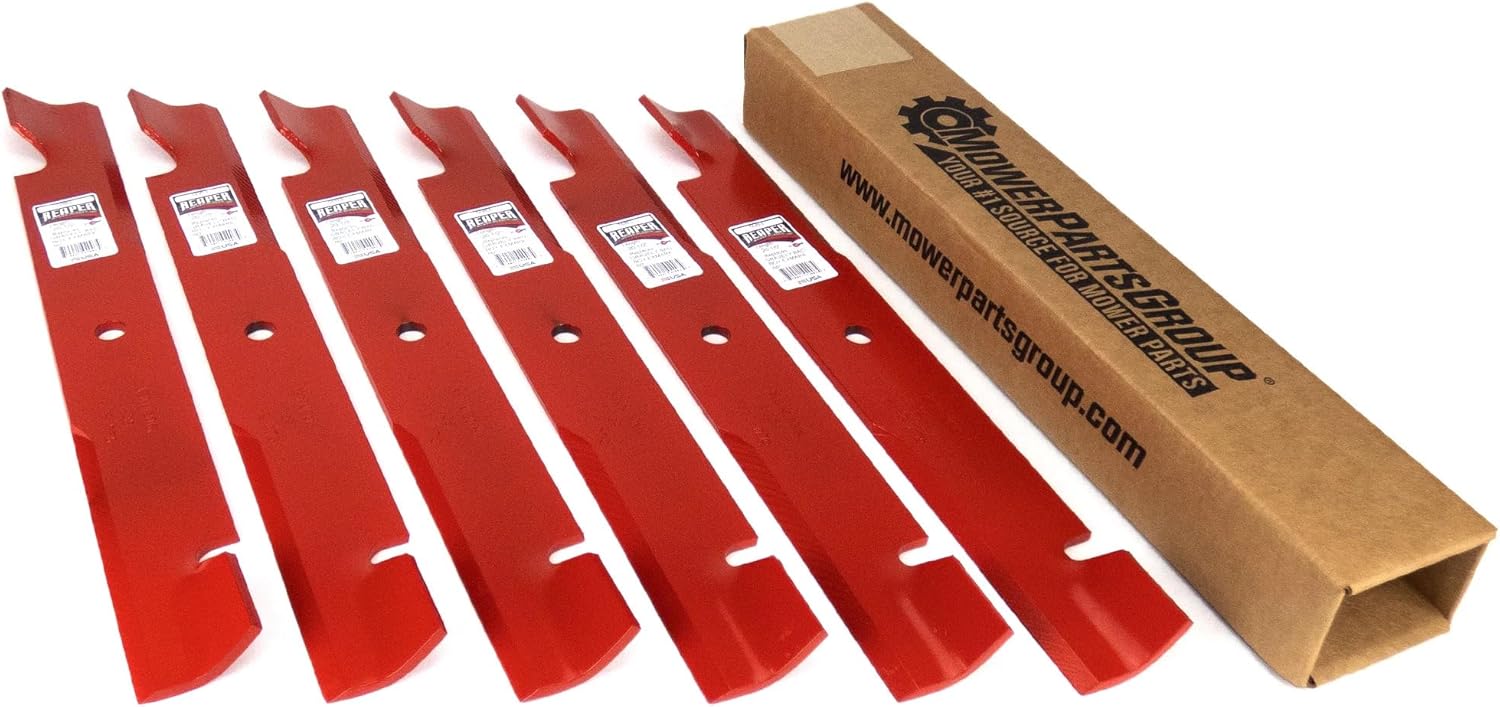
Choosing an exact match for your mower deck requires verifying blade length, center-hole configuration, and deck width rating. A common mistake is assuming that nominal deck width equals actual blade length. For example, a dedicated 16-inch electric unit such as the Greenworks corded or cordless mower utilizes a replacement blade measuring exactly 15.75 inches to ensure adequate tip clearance inside the housing. Multiplying blade length by the number of spindles on multi-blade decks explains why 42-inch riding mowers use two 21-inch blades rather than a single full-width bar.
Shopping for mower accessories online also requires filtering through confusing catalog results where personal grooming products share similar branding terms. Products like personal body trimmers frequently appear in search listings alongside heavy steel yard equipment, which can distract shoppers searching for genuine lawn tractor components. When evaluating replacement lawn mower blade costs, focus strictly on durable outdoor power equipment components built from forged or stamped steel. Ensure the listing explicitly references your exact mower model number, original equipment part number, or deck width before making a purchase.
Verifying Blade Balance and Edge Preparation
Many buyers wonder whether new mower blades come sharpened straight out of the package or if pre-installation grinding is necessary. Factory blades generally arrive with a working edge coated in protective paint or powder coat to prevent rust during shipping and storage. While this factory edge might feel slightly duller than a razor blade, it is intentionally ground with a durable thirty-degree bevel designed to withstand grass impact without chipping. You do not need to grind away the paint coating before mounting, as cutting grass will naturally polish the leading steel edge.
Before mounting any blade onto your mower spindle, testing its static balance prevents severe vibration and premature bearing wear. Universal metal blade balancers, such as step-cone zinc-alloy fixtures, allow you to place the blade horizontally on a center pin to check for level resting. If one side dips noticeably toward the workbench, the heavy end will generate substantial vibration when spinning at high speeds. Correcting a minor imbalance involves removing a small amount of steel from the back edge of the heavy side using a metal hand file.
Orienting the Blade Correctly for Aerodynamic Airflow
Installing a lawn mower blade upside down is one of the most frequent errors made during residential yard maintenance. A mower blade does not simply slice grass; it functions as a centrifugal fan that generates vertical suction to pull grass blades upright before cutting them. The sharp cutting edge must face forward in the direction of spindle rotation, while the curved aerodynamic lift wings must point upward toward the underside of the mower deck. If the blade is installed upside down, the dull back side of the wing strikes the grass and flattens turf against the soil.
Most reputable blade manufacturers stamp clear identification markings directly into the steel surface to help you identify the correct mounting side. Look for embossed text such as “BOTTOM,” “GRASS SIDE,” or specific part numbers, which are typically stamped on the face that must point directly toward the turf. If you are mounting a mulching blade with stepped cutting teeth, the curved relief vanes should point straight up into the dome of the cutting chamber. Verifying that the cutting bevel faces the proper direction of rotation ensures clean clipping expulsion through the discharge chute.
Fastening Hardware and Torquing to Manufacturer Specifications
Align the center hole of your replacement blade with the locator pins on the blade adapter, making sure the steel sits completely flat against the flange. Hold the blade firmly against the spindle with one gloved hand while threading the retaining bolt and washer assembly by hand into the shaft. Always turn the bolt several complete rotations by hand before applying a ratchet to ensure the threads engage cleanly and avoid cross-threading. If the hardware binds after only a single turn, back the fastener out immediately to inspect the threads for dirt or misaligned engagement.
Once the bolt is hand-tight, reposition your blade removal clamp or wooden block to lock the blade against rotation in the tightening direction. Tightening the spindle fastener to the exact torque specification listed in your mower operator manual ensures the assembly cannot vibrate loose during cutting. Most walk-behind push mowers require between 35 and 50 foot-pounds of torque, whereas commercial zero-turn spindles often demand 70 to 90 foot-pounds or more. Using a calibrated click-type torque wrench guarantees accurate clamping force without overstretching the bolt threads.
Post-Installation Checks and Initial Startup Verification
Before lowering the mower back onto its wheels, perform a manual clearance check to confirm unobstructed spindle rotation. With the spark plug wire or battery still completely disconnected, rotate the blade slowly by hand through a full 360-degree rotation. Listen for any metallic scraping sounds and verify that the blade tips maintain uniform clearance from the internal deck walls and discharge chute baffle. This rotation test confirms that the blade is seated squarely on its mounting pins rather than clamped at an angle across the spindle shoulder.
Lower the mower to a level, debris-free concrete surface such as a driveway before restoring power to the machine. Reconnect the spark plug wire or reinsert the safety key and battery pack into the powerhead compartment. Start the mower at low throttle or engagement speed while standing safely behind the operator control handle. Listen carefully for unusual rattles or severe vibration through the handlebars, as significant shaking indicates an unseated blade or an uncorrected balance issue.
Seasonal Replacement Intervals and Edge Maintenance
Developing a regular inspection schedule helps you determine when a blade can be resharpened and when complete replacement becomes mandatory. For typical suburban properties, inspecting the blade condition every twenty-five to thirty mowing hours or twice per cutting season keeps edges in optimal shape. Minor nicks caused by small gravel can be dressed out using a flat file, provided the original edge angle is maintained. However, if the lift wings have thinned significantly from abrasive soil or if the steel bar shows visible bends, sharpening is no longer safe.
Keeping an extra, ready-to-mount replacement blade on a garage shelf saves valuable weekend time when unexpected damage occurs mid-mow. Store spare mower blades in a dry space with a light coating of machine oil to prevent moisture and garage humidity from pitting the steel. When seasonal grass growth accelerates in early spring, having a balanced, factory-fresh blade ready for installation ensures your lawn receives clean, healthy cuts without interruption. Replacing your lawn mower blade systematically protects your turf, preserves equipment longevity, and delivers dependable mowing results all season long.




Write Your Review
No reviews yet. Be the first to share your experience!