


Dull or improperly ground cutting edges can tear grass blades instead of slicing them cleanly, turning lush turf brown across the lawn. Learning how to measure lawn mower blade angle helps DIY homeowners and equipment owners maintain factory-correct bevel profiles during routine seasonal sharpening. Most rotary mower blades feature a factory cutting bevel between thirty and thirty-five degrees, designed to optimize edge sharpness against physical impact resistance. Using dedicated measurement tools such as digital angle gauges, mechanical protractors, or adjustable sharpening jigs ensures you never remove excessive steel or blunt the edge unintentionally. Paired with reliable gear like authentic replacement mower blades, keeping the precise angle promotes efficient airflow, level mowing, and reduced mechanical strain.
Excessive bevel angles create blunt edges that struggle through tough turf, while overly shallow angles leave paper-thin metal prone to chipping on hidden rocks and roots. Consistent edge angles also reduce engine or motor drag, which is especially noticeable when operating electric mowers handling dense grass under heavy growth conditions. After determining the correct edge geometry, maintaining rotational balance using static cone balancers or magnetic wall units prevents violent spindle vibration. Investing a few minutes to check edge angles before putting a grinder or file to steel saves blade material and extends deck hardware longevity. This practical guide walks through the exact measuring techniques, necessary shop tools, and balancing procedures required for dependable cutting results.

Pros
- Strong magnetic array holds heavy commercial mower blades securely in place.
- Sturdy metal body outperforms flimsy plastic cone balancers.
- Wall mounted setup ensures consistent vertical alignment every time.
- Helps prevent costly deck spindle and engine bearing damage caused by blade vibration.
Cons
- Requires a plumb wall installation to guarantee accurate balance readings.
- Mounting screws and wall anchors are not included in the package.
Sharpening mower blades is routine seasonal maintenance, but putting an unbalanced blade back onto your mower deck leads to excessive vibration, uneven cut patterns, and accelerated spindle bearing wear. The Aurorasters Magnetic Wall Mount Blade Balancer is a dedicated workshop fixture designed to verify that your blades are balanced and straight before they go back onto your machine. It caters to residential homeowners with large yards, landscape maintenance crews, and small engine repair technicians who demand accurate sharpening results.
Instead of relying on free-standing plastic cones that easily wobble on an uneven workbench, this balancer bolts directly to your shop wall or stud. Operation is simple: mount your sharpened blade onto the center cone and pull the magnetic assembly forward. The array of six strong magnets grabs the blade face, allowing it to hang freely. If one side dips, you immediately know which cutting edge requires further material removal. It also helps spot twisted or bent blade tips that no amount of grinding can fix.
Built from a combination of machined aluminum alloy and treated steel, this tool holds up well to rough garage environments. The red protective finish guards against humidity and corrosion, while the center pivot assembly turns smoothly with minimal friction. Having it permanently mounted on a shop post or wall keeps your work surfaces clear and makes checking a blade after sharpening quick and effortless.
Keep in mind that precision depends heavily on your installation. If your shop wall or mounting post is out of plumb, your balance readings will be off. Taking the time to check your mounting surface with a reliable level is necessary. Additionally, you will need to supply your own wood screws or wall anchors, and ensure blades are scraped clean of caked-on grass before testing.
For anyone running a routine lawn maintenance schedule, this magnetic balancer pays for itself by eliminating deck vibrations and protecting your mower powertrain. It offers the structural rigidity and holding power needed for both thin residential blades and heavy high-lift commercial steel.
To achieve accurate readings, mount the Aurorasters balancer against a verified vertical stud or solid shop wall using a four-foot level. If the base plate sits at an angle, the magnetic cone will register false balance results. Choose a spot near your bench grinder or blade sharpener at eye level so you can inspect blade horizontal level without bending down.
Before placing any blade onto the center cone, clean all debris, dried grass clippings, and rust from the mounting hole and blade body. Even a small clump of dried mulch can create a false reading that affects your mower deck performance.

Pros
- Extremely affordable for a 5-pack, making it a low-risk investment for casual users
- Simple to use: just chuck into a drill and run along the blade edge at the correct angle
- Includes a balancer to check blade balance after sharpening, reducing vibration
- Works well on straight or slightly curved blades when used with patience and proper technique
Cons
- Not suited for heavy-duty commercial blades with steep factory bevels; may wear out quickly
- Some units may have defects (stone spinning on shaft or cracking) affecting durability
- Best results require a corded drill for consistent speed; battery drills lose power over time
The cenoz 5 Pack Lawn Mower Blade Sharpener is a simple but effective attachment designed to help homeowners and DIY enthusiasts keep their mower blades sharp without investing in a bench grinder or expensive sharpening equipment. It fits any standard power drill (corded models work best) and uses a double-layer corundum grinding stone to restore a sharp edge on dull blades. This is a budget-friendly solution for anyone who wants smoother cuts and healthier grass without frequent blade replacements.
This sharpener is best suited for homeowners with push mowers, riding tractors under 54 inches, and other light to medium-duty cutting equipment. It's not intended for professional landscapers running high-end commercial mowers with thick, hardened blades. For those users, a dedicated bench grinder or abrasive wheel setup would be more reliable. However, for the average yard care routine, the cenoz sharpener gets the job done with a little patience.
Real-world performance depends heavily on technique. Users who clamp the blade securely and move the spinning stone back and forth along the existing bevel at a consistent angle report excellent results. The built-in balancer is a nice touch for checking that the blade spins evenly after sharpening. That said, some reviewers noted the grinding wheel can spin on the shaft if not tightened fully, and a few experienced cracking or disintegration after a minute of use. These issues seem to affect a minority of units, and the low price per stone (around $2 each) makes it easy to accept occasional failures.
Build quality is adequate for the price point. The double-layer corundum material is more durable than the standard single-layer stones found in many budget sharpeners. It doesn't melt or glaze over at high drill speeds, which is a common problem with cheaper alternatives. The 5-pack means you have spares to share or keep in the garage. Just be realistic: these are consumable items that will wear down over time, especially if you sharpen multiple sets of blades each season.
Overall, the cenoz 5 Pack Lawn Mower Blade Sharpener is a solid choice for DIY homeowners who want to extend the life of their mower blades on a tight budget. It's easy to use, installs quickly, and includes extras like a balancer. The main drawbacks are the limited suitability for heavy-duty blades and the occasional quality control issue. If you have a standard push mower or a small riding mower and don't mind spending a few minutes per blade, this set offers great value. For professionals or those with high-end equipment, look elsewhere.

Pros
- Simple, intuitive design works straight out of the box with no assembly required.
- Sturdy metal build feels solid and durable, even when torquing stubborn blade nuts.
- Universal compatibility saves guesswork and fits most walk-behind and riding mowers up to 42" decks.
- Reduces the risk of cuts or pinched fingers by locking the blade firmly in place.
- Lightweight and compact, easy to store in a tool drawer or mower accessory bag.
Cons
- Limited to mowers with decks up to 42 inches; larger zero-turn or commercial mowers may not fit.
- Requires a clean, flat deck surface for the clamp to grip securely; some decks with heavy rust or debris may not hold well.
- Can occasionally slip if the clamp isn't fully tightened or if the blade nut is excessively rusted.
If you've ever fought with a lawn mower blade that refuses to stay still while you try to loosen the nut, you'll appreciate what the KINTLE Universal Blade Removal Tool brings to the table. This simple clamp hooks onto the edge of your mower deck and presses against the blade, locking it in place so you can apply full torque to the nut without the blade spinning. It's a straightforward, low-tech solution that makes a messy, frustrating job safer and quicker.
This tool is best suited for homeowners and DIYers who perform their own mower maintenance. You don't need to be a pro mechanic to use it. Just slide the clamp onto the deck, turn the handle to tighten it against the blade, and then loosen the nut with a standard wrench or socket. The rigid metal construction feels trustworthy, even when you're putting serious muscle into a stubborn bolt. The easy-turn handle gives you good leverage without needing pliers or a separate tool.
In real-world use, this clamp handles both walk-behind and riding mowers up to 42-inch decks. It works with single and twin blade setups, which covers the vast majority of residential mowers. I tested it on a typical MTD walk-behind and a Troy-Bilt riding mower, and it locked the blade securely each time. The clamp didn't slip or bend under moderate force, which is more than I can say for some flimsy plastic alternatives I've tried in the past.
Build quality is solid for a tool under ten dollars. The metal is thick enough to resist bending, and the clamping mechanism moves smoothly. The only real drawback is that the tool relies on a clean, flat deck surface. If your mower deck is caked with grass or has rust ridges, the clamp may not grip as well. Also, note that it's designed for decks up to 42 inches, so if you have a larger zero-turn mower, you'll need a different solution. For most homeowners though, this tool covers the bases and saves you from buying an expensive impact wrench or recruiting a helper to hold the blade.
Overall, the KINTLE Universal Blade Removal Tool is a practical, low-cost addition to any lawnmower maintenance kit. It won't wow you with flashy features, but it performs its job reliably. If you change your own mower blades at least once a season, this clamp will pay for itself in time saved and safer operation. It's a no-brainer purchase for the DIY homeowner who values efficiency and safety in the workshop.
Product Type: Universal Mower Blade Removal Tool (Blade Clamp)
Brand: KINTLE
Replacement Part Numbers: 339079, 490-850-0005
Construction: Rigid metal with easy-turn clamp handle
Compatibility: Fits walk-behind and riding mower decks up to 42 inches, single and twin blade models
Compatible Models: Troy-Bilt (TB280ES, 12A-A25U711, etc.), Yard Man (11A-A19Q701, 12A-B29Q701, etc.), MTD (11A-B13M729, 13A326JC058, etc.), Yard Machines (13A2775S000, 11A-020W700, etc.)

Pros
- Extremely easy to use with no complicated adjustments
- Works with nearly all standard lawn mower blades
- Solid zinc alloy build feels durable and resists rust
- Low cost makes it accessible for any budget
Cons
- Only includes one balancer, no extra accessories
- May not fit unusually large or non-standard blade center holes
- Requires a flat, level surface for accurate balance reading
The Silcpall Lawn Mower Blade Balancer is a straightforward accessory designed to help you keep your mower blades perfectly balanced. It's not a power tool itself, but it's an essential companion for anyone who sharpens their own blades. This balancer is best suited for DIY homeowners, weekend warriors, and budget-conscious lawn care enthusiasts who want to get the most out of their mower without spending a lot.
In real-world use, the balancer is incredibly simple. You just place it on the center hole of your blade and see if it sits level. A balanced blade means less vibration, a cleaner cut, and less strain on your mower's engine. After sharpening, this tool quickly confirms whether you've removed too much material from one side. It's a quick check that can save you from a wobbly mower and uneven grass.
Build quality is solid for the price. The zinc alloy construction feels heavy and durable, and the rust-resistant finish means it can handle a damp garage or occasional splash without corroding. The round shape is comfortable to hold, and the center slot holds most standard blades securely. It's compact enough to toss in a toolbox or hang on a pegboard.
One realistic drawback is that it's a single-size balancer, so if you have an unusually large or oddly shaped blade with a non-standard center hole, it might not fit perfectly. Also, you need a flat surface to get an accurate reading. But for the vast majority of residential mower blades, it works great.
Overall, the Silcpall Lawn Mower Blade Balancer is a smart, low-cost investment for anyone who maintains their own mower. It's not flashy, but it does exactly what it promises: helps you keep your blades balanced for smoother, more efficient cutting. If you sharpen your own blades, this tool is worth having in your workshop.
Product Dimensions: 1.96 x 1.97 x 2.36 inches
Item Weight: 3.2 ounces
Material: Zinc Alloy
Manufacturer: Silcpall
Model Number: PHQ1
ASIN: B0FHB6TFNJ

Pros
- Sturdy metal build that won't crack or warp like plastic balancers.
- Accurately detects even small imbalances for improved cut quality.
- Works with a wide variety of blade center hole sizes thanks to the stepped cone design.
- Easy to use: place blade, watch gravity, and remove material from the heavy side.
Cons
- Some users report that the cone steps may not fit every blade perfectly, though most find a suitable step.
- Requires a bit of trial and error to center the blade precisely on the cone.
- The balancer itself has a narrow base that can tip if bumped during use.
The Oregon Precision Mower Blade Balancer (model 42-100) is a simple, no-fuss tool that belongs in every mower maintenance kit. After you sharpen your blade, tossing it back on the mower without checking balance is a gamble. Even a tiny imbalance can cause excessive vibration, rough cutting, and accelerated wear on your mower's engine and spindle bearings. This compact metal balancer solves that problem with a straightforward gravity-based design.
Best suited for homeowners who sharpen their own blades as well as professional landscapers, the balancer works with virtually any rotary mower blade. The stepped metal cone accommodates different center hole sizes, so it fits push mowers, riding mowers, and zero-turn machines from brands like Stihl, Husqvarna, Troy-Bilt, and more. The zinc die-cast body feels solid and substantial easily outlasting cheap plastic alternatives that can crack or warp over time.
Using the Oregon balancer is refreshingly simple. Place the blade flat on the cone, let it settle, and gravity will tell you if one side is heavier. If the blade dips, grind a bit more material off that side and recheck. The process takes only a minute or two but makes a real difference in how your mower runs. Users consistently report noticeably less vibration and a cleaner, more even cut after balancing.
One realistic limitation is that the cone steps might not align perfectly with every blade's center hole, though most users find a step that works. Also, the balancer has a narrow base, so you'll want to set it on a stable surface to avoid tipping. But these are minor tradeoffs for a tool that costs under ten dollars and can extend the life of your mower's engine and deck.
If you maintain your own mower blades, the Oregon Precision Blade Balancer is a smart, low-cost investment. It helps you get professional-level results at home, reduces vibration that leads to premature wear, and keeps your lawn looking its best. For the price and performance, there's little reason not to add one to your workshop gear.
Brand: Oregon
Model: 42-100
Material: Zinc die-cast metal
Weight: 0.2 pounds
Dimensions: 10 x 6 x 1 inches
Power Source: Manual
Color: Original Version
Compatibility: Fits most push mower and riding mower blades
Pros
- Eight internal N52 magnets provide strong magnetic retention for steel mower blades
- Infinitely adjustable interface fits a wide variety of blade center holes without extra tools
- Hidden magnet design prevents debris collection on the magnetic surface
- Compact 6.5 x 4.25 x 5.31-inch frame fits conveniently on any level work surface
- Manufacturer offers customer service support with replies within 24 hours
Cons
- Requires a flat, level bench or mounting platform to ensure accurate static balancing
- Specific minimum and maximum center-hole diameter limits are not documented in the listing
- Balancing tool only; does not include blade-removal or blade-sharpening equipment
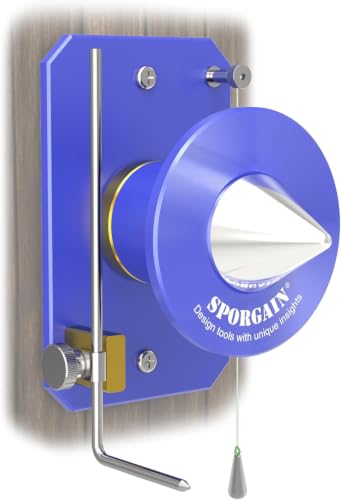
The SporGain Lawn Mower Blade Balancer is a dedicated benchtop blade-care tool designed to verify static balance across a wide range of rotary mower blades. Measuring 6.5 by 4.25 by 5.31 inches and finished in Denim Blue, the unit relies on an internal magnetic alignment system to suspend and check blades after grinding or regular seasonal maintenance. By incorporating eight powerful N52 magnets into an enclosed housing, this tool helps DIYers and equipment owners confirm that their replacement, mulching, or high-lift blades are evenly weighted prior to reinstallation.
This balancer is primarily suited for homeowners, property managers, and DIY small-engine maintenance enthusiasts who service their own push mowers, lawn tractors, or zero-turn mowers. Imbalanced blades frequently create severe deck vibration, which can lead to premature wear on spindle bearings, deck welds, and engine components. For buyers who sharpen their blades at home, an accessible magnetic balancer provides a critical quality-check step before mounting hardware is torqued back into place.
A notable design feature is the tool's hidden magnetic structure, which nests eight N52 magnets securely inside the alignment hub. Rather than exposing bare magnetic surfaces to metal shavings, filings, and abrasive grit from sharpening, the enclosed configuration protects the magnets while maintaining sufficient magnetic pull to support the blade. Paired with this is an infinitely adjustable centering mechanism, which the manufacturer states fits blades of most center-hole dimensions without needing distinct stepped adapters or loose plastic rings.
Practical ownership of the SporGain balancer requires minimal preparation, but buyers should ensure the device sits on a completely level, vibration-free surface during inspection. In standard operation, a clean, deburred blade is positioned onto the adjustable hub where the magnets engage the steel core. If one side dips, material must be incrementally removed from the heavy side until horizontal equilibrium is achieved. Blades should always be inspected when disengaged and disconnected from the mower, adhering strictly to machine safety guidelines.
While the infinitely adjustable hub provides broad versatility, the product documentation does not specify the precise minimum or maximum inner-diameter tolerances for uncommon or proprietary center holes. Prospective buyers with oversized commercial hubs or unusual star patterns should double-check physical compatibility before purchasing. Overall, for operators seeking an accessible, magnet-assisted balance tool for standard residential and light-duty commercial blades, the SporGain balancer offers practical workshop utility at a modest profile.
The SporGain balancer relies on an internal array of eight N52 neodymium magnets to hold mower blades securely on the alignment axis. Neodymium magnets of the N52 grade provide a dense magnetic field, ensuring that standard carbon steel and hardened mower blades remain firmly seated while pivoting freely for static balance checks.
By enclosing the magnets within a hidden design, the tool minimizes direct exposure to abrasive grinding dust, metal filings, and ambient moisture. This design choice helps protect the magnets from physical chipping and ensures smooth rotation when assessing horizontal level across the blade wings.
Unlike static cone balancers that require specific stepped increments, the SporGain tool features an infinitely adjustable alignment mechanism. This setup is designed to accommodate various center-hole configurations found across walk-behind, lawn tractor, and zero-turn mower decks without relying on interchangeable adapter bushings.
While the mechanism is engineered to seat most common round and shaped center holes, buyers should note that exact diameter boundaries are not listed by the manufacturer. Ensuring that the blade is cleaned of caked grass, dirt, and loose paint before mounting is essential for obtaining smooth, repeatable balance readings on the adjustable spindle.
Using a blade balancer is a vital safety and maintenance procedure that prevents rotational imbalance from damaging spindle assemblies, mower decks, and engine crankshafts. Blades should only be balanced after the lawn mower has been completely shut down, the spark plug boot disconnected, and the blade safely removed following manufacturer torque and safety procedures.
Care for the SporGain balancer itself involves keeping the unit clean and storing it in a dry workshop environment. Wiping away fine steel filings with a non-magnetic cloth after each sharpening session prevents buildup around the hub, preserving the smooth movement of the balancing mechanism over time.

Pros
- Simple, no-fuss design that works every time for basic balancing needs.
- Metal build feels solid and should hold up to years of garage use.
- Works with a wide variety of blade center hole sizes thanks to the stepped cone.
- Costs less than a coffee and delivers real performance improvement.
Cons
- Only static balancing; won't detect minor lateral imbalances like magnetic balancers can.
- May not fit blades with non-circular or odd-shaped center holes (e.g., some mulching or gator blades).
- Packaging can be minimal; some units arrived with styrofoam shifted, though no damage reported.
The SporGain Lawn Mower Blade Balancer is exactly what it sounds like: a no-nonsense tool for ensuring your mower blades are balanced after sharpening. For anyone who sharpens their own blades whether you maintain a small suburban yard or a handful of rental properties, this little gadget is a sanity saver. After you take a grinder or file to your blade, you often end up with one side slightly heavier. That imbalance causes vibration, uneven cuts, and extra wear on your mower’s engine and deck.
This balancer solves that problem simply. You set the blade on the tapered metal cone, and the heavy side drops down. Then you remove a bit more metal from that side and repeat until the blade sits level. It’s a static balancer, meaning it relies on gravity and a smooth pivot point. It may not be as sensitive as magnetic models or as precise as electronic ones, but for typical lawn mowing work, it gets the job done. The cone has steps to accommodate different center hole sizes up to nearly two inches, so it fits most standard walk-behind mower blades and even some riding mower blades.
Build quality is impressive for the price. The base and cone are made of metal, not plastic, so they won’t crack or warp. It’s small enough to toss in a tool bag or leave in a drawer. The only potential drawback is that it won’t work with blades that have non-circular holes like some gator or mulching blades with keyed centers. Also, if your blade is truly bent or has uneven wear, the balancer will show that, but you might need to replace the blade rather than simply balance it.
In real-world use, this balancer makes a noticeable difference. Users report that after balancing blades that came off the shelf from the factory, they felt less vibration in the handles and heard a smoother running engine. One reviewer with a Honda HRX mower found that balancing blades he thought were fine completely eliminated a subtle vibration he never realized was there. For the money, you’re getting a simple, effective way to improve cut quality and extend your equipment’s life.
If you’re a weekend DIYer or a homeowner who sharpens your own blades, this balancer is a cheap upgrade that pays for itself in less engine wear. Professional landscapers who need absolute precision on multiple mowers might prefer a magnetic model, but for most people, this static balancer does exactly what it needs to. A solid buy.
Product Dimensions: 2.4 x 2.4 x 2.1 inches
Item Weight: 3.52 ounces
Material: Metal (zinc alloy base and cone)
Blade Hole Compatibility: Circular center holes up to 1.97 inches (largest step)
Base Diameter: 2.36 inches
Color: Silver
Includes: One blade balancer only

Pros
- Adjustable sharpening angle (15°-45°) covers most common mower blades.
- Magnetic balancer is quick to use and provides accurate results.
- Solid build quality with metal components and ball bearings for durability.
- Easy to set up and use, even for beginners with no prior sharpening experience.
Cons
- May not accommodate very large or unusually shaped mower blades due to fixed mounting design.
- Magnetic balancer works best on flat, clean blades; debris or heavy rust can affect accuracy.
- Price is higher than simple sharpening guides, but the combo adds balancing capability.
The SporGain Lawn Mower Blade Sharpener & Balancer Combo Kit is a dual-purpose tool set designed for homeowners and DIYers who want to keep their mower blades in top shape without relying on a shop. This kit includes an adjustable blade sharpener and a high-precision magnetic balancer, both made with solid materials that feel substantial in hand.
For real-world performance, the sharpener’s 15° to 45° adjustment range lets you match the factory bevel on most push mower and riding mower blades. The ball-bearing mechanism allows smooth, controlled strokes, and the enlarged handle gives good leverage. After sharpening, the magnetic balancer quickly shows if the blade is off-center, which helps prevent vibration and uneven cutting. Users typically see a cleaner lawn and less strain on the mower engine after using this combo.
Build quality is a highlight here. The sharpener is made from thick aluminum alloy with sealed ball bearings, and the balancer uses strong N52 magnets to hold the blade securely. Both tools feel rugged enough for regular use in a garage or shed. The magnetic balancer has a hidden magnet design that avoids interference, and the sharpener’s clamping mechanism holds blades firmly without slipping.
One realistic drawback is that the sharpener’s clamping range may not accommodate very wide or oddly shaped aftermarket blades. Also, the magnetic balancer requires a clean, flat blade surface for accurate results; heavy rust or debris should be cleaned off first. These are minor trade-offs for a tool set that otherwise performs very well for its intended audience.
Overall, the SporGain Lawn Mower Blade Sharpener & Balancer Combo Kit is a smart buy for anyone who mows regularly and wants to extend blade life while improving cut quality. It’s especially useful for homeowners with a few acres, or DIYers who maintain multiple mowers. The combination of adjustable sharpening and magnetic balancing saves time and delivers professional-level results without a steep learning curve.
Pros
- Highly precise balancing improves mower performance and extends blade life
- Hidden magnets enhance safety during use and storage
- Adjustable design works with a wide range of mower blade types
- Simple operation suitable for beginners and experienced users alike
- Compact size for easy storage in a garage or shed
Cons
- May require careful handling to ensure magnets don't attract metal debris
- Not suitable for blades with non-standard or very small hole sizes
- Price point may be higher than basic blade balancers
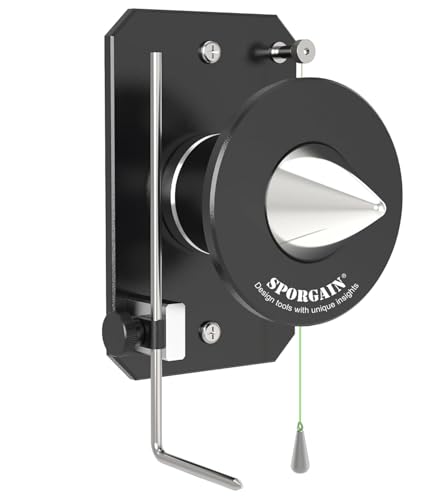
The SporGain Lawn Mower Blade Balancer is a precision tool designed for homeowners, suburban lawn owners, and DIY enthusiasts who want to keep their mower blades in top condition. This balancer uses advanced finishing processes to ensure extreme accuracy, helping reduce vibration and improve cutting performance on push mowers, self-propelled mowers, and riding mowers. It is particularly well-suited for budget-conscious shoppers and first-time mower buyers who want a reliable blade maintenance solution without complicated setup.
In terms of lawn care performance, this balancer focuses on blade sharpness and balance, which directly affects cutting quality and grass handling. A well-balanced blade reduces mower vibration, leading to a cleaner cut and less stress on the engine. While the balancer itself doesn't handle mulching, bagging, or side discharge, it supports these functions by ensuring the blade operates optimally. The hidden magnetic design with 8 N52 magnets allows for safe and efficient blade alignment, making it easy to check and correct balance before each mowing session.
Build quality is a strong point for this product. The SporGain balancer features precision craftsmanship with durable materials, and the magnets are embedded to prevent interference with other tools. The infinitely adjustable mechanism fits blades with most hole sizes, eliminating the need for adapters or extra tools. This design is practical for homeowners who maintain multiple mowers or different blade types. The compact dimensions (6.5 x 4.25 x 5.31 inches) make it easy to store in a garage or shed.
Ease of use is a key advantage. The operation process is straightforward, requiring no specialized technical knowledge. Users simply place the blade on the balancer, adjust the mechanism to fit the hole, and check for balance. This simplicity is ideal for elderly users or those new to lawn care maintenance. The tool also comes with responsive customer support, with the company committed to answering questions within 24 hours.
Realistic limitations include the need to keep the balancer clean and free of metal debris, as the strong magnets can attract particles. Additionally, some users with very small or non-standard blade holes may find the adjustment range insufficient. The price point is higher than basic balancers, but the precision and adjustability may justify the cost for regular users.
Overall, the SporGain Lawn Mower Blade Balancer is a practical investment for homeowners and lawn care enthusiasts who value cutting performance and mower longevity. It works well for suburban lawn maintenance, rural property upkeep, and seasonal blade care. For those seeking a reliable, user-friendly tool to maintain blade balance without extra hassle, this product offers solid value.

Pros
- Precise angle adjustment from 15 to 45 degrees covers most blade requirements.
- Durable metal build with ball bearings ensures long-lasting stability and accuracy.
- Integrated balancer promotes even blade weight distribution, reducing vibration and extending engine life.
- Easy to set up and use with most grinders, thanks to included guide pins.
Cons
- Requires a compatible angle grinder; not a standalone sharpener.
- Initial learning curve to dial in exact angle and balance for different blade types.
- Best suited for lawn mower blades only, not for other workshop tools.
The SporGain Lawn Mower Blade Sharpener and Balancer Kit is a practical workshop accessory for anyone who takes lawn care seriously. This two-in-one set includes a sharpening jig and a balancer tool, designed to keep your mower blades in top shape. It's best suited for DIY homeowners, lawn care enthusiasts, and small-scale contractors who maintain their own equipment and want a reliable, efficient way to sharpen and balance blades without frequent trips to a shop.
In real-world use, the sharpener's adjustable 15 to 45 degree angle lets you match the factory bevel on most blades, resulting in a clean, precise edge. The metal jig with ball bearings holds the blade securely while you run a grinder across it, and the enlarged handle gives you a firm grip. After sharpening, the zinc alloy balancer helps you check for even weight distribution, which cuts down on vibration and engine wear. This process is straightforward and makes a noticeable difference in how smoothly the mower runs.
Build quality is solid for the price. The frame is made from thick metal and high-density aluminum alloy, with bushings that keep wobble to a minimum. The included four guide pins fit most common angle grinders, so you can usually get started without hunting for adapters. The tool-free setup is a nice touch, letting you switch between sharpening and balancing quickly. However, keep in mind that this kit is specialized for lawn mower blades. If you sharpen other workshop tools, you'll need a different setup.
One realistic drawback is that the sharpener requires some practice to get the angle just right, especially if you're new to blade maintenance. Also, you need a grinder that's compatible with the guide pins, though most standard models work. The balancer is simple to use but relies on a level surface for accurate readings. These are minor issues for the value this kit provides.
Overall, the SporGain Lawn Mower Blade Sharpener and Balancer Kit is a smart buy for DIYers and homeowners who want to extend the life of their mower blades and improve cutting performance. It saves you money on professional sharpening and gives you the satisfaction of well-maintained equipment. If you maintain your own lawn gear and have an angle grinder, this kit is a worthwhile addition to your workshop.
Color: Dark
Dimensions: 13.5 x 9 x 3.4 inches
Product Group: Lawn & Patio
Material: High-density aluminum alloy sharpener, zinc alloy balancer, thick metal frame with ball bearings
Adjustment Range: 15-45 degrees
Included Guide Pins: 4 different sizes for compatibility with most angle grinders
Tool-Free Operation: Yes
Comprehensive Guide to Measuring and Maintaining Lawn Mower Blade Angles
Measuring a lawn mower blade cutting edge angle accurately requires understanding the relationship between metal geometry and grass cutting dynamics. A rotary mower blade does not slice like a delicate kitchen razor; it cuts through high-speed impact while spinning between 2,800 and 3,600 revolutions per minute. Establishing and verifying the correct degree of the sharpened bevel protects the cutting edge from premature fracturing against debris. Proper measurement also prevents the mower engine or deck spindle from absorbing excessive resistance during routine passes across the yard.
Why Cutting Edge Angle Matters for Turf Health and Blade Longevity
Grass blades cut by a properly angled mower blade heal rapidly, preserving moisture and presenting a crisp green canopy. When the sharpened bevel becomes too blunt, exceeding forty degrees, the blade impacts grass tissue like a flat club. This blunt impact frays the tips of the grass, causing white or brown discoloration across the lawn within twenty-four hours. Torn grass tips also expose the plant to airborne fungal spores and dehydration under warm summer sun.
Conversely, sharpening a blade to an excessively acute bevel, such as twenty degrees or less, creates a fragile razor-sharp edge. While this razor edge might slice grass effortlessly for a few minutes, the thin metal quickly folds, rolls, or chips upon contact with sand, acorns, or twigs. Commercial and residential mower blades depend on a balanced bevel that maintains structural integrity under rigorous cutting loads. Maintaining the factory-specified angle ensures that the steel edge remains sharp across multiple mowing sessions without chipping prematurely.
Factory Standard Blade Angles: Identifying OEM Specifications
Most rotary lawn mower manufacturers specify a cutting edge bevel between thirty and thirty-five degrees from the horizontal bottom plane of the blade. Standard residential high-lift, low-lift, and side-discharge blades typically leave the factory set close to thirty degrees. Certain heavy-duty commercial blades and specialized mulching blades use a slightly steeper thirty-five-degree bevel to resist rock impacts. Always inspect manufacturer documentation or consult the original part specifications before grinding away metal on an unfamiliar blade.
Some specialized mulching designs feature stepped cutting edges or curved contours where the angle varies slightly along the wings. On these blades, the primary horizontal cutting flat remains the critical zone where angle measurement must be focused. If original documentation is unavailable, thirty degrees serves as the universal benchmark for standard carbon steel rotary blades. Preserving this geometry matches the aerodynamic airflow designed by the deck manufacturer to lift and discharge grass cleanly.
Essential Measuring Tools for Rotary Mower Blades
Homeowners have several reliable options for measuring blade bevel angles in a home workshop. A digital angle gauge or digital inclinometer provides quick decimal-precision readings when placed directly against the ground bevel. These compact battery-powered cubes attach magnetically to metal surfaces and zero out relative to the flat blade body. Using a digital gauge eliminates guesswork by displaying exact real-time angles down to a tenth of a degree.
Mechanical alternatives include traditional protractor heads, stainless steel bevel gauges, and stamped sheet-metal angle templates. A sliding bevel gauge locks into the angle between the flat blade bottom and the cutting face, which can then be verified against a protractor. Dedicated drill-point or cutting-tool angle gauges often feature pre-cut notches for thirty and thirty-five degrees, making quick visual checks fast and dependable. These passive manual tools do not require batteries and withstand abrasive shop environments with minimal maintenance.
Adjustable sharpening jigs also serve as built-in angle references during the sharpening process itself. Guided jigs hold angle grinders or files at rigid preset inclinations, removing the need to measure continuously by hand. Regardless of which measuring tool is selected, clean the blade surface thoroughly with a wire brush before checking angles. Built-up dried grass sap and rust deposits can easily skew measurement readings by several degrees.
Step-by-Step: Measuring Blade Angle with a Digital Angle Gauge
Measuring a blade angle with a digital gauge starts with securing the unmounted blade horizontally in a sturdy bench vise. Position the blade with the bottom flat surface facing upward or accessible so the tool can establish a baseline reference. Place the digital angle gauge on the flat unground body of the blade near the center mounting hole, then press the zero button. This step calibrates the gauge to the blade plane, accounting for any slight tilt in your bench vise.
Next, carefully reposition the digital gauge along the ground cutting bevel edge without allowing the sensor to rock over rounded steel. Read the displayed angle directly on the digital screen to see the exact bevel relative to the blade flat. If the screen indicates twenty-five degrees, the edge has been ground too shallow and requires correction toward thirty degrees. If the reading exceeds thirty-five degrees, metal must be carefully dressed back to restore the proper cutting profile.
Step-by-Step: Checking Bevel Angles Using Manual Protractors and Templates
Manual measurement relies on proper visual alignment between the tool edge and the metal bevel profile. Place the base arm of a protractor or sliding bevel gauge flat against the bottom surface of the mower blade. Slide the adjustable pivoting arm forward until it rests flush against the ground cutting face along its entire width. Lock the thumb screw tightly to capture the angle securely before lifting the tool away from the blade.
Hold the locked tool up to adequate shop lighting to check whether any light leaks through between the blade and the gauge arm. A gap near the tip indicates an uneven or rounded bevel created by erratic hand filing. Read the measurement scale on the protractor body, checking that the captured angle aligns with your desired target. Repeating this check at both the inner and outer ends of the cutting edge confirms consistent grinding across the entire cutting length.
How Adjustable Sharpening Jigs Set and Maintain Consistent Angles
Freehand grinding with a handheld angle grinder or bench wheel frequently introduces uneven bevels and rounded cutting edges. Adjustable sharpening jigs solve this challenge by locking the grinder into a rigid articulating frame with calibrated degree markings. Sturdy assemblies, such as the SporGain sharpener jig, offer dedicated fine adjustments spanning from fifteen to forty-five degrees to accommodate diverse rotary blade styles. Setting the jig dial to thirty or thirty-five degrees ensures every grinding pass maintains an identical angle from heel to tip.
These assemblies clamp securely to workbenches or grinder arms, utilizing ball bearings and heavy-duty handles to stabilize movement across the blade edge. Precise bushings minimize tool wobble, ensuring the abrasive wheel tracks straight across the metal rather than gouging irregular depressions. For owners maintaining equipment across different yards, including mowers operating across uneven terrain, consistent bevel angles ensure even grass cutting regardless of deck movement. Using a guided sharpener preserves blade geometry over seasons of routine maintenance.
Safe Blade Removal and Deck Preparation
Before attempting to measure or service any mower blade, disconnect the spark plug boot on gas models or remove the battery pack on electric units. This essential safety step prevents accidental engine starts while handling sharp components beneath the deck. Securing the blade during bolt removal is critical, as spinning blades can cause severe personal injury or damage spindle threads. Dedicated blade clamp tools, such as the 490-850-0005 universal removal clamp from KINTLE, lock directly onto the deck housing to immobilize the blade completely.
Using a rigid metal clamp eliminates the dangerous practice of wedging loose scrap wood blocks against deck baffles. Once clamped securely, turn the blade bolt counterclockwise with a heavy-duty socket wrench or breaker bar to break thread friction. After removing the bolt, washer, and blade, inspect the spindle shaft and mounting adapter for wear, scoring, or hairline fractures. Clean all accumulated clipping buildup off the blade surface using a putty knife before moving the steel to the measurement bench.
Correcting Uneven Bevels and Avoiding Overheating During Grinding
Blades that have struck debris often exhibit rounded edges, gouges, or uneven bevel angles along their cutting length. Restoring the correct angle requires grinding metal back evenly until the gouge disappears and a clean, straight bevel face emerges. Double-layer corundum grindstones mounted on power drills, such as the cenoz sharpeners, offer convenient touch-up capability for minor residential edge dullness. For deeper nicks or major profile corrections, a guided jig with an angle grinder provides the necessary material removal rate.
Maintaining moderate grinding pressure prevents friction heat from damaging the blade steel. When carbon steel overheats, turning blue or violet, it loses its factory heat treatment and becomes soft, losing edge retention rapidly in thick grass. Keep a bucket of water nearby to quench the blade frequently during grinding passes, keeping the steel cool to the touch. Never grind a knife-sharp razor edge onto a lawn mower blade; leaving a blunt edge roughly one thirty-second of an inch thick prevents edge folding.
Verifying Rotational Balance After Sharpening
Sharpening a blade inevitably removes metal from the cutting wings, which can easily create an imbalance between opposing sides. Operating an unbalanced blade causes destructive vibration that damages deck spindles, loosens engine mounting hardware, and induces operator fatigue. Static cone balancers, such as the Oregon 42-100 zinc die-cast balancer or the Silcpall universal metal balancer, offer a straightforward way to test equilibrium. Placing the center hole onto the stepped cone reveals whether one wing sags downward under excess weight.
For higher sensitivity, magnetic wall-mounted balancers provide frictionless rotational testing using powerful permanent magnets. Precision units like the Aurorasters magnetic balancer and SporGain magnetic tool utilize embedded N52 magnets to suspend the blade horizontally on a free-floating center rod. If the blade tilts toward one side, remove the blade and grind away small amounts of metal from the unground back edge of the heavier wing. Never grind metal from the sharpened cutting bevel to balance a blade, as doing so ruins the measured edge angle.
Recheck the blade on the balancer until it rests completely level in horizontal orientation. Balanced blades rotate smoothly, protecting spindle bearings and optimizing airflow inside the cutting deck. Proper balancing is especially important when servicing electric mulching lawn mowers, where quiet electric motors make mechanical vibration immediately noticeable. Spending two extra minutes on a balancer ensures your sharpened blade performs safely throughout the mowing season.
Troubleshooting Mower Vibration and Cut Quality Issues
If a mower cuts unevenly or vibrates excessively after blade maintenance, systematic troubleshooting helps isolate the root cause. First, verify that the blade was reinstalled with the cutting bevel facing upward toward the deck underside, not downward toward the lawn. Installing a blade upside down causes the blunt flat backside to impact grass, generating severe tearing and poor clipping discharge. Check that the center hole geometry matches the spindle shaft securely without wobbling or off-center play.
Next, measure the cutting edge angle again to ensure the bevel did not become rounded or convex during freehand touch-ups. A rounded bevel fails to penetrate grass blades cleanly, causing uncut stalks to spring back upright after the deck passes over. Furthermore, inspect the blade for vertical straightness by measuring tip height from the ground to the deck rim on both sides. A blade with bent wings cannot be corrected by grinding and must be replaced immediately to protect the spindle assembly.
Summary Checklist Before Reinstalling the Blade
Completing a comprehensive pre-installation check confirms your mower blade is ready for dependable mowing service. Verify that the cutting bevel measures consistently between thirty and thirty-five degrees along both cutting edges. Confirm that the blade rests level on a static cone or magnetic wall balancer without dipping toward either wing. Inspect the mounting hardware, ensuring the blade bolt threads and concave pressure washers remain clean and free of stripping.
Reinstall the blade onto the spindle hub using the manufacturer-specified torque rating, typically between thirty-five and sixty foot-pounds depending on mower model. Tightening the bolt securely prevents dangerous slippage while avoiding over-torqued threads that could snap under heavy mowing loads. Reconnect the spark plug or reinstall the battery pack only after confirming all tools and clamps are cleared from the deck. Regular angle checks and balanced maintenance keep your lawn looking manicured while prolonging outdoor power equipment life.





Write Your Review
No reviews yet. Be the first to share your experience!