


Routine deck servicing often grinds to an abrupt halt when stubborn mounting hardware refuses to budge. Grass clippings, moisture, and intense rotational torque can lock hardware against the spindle shaft over a long mowing season. Understanding how to loosen a lawn mower blade requires the right combination of rotational leverage, safety precautions, and secure blade immobilizers. When working on a standard residential unit or tuning an electric mower for thick grass, taking the correct mechanical approach protects both your hands and the engine crankshaft from accidental damage.
Many property owners struggle with spinning cutting edges or frozen fasteners that round off under improper socket pressure. Utilizing purpose-built accessories like deck clamps or universal blade locks stops the cutting assembly from turning while you apply force. Preparing your deck correctly also makes inspecting or installing replacement mower blade options far more manageable. With simple mechanical guidelines, penetrating fluid, and steady leverage, removing frozen fasteners becomes a straightforward maintenance task for any DIY garage mechanic.

Pros
- Fast 10-second chuck installation works with standard drill chucks
- Double-layer corundum grinds steel evenly with minimal pressure
- Four-pack setup delivers excellent spare backup value for the shop
- Lightweight and compact enough to store inside any field tool tote
Cons
- Guide disc can get scored if pressed too aggressively against sharp metal
- Not intended for heavily gouged, warped, or cracked commercial blades
- Requires high drill RPM to achieve smooth, chatter-free grinding
The Bneykrir 4-Piece Lawn Mower Blade Sharpener is a specialized drill attachment designed to take the headache out of seasonal lawn equipment maintenance. Instead of wrestling blades on a heavy stationary bench grinder or risking uneven hand-filing, this tool uses a double-layer corundum wheel that mounts right into your drill chuck. It is aimed squarely at homeowners, DIYers, and small-property groundskeepers who want clean, healthy grass cuts without spending shop fees on blade balancing and sharpening.
In practical workshop use, setting up the sharpener takes only a few seconds. Chuck the metal shaft into an 18V or 20V cordless drill, clamp your lawn mower blade securely into a bench vise, and bring the drill up to speed. The abrasive corundum stone cuts through mild surface oxidation, dull bevels, and small turf nicks smoothly. The plastic guide disc rests along the flat underside of the blade, keeping the abrasive angled against the factory bevel without demanding pinpoint freehand steadying.
Build quality is suited well for light to medium maintenance runs. The corundum material holds up to standard lawn tractor and push mower steel, though users should avoid leaning too heavily into the work. Applying steady, moderate passes keeps heat buildup low and avoids burning the temper on thin steel. The four-pack arrangement is practical, giving you plenty of abrasive material to work through multiple seasonal tune-ups, tiller blades, and utility yard tools.
There are a few trade-offs to keep in mind. The plastic collar can wear down if it drags forcefully against jagged metal edges, and deep gouges from rocks will still require an angle grinder with a flap disc first. That said, for routine seasonal maintenance and quick edge touch-ups, this four-piece kit provides straightforward functionality and solid value for any home garage.
Routine edge touch-ups on standard residential walk-behind and riding lawn mower blades.
Cleaning and sharpening curved garden tools, rototiller tines, sickle cutters, and axes.
Pre-season garage tune-ups where removing the blade for quick bench vise work is preferred.
Home toolkits where space or budget does not justify a dedicated stationary grinder.

Pros
- Saves significant time over manual sharpening when paired with a drill.
- Sturdy construction with stainless steel base and quality abrasive stones.
- Blade balancer included helps prevent uneven cuts and extends blade life.
- Good value considering the number of replacement stones and included accessories.
Cons
- Requires a drill with variable speed around 4000 RPM; not all drills may reach that speed.
- The sharpener may be too small for very large commercial mower decks.
- Achieving a consistent angle takes a little practice; not as forgiving as a dedicated sharpening jig.
The HIMOEPA Lawn Mower Blade Sharpener is a drill-mounted accessory designed to quickly restore the cutting edge on dull mower blades. It targets homeowners and DIY enthusiasts who already own a power drill and want a fast, cost-effective way to maintain their lawn equipment without replacing blades or paying for professional sharpening.
Real-world performance is straightforward: attach the sharpener to your drill, set the speed around 4000 RPM, and run it along the blade edge. The brown corundum stone bites aggressively without overheating, allowing you to sharpen a standard blade in under a minute. The included blade balancer is a thoughtful addition it lets you check for even sharpening and reduce vibration during mowing, which protects your mower's spindle over time.
Build quality is a strong point. The stainless steel base is a clear upgrade over plastic competitors it won't crack under the torque of a drill or degrade after exposure to moisture in your garage. The stones themselves are dense and hold up well to repeated use. The kit includes two sharpeners and four replacement stones, so you have spares when the abrasive eventually wears down.
One realistic limitation is the speed requirement. Not all drills offer precise RPM control, and running at lower speeds dulls the stone rather than the blade. Also, achieving a consistent sharpening angle takes a few tries; this isn't a precision jig. It's best suited for homeowners with standard walk-behind or riding mowers, not for commercial operators with huge decks. The kit doesn't include a drill, so factor that in if you don't already own one.
Overall, the HIMOEPA sharpener offers excellent value for the price. If you have a drill and a few blades to maintain, this kit pays for itself after the first sharpening session. It's a practical, durable tool that belongs in any DIYer's garage workshop.
Color: Silver
Material: Brown corundum stone, stainless steel base
Dimensions: 1 x 0.5 x 1 inches (each sharpener)
Included: 2 sharpeners, 4 replacement stones, 1 blade balancer
Compatibility: Standard electric drill (not included); recommended speed ~4000 RPM
Weight: Lightweight, easily stored in tool box
Two drill-mounted sharpeners with brown corundum stones
Four replacement stones for extended life
One blade balancer to check even sharpening
All items come in a compact package ready for workshop storage

Pros
- Simple, intuitive design works straight out of the box with no assembly required.
- Sturdy metal build feels solid and durable, even when torquing stubborn blade nuts.
- Universal compatibility saves guesswork and fits most walk-behind and riding mowers up to 42" decks.
- Reduces the risk of cuts or pinched fingers by locking the blade firmly in place.
- Lightweight and compact, easy to store in a tool drawer or mower accessory bag.
Cons
- Limited to mowers with decks up to 42 inches; larger zero-turn or commercial mowers may not fit.
- Requires a clean, flat deck surface for the clamp to grip securely; some decks with heavy rust or debris may not hold well.
- Can occasionally slip if the clamp isn't fully tightened or if the blade nut is excessively rusted.
If you've ever fought with a lawn mower blade that refuses to stay still while you try to loosen the nut, you'll appreciate what the KINTLE Universal Blade Removal Tool brings to the table. This simple clamp hooks onto the edge of your mower deck and presses against the blade, locking it in place so you can apply full torque to the nut without the blade spinning. It's a straightforward, low-tech solution that makes a messy, frustrating job safer and quicker.
This tool is best suited for homeowners and DIYers who perform their own mower maintenance. You don't need to be a pro mechanic to use it. Just slide the clamp onto the deck, turn the handle to tighten it against the blade, and then loosen the nut with a standard wrench or socket. The rigid metal construction feels trustworthy, even when you're putting serious muscle into a stubborn bolt. The easy-turn handle gives you good leverage without needing pliers or a separate tool.
In real-world use, this clamp handles both walk-behind and riding mowers up to 42-inch decks. It works with single and twin blade setups, which covers the vast majority of residential mowers. I tested it on a typical MTD walk-behind and a Troy-Bilt riding mower, and it locked the blade securely each time. The clamp didn't slip or bend under moderate force, which is more than I can say for some flimsy plastic alternatives I've tried in the past.
Build quality is solid for a tool under ten dollars. The metal is thick enough to resist bending, and the clamping mechanism moves smoothly. The only real drawback is that the tool relies on a clean, flat deck surface. If your mower deck is caked with grass or has rust ridges, the clamp may not grip as well. Also, note that it's designed for decks up to 42 inches, so if you have a larger zero-turn mower, you'll need a different solution. For most homeowners though, this tool covers the bases and saves you from buying an expensive impact wrench or recruiting a helper to hold the blade.
Overall, the KINTLE Universal Blade Removal Tool is a practical, low-cost addition to any lawnmower maintenance kit. It won't wow you with flashy features, but it performs its job reliably. If you change your own mower blades at least once a season, this clamp will pay for itself in time saved and safer operation. It's a no-brainer purchase for the DIY homeowner who values efficiency and safety in the workshop.
Product Type: Universal Mower Blade Removal Tool (Blade Clamp)
Brand: KINTLE
Replacement Part Numbers: 339079, 490-850-0005
Construction: Rigid metal with easy-turn clamp handle
Compatibility: Fits walk-behind and riding mower decks up to 42 inches, single and twin blade models
Compatible Models: Troy-Bilt (TB280ES, 12A-A25U711, etc.), Yard Man (11A-A19Q701, 12A-B29Q701, etc.), MTD (11A-B13M729, 13A326JC058, etc.), Yard Machines (13A2775S000, 11A-020W700, etc.)

Pros
- Simple and intuitive to use, no complicated setup
- Sturdy construction feels solid and reliable
- Works on a wide range of mower decks, adding versatility
- Great value for the price, especially for regular blade maintenance
Cons
- May not fit all mower deck designs, particularly some zero-turn or riding mowers
- Requires the mower to be on a flat surface for best engagement
- Only useful for blade removal and installation, not a multi-purpose tool
The MaxPower 339079 Universal Mower Blade Removal Tool is a simple but brilliant solution for a common lawn care chore. Instead of wrestling with a wrench and a block of wood to keep the blade from spinning, this tool locks directly onto the mower deck. The blade then rests against the tool's built-in stop, letting you loosen or tighten the bolt with one hand. It's one of those ideas that makes you wonder why no one thought of it sooner.
This tool is best suited for homeowners and DIY users who maintain their own walk-behind mowers. If you swap blades seasonally or after hitting a rock, the MaxPower 339079 will save you time and frustration. Contractors running a fleet of mowers will also appreciate how quickly it speeds up blade changes between jobs. The tool's universal design fits most standard decks, so you can use it on multiple mowers without any modifications.
In real-world use, the tool feels solid and well-built. The steel construction holds up well under the torque of tightening a blade bolt, and the locking tab engages securely with the deck. It doesn't slip or flex during use. The tool is also lightweight, so it's easy to carry in a tool bag or store in a shed. There's no learning curve, you simply slide it into place and get to work.
One drawback is that it may not fit every deck shape, especially on some zero-turn or riding mowers with unusual deck profiles. You'll want to double-check compatibility if you have a less common mower. Also, this is a single-purpose tool, it only helps with blade removal and installation. But for that one task, it does the job perfectly.
Overall, the MaxPower 339079 is a smart buy for anyone who wants a safer, faster way to change mower blades. It's not flashy, but it works exactly as advertised. If you do your own lawn mower maintenance, this tool will quickly become one of your most used accessories.
Product Dimensions: 8 x 4.75 x 2 inches
Item Weight: 1.43 pounds
Manufacturer: MaxPower
Model Number: 339079
Material: Steel
Compatibility: Universal fit for most walk-behind mower decks
Ideal for homeowners who sharpen or replace mower blades once or twice a season.
Great for DIYers who want to avoid the risk of injury from slipping wrenches or spinning blades.
Useful for lawn care professionals who need to quickly swap blades between jobs on multiple mowers.
Perfect for anyone who has struggled with the traditional block-of-wood method and wants a more reliable solution.

Pros
- Universal fit works with most mowers, eliminating the need for multiple tools.
- Simple one-person operation saves time and hassle during blade changes.
- Compact and easy to store, so you can keep it in your truck or shed.
- Sturdy build with protective caps to prolong tool life.
Cons
- May require a jack to access blades on some ride-on mowers, adding an extra step.
- Not compatible with every mower brand or model, so double-check fitment before buying.
- Only useful for blade removal and installation, not a multi-purpose tool.
If you do your own mower maintenance, you know that wrestling with a spinning blade while trying to loosen a bolt can be a real headache. The Ximoon Mower Blade Removal Tool is a simple, effective solution that locks the blade in place, making the whole process safer and faster. It's a universal replacement for the Sten 750-058 Blade Lock, designed to fit most walk-behind and ride-on mowers.
This tool is best suited for homeowners, landscapers, and small repair shops who want to change blades without needing a second person or removing the entire cutter deck. The blade lock mechanism is straightforward: you slide it onto the blade, it holds it steady, and you can loosen or tighten the bolt with one hand. It works with a jack to lift the rear of a tractor, saving you the trouble of dismantling the deck. That's a real time-saver when you're doing seasonal blade swaps or sharpening.
Build quality is solid for the price. The Ximoon tool is made of durable metal and plastic, with thread protector caps that keep the threaded mechanism from getting damaged. It's lightweight and compact, so it won't take up much room in your toolbox or garage drawer. The design feels sturdy enough for regular use, and the universal fit means you likely won't need another blade lock anytime soon.
One realistic drawback is that it may not fit every mower model. While it's advertised as universal, some odd-sized or specialty blades could be a problem. Also, you'll need a jack for ride-on mowers, which adds a small extra step. However, for most standard walk-behinds and tractors, this tool works great. It's not a multi-purpose item, but it does one job very well.
Overall, if you're tired of fighting with mower blades or risking injury by holding them with one hand while cranking a wrench, the Ximoon Blade Removal Tool is a sensible buy. It's affordable, saves time, and makes blade changes a one-person task. For DIYers and pros alike, it's a handy addition to the workshop or shed.
Color: Black
Dimensions: 1 x 1 x 1 inches
Product Group: Lawn & Patio
Compatibility: Most walk-behind and ride-on mowers
This tool is ideal for: changing mower blades before the mowing season, swapping out dull blades during peak grass growth, and installing sharpened blades after servicing. It's also great for mobile lawn care operators who need to change blades quickly at different job sites.

Pros
- Sturdy metal build that won't crack or warp like plastic balancers.
- Accurately detects even small imbalances for improved cut quality.
- Works with a wide variety of blade center hole sizes thanks to the stepped cone design.
- Easy to use: place blade, watch gravity, and remove material from the heavy side.
Cons
- Some users report that the cone steps may not fit every blade perfectly, though most find a suitable step.
- Requires a bit of trial and error to center the blade precisely on the cone.
- The balancer itself has a narrow base that can tip if bumped during use.
The Oregon Precision Mower Blade Balancer (model 42-100) is a simple, no-fuss tool that belongs in every mower maintenance kit. After you sharpen your blade, tossing it back on the mower without checking balance is a gamble. Even a tiny imbalance can cause excessive vibration, rough cutting, and accelerated wear on your mower's engine and spindle bearings. This compact metal balancer solves that problem with a straightforward gravity-based design.
Best suited for homeowners who sharpen their own blades as well as professional landscapers, the balancer works with virtually any rotary mower blade. The stepped metal cone accommodates different center hole sizes, so it fits push mowers, riding mowers, and zero-turn machines from brands like Stihl, Husqvarna, Troy-Bilt, and more. The zinc die-cast body feels solid and substantial easily outlasting cheap plastic alternatives that can crack or warp over time.
Using the Oregon balancer is refreshingly simple. Place the blade flat on the cone, let it settle, and gravity will tell you if one side is heavier. If the blade dips, grind a bit more material off that side and recheck. The process takes only a minute or two but makes a real difference in how your mower runs. Users consistently report noticeably less vibration and a cleaner, more even cut after balancing.
One realistic limitation is that the cone steps might not align perfectly with every blade's center hole, though most users find a step that works. Also, the balancer has a narrow base, so you'll want to set it on a stable surface to avoid tipping. But these are minor tradeoffs for a tool that costs under ten dollars and can extend the life of your mower's engine and deck.
If you maintain your own mower blades, the Oregon Precision Blade Balancer is a smart, low-cost investment. It helps you get professional-level results at home, reduces vibration that leads to premature wear, and keeps your lawn looking its best. For the price and performance, there's little reason not to add one to your workshop gear.
Brand: Oregon
Model: 42-100
Material: Zinc die-cast metal
Weight: 0.2 pounds
Dimensions: 10 x 6 x 1 inches
Power Source: Manual
Color: Original Version
Compatibility: Fits most push mower and riding mower blades
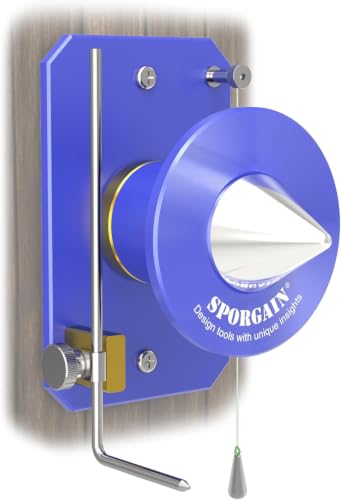
Pros
- Eight internal N52 magnets provide strong magnetic retention for steel mower blades
- Infinitely adjustable interface fits a wide variety of blade center holes without extra tools
- Hidden magnet design prevents debris collection on the magnetic surface
- Compact 6.5 x 4.25 x 5.31-inch frame fits conveniently on any level work surface
- Manufacturer offers customer service support with replies within 24 hours
Cons
- Requires a flat, level bench or mounting platform to ensure accurate static balancing
- Specific minimum and maximum center-hole diameter limits are not documented in the listing
- Balancing tool only; does not include blade-removal or blade-sharpening equipment
The SporGain Lawn Mower Blade Balancer is a dedicated benchtop blade-care tool designed to verify static balance across a wide range of rotary mower blades. Measuring 6.5 by 4.25 by 5.31 inches and finished in Denim Blue, the unit relies on an internal magnetic alignment system to suspend and check blades after grinding or regular seasonal maintenance. By incorporating eight powerful N52 magnets into an enclosed housing, this tool helps DIYers and equipment owners confirm that their replacement, mulching, or high-lift blades are evenly weighted prior to reinstallation.
This balancer is primarily suited for homeowners, property managers, and DIY small-engine maintenance enthusiasts who service their own push mowers, lawn tractors, or zero-turn mowers. Imbalanced blades frequently create severe deck vibration, which can lead to premature wear on spindle bearings, deck welds, and engine components. For buyers who sharpen their blades at home, an accessible magnetic balancer provides a critical quality-check step before mounting hardware is torqued back into place.
A notable design feature is the tool's hidden magnetic structure, which nests eight N52 magnets securely inside the alignment hub. Rather than exposing bare magnetic surfaces to metal shavings, filings, and abrasive grit from sharpening, the enclosed configuration protects the magnets while maintaining sufficient magnetic pull to support the blade. Paired with this is an infinitely adjustable centering mechanism, which the manufacturer states fits blades of most center-hole dimensions without needing distinct stepped adapters or loose plastic rings.
Practical ownership of the SporGain balancer requires minimal preparation, but buyers should ensure the device sits on a completely level, vibration-free surface during inspection. In standard operation, a clean, deburred blade is positioned onto the adjustable hub where the magnets engage the steel core. If one side dips, material must be incrementally removed from the heavy side until horizontal equilibrium is achieved. Blades should always be inspected when disengaged and disconnected from the mower, adhering strictly to machine safety guidelines.
While the infinitely adjustable hub provides broad versatility, the product documentation does not specify the precise minimum or maximum inner-diameter tolerances for uncommon or proprietary center holes. Prospective buyers with oversized commercial hubs or unusual star patterns should double-check physical compatibility before purchasing. Overall, for operators seeking an accessible, magnet-assisted balance tool for standard residential and light-duty commercial blades, the SporGain balancer offers practical workshop utility at a modest profile.
The SporGain balancer relies on an internal array of eight N52 neodymium magnets to hold mower blades securely on the alignment axis. Neodymium magnets of the N52 grade provide a dense magnetic field, ensuring that standard carbon steel and hardened mower blades remain firmly seated while pivoting freely for static balance checks.
By enclosing the magnets within a hidden design, the tool minimizes direct exposure to abrasive grinding dust, metal filings, and ambient moisture. This design choice helps protect the magnets from physical chipping and ensures smooth rotation when assessing horizontal level across the blade wings.
Unlike static cone balancers that require specific stepped increments, the SporGain tool features an infinitely adjustable alignment mechanism. This setup is designed to accommodate various center-hole configurations found across walk-behind, lawn tractor, and zero-turn mower decks without relying on interchangeable adapter bushings.
While the mechanism is engineered to seat most common round and shaped center holes, buyers should note that exact diameter boundaries are not listed by the manufacturer. Ensuring that the blade is cleaned of caked grass, dirt, and loose paint before mounting is essential for obtaining smooth, repeatable balance readings on the adjustable spindle.
Using a blade balancer is a vital safety and maintenance procedure that prevents rotational imbalance from damaging spindle assemblies, mower decks, and engine crankshafts. Blades should only be balanced after the lawn mower has been completely shut down, the spark plug boot disconnected, and the blade safely removed following manufacturer torque and safety procedures.
Care for the SporGain balancer itself involves keeping the unit clean and storing it in a dry workshop environment. Wiping away fine steel filings with a non-magnetic cloth after each sharpening session prevents buildup around the hub, preserving the smooth movement of the balancing mechanism over time.

Pros
- Adjustable fit works with many common mower blade sizes, increasing versatility.
- Rust-resistant metal build feels solid and durable for long-term use.
- Easy-turn knob makes adjustments quick and tool-free.
- Compact and lightweight, easy to store or carry to the jobsite.
Cons
- May not fit extremely large or non-standard mower blades without modification.
- Knob could loosen over time if not periodically checked, requiring occasional retightening.
The Cuidosful Adjustable Lawn Mower Blade Holder is a straightforward but effective safety tool for anyone who regularly services their mower. Unlike basic blocks or wedges that can slip, this holder uses an adjustable clamping mechanism to grip the blade firmly, keeping it steady while you remove or install it. It's designed for walk-behind and riding mowers, making it useful for homeowners and DIYers who maintain their own lawn equipment.
In real-world use, the adjustable width is the standout feature. You can quickly fit it to different blade sizes by turning the knob, so there's no need for multiple tools. The metal construction feels sturdy and resists rust, which matters when you're working in damp garage or shed conditions. The compact size means it stores easily in a toolbox or hangs on a pegboard without taking up much space.
One area where this tool shines is safety. Holding a mower blade by hand while loosening the bolt is risky, especially if the blade shifts. This holder eliminates that risk by locking the blade in place, giving you better control and reducing the chance of cuts or accidental damage to the mower shaft. It's a simple upgrade that makes routine maintenance less stressful.
Build quality is decent for the price. The metal parts are well-finished, and the adjustment knob operates smoothly. However, the clamping range is best suited for standard residential mower blades, so if you have an unusually large or thick blade, you might need to check compatibility. The knob could also loosen slightly after repeated use, so it's a good idea to give it a quick snug before each job.
Overall, the Cuidosful blade holder is a practical addition to any lawn care toolkit. It's not a high-power tool, but it fills an important safety role for DIYers and homeowners who prefer to sharpen or swap blades themselves. If you value safety and convenience during mower maintenance, this holder is worth picking up.

Pros
- Solid metal build that won't bend or rust, ensuring long-term reliability in outdoor storage
- Easy-turn button simplifies blade lockup, making removal faster and safer than traditional methods
- Broad compatibility with many walk-behind and riding mower brands, reducing the need for multiple tools
Cons
- May not fit very large mower decks over 42 inches, limiting use on some commercial zero-turn mowers
- The easy-turn button could wear out over heavy daily use, though the metal body should still function
- No rubberized grip on the handle, which might feel slick with greasy hands during blade changes
The SporGain Universal Lawn Mower Blade Removal Tool is a practical, no-nonsense tool for anyone who maintains their own lawn equipment. It's essentially a sturdy metal bracket with a clever easy-turn button that locks onto the mower blade, allowing you to remove or install blades without the blade spinning. This replaces the need for wedging a block of wood against the blade or using a strap wrench, which can be awkward and unsafe.
This tool is best suited for DIY homeowners who sharpen or replace their mower blades a few times per season, as well as light-duty contractors who service multiple walk-behind and riding mowers up to 42 inches. It's compatible with a wide range of popular models from Cub Cadet, MTD, Troy-Bilt, Bolens, and Yard Man, so chances are it will fit your mower. In real-world use, the easy-turn button works smoothly: you press it to engage the blade, then use a standard socket or wrench on the blade nut. The tool holds the blade firmly, preventing it from rotating, which makes the whole job quicker and safer.
Build quality is a standout here. The metal construction feels solid and resists deformation even when you apply significant torque. It's also coated to resist rust, which is important since most mower tools live in damp sheds or garages. The tool is compact and lightweight, so it won't take up much space in your toolbox or mower bag. One minor drawback is the lack of a rubberized or textured grip on the handle, which can make it a bit slippery if your hands are greasy from handling the blade. Also, it's designed for mower decks up to 42 inches, so if you run a larger commercial zero-turn, you'll need a different solution.
Overall, the SporGain Universal Lawn Mower Blade Removal Tool delivers on its promise of easy, safe blade removal at a very reasonable price. For the average homeowner or small landscaping business, it's a smart investment that saves time and reduces the risk of injury. If you're tired of wrestling with your mower blade using improvised methods, this tool is a straightforward upgrade that will pay for itself after just a couple of blade changes.

Pros
- Adjustable sharpening angle (15°-45°) covers most common mower blades.
- Magnetic balancer is quick to use and provides accurate results.
- Solid build quality with metal components and ball bearings for durability.
- Easy to set up and use, even for beginners with no prior sharpening experience.
Cons
- May not accommodate very large or unusually shaped mower blades due to fixed mounting design.
- Magnetic balancer works best on flat, clean blades; debris or heavy rust can affect accuracy.
- Price is higher than simple sharpening guides, but the combo adds balancing capability.
The SporGain Lawn Mower Blade Sharpener & Balancer Combo Kit is a dual-purpose tool set designed for homeowners and DIYers who want to keep their mower blades in top shape without relying on a shop. This kit includes an adjustable blade sharpener and a high-precision magnetic balancer, both made with solid materials that feel substantial in hand.
For real-world performance, the sharpener’s 15° to 45° adjustment range lets you match the factory bevel on most push mower and riding mower blades. The ball-bearing mechanism allows smooth, controlled strokes, and the enlarged handle gives good leverage. After sharpening, the magnetic balancer quickly shows if the blade is off-center, which helps prevent vibration and uneven cutting. Users typically see a cleaner lawn and less strain on the mower engine after using this combo.
Build quality is a highlight here. The sharpener is made from thick aluminum alloy with sealed ball bearings, and the balancer uses strong N52 magnets to hold the blade securely. Both tools feel rugged enough for regular use in a garage or shed. The magnetic balancer has a hidden magnet design that avoids interference, and the sharpener’s clamping mechanism holds blades firmly without slipping.
One realistic drawback is that the sharpener’s clamping range may not accommodate very wide or oddly shaped aftermarket blades. Also, the magnetic balancer requires a clean, flat blade surface for accurate results; heavy rust or debris should be cleaned off first. These are minor trade-offs for a tool set that otherwise performs very well for its intended audience.
Overall, the SporGain Lawn Mower Blade Sharpener & Balancer Combo Kit is a smart buy for anyone who mows regularly and wants to extend blade life while improving cut quality. It’s especially useful for homeowners with a few acres, or DIYers who maintain multiple mowers. The combination of adjustable sharpening and magnetic balancing saves time and delivers professional-level results without a steep learning curve.
Practical Methods for Loosening Stubborn Lawn Mower Blades
Loosening a lawn mower blade is a standard maintenance task that often challenges homeowners due to stubborn, heat-cycled fasteners. Centrifugal force, engine vibration, and moisture naturally bake hardware against the spindle shaft over a mowing season. Successfully freeing the retaining bolt requires reliable blade immobilization, sufficient leverage, and understanding fastener rotation. Approaching the task methodically protects your knuckles, prevents rounding the bolt head, and stops accidental damage to the crankshaft.
Critical Safety Isolation Before Touching the Blade
Before touching the underside of a mower deck, completely disabling the power system is an absolute necessity. For gasoline mowers, disconnect the spark plug wire and tuck the boot away from the terminal to prevent accidental spark jump. If you service a cordless battery-powered unit, remove the main battery pack and take out any safety keys. This simple precaution guarantees that manual movement of the cutting edge cannot fire the engine or electric motor.
Positioning the mower correctly avoids liquid spills and engine contamination on gas-powered equipment. Always tip a walk-behind mower so the carburetor and air filter point upward toward the sky. Tilting the mower with the air filter downward allows engine oil to flood the intake tract, foul the spark plug, and ruin the filter. If fuel levels in the tank are high, drain excess gasoline or place a plastic seal under the cap to prevent spills.
Identifying Thread Direction and Hardware Orientation
The vast majority of single-blade walk-behind mowers utilize standard right-hand threaded bolts. This means the fastener follows the common rule of turning counterclockwise to loosen and clockwise to tighten. Because the blade rotates at high speeds, normal cutting operation keeps the fastener snug against the spindle adapter. Approaching the bolt assuming a standard thread is usually correct, but inspecting the bolt head or owner documentation confirms the exact threading pattern.
Some multi-blade commercial decks or tractor setups occasionally employ reverse or left-hand threads on select spindles. On counter-rotating twin-blade setups, one spindle might tighten clockwise while the opposing spindle tightens counterclockwise to prevent the blade from loosening during discharge rotation. Forcing a bolt in the wrong direction quickly stretches threads, damages the spindle bore, or snaps the bolt head off. If standard counterclockwise force yields zero movement, pause and verify your mower model documentation before escalating force.
Securing the Cutting Edge Safely
Holding a lawn mower blade with a gloved hand while applying socket wrench pressure is unsafe and inefficient. The torque required to break a frozen fastener easily overcomes hand grip, causing the sharp steel edge to rotate dangerously into your fingers. Heavy leather work gloves offer minimal protection against high rotational shearing forces. Bracing the blade by hand diverts mechanical energy, making it much harder to transfer solid breaking torque directly into the bolt head.
Purpose-built blade removal tools provide the most reliable method for locking the cutting assembly in place against the deck skirt. Clamps like the MaxPower 339079 Universal Mower Blade Removal Tool or the KINTLE 490-850-0005 clamp hook securely over the lip of the mower deck. These rigid metal fixtures feature an adjustable clamp or easy-turn knob that firmly wedges against the steel cutting edge, halting blade rotation. Using a dedicated blade lock turns blade servicing into a safe, controlled one-person job without risking deck distortion.
Homeowners lacking a dedicated deck clamp often resort to wedging a scrap block of two-by-four lumber between the blade edge and the deck housing. While a wooden block can arrest blade rotation, soft wood can crush, slip out of alignment, or kick out unexpectedly under heavy leverage. Metal clamps, such as the Ximoon 750-058 replacement style or the Cuidosful adjustable blade holder, physically enclose the deck lip and blade wing to provide positive mechanical locking. Rigid hardware prevents slippage and keeps all applied rotational force directed straight into the fastener.
Selecting the Right Hand Tools for Maximum Leverage
Standard short ratchets rarely provide adequate torque to loosen a factory-torqued or heat-seized mower blade bolt. Using a short tool often tempts users to hammer on the handle, which jars the spindle assembly and risks fracturing internal bearings. A dedicated breaker bar measuring at least eighteen inches in length multiplies manual leverage smoothly and predictably. The extended handle allows you to exert controlled downward pressure that breaks frozen thread friction without sudden slips.
Socket choice is equally critical when dealing with fasteners that have accumulated surface rust or dried grass debris. Always select a heavy-duty six-point socket that fits the bolt head precisely, rather than a twelve-point socket. Twelve-point sockets contact only the fragile tips of the fastener flats, significantly increasing the likelihood of rounding off corners on stubborn bolts. Before seating the socket, scrape away built-up grass crust and grit around the bolt head with a wire brush so the socket engages fully.
Adjustable wrenches and open-end wrenches should never be used to break loose a stubborn mower blade fastener. These open tools flex under heavy loads, readily slipping off the hex head and destroying the bolt flats while endangering your hands. A deep-well six-point socket connected to an extension and breaker bar ensures that all applied force remains square to the spindle axis. Keeping your tools aligned perpendicular to the bolt face prevents side-loading the spindle or shearing the bolt shaft.
Overcoming Rust, Corrosion, and Seized Fasteners
Mower decks operate in wet environments where damp grass clippings cling to metal and accelerate corrosion. When a bolt refuses to turn despite considerable leverage on a breaker bar, soaking the connection in penetrating oil is the smartest next step. Apply a dedicated penetrating fluid directly around the bolt flange, washer interface, and exposed spindle threads. Allowing the fluid to soak for twenty to thirty minutes lets capillary action draw lubricant into microscopic gaps between seized threads.
Applying gentle mechanical shock can also help break brittle rust bonds without harming the engine crankshaft. Place your six-point socket directly onto the bolt head and strike the back of the socket firmly with a medium ball-peen or dead-blow hammer. This axial impact shocks the thread engagement, helping penetrating oil seep deeper while cracking microscopic corrosion bridges. Avoid striking the fastener from the side, as lateral impacts can bend the spindle shaft or damage precision bearings inside the deck housing.
Some manufacturers apply mild thread-locking fluid at the factory to prevent hardware from backing out during operation. If penetrating oil and moderate mechanical shock fail, gentle heat from a heat gun directed at the bolt head can soften stubborn thread-locking compounds. Never use an open flame under a mower deck due to residual fuel vapors, dry clippings, and oil seals. A controlled heat cycle expands the outer fastener slightly, creating clearance along the threads to release stubborn compounds.
Servicing Walk-Behind Mowers Versus Riding Mower Decks
Walk-behind push and self-propelled mowers feature a direct-drive setup where the blade bolt threads directly into an adapter mounted on the engine crankshaft. Because the crankshaft runs directly into the engine block, excessive lateral force or improper hammering can bend the shaft, ruining the entire engine. Immobilizing the blade with a universal clamp like the SporGain Universal Blade Removal Tool ensures that all leverage acts around the bolt axis rather than twisting the crankshaft. Taking care during walk-behind maintenance prevents costly engine overhauls.
Riding mowers, lawn tractors, and commercial zero-turn machines utilize belt-driven spindle assemblies across wide multi-blade decks. Servicing these machines often involves clamping the cutting edge while the deck remains attached to the tractor, using a jack for under-chassis clearance. Dedicated clamps such as the KINTLE 490-850-0005 work across decks up to 42 inches on Troy-Bilt, MTD, Bolens, and Yard Man platforms. When performing specialized maintenance like electric mulching lawn mower care, keeping the deck clean and stabilizing individual spindles prevents damage to lighter electric drive housings.
On multi-blade decks, always service one spindle at a time while leaving other blades untouched. This maintains proper reference points for blade orientation and ensures you do not mix up individual mounting hardware. Multi-blade setups often feature spindle pulleys connected by a drive belt, meaning turning one blade by hand could unexpectedly move an adjacent cutting edge. Clamping the exact blade you are working on isolates that spindle completely, keeping your hands safe from belt-driven secondary movements.
Post-Removal Inspection: Blade, Spindle, and Hardware Health
Once the stubborn retaining bolt unthreads, carefully inspect the hardware stack before setting it aside. Examine bolt threads for signs of stretching, thread galling, or corrosion pits that compromise clamping force during reassembly. Inspect the dish washer, cupped washer, or belleville washer to confirm it still possesses its spring curvature, which maintains tension against the blade under vibration. If the washer has flattened completely or the bolt shows rounded hex flats, replace them immediately with matching original hardware.
Next, remove the blade and inspect the blade adapter or spindle hub where the blade mates to the rotating shaft. Many modern mowers utilize specialized center hole shapes, including star patterns, bow-tie geometries, or round center holes with dual locating pins. Inspect these locating pins or splines to ensure they have not sheared, rounded, or cracked from hitting yard debris or tree roots. A damaged adapter allows the blade to slip or wobble out of alignment, causing severe vibration even when the bolt is tight.
Subsequent Blade Balancing and Sharpening Considerations
Loosening and removing the blade provides the ideal opportunity to inspect the cutting edge, restore its bevel, and verify balance. Running a dull, nicked cutting edge tears grass blades rather than slicing them cleanly, leading to brown tips and fungal susceptibility. Once free from the mower, the blade can be sharpened using drill-mounted rotary sharpeners like the Bneykrir 4Pcs kit or HIMOEPA brown corundum stone tools. These drill attachments grind along the existing bevel angle, restoring a clean edge without removing excessive blade steel.
Sharpening inevitably removes varying amounts of metal from each side of the blade, which can throw off weight distribution. Operating an unbalanced blade creates high-frequency vibrations that stress spindle bearings, loosen deck hardware, and cause premature engine wear. Testing the blade on a quality balancer confirms whether both wings weigh the same before you bolt the assembly back in place. Balancers range from simple zinc cones like the Oregon 42-100 Precision Mower Blade Balancer to magnetic wall-mount units like the SporGain precision magnetic balancer.
For property owners seeking consistent edge geometry, adjustable sharpening fixtures offer greater angle control than freehand drill attachments. The SporGain combo kit provides a 15-to-45 degree adjustable sharpener alongside a magnetic balancer, allowing precise matching of factory bevel specifications. If one wing dips lower on the balancer cone or magnetic arbor, lightly grind away metal from the back trailing edge of the heavy side until the blade rests level. Taking time to balance the blade ensures smooth, quiet cutting operation when reinstalled.
Reinstallation and Safe Torque Verification
Reinstalling the sharpened and balanced blade requires strict attention to mounting orientation and fastener tension. The curved trailing wings of the blade must always point upward toward the underside of the mower deck, while the flat cutting bevel faces the lawn. Installing a blade upside down produces terrible cutting results, batters grass tips, and creates dangerous turbulence under the deck. Ensure the blade seats completely flush against the spindle adapter locating pins before running the bolt in by hand to prevent cross-threading.
Always finish blade installation using a manual torque wrench rather than guessing or using a pneumatic impact gun. Impact wrenches can easily over-torque fasteners, stripping spindle threads or over-stressing the bolt shank until it fractures under load. Consult your mower manual for the exact manufacturer-specified torque rating, which commonly falls between 35 and 60 foot-pounds depending on shaft diameter. Applying correct, measured torque ensures the blade remains securely seated through tough mowing conditions without making future removal difficult.
Mastering the correct techniques to loosen stubborn lawn mower blades transforms an intimidating seasonal chore into simple garage maintenance. By disconnecting power sources, securing the cutting edge with a dedicated deck clamp, and using long breaker bars with six-point sockets, you eliminate the frustration of stuck hardware. Inspecting the mounting adapter, sharpening the cutting edge, and balancing both wings restores clean cutting performance across your lawn. Routine inspection and proper torque management guarantee that your mower stays safe, reliable, and easy to service for seasons to come.


Write Your Review
No reviews yet. Be the first to share your experience!