


Thick layers of dead grass, decaying stems, and compacted organic matter can slowly choke a healthy lawn by blocking moisture, air, and fertilizer from reaching the root zone. When routine mowing is no longer enough to revitalize tired turf, many homeowners turn to specialized yard tools to loosen this compressed debris without renting bulky commercial equipment. Learning how does a dethatching lawn mower blade work helps you understand whether converting your standard walk-behind mower into a light-duty power rake makes practical sense for seasonal yard maintenance. By replacing your standard cutting blade with a dedicated bar equipped with flexible metal spring tines, your mower can comb through the turf canopy to lift stubborn thatch up to the surface.
The process requires careful mower deck height settings and proper installation techniques so you do not gouge the soil or damage your engine crankshaft. Before undertaking this seasonal lawn care project, familiarizing yourself with removing a mower blade safely ensures you disconnect the spark plug wire and secure the cutting deck properly. Matching the correct replacement parts, such as flexible spring tines and universal walk-behind blades, ensures smooth rotation while protecting the mower from excessive vibration. A well-maintained dethatching setup can quickly lift buried dead matter so your lawn can breathe and absorb essential nutrients again.

Pros
- Durable 65Mn steel construction handles tough dethatching jobs without snapping
- Quick and simple installation saves time compared to replacing the entire blade assembly
- Affordable 6-pack offers good value for maintaining multiple mowers or keeping spares on hand
Cons
- Compatibility limited to specific dethatching blade models, so double-check your mower before buying
- Springs may need periodic replacement depending on usage frequency and lawn debris density
The remolean 330105 dethatcher rake spring pack is a practical replacement solution for anyone who owns a dethatching mower blade and wants to keep it working like new. These springs are specifically designed for the Arnold 16 Inch Dethatching Mower Blade, but they also fit Mastercraft Thatcher Blade and Power Blade models. If you have one of these common dethatcher attachments, this 6-pack gives you a quick fix for worn-out or broken springs that cause blade wobble or detachment.
Who should buy these springs? Homeowners with a standard walk-behind mower that uses a dethatching blade will get the most value. DIYers who maintain their own lawn equipment will appreciate the straightforward installation process. You don't need specialized tools or mechanical skills. Just swap out the old springs, and you are back to dethatching in minutes. Contractors with large properties might also keep a pack on hand for quick repairs between jobs.
Performance wise, the 65Mn spring steel construction is a solid choice for this application. It offers good flexibility and fatigue resistance, so the springs can handle repeated bending and release without snapping. The gold color coating adds a layer of corrosion protection, which is useful when you are working in wet grass or storing the mower in a damp shed. In real-world use, these springs keep the dethatching blade balanced and rotating properly, which improves cutting consistency and reduces strain on the mower engine.
Build quality is decent for the price point. The springs feel sturdy and have a consistent coil shape. They are not overly stiff, which makes installation easier, but they still provide enough tension to hold the blade securely. One realistic limitation is that compatibility is not universal. You need to verify your mower model and blade type before purchasing. Also, like any spring-based component, these will eventually wear out after heavy use, especially if you are dethatching thick, debris-heavy lawns frequently.
Overall, the remolean 330105 dethatcher spring pack is a cost-effective way to extend the life of your dethatching blade. If you already own a compatible Arnold, Mastercraft, or Power Blade dethatcher, this 6-pack is a no-brainer. It saves you the hassle and expense of buying a whole new blade assembly. For the average homeowner or DIYer who wants to keep their lawn equipment running smoothly, these springs are a reliable and practical choice.
Pros
- Effectively removes thick thatch layers for a healthier lawn.
- Compatible with a wide range of 21-22 inch walk-behind mowers.
- Solid build quality for long-term use in residential settings.
- Simple installation process saves time and hassle.
Cons
- Only fits mowers with 21 to 22 inch decks, limiting compatibility.
- No user reviews available yet to verify real-world performance.
- May require visual inspection of your mower deck to ensure proper fit.
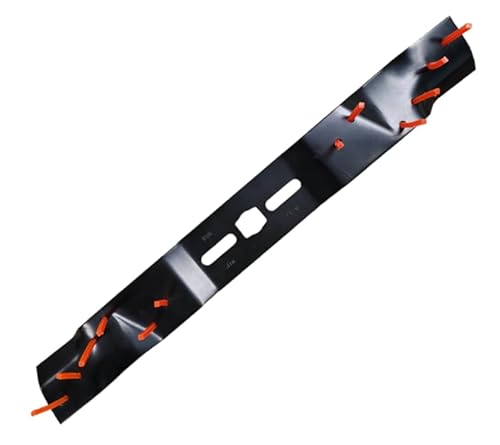
The ACTIVLIFE dethatching blade is a specialized lawn care tool designed for walk-behind mowers with 21 to 22 inch cutting decks. Unlike standard mower blades that simply cut grass, this blade features a unique serrated edge and aggressive lift that pulls thatch up from the soil surface and cuts it into fine pieces. Thatch is the layer of dead grass and roots that can build up and choke your lawn, so using a dethatching blade is a smart way to rejuvenate your yard without renting a power rake.
This blade is best suited for homeowners and DIYers who maintain their own lawns and want to tackle thatch buildup themselves. It's not meant for commercial contractors or large properties where a dedicated dethatcher might be more efficient, but for a standard residential lot, it's a practical and cost-effective solution. The blade installs just like a regular mower blade, so you don't need any special skills or tools.
In real-world use, this blade does a solid job of pulling up thatch and leaving a cleaner lawn surface. The cutting action is aggressive enough to break up heavy thatch but gentle on the grass itself when used properly. You'll want to adjust your mower deck height to avoid scalping. The blade is made from hardened steel, so it holds an edge well and resists bending when you hit hidden rocks or roots. It's not the lightest blade, but the weight helps with momentum for consistent cutting.
Build quality is good for the price point. The blade feels sturdy and the mounting hole is precisely centered. One realistic drawback is that you need to verify compatibility by comparing the blade's dimensions and mounting pattern with your mower deck. The lack of user reviews means you're relying on the manufacturer's claims, but the design is standard enough for most popular mower brands. Also, because it's a dethatching blade, it will wear faster than a standard blade if used on rough terrain.
Overall, the ACTIVLIFE dethatching blade is a worthwhile investment for any homeowner dealing with thatch problems. It saves you the cost of hiring a professional and can be swapped in for a regular blade in minutes. If you have a 21 or 22 inch walk-behind mower and want to improve your lawn's health, this blade delivers practical results at a fair price.
Product Group: Lawn & Patio
Blade Type: Dethatching
Compatible Deck Size: 21 to 22 inches
Material: Hardened Steel
Mounting: Standard center hole for walk-behind mowers
Finish: Black powder coat for rust resistance

Pros
- Affordable multi-pack for replacing worn springs on universal dethatching blades.
- Matches the standard 89-801 part number, so compatibility is straightforward for many popular dethatcher models.
- Lightweight and compact, making storage and handling easy in a garage or shed.
- Helps extend the life of your existing dethatcher without the need for a full attachment replacement.
Cons
- Universal fit may still require you to verify your specific dethatcher model's spring mounting style before ordering.
- Only four springs are included, so larger dethatcher widths may need multiple packs.
- No detailed installation guide is included, which could be a minor issue for first-time buyers.
The xuyunming 89-801 dethatcher spring set is a replacement part designed for universal dethatching blades used on 16, 18, and 20 inch dethatcher attachments. These springs are the small tines that do the actual work of pulling thatch and debris from your lawn. If your existing dethatcher has worn or broken springs, this four-pack offers a simple way to refresh it without replacing the entire attachment.
This product is best suited for homeowners who already own a universal dethatching blade or dethatcher attachment and need replacement springs. It is especially handy for budget-conscious shoppers and DIY lawn care enthusiasts who prefer to maintain and repair their equipment rather than buy new. Apartment dwellers with small patios or renters with modest yards may also keep a dethatcher in storage for seasonal use, and having spare springs on hand makes sense for quick repairs.
Based on the product description, these springs are built to match the standard 89-801 part number, which is commonly used in the lawn care industry. The metal construction should hold up to normal dethatching jobs like pulling up dead grass, moss, and light debris after spring rain or before a fall cleanup. The universal fit for 16, 18, and 20 inch blades gives you flexibility if you own multiple dethatcher attachments or if you upgrade your mower setup later.
Installation and maintenance are straightforward, but keep in mind that this is a bare-bones replacement part. You will need to inspect your current spring mounting and use basic hand tools to swap out the old springs. The springs themselves are small and easy to store in a garage drawer or shed shelf. However, because there are no detailed instructions included, first-time buyers may want to look up generic dethatcher spring replacement videos online. Also, the pack contains four springs, so larger dethatchers may require more than one pack depending on how many tines need replacing.
Overall, this is a practical, low-cost replacement option for anyone who wants to keep an existing dethatcher running rather than spending money on a whole new attachment. For the average suburban homeowner doing weekly lawn maintenance and seasonal thatch removal, having a spare pack of 89-801 springs on hand is a smart move. Just double-check your dethatcher model and spring mounting style before ordering to ensure a smooth fit.

Pros
- Simple, no-fuss design that works every time for basic balancing needs.
- Metal build feels solid and should hold up to years of garage use.
- Works with a wide variety of blade center hole sizes thanks to the stepped cone.
- Costs less than a coffee and delivers real performance improvement.
Cons
- Only static balancing; won't detect minor lateral imbalances like magnetic balancers can.
- May not fit blades with non-circular or odd-shaped center holes (e.g., some mulching or gator blades).
- Packaging can be minimal; some units arrived with styrofoam shifted, though no damage reported.
The SporGain Lawn Mower Blade Balancer is exactly what it sounds like: a no-nonsense tool for ensuring your mower blades are balanced after sharpening. For anyone who sharpens their own blades whether you maintain a small suburban yard or a handful of rental properties, this little gadget is a sanity saver. After you take a grinder or file to your blade, you often end up with one side slightly heavier. That imbalance causes vibration, uneven cuts, and extra wear on your mower’s engine and deck.
This balancer solves that problem simply. You set the blade on the tapered metal cone, and the heavy side drops down. Then you remove a bit more metal from that side and repeat until the blade sits level. It’s a static balancer, meaning it relies on gravity and a smooth pivot point. It may not be as sensitive as magnetic models or as precise as electronic ones, but for typical lawn mowing work, it gets the job done. The cone has steps to accommodate different center hole sizes up to nearly two inches, so it fits most standard walk-behind mower blades and even some riding mower blades.
Build quality is impressive for the price. The base and cone are made of metal, not plastic, so they won’t crack or warp. It’s small enough to toss in a tool bag or leave in a drawer. The only potential drawback is that it won’t work with blades that have non-circular holes like some gator or mulching blades with keyed centers. Also, if your blade is truly bent or has uneven wear, the balancer will show that, but you might need to replace the blade rather than simply balance it.
In real-world use, this balancer makes a noticeable difference. Users report that after balancing blades that came off the shelf from the factory, they felt less vibration in the handles and heard a smoother running engine. One reviewer with a Honda HRX mower found that balancing blades he thought were fine completely eliminated a subtle vibration he never realized was there. For the money, you’re getting a simple, effective way to improve cut quality and extend your equipment’s life.
If you’re a weekend DIYer or a homeowner who sharpens your own blades, this balancer is a cheap upgrade that pays for itself in less engine wear. Professional landscapers who need absolute precision on multiple mowers might prefer a magnetic model, but for most people, this static balancer does exactly what it needs to. A solid buy.
Product Dimensions: 2.4 x 2.4 x 2.1 inches
Item Weight: 3.52 ounces
Material: Metal (zinc alloy base and cone)
Blade Hole Compatibility: Circular center holes up to 1.97 inches (largest step)
Base Diameter: 2.36 inches
Color: Silver
Includes: One blade balancer only
Pros
- Versatile enough for both large garden tools and fine household blades.
- Very easy to use with clear slot guides for angle and pressure.
- Sturdy construction with no moving parts that can fail or require maintenance.
Cons
- Some users find it doesn’t put a razor edge on very dull or thick blades; best for regular touch-ups.
- The carbide slot can remove metal quickly but may leave a slightly rough finish without the ceramic hone.
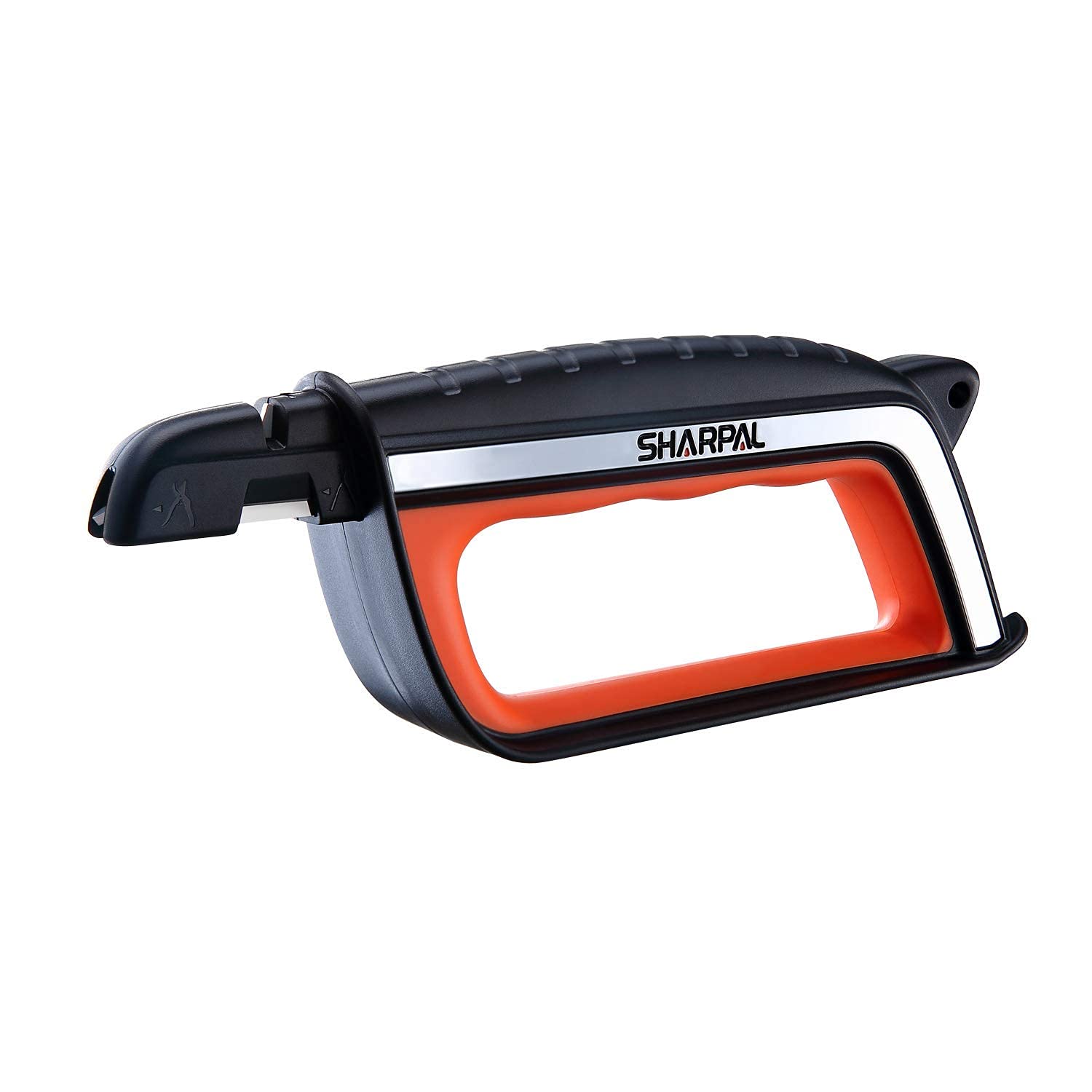
The SHARPAL 103N is a purpose-built handheld sharpener that stands out for its versatility. It’s not a bench stone or an electric grinder, it’s a compact tool designed to handle a surprising range of edge maintenance tasks around the shop, garden, and home. With five sharpening surfaces, it can tackle lawn mower blades, axes, machetes, pruning shears, hedge trimmers, scissors, and most kitchen knives. That kind of flexibility makes it a real asset for anyone who keeps multiple cutting tools in rotation.
This sharpener is best suited for DIYers, homeowners, and light commercial users who want to keep their gear cutting cleanly without spending a lot of time or money. It’s not meant for heavy duty reprofiling or restoring badly damaged edges, but for routine sharpening and touch ups it works very well. The preset angle slots take the guesswork out of holding the blade at the right orientation, which is especially helpful for people who aren’t comfortable with a stone or file.
In use, the 103N feels solid and secure. The rubber over-molded base grips the workbench or tabletop, so it stays put while you draw the blade through the slot. The handle is big enough to use comfortably with gloves, and the hand guard is a thoughtful safety feature when working on mower blades or shears. Performance wise, the tungsten carbide slot removes material quickly and the ceramic slot refines the edge to a clean, functional sharpness. Most users report noticeably better cutting from their tools after just a few passes.
Build quality is good for the price point. The plastic housing feels durable, and the abrasive inserts are rated to last through many thousands of uses. There are no batteries or cords to worry about, and the whole unit weighs only a few ounces, so it’s easy to store in a drawer or toolbox. Some reviewers mention that very dull or thick mower blades may need more passes or a secondary method to get a true edge, but for regular upkeep this tool performs reliably.
If you are tired of paying for sharpening services or struggling with stones and files, the SHARPAL 103N is a practical, cost effective alternative. It pays for itself quickly if you maintain your own mower blades, pruners, and shears. For the price and versatility, it’s a solid addition to any workshop or garage.
Brand: SHARPAL
Model: 103N
Dimensions: 8.46 x 2.95 x 1.34 inches
Weight: 6.2 ounces (176 grams)
Materials: Tungsten carbide and ceramic abrasives
Grit types: Coarse, medium, fine
Number of sharpening slots: 5 preset angle guides
Color: Orange and black
Warranty: 3 years
Lawn Mower Blade Touch Ups: Use the dedicated carbide slot to quickly restore a clean cutting edge without removing the blade from the mower (if accessible) or with the blade removed on a bench. Ideal for seasonal maintenance.
Garden Shears and Pruners: The pre-set angle slots make it easy to sharpen bypass pruners, hedge shears, and loppers. A few passes bring back factory sharpness.
Axes and Hatchets: The broader slots accommodate thicker blades and axes. Great for campsite or woodlot tool upkeep.
Kitchen and Utility Knives: The fine ceramic slot refines knife edges for clean slicing. Works well on most straight edge kitchen blades.

Pros
- Affordable price for a 4-pack, great value for budget-conscious shoppers.
- Sturdy SWPB material feels durable and should hold up well during regular use.
- Compatible with popular dethatcher blades from Maxpower and Arnold, plus many universal 16-inch models.
- Easy to install, no special skills required.
Cons
- Limited to 16-inch dethatcher blades, not suitable for other sizes or types of mower attachments.
- Some users may find the springs slightly stiff initially, requiring a bit of effort to attach.
- Pack includes only springs, no additional hardware or instructions included.
If you own a lawn mower with a dethatcher attachment or a power rake blade, you know that the springs are what give the tines their aggressive action to pull up thatch. Over time, these springs can lose tension or break, leaving your lawn care efforts less effective. The Feekoon 4 Pack Universal Power Rake Replacement Springs step in as a practical, budget-friendly solution for homeowners who want to restore their dethatching performance without spending a lot.
These springs are designed to fit a range of 16-inch dethatcher blades, including the popular Maxpower 330105 and Arnold 490-100-0111 models. That makes them a versatile option for many suburban and rural property owners who rely on a dethatcher for spring lawn clean-up or fall reseeding prep. The universal compatibility is a big plus, though it's always a good idea to double-check your blade's design before purchasing.
Made from SWPB steel, these springs boast higher strength, hardness, and toughness compared to standard materials. Based on the product description, they should hold up well against the repeated stress of digging into grass and soil. For budget-conscious shoppers and first-time buyers, this set offers a simple way to maintain your dethatcher without needing to replace the entire blade assembly.
Installation is straightforward: you just remove the old springs and clip in the new ones. No special tools are needed, which is a relief for anyone who isn't mechanically inclined. The compact size (about 4 inches long) means you can store the extras in a drawer or toolbox without taking up valuable garage space. This is especially handy for apartment dwellers or small-yard homeowners who have limited storage.
One realistic limitation is that these springs are only meant for 16-inch dethatcher blades. If you have a larger or smaller blade, they won't fit. Also, some users might find the springs a bit stiff initially, requiring a little muscle to get them into place. But once installed, they should provide reliable tension for effective dethatching.
Overall, the Feekoon power rake replacement springs are a solid choice for anyone who needs to refresh their dethatcher's performance. They offer good value, decent durability, and easy installation. Whether you're a lawn care enthusiast prepping your yard for a backyard barbecue or a suburban homeowner tackling spring cleanup, these springs can help you get the job done without breaking the bank.
The Mechanics and Operation of Dethatching Lawn Mower Blades
A dethatching lawn mower blade operates by transforming the rotational force of a standard walk-behind mower into a mechanical combing action. Instead of relying purely on a sharp cutting edge to slice grass blades, this specialized attachment uses flexible steel spring tines mounted near the blade tips to rake through turf. As the mower engine spins the blade assembly inside the deck, these tines dip lightly into the turf canopy to flick compacted organic debris up to the lawn surface. This process allows property owners to dislodge suffocating thatch without needing to purchase or rent a standalone power rake machine.
How Dethatching Blades Function Under the Mower Deck
The core mechanism of a dethatching blade relies on centrifugal force and precise deck clearance. A standard mower blade is engineered to create upward airflow that lifts grass blades vertically for a clean cut and expels clippings through a discharge chute or into a collection bag. In contrast, a dethatching blade features a sturdy metal bar equipped with downward-reaching spring tines or heavy nylon lines secured near both ends. When the mower spindle rotates at several thousand revolutions per minute, the spinning tines sweep rapidly through the grass canopy just above the soil line.
As the spinning tines encounter the thatch layer, their momentum pulls dead stems, creeping moss, and dried grass clippings away from the root zone. Thatch naturally accumulates between the green vegetation and the soil surface, forming a dense barrier when it exceeds half an inch in thickness. The rapid sweeping motion of the spring-loaded tines snags this interwoven layer without severing healthy, deeply anchored grass roots. Once dislodged, the loosened debris is thrown into the mower deck airflow, settling on top of the lawn where it can be gathered or vacuumed into a grass catcher.
The Role of Flexible Spring Tines and Steel Construction
Flexibility is the primary engineering feature that prevents a dethatching blade from tearing your lawn to shreds or damaging the mower spindle. Solid, rigid metal teeth rotating at high speeds would catch on roots, rocks, or uneven soil, potentially stalling the motor or bending the crankshaft. Replacement springs, such as the remolean 330105 or Feekoon power rake springs, are typically manufactured from high-tensile spring steel alloys like 65Mn or SWPB. These resilient materials allow the tines to flex backward when they strike hard obstructions before instantly snapping forward to continue raking.
The quality of the metal directly dictates how long the tines maintain their elasticity under intense friction and high rotational stress. Understanding broader concepts surrounding lawn mower blade steel materials helps explain why manufacturers select hardened carbon and spring steels for these high-wear components. Standard cutting blades prioritize edge retention and impact toughness to withstand small sticks and pebbles, whereas dethatching tines require exceptional fatigue resistance to endure thousands of flex cycles per minute. When tines lose tension or wear down unevenly, their ability to penetrate dense thatch diminishes significantly.
Dethatching Blades Versus Dedicated Power Rakes and Standard Blades
Homeowners frequently wonder how a dethatching blade conversion compares to using a dedicated power rake or a routine cutting blade. A conventional cutting blade focuses entirely on severing grass blades cleanly at a predetermined height to promote healthy turf growth. In fact, checking the factory edge sharpness on new blades is usually essential for mowing, but dethatching attachments rely far more on mechanical raking than on edge sharpness. While some hybrid dethatching blades retain mild cutting edges on their shoulders, their primary task remains lifting organic debris rather than delivering an immaculate cut.
Dedicated power rakes and motorized dethatchers feature a cylindrical reel equipped with dozens of vertically oriented flail blades or spring tines. These standalone machines offer uniform coverage across wide swaths of turf and provide granular depth adjustment that protects grass crowns. A dethatching blade on a walk-behind mower provides a more affordable, space-saving alternative for small to medium residential yards. However, because a mower blade spins on a single horizontal axis, the raking action is concentrated along the circular tip path rather than across a uniform front-to-back roller.
This circular sweeping motion means the operator must overlap mowing passes to achieve thorough thatch removal across the entire lawn. While a dedicated power rake operates with high mechanical efficiency, converting your existing 21-inch or 22-inch mower deck with an ACTIVLIFE dethatching blade provides adequate power for routine yard revitalization. Homeowners should recognize that mower-mounted blades represent a maintenance compromise designed for light to moderate thatch accumulation. Lawns with extreme thatch layers exceeding an inch may require heavy commercial equipment or core aeration to avoid overworking a residential lawn mower.
Proper Deck Height and Operation to Prevent Turf Damage
Setting the appropriate mower deck cutting height is the most critical operational factor when using a dethatching blade. If the mower deck is positioned too low, the spring tines will dig directly into the dirt, gouging topsoil and uprooting healthy grass crowns. Conversely, setting the deck too high prevents the tines from making contact with the thatch layer, rendering the entire operation ineffective. The goal is to calibrate the wheel height adjustment so the tips of the spring tines brush lightly through the thatch layer without scraping bare ground.
A safe approach involves starting the mower on a relatively high deck setting over a small, inconspicuous test section of turf. Inspect the ground behind the mower to see whether dead, tan-colored material is being pulled to the surface without pulling up green, rooted clumps. If minimal debris emerges, lower the wheel adjusters by a single notch and repeat the evaluation until an even stream of loosened thatch appears. Never attempt to dethatch when the lawn is soggy or saturated, as soft soil allows the tines to sink too deeply and scalp the lawn.
Operating speed also plays an important role in how cleanly the blade lifts embedded debris. Pushing the mower too rapidly across the turf prevents the spinning tines from thoroughly combing through dense sections of thatch. Maintaining a slow, steady walking pace gives the rotating bar enough time to tease apart tangled roots and dead grass blades. If the engine begins to bog down or emit a straining sound, stop forward movement immediately and raise the deck slightly to relieve rotational resistance.
Managing Rotational Balance and Engine Vibration
Maintaining rotational balance is crucial whenever you install specialty blades or replacement hardware on a lawn mower spindle. A dethatching blade experiences significant lateral and vertical forces as its spring tines strike turf debris and flex backward during operation. If one spring wears down faster than the other or snaps off entirely, the resulting weight imbalance can introduce severe high-frequency vibration throughout the machine. Persistent vibration can loosen deck bolts, cause rapid bearing wear inside the spindle assembly, and even damage the engine crankshaft over time.
Utilizing a static tool like the SporGain metal lawn mower blade balancer helps homeowners verify proper weight distribution before fastening the blade to the mower. Placing the center hole of the dethatching bar onto the stepped cone reveals whether one side dips lower than the other. If an imbalance exists, the operator can adjust spring placement or replace worn components to achieve a level, horizontal balance. Taking time to inspect balance after every seasonal dethatching session helps protect your equipment from unnecessary mechanical fatigue.
Sharpening tools such as the SHARPAL 103N multi-sharpener can be utilized on hybrid blades that incorporate cutting bevels alongside their tine assemblies. While the tines perform the raking, maintaining a clean leading edge on the blade body helps cut stray tall grass stalks cleanly. However, users should never grind metal away from the flexible spring tines themselves, as grinding alters their heat treatment and reduces tensile strength. Regular visual checks for missing springs, loose mounting bolts, and physical bends ensure the entire assembly rotates smoothly under load.
Identifying Replacement Springs and Compatible Blade Hardware
Dethatching springs are sacrificial wear components that naturally degrade, deform, or snap after extended contact with thatch, sticks, and hard ground. When tines break or lose their spring tension, replacing them with correctly matched parts is essential for restoring raking performance. Replacement kits, such as the xuyunming 4-pack 89-801 springs or the Feekoon 4-pack universal springs, are designed to fit popular power rake bars. Cross-referencing part numbers like Maxpower 330105 or Arnold 490-100-0111 ensures the mounting coils align securely with the pre-drilled holes on your blade.
Mounting hardware compatibility must never be overlooked when securing replacement springs to a dethatching bar. Most universal blades utilize carriage bolts, lock washers, and locking nuts to prevent the hardware from backing out under severe rotational vibration. If a bolt works loose during operation, the spring tine can detach at high speed, creating a hazardous projectile under the deck. Always verify that replacement springs include appropriate mounting fasteners or reuse factory-grade hardware that remains in sound, unstripped condition.
Deck clearance represents another vital compatibility consideration when shopping for dethatching blades or replacement components. A blade labeled for 21-inch to 22-inch walk-behind mowers must rotate freely without contacting the deck baffles, discharge chute opening, or inner housing walls. Additionally, the downward-protruding spring tines require sufficient vertical clearance so they do not hit deck lip brackets when the mower height is adjusted. Measuring the blade length, center-hole diameter, and tine projection height ensures the dethatching assembly fits safely within your specific mower deck envelope.
Post-Dethatching Cleanup and Seasonal Lawn Care Practices
Once a dethatching blade completes its work, your lawn will typically appear messy and covered with thick piles of dead vegetation. Leaving this dislodged organic material on the turf will smother green grass blades and defeat the purpose of dethatching. Operators can attach a standard bagging blade or use a lawn sweeper to vacuum the lifted thatch into collection bags for composting. Raking the lawn by hand with a flexible leaf rake also works well on smaller suburban properties where mower bagging capacity is limited.
Timing is equally important when planning a dethatching project with your converted lawn mower. Cool-season grasses like Kentucky bluegrass, fescue, and perennial ryegrass respond best to dethatching during early spring or early autumn when moderate temperatures support recovery. Warm-season grasses, including Bermuda and Zoysia, should be dethatched in late spring once active growth has resumed and the lawn is fully green. Dethatching during periods of midsummer heat stress or extreme drought can severely damage grass root systems and invite weed infestations.
Following up a dethatching session with appropriate lawn renovation steps maximizes the long-term benefits to your turf. Dislodging compacted thatch creates exposed soil pockets that are prime candidates for overseeding with quality grass seed blends. Applying a balanced lawn fertilizer and providing consistent moisture encourages root growth through the loosened soil structure. Because water and oxygen can now penetrate the soil surface unimpeded, the lawn typically rebounds within two to three weeks with thicker, healthier turf.
Key Maintenance and Safe Handling Practices
Safe operation is essential whenever you handle, inspect, or operate a mower equipped with a dethatching blade. Always disconnect the spark plug boot or remove the electric mower battery pack before reaching beneath the deck to inspect spring tines. Heavy leather work gloves should be worn to protect hands from sharp tine ends and metal edges during installation or removal. Never attempt to clear jammed sticks or tangled thatch from under the mower deck while the engine is running or capable of restarting.
Routine post-use inspection ensures your dethatching equipment remains safe and ready for future seasonal use. Clean away compacted grass clippings and moist soil from around the mounting bolts and spring coils to inhibit rust formation. Inspect the dethatching bar for any hairline cracks, warps, or elongation around the center mounting hole. Storing the dethatching blade in a clean, dry location prevents corrosion from weakening the steel springs between seasonal maintenance cycles.
Understanding the mechanical interaction between rotating spring tines and your turf enables you to dethatch effectively while safeguarding your mower engine and lawn health. By verifying deck clearances, balancing the blade accurately, and setting the proper operating height, you can lift choking thatch layers and promote vibrant seasonal turf growth.





Write Your Review
No reviews yet. Be the first to share your experience!