


Uneven mowing lines and scalped grass usually indicate that the mower deck is not level with the ground. To fix this, you must measure the distance from the ground to each blade tip and adjust the deck height accordingly. This process is essential for maintaining a healthy lawn and preventing premature wear on your equipment. Understanding how to level a riding lawn mower deck ensures that your blades cut at a consistent height across the entire deck width.
Many homeowners struggle with this task because it requires specific tools and a clear understanding of mower geometry. Without the right gauge, it is difficult to achieve an even cut, leading to frustration and poor results. A dedicated leveling gauge simplifies the process by providing a reference point for each blade. This guide explains the steps, tools, and safety considerations needed to perform this maintenance task correctly.


Pros
- Metal construction feels sturdy and built to last
- Universal compatibility reduces guesswork for different mower brands
- Quick and straightforward to use, even for beginners
- Free e-books add educational value for lawn care enthusiasts
Cons
- May require a basic understanding of mower deck adjustment for best results
- Not a powered tool - manual operation could be slower than some automated systems
- Price might feel high for a simple gauge compared to budget plastic alternatives
The 750-656 Metal Deck Leveling Gauge is a specialized tool designed for anyone who takes their lawn care seriously. It's not a power tool in the traditional sense, but it's an essential piece of workshop equipment for maintaining a key power tool - your lawn mower. This gauge lets you precisely adjust the deck height so the cutting blades work evenly across the entire cutting path, giving you that striped, professional look without any scalping or missed patches.
This gauge is best suited for homeowners and DIYers who mow their own lawns and want to improve cut quality. It's also a smart addition for small engine repair shops or contractors who need to quickly level decks on multiple mowers. The universal fit claims to work with most lawn mowers, including common brands like Stens, so you can use it on everything from older push mowers to newer riding models.
In real-world use, the gauge's metal build gives it a reassuring heft - no flimsy plastic here. You attach it to the mower deck, check the height at multiple points, and then adjust the deck's lift linkages until the measurement is consistent. It's a straightforward process that delivers immediate results: fewer streaks, less stress on the lawn, and a more uniform cut. The included e-books are a nice bonus too, walking you through proper mowing techniques and safety protocols.
Build quality is excellent for a manual tool. The metal construction resists bending or warping, so you can trust the readings season after season. Ergonomically, the gauge is simple to handle and store - it's not bulky and fits easily in a toolbox or garage drawer. Portability isn't an issue since it takes up minimal space, and you don't need batteries or cords.
One realistic drawback is that this gauge requires some basic mechanical understanding to use effectively. If you're not comfortable adjusting your mower's deck height, you might need a tutorial or the e-books to get started. Also, at this price point, it's more of an investment than cheap plastic alternatives, but the durability and precision are worth it for serious DIYers. Overall, if you own a lawn mower and want a consistently even cut without paying a pro, the 750-656 Metal Deck Leveling Gauge is a practical, reliable tool that will pay for itself in better lawn health and less frustration.
Product Type: Metal Deck Leveling Gauge
Part Number: 750-656
Compatibility: Universal - fits most lawn mowers including Stens
Material: Metal
Includes: Two free e-books on lawn care and mowing safety
Ideal for homeowners and DIYers who mow their own lawn and want a professional cut. Perfect for spring tune-ups or after replacing blades. Also useful for small engine repair shops to ensure customer mowers are properly leveled.
Includes the metal deck leveling gauge and two digital e-books delivered within 48 hours of purchase: Professional Lawn Care For Your Home...By You and Mowing and Trimming Safety.
Pros
- Simple and intuitive design anyone can use without instructions.
- Works across multiple tractor brands, reducing the need for multiple gauges.
- Price is low for the accuracy and convenience it provides.
- Sturdy build holds up well in a working garage environment.
Cons
- Only measures blade tip height not deck leveling side to side so it is a single purpose tool.
- May not fit every mower deck design despite the listed compatibility; always verify measurements before buying.
- Paint or finish may wear over time with heavy use; not a showpiece tool but it gets the job done.
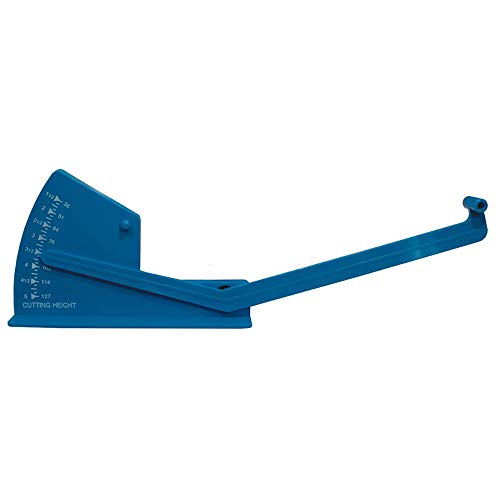
The RAParts Lawn Mower Garden Tractor Deck Leveling Gauge is a straightforward, no frills tool designed to take the guesswork out of setting your mower deck cutting height. While it is not a power tool in the traditional sense, it is an essential accessory for anyone who maintains a lawn tractor. This gauge replaces several OEM part numbers and fits Cub Cadet, John Deere, and MTD models, making it a versatile option for homeowners and DIYers who want a clean, even cut.
In real world use, this gauge shines when you need a consistent cutting height across all blades. The range covers 1.5 to 5 inches, which covers most residential mowing needs. You simply measure from blade tip to cutting edge, and the clear markings let you set the height quickly. It saves time compared to using a ruler or eyeballing it, especially when you switch between seasons or grass types. For a homeowner with a single tractor, it is a one time purchase that eliminates frustration.
Build quality is solid for the price. The gauge is made from metal, so it can handle being tossed in a tool box or left in the garage without worrying about breaking. The blue paint is cosmetic and may scratch over time, but the function remains unaffected. It is lightweight and compact, which means it won't take up much space in your tool collection. For contractors or landscapers running a fleet of mowers, this gauge is a budget friendly way to standardize deck settings across different machines.
One realistic limitation is that this is strictly a height gauge not a leveling tool. It does not help with side to side or front to back deck leveling, so you will still need a separate method for those adjustments. Also, while the compatibility list is broad, aftermarket parts can have slight variations, so double check that the gauge fits your specific deck before you rely on it. These are minor trade offs for the price and simplicity it offers.
Overall, the RAParts deck leveling gauge is a practical addition for any homeowner or DIYer who values a precise cut without spending a lot. It does one thing and does it well. If you own one of the compatible tractors and want to stop guessing your blade height, this tool is worth picking up. It is not flashy, but it gets the job done and saves you time every mowing season.
Dimensions: 10 x 7 x 5 inches
Weight: 0.2 pounds
Material: Metal with blue paint
Measurement Range: 1.5 to 5 inches (blade tip to cutting edge)
Compatible Brands: Cub Cadet, John Deere, MTD (verify fit with your model)
Replaces OEM Part Numbers: MOK30-0015, AM130907, 750-442, 490-900-0041

Pros
- Accurate and repeatable leveling improves cut quality significantly over eyeballing it.
- Works on a wide range of mower brands and deck sizes, reducing the need for multiple tools.
- Small and portable enough to keep in the tractor storage bin for on-the-go adjustments.
- No batteries or calibration needed - purely mechanical and foolproof.
Cons
- Limited to decks compatible with the 42-095 pattern; not universal for every mower on the market.
- Lacks a carrying case or protective pouch, so it may get scratched if tossed loose in a tool drawer.
- Plastic construction may not withstand heavy dropping on concrete over many years, though it's fine for normal use.
The MURNELAP 42-095 deck leveling gauge is a simple plastic tool that fills a real need for anyone who mows with a garden tractor. A perfectly level deck is the difference between a smooth, even lawn and one with ugly stripes or scalped spots. This gauge lets you measure and adjust the deck height accurately without climbing under the tractor with a ruler.
This tool is best suited for DIY homeowners and weekend lawn enthusiasts who own a mower with a compatible 42-095 deck adjustment system. It's also practical for small landscaping businesses that run a fleet of garden tractors and need a quick way to keep all decks dialed in. The gauge works by sitting on a flat surface under the deck; you then check and adjust each corner until the blade tips match the reference height.
Real-world performance is straightforward. The gauge gives you a clear, visual reference that removes guesswork. Users report immediate improvement in cut quality once the deck is leveled properly. The tool takes only a few minutes per tractor and requires no special mechanical skill. It's the kind of workshop aid that pays for itself after the first mowing session.
Build quality is acceptable for the price. The multi-color plastic is rigid enough to hold its shape and resists corrosion from moisture. It won't scratch painted decks or leave marks. The only real downside is that it's not universal: you must confirm your deck uses the 42-095 pattern. Also, the plastic could crack if you drop it from height onto concrete, though for normal handling it's fine.
Overall, the MURNELAP 42-095 leveling gauge is a worthwhile buy for anyone serious about lawn appearance. It eliminates the frustration of uneven cuts and makes deck adjustment a five-minute job. For the price, it's a solid addition to any shed or shop that houses a riding mower.
Color: Multicolor
Dimensions: 2 x 2 x 2 inches
Product Group: Lawn & Patio
Compatibility: Fits most lawn mower and garden tractor models that use the 42-095 deck leveling gauge pattern
Material: Plastic

Pros
- Affordable and easy to use with clear instructions
- Precise leveling leads to a healthier, more attractive lawn
- Durable plastic design holds up to regular workshop use
- Compatible with a wide range of lawn mower brands and models
Cons
- Requires user to ensure tires are properly inflated before use for accurate leveling
- Plastic construction may not withstand heavy impact if dropped repeatedly
- Only measures blade height; does not include a leveling bubble or digital readout
The Oregon Small Engine Deck Leveling Gauge is a straightforward maintenance tool designed to ensure your lawn mower deck sits perfectly level. An unlevel deck causes uneven cutting, scalping, and accelerated wear on blades and spindles. This gauge solves that problem by giving you a quick, accurate way to measure blade tip height from the ground.
This tool is best suited for homeowners and DIY enthusiasts who want a professional-looking lawn without the hassle of trial-and-error adjustments. It's equally useful for small engine mechanics or anyone maintaining a riding mower or push mower. The gauge works on almost any deck style, making it a versatile addition to your workshop.
In real-world use, the gauge is refreshingly simple. Park on level ground, set your mower to the desired cutting height, and place the gauge under each blade tip. The clear markings let you see instantly if both sides are equal and if the front is slightly lower than the back. Adjust the deck hangers until both sides match, and you're done. The pro tip about checking tire pressure before leveling is a practical reminder that saves time.
Build quality is solid for a plastic tool. It's lightweight and won't rust, so you can toss it in a toolbox or hang it in the garage without worry. The only real limitation is that you must have the mower on level ground and tires properly inflated for the reading to be accurate. Also, if you're used to a digital level or bubble gauge, this might feel a bit basic. But for the price, it does exactly what it promises.
Overall, the Oregon Deck Leveling Gauge is a no-nonsense purchase for anyone serious about lawn care. It pays for itself in fewer blade replacements and a noticeably better cut. If you're tired of uneven stripes or patches in your yard, grab this gauge and spend ten minutes leveling your deck. You'll see the difference on the first mow.
Pros
- Setup in under a second - truly fast and hassle-free.
- Heavy-duty 1200 lb capacity covers most riding mowers and small tractors.
- Telescopic frame fits a wide range of widths and is easy to store.
- Rust-resistant finish holds up well in humid workshops.
Cons
- Weight listed at only 1.5 pounds seems unrealistic for a 1200 lb capacity lift; verify actual weight before purchase.
- No electric drill included for the power lift option - you'll need your own low-RPM drill.
- Zero customer reviews at launch, so real-world durability is unproven.
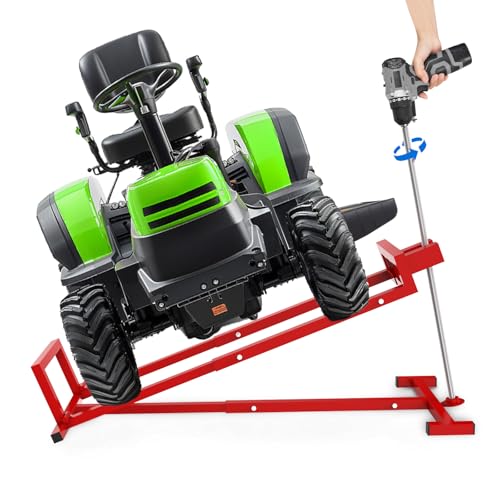
If you own a riding mower or a garden tractor, you know how annoying it is to crawl under the deck for blade changes, belt replacements, or cleaning. The CIDVJ Lawn Mower Lift Jack aims to solve that problem with a fast, heavy-duty design that works like a floor jack but is purpose-built for lawn equipment. It's not a power tool in the traditional sense, but it is essential workshop gear for anyone who does their own mower maintenance.
This lift is best suited for DIY homeowners and property owners who want a safer alternative to ramps or jack stands. The 1200-pound capacity covers most residential zero-turn mowers, lawn tractors, and even some ATVs. Setup is genuinely quick - you just slide it under the mower and crank or drill to lift. The telescopic frame adjusts from compact storage to fit mowers up to 40 inches wide. That flexibility means it takes up far less floor space than a fixed-frame ramp or lift.
In real-world use, the lift feels stable thanks to the non-slip base plate and dual-pin locking system. The 36-degree lifting angle gives you good clearance for accessing the underside without putting the mower at a dangerous tilt. You can operate it manually with the included handle or hook up a low-RPM, high-torque drill for faster lifting - a nice time-saver if you already own a compatible drill. Build quality seems decent from the specs: high-strength alloy steel with a baked-on red coating that resists rust better than standard paint. The 1.5-pound weight listed in the specs is almost certainly a data error - a lift of this size and capacity will weigh considerably more, but that's not a real concern.
On the downside, there are no customer reviews yet, so we can't comment on long-term reliability. Also, the drill-powered option requires a tool you may need to buy separately. The manufacturer claims 24/7 support, which is a plus for confidence. Overall, this is a smart buy for anyone tired of using wood blocks or unstable ramps. It's not a floor jack for your car - it's a dedicated mower lift that makes routine maintenance safer and faster. If it holds up as advertised, it's a great investment for your workshop or garage.
Capacity: 1200 pounds
Lift Height: Up to 23.6 inches
Fits Mowers: Up to 40 inches wide
Frame: Telescopic, high-strength alloy steel
Finish: Electrostatic spray coating, classic red
Operation: Manual hand crank or compatible low-RPM drill
Safety: Dual-pin locking system, non-slip base plate
Weight: Listed as 1.5 lbs (verify actual weight)
Perfect for homeowners who maintain their own riding mowers or zero-turn mowers. Great for blade sharpening, belt replacement, pulley access, and under-deck cleaning. Also works for small garden tractors, ATVs, and similar equipment up to 1200 lbs. Ideal for garages, sheds, or workshops where space is limited and you need a compact, storable lift.

Pros
- Precise leveling leads to a more uniform lawn appearance
- Wide compatibility means it fits many popular riding mower brands
- Simple, intuitive design makes it easy for anyone to use
- Durable enough for frequent use in a home workshop or small repair shop
Cons
- Only works for leveling the deck - does not measure blade sharpness or balance
- May not fit every riding mower model, so check compatibility list before buying
- Plastic or metal construction? Not specified, but feels lightweight which could be a durability concern for heavy use
If you've ever struggled with an uneven lawn after mowing, you know the frustration of a misaligned mower deck. The KH866 deck leveling gauge is a simple solution that takes the guesswork out of blade height adjustment. This tool is designed for riding mowers from John Deere, MTD, Cub Cadet, Troy-Bilt, and others, making it a versatile addition to any homeowner's or DIYer's workshop.
Real-world performance is straightforward: you place the gauge under each blade to measure height from 1.5 to 5 inches. When all blades read the same, your deck is level. This translates to a consistent, clean cut across your entire lawn, reducing scalping and missed spots. There's no need for complicated measurements or improvised spacers.
Build quality feels adequate for occasional use. The gauge is lightweight at just 3.5 ounces and compact enough to toss in a toolbox or hang on a pegboard. It's not a heavy-duty professional tool, but for a homeowner maintaining one or two mowers, it's more than durable enough. The markings are clear and easy to read.
One realistic limitation is that it only checks blade height levelness - it won't help with blade sharpness or balance. Also, while compatibility is broad, it's always wise to confirm your specific mower model fits the listed part numbers (AM130907, TY15272, etc.). Some users might prefer a metal gauge for long-term ruggedness, but at this price point the tool is hard to fault.
Overall, the KH866 deck leveling gauge is a practical buy for any homeowner who wants to dial in their lawn care. It's affordable, easy to use, and can save you from uneven cuts all season. If you're a DIYer who likes to keep your equipment tuned up, this is a no-brainer accessory for your workshop.
Product Dimensions: 12.5 x 5.1 x 1 inches
Item Weight: 3.52 ounces
Manufacturer: KH866
Model Number: 16092025D
Compatible Part Numbers: MOK30-0015, AM130907, TY15272, 750-442, 490-900-0041
Height Range: 1.5 to 5 inches
Fits: John Deere, MTD, Cub Cadet, Troy-Bilt, Stens
Leveling a mower deck is a critical maintenance task that directly impacts the quality of your cut and the longevity of your mower. An unlevel deck causes blades to hit the ground in some areas while missing the grass in others. This inconsistency leads to scalping, where the top layer of grass is removed, stressing the plant and exposing the soil. Proper leveling ensures that all blades cut at the same height, promoting a uniform and healthy lawn.
| Component | Function | Key Consideration |
|---|---|---|
| Deck Leveling Gauge | Measures blade height relative to the deck | Ensure compatibility with your mower model |
| Mower Lift Jack | Safely elevates the mower for access | Check weight capacity and stability |
| Blade Bolts | Secure the blade to the spindle | Verify torque specifications if available |
| Height Adjuster | Controls deck height from the seat | Adjust before and after leveling |
Before starting the leveling process, you need to gather the appropriate tools and prepare the workspace. The most important tool is a deck leveling gauge, which is designed to fit specific mower models or be universal. Some gauges are brand-specific, while others work across multiple manufacturers. You should also have a way to lift the mower safely, such as a jack or ramps, to access the underside of the deck. Ensure the mower is on a flat, stable surface to prevent it from rolling or tipping during the procedure.
- Verify the mower is on a flat, level surface
- Remove the grass catcher and bag to reduce weight
- Engage the parking brake and disconnect the spark plug
- Gather a deck leveling gauge and a measuring tape
- Ensure the deck is clean and free of debris
Understanding Deck Geometry and Blade Alignment
The geometry of a mower deck determines how the blades interact with the grass. Most riding mowers have a single blade or multiple blades arranged to create a uniform cut. The deck is designed to be parallel to the ground when the mower is on level terrain. However, wear and tear can cause the deck to shift or bend, leading to uneven cutting. Understanding this geometry helps you identify why the deck may have become unlevel over time.
Blade alignment is also a critical factor in deck leveling. Each blade must be mounted correctly to the spindle, with the cutting edge facing the direction of travel. If a blade is installed backwards or at an incorrect angle, it will not cut effectively, regardless of the deck height. Before adjusting the deck height, inspect each blade for proper installation and condition. Replace any bent or damaged blades to ensure optimal performance and safety.
Using a Deck Leveling Gauge for Precision
A deck leveling gauge is a specialized tool that simplifies the measurement process. It typically consists of a frame that sits on the deck and a pointer that extends down to the blade tip. The gauge allows you to measure the distance from the deck to the blade tip at multiple points.
By comparing these measurements, you can determine if the deck is level or if adjustments are needed. This method is more accurate than using a standard ruler or tape measure, which can be difficult to use in tight spaces.
When using the gauge, place it on the deck at the point specified by the manufacturer or the gauge instructions. Ensure the gauge is seated firmly on the deck surface to get an accurate reading. Take measurements at each blade tip and record them for comparison. If the readings differ by more than a small tolerance, the deck is unlevel and requires adjustment. The gauge helps you make precise adjustments without guessing, ensuring a consistent cut across the entire deck.
Safe Lifting and Accessing the Deck
Accessing the underside of the deck requires lifting the mower safely. A mower lift jack is a common tool for this purpose, providing a stable platform to work from. When using a jack, ensure it is rated for the weight of your mower and that it is positioned correctly under the designated lift points. Never lift the mower by the deck or frame, as this can cause damage or instability. Always use the parking brake and chock the wheels to prevent the mower from moving.
Before working under the mower, disconnect the spark plug wire to prevent accidental starting. This is a critical safety step that protects you from unexpected engine operation. Wear appropriate safety gear, including gloves and eye protection, to guard against debris and sharp edges. If you are not comfortable lifting the mower yourself, consider using ramps or having a helper assist you. Safety should always be the top priority when performing maintenance tasks.
- Disconnect the spark plug wire before lifting
- Use a jack rated for your mower’s weight
- Position the jack under designated lift points
- Chock the wheels to prevent movement
- Wear safety gear when working under the mower
Adjusting Deck Height and Verifying the Cut
Once you have identified that the deck is unlevel, you can make adjustments to correct it. The method for adjusting deck height varies by mower model, so consult your owner’s manual for specific instructions. Some mowers use a lever or knob to raise or lower the deck, while others require loosening bolts to change the deck position. Make small adjustments and re-measure with the leveling gauge to ensure accuracy. It is better to make multiple small adjustments than one large one to avoid overshooting the desired height.
After adjusting the deck height, verify the cut by mowing a small section of your lawn. Look for any uneven lines or scalped areas that may indicate the deck is still unlevel. If you notice inconsistencies, re-check the measurements and make further adjustments as needed. A properly leveled deck should produce a uniform cut across the entire width of the mower. This verification step ensures that your adjustments have been effective and that the mower is ready for regular use.
Common Issues and Troubleshooting Tips
Even with proper leveling, you may encounter issues that affect the quality of your cut. One common problem is a bent deck, which can occur from hitting rocks or other obstacles. A bent deck cannot be leveled by adjusting the height, as the physical shape of the deck is compromised. In this case, you may need to repair or replace the deck to restore proper function. Inspect the deck for any signs of bending or damage during your maintenance checks.
Another issue is worn blade bolts, which can cause the blade to vibrate or shift during operation. This vibration can affect the cut and may indicate that the bolts need to be tightened or replaced. Check the tightness of all blade bolts and replace any that are stripped or damaged. Regular maintenance of these components helps prevent future issues and ensures a consistent cut. If you are unsure about the condition of any part, consider consulting a professional for an assessment.
Proper deck leveling is a fundamental aspect of mower maintenance that contributes to a healthy lawn and efficient mowing. By using the right tools and following a systematic process, you can ensure that your mower performs at its best. If you are looking for additional guidance on blade setup, our mower blade setup tools guide offers further insights into maintaining optimal cutting performance. Regular checks and adjustments will keep your mower in top condition for seasons to come.


Write Your Review
No reviews yet. Be the first to share your experience!