


A self-propelled Honda lawn mower that stops moving or fails to start usually points to a specific mechanical or electrical fault rather than a complex failure. The most common causes are a disconnected drive cable, a clogged air filter, a dead battery, or a worn drive belt. Identifying the exact symptom allows you to apply the correct fix without unnecessary part replacement.
Understanding the self-propelled drive system is key to troubleshooting these machines. Honda designs these mowers with robust components, but they require regular maintenance to keep the propulsion and engine running smoothly. Whether you own a gas model like the HRN series or a battery-powered unit like the HRX-BE, the diagnostic process follows a logical path from simple checks to more involved repairs. This guide walks you through the specific steps to identify and resolve the most frequent issues.

Pros
- Cut quality rivals gas mowers, with consistent, clean lines even on uneven terrain
- Quiet operation lets you mow early or late without disturbing neighbors
- Self-propelled speed control is intuitive and responsive, reducing user fatigue
- Lightweight feel thanks to balanced design, despite a 111-pound weight
Cons
- Weighs 111 pounds, which can be heavy to maneuver on steep slopes or when pushing manually
- Only one 12 Ah battery included; a second battery costs extra for maximum runtime
- Price is significantly higher than many battery mowers, positioning it as a premium investment
The Honda HRX-BE is a battery-powered walk-behind lawn mower that brings genuine gas engine performance to the cordless world. Unlike many electric mowers that compromise on torque, this model uses a Honda motor that delivers the same power and high torque as the company's GCV series gas engines. That means you can power through thick, wet grass without bogging down, and the twin-blade MicroCut system produces four cutting surfaces for ultra-fine clippings that mulch into the lawn or fill the 2.2-bushel bag with ease.
Best suited for homeowners with medium to large lawns (up to about 0.37 acre per charge with the included 12 Ah battery, and double that with a second battery), the HRX-BE also works well for those who want to avoid gas and oil maintenance. The four-in-one Versamow system with Clip Director lets you switch between mulching, bagging, discharge, and leaf shredding without any tools or attachments. The self-propelled e-Select Drive gives you variable speed from 0 to 4 mph with a touch button, so you can walk at a natural pace and not feel rushed or strained.
Build quality is excellent. The NeXite composite deck is lightweight yet tough, resisting rust and dents far longer than steel. The adjustable handles fold for storage, and the dual-lever height adjustment offers seven cutting heights between 0.75 and 4 inches. However, the mower weighs 111 pounds, which is heavy for a battery model. Pushing it manually up an incline takes effort, though the self-propelled system helps on flat ground. The price is also a premium, making it a serious investment for homeowners who prioritize cut quality and reliability over cost.
One realistic drawback is that the included 12 Ah battery delivers up to 45 minutes of runtime, which covers about a third of an acre. If your lawn is larger, you'll need to buy a second battery. The 8 Ah option is available, but we recommend the 12 Ah for consistency. Also, the battery platform is proprietary to Honda's DP50120 and DP5080 batteries, so you can't use other brand batteries.
Overall, the Honda HRX-BE is an outstanding battery mower for anyone who values gas-like power, quiet operation, and durability. It's not cheap, but the 5-year residential warranty and nationwide service network mean it's built to last. If you have a lawn that demands serious cutting ability and you want to leave gas cans behind, this mower is a top choice.
Cutting Width: 21 inches
Cutting Height Range: 0.75-4 inches (7 positions)
Cutting Modes: Mulch, Bag, Discharge, Shred (4-in-1 Versamow)
Deck Material: NeXite composite
Battery Bays: 2 (comes with one 12 Ah battery)
Battery Voltage: 60V (DP50120 and DP5080 compatible)
Maximum Runtime: 90 minutes with two 12 Ah batteries
Self-Propelled Speed: Variable 0-4 mph (e-Select Drive)
Weight: 111 pounds
Bag Capacity: 2.2 bushels
Warranty: 5-year residential, 90-day commercial

Pros
- Comprehensive kit covers all essential tune-up needs
- Authentic Honda parts guarantee compatibility and durability
- Blade set provides sharp, even cuts for a manicured lawn
Cons
- Only fits HRN216 series, not other Honda mower models
- Blades may need more frequent sharpening depending on yard debris
This Honda HRN216 tune-up kit is a genuine maintenance package designed to restore your mower's performance. It includes the essential parts: an air filter, spark plug, upper and lower blades, and a bottle of 10W-30 oil. Everything you need for a complete service is in one box, which saves you the trouble of sourcing each item individually.
The kit is best suited for homeowners who own one of the compatible HRN216 models. If you want reliable starting, smooth operation, and a clean cut, this kit delivers. The blade set (upper and lower) works together to mulch and bag grass efficiently, while the air filter and spark plug help the engine run at its peak. The included oil keeps the engine lubricated, reducing wear over time.
In real-world use, the parts are straightforward to install. The blades are sharp out of the box and cut cleanly through typical lawn grass. The air filter and plug are exact replacements, so you do not have to worry about fitment issues. Regular maintenance with this kit can extend your mower's life and keep it starting easily season after season.
Build quality is typical Honda: durable and well-made. The blades are sturdy and hold an edge reasonably well, though you may need to sharpen them after heavy use or if you hit rocks. The kit does not include a fuel stabilizer or other extras, but it covers the basics thoroughly. It is a practical choice for anyone who wants to keep their HRN216 running like new without guesswork.
One limitation is that this kit only fits HRN216 models, so it is not a universal solution. Also, if you prefer aftermarket parts, this may not appeal to you. But for owners who value genuine OEM components, this kit is a solid investment. It simplifies maintenance and ensures your mower performs at its best every time you cut the grass.

Pros
- 33% more power than residential mowers for tough grass and uneven terrain
- Two battery bays for extended runtime up to 90 minutes with two 12Ah batteries
- Smooth variable speed self-propelled drive with cruise control for comfortable mowing
- Easy height adjustment with eight settings and a large, easy-off bag for clippings
Cons
- Heavy at 140 pounds, which can be a challenge to maneuver or transport without the self-propelled drive
- Expensive compared to gas models and some battery competitors; only one battery and charger included
- Limited to mulching and bagging (no side discharge), which may not suit all mowing preferences
The Honda HRC-BE is a battery powered walk-behind lawn mower that brings commercial-grade performance to the cordless market. Unlike typical residential electric mowers, it uses a 2.0 kW motor that delivers 33% more power and torque, making it capable of handling thick, wet, or overgrown grass without bogging down. The twin blade MicroCut system provides four cutting surfaces for finer clippings, which improves mulching and bagging efficiency. With a 2.5 bushel easy-off grass bag, you can cover more ground before emptying.
This mower is best suited for contractors, property managers, and homeowners with large lawns who need reliable, gas-like performance without the maintenance of an engine. The dual battery bays are a standout feature: the included 12Ah battery gives about 45 minutes of runtime (roughly 0.37 acre), and adding a second battery doubles that to 90 minutes. The variable speed self-propelled transmission with electric cruise control lets you adjust speed from 0 to 4 mph smoothly, reducing fatigue on long mowing sessions.
Build quality is robust. The steel deck with a bumper and Nexite wheels are designed to withstand commercial use, and the height adjustment system offers eight settings from 0.75 to 4 inches for precise cutting. Honda also backs this mower with a nationwide service network, so parts and support are readily available. However, at 140 pounds, it is heavy, and the self-propelled drive is essential for maneuvering. Also, note that this model only offers mulching and bagging modes no side discharge, which may be a limitation for some users.
Overall, the Honda HRC-BE is a premium choice for those who want zero-emission mowing without sacrificing power or runtime. It is priced higher than many competitors, but the commercial-grade motor, dual battery flexibility, and Honda reliability make it a strong investment for serious lawn care.
| Specification | Value |
|---|---|
| Brand | Honda |
| Power Source | Battery Powered |
| Color | Red |
| Cutting Width | 21 Inches |
| Cutting Height | 0.75 to 4 Inches (8 positions) |
| Battery Life | 45 minutes (per 12Ah battery) |
| Battery Bays | 2 |
| Self-Propelled Speed | 0 to 4 mph (variable) |
| Deck Material | Steel with bumper |
| Grass Bag Capacity | 2.5 Bushels |
| Weight | 140 pounds |
| Warranty | 2 years (residential and commercial) |

Pros
- Direct compatibility with popular Honda mower models, eliminating guesswork.
- Comes with every part needed for the adjuster repair, no additional purchases.
- Affordable price point makes it a no-brainer for preventive maintenance.
- Compact, lightweight design stores easily in a toolbox or mower bag.
Cons
- Only fits HRR216K6 and HRX217K2 series, not universal for all Honda mowers.
- No printed installation instructions included, though online diagrams can help.
- Spring tension may feel slightly stiffer than original on first use, but breaks in quickly.
If your Honda HRR216K6 or HRX217K2 mower has a loose, wobbly handle or one that won't lock into position, the MWEDP handle adjuster kit is a practical fix. This replacement set includes the grip, two coiled pins, a spring, and the collar that together make up the adjuster mechanism. It's a targeted repair that avoids replacing the entire handle assembly.
Best suited for DIY homeowners who maintain their own lawn equipment, this kit restores the handle's ability to shift smoothly between height and angle settings. Installation requires only basic tools like a screwdriver and pliers. You'll remove the old, worn parts and snap in the new ones. The fit is spot-on for the models listed, so there's no guesswork or modification needed.
In real-world use, the grip provides a comfortable, secure hold when you adjust the handle. The pins and collar lock together firmly, eliminating that sagging feel that develops over time. The spring returns the mechanism to its locked position reliably. Build quality is solid for the price, with lightweight but durable plastic and steel components.
One realistic drawback is that this kit is model-specific. If you own a different Honda mower than the HRR216K6 or HRX217K2, you'll need to look for a different kit. Also, the packaging doesn't include step-by-step instructions, but a quick online search will turn up diagrams and videos from other owners. On first use, the spring might feel a bit stiff, but it loosens up after a few adjustments.
Overall, this handle adjuster kit is a smart, budget-friendly way to keep your Honda mower operating smoothly. If you're comfortable with basic repairs and want to avoid a costly service visit, it's a solid purchase. For $7.99, it's a fraction of the cost of a new handle assembly and gets the job done right.
Color: grizzly
Dimensions: 2 x 2 x 2 inches
Weight: 0.13 pounds
Product Group: Home Improvement
Binding: Unknown Binding
1x Grip (53125-VL0-B00ZA)
1x Pin 8MM (53158-VL0-B01)
1x Spring (53367-VL0-B00)
1x Coiled Pin 2x12 (90751-VL0-B00)
1x Collar (91551-VL0-B00)

Pros
- Powerful 201cc engine provides reliable performance for large lawns without needing to recharge
- Wide 22-inch deck cuts mowing time by covering more grass per pass
- Self-propelled drive reduces pushing effort, especially on slopes and uneven ground
- Versatile 3-in-1 functionality allows bagging, mulching, or side discharge to suit yard conditions
- Easy single-lever height adjustment with 6 positions from 1.25 to 4 inches
Cons
- Gas mower requires regular maintenance like oil changes and air filter cleaning, unlike cordless electric models
- Self-propelled drive is single-speed, so users cannot adjust pace to match walking speed
- Heavier than many electric mowers, which may be less ideal for small or very hilly lawns
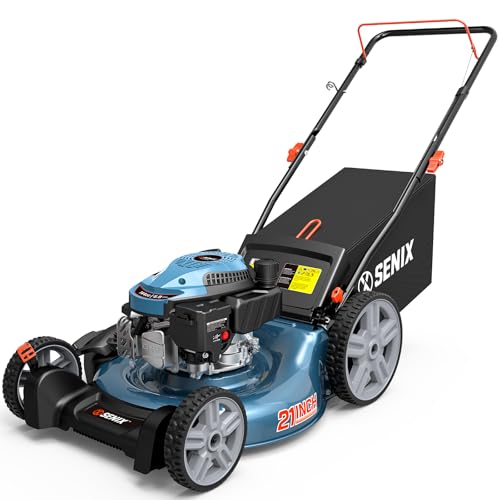
The SENIX 201cc 22-inch self-propelled gas lawn mower is a solid choice for homeowners and suburban property owners with medium to large lawns. This walk-behind mower packs a 201cc OHV 4-stroke engine that delivers reliable, long-lasting power for tackling thick grass and uneven terrain. The 22-inch steel cutting deck is wider than many standard 20-inch models, which means you can cover more ground per pass and finish mowing your front yard or backyard faster.
For lawn care enthusiasts or first-time buyers looking for a gas mower that won't break the bank, the SENIX offers great value. The self-propelled drive takes most of the pushing effort out of mowing, especially on gentle slopes or bumpy ground. The 11-inch rear wheels and 8-inch front wheels provide solid traction and help the mower glide smoothly over uneven spots. You can easily navigate around flower beds, garden hoses, and trees without wrestling the machine.
One of the standout features is the 3-in-1 function. You can quickly switch between bagging, mulching, or side discharge depending on your lawn's needs. Mulching clippings returns nutrients to the soil, which is great for lawn health during peak growing season. Bagging leaves a clean finish for a tidy look before a backyard barbecue, and side discharge handles thick grass without clogging. The single-lever height adjustment offers six positions from 1.25 to 4 inches, letting you dial in the perfect cut for different grass types and seasons.
Build quality is practical for everyday use. The steel deck feels sturdy and should hold up well against rocks and roots. The handle is comfortable and the self-propelled engagement is straightforward. Assembly is manageable with clear instructions, and most tools are included. Maintenance is typical for a gas mower: you'll need to check the oil, clean or replace the air filter, and sharpen the blade periodically. The engine has accessible components for oil changes and air filter servicing.
Storage is straightforward thanks to the foldable handle, which reduces the mower's footprint in a garage or shed. The grass bag has decent capacity for a 22-inch mower, though you may need to empty it more often if bagging very thick or wet grass. Some users might find the single-speed self-propelled drive limiting if they prefer to walk at a different pace, but for most homeowners it works well.
Overall, the SENIX 201cc self-propelled gas mower is a practical, budget-friendly option for suburban and rural property owners who need reliable cutting performance without the complexity of electric batteries. It's well-suited for medium to large lawns where gas power and wide deck coverage make a real difference in mowing time. If you're looking for a dependable gas mower that offers good versatility and easy maneuverability, this model is worth considering.
Pros
- Exact OEM fit for compatible Honda mowers - no guesswork.
- Easy to install with standard hand tools in minutes.
- Restores full adjustability to mower handle for comfortable operation.
- Genuine Honda part ensures long-term durability and reliability.
Cons
- Limited compatibility - only fits specific Honda mower models; must verify by model, type, and serial number.
- Does not include any additional hardware beyond the adjuster kit itself.
- Plastic construction may not withstand heavy abuse like metal alternatives, though it meets OEM specs.
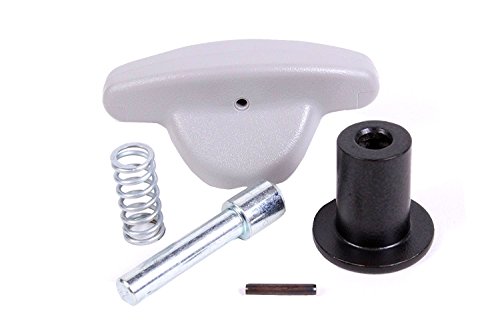
The Honda 06530-VL0-315ZA Adjuster Kit is a genuine OEM replacement part designed for specific Honda lawn mower models. This small but critical component allows you to adjust your mower's handle height, making it easier to maneuver and store. While it's not a power tool in the traditional sense, it's an essential maintenance item for anyone who owns a compatible Honda walk-behind mower.
This kit is best suited for homeowners and DIY enthusiasts who prefer to repair their own equipment rather than replace it. If your mower's handle adjuster has broken or become loose, this OEM part restores full functionality without the hassle of aftermarket modifications. The installation is straightforward - you only need basic hand tools and about 10 minutes of your time.
In real-world use, the adjuster kit performs exactly as the original part did, providing smooth and secure handle height adjustments. The gray plastic feels robust and matches the original material quality. It's lightweight and won't affect your mower's balance or handling. The only catch is compatibility: you must verify your mower's model, type, and serial number before purchasing, as this part does not fit all Honda mowers.
Build quality is typical of genuine Honda parts - reliable and durable for normal residential use. However, if you frequently fold or adjust your handle, the plastic may eventually wear, though that's true of any OEM part. For most users, this adjuster kit will last several seasons.
Overall, if you own a compatible Honda mower and need to fix a broken handle adjuster, this OEM kit is the right choice. It's affordable, easy to install, and restores your mower's usability. For DIYers who value keeping their equipment in top shape, this is a smart buy.
Color: Gray
Size: 06530VL0315ZA_HONDA
Dimensions: 5 x 2.99 x 1.42 inches
Weight: 0.0625 Pounds
Product Group: Lawn & Patio
Binding: Tools & Home Improvement

Pros
- Smooth variable-speed CVT adapts to your walking speed without jerky starts or stops.
- Automatic choke and reliable starting save time and frustration compared to traditional mowers.
- Deck washout port and foldable design simplify maintenance and storage.
- High rear wheels with deep tread handle rough terrain and damp grass better than standard wheels.
- Good value for the price, offering features typically found on more expensive models.
Cons
- Some users report the drive belt can slip or come off after several seasons, requiring repair.
- Front-wheel drive (FWD) loses traction on steep slopes or very uneven lawns; rear-wheel drive may be better for rough ground.
- Mower is relatively heavy at 84.9 pounds, which can be tiring to maneuver when not self-propelled.
The YARDMAX YG2860 is a 22-inch gas self-propelled walk-behind mower designed for homeowners who want a reliable, easy-to-use machine without the premium price tag. It packs a 201cc OHV engine that delivers ample power for cutting thick grass on medium to large lawns. The standout feature is the continuously variable transmission (CVT) which offers six speed selections. You simply shift the lever and the mower smoothly adjusts its pace to match your walking speed. No more constant tweaking of a traditional drive control.
This mower is best suited for homeowners with relatively flat lawns who value convenience. The automatic choke system eliminates the need to prime or choke the engine, so starting is as simple as pull and go. The 3-in-1 capability allows you to mulch, bag, or side-discharge clippings, giving you flexibility depending on the season or your lawn care routine. The MaxFlow deck design keeps clippings suspended longer, which improves mulching quality and reduces clumping.
Build quality is decent for the price range. The steel deck feels sturdy, and the high rear wheels with aggressive tread provide solid traction on dry grass and gentle slopes. However, the front-wheel drive system is less effective on steep hills or very uneven terrain. Some long-term reviews mention the drive belt can slip or require periodic adjustment, so plan for occasional maintenance. At nearly 85 pounds, the mower is heavy to push if you lose power, but the self-propelled system handles most of the work.
Ergonomically, the handle adjusts to your height, and the single-lever height adjustment is easy to use. The deck washout port is a real time-saver just attach a hose and flush out grass buildup. The mower also folds for compact storage, a nice bonus for small garages.
Overall, the YARDMAX YG2860 is a solid choice for the budget-conscious homeowner who wants a self-propelled mower with easy starting and variable speed control. It is not built for heavy commercial use, and the FWD design limits its performance on steep slopes. But for flat to gently rolling lawns, it delivers a clean, even cut with less effort than a push mower. If you are willing to handle minor drive system maintenance, this mower offers great value for the money.
Engine: 201cc OHV Yardmax engine with automatic choke
Cutting Width: 22 inches
Drive System: Front-wheel drive with 6-speed CVT
Height Adjustment: Single lever, 7 positions from 1.38 to 3.55 inches
Deck Type: 3-in-1 (mulch, bag, side discharge)
Wheels: High rear wheels with aggressive tread, double ball bearings
Weight: 84.9 pounds
Dimensions: 69 x 22.9 x 35.9 inches (folded for storage)
Warranty: 5 years on engine, 2 years on mower
Best for flat to gently sloping lawns up to 1/2 acre that are not overly rough or steep. Ideal for homeowners who want the convenience of self-propelled motion with variable speed control. Works well for regular weekly mowing of medium-density grass in suburban settings. Not recommended for commercial use or for yards with sharp inclines where front-wheel drive may struggle.
When choosing a self-propelled mower, consider your lawn's terrain and your comfort with maintenance. The YARDMAX YG2860 offers features like automatic choke and CVT that simplify operation. However, front-wheel drive is less capable on steep slopes than rear-wheel drive. If your lawn has hills, consider the RWD version (YG2861). Also budget for occasional drive belt service. For the price, this mower provides solid value for flat to moderate terrain.
The first step in repairing a self-propelled Honda mower is to isolate whether the engine is running but the drive is not, or if the engine itself is failing to start. These two scenarios require completely different diagnostic paths. For gas models, the drive system is typically mechanical or hydrostatic, while battery models use electric transmissions. Knowing which system you are dealing with prevents you from wasting time checking the wrong components.
| Symptom | Likely Cause | First Check |
|---|---|---|
| Engine runs, no drive | Disconnected cable, worn belt, clutch issue | Drive cable connection |
| Engine won’t start | Stale fuel, clogged filter, dead battery | Fuel quality or battery charge |
| Drive slips under load | Worn belt, hydrostatic pump issue | Belt tension and wear |
| Erratic speed control | Dirty sensor, loose wiring | Speed control lever and wiring |
Before opening any panels, ensure the mower is on a flat, stable surface. Disconnect the spark plug wire for gas models or remove the battery key for electric models to prevent accidental starting. This safety step is critical before inspecting moving parts like belts or blades. A quick visual inspection often reveals loose cables, obvious belt wear, or fluid leaks that point directly to the problem.
- Check the drive cable connection at the handle and the deck.
- Inspect the drive belt for cracks, fraying, or glazing.
- Verify the air filter is clean and not clogged with debris.
- Test the battery voltage if the mower is battery-powered.
- Ensure the spark plug is clean and the gap is correct.
- Look for fuel leaks or stale fuel in the tank.
Diagnosing Drive System Failures in Gas Models
Gas-powered Honda mowers often use a mechanical drive system where a cable connects the handle lever to a clutch on the rear axle. If the engine runs but the mower does not move, the drive cable is the most likely culprit. Over time, this cable can stretch, snap, or become disconnected from the pulley system. Check the cable routing to ensure it is not pinched or rubbing against sharp edges.
If the cable is intact, inspect the drive belt. The belt transfers power from the engine to the wheels. A worn or glazed belt will slip under load, causing the mower to move slowly or not at all. You can check the belt tension by pressing on it; it should have some give but not be loose. If the belt is damaged, it needs replacement. Always match the belt size and type to your specific model number.
Some Honda models use a hydrostatic transmission. In these units, the drive failure might indicate a pump issue or low fluid levels. Check the hydrostatic fluid level if your model has a sight glass. Low fluid can cause slipping or loss of drive. If the fluid is contaminated or low, it may be time for a fluid change or a professional inspection of the pump assembly.
Troubleshooting Engine Start Issues on Gas Mowers
When a gas Honda mower fails to start, the problem is usually related to fuel, air, or spark. Start with the fuel. Old fuel is a common cause of starting problems. If the fuel has been sitting for more than a month, it may have degraded and clogged the carburetor. Drain the old fuel and replace it with fresh, stabilized gasoline. This simple step resolves many starting issues.
Next, check the air filter. A clogged air filter restricts airflow to the engine, making it hard to start. Remove the filter and inspect it. If it is dirty, clean it with soap and water or replace it. A clean air filter ensures the engine gets the right air-fuel mixture. Honda recommends checking the air filter regularly, especially after mowing in dusty conditions.
The spark plug is another critical component. A fouled or worn spark plug can prevent the engine from igniting. Remove the plug and inspect the electrode. If it is black or oily, it needs cleaning or replacement. Check the spark plug gap with a feeler gauge to ensure it matches the manufacturer’s specification. A correct gap is essential for a strong spark and reliable starting.
For more on a connected point, our page on best variable speed self propelled lawn mower goes into it separately.
Fixing Drive and Power Issues on Battery Mowers
Battery-powered Honda mowers like the HRX-BE use electric transmissions for self-propulsion. If the drive stops working, the first check is the battery charge. A low battery can cause the drive motor to lose power. Ensure the battery is fully charged and properly seated in the battery bay. Loose connections can interrupt power to the drive system.
Check the speed control lever and its wiring. The lever sends a signal to the drive motor to adjust speed. If the lever is stuck or the wiring is loose, the drive may not respond. Inspect the wiring for any signs of damage or corrosion. Clean any corroded connectors with electrical contact cleaner. A secure connection is vital for consistent drive performance.
If the battery is charged and the wiring is secure, the issue might be with the drive motor or controller. These components are more complex and may require professional diagnosis. If you are not comfortable working with electrical systems, consult a Honda service center. They have the tools and expertise to test the motor and controller accurately. Attempting to repair these parts without proper knowledge can lead to further damage.
A closely related question is covered in best self propelled lawn mower electric start, which may help alongside this section.
Maintenance Tips to Prevent Future Failures
Regular maintenance is the best way to prevent self-propelled drive and engine failures. Clean the air filter and replace it as recommended by Honda. A clean filter keeps the engine running efficiently. Check the fuel system for leaks and ensure the fuel is fresh. Stale fuel can clog the carburetor and cause starting problems. Use fuel stabilizer if you store the mower for extended periods.
Inspect the drive belt and cable regularly. Look for signs of wear, such as cracks, fraying, or stretching. Replace these components before they fail completely. A worn belt can slip and overheat, causing further damage. Lubricate the drive cable if your model requires it. Follow the manufacturer’s lubrication schedule to keep the cable moving smoothly.
For battery mowers, store the battery in a cool, dry place. Extreme temperatures can reduce battery life and capacity. Charge the battery periodically if it is not in use. A fully charged battery is ready to go when you need it. Avoid storing the battery in a discharged state, as this can damage the cells. Proper storage extends the life of your battery and ensures reliable performance.
- Clean the air filter every 25 hours of use.
- Replace the spark plug annually or as needed.
- Inspect the drive belt for wear each season.
- Use fresh fuel or add stabilizer for storage.
- Store the battery in a cool, dry location.
- Check the drive cable for tension and wear.
When to Seek Professional Help
Some issues are beyond the scope of DIY repair. If the engine is making unusual noises, such as knocking or grinding, stop using the mower immediately. These sounds can indicate internal engine damage. Continuing to run the mower can worsen the problem and lead to costly repairs. A professional mechanic can diagnose the issue and recommend the best course of action.
If the drive system fails after checking the cable, belt, and battery, the problem may be with the transmission or controller. These components require specialized tools and knowledge to repair. Honda service centers have access to genuine parts and trained technicians. They can perform a thorough diagnosis and repair the issue correctly. Using genuine parts ensures compatibility and long-term reliability.
Always consult the owner’s manual for specific maintenance and repair instructions. The manual provides model-specific guidance and safety warnings. If you are unsure about a repair step, stop and seek help. Attempting a repair without proper knowledge can void the warranty or cause safety hazards. When in doubt, professional service is the safest and most reliable option.
Resolving a self-propelled Honda mower issue starts with identifying the exact symptom and following a logical diagnostic path. By checking the drive cable, belt, fuel system, and battery connections, you can address most common problems. Regular maintenance prevents these issues from occurring. If the problem persists or involves complex components, seek professional help to ensure a safe and effective repair.
If this topic is part of a bigger decision, best self propelled lawn mower on the market is a useful related read.




Write Your Review
No reviews yet. Be the first to share your experience!