


Putting lawn mower gas into a car fuel tank is not recommended because small-engine fuel mixes are formulated for different combustion requirements than automotive gasoline. Most walk-behind mowers use 2-stroke engines that require a pre-mixed ratio of gasoline and oil, while 4-stroke models use straight gasoline similar to cars but often with different octane or ethanol specifications. The key distinction is that 2-stroke fuel contains oil, which can clog fuel injectors and catalytic converters in modern vehicles.
Homeowners often wonder if they can save money by using leftover mower fuel in their vehicles, especially when storing fuel for the season. However, the risk of engine damage outweighs any minor cost savings. This article explains the specific differences between small-engine and automotive fuels, why mixing them is dangerous, and how to properly dispose of or use leftover mower gasoline. Understanding these mechanical differences helps protect your car’s long-term performance and resale value while ensuring safe fuel storage practices.

Pros
- Auto choke and primer bulb make starting nearly effortless – great for less experienced users or those who dislike pulling cords.
- Lightweight at 58.4 pounds, so it’s easy to push on flat terrain and navigate around obstacles.
- Durable steel deck feels solid and should handle years of typical use without issues.
- Five height adjustments give you flexibility to mow different grass types and seasons.
Cons
- Only side discharge included – no mulching or bagging capability, so you’ll need to rake or use a separate catcher for clippings.
- 18-inch cutting width is smaller than many standard mowers, meaning more passes on larger lawns.
- Gas engine requires regular maintenance like oil changes and fuel stabilization, which may be a drawback for eco-conscious users.
If you’re a homeowner or first-time buyer looking for an affordable gas push mower that starts easily and handles small to medium lawns, the PowerSmart 18-inch 144cc model deserves a close look. This walk-behind mower is designed for practicality: it’s lightweight, maneuverable, and built with a steel deck that can take the bumps and knocks of regular yard work. The standout feature is the auto choke and primer bulb combo, which means you spend less time yanking a cord and more time mowing on Saturday morning.
When it comes to cutting performance, the 18-inch blade does a solid job on typical suburban grass, including thick patches that might bog down weaker mowers. The side discharge clears clippings efficiently, so you won’t have to stop frequently to unclog. However, if you prefer mulching or bagging, you’ll need to handle clippings separately – this mower is side-discharge only. The five cutting heights (1.5 to 3.9 inches) are easy to adjust with the dual-lever system, letting you tailor the cut for spring growth, summer heat, or fall leaf cleanup.
Build quality is a highlight: the steel deck feels sturdy and resistant to rust, while the 8-inch rear and 7-inch front wheels provide good traction on uneven ground. The mower is light enough (58 pounds) to push uphill on gentle slopes without straining, and the handle height is comfortable for most users. Storage is straightforward – the handle folds down, so the mower takes up minimal space in a garage or shed. Maintenance is also simple: the oil fill and air filter are easy to access, and changing the blade is a straightforward job with basic tools.
That said, there are a few limitations to keep in mind. The 18-inch cutting width means more passes on larger lawns, so it’s best suited for yards up to a quarter acre. The gas engine requires regular care – oil changes, fuel stabilization, and cleaning – which may not appeal to everyone. Noise levels are typical for a gas mower, so early morning mowing might disturb neighbors. And since there’s no grass bag, you’ll need to rake or leave clippings on the lawn.
Overall, the PowerSmart 18-inch gas push mower is a practical, budget-friendly option for homeowners who want a reliable machine for basic lawn maintenance. It’s especially good for first-time buyers, elderly users who appreciate easy starting, or anyone with a small yard who doesn’t need mulching or bagging. If you’re after a simple, no-fuss mower that gets the job done without a high price tag, this one is worth considering.
Pros
- Lightweight and easy to maneuver around flower beds and garden hoses.
- Foldable handle for compact storage in a garage or shed.
- 3-in-1 cutting options offer versatile lawn care for mulching, bagging, or side discharge.
- Self-propelled drive reduces user effort on slopes and uneven ground.
Cons
- Limited cutting height adjustment options may not suit all grass types or desired lawn heights.
- Gas engine requires regular maintenance (oil changes, spark plug checks) compared to electric models.
- Brand is relatively new, so long-term durability is unproven based on available user reviews.
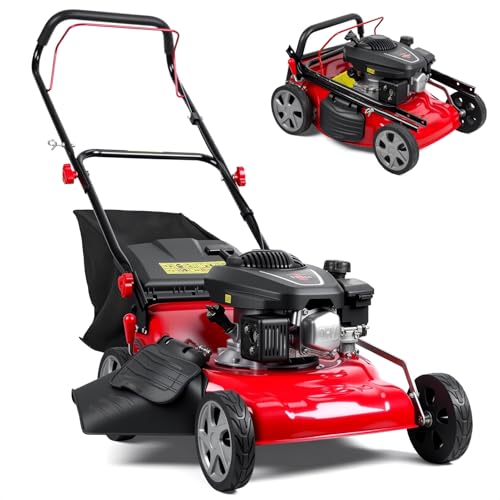
The Smalibal 131cc Gas Self-Propelled Lawn Mower is a budget-friendly walk-behind mower designed for homeowners with small to medium yards. It combines the power of a gas engine with the convenience of self-propulsion, making it a solid choice for first-time mower buyers, budget-conscious shoppers, or anyone looking for an affordable upgrade from a basic push mower. With a foldable handle and lightweight build, this mower also suits those with limited storage space, such as apartment dwellers or suburban residents with small sheds.
In terms of cutting performance, the 131cc engine provides enough torque to handle overgrown grass, thick weeds, and even light brush. The high-strength steel blades work well for mulching leaves or bagging clippings, and the 3-in-1 system lets you switch between mulching, rear bagging, and side discharge without tools. The 50-liter grass bag has a wide opening that makes emptying quick, though you may need to empty it more often in tall or damp grass. According to the product description, the mower can collect a large amount of grass before needing a trip to the compost pile, which is practical for weekly lawn maintenance.
Build quality focuses on lightweight materials and convenience. The mower features a folded design that reduces its footprint for storage, and the self-propelled rear-wheel drive gives good traction on gentle slopes or uneven terrain. The big wheels help with maneuverability around flower beds and garden hoses, and the overall weight is manageable for most users. However, the deck material is not specified in the specs, so we can't confirm if it's steel or polymer. Given the low price point, it's likely a steel deck with a basic paint finish - adequate for regular use but possibly prone to rust if not stored properly.
Ease of use is a highlight. The self-propelled system reduces the effort needed on slopes, and the push-button start simplifies the starting process (though it may still require a pull cord as a backup). Assembly is reportedly straightforward, with clear instructions included. Maintenance follows typical gas mower routines: checking oil levels, cleaning or replacing the air filter, and sharpening the blade each season. The foldable handle also allows for vertical storage, a nice touch for cramped spaces.
Realistically, this mower has limitations. The cutting height adjustment range isn't detailed in the specs, so you may have fewer options for fine-tuning your lawn height. Gas engines are louder and emit fumes, so it's less eco-friendly than electric alternatives and may not be ideal for early-morning mowing in quiet neighborhoods. The brand is relatively new, so long-term reliability is unknown - though the price makes it a low-risk entry point for gas mower ownership.
Overall, the Smalibal 131cc Gas Self-Propelled Lawn Mower offers good value for budget-minded homeowners with small to medium yards, especially if you want self-propelled assistance on slopes. It's a practical choice for routine lawn care, mulching fall leaves, or clearing overgrown patches. If you prioritize quiet operation or eco-friendliness, consider an electric mower instead, but for affordable gas power with convenient storage and versatile cutting options, this mower is worth a look.

Pros
- Reliable 144cc engine with no oil mixing needed, plus better fuel economy than 2-stroke alternatives.
- Durable steel deck and overmolded wheels handle rocky or hilly lawns well.
- 5 height settings give you control over cut length from short to tall grass.
- Low noise compared to many gas mowers, making it neighbor-friendly during early morning or evening mowing.
- Easy maintenance with accessible air filter and blade replacements.
Cons
- No self-propulsion; you'll need to push it manually, which can be tiring on larger yards or steep slopes.
- At 43.4 pounds, it's heavier than some comparable push mowers, though the wheels help rolling.
- Only side discharge included; no bagging or mulching option mentioned, limiting versatility for some users.
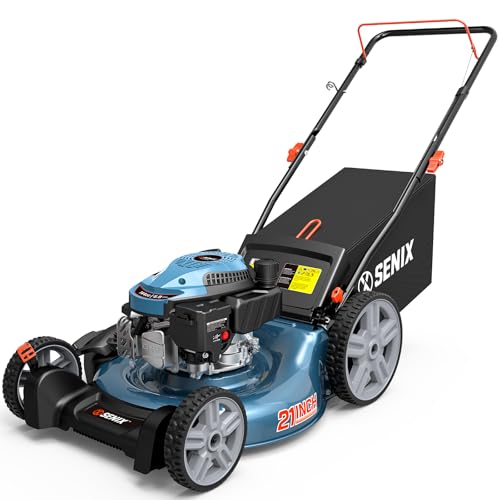
The SENIX LSPG-L5 is a gas-powered push lawn mower designed for homeowners who want a dependable machine without the complexity of battery charging or 2-stroke engine maintenance. It uses a 144cc 4-cycle OHV engine that runs on straight gasoline, offering a simple start and consistent power for cutting grass on small to medium lawns (up to about a quarter acre).
This mower is best suited for DIY-oriented homeowners who value fuel efficiency and low noise over the convenience of self-propulsion. The 20-inch steel deck provides a good balance between cutting width and maneuverability, allowing you to trim around flower beds and fences without too much hassle. The 5-position height lever lets you quickly adjust from 1.25 to 3.75 inches, accommodating different grass lengths and seasonal conditions.
Performance is solid for its class. The engine starts reliably (prime and pull) and runs smoothly, cutting through typical turf grass without bogging down. The side discharge clears clippings well, though on very thick wet grass you may need to overlap passes. The 7-inch overmolded wheels roll easily over uneven ground and small bumps, but the lack of self-propulsion means you'll feel the weight on inclines or longer sessions. At 43 pounds, it's manageable but not lightweight.
Build quality is good for the price point. The steel deck feels sturdy and the plastic components are well fitted. Assembly takes about 20 minutes with basic tools. The 2-year warranty adds peace of mind, though you'll want to keep the blade and air filter clean to ensure longevity. A realistic drawback: there's no mulching or bagging attachment included, so if you need those features you'll have to look at other models or buy accessories separately.
Overall, the SENIX 144cc gas lawn mower is a smart choice for budget-conscious homeowners who want a reliable gas mower for flat to slightly rolling yards. It's not for steep hills or large acreage, but for everyday lawn care it delivers good value with low operating costs.
Brand: SENIX
Power Source: Gas Powered (4-stroke OHV engine, 144cc)
Cutting Width: 20 inches
Cutting Height Range: 1.25 - 3.75 inches (5 positions)
Discharge Type: Side discharge
Wheel Size: 7 inches front and rear (overmolded)
Deck Material: Heavy-duty steel
Weight: 43.4 pounds
Dimensions (assembled): 27.2 x 22.2 x 14.2 inches
Assembly Required: Yes
Warranty: 2-year manufacturer warranty
UPC: 843212102748
Model Number: GCJ-LSPG-L5
The primary reason to avoid using lawn mower fuel in a car is the presence of oil in 2-stroke mixes. Small-engine 2-stroke mowers, such as many reel or lightweight push models, burn a mixture of gasoline and 2-cycle oil to lubricate internal moving parts. Automotive engines have separate oil systems and do not burn oil as part of the fuel. Introducing oil-rich fuel into a car’s combustion chamber creates excessive carbon deposits on spark plugs and piston rings, leading to poor starting, rough idling, and reduced fuel efficiency over time.
| Fuel Type | Typical Use | Oil Content | Car Compatibility |
|---|---|---|---|
| 2-Stroke Mix | Small 2-stroke engines | Yes (2-5%) | No |
| 4-Stroke Gas | Small 4-stroke engines | No | Often Yes (Check Octane) |
| Automotive Gas | Car/Truck engines | No | Yes |
Even if the mower is a 4-stroke model that uses straight gasoline, there are still compatibility concerns. Small-engine manufacturers often specify unleaded gasoline with an octane rating of 87 or higher, which is the same as standard automotive regular gas.
However, some small-engine fuels may contain higher ethanol blends or different stabilizers that are not optimized for long-term storage in a car’s fuel system. Ethanol can attract moisture, leading to phase separation and corrosion in fuel lines and injectors. Always check the octane requirement in your car’s owner’s manual before using any fuel source.
The risk of clogging the catalytic converter is particularly high with 2-stroke fuel. Modern cars rely on catalytic converters to reduce harmful emissions. Oil from 2-stroke fuel burns incompletely in the high-temperature environment of the exhaust system, creating ash and carbon buildup that coats the catalyst. This reduces the converter’s efficiency, triggers the check engine light, and can lead to expensive repairs. The manufacturer of your vehicle specifically designs the fuel system to handle only automotive-grade gasoline without additives or oils.
- 2-stroke fuel contains oil that damages car engine components
- Carbon deposits clog spark plugs and fuel injectors
- Catalytic converters are highly sensitive to oil-rich fuel
- Octane ratings must match the vehicle’s requirements
- Ethanol content in small-engine fuel may vary
- Moisture absorption in ethanol blends causes corrosion
Identifying 2-Stroke vs 4-Stroke Mower Fuel
Determining whether your mower uses 2-stroke or 4-stroke fuel is the first step in safe fuel management. Most modern walk-behind mowers, including popular push and self-propelled models, use 4-stroke engines that run on straight gasoline. These engines have a separate oil fill port and do not require oil mixed into the fuel. However, older mowers, some trimmers, and certain lightweight models still use 2-stroke engines. Check the owner’s manual or the fuel cap label to confirm the engine type. If the label says “2-cycle” or “pre-mix,” the fuel contains oil.
Visual inspection of the fuel can also provide clues. 2-stroke fuel often has a slightly different smell and may appear slightly darker due to the oil content. However, this is not a reliable test. The only safe method is to consult the manufacturer’s documentation. If you are unsure, assume the fuel is not safe for your car. Using the wrong fuel type is a common mistake that leads to unnecessary engine stress and potential warranty issues.
Impact on Engine Performance and Longevity
Using lawn mower gas in a car can lead to immediate and long-term performance issues. In the short term, you may notice harder starting, rough idling, or a loss of power during acceleration. These symptoms occur because the engine is not receiving the correct fuel-air mixture. Over time, carbon buildup restricts airflow and combustion efficiency, reducing fuel economy and increasing emissions. The engine may also run hotter, increasing wear on internal components like pistons and valves.
Long-term exposure to oil-rich fuel can cause severe damage to the fuel system. Fuel injectors are precision components that can clog with carbon deposits, leading to uneven fuel delivery. This not only hurts performance but can also damage the engine control unit (ECU) as it struggles to compensate for the poor combustion. In extreme cases, a clogged fuel filter or injector can cause the engine to stall while driving, creating a safety hazard. Regular use of the wrong fuel voids most manufacturer warranties, leaving you responsible for all repair costs.
Safe Disposal and Proper Storage of Leftover Fuel
If you have leftover mower fuel, do not pour it down the drain or into the ground. Gasoline is hazardous waste and must be disposed of properly. Many local hazardous waste facilities accept small quantities of gasoline for free or at a low cost. Check with your local municipality or waste management provider for specific drop-off locations and guidelines. Never mix gasoline with other chemicals or liquids before disposal.
For storage, keep fuel in approved, labeled containers that are specifically designed for gasoline. Store containers in a cool, dry place away from direct sunlight and heat sources. Gasoline degrades over time, losing its volatility and effectiveness. Adding a fuel stabilizer can extend the life of stored fuel, but it is not a substitute for proper disposal. If you are not sure how to handle leftover fuel, contact a professional waste disposal service. Safe storage prevents accidents and environmental contamination.
For more details on maintaining your small engine equipment, you might find our guide on small yard mower care helpful. It covers routine maintenance tasks that extend the life of your mower and ensure safe operation.
Common Myths About Fuel Compatibility
A common myth is that all gasoline is the same. In reality, different engines require different fuel specifications based on their design and operating conditions. Automotive engines are designed to handle the specific octane ratings and ethanol blends available at gas stations. Small engines, on the other hand, may be more sensitive to certain additives or require specific octane levels to prevent knocking. Assuming that any gasoline will work in any engine is a dangerous misconception that can lead to costly repairs.
Another myth is that a small amount of the wrong fuel will not cause damage. Even a small volume of 2-stroke fuel in a car’s tank can introduce oil into the fuel system, starting the process of carbon buildup. The damage may not be immediately apparent, but it accumulates over time. It is better to be safe and never mix fuels. If you accidentally put the wrong fuel in your car, consult a mechanic immediately for advice on flushing the system.
- All gasoline is not interchangeable between engine types
- Small amounts of oil-rich fuel still cause damage
- Octane ratings matter for engine performance
- Ethanol blends can affect fuel system components
- Accidental mixing requires professional assessment
- Prevention is cheaper than engine repair
Understanding the differences between small-engine and automotive fuels is essential for protecting your investment. Always use the fuel specified in your vehicle’s owner’s manual, and dispose of leftover mower fuel responsibly. If you are unsure about fuel compatibility, ask a professional or refer to the manufacturer’s guidelines.
Safe fuel practices ensure reliable performance and longevity for both your car and your lawn equipment. For more insights on power tool safety, see our guide on electric chainsaw performance, which highlights the importance of using the correct power source and fuel for each tool.





Write Your Review
No reviews yet. Be the first to share your experience!