


Most residential lawns thrive when cut between 2 and 4 inches, though the exact setting depends on grass type, season, and mower capability. Understanding what height for lawn mower is correct prevents scalp damage, reduces weed pressure, and keeps the turf dense enough to resist drought and pests.
The ideal height is not a single fixed number but a range adjusted for growth conditions. Tall fescue and zoysia often need the upper end of the scale, while Bermuda and Kentucky bluegrass may perform better slightly lower. If you are unsure where to start, check the manufacturer’s recommended range for your specific mower model, as some units have limited adjustment travel. For context on how height interacts with terrain, our lawn mower for slopes guide covers how cut height affects traction and blade clearance on uneven ground.

Pros
- Simple to use, no complex setup or training required.
- Scale markings are clear and easy to read on the job.
- Lightweight and portable, easy to carry between mowers or job sites.
- Affordable price point for a dedicated leveling tool.
Cons
- Plastic construction may not be as durable as metal alternatives over many years of heavy use.
- Scale range limited to 1 1/2 to 5 inches, which may not suit every mower deck or aftermarket blade setup.
- Manual measurement still relies on your eye for true level; best used as a quick reference, not a precision instrument.
The Xhziy Mower Deck Leveling Gauge is a straightforward measuring tool designed to help you set blade height accurately on lawn mowers. It's a pocket-sized plastic gauge that reads from 1 1/2 to 5 inches, giving you a quick visual reference for leveling your deck. No batteries, no electronics, just a simple mechanical tool that gets the job done.
This gauge is best suited for DIY homeowners and lawn maintenance techs who want a faster way to check blade height without dragging out a tape measure or level. If you zero-turn mows every week or you're a contractor who maintains a fleet of mowers, this tool saves time and reduces guesswork. The ergonomic handle makes it easy to use even with greasy fingers or work gloves.
In real-world use, the gauge works as advertised. Place it on the mower deck, line up the scale with the blade tip, and read the height. The markings are clear and easy to interpret. It's robust enough for occasional drops on the lawn or shop floor, though the plastic body won't survive a direct hit from a truck or heavy equipment.
Build quality is decent for the price. The plastic feels solid, and the blue color helps prevent losing it in the grass. At just 2.24 ounces and measuring 12x5x2 inches, it's truly portable. You can stash it in a tool pouch or leave it in the mower's storage compartment. The main drawback is the limited range and the fact it requires manual reading, so you still need some basic understanding of deck leveling. Also, if you have non-standard blades or a deck with unusual geometry, the gauge might not fit perfectly.
Overall, for under ten bucks, the Xhziy Mower Deck Leveling Gauge is a handy addition to any lawn care setup. It won't replace a professional dial indicator or laser level, but for everyday tuning and quick checks, it's a practical, no-fuss tool. I'd recommend it to any homeowner who wants a level cut without the hassle, or to lawn service crews who need a quick reference gauge for multiple mowers.
Pros
- Wide 26-inch sweep path makes quick work of leaf and grass cleanup on average-sized lawns.
- 10-level height adjustment gives flexibility for different grass lengths and surfaces.
- Sturdy build with metal frame and rubberized wheels that handle damp and uneven ground.
- Large 7 cu ft hopper and quick-release dump system save time during peak fall cleanup.
- Lightweight enough to push and store without needing gas, oil, or charging.
Cons
- Wet leaves and heavy debris can reduce sweeping efficiency and may require waiting for dry conditions.
- No motor means all pushing power comes from you, which may be tiring on larger or sloped properties.
- May need occasional brush replacement depending on use, and replacement brushes are optional accessories.
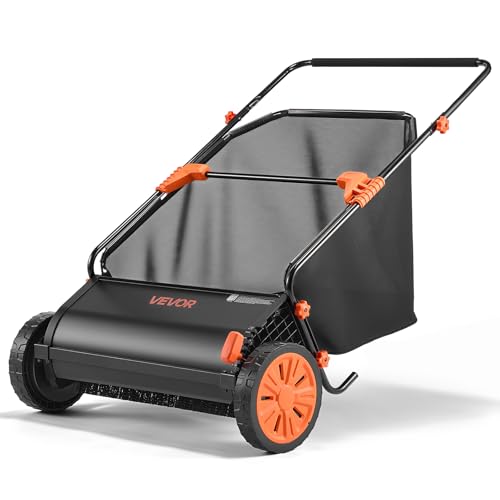
The VEVOR 26 inch push lawn sweeper is a practical cleanup tool that works behind your mower to collect grass clippings, leaves, and pine needles. It is not a mower itself, but rather a yard sweeper that makes seasonal cleanup easier. For homeowners with small to medium lots, suburban yards, or even apartment patios with grass areas, this sweeper can save a lot of raking time.
Performance wise, the 26 inch sweep path is generous for a push model, and the 1:5 brush to wheel ratio helps gather debris effectively in fewer passes. The three V-shaped rotating brushes reach down into the grass while the 10-level adjustable height lets you set the sweeping depth for short grass, tall grass, or a bare concrete surface. Like most lawn sweepers, it works best on dry leaves and clippings. Wet leaves can clog or reduce efficiency, so it is a good idea to wait for the grass and leaves to dry.
Build quality seems solid for the price. The metal frame feels sturdy, and the PP bristles resist tangling from weeds and pine needles. The upgraded PP and rubber wheels roll smoothly and offer decent traction on damp ground. The hopper bag holds 7 cubic feet of debris, which is large enough to reduce frequent emptying, and the four-point quick-release buckles make it easy to dump. The foam-padded handle is a nice touch for longer cleanup sessions.
Setup and maintenance are straightforward. The product description says core parts come pre-assembled, so you mainly need to attach the frame and hopper. There are optional replacement brushes available if the bristles wear down over time. No cords, fuel, or engine maintenance to worry about. Just push, sweep, and empty.
Storage is manageable because it is a self-contained push unit, but the 50 inch length means it takes up some floor space in a garage or shed. It weighs about 27.5 pounds, so most users can lift it without trouble. One limitation is that it does not have a motor, so you have to supply the push power. It also is not designed for wet heavy debris or nuts. For routine lawn maintenance and fall leaf cleanup, this sweeper may be a smart budget-friendly choice.
Overall, the VEVOR push lawn sweeper is best suited for budget-conscious homeowners, suburban residents, first-time yard tool buyers, gardeners, and anyone who wants to reduce raking. It won't handle every cleanup job, but for grass clippings and leaves on a typical lawn, it offers a lot of convenience for the price.
Pros
- Remote control operation eliminates the need to push or ride, reducing physical strain and making mowing accessible for elderly or mobility-limited users.
- Crawler tracks provide superior traction on slopes and uneven terrain, outperforming wheeled mowers in challenging conditions.
- Hybrid power system offers long runtime and low maintenance, with easy startup and fuel efficiency.
- Zero-turn maneuverability allows precise navigation around obstacles, making it effective for complex landscapes.
Cons
- Higher price point compared to traditional push or riding mowers, which may not suit budget-conscious buyers with flat, small lawns.
- Heavier than standard push mowers due to tracks and hybrid system, requiring careful transport or storage.
- Limited customer reviews available (0 reviews at launch), so real-world long-term reliability is unverified.
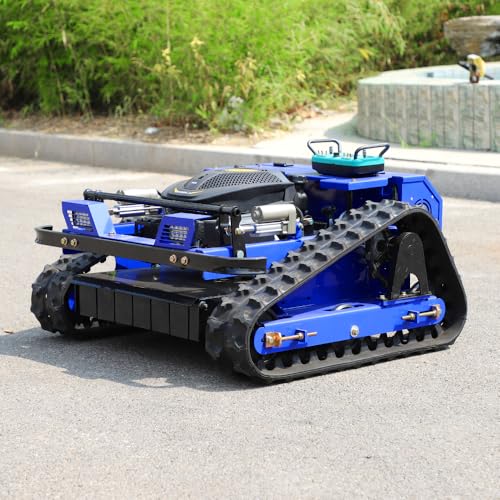
If you have a steep slope, a large property, or just want to avoid the physical effort of pushing a mower, the INFRONT Remote Control Lawn Mower offers a compelling solution. This isn't a typical robotic mower that wanders on its own. Instead, you control it with a handheld remote, directing it across your yard while you stay comfortable on the patio or at the edge of the lawn. It's designed for homeowners who need to tackle challenging terrain, rural property owners managing acreage, or anyone who wants to mow hills safely without risking a slip or fall.
At the heart of this mower is a hybrid oil-electric power system, which combines a gas engine for extended runtime and an electric motor for smooth, quiet operation. The gas engine provides the muscle to drive the crawler tracks and spin the dual alloy blades, while the electric drive system helps with maneuverability and reduces noise. Based on the product description, the engine is easy to start and has low fuel consumption, which is a plus for those mowing large areas. The dual blades with rebound protection are a smart feature: if you hit a rock or stump, the blades bounce back rather than snapping, which can save you from frequent blade replacements.
The crawler track system is the standout feature here. Unlike traditional wheels, tracks distribute weight evenly and grip the ground better, making this mower stable on slopes, wet grass, or loose soil. You can mow hills that would be dangerous with a push mower or even a typical riding mower. The zero-turn capability adds to its agility, letting you pivot around trees, garden beds, and fence posts without leaving uncut patches. For homeowners with complex landscaping, this is a huge advantage. The adjustable cutting height gives you control over grass length, from a low trim to a more relaxed cut, depending on the season or your preference.
Build quality appears solid, with a steel or heavy-duty construction that can handle rough use. The mower measures 36.6 x 35.4 x 20.4 inches, which is substantial but not overly large. While the product data doesn't specify deck material, the tracked chassis and hybrid system suggest robust engineering. The remote control is described as intuitive and user-friendly, allowing you to adjust cutting height on the fly. This is a practical feature when you're moving from a flat area to a slope or from thick grass to thin.
One limitation to consider is the price point at $1,799. This is an investment, and it's best suited for those who genuinely need the remote control and track traction. If you have a small, flat suburban lawn, a traditional push or self-propelled mower will be more cost-effective and easier to store. The mower's weight may also be a factor for storage; you'll need garage space and perhaps a ramp to get it on a trailer. Additionally, there are no user reviews yet, so the hybrid system's long-term reliability is unproven in the field. However, the brand seems to focus on outdoor power equipment, and the features are well thought out.
For the right buyer, the INFRONT Remote Control Lawn Mower is a game changer in the literal sense of changing how you approach lawn care. It's ideal for homeowners with steep slopes, large properties, or physical limitations that make pushing a mower difficult. It also appeals to lawn care enthusiasts who enjoy having precise control over their mowing pattern. If you fall into those categories, this mower could save you time, effort, and even risk. Just be sure you're comfortable with the price and the need for occasional maintenance on the gas engine. Overall, it's a practical, innovative solution for challenging yards.
Pros
- Affordable and easy to use with clear instructions
- Precise leveling leads to a healthier, more attractive lawn
- Durable plastic design holds up to regular workshop use
- Compatible with a wide range of lawn mower brands and models
Cons
- Requires user to ensure tires are properly inflated before use for accurate leveling
- Plastic construction may not withstand heavy impact if dropped repeatedly
- Only measures blade height; does not include a leveling bubble or digital readout
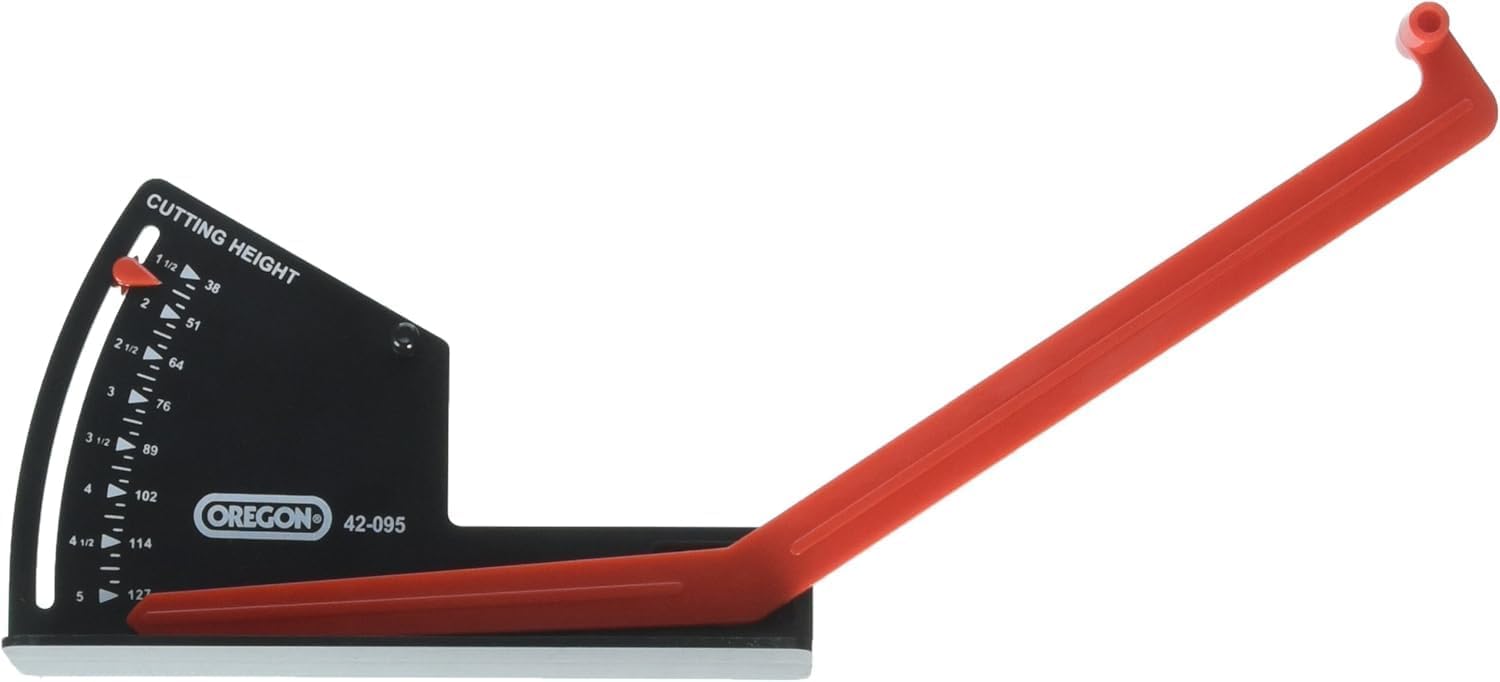
The Oregon Small Engine Deck Leveling Gauge is a straightforward maintenance tool designed to ensure your lawn mower deck sits perfectly level. An unlevel deck causes uneven cutting, scalping, and accelerated wear on blades and spindles. This gauge solves that problem by giving you a quick, accurate way to measure blade tip height from the ground.
This tool is best suited for homeowners and DIY enthusiasts who want a professional-looking lawn without the hassle of trial-and-error adjustments. It's equally useful for small engine mechanics or anyone maintaining a riding mower or push mower. The gauge works on almost any deck style, making it a versatile addition to your workshop.
In real-world use, the gauge is refreshingly simple. Park on level ground, set your mower to the desired cutting height, and place the gauge under each blade tip. The clear markings let you see instantly if both sides are equal and if the front is slightly lower than the back. Adjust the deck hangers until both sides match, and you're done. The pro tip about checking tire pressure before leveling is a practical reminder that saves time.
Build quality is solid for a plastic tool. It's lightweight and won't rust, so you can toss it in a toolbox or hang it in the garage without worry. The only real limitation is that you must have the mower on level ground and tires properly inflated for the reading to be accurate. Also, if you're used to a digital level or bubble gauge, this might feel a bit basic. But for the price, it does exactly what it promises.
Overall, the Oregon Deck Leveling Gauge is a no-nonsense purchase for anyone serious about lawn care. It pays for itself in fewer blade replacements and a noticeably better cut. If you're tired of uneven stripes or patches in your yard, grab this gauge and spend ten minutes leveling your deck. You'll see the difference on the first mow.

Pros
- Powerful gas engine handles thick, wet, and tall grass without bogging down.
- Self-propelled drive reduces effort on slopes and long stretches, great for larger lawns.
- 22-inch cutting width strikes a good balance between speed and maneuverability.
- Versatile 3-in-1 system covers mulching, bagging, and side discharge for year-round lawn care.
- Single-lever height adjustment is quick and tool-free, convenient for adjusting on the fly.
Cons
- Weighs 79 pounds, which may be heavy for some users to push manually if the self-propelled system fails or on flat ground.
- Gas engine requires regular maintenance like oil changes and fuel stabilization, less convenient than cordless electric models.
- Grass bag capacity not specified; may need frequent emptying on large lawns with heavy growth.
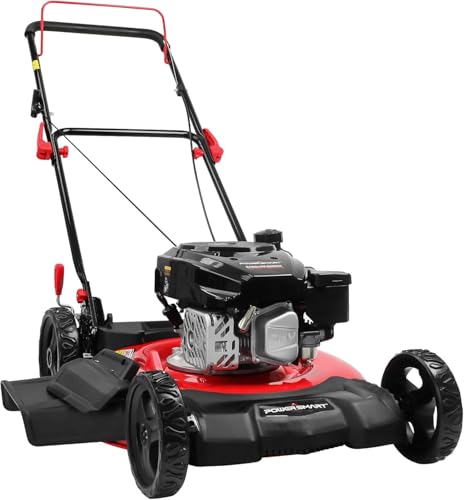
The SENIX 201cc 22-inch self-propelled gas lawn mower is designed for homeowners who need reliable cutting power for medium to large lawns. Powered by a 201cc 4-cycle OHV engine, this mower delivers consistent performance to tackle thick grass, uneven terrain, and seasonal overgrowth. Its 22-inch steel cutting deck is wider than many entry-level mowers, helping you cover more ground in fewer passes and finish mowing faster.
This mower is best suited for suburban and rural property owners with sloped or uneven lawns. The rear-wheel-drive self-propelled system, paired with large 11-inch rear wheels, provides excellent traction on hills and helps you maintain control on bumpy ground. The variable speed control lets you match your walking pace, which is especially helpful for elderly users or those with larger yards. First-time mower buyers will appreciate the straightforward single-lever height adjustment, offering six positions from 1.25 to 4 inches for precise cutting across different grass types and seasons.
In terms of lawn care performance, the 3-in-1 cutting system gives you flexibility: bag clippings for a clean finish during peak growth, mulch to nourish the lawn, or side discharge for tall grass after a vacation. The sharp steel blade and powerful engine handle mulching well, returning fine clippings that break down quickly. Bagging efficiency is solid for a gas mower, though the bag capacity may require frequent emptying on large lawns. The side discharge chute works effectively for thick, wet grass without clogging.
Build quality is practical for the price point. The steel deck feels durable and resistant to impacts from rocks and roots, though it may rust over time if not cleaned and stored properly. The large rear wheels roll smoothly over uneven ground, and the handle is comfortable with a rubberized grip. Assembly is straightforward with clear instructions and included tools, typically taking 30-45 minutes. Storage is easy thanks to a foldable handle that reduces the mower's footprint in a garage or shed.
Maintenance is manageable: you'll need to check and change oil, replace the air filter periodically, and sharpen or replace the blade. The gas engine requires fuel stabilization if storing over winter, which is a minor hassle compared to cordless electric models. However, for users who prefer the range and power of gas, this mower offers good value. The 79-pound weight is noticeable but manageable with the self-propelled drive engaged.
Overall, the SENIX 201cc self-propelled mower is a solid choice for budget-conscious homeowners who need reliable performance on medium to large lawns with slopes. It may not be the lightest or most feature-rich option, but its powerful engine, versatile cutting modes, and user-friendly adjustments make it a practical workhorse for routine weekly mowing and seasonal yard cleanup.

Pros
- Measures actual blade height rather than guessing based on outer deck rim position.
- Fits underneath low-clearance decks on popular John Deere, Cub Cadet, and MTD lawn tractors.
- Easy-to-read numbered scale speeds up both side-to-side and front-to-back rake leveling.
- Requires no batteries, electrical connections, or complicated assembly before use.
Cons
- Requires reaching under the cutting deck with protective gloves to position the gauge at the blade tip.
- Molded plastic construction requires careful garage storage to avoid bending or cracking under heavy tools.
- Does not include deck adjustment wrenches or replacement linkage hardware.
The Chamixx Mower Deck Leveling Gauge is a dedicated lawn tractor and riding mower maintenance tool designed to replace OEM parts like John Deere AM130907 and TY15272, as well as Stens 750-442. For suburban homeowners with quarter-acre lawns and rural property owners managing sprawling acreage, keeping a multi-blade cutting deck parallel to the ground is critical. This specialized gauge eliminates the guesswork involved in seasonal deck setup by measuring true blade height from the parking surface rather than relying on uneven deck shell edges.
Maintaining proper deck alignment directly affects grass handling and overall lawn health. When a mower deck hangs unevenly, the blades leave unsightly ridge lines across the turf and can scalp high spots during routine weekend mowing. A leveled deck also ensures the mower maintains the proper front-to-back pitch (typically an eighth to a half-inch lower in the front), which generates the airflow needed for clean mulching, strong side discharge, and efficient bagging without clumping.
The build quality centers around a durable, lightweight molded housing featuring a clear vertical measurement scale. The sliding indicator allows users to slide the tool under the deck lip, place the tip of the blade on the gauge arm, and read the exact height off the scale. Because of its slim profile, the tool slips into place around front anti-scalp wheels and side discharge chutes without forcing the operator to drop the deck assembly off the tractor frame.
Using this gauge is straightforward during routine spring prep or after striking an exposed tree root or rock during yard cleanup. Homeowners simply park the tractor on a flat concrete surface like a garage floor, disconnect the spark plug for safety, and take quick readings at the outer blade tips on both the discharge and trim sides. A few turns on the deck lift links balance the deck, restoring clean cutting performance before the next lawn mowing session.
While the gauge is simple and practical, users should keep realistic expectations regarding its build and function. Because it is molded from lightweight plastic, it should be kept away from excessive heat and stored neatly in a toolbox drawer rather than tossed loose under heavy power equipment. Overall, this gauge represents a cost-effective, practical solution for any DIY lawn care enthusiast or homeowner wanting a golf-course finish without paying dealership service rates.
Before using the leveling gauge, park your lawn tractor or zero-turn mower on a hard, completely flat surface such as a concrete driveway or level garage floor. Check tire pressure across all four tires first, as uneven air pressure will throw off deck alignment measurements before you even begin adjusting mechanical linkages.
Always turn off the engine, set the parking brake, remove the ignition key, and disconnect the spark plug wire to ensure total safety before reaching near the mower deck. Wear heavy work gloves to manually rotate the cutting blades so they point side-to-side across the width of the deck.
Slide the Chamixx gauge under the left side of the mower deck, position the blade tip against the measurement foot, and record the height. Repeat the exact same measurement on the right-hand blade tip. Adjust your tractor deck lift links until both sides match within an eighth of an inch, then rotate the blades front-to-back to verify proper pitch according to your mower operator manual.
This leveling tool serves as a direct functional replacement for John Deere part numbers AM130907 and TY15272, as well as aftermarket equivalents including Stens 750-442, MTD 490-900-0041, and Chamixx MOK30-0015. It is broadly compatible with riding mowers, lawn tractors, and residential zero-turn mowers from John Deere, Cub Cadet, Troy-Bilt, Craftsman, and Yard-Man.
The mechanical gauge design works independently of deck size, making it suitable for 38-inch, 42-inch, 48-inch, and 54-inch decks alike. As long as your mower features standard under-deck blade clearance and adjustable hanger links, this gauge provides the universal reference point needed to restore factory-level cutting geometry.
Determining the Correct Mower Deck Height
Choosing the right height involves balancing grass biology with mechanical limits. Cutting too short stresses the plant, while cutting too long can lead to thatch buildup and fungal issues. The goal is to remove no more than one-third of the blade height at a time, a rule that becomes critical during rapid spring or early summer growth.
| Grass Type | Recommended Height Range | Notes |
|---|---|---|
| Bermuda | 0.5 – 2.0 inches | Tolerates low cuts; adjust for shade |
| Kentucky Bluegrass | 2.0 – 4.0 inches | Higher in high-traffic or shade areas |
| Tall Fescue | 3.0 – 4.5 inches | Benefits from higher cuts in heat |
| St. Augustine | 3.0 – 5.0 inches | Keep higher to prevent scalping |
| Zoysia | 1.0 – 3.0 inches | Adjust based on variety and sun exposure |
Before adjusting the deck, verify that the mower is level. An unlevel deck causes one side of the blade to cut higher than the other, creating a striped or uneven appearance that no single height setting can fix. Many homeowners use a deck leveling gauge to ensure the deck sits parallel to the ground. This tool helps identify if the rear of the deck is higher than the front, a common issue after blade replacement or transport.
- Check the mower manual for the minimum and maximum deck travel
- Identify the dominant grass species in your lawn area
- Note any shaded sections that require higher settings
- Inspect the deck for rust or debris that affects level
- Verify the blade is sharp and properly balanced
- Set the deck level using a gauge or bubble level
Seasonal Adjustments for Year-Round Health
Grass growth is not uniform throughout the year, so a static height setting often fails to meet the plant’s needs. In early spring, when growth is rapid, you may need to mow more frequently at a slightly higher setting to remove the top third of new growth. As temperatures rise in mid-summer, increasing the height can help shade the soil, reducing water evaporation and keeping the root zone cooler.
Fall is another critical adjustment period. Lowering the height slightly before the first frost can help the grass harden off, but avoid cutting too short, which can leave the crown exposed to cold damage. For cool-season grasses, maintaining a higher height in late fall helps the plant store carbohydrates for winter survival. Warm-season grasses may require a different approach, often staying higher to protect the crowns from freezing temperatures.
Some users find that adjusting height based on weather patterns rather than calendar dates yields better results. After a period of heavy rain and rapid growth, raise the height temporarily to avoid scalping. During dry spells, keep the height at the upper end of the recommended range to preserve moisture. This dynamic approach requires more attention but can significantly improve turf density and color.
Deck Leveling and Mechanical Alignment
Even if you select the correct height, an unlevel deck will compromise the cut. The deck should be parallel to the ground, with the rear of the deck typically slightly higher than the front to prevent scalping in uneven areas. However, the difference should be minimal, usually no more than a fraction of an inch. Excessive tilt can cause the blade to dig into the ground on one side, leading to uneven cuts and increased wear on the blade and bearings.
Using a deck leveling gauge simplifies this process. These tools clip onto the deck and provide a visual indication of level. Some gauges are universal, while others are designed for specific mower models. For example, gauges compatible with John Deere, MTD, and Cub Cadet models often list specific part numbers to ensure a proper fit. Checking the compatibility list before purchasing a gauge ensures the tool aligns correctly with your deck’s mounting points.
- Place the mower on flat, solid ground for accurate readings
- Ensure the tires are inflated to the manufacturer’s recommended pressure
- Check the deck level from the front and side views
- Adjust the deck bolts evenly to maintain symmetry
- Re-check the level after tightening all hardware
- Test cut a small section to verify the adjustment
Impact of Cut Height on Turf Health
Height directly influences the depth of the root system. Cutting grass too short restricts the plant’s ability to photosynthesize effectively, leading to weaker roots and increased susceptibility to drought and disease. Conversely, leaving the grass too long can create a dense canopy that blocks sunlight from reaching lower leaves, potentially encouraging fungal growth and thatch accumulation.
Weed control is another factor affected by cut height. Most weeds are shorter than desirable turf grasses. By maintaining a higher cut, you shade out the weeds, preventing them from accessing the sunlight needed for growth. This natural suppression method reduces the need for herbicides. However, if the grass is allowed to grow too long, it can mat down, creating a habitat for pests and diseases.
Thatch management is closely linked to mowing height. Thatch is the layer of dead stems and roots between the soil and the green blades. While a thin layer of thatch provides insulation, a thick layer can prevent water and nutrients from reaching the root zone. Mowing at the correct height promotes healthy root growth, which helps break down thatch naturally. If thatch becomes an issue, aerating the lawn and adjusting the mowing height can help restore balance.
Mower Type Considerations and Limitations
Not all mowers offer the same range of height adjustment. Some push mowers have limited travel, while self-propelled and riding mowers often provide a wider range. If your mower’s minimum height is higher than your grass type’s ideal range, you may need to consider a different mower or accept a slightly higher cut. Similarly, if your mower’s maximum height is lower than needed for tall fescue or St. Augustine, you risk scalping and stress.
Self-propelled mowers with variable speed drives can help manage rapid growth periods more effectively. These mowers allow you to adjust the pace of mowing to match the grass height, ensuring you do not remove too much material at once. For larger properties, remote control or robotic mowers offer the advantage of consistent height settings, as they can be programmed to maintain a specific cut height automatically. However, these systems still require initial calibration to ensure the deck is level and the height setting is accurate.
When selecting a mower, consider the height adjustment mechanism. Single-lever systems are convenient and allow for quick changes, while individual wheel adjustments offer more precision but take longer to set. For homeowners who adjust height frequently, a single-lever system may be more practical. For those who set the height once and leave it, a more robust locking mechanism may provide better long-term stability.
For those dealing with specific terrain challenges, understanding how mower type interacts with height is crucial. If you have steep or uneven ground, a mower with a lower center of gravity and good traction may be necessary to maintain consistent height without bouncing or scalping. Our lawn mower for slopes guide provides detailed insights into selecting the right equipment for challenging terrain, ensuring that your height settings translate into a uniform cut.
Ultimately, the correct height for your lawn mower is a dynamic setting that responds to grass type, season, and environmental conditions. By monitoring growth, adjusting the deck level, and respecting the one-third rule, you can maintain a healthy, dense lawn that requires less water and fewer chemicals. Regularly checking the deck alignment and blade condition ensures that your height settings are executed accurately, leading to a professional-looking result that supports long-term turf health.





Write Your Review
No reviews yet. Be the first to share your experience!