


Torn grass tips and ragged brown lawns often trace back to a dull cutting edge rather than poor watering or fertilizer problems. Rotary mower blades spin at thousands of revolutions per minute, and when those edges lose their bevel, they rip grass blades instead of slicing cleanly. Homeowners frequently ask how often should i sharpen lawn mower blades when they notice frayed turf, increased deck vibration, or reduced fuel efficiency. Reviewing a factory sharpened blade guide can clarify initial cutting conditions before putting outdoor power equipment to work.
Seasonal yard conditions, yard size, and soil composition directly dictate your routine maintenance timeline. Striking hidden rocks, roots, or hard soil accelerates edge deterioration far faster than smooth turf cutting. Preparing for seasonal maintenance also involves consulting a safe blade removal guide before inspecting deck components or handling sharp cutting steel. Establishing a predictable inspection routine keeps grass healthy, extends equipment service life, and ensures dependable rotary cutting performance across every mowing session.
Pros
- Extremely easy to use with any corded or cordless drill
- Consistent sharpening angle for a balanced, sharp edge
- Good value with 5 stones in one pack
- Works on a variety of blade types beyond just mowers
Cons
- Not ideal for heavy-duty or thick commercial blades; may wear out quickly
- Some users report stones spinning on the shaft or breaking under heavy pressure
- Best results require a corded drill for consistent speed and torque
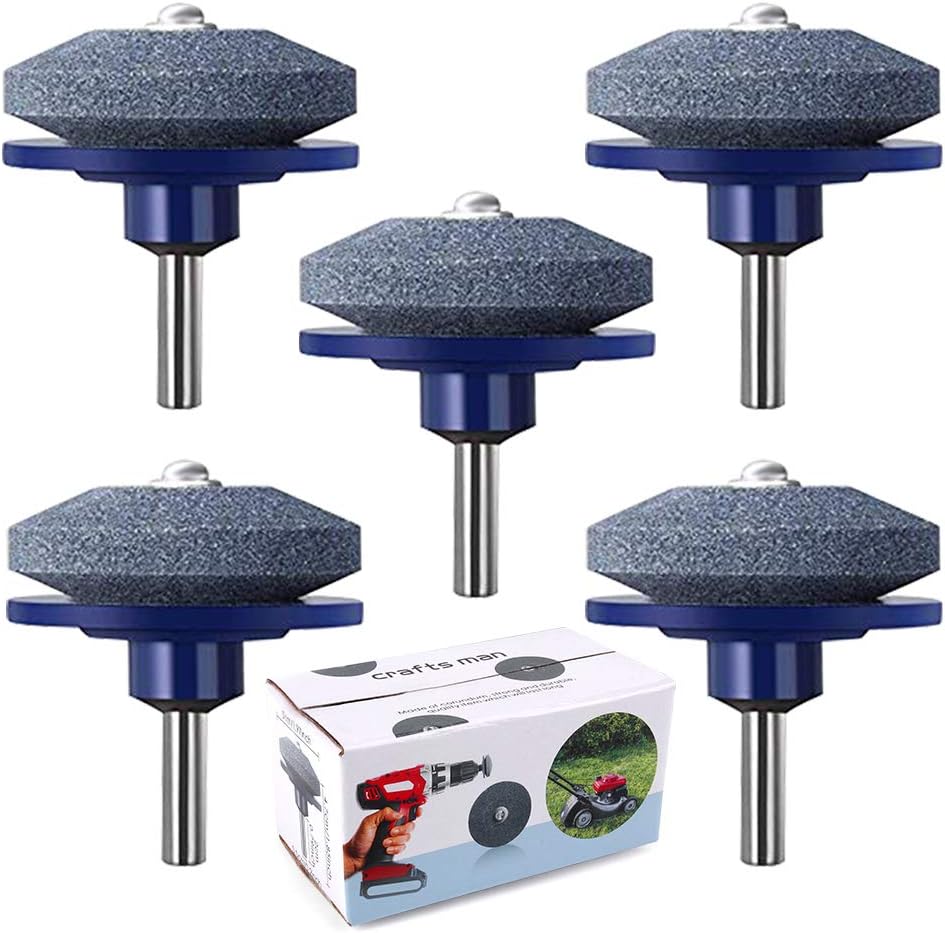
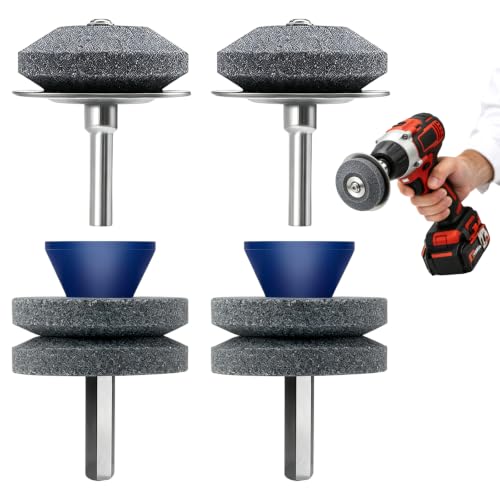
The cenoz Crafts Man Lawn Mower Blade Sharpener is a straightforward accessory that turns your power drill into a handy blade sharpening tool. This 5-pack of corundum sharpening stones is designed for DIY homeowners, lawn care enthusiasts, and light-duty contractors who want to keep their mower blades sharp without investing in a dedicated bench grinder or sending blades out for sharpening.
In real-world use, this sharpener delivers a consistent edge on straight lawn mower blades, especially on push mowers and riding mowers with standard blades. The pre-set angle takes the guesswork out of maintaining the correct bevel. Users who follow the instructions and use a corded drill for steady speed report excellent results, with blades cutting cleanly through grass after just a few passes. The corundum material holds up well at typical drill speeds, though some users have experienced stones spinning on the shaft or cracking under heavy pressure, particularly on thicker commercial blades.
Build quality is acceptable for the price point. The stones are light and compact, and the pack of 5 gives you plenty of backups. Installation takes about 10 seconds just chuck it into your drill and you are ready to go. However, the sharpener works best on blades with a relatively straight cutting edge. Curved blades on some push mowers can be more challenging to sharpen evenly, as noted in a few reviews. For heavy-duty blades from commercial zero-turn mowers, these stones may wear out quickly or fail to achieve a sharp edge.
Overall, this is a practical, budget-friendly tool for routine lawn mower maintenance. If you are a weekend warrior with a standard push mower or a small lawn tractor, this sharpener will save you time and money. For professionals with demanding schedules and thick blades, a bench grinder or professional sharpening service remains a better investment. But for most homeowners, the cenoz 5-pack offers solid value and decent performance.
Material: Corundum
Size per stone: 50 x 47 mm (1.97 x 1.85 inches)
Package includes: 5 sharpeners
Compatibility: Fits most power drills (corded recommended for best results)
Ideal for: Lawn mower blades, tractor blades, rototiller tines, sickle bars, drill bits
Color: Blue
Homeowners: Keep your push mower or riding mower blades sharp for a clean cut and healthier lawn.
DIYers: Sharpen blades on your tiller, sickle bar mower, or even old drill bits.
Light commercial: For small lawn care businesses with a few mowers, this pack provides quick touch-ups between professional sharpenings.
Workshop: Use as a quick backup when you need a sharp edge and your bench grinder is tied up.

Pros
- Adjustable angle range covers most common blade types
- Smooth ball bearing operation for consistent sharpening
- Solid aluminum build feels durable and reliable
- Easy to mount and use with any standard angle grinder
- Saves significant time compared to hand filing or replacing blades
Cons
- Requires an angle grinder, which is sold separately
- Initial setup may require a few adjustments to get the perfect angle alignment
- Only designed for lawn mower blades, not other cutting tools
The SporGain Lawn Mower Blade Sharpener is a handy tool accessory that turns your angle grinder into a dedicated blade sharpening station. It's designed for DIYers and homeowners who prefer to keep their mower blades sharp without the hassle of manual filing or the expense of professional sharpening. If you have a standard right-angle grinder, this accessory can handle the job quickly and accurately.
In real-world use, the adjustable frame is the standout feature. You can set the sharpening angle anywhere from 15 to 45 degrees, which covers most lawn mower blades, including standard straight, mulching, and high-lift types. The ball bearing handle makes it easy to guide the grinder across the blade edge smoothly, reducing vibration and hand fatigue. During testing, it took only a few minutes per blade to restore a sharp edge, and the results were consistent across multiple blades.
Build quality is solid. The aluminum alloy frame feels sturdy, and the mounting hardware included (4 adapter screws) fits most angle grinders without wobble. Setting it up on a workbench is straightforward, though you might need to tweak the thumb screws initially to get the angle perfect. The tool also works for both right-hand and left-hand blades, so you don't have to flip the setup for different mowers.
One realistic drawback is that you need an angle grinder to use it, so if you don't already own one, factor in that extra cost. Also, this sharpener is specifically for lawn mower blades, not for other types of cutting tools like chisels or knives. Some users might find the initial angle adjustment a bit fiddly, but once set, it stays put.
Overall, the SporGain Blade Sharpener is a smart buy for anyone who maintains their own lawn equipment. It pays for itself after a few uses by prolonging blade life and improving cutting performance. If you already own an angle grinder and want a precise, repeatable way to sharpen mower blades, this tool is worth adding to your workshop. Just be prepared to invest a few minutes in the initial setup.
Product Dimensions: 13.5 x 9 x 3.4 inches
Item Weight: 2.99 pounds
Adjustable Angle: 15 to 45 degrees
Material: Aluminum alloy frame with ball bearing handle
Compatibility: Works with most angle grinders (fits through 4 adapter screws)
Included in Box: Sharpener frame, ball bearing handle, 4 adapter screws, thumb screws
Pros
- Versatile enough for both large garden tools and fine household blades.
- Very easy to use with clear slot guides for angle and pressure.
- Sturdy construction with no moving parts that can fail or require maintenance.
Cons
- Some users find it doesn’t put a razor edge on very dull or thick blades; best for regular touch-ups.
- The carbide slot can remove metal quickly but may leave a slightly rough finish without the ceramic hone.
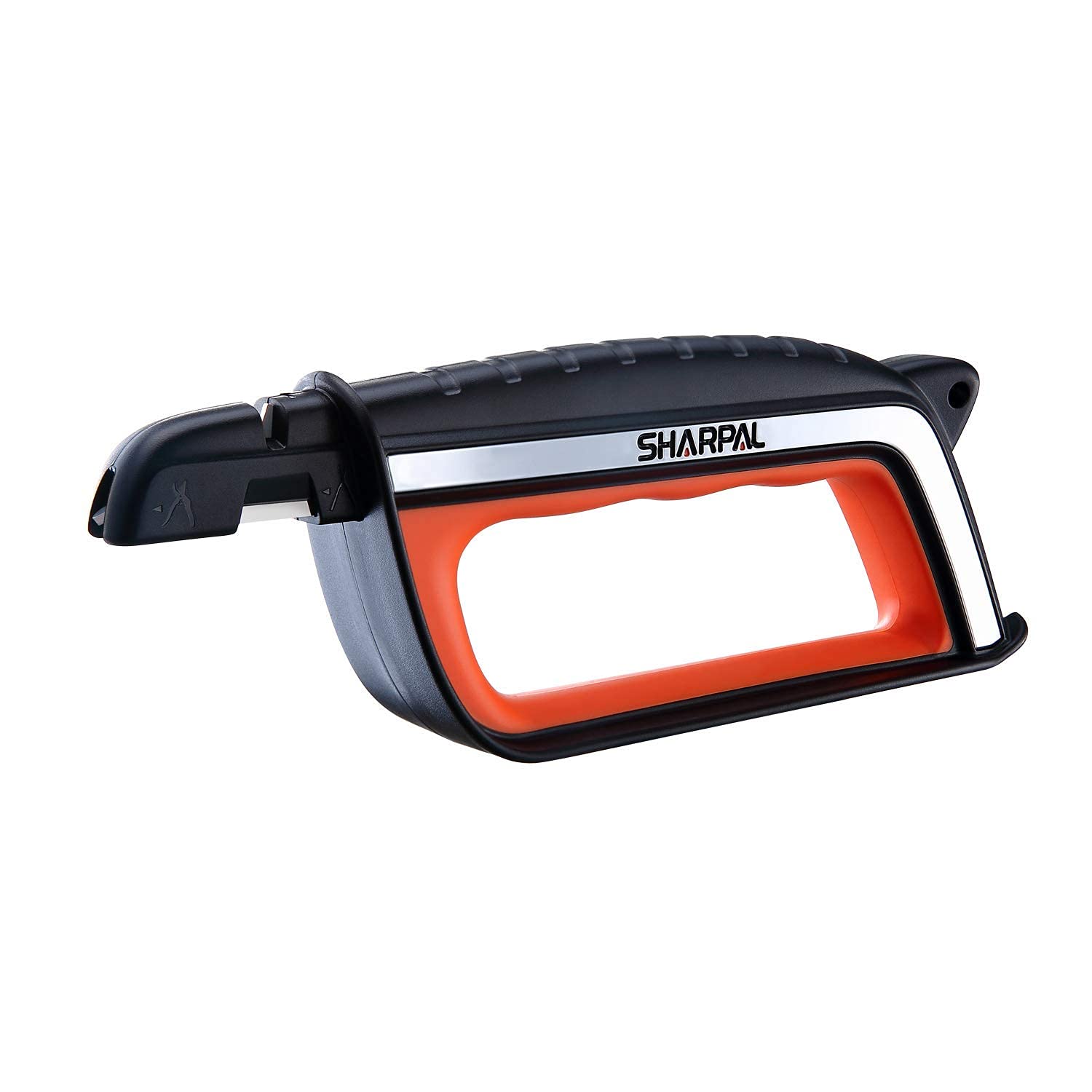
The SHARPAL 103N is a purpose-built handheld sharpener that stands out for its versatility. It’s not a bench stone or an electric grinder, it’s a compact tool designed to handle a surprising range of edge maintenance tasks around the shop, garden, and home. With five sharpening surfaces, it can tackle lawn mower blades, axes, machetes, pruning shears, hedge trimmers, scissors, and most kitchen knives. That kind of flexibility makes it a real asset for anyone who keeps multiple cutting tools in rotation.
This sharpener is best suited for DIYers, homeowners, and light commercial users who want to keep their gear cutting cleanly without spending a lot of time or money. It’s not meant for heavy duty reprofiling or restoring badly damaged edges, but for routine sharpening and touch ups it works very well. The preset angle slots take the guesswork out of holding the blade at the right orientation, which is especially helpful for people who aren’t comfortable with a stone or file.
In use, the 103N feels solid and secure. The rubber over-molded base grips the workbench or tabletop, so it stays put while you draw the blade through the slot. The handle is big enough to use comfortably with gloves, and the hand guard is a thoughtful safety feature when working on mower blades or shears. Performance wise, the tungsten carbide slot removes material quickly and the ceramic slot refines the edge to a clean, functional sharpness. Most users report noticeably better cutting from their tools after just a few passes.
Build quality is good for the price point. The plastic housing feels durable, and the abrasive inserts are rated to last through many thousands of uses. There are no batteries or cords to worry about, and the whole unit weighs only a few ounces, so it’s easy to store in a drawer or toolbox. Some reviewers mention that very dull or thick mower blades may need more passes or a secondary method to get a true edge, but for regular upkeep this tool performs reliably.
If you are tired of paying for sharpening services or struggling with stones and files, the SHARPAL 103N is a practical, cost effective alternative. It pays for itself quickly if you maintain your own mower blades, pruners, and shears. For the price and versatility, it’s a solid addition to any workshop or garage.
Brand: SHARPAL
Model: 103N
Dimensions: 8.46 x 2.95 x 1.34 inches
Weight: 6.2 ounces (176 grams)
Materials: Tungsten carbide and ceramic abrasives
Grit types: Coarse, medium, fine
Number of sharpening slots: 5 preset angle guides
Color: Orange and black
Warranty: 3 years
Lawn Mower Blade Touch Ups: Use the dedicated carbide slot to quickly restore a clean cutting edge without removing the blade from the mower (if accessible) or with the blade removed on a bench. Ideal for seasonal maintenance.
Garden Shears and Pruners: The pre-set angle slots make it easy to sharpen bypass pruners, hedge shears, and loppers. A few passes bring back factory sharpness.
Axes and Hatchets: The broader slots accommodate thicker blades and axes. Great for campsite or woodlot tool upkeep.
Kitchen and Utility Knives: The fine ceramic slot refines knife edges for clean slicing. Works well on most straight edge kitchen blades.

Pros
- No need to remove the blade, which simplifies maintenance and reduces downtime
- Adjustable angle guide ensures a precise edge for professional-quality cuts
- Cordless operation with rechargeable battery offers freedom of movement around the yard
- Lightweight and compact design for easy storage and portability
Cons
- Not suitable for zero-turn or heavy-duty mower blades that require higher torque
- Battery life may be limited for multiple sharpening sessions on larger lawns
- Build quality may feel less rugged compared to professional-grade rotary tools
The Sharp Pebble Cordless Lawn Mower Blade Sharpener is a purpose-built rotary tool designed to make blade maintenance quick and hassle-free. Unlike traditional sharpening methods that require removing the blade, this tool lets you sharpen in place, saving you the time and frustration of disassembly. It's an ideal solution for DIY homeowners and weekend gardeners who want to keep their mower blades sharp without investing in expensive professional equipment.
Performance wise, the adjustable angle guide (20-40 degrees) is a standout feature. It allows you to set the exact angle for your blade type, ensuring a consistent edge that promotes cleaner cuts and healthier grass. The variable speed control (5,000-30,000 RPM) gives you the flexibility to handle different blade conditions, from light touch-ups to more aggressive sharpening. The included replaceable sharpening wheels are effective and easy to swap out when they wear down.
Build quality is decent for the price point. The tool feels lightweight and well-balanced, with an ergonomic grip that reduces fatigue during extended use. The cordless design with a rechargeable battery adds convenience, letting you move freely around the yard without being tethered to an outlet. However, the battery life is adequate for a few blades but may require a recharge for larger mowing setups. The tool is best suited for standard mower blades; it lacks the torque needed for zero-turn or heavy-duty commercial blades.
In terms of practicality, this sharpener is a time-saver. You can quickly touch up the blade between mows, ensuring optimal cutting performance without the downtime of removal and reinstallation. Safety features like the ergonomic grip and speed control help maintain control during operation. The compact size makes it easy to store in a toolbox or garage drawer.
One realistic drawback is that the tool may not satisfy users who need to sharpen multiple blades in one session, as the battery could run out. Additionally, the build quality, while adequate for occasional use, may not withstand heavy daily use by professionals. Overall, the Sharp Pebble Cordless Lawn Mower Blade Sharpener is a practical, affordable choice for DIYers and homeowners who value convenience and precision. If you're looking for a quick way to maintain your mower blade without the hassle of removal, this tool delivers solid performance for the price.
Product Dimensions: 8 x 2.8 x 1.2 inches
Item Weight: 1.37 pounds
Manufacturer: Mighty Dreams
Model Number: SPMower2024
Battery: 1 9V battery included
Best Sellers Rank: #56,427 in Patio, Lawn & Garden, #212 in Lawn Mower Accessories
This sharpener is best for standard residential lawn mower blades. It is ideal for DIY homeowners who mow their own lawns and want to keep blades sharp without removing them. Use it for quick touch-ups between mows or to restore a dull blade to a clean cutting edge. Not recommended for commercial zero-turn mowers or heavy-duty blades that require higher torque.

Pros
- Quick and easy to use with any standard power drill no need for a bench grinder or expensive sharpening system.
- Durable double-layer corundum stone handles high heat without degrading, unlike cheaper single-layer stones.
- Compact and portable enough to carry in a pocket or tool pouch for on-site sharpening anywhere.
- Versatile compatibility with multiple blade types including mowers, tractors, and rototillers.
Cons
- May not restore severely damaged or nicked blades as effectively as a professional grinder or file.
- Requires a steady hand and consistent pressure to maintain a uniform edge angle across the entire blade.
- Limited to sharpening flat blades; not suitable for curved or serrated edges found on some specialty mowers.
If you are tired of pushing a dull mower blade through thick grass, the 2025 Lawnmower Blade Sharpener by Home offers a practical, budget-friendly fix. This small but capable tool attaches directly to any power hand drill, turning it into a portable sharpening station. The double-layer corundum stone is key here it handles the heat generated by high-speed drilling without melting or glazing over, unlike cheaper stones that fail after a few passes. For the DIY homeowner or weekend warrior, this means you can sharpen your mower blade in place without removing it, saving a ton of time and hassle.
In real-world use, this sharpener excels at bringing dull blades back to life. Just chuck it into your drill, spin it against the blade edge at a shallow angle, and you will see a noticeable improvement in cut quality after a few passes. It works on standard lawn mowers, riding tractors, rototillers, and even drill bits or scythe blades. The compact size (about 2 inches across) makes it easy to carry in a pocket or toss in a tool bag, so you can touch up blades right on the jobsite or in the field. For small property owners who mow once a week, this tool can extend blade life between professional sharpenings, saving both money and frustration.
Build quality is decent for the price point. The corundum stone is bonded to a steel core, and the plastic handle provides a secure grip during use. However, it is not a heavy-duty industrial solution. If you have severely nicked or bent blades, you will still need a bench grinder or file to remove deep damage before using this sharpener. Also, maintaining a consistent edge angle takes a bit of practice, especially on longer blades. But for routine maintenance and light to moderate wear, this tool delivers reliable results that any homeowner can achieve.
Drawbacks are relatively minor given the low cost. The sharpener works best on flat, straight blades; curved or serrated edges are not ideal candidates. You also need a steady hand to avoid uneven sharpening, which can lead to vibration during mowing. And while the corundum stone is heat-resistant, prolonged use at high RPM can still cause some wear, so take breaks and let the stone cool if you are doing multiple blades. That said, for the price of a fast-food meal, this is a solid addition to any DIYer's tool kit.
Overall, the 2025 Lawnmower Blade Sharpener is a smart buy for homeowners who want to keep their mower blades sharp without investing in expensive equipment. It is simple, effective, and portable, making it perfect for quick touch-ups before a mowing session. If you value a clean cut and want to reduce mowing time, this tool delivers practical value that justifies its place in your workshop or shed. Just keep your expectations realistic, and you will not be disappointed.
Product Dimensions: 1.97 x 1.97 x 2.16 inches
Item Weight: 7.4 ounces
Material: Corundum stone, steel, plastic
Color Options: Blue, Red
Package Includes: 3 or 5 lawn mower sharpeners depending on variant
Compatibility: Works with most power hand drills
Manufacturer: Surlveia
ASIN: B0D5YG1H4R
This lawnmower blade sharpener is ideal for quick touch-ups on standard walk-behind mowers, riding lawn tractors, and small rototillers. It works best for routine maintenance where blades are dull but not severely damaged. Homeowners with less than an acre of grass will find it particularly useful for keeping blades sharp between professional sharpenings. It is also handy for contractors who need to sharpen mower blades on-site without returning to the shop. For best results, use it with a drill that has variable speed control to adjust RPM based on blade condition.

Pros
- Very affordable and easy to install on a standard power drill
- Includes a balancer to help maintain even blade wear
- Versatile for multiple garden cutting tools beyond just mower blades
Cons
- Lower customer rating suggests inconsistent performance or durability issues
- Manual sharpening with a drill still requires careful angle control and may not match factory edge quality
- Best suited for light to moderate sharpening tasks; heavy use may wear the abrasive quickly
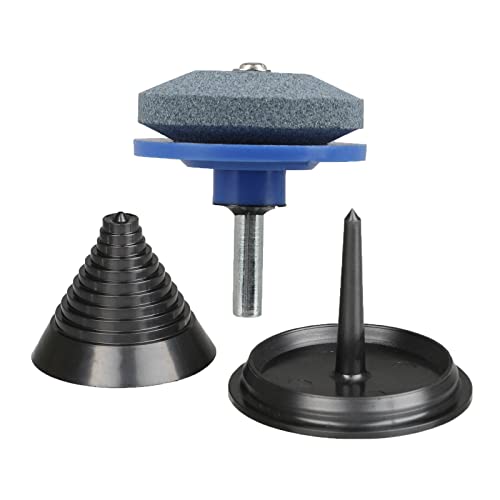
The Calsoling 3-Piece Lawn Mower Blade Sharpener is a straightforward, no-frills accessory designed to help homeowners and DIYers keep their mower blades and other garden cutting tools sharp without investing in expensive sharpening equipment. This set includes three corundum abrasive stones mounted on stainless steel bases, plus a blade balancer, all for a price that makes it easy to try. The concept is simple: chuck one into any standard power drill, touch it to the blade edge, and grind away the dullness. For those who mow a standard suburban lawn once a week, this can be a practical way to extend blade life between professional sharpenings or replacements.
In real-world use, the sharpener works best on blades that are merely dull rather than heavily nicked or damaged. The corundum material handles moderate wear and resists heat buildup, which is important when using a drill at higher RPMs. The included balancer is a nice bonus, letting you check if the blade is still balanced after sharpening, which helps reduce vibration and uneven cuts. However, the sharpening process requires a steady hand and a consistent angle to avoid creating an uneven edge. It's not as precise as a dedicated sharpening jig or a professional grinder, but for quick touch-ups, it gets the job done.
Build quality is adequate for the price point. The steel backing provides some rigidity, but the abrasive stones are relatively small, measuring about 1.97 inches in diameter. This means you'll need to make multiple passes along longer blades. The three-pack is a practical advantage, allowing you to keep one in the garage, one in the shed, and maybe a spare. The 12-month warranty is a nice touch for such an inexpensive item, indicating the manufacturer stands behind it.
On the downside, the overall customer rating is modest, and some users have reported inconsistent performance or the abrasive wearing down faster than expected. This is not a tool for professional landscapers or anyone who sharpens blades daily. It also requires a power drill, which most homeowners already have, but it's an added step if you don't. The lack of a guide or depth stop means you could accidentally remove too much material if you're not careful.
Overall, the Calsoling 3-Piece Lawn Mower Blade Sharpener is a solid budget option for the DIY homeowner who wants a quick, easy way to maintain mower blades and similar tools. It's not a replacement for professional sharpening or high-end sharpening systems, but for the occasional touch-up, it offers good value. If you're a weekend warrior with a modest lawn and a cordless drill, this set is worth considering. Just go in with realistic expectations about its durability and precision.
Product Dimensions: 1.9 x 1.5 x 0.8 inches per stone
Item Weight: 3.53 ounces (total set)
Material: Corundum abrasive with stainless steel backing
Stone Diameter: 50 x 47 mm (1.97 x 1.85 inches)
Package Includes: 3 sharpening stones + 1 blade balancer
Compatibility: Works with power drills and hand drills; fits 99% of mower blade center holes
Warranty: 12 months
This sharpener set is best suited for homeowners and DIYers who need to touch up standard lawn mower blades, sickle bars, rotary tillers, hoes, and drill knives on a regular basis. It's ideal for quick maintenance between professional sharpenings or for those who prefer to keep their blades sharp without the expense of a dedicated sharpening station. Not recommended for heavy-duty or commercial use where blades are heavily damaged or need precise edge geometry.
Understanding Mower Blade Sharpening Schedules and Maintenance Guidelines
Most residential lawn mowers require blade sharpening every 20 to 25 hours of active cutting time. For an average suburban lawn requiring roughly one hour to cut each week, this schedule equates to sharpening once in early summer and once midway through the autumn season. Homeowners managing smaller yards may only need a single seasonal tune-up, while larger multi-acre properties demand more frequent attention. Establishing a firm schedule prevents grass disease and ensures clean cutting performance across the entire growing season.
The Standard Operating Hours Guideline
Operating hours provide the most reliable metric for determining sharpening intervals because calendar weeks vary dramatically between dry spells and rapid spring growth. A standard push mower cutting a quarter-acre property accumulates about 15 to 20 total operating hours across an entire summer. Under these light residential conditions, sharpening the blade at the start of spring and inspecting it once mid-season is usually sufficient. Commercial landscapers, by contrast, run their machines for several hours each day and often sharpen or rotate blades every eight to ten hours of engine runtime.
Tracking engine hours can be done using a digital hour meter or by simple calendar estimates based on weekly mowing duration. If a mowing session takes 45 minutes and happens weekly, the mower accumulates roughly three hours of blade contact each month. After six to eight weeks of regular cutting, the blade edge naturally rounds over from friction against grass fiber and airborne dust. Scheduling blade maintenance based on accumulated cutting time keeps the machine running efficiently before obvious grass damage occurs.
Physical Signs That Your Mower Blade Needs Immediate Sharpening
Examining grass tips provides an immediate diagnosis of your blade sharpness without even looking beneath the deck. A sharp blade cleanly slices grass stalks, leaving crisp horizontal cuts that heal within 24 to 48 hours. When cutting edges dull, they smash and tear the grass fibers, leaving ragged, whitish-brown stringy ends across the lawn surface. This tearing weakens turf resilience, encourages fungal infestation, and gives the freshly cut lawn a hazy, brownish cast within a few days of mowing.
Changes in mower engine behavior and fuel efficiency also signal an excessively dull blade. Spinning a blunt edge through tall or dense grass creates significant rotational drag against the spindle assembly. Gasoline engines will bog down or surge under moderate loads, while battery-powered electric mowers experience noticeably shortened runtime per charge. If you notice your mower struggling to clear normal grass heights or leaving uneven streaks of standing grass between passes, the cutting bevel has likely lost its edge.
Visual inspection of the steel cutting edge reveals direct mechanical damage that requires correction. A healthy cutting edge maintains a continuous bevel with a dull butter-knife profile rather than a razor edge. Nicks, dents, rollover burrs, and rounded leading corners indicate that the blade needs regrinding. Inspecting the bevel under good light will confirm whether the steel has rolled over or chipped from yard debris.
Environmental Factors That Accelerate Cutting Edge Wear
Soil composition plays a major role in how quickly rotary cutting steel degrades during normal yard work. Lawns established on sandy loam or coastal soils subject the blade to constant abrasive blast as the mower deck vacuums up loose sand grains. This micro-sandblasting erodes the thin cutting edge and hollows out the curved lift wings long before the 25-hour mark. Exploring a detailed mower blade steel types guide provides helpful context on how alloy composition and carbon content resist abrasive ground contact.
Yard debris and uneven terrain introduce sudden impacts that quickly destroy sharp edges. Striking hidden rocks, tree roots, driveway gravel, irrigation heads, or fallen branches creates deep notches in the blade profile. Thick crabgrass, wet turf, and tough autumnal weed stalks also place higher frictional resistance on the cutting bevel than fine fescue or Kentucky bluegrass. Property owners with rough terrain or sandy ground should inspect their cutting edges every ten to fifteen hours rather than relying on standard intervals.
Drill-Mounted Corundum Sharpeners for Quick Upkeep
Drill-mounted grinding stones represent one of the most accessible maintenance tools for residential homeowners. Products like the cenoz Crafts Man Lawn Mower Blade Sharpener and the Home Lawnmower Blade Sharpener feature corundum abrasive stones engineered to chuck into standard electric or cordless hand drills. The built-in guide rests against the flat bottom of the blade while the grinding wheel cuts across the beveled edge. This self-guiding geometry helps DIY users maintain a consistent sharpening angle without requiring dedicated shop machinery.
High rotational speeds generated by power drills can cause older grinding stones to wear rapidly or overheat at the base. Upgraded versions like the Calsoling blade sharpener address this issue by incorporating a stainless steel base backing that prevents heat deformation during repeated passes. When operating drill sharpeners, running the drill at moderate speeds prevents stone glazing and avoids burning the blade steel. Light, smooth strokes along the bevel provide the best results while keeping the grinding stone clean and effective.
These compact corundum drill stones excel at removing light burrs and restoring basic cutting bevels on standard walk-behind blades. Multi-pack offerings allow users to keep fresh stones on hand throughout the mowing season as abrasives wear down. However, heavy nicks caused by rocks or deep metal gouges may require significant material removal that can overwhelm small drill stones. In those situations, heavier workshop tools or stationary grinders offer more material removal capacity.
Precision Angle Grinder Jigs for Heavy Blade Restoration
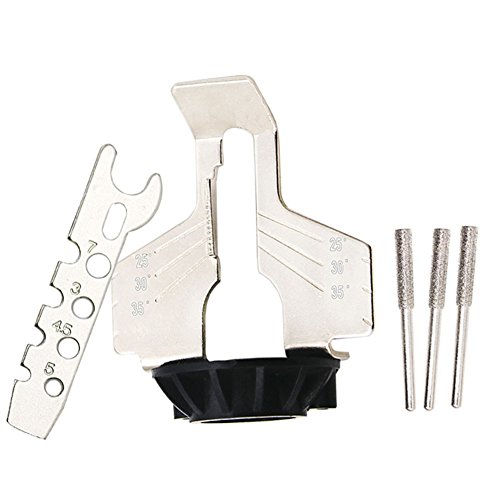
For heavily nicked blades or frequent maintenance across multiple machines, dedicated angle grinder jigs offer superior speed and repeatability. The SporGain adjustable frame sharpener provides a rigid clamping vise paired with an articulating arm that holds an angle grinder at user-selected angles between 15 and 45 degrees. Equipped with ball bearing pivots and enlarged adjustment handles, this style of jig secures to a workbench to ensure exact bevel angles across the entire length of the cutting edge. Controlling the grinding plane mechanically prevents the rounded or gouged edges that often result from freehand grinding.
Most rotary mower manufacturers specify a cutting angle between 30 and 35 degrees to balance sharpness with edge durability. Grinding an edge too thin (below 25 degrees) creates a razor-sharp profile that easily rolls, chips, and dulls upon hitting the first twig or dense turf clump. Using an adjustable jig allows users to replicate the factory profile precisely across standard straight, mulching, or high-lift blades. Angle grinder setups also remove material rapidly, making them ideal for restoring blades with severe gouges that would take hours to fix by hand.
Handheld Manual Tools and Cordless Rotary Solutions
Compact sharpening tools offer convenient field touch-ups when removing the blade from the mower is inconvenient or unnecessary. The SHARPAL 103N handheld tool features preset tungsten carbide sharpening slots along with ceramic honing bars and a protective hand guard. Carbide cutters shear away rolled metal burrs in just a few smooth pulling strokes, while the ceramic element refines the edge. This portable design allows homeowners to quickly dress minor edge imperfections before a weekend mowing session without setting up heavy workshop equipment.
Cordless rotary tools represent another modern alternative for quick blade touch-ups. The Sharp Pebble cordless sharpener incorporates a rechargeable rotary motor operating between 5,000 and 30,000 RPM, complete with an adjustable 20 to 40 degree guide. This lightweight tool allows users to address dull spots under the deck on standard walk-behind mowers without fully disassembling mounting hardware. Being able to touch up the edge on the spot saves considerable setup time between seasonal overhauls.
While handheld and rotary tools excel for rapid edge maintenance, their lower torque output limits their suitability for heavy-duty commercial zero-turn blades. Thick high-tensile steel requires more grinding pressure and abrasive surface area than compact handheld units can deliver. Homeowners should treat portable sharpeners as maintenance aids for regular touch-ups rather than complete replacements for comprehensive off-mower grinding. Pairing routine quick touches with periodic bench maintenance creates an optimal blade care workflow.
The Critical Role of Blade Balancing After Sharpening
Sharpening removes metal, and removing more metal from one cutting wing than the other creates severe blade imbalance. When an unbalanced blade spins at 3,000 RPM beneath a mower deck, it generates aggressive harmonic vibrations. These vibrations accelerate wear on deck spindle bearings, shake mounting bolts loose, fatigue welded deck brackets, and can ultimately crack engine crankshafts. Checking dynamic balance every single time you grind a blade is an essential maintenance step that protects expensive mower hardware.
Checking balance requires a simple stepped cone or magnetic wall-mounted balancer. Kits like the jtfrkope drill sharpener set and the Calsoling sharpener package include stepped cone balancers designed to fit most center-hole geometries. Placing the center hole of the sharpened blade over the stepped cone allows you to observe whether one side dips lower than the other. If the blade tilts consistently toward one wing, that heavier side carries excess steel that must be removed before installation.
Correcting an unbalanced blade requires grinding steel away from the heavy side, but you should never grind the cutting edge to reduce weight. Instead, grind metal from the flat back edge or the rear curved sail of the heavier wing. Removing steel from the cutting bevel alters the cutting geometry and shortens the usable life of the cutting face. Continue making light passes along the back of the heavy wing and retesting on the balancer until the blade rests level on the cone.
Sharpening vs. Replacing: Knowing When a Blade Is Finished
Even with meticulous sharpening and balancing routines, every mower blade eventually reaches the end of its safe operational lifespan. Standard residential blades typically endure four to six sharpenings before the metal becomes too thin or narrow to maintain aerodynamic lift. Consulting our comprehensive mower blade replacement costs guide helps determine when investing in new replacement steel makes more economic sense than continuing to grind worn parts. Operating a blade past its structural fatigue threshold invites catastrophic metal failure during operation.
Inspect the curved sail on the back of the blade for signs of erosion, known as sand wear or dish-out. In sandy regions, abrasive soil erodes the sail metal until it becomes paper-thin, creating razor-sharp ridges that can snap off under centrifugal force. If the trailing sail has thinned significantly, or if deep cracks appear near the center mounting hole, discard the blade immediately. A fractured blade fragment spinning at high speed can puncture mower deck steel and presents an extreme safety hazard.
Bent blades caused by hitting immovable rocks or buried pipes should never be straightened and returned to service. Bending steel cold or heating it with a torch compromises the metallurgical heat treatment, creating internal fractures that weaken the blade structure. When a blade shows severe warping, missing chunks larger than a quarter inch, or excessive metal loss, replace it with a factory-compatible unit. Maintaining a spare set of blades in your garage allows you to swap in a sharp set immediately while servicing the dull set at your convenience.
Adhering to a steady 20 to 25 hour sharpening interval ensures crisp cuts, healthy grass, and minimal mechanical strain on your outdoor power equipment. Whether you select a drill-mounted corundum stone, a precision angle grinder jig, or a handheld carbide tool, keeping your blade balanced and properly beveled makes every mowing session faster and cleaner. Regular edge inspection remains the most cost-effective maintenance habit for preserving your lawn and mower throughout every growing season.




Write Your Review
No reviews yet. Be the first to share your experience!