


A dull chainsaw chain causes the engine to work harder, producing uneven cuts and increasing the risk of kickback. To address this, you need to know how to sharpen a chainsaw blade with a flat file correctly, ensuring each cutting tooth is filed to the same angle and depth as the original factory setting. The process requires a specific file size that matches your chain gauge and a steady hand to maintain the correct bevel angle throughout the entire chain.
While many homeowners assume sharpening is a simple task, inconsistent filing leads to a chain that binds or skips. Understanding the geometry of the cutting tooth, including the top, side, and bottom angles, is essential for a successful result. This guide breaks down the specific steps for using a flat file or a specialized guide to restore your chain’s cutting efficiency safely and effectively.
For context on similar maintenance tasks, you might also find our lawn mower blade sharpening guide useful, as the principles of maintaining a sharp edge apply to both types of cutting tools.

Pros
- Versatile 2-in-1 tool that covers both sharpening/deburring and blade balancing needs.
- Comfortable, anti-slip grip reduces hand fatigue during extended use.
- Blade balancer fits the vast majority of residential mower blades.
- Solid steel file with dual-cut teeth handles a range of metal and tool maintenance tasks.
Cons
- Limited to manual operation; no power assist for heavy-duty sharpening or high-volume work.
- Blade balancer is specifically for mower blades, not suitable for other rotating equipment like chainsaw bars or trimmer heads.
- Zero customer reviews at launch, so long-term durability and real-world performance are unverified.
The WORKPRO 10 in. Flat File and Stens Blade Balancer bundle is a straightforward, no-frills solution for two common workshop and lawn care tasks: sharpening metal tools and balancing mower blades. It’s a flat file with double-cut teeth on one side for aggressive material removal and single-cut on the other for finer finishing, paired with a zinc blade balancer that fits the vast majority of push mower and riding mower blades. This combo is clearly aimed at DIYers and homeowners who handle their own lawn equipment maintenance, as well as hobbyist mechanics who need a quick way to deburr metal parts or touch up cutting edges.
In real-world use, the file performs exactly as expected for manual tool sharpening. The double-cut side eats through burrs and rough edges on shears, hoes, or shovels, while the single-cut side lets you refine the edge for a cleaner cut. The anti-slip ergonomic grip is a nice touch - it gives you secure control even if your hands are sweaty or oily, and the file itself feels sturdy without being overly heavy. The blade balancer is equally practical: you simply slide the blade onto the cone, and the magnetic (or gravity-based) centering tells you if one side is heavier. It’s a simple but effective way to reduce vibration and extend blade life on your mower.
Build quality is solid for the price point. The flat file is made from durable steel with precision-coated teeth that resist dulling over time, and the zinc balancer feels robust enough to survive being dropped in the garage. That said, this isn’t a pro-grade toolset - the file lacks the ergonomic handles of higher-end shop files, and the balancer is a basic cone design without any digital readout. For occasional weekend use, it’s more than adequate, but a full-time landscaper or small engine shop would likely want something more heavy-duty.
The biggest limitation is that this is strictly a manual combo. If you’re dealing with heavily worn blades or large volumes, you’ll still want a bench grinder or power file for the heavy lifting. Also, the balancer is specifically for mower blades - it won’t help with balancing other spinning parts like chainsaw bars or trimmer heads. And with zero customer reviews available yet, there’s no track record to confirm long-term durability.
Overall, this WORKPRO bundle is a smart buy for any DIYer or homeowner who maintains their own mower and doesn’t want to chase down separate tools. It’s affordable, easy to use, and covers two essential maintenance tasks. If you swap mower blades a couple times a season and occasionally sharpen a shovel or garden shear, this combo will serve you well. For heavy-duty shop use or professional work, consider stepping up to dedicated tools.

Mastering the Flat File Technique for Chainsaw Chains
Sharpening a chainsaw chain with a flat file is a precise mechanical task that demands attention to geometry rather than just force. The goal is to restore the original cutting angle of each tooth, which is typically between 25 and 35 degrees, depending on the manufacturer’s specifications for your specific chain model.
If you file one tooth to a steeper angle than the others, the chain will vibrate, wear out the drive links unevenly, and produce a rough cut. Consistency is the single most important factor in this process, and it is often the hardest part for DIYers to master without proper guidance.
| Component | Function in Sharpening | Common Error |
|---|---|---|
| Cutting Tooth | The primary edge that bites into the wood | Filing only the top, ignoring the side angle |
| Depth Gauge | Controls how deep the tooth cuts | Leaving gauges too high after sharpening |
| File | The tool that removes metal to create the angle | Using a file that is too large for the chain |
| Sharpening Guide | Locks the file to the correct angle | Loose guide causing angle drift |
Before you begin filing, you must identify the correct file size for your chain. The file diameter must match the chain’s gauge, which is usually stamped on the chain or listed in your owner’s manual. Using a file that is even slightly too large will round the cutting edge instead of creating a sharp, defined corner, resulting in a chain that pushes against the wood rather than slicing through it. Most standard chains use a 5/32-inch or 3/16-inch file, but specialty chains may require different sizes.
- Check the chain gauge stamped on the drive links or in the manual.
- Select a file that matches the gauge exactly for proper edge formation.
- Ensure the file teeth are sharp; a dull file will not cut metal effectively.
- Inspect the chain for broken teeth or excessive wear before starting.
Setting the Correct Filing Angle
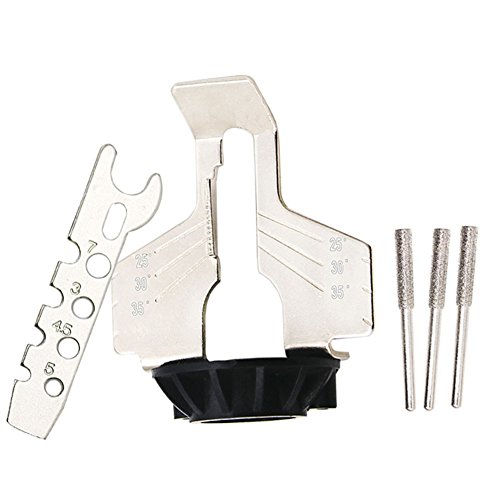
The angle of the cut determines how the chain interacts with the wood. A standard general-purpose chain is usually sharpened to a 30-degree angle, while high-efficiency or semi-chisel chains might require a 25-degree angle. If you do not have a protractor, a sharpening guide that clamps onto the chain is the safest way to ensure accuracy.
These guides hold the file in place, preventing your hand from drifting as you apply pressure. Without a guide, it is easy to accidentally file the tooth to a 40-degree angle, which makes the chain feel dull even if the metal looks shiny.
When using a flat file, you must file on the forward stroke of the chain. This means you hold the saw upside down and let the chain run forward over the file. You should never file on the return stroke, as this will distort the cutting edge and create a hook that can cause kickback.
Keep the file perpendicular to the chain bar, ensuring that the bottom of the tooth remains level with the depth gauges. If the tooth drops below the gauge level, the chain will not cut properly and may bind in the bar.
Managing Depth Gauges After Sharpening
Every time you sharpen a chain, you remove metal from the cutting tooth, which effectively lowers the height of the tooth relative to the depth gauges. If you do not adjust the gauges, they will become too high, preventing the tooth from biting into the wood.
This is why a chain that has been sharpened but not gauge-checked often feels dull and refuses to cut. You must use a depth gauge tool to measure the height of each gauge and file them down to the manufacturer’s specified dimension if they are too high.
It is a common mistake to assume that sharpening the teeth is the only step required. In reality, the depth gauges are just as critical to the cutting performance as the edge itself. If the gauges are uneven, the chain will not run smoothly, leading to increased vibration and wear on the sprocket.
Always check the gauges after you have finished filing the teeth to ensure the chain is balanced and ready for use. This step is often overlooked by beginners but is essential for maintaining a sharp and efficient cutting system.
Choosing the Right File for the Job
While the keyword mentions a flat file, it is important to understand that most chainsaw chains are sharpened with a round file, not a flat one. A flat file is typically used for deburring or sharpening other tools, but for the complex geometry of a chainsaw tooth, a round file is the standard.
However, some specialized chains or specific sharpening guides may use flat files or flat-edged tools. If you are using a flat file, you must be extremely careful to maintain the correct angle and depth, as flat files do not conform to the curved shape of the tooth as naturally as round files do.
The quality of the file also matters. A cheap file with uneven teeth will not produce a consistent edge. Look for files made from high-carbon steel with a precise diamond cut pattern. The file should fit snugly in your hand or the sharpening guide without wobbling. A wobbly file leads to an uneven cut, which is far worse than a slightly dull chain. Investing in a good quality file and a reliable sharpening guide will save you time and frustration in the long run.
Safety and Chain Handling
Working with a chainsaw chain requires strict safety protocols. Always ensure the chain is locked in place using a chain brake or a dedicated holding tool. Never attempt to sharpen a chain while the engine is running or the trigger is accessible. The chain can slip and snap back, causing serious injury. Wear heavy-duty gloves to protect your hands from the sharp teeth and the file. Keep your workspace clean and free of debris to prevent slipping or tripping while you work.
Before you start, check the condition of the chain. If the chain is stretched beyond the manufacturer’s tolerance, it will not hold a sharp edge effectively. A stretched chain will slip on the drive sprocket, causing uneven wear and poor cutting performance. If the chain is worn out, sharpening will not fix the problem, and you will need to replace the entire chain. Always measure the chain stretch according to the manual before investing time in sharpening.
- Always engage the chain brake before handling the chain for sharpening.
- Wear protective gloves to prevent cuts from sharp teeth and file edges.
- Ensure the file is the correct diameter for your specific chain gauge.
- Check the chain for excessive stretch or wear before starting the process.
Common Mistakes to Avoid
One of the most frequent errors is filing only a few teeth to see if the chain cuts better. This creates an imbalance in the chain, causing it to pull to one side and wear out the bar unevenly. You must sharpen the entire chain in one session, ensuring every tooth is filed to the same angle and depth. Skipping teeth or filing them inconsistently will ruin the chain’s geometry and lead to premature failure. Patience is key; take your time to ensure each tooth is treated equally.
Another common mistake is using too much pressure. You do not need to force the file into the metal; the file should do the work. Excessive pressure can overheat the metal, changing its temper and making it brittle. This can lead to the tooth cracking or breaking off during use. Apply steady, moderate pressure and let the file cut the metal smoothly. If the file feels like it is not cutting, check if it is dull or if you are filing on the wrong stroke.
Finally, many users forget to clean the file after use. Metal shavings and wood dust can clog the file teeth, reducing its cutting ability. Use a file card or a wire brush to clean the file after each session. A clean file will cut more effectively and last longer. Store the file in a dry place to prevent rust, which can ruin the cutting surface. Proper maintenance of your sharpening tools is just as important as maintaining the chain itself.
By following these precise steps and maintaining consistent angles, you can restore your chainsaw chain to optimal cutting performance. Remember that the goal is not just a shiny edge, but a geometrically correct one that works in harmony with the depth gauges and the bar. Take the time to learn the correct technique, use the right tools, and always prioritize safety.
A well-sharpened chain is not only more efficient but also safer to operate, reducing the risk of kickback and other hazards associated with dull or damaged chains. For further details on maintaining other cutting tools, consider reviewing our guide on removing stuck mower blade bolts, which highlights the importance of proper tool maintenance and storage.






Write Your Review
No reviews yet. Be the first to share your experience!