


Uneven brown tips across a freshly cut lawn often signal a dull or battered cutting edge that tears grass rather than slicing it cleanly. Homeowners shopping for quick replacements frequently wonder whether are store bought mower blades sharpened straight out of the box or if they require immediate grinding. Most replacement blades leave the factory with a utility edge coated in heavy paint, which leads to confusion about their readiness for yard work. Understanding the differences between shipping bevels and razor edges can save equipment owners significant time during seasonal maintenance.
Checking factory specifications helps ensure your mower operates smoothly without unnecessary engine strain or deck vibration. Our factory blade sharpness guide covers standard manufacturer preparation for traditional rotary mowers. In addition, reviewing the lawn mower blade steel guide explains how heat treatments and metallurgical choices determine edge durability across tough terrain. Evaluating your replacement parts before turning the ignition key keeps your turf healthy and extends the operating life of your machine.

Pros
- Direct OEM fit for listed Honda HRR216 models, no guesswork needed
- Excellent cut quality that leaves a professional-looking lawn
- Saves money compared to dealer replacement costs
Cons
- Edges are not extremely sharp from the factory; a light sharpening might be desired for peak performance
- Compatibility is limited to specific frame serial numbers, so you must verify before buying
The Honda HRR216 Blade Kit is a genuine OEM replacement set designed for Honda's HRR216 series push mowers. It includes both the upper blade (72531-VH7-000) and the lower rotary blade (72511-VL0-S00), which work together to lift, cut, and mulch grass efficiently. This is not a universal or aftermarket blade, so it's built to match the original equipment exactly.
This kit is best suited for homeowners, DIY lawn care enthusiasts, and anyone who wants to keep their Honda mower running like new without paying dealer prices. If you own an HRR216K9, K10, or K11 with the correct frame serial range (MZCG-8670001 and up), these blades are a drop-in upgrade that restores the factory cutting performance.
In real-world use, the blades deliver a crisp, even cut that leaves grass looking clean and healthy. Many users report a noticeable improvement in lawn appearance after swapping dull blades for this kit. While the edges come sharp enough for normal mowing, some owners choose to give them a quick hone with sandpaper to maximize cutting efficiency. The two-blade design helps with mulching, reducing grass clippings to fine particles that decompose quickly.
Build quality is typical Honda solid. The metal blades are stiff and hold up well to rocks, sticks, and thick grass without bending. Installation is straightforward: remove the old blade, bolt on these with the correct torque, and you're back to mowing in under 20 minutes. The kit weighs just over three pounds, making it easy to handle during the swap.
One realistic limitation is that these blades are not extraordinarily sharp from the factory. They work fine for most people, but if you're particular about a razor-cut finish, you'll want to spend a few minutes with a file or sharpening stone. Also, compatibility is not universal across all HRR216 models, so confirm your mower's frame serial number before ordering — otherwise you risk buying the wrong blade set.
Overall, the Honda HRR216 Blade Kit is a no-brainer for owners of compatible mowers. It beats paying a shop for installation and gives you genuine parts that last. If you do your own maintenance and want a factory-perfect cut, this kit is a reliable, cost-effective choice that keeps your lawn looking its best season after season.

Pros
- Restores sharp cutting performance with heat-treated steel
- Precise fit for Greenworks 25302 mower
- Easy to install and remove for maintenance
- Affordable solution compared to replacing the mower
- Sturdy build that handles typical yard debris
Cons
- Only compatible with specific Greenworks model (25302)
- Blade length is shorter than deck size, which may limit cutting width
- May need periodic sharpening or replacement depending on usage
These Greenworks replacement blades are a practical solution for anyone who owns the Greenworks 20-inch Twin Force mower (model 25302). Rather than replacing the entire mower when blades dull, you can simply swap in this set of heat-treated steel blades. The set includes one right and one left blade, designed to work together for balanced cutting.
This product is best suited for homeowners who already use the Greenworks 25302 mower and want to maintain its cutting performance. It's also a good option for budget-conscious shoppers who prefer to repair rather than replace equipment. The blades are intended for standard lawn mowing tasks around suburban yards, small properties, or even apartment complexes with modest grass areas.
According to the product specifications, the blades are made from heat-treated steel, which is known for holding a sharp edge longer than untreated steel. Each blade measures 9.5 inches in length, and the set is designed to fit the 20-inch deck. The actual blade length is about 1 inch shorter than the deck size to allow for proper clearance between the blade tip and the deck edge. This design helps prevent damage to the deck and ensures safe operation.
Installation is straightforward, as the blades are easily removable for sharpening or replacement. Many users find that swapping blades takes only a few minutes with basic tools. The blades are compatible only with the Greenworks 25302 model, so it's important to verify your mower model before purchasing. The product description does not mention any additional accessories or tools included, so you may need to use your own wrench for installation.
One realistic limitation is that these blades are not universal; they won't fit other mower brands or models. Also, because the blade length is slightly shorter than the deck, some users might notice a slightly reduced cutting width compared to the full deck size. However, this is a standard design feature for clearance and safety. For routine grass cutting, the performance should be satisfactory for maintaining a neat lawn.
Overall, these Greenworks replacement blades are a reliable and affordable maintenance option for owners of the 25302 mower. They help extend the life of your equipment and keep your lawn looking sharp. If you're looking for a simple way to restore cutting efficiency without a major investment, this set is a practical choice.

Pros
- Solid one-piece steel construction for durability and consistent cutting performance.
- Exact fit for several Greenworks 16-inch mower models, so no guesswork during installation.
- Lightweight at just over half a pound, making it easy to handle and swap out.
- Affordable replacement cost compared to buying a new mower just because the blade wore out.
Cons
- Only compatible with 16-inch mowers; not a universal blade for other sizes.
- Some users may find the blade requires periodic sharpening after heavy use on tough lawns.
- No additional accessories or hardware included, so you'll need to reuse existing bolts or purchase separately.
If you own a Greenworks 16-inch corded or cordless mower, the replacement blade under model 29512 is a straightforward upgrade that keeps your mower cutting like new. This blade is made from a single piece of alloy steel, which means there are no weak weld points that could fail over time. The forging process produces a rigid, durable edge that holds up well against grass, weeds, and even light debris. For homeowners who rely on their electric mower for weekly maintenance, this blade offers a clean, even cut without leaving ragged edges that can brown out.
The installation process is simple. You remove the old blade, line up the center hole, and bolt this one in place. The 15.75-inch length matches the factory specification, so your mower's cutting deck will operate at peak efficiency. Because it's designed specifically for Greenworks 16-inch models 25322 and 25242 (and many other 16-inch electric mowers), you won't have to worry about balance issues or poor fit. Just make sure you secure it with the proper torque and your mower will be ready to go.
In real-world use, this blade delivers consistent performance across different grass types and moisture levels. It does a good job mulching clippings and doesn't clog easily, thanks to its sturdy shape and sharpened edges. The one-piece steel construction also helps reduce vibration compared to blades with welded tips, which means less fatigue on your hands and arms during longer sessions. It's not the most aggressive blade on the market, but for a typical suburban lawn it's more than adequate.
Build quality is solid. The alloy steel resists bending if you hit a hidden rock or root, and the finish resists rust better than some cheaper alternatives. That said, like any mower blade, it will eventually need sharpening. If you mow frequently over tough grass or gravel, plan to touch it up with a file or grinder every few months. The lightweight design (just under 0.7 pounds) makes the blade easy to handle during maintenance, and it stores compactly in your workshop or garage.
One limitation is that it's not a universal blade. It only fits 16-inch mowers with the specific center hole pattern. Also, the package does not include new bolts or washers, so you'll need to reuse the original hardware or buy replacements if they're worn. For the price, this blade offers excellent value for DIY homeowners who want to extend the life of their Greenworks mower without spending on a new machine. It's a practical, reliable choice that gets the job done neatly.
Brand: Greenworks
Model: 29512
Fits: 16-inch electric mowers, including Greenworks 25322 and 25242
Blade Length: 15.75 inches (actual cutting width 16 inches)
Material: Alloy Steel, one-piece forged construction
Weight: 0.69 pounds
Dimensions: 15.75 x 1.97 x 0.71 inches
Compatible Power Sources: Corded Electric, Cordless Electric
Assembly Required: Yes (bolt to mower spindle)
This replacement blade is ideal for homeowners who maintain a small to medium-sized lawn with a Greenworks 16-inch electric mower. It's perfect for routine weekly mowing of Bermuda, fescue, or rye grass. Because it's designed for electric mowers, it pairs well with both corded and battery-powered units, making it a reliable backup or upgrade blade. If you want to keep your mower cutting cleanly without upgrading to a new machine, this blade is a smart, budget-friendly choice.

Pros
- Durable titanium coating extends blade life against abrasive turf and morning moisture
- Includes matching replacement screws for safe and secure installation on the cutting disc
- Clean cutting edge promotes healthier grass tips and prevents brown, frayed turf ends
- Generous 30-count pack covers multiple seasonal blade rotations at an accessible price point
Cons
- Requires careful handling during installation due to extremely sharp factory edges
- Blade life can shorten noticeably if the lawn contains frequent gravel, acorns, or exposed roots
- Not universally compatible with all robotic brands outside listed Husqvarna, Gardena, and Yard Force mount patterns
Maintaining a pristine suburban lawn with an automated robotic mower requires sharp, dependable blades. The FOTEEMO 30-pack titanium-coated robotic lawn mower blades are aftermarket replacements designed to fit widely used robotic mowers like Husqvarna Automower and Gardena units. These blades are well-suited for busy suburban homeowners, tech-savvy lawn enthusiasts, and eco-conscious yard owners who depend on daily automated cutting to keep their grass manicured without pushing a heavy gas mower.
When robotic mowers operate with dull blades, they tear grass blades rather than slicing them cleanly, which leads to unsightly brown tips and lawn dehydration. At 0.75 mm thick, these stainless steel blades feature a fine, razor-sharp edge that provides a clean, even trim across every pass. A clean slice allows turf to heal quickly, reducing lawn stress during hot summer dry spells. Because robotic units cut in continuous micro-cycles, having a sharp cutting profile ensures minimal resistance against the motor, helping the mower preserve battery runtime per charge cycle.
Each blade in this set features a gold-tone titanium coating applied over durable stainless steel. This surface treatment provides valuable resistance against moisture, lawn fertilizer salts, and plant acidity, preventing premature rust and edge degradation during damp spring mornings. In addition to the blades, the set includes brand-new mounting screws, which is crucial because old screws can strip, rust, or loosen after prolonged vibration on uneven ground. The balanced weight distribution helps the cutting disc spin freely without causing unwanted vibration in the mower chassis.
Swapping out blades on a robotic mower is one of the simplest DIY maintenance tasks a homeowner can perform. Using a standard screwdriver, replacing the three swinging blades takes less than five minutes on a Saturday morning. With 30 blades in the pack, homeowners have enough stock to change blades every few weeks through spring, summer, and peak fall growth without constantly needing to reorder. Storing the compact pack on a garage pegboard or workbench shelf takes up practically zero space.
While these blades deliver reliable everyday cutting performance, they are designed to swing freely on impact, meaning hidden rocks, fallen twigs, or surface tree roots can still nick or dull the edge over time. Homeowners with bumpy yards or heavy tree cover should do a quick sweep for fallen branches before daily scheduled runs. For owners of Husqvarna, Gardena, or Yard Force robot mowers seeking an economical, sharp, and rust-resistant alternative to pricey original factory parts, this 30-pack is a sensible choice for keeping your grass green and evenly clipped all season long.
The FOTEEMO replacement blades utilize a stainless steel core treated with a specialized titanium coating. This layer acts as a barrier against moisture and lawn chemicals that commonly cause pitting and rust on standard steel blades. Robotic mowers operate in dew-covered grass, light rain, and moist soil conditions, making corrosion resistance essential for extending the working life of the cutting edge.
At 0.75 mm in thickness, the blades strike a practical balance between edge retention and flexibility. When rotating on the cutting disc, the blades swing out via centrifugal force. If a blade strikes a solid pebble or pinecone, the swinging mount allows it to pivot back, reducing the likelihood of snapping. The included replacement screws feature fresh threads to ensure a snug fit that keeps each blade safely anchored while permitting free rotation.
Routine blade inspection is vital for keeping an automated mower running efficiently. Homeowners should plan to inspect the underside of the mower every two to four weeks during the active growing season. If grass tips start showing white or brownish frayed edges, the blades are likely becoming dull and should be swapped out promptly.
Before changing blades, turn off the mower master switch and wear safety gloves to protect your hands from the sharp edges. Remove the three old screws, wipe away any caked clippings from the mounting disc, and install three new blades using the fresh screws provided in the pack. Avoid overtightening so the blades can pivot smoothly on their mounting posts, ensuring balanced operation and reliable cutting performance.

Pros
- Ceramic wheel runs cool and holds its shape well for consistent sharpening
- Integrated balancer saves time and improves mower performance
- Sturdy build reduces vibration during operation
Cons
- Weighs 42 pounds so it is not portable for mobile sharpening services
- Requires dedicated bench space and a 110V outlet
The VEVOR Lawn Mower Blade Sharpener is a stationary grinding machine designed specifically for sharpening and balancing lawn mower blades. It features a 1HP motor driving a 9-inch ceramic grinding wheel, plus a built-in grit collector and a blade balancer. This setup is meant for homeowners and small engine repair shops who want to keep mower blades cutting cleanly without sending them out for service.
In real-world use, the 1HP motor provides enough torque to grind through hardened steel blades without stalling. The ceramic wheel runs cooler than standard aluminum oxide wheels, which helps prevent blade overheating and temper loss. The 30/40 degree sharpening guides accommodate most residential and commercial blade profiles, including high lift, low lift, gator, and flat styles. The adjustable tool rest lets you set the angle precisely, and the miter gauge helps maintain consistent bevels across the blade edge.
After sharpening, the included balancer is a practical addition. You mount the blade on the cone and see which side drops. Grind a little more off the heavy side until it balances. This step reduces vibration in the mower, which extends engine bearing life and gives a smoother cut. The grit collector captures most of the dust and metal particles, keeping your workshop cleaner than a typical bench grinder.
Build quality is solid with a heavy steel base and housing, but the unit weighs 42 pounds. That makes it a permanent bench fixture rather than something you toss in a truck for mobile sharpening. It also requires a standard 110V outlet, so it fits most home garages. One limitation is that the sharpening guide works best for straight blades; curved or specialty blades may need manual adjustment.
Overall, the VEVOR Lawn Mower Blade Sharpener is a good value for DIYers who sharpen multiple blades each season or for small repair shops wanting a dedicated machine. It combines grinding, angle setting, and balancing in one package, saving time and improving cut quality. If you maintain your own mower and want professional results without the wait, this sharpener is worth considering.
Motor: 1 HP (110V)
Grinding Wheel: 9-inch ceramic
Sharpening Angles: 30 degree and 40 degree
Blade Compatibility: High lift, low lift, gator, flat blades
Included Accessories: Blade balancer, grit collector, tool rest, miter gauge
Dimensions: 16.93 x 12.4 x 10.43 inches
Weight: 42.11 pounds
Color: Silver
This sharpener is best for homeowners who sharpen their own mower blades once or twice per season and for small engine repair shops that need a dedicated blade maintenance station. It handles standard residential blades up to about 22 inches long. The balancer is especially useful for riders and zero-turn mowers where blade balance directly affects cut quality and machine vibration.

Pros
- USA-made steel offers reliable strength and edge retention for multiple seasons.
- Compatible with several major mower brands, reducing guesswork when ordering replacements.
- Sharp out of the box and balanced for minimal vibration during operation.
- Simple installation with common tools thanks to the standard star center hole.
Cons
- Only includes two blades; some users may prefer a four-pack for larger mower decks or frequent replacements.
- Not compatible with all 42-inch cut decks, so verifying OEM part numbers is essential before purchase.
- Limited user reviews available, making long-term performance data less certain for heavy-duty commercial use.
The Maxpower 561556B blade set is a straightforward replacement option for homeowners who run a 42-inch cut mower from MTD, Cub Cadet, Troy-Bilt, or Craftsman. It's not a power tool in the traditional sense, but it's an essential consumable for keeping your lawn equipment running at its best. The set includes two blades made in the USA, which is a nice bonus for those who prefer domestically sourced parts.
Who is this blade set for? It's best suited for DIY homeowners and property owners who maintain their own lawns and want a reliable, drop-in replacement without hunting down OEM-branded blades. If you have a compatible mower, these blades will save you time and money compared to dealer-purchased alternatives. The sharp edges and balanced construction mean you'll get a clean cut right out of the package, reducing the need for immediate sharpening.
In real-world use, the blades perform well on typical residential grass. They slice through thick turf without excessive tearing, and the 21-3/16 inch length covers the deck width efficiently. The 6-point star center hole aligns perfectly with the spindle, making installation a breeze with just a socket wrench. The steel feels sturdy, and the black coating helps resist rust during storage between mowing seasons.
Build quality is solid for the price point. The blades are not hardened to the same degree as high-end aftermarket options, but they hold an edge reasonably well for a season of regular mowing. The weight is manageable, and the set is compact enough to toss in a workshop drawer or hang on a pegboard. One realistic drawback is that compatibility isn't universal, so you must double-check your mower's OEM part numbers (942-04312, 942-04308, etc.) before buying. Also, with no user reviews yet, there's less community feedback to rely on, though Maxpower's reputation for lawn parts is generally positive.
Overall, if you need a dependable, USA-made blade set for a 42-inch MTD, Cub Cadet, Troy-Bilt, or Craftsman mower, the Maxpower 561556B is a smart buy. It delivers clean cuts, easy installation, and good value for the DIY lawn enthusiast. Just confirm your mower's spindle pattern before purchasing, and you'll be ready to tackle the growing season with confidence.

Pros
- Solid hardened steel build with good rigidity for consistent cutting on large decks
- Balanced design keeps vibration low, reducing strain on the mower spindle and operator
- Corrosion-resistant coating helps the blades last longer in humid storage or frequent wet mowing
- Affordable three-pack price point makes full deck replacement economical
Cons
- Limited review data available, so long-term durability compared to OEM blades is not yet proven
- Coating may wear off over time if used heavily on abrasive or sandy soil
- Only fits specific 52-inch deck models, so careful deck measurement is required before purchase
The Yolvvetrx 04771200 lawn mower blades are a replacement set designed specifically for Ariens IKON X, IKON XL, Edge and Gravely ZT X, ZT XL zero-turn mowers with 52-inch decks. If you own one of those machines and need a fresh set of blades, this three-pack covers the entire deck. These blades measure 18 inches in length, 2-1/4 inches in width, and 0.158 inches in thickness, with a 5/8-inch center hole. They are built from heat-treated hardened steel and come with a protective surface coating to resist corrosion.
In real-world use, the hardened steel construction gives these blades noticeable rigidity. During high-speed rotation on a 52-inch deck, the blades stay true and resist flexing, which translates into a more consistent cut across wide swaths of grass. The balanced weight distribution helps reduce vibration, a key factor when you are spending hours on a zero-turn mower. Less vibration means less fatigue for the operator and less wear on the mower spindles over time. The 0.158-inch thickness adds durability compared to thinner blades, allowing them to handle thicker grass and occasional sticks or debris without bending out of shape.
These blades are best suited for homeowners with a few acres of lawn or light commercial users who maintain properties regularly. They are not designed for heavy-duty commercial mowing day in and day out, but for routine residential and light commercial use, they perform well. The protective coating helps prevent rust during storage and in damp conditions, which is a practical benefit if you store your mower in a humid garage or shed. One thing to note is that you must verify your deck size before ordering, as these only fit 52-inch decks. Double-check your mower model compatibility from the list provided.
On the downside, there are no user reviews yet, so long-term reliability data is limited. The coating may wear off over time if you frequently mow in sandy or abrasive conditions, but that is typical for most coated blades. Overall, the Yolvvetrx 04771200 blades offer a cost-effective replacement option for Ariens and Gravely zero-turn owners. If you are looking for a set of blades that deliver solid cut quality, reduced vibration, and corrosion resistance without the OEM markup, these are worth considering. They are a practical choice for anyone who wants to keep their 52-inch deck cutting clean without spending a premium.
Length: 18 inches
Width: 2-1/4 inches
Thickness: 0.158 inches
Center Hole Diameter: 5/8 inches
Quantity: 3 blades per pack
Material: Heat-treated hardened steel
Coating: Protective corrosion-resistant finish
Color: Black
Compatible Decks: 52-inch decks on select Ariens and Gravely zero-turn mowers
Ariens IKON X: 915177, 915225, 915222, 915223, 915332, 915205, 915330
Ariens IKON XD: 915266, 915267, 915335, 915341, 915343
Ariens IKON XL: 915227, 915239, 915201
Ariens Edge: 915254, 915285
Gravely ZT X and ZT XL models with 52-inch decks
Always verify your deck size and model number before purchasing.
Everything You Need to Know About Factory Mower Blade Edges
Store-bought lawn mower blades are sharpened at the manufacturing facility, but they intentionally lack the razor edge found on kitchen cutlery. Instead, equipment makers grind a durable working bevel measuring between thirty and forty degrees to withstand sudden impacts from small twigs and hidden yard debris. This factory bevel is then covered with heavy paint, powder coating, or protective lacquer to prevent oxidation during transit and warehouse storage. While the thick paint layer often gives the visual impression of a completely blunt piece of metal, the underlying steel edge is fully profiled and ready to cut grass.
The Distinction Between Working Edges and Razor Sharpness
Lawn turf requires a clean shearing action rather than an ultra-thin surgical incision to slice through stems cleanly. If a rotary mower blade is sharpened to a delicate razor point, the thin edge quickly rolls over, folds, or chips upon encountering normal turf debris. A slightly blunted working bevel maintains structural integrity while spinning at tip speeds that often exceed two hundred miles per hour. Most commercial blade manufacturers deliberately leave a flat landing of approximately one sixty-fourth of an inch along the leading edge. This specific bevel geometry resists micro-fractures, ensuring the blade maintains cutting efficiency through dozens of mowing cycles without premature failure.
Impact resistance is the primary mechanical reason why manufacturers profile rotary cutting edges with a blunt angle. Rotary decks constantly encounter hidden sticks, small gravel, dense thatch, and compacted soil hummocks that would instantly ruin a knife-sharp margin. The standard thirty-degree bevel supports the cutting face with a solid mass of backing steel to absorb high-impact resistance. When the rapidly spinning blade contacts thick stems, the wedge angle forces plant tissue against the deck air current, producing a clean slice without gouging the metal. Equipment owners who sharpen replacement blades to razor sharpness often experience severe chipping and reduced blade lifespan after a single mowing session.
Why New Blades Ship with Heavy Powder Coating
Unboxing a store-bought replacement blade often surprises homeowners because the cutting bevel is completely submerged beneath a thick layer of paint. Manufacturers apply this protective barrier because bare carbon steel begins oxidizing almost immediately when exposed to ambient moisture and warehouse air. Without this enamel or powder coat, replacement parts would arrive at retail stores covered in surface corrosion, pitting, and rust scale. The coating protects the steel from the factory assembly line, across ocean freight containers, and throughout months of shelf storage.
Many equipment owners wonder if this heavy layer of finish must be scraped away using chemicals or bench grinders before installation. Under normal mowing conditions, the abrasive friction of cutting grass naturally scrubs the paint away from the primary cutting edge within the first half-hour of operation. Attempting to grind the paint off manually can scratch the steel, heat the metal unnecessarily, or disrupt the precision balance of the component. Allowing natural turf abrasion to expose the freshly ground metal beneath preserves factory geometry while keeping the rest of the blade protected against corrosion.
Should You Sharpen a Store-Bought Blade Before First Use?
Most standard replacement blades do not require immediate sharpening before you install them under the deck. High-volume manufacturers mill the edge angle accurately on industrial machinery, ensuring consistent performance directly out of the packaging. As long as the bevel is formed uniformly beneath the protective paint, the blade will sever turf cleanly without ripping leaf tissue. Inspecting the edge by running a gloved thumb across the bevel helps verify that no shipping gouges or major manufacturing defects compromise the cutting surface.
There are specific situations where touching up a new blade on a bench stone or hand file proves beneficial. Some aftermarket manufacturers leave a slightly rounded edge beneath excessive powder coating, which can cause slight tearing on fine fescue or delicate Kentucky bluegrass lawns. In such circumstances, taking one or two light passes with a mill bastard file removes excess paint buildup along the leading lip. However, aggressive mechanical grinding is counterproductive and removes valuable heat-treated steel that took precise factory processes to harden.
Robotic Mower Blades Versus Traditional Rotary Blades
Rotary mower blades differ substantially from the miniature cutting systems found on automated robotic units. High-mass rotary units, such as those made by Maxpower or Yolvvetrx, rely on kinetic energy and thick beveled steel to power through dense turf. In sharp contrast, robotic systems use free-swinging miniature razor blades, such as the titanium-coated stainless steel blades manufactured by FOTEEMO. These robotic cutters measure only 0.75 millimeters in thickness and ship with authentic, razor-sharp edges designed to slice individual grass blades continuously.
Because robotic mowers run daily on low-torque electric motors, they cannot depend on blunt impact force to shear tough vegetation. Their razor edges must remain surgically keen to preserve battery runtime and prevent ragged tip discoloration across the lawn. Traditional riding and walk-behind mowers operate with significantly higher horsepower and rotational momentum, requiring robust steel profiles rather than razor blades. Understanding which cutting mechanism your machine employs prevents you from applying heavy rotary blade standards to delicate automated equipment.
Twin Blade Systems and Complex Deck Configurations
Certain walk-behind mowers employ specialized multi-blade configurations that complicate factory sharpness expectations. For instance, genuine Honda HRR216 models utilize a dual-blade setup consisting of an upper mulching blade and a lower rotary cutting blade. Both blades work together inside the deck chamber, where the lower blade clips the grass and the upper blade recuts the suspended clippings into fine mulch. Each blade in this system features specific factory bevels designed to balance airflow, mulching efficiency, and cutting resistance.
Similarly, battery-powered platforms like the Greenworks 20-inch Twin Force mower utilize dual 9.5-inch heat-treated steel blades rotating in tandem. The manufacturer designs these blades to measure approximately one inch shorter than the nominal deck size to allow adequate deck wall clearance. Because electric motors require optimized aerodynamic efficiency to maximize battery life, their factory edges are engineered to reduce rotational drag. Altering the factory bevel on these twin blade systems can disrupt airflow, spike motor draw, and degrade mulch dispersion across your lawn.
Checking Center-Hole Geometry and Deck Fitment
A sharp edge is completely useless if the blade cannot mount securely to your mower spindle assembly. Replacement blades feature varied mounting geometries, such as the 6-point star center hole found on Maxpower blades designed for 42-inch MTD, Cub Cadet, and Troy-Bilt decks. In contrast, commercial-style zero-turn replacements, like Yolvvetrx blades for 52-inch Ariens and Gravely decks, use standard 5/8-inch round center holes. Forcing an incompatible center hole onto an unmatched spindle shaft creates severe safety hazards and leads to catastrophic vibration during operation.
Blade dimensions must also match the original deck configuration rather than generic estimates. For example, Greenworks manufactures a 16-inch replacement blade that measures exactly 15.75 inches in length from tip to tip for models 25322 and 25242. Forged from a single piece of steel, this specific length ensures necessary clearance between the rotating tips and the inner deck baffle. Always verify length, width, thickness, and center-hole shape against your owner manual before buying replacement cutting components.
Checking Rotational Balance Before Deck Installation
Even brand-new blades fresh from the retail carton should be inspected on a balancer prior to being bolted onto a mower spindle. During manufacturing, minor variations in steel density, punch-stamping, or uneven paint application can create weight discrepancies between the two wings. An unbalanced blade spinning at three thousand rotations per minute exerts severe lateral loads on the spindle bearings and engine crankshaft. Using an inexpensive cone balancer or an integrated precision balancer can quickly confirm whether both ends hang completely level.
If one end of the new blade dips downward on the balancer, metal must be carefully removed from the heavy side to restore equilibrium. When balancing, you should always remove steel from the flat trailing back of the sail rather than grinding away the cutting edge. Shaving material from the cutting edge alters the bevel angle and shortens the usable lifespan of the blade. Taking time to verify balance prevents premature deck cracking, reduces vibration in the mower handle, and protects internal engine seals from chronic stress.
Sharpening Tools and Equipment for Routine Maintenance
Once factory edges eventually dull from regular mowing, having appropriate maintenance tools on hand simplifies blade restoration. Dedicated stationary units, such as the VEVOR one-horsepower sharpener with its nine-inch ceramic grinding wheel and grit collector, allow operators to maintain precise thirty-degree or forty-degree angles. These high-end sharpeners grind smoothly without overheating the steel, which preserves the manufacturer’s heat treatment. Preserving metallurgical hardness ensures that the blade maintains its profile through demanding seasonal growth.
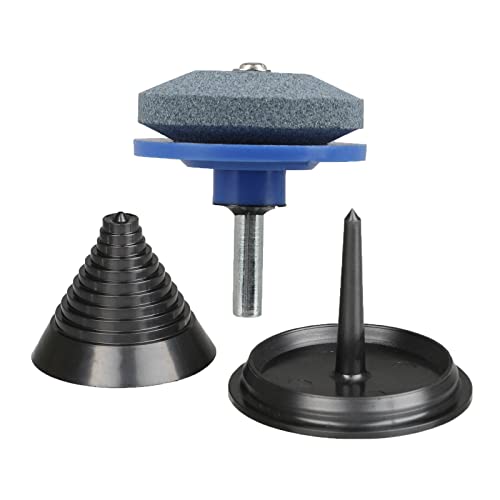
For casual DIY homeowners, drill-attachment sharpeners like the jtfrkope double-layer corundum ceramic stone offer a portable, cost-effective alternative. These tools attach directly to standard power drills and feature pre-angled grinding faces that match common mower bevels. Paired with a stepped multi-tier balancer, a drill-mounted sharpener allows users to touch up dull edges in just a few minutes without removing excess steel. Regardless of the equipment used, the goal remains restoring the original factory bevel rather than creating a dangerously thin knife edge.
Safe Removal and Installation Procedures
Working underneath a mower deck requires strict adherence to safety protocols to prevent accidental engine starts or severe lacerations. Before attempting to service any cutting hardware, always disconnect the spark plug boot on gas engines or remove the safety key and battery pack on cordless models. You can learn the complete sequence to safely remove a lawn mower blade without risking accidental spindle rotation or hardware damage. Placing a sturdy wooden block between the blade tip and the deck prevents the assembly from spinning while loosening stubborn bolts.
When installing replacement blades, matching the correct orientation is essential for proper cutting and airflow. The curved wings or sails must point upward toward the mower deck, while the flat side of the blade faces downward toward the soil. Securing mounting hardware requires following manufacturer torque specifications, as overtightening can strip spindle threads while under-tightening can lead to catastrophic hardware failure. Checking the cost of replacement mower blades can help you budget for periodic blade replacements instead of continuously grinding down excessively worn or warped steel.
Turf Health and the Consequences of Mowing with Dull Blades
Understanding the visual signs of a dull cut helps lawn owners determine when their blades need attention. A properly beveled factory edge leaves a crisp, clean horizontal line across each grass tip. In contrast, an excessively dull or damaged blade shreds the leaf fibers, leaving jagged white or tan strands that wither in direct sunlight. This ragged tearing damages cellular tissue, increases water evaporation from the grass, and exposes the turf to fungal pathogens.
Keeping sharp, well-balanced blades on your mower promotes dense root development and rich green turf color throughout the growing season. Inspecting your blade tips every twenty to twenty-five mowing hours ensures that minor dings from gravel or roots do not degrade cut quality. By understanding how store-bought blades are manufactured with durable utility bevels, you can confidently install new parts and maintain a pristine, manicured lawn.



Write Your Review
No reviews yet. Be the first to share your experience!