


Ragged grass tips and browning lawn patches often indicate that a rotary cutting deck struggles to shear grass cleanly. Property owners inspecting their cutting deck frequently ask whether are lawn mower blades supposed to be sharp or if a duller factory bevel is normal. A standard rotary mower blade is not meant to cut like a kitchen knife or a surgical razor, because an overly thin edge dulls instantly against turf soil and small pebbles. Understanding the distinction between a working edge and razor sharpness helps prevent unnecessary wear while ensuring clean cuts across the lawn.
Standard replacement blades, such as powder-coated mulching options from MaxPowerPrecisionParts, arrive with a distinct beveled edge engineered to withstand high-speed impact without rolling over. If you are also checking deck dimensions, our Craftsman lawn mower blade sizing guide explains how to match the correct length and center-hole geometry before working on the cutting assembly. Balancing routine edge maintenance with proper blade selection prevents excessive engine strain, deck vibration, and torn grass blades.
Pros
- Fast 10-second chuck installation works with standard drill chucks
- Double-layer corundum grinds steel evenly with minimal pressure
- Four-pack setup delivers excellent spare backup value for the shop
- Lightweight and compact enough to store inside any field tool tote
Cons
- Guide disc can get scored if pressed too aggressively against sharp metal
- Not intended for heavily gouged, warped, or cracked commercial blades
- Requires high drill RPM to achieve smooth, chatter-free grinding
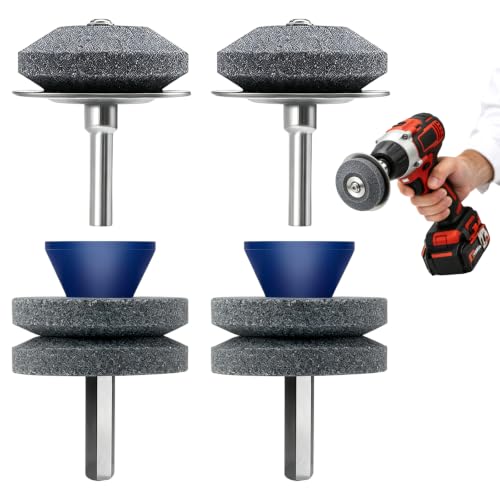
The Bneykrir 4-Piece Lawn Mower Blade Sharpener is a specialized drill attachment designed to take the headache out of seasonal lawn equipment maintenance. Instead of wrestling blades on a heavy stationary bench grinder or risking uneven hand-filing, this tool uses a double-layer corundum wheel that mounts right into your drill chuck. It is aimed squarely at homeowners, DIYers, and small-property groundskeepers who want clean, healthy grass cuts without spending shop fees on blade balancing and sharpening.
In practical workshop use, setting up the sharpener takes only a few seconds. Chuck the metal shaft into an 18V or 20V cordless drill, clamp your lawn mower blade securely into a bench vise, and bring the drill up to speed. The abrasive corundum stone cuts through mild surface oxidation, dull bevels, and small turf nicks smoothly. The plastic guide disc rests along the flat underside of the blade, keeping the abrasive angled against the factory bevel without demanding pinpoint freehand steadying.
Build quality is suited well for light to medium maintenance runs. The corundum material holds up to standard lawn tractor and push mower steel, though users should avoid leaning too heavily into the work. Applying steady, moderate passes keeps heat buildup low and avoids burning the temper on thin steel. The four-pack arrangement is practical, giving you plenty of abrasive material to work through multiple seasonal tune-ups, tiller blades, and utility yard tools.
There are a few trade-offs to keep in mind. The plastic collar can wear down if it drags forcefully against jagged metal edges, and deep gouges from rocks will still require an angle grinder with a flap disc first. That said, for routine seasonal maintenance and quick edge touch-ups, this four-piece kit provides straightforward functionality and solid value for any home garage.
Routine edge touch-ups on standard residential walk-behind and riding lawn mower blades.
Cleaning and sharpening curved garden tools, rototiller tines, sickle cutters, and axes.
Pre-season garage tune-ups where removing the blade for quick bench vise work is preferred.
Home toolkits where space or budget does not justify a dedicated stationary grinder.

Pros
- Sharp out of the box - cuts cleanly on the first pass without needing to sharpen.
- Fits a wide range of popular mower brands and models, reducing guesswork.
- Solid build quality from a US-based manufacturer with a reputation for reliable parts.
- Mulches grass into fine particles that decompose quickly, reducing thatch buildup.
- Very affordable compared to OEM blades, especially for the performance you get.
Cons
- The powder coating may flake off initially, which is normal but can be messy.
- Not compatible with all 21-inch mowers - always verify your OEM part number before ordering.
- Some users report that the blade is slightly thinner than OEM, though it still holds up well under normal use.
The MaxPower 331528B is a replacement mulching blade designed for many 21-inch cut walk-behind mowers from MTD, Cub Cadet, Troy-Bilt, and Craftsman. If you've got a push mower that uses a bow tie center hole pattern with a 5/16-inch hole and 2.5-inch spacing, this blade is likely a direct drop-in. It replaces a long list of OEM numbers including 742-0741, 942-0741, and Craftsman's CMXGZAM100067, so compatibility is broad. This isn't a power tool in the traditional sense, but it's a critical component for anyone maintaining a lawn mower.
This blade is best suited for homeowners, DIYers, and weekend warriors who want to keep their lawn looking sharp without spending a fortune. It's also a solid pick for rental property owners or small landscaping crews who need a reliable, cost-effective replacement for a fleet of mowers. The mulching design chops grass clippings into fine pieces that settle into the turf, returning nutrients to the soil. That means less bagging and a healthier lawn overall.
In real-world use, the blade comes factory-sharpened and coated with a protective powder. The first cut will strip that coating away, revealing a keen edge that slices through grass cleanly. Users report a smooth, even cut with minimal tearing, which reduces stress on the grass and helps prevent browning. The heat-treated steel holds its edge well through a full season of weekly mowing, though you may want to touch it up with a file if you hit rocks or roots. Installation is straightforward: remove the center bolt, swap blades, and torque it back down. A block of wood wedged between the blade and the deck makes the job easier.
Build quality is solid for an aftermarket blade. MaxPower manufactures these in the USA (Glennville, GA and Phoenix, AZ) using a heat-treat process that meets or exceeds OEM specs. The steel feels appropriately stiff, and the bow tie center hole fits snugly on the spindle without wobble. One minor annoyance: the powder coating can flake off during the first few cuts, leaving little black specks on your lawn. That's cosmetic and harmless, but worth noting. Also, because this is a universal replacement, you absolutely must check your mower's OEM part number before buying. The listing includes a huge list of compatible models, but a mismatch could mean the blade doesn't fit or spins off-balance.
Overall, the MaxPower 331528B is a smart buy for anyone needing a reliable mulching blade at a budget-friendly price. It cuts well, fits a wide range of mowers, and is built to last. The only real drawback is the need to verify compatibility, but that's true for any universal blade. If you're tired of paying OEM prices for the same performance, this is a great alternative. Just double-check your part number, and you'll be back to mowing in no time.
Blade Length: 21 inches
Blade Width: 2.25 inches
Center Hole: Bow tie pattern, 5/16-inch diameter outer holes, 2.5-inch center-to-center spacing
Weight: 1.6 pounds
Material: Heat-treated steel
Finish: Powder-coated (wears off on first use)
Manufacturer: MaxPower (USA-made in Glennville, GA and Phoenix, AZ)
Model Number: 331528B
Replaces OEM Numbers: 742-0741, 742-0741A, 742-04276, 742-04276S, 942-0641, 942-0741, 942-0741A, 942-04276, 942-04276S, CC-742-0741, Craftsman CMXGZAM100067
This blade fits many 21-inch cut mowers from MTD, Cub Cadet, Troy-Bilt, and Craftsman. Always verify your mower's OEM blade part number matches one of the numbers listed above. Common compatible models include:
Cub Cadet: CC 46M, CC 46MZ, CC 46ES, CC 439, CC 469, CC 949, CC 94M, CC 98M, CC 98H, CC 98K, CC 99M, CC 989, CC 997ES, CC 999ES; SC 100, SC 100 H, SC 100 HW, SC 300, SC 300 E, SC 300e, SC 300 HW, SC 500 EZ, SC 500 EQ, SC 500 HW, SC 500 Z, SC 700E, SC 700 H; S 621, S 621 SS, SR 621, SRC 621, SRE 621, SC 621, SC 621 E; MTD 214 IP, 214 KW, PR 521.
Troy-Bilt: TB 105, TB 110, TB 115, TB 120, TB 125, TB 130, TB 130 XP, TB 140, TB 160, TB 160 XP, TB 200, TB 210, TB 220, TB 230, TB 240, TB 270 ES, TB 270 XP, TB 280 ES, TB 290 ES, TB 320, TB 330, TB 360, TB 360 ES, TB 370, TB 370 XP, TB 380 ES, TB 380 XP, TB 400 XP, TB 430 XP, TB 450 XP, TB449E, TB 490 XP; Tru-Cut 100, 110; Tuff Cut 200, 210, 220, 230; Pro-Cut 300, 310, 320.
Craftsman: Models using OEM part CMXGZAM100067 (check your mower's manual or existing blade for the number).

Pros
- Powerful 1HP motor handles tough, dull blades without bogging down
- Ceramic wheel stays cool and sharpens faster than traditional stones
- Dual angle brackets make it easy to switch between blade types for consistent results
- Blade balancer and hole adapters add professional-level convenience
- Solid steel base and low-vibration design provide stable operation
Cons
- Weighs over 43 pounds, making it less portable and requiring a dedicated workspace
- Bench grinder format takes up bench or table space; not suitable for mobile use
- Price may be high for occasional homeowners who sharpen blades once a year
The Holdwell S Lawn Mower Blade Sharpener is a compact bench grinder built specifically for sharpening mower blades. While it is not a mower itself, this tool is a valuable addition for any homeowner or lawn care enthusiast who wants to keep their cutting equipment in top shape. A sharp blade makes a noticeable difference in how your mower handles grass, reducing tearing and giving your lawn a clean, healthy cut.
This sharpener is best suited for homeowners who maintain their own lawn, especially those with multiple mowers or frequent sharpening needs. It also works well for budget-conscious shoppers who want to extend the life of their blades rather than buying new ones. Landscaping professionals and property managers will appreciate the consistent sharpening angles and the included blade balancer, which helps prevent vibration damage to the mower deck.
The 1HP motor delivers plenty of power to handle dull, nicked blades from high-lift, low-lift, gator, and flat designs. The 9-inch ceramic wheel runs cooler than traditional abrasive wheels, so you can sharpen several blades without worrying about overheating. The pre-installed 30° bracket and extra 40° bracket make it easy to set the correct angle for different blade types, ensuring a sharp edge every time. After sharpening, you can use the blade balancer to check for even weight distribution, which reduces vibration during mowing and protects your mower's spindle bearings.
Build quality is solid. The aluminum-housed motor and steel base keep the grinder stable during operation, and the integrated design minimizes vibration. The package includes six blade hole adapters to fit various center hole sizes, so the blade stays securely in place while sharpening. Extra replacement sandpapers are also included, extending the life of the ceramic wheel. Setup is straightforward with the included screwdriver and manual, taking only a few minutes.
One realistic limitation is the weight and size. At over 43 pounds, this grinder is heavy and requires a dedicated bench or table. It is not portable for field use. Also, if you only sharpen blades once a season, the investment may be hard to justify compared to professional sharpening services. However, for frequent use, it pays for itself quickly.
Overall, the Holdwell S Lawn Mower Blade Sharpener is a practical tool for anyone serious about lawn care. It helps you maintain razor-sharp blades, improves cutting performance, and reduces the hassle of replacing blades. If you have a medium to large lawn or manage multiple properties, this grinder is a worthwhile addition to your workshop.
Sharp mower blades are essential for a clean cut that promotes lawn health. The Holdwell S sharpener uses a 9-inch ceramic wheel to restore dull edges quickly. The dual angle brackets let you match the original bevel of high-lift, low-lift, gator, or flat blades, so you maintain the manufacturer's recommended cutting geometry. The included blade balancer ensures the blade spins evenly after sharpening, reducing stress on the mower's engine and deck. According to user feedback, this setup delivers results comparable to professional sharpening services.
The sharpener features a 1HP aluminum-housed motor that dissipates heat well during extended use. The solid steel base and integrated design keep vibration low, which improves sharpening accuracy and extends the life of the tool. The ceramic grinding wheel is more durable than traditional stone wheels and resists glazing. Extra sandpapers are included to maintain the wheel's surface over time. Overall, this is a well-built machine that can handle regular sharpening sessions for years.
The package comes with everything you need to start sharpening right away: the bench grinder, extra sandpapers, 30° and 40° angle brackets, a blade balancer, six blade hole adapters, a screwdriver, and a user manual. The adapters fit most common center hole sizes, so you can sharpen blades from different mower brands without needing additional parts. The blade balancer is a nice touch that helps you check for uneven sharpening, preventing future mower vibration issues.
To keep the sharpener in good condition, regularly inspect the ceramic wheel for wear and replace it when needed using the included sandpapers. Clean the wheel with a dressing stick if it becomes glazed. Store the grinder in a dry area to prevent rust on the steel base. The motor is sealed and requires no routine lubrication. After each sharpening session, wipe down the brackets and adapters to remove metal filings. With minimal care, this tool will stay reliable for many seasons.
Pros
- Simple pull-through action makes sharpening fast and easy for beginners
- Integrated wire brush keeps blade clean for better sharpening results
- Oversized handle and safety guard improve comfort and protection when using gloves
Cons
- Manual operation requires physical effort and multiple passes for very dull blades
- May not achieve the same precision as a bench grinder or professional sharpening service
- Limited to lawn mower blades; not designed for other cutting tools or kitchen knives
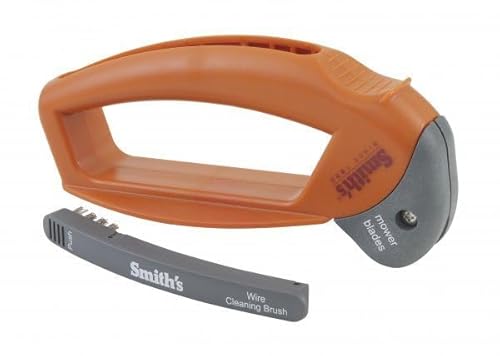
Smith's Lawn Mower Blade Sharpener is a straightforward manual tool designed to keep your mower blades sharp without the need for power equipment or removing the blade. It targets the typical homeowner who wants a quick and easy way to maintain cutting performance during the mowing season. While it sits in the Knife Sharpeners category on Amazon, its specific design for mower blades sets it apart for lawn care duty.
In real-world use, you simply place the sharpener over the blade and pull it back and forth a few times. The durable head guides the abrasive surface against the edge, restoring a functional sharpness that improves cut quality. The integrated wire brush is a nice touch - you can clean off grass residue right before sharpening, which helps the tool work more effectively. The oversized handle is genuinely comfortable even with thick work gloves, and the large safety guard gives you confidence while pulling.
Build quality is what you would expect at this price point: functional and lightweight. The plastic body holds up fine for occasional use, but it does not feel like a heavy-duty shop tool. Keep in mind that this sharpener is meant for touch-ups and maintenance, not for reshaping heavily damaged or nicked blades. If your blade has significant wear, you might need several passes or a more aggressive method. Also, it only works on lawn mower blades, so it is not a multi-purpose tool.
The biggest limitation is the manual effort involved. For someone sharpening multiple blades or dealing with tough steel, a bench grinder would be faster and more consistent. However, for the DIYer who wants to spend five minutes refreshing a blade before mowing, this tool delivers good value. It stores easily in a tool bag or shed, and there are no cords or batteries to worry about.
Overall, Smith's Lawn Mower Blade Sharpener is a practical, no-nonsense addition for any homeowner with a reel or rotary mower. It will not replace professional sharpening or power tools, but it offers an accessible, low-cost way to keep your cuts clean and your lawn healthy. If you are looking for a straightforward maintenance tool that does not require a workshop setup, this is a solid choice.
Color: Black
Size: One Size
Dimensions: 7.34 x 2.15 x 2.86 inches
Weight: 0.47 pounds
Product Group: Kitchen
Best suited for DIY homeowners who want to maintain reel or rotary mower blades between professional sharpenings. Ideal for quick touch-ups in the garage or on the lawn before mowing. Not recommended for commercial mowing operations or for blades with severe damage.

Pros
- Quick and easy to use with any standard power drill no need for a bench grinder or expensive sharpening system.
- Durable double-layer corundum stone handles high heat without degrading, unlike cheaper single-layer stones.
- Compact and portable enough to carry in a pocket or tool pouch for on-site sharpening anywhere.
- Versatile compatibility with multiple blade types including mowers, tractors, and rototillers.
Cons
- May not restore severely damaged or nicked blades as effectively as a professional grinder or file.
- Requires a steady hand and consistent pressure to maintain a uniform edge angle across the entire blade.
- Limited to sharpening flat blades; not suitable for curved or serrated edges found on some specialty mowers.
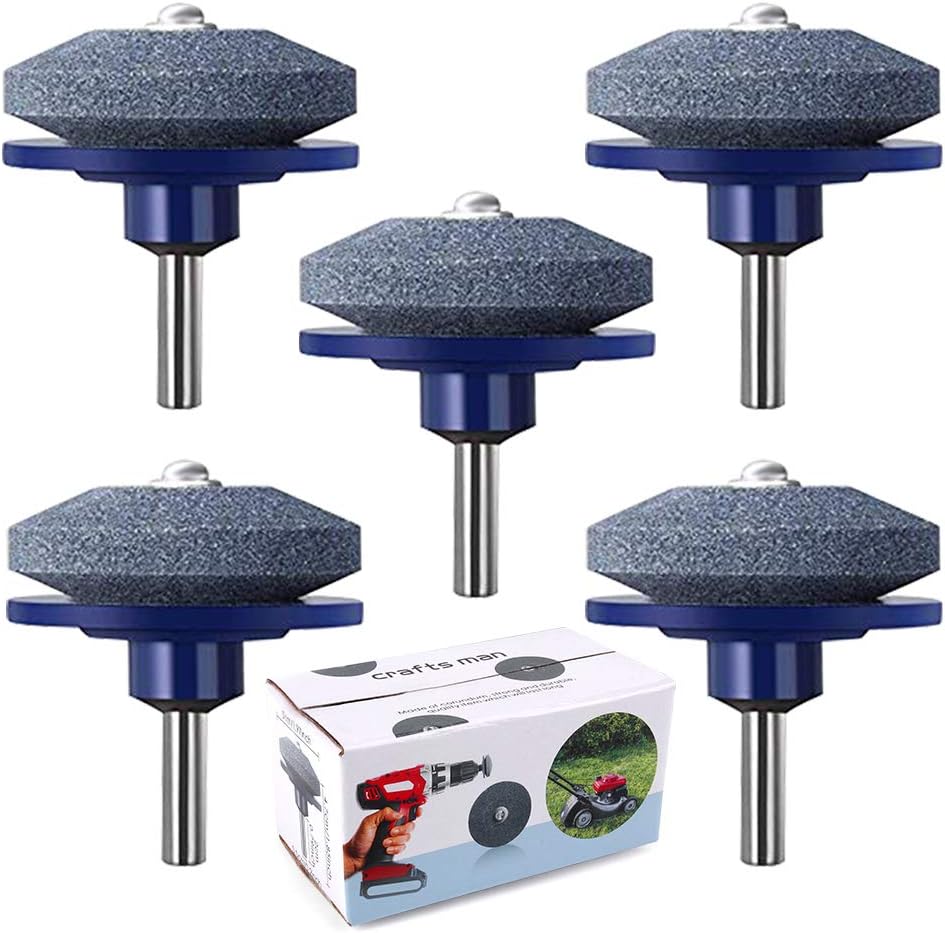
If you are tired of pushing a dull mower blade through thick grass, the 2025 Lawnmower Blade Sharpener by Home offers a practical, budget-friendly fix. This small but capable tool attaches directly to any power hand drill, turning it into a portable sharpening station. The double-layer corundum stone is key here it handles the heat generated by high-speed drilling without melting or glazing over, unlike cheaper stones that fail after a few passes. For the DIY homeowner or weekend warrior, this means you can sharpen your mower blade in place without removing it, saving a ton of time and hassle.
In real-world use, this sharpener excels at bringing dull blades back to life. Just chuck it into your drill, spin it against the blade edge at a shallow angle, and you will see a noticeable improvement in cut quality after a few passes. It works on standard lawn mowers, riding tractors, rototillers, and even drill bits or scythe blades. The compact size (about 2 inches across) makes it easy to carry in a pocket or toss in a tool bag, so you can touch up blades right on the jobsite or in the field. For small property owners who mow once a week, this tool can extend blade life between professional sharpenings, saving both money and frustration.
Build quality is decent for the price point. The corundum stone is bonded to a steel core, and the plastic handle provides a secure grip during use. However, it is not a heavy-duty industrial solution. If you have severely nicked or bent blades, you will still need a bench grinder or file to remove deep damage before using this sharpener. Also, maintaining a consistent edge angle takes a bit of practice, especially on longer blades. But for routine maintenance and light to moderate wear, this tool delivers reliable results that any homeowner can achieve.
Drawbacks are relatively minor given the low cost. The sharpener works best on flat, straight blades; curved or serrated edges are not ideal candidates. You also need a steady hand to avoid uneven sharpening, which can lead to vibration during mowing. And while the corundum stone is heat-resistant, prolonged use at high RPM can still cause some wear, so take breaks and let the stone cool if you are doing multiple blades. That said, for the price of a fast-food meal, this is a solid addition to any DIYer's tool kit.
Overall, the 2025 Lawnmower Blade Sharpener is a smart buy for homeowners who want to keep their mower blades sharp without investing in expensive equipment. It is simple, effective, and portable, making it perfect for quick touch-ups before a mowing session. If you value a clean cut and want to reduce mowing time, this tool delivers practical value that justifies its place in your workshop or shed. Just keep your expectations realistic, and you will not be disappointed.
Product Dimensions: 1.97 x 1.97 x 2.16 inches
Item Weight: 7.4 ounces
Material: Corundum stone, steel, plastic
Color Options: Blue, Red
Package Includes: 3 or 5 lawn mower sharpeners depending on variant
Compatibility: Works with most power hand drills
Manufacturer: Surlveia
ASIN: B0D5YG1H4R
This lawnmower blade sharpener is ideal for quick touch-ups on standard walk-behind mowers, riding lawn tractors, and small rototillers. It works best for routine maintenance where blades are dull but not severely damaged. Homeowners with less than an acre of grass will find it particularly useful for keeping blades sharp between professional sharpenings. It is also handy for contractors who need to sharpen mower blades on-site without returning to the shop. For best results, use it with a drill that has variable speed control to adjust RPM based on blade condition.

Pros
- Very affordable and easy to install on a standard power drill
- Includes a balancer to help maintain even blade wear
- Versatile for multiple garden cutting tools beyond just mower blades
Cons
- Lower customer rating suggests inconsistent performance or durability issues
- Manual sharpening with a drill still requires careful angle control and may not match factory edge quality
- Best suited for light to moderate sharpening tasks; heavy use may wear the abrasive quickly
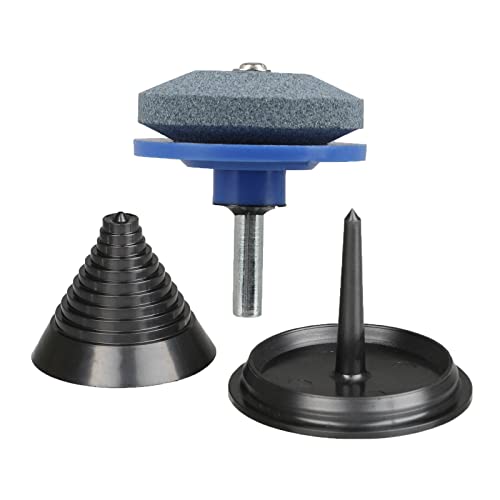
The Calsoling 3-Piece Lawn Mower Blade Sharpener is a straightforward, no-frills accessory designed to help homeowners and DIYers keep their mower blades and other garden cutting tools sharp without investing in expensive sharpening equipment. This set includes three corundum abrasive stones mounted on stainless steel bases, plus a blade balancer, all for a price that makes it easy to try. The concept is simple: chuck one into any standard power drill, touch it to the blade edge, and grind away the dullness. For those who mow a standard suburban lawn once a week, this can be a practical way to extend blade life between professional sharpenings or replacements.
In real-world use, the sharpener works best on blades that are merely dull rather than heavily nicked or damaged. The corundum material handles moderate wear and resists heat buildup, which is important when using a drill at higher RPMs. The included balancer is a nice bonus, letting you check if the blade is still balanced after sharpening, which helps reduce vibration and uneven cuts. However, the sharpening process requires a steady hand and a consistent angle to avoid creating an uneven edge. It's not as precise as a dedicated sharpening jig or a professional grinder, but for quick touch-ups, it gets the job done.
Build quality is adequate for the price point. The steel backing provides some rigidity, but the abrasive stones are relatively small, measuring about 1.97 inches in diameter. This means you'll need to make multiple passes along longer blades. The three-pack is a practical advantage, allowing you to keep one in the garage, one in the shed, and maybe a spare. The 12-month warranty is a nice touch for such an inexpensive item, indicating the manufacturer stands behind it.
On the downside, the overall customer rating is modest, and some users have reported inconsistent performance or the abrasive wearing down faster than expected. This is not a tool for professional landscapers or anyone who sharpens blades daily. It also requires a power drill, which most homeowners already have, but it's an added step if you don't. The lack of a guide or depth stop means you could accidentally remove too much material if you're not careful.
Overall, the Calsoling 3-Piece Lawn Mower Blade Sharpener is a solid budget option for the DIY homeowner who wants a quick, easy way to maintain mower blades and similar tools. It's not a replacement for professional sharpening or high-end sharpening systems, but for the occasional touch-up, it offers good value. If you're a weekend warrior with a modest lawn and a cordless drill, this set is worth considering. Just go in with realistic expectations about its durability and precision.
Product Dimensions: 1.9 x 1.5 x 0.8 inches per stone
Item Weight: 3.53 ounces (total set)
Material: Corundum abrasive with stainless steel backing
Stone Diameter: 50 x 47 mm (1.97 x 1.85 inches)
Package Includes: 3 sharpening stones + 1 blade balancer
Compatibility: Works with power drills and hand drills; fits 99% of mower blade center holes
Warranty: 12 months
This sharpener set is best suited for homeowners and DIYers who need to touch up standard lawn mower blades, sickle bars, rotary tillers, hoes, and drill knives on a regular basis. It's ideal for quick maintenance between professional sharpenings or for those who prefer to keep their blades sharp without the expense of a dedicated sharpening station. Not recommended for heavy-duty or commercial use where blades are heavily damaged or need precise edge geometry.
Understanding Mower Blade Sharpness, Cutting Dynamics, and Maintenance
Rotary lawn mower blades are definitely supposed to be sharp, but they should never be sharpened down to a razor-thin edge. A properly sharpened mower blade features a clean, well-defined bevel with a slightly blunted leading edge comparable to the profile of a butter knife. Because a rotary blade spins at roughly 3,000 revolutions per minute, the blade tips routinely reach linear speeds exceeding 150 to 200 miles per hour. At those extreme velocities, high-speed impact physics shears grass blades cleanly without requiring the delicate, paper-thin edge found on kitchen cutlery.
Grinding a mower blade too thinly weakens the steel matrix and causes rapid edge failure against sandy soil, woody stems, and hidden lawn debris. When an edge is excessively sharp, it quickly rolls over, chips, and turns jagged after just a few minutes of contact with coarse turf. Conversely, a completely dull or rounded blade batters grass rather than slicing it, leaving shredded leaf tips that quickly dry out and turn a sickly brown color. Achieving the proper balance between sharpness, structural durability, and rotational balance ensures both vigorous lawn health and dependable mower performance.
The Mechanical Difference Between Razor Sharpness and a Working Edge
A razor edge relies on an extremely thin wedge that slices soft materials through delicate lateral pressure and minimal resistance. In contrast, lawn mower blades operate under violent impact dynamics where kinetic energy drives the cutting action across thousands of turf stalks per second. If a homeowner grinds a mower blade down to a hair-splitting edge, the microscopic tip lacks sufficient steel mass to withstand those repetitive concussive forces. The immediate shock of striking dense grass crowns, hidden twigs, and airborne soil particles quickly folds or fractures that delicate edge.
A proper working edge on a rotary blade should maintain a blunt edge margin measuring roughly 1/64 to 1/32 of an inch along the flat front. This narrow, unsharpened flat margin prevents the leading cutting corner from chipping, rolling, or cracking under sudden impacts. Professional sharpening guidelines consistently recommend maintaining this intentional edge flat to maximize working life between seasonal maintenance intervals. The goal is to produce a smooth, consistent bevel that concentrates rotational energy without compromising the structural integrity of the heat-treated steel.
Factory Powder Coatings and Initial Blade Sharpness
Brand new replacement blades frequently confuse homeowners because the cutting edge often arrives completely covered under a thick layer of paint or protective powder coating. Replacement units like the Maxpower 331528B mulching blade feature heavy powder coating across the entire surface, including the factory-machined cutting bevel. Manufacturers apply this durable coating to inhibit rust and surface corrosion while parts sit in transit, retail displays, and humid storage warehouses. Furthermore, the coated edge provides an extra layer of handling safety for homeowners unpackaging and installing the blade.
Many buyers wonder whether they should grind away this factory coating on a bench grinder before installing the new blade on their mower deck. According to manufacturer specifications from brands like MaxPowerPrecisionParts, this protective powder coating is engineered to wear away naturally during the very first cut. Grinding a new coated blade is generally unnecessary because precision factory sharpening already sits directly beneath the paint layer. Once the abrasive friction of cutting grass strips away the outer paint, the precision-milled steel edge takes over to deliver clean cuts.
Turf Symptoms and Visual Signs of a Dull Mower Blade
Inspecting the appearance of your grass tips provides the fastest and most reliable diagnostic indicator of blade condition. A dull blade tears, rips, and shatters the cellular structure of grass stems instead of making a crisp, horizontal slice. Within twenty-four to forty-eight hours after mowing, torn grass tips dry out and develop a pale whitish or straw-yellow appearance across the lawn canopy. This ragged tearing dramatically increases plant moisture loss, stresses root systems, and creates jagged open wounds that invite fungal pathogens like dollar spot and brown patch.
A physical inspection of the blade underneath the mower deck reveals distinct physical wear patterns that accumulate over a mowing season. When a blade requires service, the leading cutting edge appears visibly rounded, smooth, or grooved from continual abrasion against soil and sand. You may also observe prominent dents, gouges, or rolled burrs where the spinning metal struck rocks, roots, or hardened surface debris. If sliding a gloved thumb across the bevel reveals rounded steel with zero distinct transition corner, the blade has lost its working edge and requires re-profiling.
Determining the Correct Bevel Angle and Cutting Profile
Maintaining the correct grinding angle is critical whenever restoring a dull mower blade on a bench grinder or sharpening station. Most standard rotary mower blades utilize an original factory bevel angle between 30 and 35 degrees along the upper face. Dedicated sharpening equipment designed for lawn care, such as the Holdwell S bench grinder, includes pre-set 30-degree and 40-degree angle brackets to ensure uniform edge geometry. A 30-degree angle provides an optimal balance between slicing efficiency, cutting resistance, and long-term edge retention for typical residential turf varieties.
Certain commercial mowing applications or rough property clearing tasks benefit from a slightly steeper 40-degree angle to provide greater steel reinforcement behind the edge. Steeper bevels resist edge chipping when operators encounter sandy soil, gravel paths, or overgrown acreage containing hidden obstacles. When sharpening, you must only remove material from the top beveled face while keeping the bottom side of the blade perfectly flat. Grinding the underside creates an unintended double bevel that disrupts deck aerodynamics, decreases upward suction, and impairs discharge performance.
Evaluating Sharpening Tools for Routine Maintenance
Homeowners can select from several practical tool categories to restore a dull edge without investing in costly commercial machinery. Rotary drill attachments, such as the double-layer corundum stone sharpeners from Bneykrir, Home, and jtfrkope, mount directly into standard power drills. These compact stones feature a plastic guide collar that rests against the flat bottom of the blade to stabilize the tool at an appropriate working angle. Upgraded versions like the Calsoling sharpener incorporate a stainless steel base to resist heat friction and prevent abrasive melting during extended drill operation. These drill tools provide an accessible, low-cost option for seasonal lawn mower maintenance.
Manual pull-through sharpeners offer another convenient choice for quick blade touch-ups without requiring electric power. The Smith’s lawn mower blade sharpener utilizes a preset carbide head, an oversized grip for gloved hands, and a wire cleaning brush integrated into the handle. While manual carbide pull-through tools excel at scraping away light burrs, drill-mounted stones remove deeper metal nicks much faster. For professional landscapers maintaining multiple blade sets, dedicated high-power bench grinders like the Holdwell S unit with ceramic wheels deliver superior speed, heat dissipation, and angle consistency.
Rotational Balance and Vibration Prevention
Sharpening inevitably removes metal from the blade, which will alter its center of gravity if one wing loses more material than the other. An unbalanced blade spinning at high speeds generates violent centrifugal forces that vibrate through the entire cutting deck and drive assembly. This chronic vibration accelerates wear on spindle bearings, loosens deck hardware, cracks metal housings, and can even bend the engine crankshaft. Checking rotational balance after every sharpening session is just as important as restoring the cutting edge itself.
Static balance testers, including the stepped cone balancers supplied with the jtfrkope and Calsoling sharpener sets, offer a quick way to verify weight distribution. You seat the blade center hole over the graduated steps of the cone and check whether the blade stays level or tips toward one end. If one cutting wing dips lower, that side carries excess steel mass that must be removed before reinstalling the blade. To correct the balance, grind metal off the rear lift wing or non-cutting sail of the heavy side rather than taking excess material from the sharpened edge.
Blade Aerodynamics, Lift Profiles, and Deck Configurations
Routine sharpening should focus strictly on the cutting bevel while leaving the rear lift sails completely intact. These upturned curved wings generate the powerful upward vortex of air that pulls grass blades erect right before the cutting edge makes contact. Mulching blades, such as the Maxpower 331528B designed for 21-inch MTD, Cub Cadet, Troy-Bilt, and Craftsman decks, rely on continuous curved contours to recirculate clippings beneath the deck. If overzealous grinding thins or reshapes these sails, the deck loses the suction required to mulch, discharge, or bag clippings cleanly.
Different mowing setups demand specific blade profiles to manage airflow and handle clippings effectively across varying grass densities. Exploring specialized configurations like black mower blade configurations shows how distinct blade geometries influence discharge velocity and clipping dispersal. Similarly, reviewing specialized setups on modern brushless electric mower blades illustrates how optimized blade weights and lift designs conserve battery power by minimizing aerodynamic drag. Preserving the manufacturer-engineered shape during sharpening prevents unwanted deck turbulence and uneven cutting streaks.
Safe Inspection, Removal, and Installation Procedures
Blade maintenance always begins with rigorous safety precautions to eliminate any possibility of accidental motor startup. On gasoline-powered mowers, disconnect the spark plug ignition boot and secure the lead wire completely away from the plug. On cordless electric models, remove the security key and pull out the battery packs before tipping the machine. Tilt the mower deck so that the engine carburetor and air cleaner point upward toward the sky, which keeps engine oil and gasoline from draining into the intake tract.
Block the blade securely by wedging a piece of wood between the cutting wing and the deck interior to lock rotation while breaking the mounting bolt loose. Inspect the mounting hardware, blade washer, and spindle adapter for any evidence of stripped threads, rust pitting, or deformed metal. Replacement blades often rely on specific mounting patterns, such as the bow tie center hole pattern found on the Maxpower 331528B, which must seat perfectly flush against the spindle star. When reinstalling the blade, ensure the cutting bevel faces upward toward the undercarriage and torque the bolt according to manufacturer specifications.
Identifying When to Sharpen Versus When to Replace
Sharpening can restore a dull blade several times across multiple seasons, but every piece of cutting steel has an ultimate operational lifespan. Grinding away nicks and grooves progressively narrows the blade width, reducing its structural mass and impact resistance. If repeated grinding removes more than one-third of the original cutting edge depth, the blade should be retired from service immediately. A compromised blade can fracture or shatter when striking an unexpected lawn obstacle, creating dangerous high-velocity shrapnel beneath the deck.
Check the lift wings and central mounting hole closely during every maintenance session for structural fatigue, metal erosion, or hairline stress fractures. Abrasive sandy soil can wear down the lift wings until the metal becomes paper-thin, creating an extreme risk of detachment during operation. If you discover severe bends along the blade spine, deep gouges deeper than an eighth of an inch, or cracks spreading from the center hole, discard the blade. Installing a fresh replacement blade restores safe mowing operation, ensures proper deck balance, and preserves the pristine lawn appearance you desire.
Seasonal Maintenance Frequency and Blade Storage
Establishing a predictable maintenance schedule keeps your mower cutting efficiently without requiring excessive metal removal during each service session. Most residential lawns benefit from blade sharpening every twenty to twenty-five mowing hours, which typically translates to once or twice per mowing season. Lawns with sandy soil, exposed tree roots, or rocky boundaries may require more frequent touch-ups to counteract accelerated abrasive wear. Performing minor, frequent edge cleanings removes minimal steel and prolongs the total lifespan of the cutting blade.
Keeping a spare replacement blade ready in your workshop prevents unplanned downtime during peak grass-growing months. When a blade dulls, you can immediately swap in your sharpened backup blade and service the dull blade at your leisure. Before storing serviced blades for the winter, clean off all dried grass buildup, dry the steel thoroughly, and apply a light coat of protective oil to prevent surface rust. Proper off-season storage ensures your cutting deck is ready for clean, effortless mowing the moment spring arrives.
Maintaining a properly beveled working edge rather than an overly fine razor edge allows your lawn mower to perform safely and cleanly all season long. Regularly inspecting your blade for rounded corners, preserving the 30-degree factory angle, and testing rotational balance prevents costly spindle bearing repairs. Whether using convenient drill-mounted corundum sharpeners, handheld carbide tools, or dedicated ceramic bench grinders, keeping your cutting edges in prime shape is a manageable DIY task. That simple investment in routine blade care rewards you with a healthier, greener lawn and smooth equipment operation every time you mow.



Write Your Review
No reviews yet. Be the first to share your experience!