


The short answer is no, the metal cutting blade itself is not threaded; rather, the spindle nut that secures it to the mower deck is typically reverse threaded. This specific design prevents the nut from loosening due to the high rotational speed of the blade during operation. Understanding this distinction is critical for safe removal and installation of replacement parts on your equipment.
Many homeowners encounter confusion when attempting to change a blade, mistaking the blade orientation for the thread direction. The reverse thread mechanism is a safety feature found on most walk-behind and riding mowers. If you are dealing with a stuck fastener or planning a blade swap, our guide on loosening stuck lawn mower blade bolts provides practical techniques for dealing with corrosion. Knowing the difference between the blade’s cut direction and the nut’s threading ensures you apply force in the correct direction, protecting both your tool and your safety.

Pros
- Fits a wide range of popular mower brands without modification.
- Sturdy alloy steel holds an edge longer than basic stamped blades.
- Easy install with no assembly required – just swap out the old blade.
Cons
- Only fits 21-inch decks; not compatible with larger or smaller mowers.
- May need to verify your old part number against listed predecessors to ensure match.
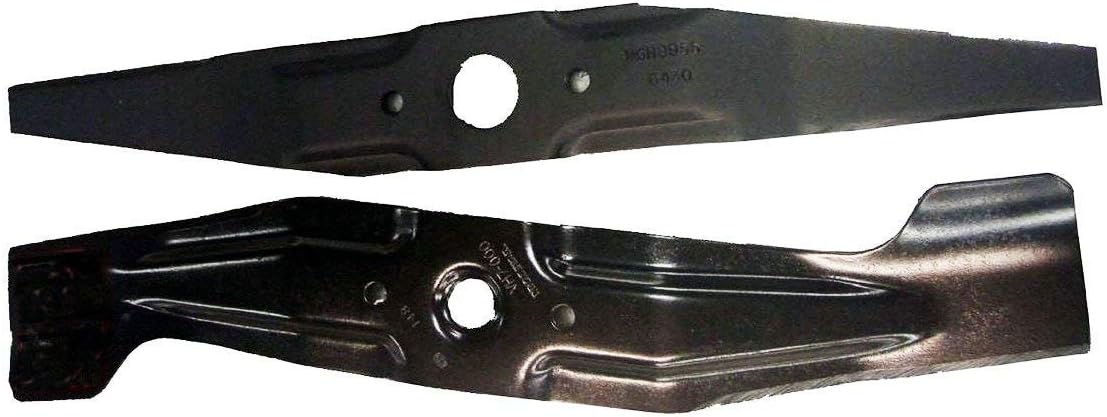
The Husqvarna 532406712 replacement blade is a straightforward, no-nonsense option for anyone who owns a 21-inch push mower from Husqvarna, Poulan, Craftsman, Weed Eater, or Roper. If you are a homeowner or DIYer who handles your own lawn maintenance, this blade gives you a reliable way to restore cutting performance without breaking the bank. It replaces several earlier part numbers like 165833, 175064, and 406712, so checking compatibility is simple.
Out in the yard, this blade handles thick grass and occasional debris well. The alloy steel construction keeps the edge sharp through several mowings, and the 0.130-inch thickness provides enough stiffness to prevent flexing during tough cuts. You will notice a cleaner slice versus older, worn blades, which means less tearing and a healthier lawn. The right-hand cut direction works seamlessly with standard bagging and mulching setups, so you do not have to change your mowing routine.
Build quality is what you would expect from Husqvarna – solid, consistent, and designed for longevity. The blade is lightweight at just 1.5 pounds, which reduces stress on the mower deck and engine over time. Installation is straightforward: remove the old blade, center the new one on the 5/8-inch hole, and torque it down. No modding or adapters needed.
One realistic limitation is that this blade only fits 21-inch decks. If you have a 20-inch or 22-inch mower, you are out of luck. Also, double-check your current part number against the list of predecessors to avoid a mismatch. But for the vast majority of standard push mowers in its size range, this blade is a dependable performer that delivers good value for the cost.
Overall, the Husqvarna 532406712 is a smart upgrade for anyone wanting a sharp, durable blade without hunting down a dealer. Whether you are a weekend warrior or just keeping your lawn tidy, this blade will get the job done reliably.
Brand: Husqvarna
Model Number: 532406712
Length: 21 inches
Width: 2 1/4 inches
Thickness: 0.130 inches
Center Hole Diameter: 5/8 inch
Outer Hole Diameter: 5/8 inch and 1 7/8 inch
Material: Alloy Steel
Weight: 1.5 pounds
Cut Direction: Right
Compatible Brands: Husqvarna, Poulan, Poulan Pro, Roper, Sears/Craftsman, Weed Eater
This blade is ideal for routine mowing on 21-inch push mowers in residential lawns. It works well for homeowners who prefer to bag clippings or mulch leaves thanks to the right-hand cut design. DIYers maintaining medium-sized yards will appreciate the durability and easy swap-out when the old blade dulls. Not suited for commercial zero-turn mowers or larger decks.

Pros
- Supplied as a full 3-blade set to completely service 54-inch triple-spindle decks at once
- Extensive documented compatibility with major AYP, Husqvarna, and Ariens OEM part numbers
- Notched high-lift profile suits side-discharge and collection-focused mowing needs
- Direct replacement fit for a wide range of lawn tractors, garden tractors, and zero-turn mowers
Cons
- Mounting hardware such as blade bolts and washers is not explicitly included in the package
- Deck size alone does not guarantee fitment, requiring manual verification of mower model and OEM part numbers
- Specific center-hole diameter and individual blade thickness are not detailed in the listing specifications
The 8TEN LawnRAZOR Mower Blade 3-Pack is an aftermarket replacement cutting set tailored specifically for riding mowers, lawn tractors, and zero-turn models equipped with 54-inch decks. Designed to replace OEM cross-reference AYP 187254, this set appeals directly to DIY homeowners, property caretakers, and equipment operators maintaining compatible Ariens, AYP, and Husqvarna machinery. The set includes three individual blades finished in green, allowing operators to refresh an entire 54-inch triple-blade deck simultaneously rather than mixing worn blades with new cutting components.
Equipment compatibility covers an extensive selection of residential and commercial-style machines fitted with 54-inch cutting shells. Documented Husqvarna tractor models include the 2354GXLS, 2754GLS, GT2254, GTH2454T, GTH24K54, GTH24V54, GTH264T, GTH2654, GTH2654T, GTH26K54T, GTH26V54, GTT354, LGT24K54, LGT2554, LGT2654, YTH2454, YTH24V54, and YTH26V54. For zero-turn equipment, the set matches Husqvarna LSZ5422, LSZ5424, RZ5422, RZ5424, RZ5426, RZ54i, Z254, and Z5426. Ariens tractor owners can utilize this set across Hydro Tractors 936043, 936059, 936068, 936069, 936055, Precision Hydro 936040, Gear Tractor 936054, and Automatic Tractors 936078, 936097, and 936096.
The blades feature a notched high-lift profile engineered to maximize lift and airflow within the cutting deck. High-lift blade designs direct grass clippings upward into a discharge chute or collection bagging system, reducing deck buildup compared to flat or low-lift configurations. The product specifications list package dimensions of 18.9 x 4 x 2 inches with a total set weight of 6.6 pounds. Replacing all three blades at once supports consistent deck balance and uniform cut height across the full 54-inch swath.
Prospective buyers must confirm compatibility beyond just deck width prior to purchase. While 54-inch deck compatibility is stated, mounting geometry must align with existing spindle shafts, and the listing does not explicitly document center-hole dimensions or include replacement mounting hardware such as blade bolts and washers. Owners must inspect their original equipment hardware to ensure bolts and spindle interfaces match before installation. Cross-referencing existing part numbers against OEM numbers such as Husqvarna 532187254, AYP 187254, or Ariens 21546235 provides the most reliable verification method.
Routine maintenance and responsible installation require strictly adhering to mower manufacturer safety procedures. Equipment must be fully shut down, parking brakes engaged, and spark plug boots disconnected prior to working beneath the mower deck. For property owners operating supported 54-inch Husqvarna or Ariens tractors, the 8TEN LawnRAZOR 3-pack presents a straightforward, OEM-matched replacement solution designed to maintain optimal grass discharge and clean cutting operation.
Compatibility requires matching both deck size and OEM reference numbers. This 3-blade set is documented for 54-inch decks on select Ariens, AYP, and Husqvarna lawn tractors, garden tractors, and zero-turn mowers.
Supported OEM part cross-references include Ariens 21546235, AYP numbers 187254, 187256, 33954, 917187254, 917532187254, and 917532187256, as well as Husqvarna numbers 532187254, 532187256, 539112053, 574292401, 575938401, and 777187256.
Documented mower models include Husqvarna tractor models 2354GXLS, 2754GLS, GT2254, GTH2454T, GTH24K54, GTH24V54, GTH264T, GTH2654, GTH2654T, GTH26K54T, GTH26V54, GTT354, LGT24K54, LGT2554, LGT2654, YTH2454, YTH24V54, and YTH26V54. Compatible zero-turn mowers include Husqvarna LSZ5422, LSZ5424, RZ5422, RZ5424, RZ5426, RZ54i, Z254, and Z5426.
Compatible Ariens tractors include Hydro Tractors 936043, 936059, 936068, 936069, 936055, Precision Hydro 936040, Gear Tractor 936054, and Automatic Tractors 936078, 936097, and 936096.
The 8TEN LawnRAZOR set includes 3 replacement mower blades with a green protective coating. The complete 3-pack features package dimensions of 18.9 x 4 x 2 inches and weighs 6.6 pounds.
The blades feature a notched high-lift profile designed to create upward draft inside 54-inch cutting decks, facilitating discharge and bag collection.
Mounting hardware is not included, meaning existing spindle bolts, washers, or adapters must be retained and inspected for serviceability prior to installation.


Pros
- High-lift profile provides strong airflow for bagging and throwing clippings cleanly
- Sturdy 0.197-inch thick steel resists bending against hidden roots or rocks
- Standard 5-point star mount fits matching Husqvarna spindles without modification
- Includes all three blades required for compatible 42-inch deck configurations
Cons
- High-lift blades may draw more engine horsepower in tall, overgrown grass compared to standard blades
- Specific to 3-blade 42-inch deck setups, so owners of 2-blade 42-inch decks must verify fitment
- Protective coating wears off at the cutting edge after initial yard use
The 8TEN LawnRAZOR Blade Set is a 3-pack of heavy-duty high-lift replacement mower blades engineered for select 42-inch decks on Husqvarna, Dixon, and Kees riding tractors and zero-turn mowers. Designed as a direct replacement for OEM part number 539112078, these blades cater to machines configured with a three-spindle cutting system. Replacing worn or dull blades is one of the most effective ways to restore a clean cut, prevent grass tip fraying, and maintain a neat lawn appearance throughout the growing season.
This blade set is well suited for suburban homeowners with medium to large yards, rural property owners maintaining open turf, and lawn care enthusiasts who demand sharp, clean cuts. Whether you are cutting the front yard on a Saturday morning before a family barbecue or managing rapid growth after spring rains, having sharp blades ensures grass recovers quickly and stays green. The high-lift geometry is especially beneficial for operators who frequently bag their clippings or rely on side discharge to distribute grass evenly across the lawn.
In terms of real-world grass handling, the high-lift design features pronounced rear sails that generate strong upward airflow inside the mower deck. This suction lifts bent or trampled grass blades upright just before the cutting edge strikes them, producing an even, carpet-like finish. The increased air velocity also pushes grass clippings forcefully through the discharge chute, reducing the risk of deck clogging in thick or slightly damp turf and making bagging systems fill more completely without leaving straggling debris on the lawn.
Build quality centers on durable steel construction with a thickness of 0.197 inches, offering dependable resistance against warping or chipping if you accidentally strike small twigs, acorns, or hidden stones. Each blade measures 14 5/8 inches in length and 2 1/2 inches in width, featuring a standard 5-point star center hole that locks securely onto matching spindles without slipping. The durable green finish provides initial corrosion resistance while resting in storage or working through damp morning grass, though normal wear will naturally expose the working steel along the cutting edge.
Before purchasing, mower owners should confirm their specific 42-inch deck requires three 14 5/8-inch blades, as many common 42-inch residential tractors utilize a two-blade deck layout instead. Additionally, because high-lift wings move more air, they can place a slightly heavier load on lower-horsepower engines when tackling very tall, overgrown grass. For owners of compatible Husqvarna and Dixon mowers looking for an affordable, reliable replacement set that enhances bagging efficiency and delivers clean weekly cuts, this 8TEN 3-pack represents a practical and cost-effective yard maintenance solution.
The high-lift sail profile on these 8TEN LawnRAZOR blades is designed to maximize deck airflow. By creating a strong updraft, the blades lift laying grass upright for a level cut while propelling clippings through the discharge chute with extra force. This makes them particularly effective for bagging grass or preventing windrows when side-discharging on thick suburban lawns.
Because the high-lift design prioritizes suction and discharge velocity, it performs best when grass is cut at normal weekly intervals. While it requires slightly more engine power than low-lift or mulching blades, the result is a cleaner turf profile with fewer straggling grass blades left behind.
These replacement blades are engineered with a 5-point star center mounting hole, ensuring direct compatibility with designated Husqvarna, Dixon SpeedZTR, and Kees 42-inch three-blade decks. The exact blade specifications include a 14 5/8-inch length, 2 1/2-inch width, and 0.197-inch thickness, replacing OEM part number 539112078 directly.
Routine blade installation requires disconnecting the mower spark plug wire, safely lifting or chocking the deck, and using appropriate safety gloves and wrenches to remove the spindle bolt. Ensuring the star pattern is fully seated before torquing to manufacturer specifications ensures smooth, vibration-free operation during your weekend mowing routine.
Understanding Reverse Threads on Mower Blades
Reverse threading, often called left-hand threading, means the nut tightens counter-clockwise and loosens clockwise. This is the opposite of standard right-hand threads found on most household screws. The physics behind this design rely on the direction of the blade’s rotation. As the blade spins to cut grass, the centrifugal force and rotational torque create a tendency for the nut to back off if it had standard threading.
By using a reverse thread, the rotation of the mower deck actually helps keep the nut snug against the spindle. This passive security measure reduces the frequency of maintenance checks needed for tightening. It is a critical safety feature because a loose blade can vibrate excessively, damage the deck, or become a projectile. Most modern mowers, including riding models and walk-behind units, utilize this standard for the main spindle nut.
| Component | Thread Direction | Function |
|---|---|---|
| Spindle Nut | Reverse (Left-Hand) | Secures blade to spindle |
| Blade Shaft | Standard (Right-Hand) | Connects to gearbox |
| Deck Bolts | Standard (Right-Hand) | Secure deck to frame |
It is important to distinguish between the nut and the blade itself. The blade is a flat piece of steel with a center hole that fits over the spindle. It does not have threads. The confusion often arises because the blade must be installed in a specific orientation relative to the deck. If you are unsure about the orientation, checking the metal mower blade setup can clarify the proper alignment for your specific deck configuration.
- Reverse threads prevent loosening during high-speed rotation
- Standard threads are used for deck assembly bolts
- The blade itself is not threaded but has a specific cut direction
- Left-hand tightening is the standard for mower spindle nuts
- Applying force in the wrong direction can strip the spindle
Identifying Thread Direction on Your Mower
Before attempting to remove a blade, you must confirm the thread direction of your specific model. While most mowers use reverse threads, some specialized or older models may differ. You can often find this information in the owner’s manual under the maintenance section. If the manual is unavailable, look for markings on the nut or the spindle assembly. Some manufacturers stamp an arrow indicating the tightening direction.
If no markings are present, you can perform a visual check by observing the angle of the threads. A reverse thread will slope downward from left to right when viewed from the top. A standard thread slopes downward from right to left. This visual cue is a reliable way to determine the direction without applying any force. Always prioritize safety by disconnecting the spark plug wire before inspecting the blade area.
For riding mowers with dual blades, each spindle typically has its own nut with reverse threading. The orientation of the blades may differ to ensure proper airflow and discharge. One blade might be angled for mulching while the other for bagging, but the nut threading remains consistent. Understanding these mechanical details helps you prepare the correct tools and approach for the job.
Safety Protocols for Blade Removal
Safety is the primary concern when working with mower blades. The first and most critical step is to disconnect the spark plug wire. This ensures the engine cannot start accidentally while your hands are near the rotating parts. Additionally, secure the blade with a block of wood or a specialized blade-removal tool to prevent it from spinning while you loosen the nut. Never rely on hand pressure alone to hold the blade in place.
Use the correct socket size for your spindle nut. A standard ratchet may not provide enough leverage, so a breaker bar or a long-handled wrench is often necessary. Apply steady pressure in the loosening direction, which is clockwise for reverse threads. If the nut is rusted or stuck, penetrating oil can help, but allow it time to soak. Avoid using impact tools unless you are confident in your control, as they can damage the spindle threads.
Wear heavy-duty gloves to protect your hands from sharp blade edges. The edges of mower blades are extremely sharp, even when dull, and can cause serious lacerations. Inspect the blade for cracks or bends before removal. If you find any damage, do not attempt to reuse the blade. A compromised blade is a significant safety hazard and should be replaced immediately.
Installation and Balancing Considerations
When installing a new blade, ensure the spindle is clean and free of debris. Apply a small amount of anti-seize compound to the threads to prevent future rusting and sticking. This makes future maintenance easier and reduces the risk of damaging the threads. Place the blade in the correct orientation, matching the cut direction to the deck design. The blade should sit flat against the washer and the spindle.
Tighten the nut securely using the reverse thread direction. This means turning counter-clockwise to tighten. Use a torque wrench if available to ensure the correct tension is applied. Over-tightening can damage the threads, while under-tightening can lead to loosening during operation. After installation, it is wise to check the balance of the blade. An unbalanced blade causes vibration, which can wear out the gearbox bearings prematurely.
You can check the balance by hanging the blade from a nail or a dedicated balancer. The blade should remain level without tilting to one side. If it tilts, the heavier side needs to be sharpened or ground down slightly to restore balance. This simple step can extend the life of your mower and ensure a smoother cut. Regular balancing is part of good maintenance practice for all mower types.
- Disconnect the spark plug before any blade work
- Secure the blade to prevent rotation during removal
- Use a breaker bar for sufficient leverage on tight nuts
- Apply anti-seize compound to prevent future rusting
- Check blade balance to reduce gearbox vibration
- Tighten the nut counter-clockwise for reverse threads
Common Mistakes to Avoid
One common mistake is assuming all mower nuts have the same thread direction. While reverse threads are standard, some specialized attachments or older models may use standard threads. Always verify with the manual or visual inspection. Another error is using the wrong socket size, which can round off the corners of the nut, making removal difficult. Select the exact size specified for your mower model to avoid damage.
Ignoring the blade orientation is another frequent issue. Installing the blade upside down can reduce cutting efficiency and cause poor discharge. The lift side of the blade should face up, and the cut direction should align with the deck’s airflow. Check the manufacturer’s instructions for the specific orientation required for your deck configuration. Mistakes in installation can lead to poor performance and potential safety risks.
Finally, neglecting to clean the spindle before installation can lead to poor seating of the blade. Debris or rust on the spindle can prevent the blade from sitting flush, causing imbalance. Take the time to clean the area thoroughly with a wire brush or degreaser. A clean installation ensures the blade operates smoothly and lasts longer. These small details make a significant difference in the overall performance of your mower.
When to Replace vs. Sharpen
Deciding whether to sharpen or replace a blade depends on its condition. If the blade is only dull but free of cracks or bends, sharpening is a viable option. Use a file or grinder to restore the edge, maintaining the original angle. Ensure both sides are sharpened evenly to maintain balance. If the blade has deep nicks, cracks, or significant warping, replacement is the safer and more effective choice.
Replacement blades are often more cost-effective in the long run if the old blade is severely damaged. A bent blade cannot be easily corrected and will cause vibration. Check the thickness of the blade; if it has worn down significantly from sharpening, it may be too thin to handle the stress of cutting. Look for replacement blades that match the original dimensions and specifications. Ensuring the correct fit is crucial for safe and efficient operation.
Keep in mind that the threading of the nut remains the same regardless of whether you are replacing the blade or the nut. The reverse thread design is consistent across most mower models. If you are replacing the nut as well, ensure you get a reverse-threaded nut that matches the spindle size. Using a standard thread nut can lead to immediate loosening and potential blade detachment. Always double-check the thread direction before installation.
Understanding that riding mower blades are not reverse threaded, but their securing nuts are, empowers you to perform maintenance safely and effectively. This knowledge prevents costly mistakes and ensures your mower operates at peak performance. By following the correct procedures for removal, installation, and balancing, you extend the life of your equipment and maintain a safe working environment. Regular attention to these details is the key to long-term mower health.




Write Your Review
No reviews yet. Be the first to share your experience!