


Husqvarna lawn mowers are primarily assembled in the United States for the North American market, though specific components and certain product lines are manufactured in other regions. Understanding the manufacturing origins of your equipment helps explain warranty support, parts availability, and build characteristics.
Many homeowners wonder if “Made in USA” applies to every unit, but the reality involves a complex global supply chain where precision-engineered parts from various countries converge in final assembly facilities. Knowing where the main chassis, engine, or deck is produced can provide clarity on quality control standards and logistical support options available to US-based buyers.
The brand operates large manufacturing and assembly plants in states like Ohio and Minnesota, which handle the final production of riding mowers and lawn tractors. However, the engines, hydrostatic transmissions, and robotic navigation modules often originate from specialized partners in Europe and Asia. This multi-country approach allows for specialized expertise in each component category.
For example, while the frame may be welded in Ohio, the electronic control units might be sourced from Sweden. This structure is common in the power equipment industry, balancing local assembly speed with global component efficiency. Buyers can verify specific model origins by checking the data plate on the machine, which lists the exact assembly location for that serial number.

Pros
- Powerful Kawasaki V-Twin engine handles thick grass and tough conditions
- Fabricated deck is built to last and resists rust and damage
- Differential lock provides excellent traction on slopes and wet grass
- Comfortable seat and low vibration make long mowing sessions less tiring
Cons
- Large 54-inch deck requires ample storage space and may not fit through standard gates
- Heavy 680-pound weight makes transport and maneuvering in tight spaces challenging
- Price point is high, but justified by commercial-grade build and performance
The Husqvarna TS 375XD is a serious riding lawn mower designed for those who need to cover a lot of ground quickly and reliably. This is not a basic lawn tractor; it is a heavy-duty machine built with commercial-grade components and a powerful 24HP Kawasaki V-Twin engine. If you are a property manager, a landscaper, or a homeowner with several acres of grass, this mower is built to handle the job without slowing you down.
At the heart of the TS 375XD is the 726cc Kawasaki FR Series V-Twin engine. This engine is known for its durability and torque, allowing the mower to power through thick, wet grass and uneven terrain without bogging down. The 54-inch fabricated mower deck is a standout feature. Unlike stamped decks, fabricated decks are welded from thicker steel, making them more resistant to cracking and corrosion. This deck delivers a clean, even cut, and the air induction mowing system lifts the grass for a more uniform finish and better mulching.
One of the most useful features for real-world use is the differential lock. When you are mowing on a slope or dealing with muddy patches, the differential lock engages both rear wheels for maximum traction. This means less slipping and more control, which is a huge advantage over standard mowers that can lose grip on uneven ground. The mower also features a heavy-duty steel frame and a comfortable high-back seat with vibration dampening, making long days in the field much more tolerable.
Build quality is excellent, with thick steel, solid welds, and quality components throughout. The controls are intuitive and easy to use, and maintenance is straightforward with easy access to the engine and deck. However, this mower is large and heavy. It requires a sizable storage area and may not fit through standard 48-inch gates. Transporting it on a trailer also requires a sturdy setup due to its 680-pound weight. The price is an investment, but for those who need a mower that can handle heavy use year after year, the TS 375XD delivers serious value.
Overall, the Husqvarna TS 375XD is an excellent choice for anyone who needs a reliable, high-performance mower for large properties. It combines power, durability, and thoughtful features like the differential lock to make mowing easier and more efficient. If you are looking for a mower that can handle commercial demands or simply want the best for your own land, this is a machine that will not let you down.
Engine: 24HP 726cc Kawasaki FR Series V-Twin
Deck Size: 54 inches
Number of Blades: 3
Deck Type: Fabricated (welded steel)
Weight: 680 pounds
Dimensions: 72 x 60 x 48 inches
Color: Orange
Product Group: Lawn & Patio
Large Residential Properties: Ideal for homeowners with 2+ acres of grass who want commercial-grade performance and reliability.
Commercial Landscaping: Perfect for landscapers and property maintenance crews who need a durable mower for daily use on multiple properties.
Hilly or Uneven Terrain: The differential lock provides superior traction on slopes and uneven ground, making it a great choice for challenging landscapes.
Heavy Grass and Weeds: The powerful Kawasaki engine and fabricated deck handle thick, tall grass and weeds without clogging or bogging down.
Pros
- Vigorous 22HP Briggs V-Twin engine handles thick grass and slight inclines with ease
- Foot-pedal hydrostatic drive delivers smooth and intuitive speed control
- Generous 46-inch deck width speeds up maintenance on acre-sized lawns
- Large 2.5-gallon fuel tank enables extended mowing runs without frequent stops
Cons
- Substantial physical footprint requires dedicated shed or garage floor space
- Traditional tractor steering has a wider turning radius than zero-turn alternatives
- Deck clearance requires extra attention when navigating around rocky or heavily rooted terrain
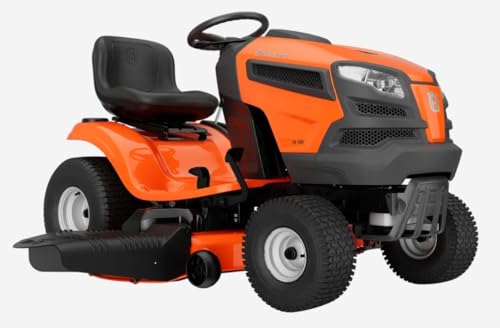
The Husqvarna TS 120 is a full-sized residential riding lawn tractor engineered to take the strain out of maintaining large lawns, country properties, and sprawling suburban acreage. Designed for homeowners seeking relief from time-consuming walk-behind mowers, this machine pairs tractor utility with the engine muscle needed for consistent grass management. Whether your goal is sprucing up the front yard before a family barbecue or clearing overgrown turf after spring downpours, this tractor offers the power and cut width to handle seasonal property care efficiently.
At the center of the tractor is a 22HP Briggs & Stratton PXi series V-Twin engine, engineered to provide steady output when powering the 46-inch stamped steel two-blade cutting deck. The dual-blade setup creates strong airflow under the deck, cleanly severing blades of Kentucky bluegrass, tall fescue, and regional warm-season grasses. Capable of moving forward at up to 5 miles per hour and in reverse at 2 miles per hour, the machine allows you to cover expansive open stretches rapidly while maintaining careful control along garden edges and fence borders.
Maneuvering across the yard is controlled by a foot-pedal operated Tuff Torq hydrostatic transmission. This pedal-driven setup functions similarly to an automatic car transmission, allowing you to alter ground speeds effortlessly without taking your hands off the steering wheel or clutching through manual gears. The smooth variable speed delivery helps when edging around flower beds, navigating gentle slopes, or reversing out of tight fence corners.
Operator convenience and straightforward maintenance are central to the layout of the TS 120. A wide step-through platform makes mounting and dismounting comfortable, while the contoured driver seat cushions against bumps and uneven ground during Saturday morning yard sessions. Routine servicing is also hassle-free, with a tilting hood that offers direct access to the engine oil dipstick, spark plug, and air cleaner. The generous 2.5-gallon fuel tank supports long cutting runs, helping you finish large yards with fewer interruptions.
Because this model measures 60 inches long by 54 inches wide, it naturally requires dedicated storage space inside a shed or garage and cannot turn on a dime like a commercial zero-turn mower. For modest yards under a quarter-acre, a compact walk-behind model is often more practical. However, for suburban homeowners and rural property managers caring for one to three acres of open grass, the Husqvarna TS 120 delivers dependable cutting performance, comfortable operation, and durable build quality.
The TS 120 is powered by a 22HP Briggs & Stratton PXi series V-Twin engine that supplies ample torque for both cutting blades and transmission drive. This overhead valve engine design promotes clean combustion, smooth running, and consistent performance when processing overgrown, moist spring grass.
Coupled with a 2.5-gallon fuel tank, the engine offers extended operating range so you can complete expansive mowing jobs without constant pauses to top off fuel. Accessible service points beneath the front hood make checking oil levels and swapping filters quick and straightforward before peak cutting season begins.
Husqvarna equipped this tractor with a Tuff Torq hydrostatic transmission that uses a foot pedal to govern forward and reverse motion. By pressing down lightly on the pedal, you gain smooth acceleration up to 5 mph, while easing off brings the tractor to a steady stop without jerking.
This pedal-controlled setup makes working around trees, playground sets, and garden borders much easier than working with rigid geared tractors. The responsive reverse pedal allows for fast 2 mph back-ups when turning around at property boundaries or clearing tight corners.

Pros
- Powerful 24HP engine delivers reliable cutting even in tall, damp grass.
- Differential lock provides exceptional traction on hills and slippery surfaces.
- Comfortable ride with high-back seat and vibration-dampening steering wheel.
- Durable steel frame and deck hold up to commercial-grade use on large properties.
Cons
- At 73 inches long and 55 inches tall, storage and transport require a sizable garage or trailer.
- Gasoline engine requires regular maintenance (oil changes, air filter) typical of riding mowers.
- Electric differential lock adds complexity and potential future repair costs compared to manual locks.
The Husqvarna TS354XD is a serious riding lawn mower designed for large properties and heavy-duty mowing tasks. With a 24-horsepower engine and a 54-inch ClearCut deck, this garden tractor cuts wide swaths quickly while handling tough conditions like damp grass and uneven terrain. The standout feature here is the commercial-grade hydrostatic transmission with an electronic differential lock, which gives you on-demand traction without spinning tires or tearing up the lawn. That makes it a solid choice for homeowners with hilly lots or contractors who need reliable performance on job sites.
Real-world performance is impressive. The engine delivers enough torque to climb slopes and power through overgrown patches without bogging down. The deck offers multiple cutting heights from 1.5 to 4 inches, so you can go from a rough brush cut to a manicured finish in one pass. The transmission is smooth and responsive, with foot pedal controls that let you change speed seamlessly. The differential lock is activated from the dashboard, so you don't have to stop or dismount to engage it. Combined with wide rear tires, the TS354XD maintains great traction even on wet grass or loose soil, reducing the chance of getting stuck.
Build quality is robust. The frame is heavy-duty steel, the deck is alloy steel, and the front-end bumper offers brush guard protection for light clearing work. The seat is extra-high and padded vinyl, comfortable enough for hours of mowing. The steering wheel is deluxe overmolded with a soft grip, and all controls fall to hand easily. However, this mower is large and heavy, so storing it requires ample garage space, and you'll need a trailer rated for its weight if you transport it. Also, gasoline maintenance is part of the deal, but the engine is reliable if you keep up with oil changes and filter swaps.
Drawbacks include the price point, which is premium for a residential machine, and the electronic differential lock adds a component that could fail over time. That said, for the performance and durability you get, it's a fair trade-off. This mower isn't meant for small yards, but if you have two acres or more with slopes or uneven ground, the TS354XD will save you time and frustration. It's also a great fit for semi-commercial use like maintaining large rental properties or estate grounds. Overall, if you need a tractor that can handle tough cutting jobs with minimal turf damage, this Husqvarna is a top contender.
Brand: The family (Husqvarna model TS354XD)
Power Source: Gasoline (24 HP)
Cutting Width: 54 inches
Cutting Height Range: 1.5 to 4 inches (38-102 mm)
Transmission: Hydrostatic with electronic differential lock
Tires: Rear 23x10.50-12, Front 15x6.00-6
Material: Alloy steel deck and frame
Weight: Approximately 700 lbs (based on dimensions 73x47x55 inches)
Color: Black and Orange
UPC: 193028049318


Pros
- No perimeter wire to bury - installs in hours instead of days.
- Exceptionally quiet operation; the clipping sound is louder than the motor.
- Smart app with features like multi-zone management and pattern mowing.
- Built tough with a reinforced bumper and larger wheels for rough terrain.
Cons
- Initial setup requires patience and familiarity with the app; some users may want professional installation.
- Higher upfront cost compared to traditional robotic mowers with wire boundaries.
- App performance can be flaky on Android; iPhone users tend to have smoother experience.
The Husqvarna 410iQ Automower is a wire-free robotic lawn mower that redefines convenience for homeowners with medium-sized yards. Instead of burying boundary wires, it relies on Husqvarna's Exact Positioning Operating System (EPOS) - a GPS-based technology that uses multiple satellites and a dedicated reference station to achieve centimeter-level accuracy. This means you can map your lawn, create stay-out zones, and adjust mowing patterns entirely through the app, without ever breaking ground.
This mower is best suited for DIY-minded homeowners who want a set-it-and-forget-it lawn care solution. If you have a half-acre or smaller property with slopes, pathways, or tricky landscaping, the 410iQ will handle it. It tackles grades up to 45% without slipping or getting stuck, and its redesigned bumper and larger wheels help it cross driveways and uneven patches. The cut height adjusts from 1 to 4 inches, so you can keep your grass at the exact length you prefer.
In real-world use, the 410iQ is impressively quiet. The loudest thing you hear is the blades clipping grass. It runs rain or shine, and the app lets you tweak schedules and cutting patterns on the fly. Many users note it takes a few days of running to get the lawn looking uniformly trimmed - it uses a random mowing pattern that covers the area over multiple passes. But the end result is a consistently well-groomed lawn with no clippings left behind.
Build quality is solid. The mower weighs 59 pounds, with a durable aluminum and plastic chassis. The anti-theft feature (alarm and GPS tracking) adds security if someone tries to take it. Maintenance is minimal: swap the blades every few weeks and hose off the deck. The included RS1 EPOS reference station is easy to set up on a wall or post, and the charging station keeps the mower topped up between cycles.
That said, there are realistic drawbacks. The biggest is the learning curve during installation. The app guides you, but it can be finicky, especially on Android devices. You'll need to drive the mower around your lawn to map boundaries, which takes time. Some users recommend hiring a pro for installation if you're not tech-savvy. Also, the price is steep compared to wired robotic mowers, though you save on the cost of wire and installation headaches. Finally, the mower relies on cellular connectivity (4G) for remote access, so if your property has poor cell service, you'll need a signal booster.
Overall, the Husqvarna 410iQ is a fantastic choice for homeowners who value a pristine lawn without the weekly labor. It's especially appealing to gadget lovers and those with complex yards where laying wire would be a nightmare. If you can handle the initial setup and don't mind the premium price, this mower will earn its keep year after year. For anyone with a half-acre or less who wants the most advanced, wire-free robotic mowing experience, the 410iQ is hard to beat.
For the North American market, the primary final assembly locations for Husqvarna riding mowers and lawn tractors are in the United States. The company maintains significant manufacturing infrastructure in Ohio and Minnesota, where the final integration of chassis, engine, deck, and transmission occurs. These facilities are responsible for the bulk of the riding mower production sold in the US.
While the brand is Swedish, the US-based assembly ensures that the machines meet local safety regulations and emission standards without the delay of transatlantic shipping for the finished product. This domestic assembly strategy also supports faster inventory replenishment for dealers and retailers across the country.
| Product Line | Typical Assembly Region | Key Component Origins |
|---|---|---|
| Riding Mowers / Lawn Tractors | United States (OH, MN) | US, Europe, Asia |
| Robotic Automowers | Europe (Sweden, Estonia) | Europe, Asia |
| Walk-Behind Mowers | United States / Europe | US, Asia |
| Engines (OEM Partners) | United States / Japan | US, Japan, China |
It is crucial to distinguish between “assembled in” and “made in” when evaluating the origin of these machines. A mower assembled in Ohio may contain a Japanese engine, a European transmission, and Chinese or Asian-manufactured plastic components. The data plate on the machine specifies the final assembly location, which is the standard metric for warranty jurisdiction.
This global supply chain model is typical for high-performance power equipment, where no single country produces every component in-house. Buyers should not assume that a US-assembled unit contains exclusively US-made parts, as specialized components often come from global leaders in their specific field.
Understanding this distinction helps manage expectations regarding parts availability and support. While the final assembly is often local, the specialized components like hydrostatic transmissions or robotic sensors may have longer lead times if they need to be sourced from international partners. However, major dealerships stock common wear items locally to minimize downtime.
The assembly location determines the primary point of contact for warranty claims, which is typically the US-based headquarters for machines assembled in North America. This setup ensures that technical support is available in local time zones and that regulatory compliance is handled by local teams familiar with EPA and CARB standards.
For robotic mowers, the manufacturing footprint differs significantly from gas-powered models. The Automower series is largely manufactured in Europe, with key facilities in Sweden and Estonia. These units are shipped to the US as finished products, meaning the assembly location is European.
This is due to the specialized nature of robotic technology, where the company maintains centralized control over software and hardware integration. The US market receives these units through import channels, but they are fully supported by local service networks. The difference in assembly location does not impact the warranty terms for US customers, as the brand provides uniform coverage regardless of the final assembly point.
US Assembly Facilities and Regional Impact
The Ohio and Minnesota facilities play a critical role in the North American supply chain. These plants handle the final assembly of the riding mower lineup, including models with 46-inch and 54-inch decks. The proximity to major distribution centers allows for efficient logistics, reducing the time between production and retail availability. This domestic presence also supports local employment and economic activity in the regions where the plants are located.
For buyers, this means that the machines they purchase are often produced within the same continent, which can simplify communication with manufacturers regarding technical issues or custom requests. The US assembly lines are equipped to handle the specific emission and safety requirements of the North American market, ensuring compliance without post-production modifications.
The scale of these operations allows for high-volume production during peak mowing seasons. The facilities are designed to manage seasonal fluctuations in demand, ramping up production in spring and slowing down in fall. This agility is essential for meeting the seasonal nature of lawn care equipment.
Buyers can expect consistent build quality throughout the year, as the assembly processes are standardized and monitored. The use of local labor for final assembly also facilitates quicker response times for any quality control adjustments that may be necessary based on field feedback. This regional focus supports the brand’s commitment to serving the North American market with reliable, compliant equipment.
Global Component Sourcing and Supply Chain
While final assembly may occur in the US, the components that make up the mower are sourced from a global network of suppliers. Engines, for instance, are often manufactured by specialized partners in the US, Japan, or other regions with expertise in internal combustion or electric motor technology. The hydrostatic transmissions used in many riding models are often sourced from European manufacturers known for precision engineering.
This global sourcing strategy allows the brand to leverage the best technology available in each component category. It also provides redundancy in the supply chain, ensuring that a disruption in one region does not halt production entirely. For the consumer, this means a machine built with a combination of high-quality parts from different parts of the world.
The integration of these global components into a final US-assembled product requires rigorous quality control at the assembly plant. Each component is inspected upon arrival and again during the assembly process to ensure compatibility and performance. This multi-stage quality assurance process helps maintain the reliability of the final machine.
Buyers can be confident that the interplay between the engine, transmission, and deck is tested before the unit leaves the factory. The global supply chain also allows for continuous improvement, as feedback from the field can be incorporated into component design updates by the respective manufacturers. This collaborative approach drives innovation and reliability in the final product.
- Check the data plate for the specific assembly location of your unit.
- US-assembled units typically have faster local parts availability for common items.
- Robotic mowers are often fully manufactured and shipped from Europe.
- Engine and transmission origins vary by model and year of production.
- Global sourcing ensures access to specialized technology in each component.
- Warranty support is handled locally regardless of component origin.
For more on a connected point, our page on where to store lawn mower goes into it separately.
Robotic Mower Manufacturing and Import Details
The robotic Automower line follows a different manufacturing path compared to gas-powered models. These units are primarily assembled in European facilities, reflecting the company’s heritage in robotic technology. The US market receives these units as finished products, which are then distributed through local dealers.
This import process involves customs clearance and compliance checks to ensure the units meet US safety and electromagnetic compatibility standards. Despite being imported, the support infrastructure in the US is robust, with trained technicians and service centers available to handle maintenance and repairs. The centralized manufacturing allows for consistent software and hardware integration across all units sold globally.
For buyers of robotic mowers, the European assembly location does not diminish the value of the product. The technology is developed and refined in these facilities, ensuring that the units sold in the US are the same high-quality models sold in Europe. The import process is streamlined to minimize delays, and the units are pre-configured for the North American market.
This includes setting up the software for local weather patterns and grass types. The local support network ensures that any issues can be resolved quickly, maintaining the convenience that robotic mowers offer. Buyers can expect the same level of performance and reliability regardless of the assembly location.
Implications for Warranty and Parts Availability
The assembly location directly impacts the jurisdiction of the warranty and the logistics of parts replacement. For US-assembled riding mowers, warranty claims are processed through the US headquarters, which simplifies the process for North American customers. Parts for these models are stocked in regional distribution centers, ensuring quick turnaround times for repairs.
For imported robotic mowers, the warranty is still handled locally, but parts may need to be shipped from European warehouses, which can take longer. However, common wear items like blades and filters are typically stocked locally to minimize downtime. Understanding this difference helps buyers plan for maintenance and potential repairs.
Parts availability is also influenced by the specific model and year of production. Older models may have parts that are no longer in regular production, requiring special orders from the manufacturer. This is more common with imported models, where the supply chain is longer.
However, the brand maintains a commitment to supporting its customer base, and parts are typically available for several years after a model is discontinued. Buyers should keep their serial number and model information handy when ordering parts, as this ensures the correct components are supplied. The local dealer network plays a crucial role in facilitating these orders and providing technical advice.
- US-assembled units have shorter parts lead times for common components.
- Robotic mower parts may require international shipping for specialized items.
- Warranty support is uniform across all models, regardless of origin.
- Local dealers stock common wear items to reduce repair downtime.
- Serial numbers help identify specific model variations and parts needs.
- Older models may have longer parts availability windows.
Quality Control and Build Standards
Regardless of the assembly location, all Husqvarna mowers undergo rigorous quality control checks. The US facilities are equipped with advanced testing equipment to verify engine performance, transmission operation, and safety features. Each unit is test-run before leaving the factory to ensure it meets the brand’s standards.
The European facilities for robotic mowers follow similar protocols, with additional checks for software functionality and sensor calibration. This consistent quality control ensures that buyers receive a reliable product, whether it is assembled in Ohio or Sweden. The brand’s reputation for durability is maintained through these strict standards.
The build standards also include compliance with local regulations, such as EPA emission standards for gas engines and FCC regulations for electronic devices. The US facilities are specifically designed to meet these requirements, ensuring that the machines are legal to operate in North America.
The European facilities comply with EU regulations, which are often stringent in terms of noise and safety. This dual compliance ensures that the products are suitable for their respective markets. Buyers can be confident that their mower meets all necessary legal and safety standards for their region. The focus on compliance is a key aspect of the brand’s global manufacturing strategy.
For buyers, the key takeaway is that the assembly location is a factor in logistics and support, but not necessarily in quality. The global supply chain allows for the integration of the best components available, resulting in a high-performance machine.
Whether you choose a US-assembled riding mower or an imported robotic unit, the focus should be on the model’s features, specifications, and suitability for your lawn. The manufacturing origin provides context for parts availability and support, but the overall quality is consistent across the lineup. By understanding these factors, you can make an informed decision that aligns with your needs and expectations.
If you are considering maintenance for your equipment, understanding how to properly handle components is essential. Our guide on removing blades from riding mowers offers practical steps for safe and effective maintenance. This knowledge complements your understanding of the machine’s build and helps you maintain its performance over time. Proper maintenance ensures that the global components work together seamlessly, extending the life of your investment. Keep these guidelines in mind as you use and care for your Husqvarna mower.


Write Your Review
No reviews yet. Be the first to share your experience!