


Ragged, yellowing grass tips often indicate that your cutting deck is battering the lawn instead of shearing it cleanly. Mulching decks rely on high-speed rotation and specialized air currents to chop grass clippings repeatedly into fine, nutrient-rich particles. When the cutting surfaces grow dull, understanding how to sharpen a mulching mower blade becomes necessary to restore clean cutting performance and prevent plant disease. Routine maintenance ensures that your machine chops grass cleanly, which promotes a vibrant, healthy lawn across every mowing cycle.
Unlike flat standard blades, mulching profiles feature curved surfaces, extended cutting edges, and raised lift wings designed to circulate clippings beneath the deck. Maintaining these distinct contours requires careful attention to bevel angles, consistent material removal, and strict rebalancing protocols. If you operate modern electric mulching mower equipment or traditional gas tractors, mastering edge maintenance protects your engine and deck spindle bearings from destructive vibration. Investing a little time in your workshop keeps your cutting system working smoothly throughout the entire season.

Pros
- Fast 10-second chuck installation works with standard drill chucks
- Double-layer corundum grinds steel evenly with minimal pressure
- Four-pack setup delivers excellent spare backup value for the shop
- Lightweight and compact enough to store inside any field tool tote
Cons
- Guide disc can get scored if pressed too aggressively against sharp metal
- Not intended for heavily gouged, warped, or cracked commercial blades
- Requires high drill RPM to achieve smooth, chatter-free grinding
The Bneykrir 4-Piece Lawn Mower Blade Sharpener is a specialized drill attachment designed to take the headache out of seasonal lawn equipment maintenance. Instead of wrestling blades on a heavy stationary bench grinder or risking uneven hand-filing, this tool uses a double-layer corundum wheel that mounts right into your drill chuck. It is aimed squarely at homeowners, DIYers, and small-property groundskeepers who want clean, healthy grass cuts without spending shop fees on blade balancing and sharpening.
In practical workshop use, setting up the sharpener takes only a few seconds. Chuck the metal shaft into an 18V or 20V cordless drill, clamp your lawn mower blade securely into a bench vise, and bring the drill up to speed. The abrasive corundum stone cuts through mild surface oxidation, dull bevels, and small turf nicks smoothly. The plastic guide disc rests along the flat underside of the blade, keeping the abrasive angled against the factory bevel without demanding pinpoint freehand steadying.
Build quality is suited well for light to medium maintenance runs. The corundum material holds up to standard lawn tractor and push mower steel, though users should avoid leaning too heavily into the work. Applying steady, moderate passes keeps heat buildup low and avoids burning the temper on thin steel. The four-pack arrangement is practical, giving you plenty of abrasive material to work through multiple seasonal tune-ups, tiller blades, and utility yard tools.
There are a few trade-offs to keep in mind. The plastic collar can wear down if it drags forcefully against jagged metal edges, and deep gouges from rocks will still require an angle grinder with a flap disc first. That said, for routine seasonal maintenance and quick edge touch-ups, this four-piece kit provides straightforward functionality and solid value for any home garage.
Routine edge touch-ups on standard residential walk-behind and riding lawn mower blades.
Cleaning and sharpening curved garden tools, rototiller tines, sickle cutters, and axes.
Pre-season garage tune-ups where removing the blade for quick bench vise work is preferred.
Home toolkits where space or budget does not justify a dedicated stationary grinder.

Pros
- Dual-pendulum linkage keeps grinding passes flat and parallel without lateral arm wander
- Angle scale features positive detents at common angles like 30 degrees for fast repeatability
- Vertical magnetic balancer seats blades securely from 0 to 35mm center hole sizes
- All-metal framework provides solid rigidity once bolted down to a workbench
Cons
- Angle grinder and grinding flap discs must be supplied separately
- Requires a permanent or securely clamped benchtop mounting spot for stable operation
- Severely curved or bent mulching blades require patience and repositioning to clamp evenly
This sharpening jig and magnetic balancing set converts an ordinary 4-1/2-inch angle grinder into a dedicated mower blade maintenance station. Rather than balancing a grinder freehand on a workbench or using a hand file, this setup holds your tool on a guided track. It is aimed directly at acreage owners, DIY mechanics, and commercial lawn care crews who want factory-consistent cutting edges on their equipment without buying a costly standalone machine.
In practical workshop use, the dual-pendulum articulated arm does a commendable job absorbing lateral vibration. Grinding discs want to kick and climb along the blade edge when operated freehand, but the pinned linkage keeps the disc moving across a uniform plane. The indexed adjustment bracket locks cleanly between 15 and 45 degrees, allowing you to match the original factory bevel on standard flat blades as well as high-lift mulching profiles. The included M8 and M10 pins thread straight into standard auxiliary handle holes on most major grinder brands, creating a firm mechanical coupling.
Blade maintenance is only half-done if you do not check balance, and the included vertical magnetic balancer is one of the strongest parts of this bundle. Using magnetic hold on an L-rod with a built-in bubble level, it quickly highlights heavy ends down to a single gram of variance. Running a well-balanced blade on your deck dramatically reduces high-RPM vibration, which extends the life of deck spindles, belts, and engine crankshaft seals.
On the downside, this is not a fully standalone sharpening tool. You still need a quality grinder, ideally fitted with a 40-grit or 60-grit zirconia flap disc to keep from burning the steel temper. You also must take the time to mount the base securely to a rigid work surface with the included fasteners, as any flex in your bench will telegraph through the grind angle. For anyone looking to speed up seasonal lawn prep or maintain multi-blade commercial decks, this kit delivers consistent shop-level results at a very reasonable investment.
For the best results, bolt the base bracket directly to the front corner of a heavy wooden workbench or a thick piece of mobile jobsite plywood. Positioning the unit near the edge gives you sufficient clearance on both sides to swing long 21-inch walk-behind blades or 30-inch commercial deck blades without bumping into shop walls or tool racks.
Pair the jig with an angle grinder that has a clean, undamaged side-handle thread (M8 or M10). Using a standard flap disc rather than a rigid bonded stone wheel yields a smoother bevel and generates far less heat, helping preserve the hardness of your blade's cutting edge.

Pros
- Powerful 700W motor handles tough blade restoration quickly.
- Integrated dust collection keeps metal shavings contained for a cleaner workspace.
- Includes three grit sandpapers for complete sharpening stages.
- Heavy steel base provides stability and reduces vibration during use.
Cons
- No blade holder or guide included, requiring careful hand positioning.
- Some assembly and setup may be needed before first use.
The WEWEAL 7-Inch Lawn Mower Blade Sharpener is a benchtop grinder designed specifically for restoring dull, chipped, or damaged mower blades to a sharp edge. Unlike manual files or angle grinders, this dedicated sharpener offers a more controlled and efficient process, making it a valuable tool for homeowners who prefer to maintain their own equipment. With a 700W motor, built-in dust collection, and a set of three sandpaper grits, it aims to simplify blade maintenance while keeping your workspace clean.
This sharpener is best suited for homeowners, lawn care enthusiasts, and gardeners who regularly mow their lawns and want to keep their blades cutting cleanly. It's also a practical option for budget-conscious shoppers who prefer to sharpen blades themselves rather than pay for professional sharpening or replace blades frequently. The product description highlights compatibility with a wide range of blade types, including high lift, low lift, gator, and flat designs, so it should work with most standard walk-behind mowers and some riding mower blades.
In terms of real-world performance, the 700W motor provides ample power for grinding through hardened steel. The included 60-grit disc handles coarse grinding on heavily damaged edges, while the 120-grit refines the edge, and the 320-grit produces a smooth finish. The hook-and-loop system allows quick sandpaper changes, which is convenient when moving between stages. The built-in dust collection case captures most metal shavings, reducing mess and making cleanup easier. According to the manufacturer, it captures up to 99% of particles, which is a significant advantage over open bench grinders.
Build quality appears solid with a heavy-duty steel base that adds stability and helps minimize vibration. The ceramic wheel is designed for longevity and consistent sharpening. The detachable dust box is a thoughtful feature that allows you to empty shavings without stopping work. The overall dimensions (13 x 9.3 x 10.4 inches) mean it will occupy a permanent spot on your workbench, but it's not overly large.
Ease of use is straightforward: mount the sharpener on a stable surface, attach the desired sandpaper disc, and guide the blade along the wheel. However, there is no included blade guide or holder, so you'll need to manually control the angle and pressure. This requires a steady hand, especially for beginners. Maintenance of the sharpener itself is minimal: occasional cleaning of the dust box and replacement of sandpaper discs as they wear. The product does not include a blade holder, which some users may find as a limitation.
Realistic limitations include the price point, which is higher than manual sharpening tools but lower than industrial-grade sharpeners. Also, the sharpener is not designed for very wide blades or those with complex profiles. For most standard mower blades, it should work well. Overall, if you value a clean workspace, consistent results, and have multiple blades to maintain, the WEWEAL 7-Inch Lawn Mower Blade Sharpener is a worthwhile investment for your lawn care toolkit.
The WEWEAL sharpener uses a 700W motor to drive a ceramic wheel at high speed, allowing it to grind through steel efficiently. The three included sandpaper grits (60, 120, 320) cover the full sharpening cycle: coarse grinding to reshape the edge, medium sharpening to refine it, and fine finishing to polish. The hook-and-loop attachment makes switching between grits quick, so you can move through the stages without delay. The dust collection system is a standout feature, capturing most metal particles and keeping your bench clean. For homeowners who sharpen blades seasonally, this system reduces cleanup time significantly.
The sharpener features a reinforced steel base that adds weight and stability, reducing vibration during operation. The ceramic wheel is durable and resists wear, maintaining its shape over many sharpening sessions. The housing appears to be impact-resistant, and the detachable dust box is made of sturdy plastic. Overall, the build quality seems designed for regular use in a home workshop. The product dimensions are compact enough to fit on most benches, and the base has mounting holes if you want to secure it permanently. The manufacturer provides a standard warranty, though the exact length is not specified in the product data.


Pros
- Extremely affordable and widely compatible with most residential mower blades.
- Simple to use: just chuck it in a drill and run along the blade edge.
- Including both sharpener and balancer means you get a complete blade maintenance solution.
- Lightweight and portable, perfect for small workshops and home garages.
Cons
- Requires a drill to operate, so you need one on hand.
- Manual balancing takes a bit of patience to get right compared to electronic balancers.
- Not ideal for heavy commercial use or high-volume shops where speed is critical.
The Arnold BSK-1 is a straightforward sharpening and balancing kit designed for lawn mower blades. It turns your regular electric drill into a reliable sharpening tool, making it easy to maintain a clean cutting edge without investing in a dedicated grinder. The kit includes a cone-shaped sharpening stone and a simple static balancer, both built to handle blades from walk-behind mowers, lawn tractors, and zero-turn machines.
This kit is best suited for homeowners and DIYers who prefer to handle their own mower maintenance rather than taking blades to a shop. It's also useful for small engine mechanics who need an affordable backup method. But if you're a professional landscaper sharpening dozens of blades a week, you'll likely want a faster, more automated system.
In real-world use, the sharpener works quickly. Chuck it into a drill, run the stone along the blade's edge at a shallow angle, and you'll see burrs form within seconds. The vibration-free claim holds up -- the stone spins smoothly, which helps avoid gouging the blade. The balancer is straightforward: hang the blade on the cone and see which side drops. Rotate a few times to confirm. It's not fancy, but it effectively reveals if the blade is heavy on one side.
Build quality is typical for a budget tool. The sharpening stone is abrasive and should last through several sharpenings. The balancer is made of plastic and a metal cone. It's lightweight (just over two ounces) and stores easily in a drawer. For the price, durability is acceptable for occasional weekend usage. You won't hesitate to toss it in a toolbox or tool bag.
The main drawback is that you need a drill, and the process is manual. Balancing requires patience -- you'll have to grind off material from the heavy side and recheck. It's not as precise as a professional blade balancer, but it's more than enough to get a decently balanced blade. Overall, the Arnold BSK-1 is a smart buy for anyone who wants to keep their mower cutting cleanly on a budget. It's a practical addition to any workshop, especially if you already own a drill.
Color: Black
Dimensions: 3 x 7 x 10 inches
Weight: 0.24 pounds
Product Group: Outdoors
Binding: Lawn & Patio

Pros
- Takes the guesswork out of matching factory bevel angles on mower blades
- Secure grinder attachment via standard M8 threaded handle mount
- Compact footprint stores easily on a shop shelf or pegboard when not in use
- Handles both standard straight blades and contoured mulching blades
Cons
- Requires your own 4-1/2-inch angle grinder and bench vise or solid mounting surface
- Threaded pin is limited to grinders with M8x1.25 handle ports, requiring adapters for tools with larger threads
- Articulating joints need firm tightening to prevent vibration drift during heavy passes
Maintaining sharp lawn mower blades is essential for a clean turf cut, but freehand sharpening with an angle grinder often results in uneven bevels, burned steel, and out-of-balance blades. This mechanical sharpening fixture solves that problem by turning your existing 4-1/2-inch angle grinder into a guided benchtop sharpening station. Designed with an adjustable articulating arm and an integrated blade clamp, it locks in grinding angles between 15 and 45 degrees to match exact factory bevel specifications.
This jig is aimed squarely at homeowners with larger yards, DIY property maintainers, and small landscaping crews who want quick, consistent blade maintenance without investing hundreds of dollars in dedicated commercial sharpeners. Setup is straightforward: clamp the base into a heavy bench vise or bolt it down to your workbench, secure the mower blade in the vise head, and screw the fixture's M8x1.25 pin directly into your angle grinder's auxiliary handle socket.
In shop practice, the guided friction arm makes a noticeable difference in cutting edge quality. Instead of rocking the grinder across the blade face, the arm holds the disc flat against the bevel, producing a straight, even grind across both standard flat blades and wavy mulching profiles. Because the setup maintains a fixed angle, you remove less metal per pass, which extends the overall life of your blades and keeps balancing issues to a minimum.
There are practical limitations to keep in mind. You must provide your own 4-1/2-inch grinder, flap disc, and mounting vise. Furthermore, the included mounting pin is sized for M8x1.25 threads, which fits many common grinders but will require a thread adapter if your tool utilizes M10 or 5/8-11 handle ports. You also need to ensure every adjustment knob is cinched down tight so grinder vibration does not shift your angle midway through a pass.
For anyone tired of ruined cutting edges or paying local shops for seasonal sharpening, this jig offers exceptional workshop utility at a low barrier to entry. Paired with a decent angle grinder and a medium-grit flap wheel, it quickly pays for itself after just a few blade turnarounds.
Mounting this sharpener securely is critical for clean results and operator safety. You can clamp the lower base directly into a standard 4-inch or larger bench vise, or bolt it to a stable workbench surface. Ensure your working area has adequate clearance on both sides so the length of the mower blade can rest flat without binding.
For optimal grinding performance, equip your 4-1/2-inch angle grinder with a 40-grit to 60-grit flap disc rather than a rigid grinding wheel. Flap discs run cooler, resist gouging, and yield a smoother, burr-free bevel. Check the grinder handle threading before setup to verify compatibility with the included M8x1.25 mounting stud.

Pros
- Ball-bearing pivot arm delivers smooth, repeatable grinding strokes without lateral play.
- Preset angle increments make matching original factory bevels fast and foolproof.
- Included zinc cone balancer provides immediate verification of blade balance before reinstallation.
- Multi-thread guide pin selection fits standard corded and cordless grinder brands without custom adapters.
Cons
- Requires a sturdy bench vise or workbench mounting surface to operate safely.
- Does not fit heavy-duty commercial brush cutter blades thicker than 0.28 inches.
- Angle grinder and flap discs must be supplied separately.
The Iontravel Lawn Mower Blade Sharpener is a dedicated grinding jig designed to turn a standard workshop angle grinder into a controlled blade profiling station. Freehand grinding often rounds off cutting edges or removes uneven amounts of metal, leading to torn grass and unbalanced blades. This jig locks the blade in place and guides the grinder along a fixed track, giving DIY homeowners and landscaping crews a consistent way to maintain their equipment throughout the mowing season.
Performance centers on the tool's ball-bearing pivot arm and stepped angle adjustment. Ranging from 15 to 45 degrees in 5-degree detents, it accommodates low-angle commercial high-lift blades as easily as standard straight residential decks. Because the pivot arm moves smoothly along the guide pin without wobbling, your flap disc or grinding wheel stays flat against the bevel. The result is a crisp, uniform cutting edge that slices grass cleanly instead of fraying the tips.
Build quality is reassuringly solid. The main body is machined from thick aluminum alloy with a protective blue anodized finish that resists corrosion and workshop grime. An ergonomic ribbed handle gives you positive control over your feed rate and grinding pressure. With four included thread pins covering M8, M10, 3/8-inch, and 5/16-inch sizes, the bracket secures snugly to most major grinder brands, whether you run corded shop tools or cordless jobsite platforms.
Keep in mind that this sharpener requires a secure mounting point, such as a sturdy bench vise or a dedicated tabletop clamp, before you can start working. It is also limited to blades up to 3.15 inches wide and 0.28 inches thick, which covers virtually all residential and commercial lawn mowers but rules out heavy agricultural brush mowers. For anyone maintaining multiple mower decks who wants fast, repeatable sharpening without spending hundreds on a standalone sharpening machine, this jig is a practical and cost-effective solution.
Setting up the Iontravel sharpener takes only a few minutes once you understand the assembly sequence. Clamp the base securely into your bench vise or bolt it to a dedicated mounting plate to eliminate vibration during operation. Select the guide pin that matches your angle grinder's auxiliary handle socket, thread it into your tool, and seat the grinder into the jig bushing.
Position your mower blade against the clamping stop, matching the factory bevel angle using the indexed degree scale. Tighten the clamp firmly against the blade spine. For best grinding results, use a 40-grit or 60-grit flap disc rather than a standard hard grinding wheel. The flap disc removes metal smoothly without overheating the steel and ruining the blade temper.
After completing grinding passes on both ends of the blade, place the center hole onto the included zinc alloy balancer cone. If one side dips, lightly touch up the non-cutting back edge of that side until the blade rests completely level. Balancing is essential to protect mower spindles and deck bearings from high-speed vibration.

Pros
- Sharpens a wide variety of single-edge garden tools quickly
- Reversible blades extend product life
- Safe ergonomic design reduces hand fatigue
- Dishwasher safe for convenient cleaning
- Compact and portable for easy storage
Cons
- Only suitable for single-edge tools, not serrated blades or knives
- Coarse grit may not produce a polished edge for fine cutting tools
- Handle may feel small for users with very large hands
The AccuSharp Garden Tool Sharpener is a straightforward manual sharpener designed to handle the dullest garden tools. It is not a power tool, but an essential workshop accessory for anyone who works with lawn mowers, pruners, shears, hoes, or shovels. Whether you are a homeowner maintaining your own yard or a professional landscaper, this tool saves you time and money by quickly restoring sharp edges without any electricity or complex setup.
Best suited for DIY homeowners, gardeners, and even contractors who need a reliable way to keep their tools in peak condition. The diamond-honed tungsten carbide blade is exceptionally hard, allowing you to sharpen very dull or damaged blades with just a few strokes. The reversible blade feature doubles its useful life, making it a long-term investment for your workshop. Users report getting 5 to 10 years of regular use before needing to replace the blade.
Build quality is solid, with a comfortable ergonomic handle that fits either hand and includes a guard to protect your fingers. The compact size (5 inches) and lightweight design (1.4 ounces) make it easy to store in a drawer or take along on jobs. It is dishwasher safe, so cleaning off residue from sharpening is hassle-free. However, keep in mind that this sharpener works only on single-edge tools; serrated blades or fine knives require a different tool. Also, the coarse grit is great for fast material removal but won't produce a polished, mirror-like finish.
Overall, the AccuSharp Garden Tool Sharpener is a practical, durable addition to any workshop or tool shed. Its ease of use, safety features, and long-lasting performance make it a smart buy for anyone who wants to keep their garden tools working like new without spending much time or money.

Pros
- Easy to use with straightforward instructions included
- Affordable alternative to professional sharpening services
- Works on both the reel blades and the bed knife in one kit
- Compact size makes it easy to store in a toolbox or drawer
Cons
- Requires manual effort and some elbow grease to get good results
- Best suited for reel mowers only, not compatible with rotary or power mowers
- May not work on all reel mower models, check compatibility before buying
The American Lawn Mower Co. SK-2 Reel Lawn Mower Hand Sharpener is a purpose-built tool for anyone who uses a reel push mower. If you own a manual reel mower from brands like Great States, American Lawn Mower, Scotts, or Earthwise, this sharpener is designed to keep your blades cutting cleanly season after season. It is a handheld kit that sharpens both the spinning reel blades and the stationary bed knife, restoring the scissor-like action that gives a precise cut.
This sharpener is best suited for homeowners with small to medium lawns who prefer the quiet, eco-friendly operation of a reel mower. It is also a smart buy for DIYers who want to handle their own mower maintenance without spending money on professional sharpening. The kit includes two sharpening stones, one for the reel blades and one for the bed knife, plus a small brush for applying the included grinding compound. The process is straightforward: you apply the compound, then run the appropriate stone back and forth along the blade surface. It takes some time and a bit of patience, but the results are noticeable. Users report that after sharpening, their mower cuts more cleanly and requires less effort to push through grass.
Build quality is solid for the price. The plastic housing is lightweight but feels durable enough for occasional seasonal use. The sharpening stones are coarse enough to remove dull edges without being overly aggressive. At just 1.72 ounces, the entire kit is easy to toss in a tool bag or store on a shelf. One thing to keep in mind is that this is a manual tool. It requires physical effort to get a good edge, especially if your blades are very dull or have never been sharpened. Some users have found it helpful to use a drill with a socket attachment to speed up the process, but that is not included and requires some improvisation.
A realistic drawback is that this sharpener only works on reel mowers. If you also own a rotary or power mower, you will need a different sharpening system. Also, the instructions could be clearer regarding disassembly steps, particularly when removing the wheel clip. A few users mention that the included directions are basic, but with a little common sense and the tips found in online reviews, most people can get the job done. Overall, this is a practical, low-cost maintenance tool that extends the life of your reel mower and improves your lawn cutting experience.
If you want to keep your reel mower performing at its best without spending a lot of money, the American Lawn Mower Co. SK-2 is a solid choice. It is not a power tool, but it is a valuable workshop accessory for anyone who values a sharp, even cut from a manual mower. For the price, it delivers real value and is a worthwhile addition to any homeowner's tool collection.

A Complete Workshop Guide to Mulching Blade Maintenance
Mulching blades operate under demanding aerodynamic conditions, requiring sharp edges that slice grass repeatedly while directing air currents upward and inward. Learning the correct maintenance procedure allows property owners to preserve the unique multi-tiered curves engineered into these components. Grinding along contoured surfaces requires more control than sharpening flat high-lift or standard discharge blades. Following a structured sharpening routine ensures consistent cutting results, lowers fuel or battery consumption, and preserves equipment longevity across the mowing season.
Unique Geometry of Mulching Blades vs. Standard Cutters
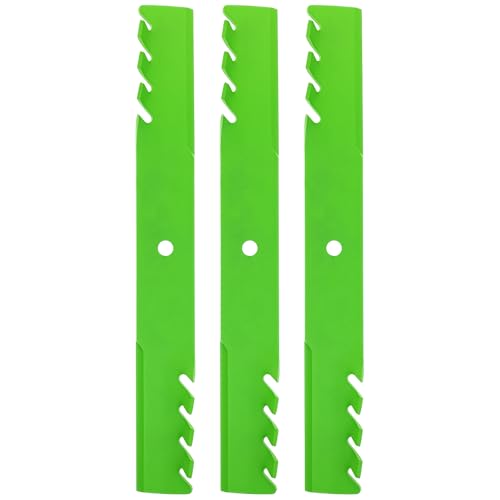
Standard rotary blades typically feature a straight, flat profile leading to an upturned sail at the trailing edge. In contrast, mulching blades, often categorized by curved surfaces, dropped cutting planes, or serrated teeth, present an extended cutting edge designed to process clippings within the mowing chamber. This specialized profile creates a vortex that suspends grass blades, allowing the cutting surfaces to impact the vegetation multiple times before dispersing the fine mulch into the turf canopy. Because the cutting edge extends farther inward toward the blade center hole, maintaining the original contour is vital during every maintenance session.
Altering the curvature of a mulching blade through aggressive or uneven grinding compromises the airflow needed for effective mulching. If you inadvertently flatten the wave or round off the transition zones, the blade loses its ability to circulate clippings effectively. Grass begins clumping under the deck, resulting in unsightly rows of wet clippings across your lawn. Preserving the manufacturer-designed profile ensures that every pass yields clean mulching results without placing excessive drag on the mower deck spindle.
Essential Safety and Deck Disconnection Protocols
Working around mower blades requires strict adherence to basic safety measures before you loosen any hardware. For gas-powered mowers, you must disconnect the spark plug wire and secure it away from the plug terminal to prevent accidental engine ignition. Cordless electric mowers require the complete removal of the safety key and the battery pack prior to handling the underside of the deck. Corded electric units should always be unplugged from the electrical outlet.
When tilting walk-behind mowers to access the blade mounting bolt, always tilt the machine so the air filter and carburetor face upward. Tilting a gas engine with the carburetor facing downward causes motor oil to flood into the air filter housing, spark plug cylinder, and exhaust muffler. Heavy leather work gloves are essential when handling mower blades to protect your hands from sharp metal edges, burrs, or sudden slipping. Stabilize the deck securely on level ground so the mower cannot tip over while you work.
Blade Removal and Physical Wear Inspection
Removing the blade bolt requires immobilizing the blade to keep the spindle shaft from spinning freely. A heavy wood block wedged between the blade tip and the inner deck wall provides a reliable mechanical stop. Using a proper six-point socket wrench, turn the blade bolt counterclockwise, although some dual-blade decks feature reverse-thread bolts that require checking mower documentation. Once the mounting bolt and washer are removed, carefully lift the blade off the spindle star, circular adapter, or locating pins.
Inspect the blade thoroughly under bright light before proceeding with any sharpening equipment. Check the metal body for hairline cracks, severe bending, or excessive thinning along the uplifted rear sails where sandy soil causes abrasive erosion. When metal loss exceeds safe parameters or deep stone gouges compromise structural strength, timely replacement mower blade selection is far safer than attempting to grind away excessive steel. A structurally weakened blade can fracture under high rotational stress, creating an immediate danger to property and bystanders.
Establishing the Proper Bevel Angle for Curved Edges
Lawn mower blades typically leave the factory ground to an angle between 30 and 35 degrees. Sharpening jigs such as the Sinpiode, Iontravel, or Aurorasters systems offer indexed adjustments ranging from 15 to 45 degrees to match exact manufacturer profiles. Maintaining the original factory angle ensures that the cutting edge retains sufficient metal thickness behind the bevel to withstand impacts with twigs, small pebbles, and dense turf. Grinding an edge that is too acute or razor-sharp causes the metal to chip, roll over, or dull rapidly during standard lawn mowing.
Tackling dense turf with mowers designed for thick grass demands a clean cutting bevel because rounded edges double the strain placed on electric motors and gas crankshafts. The edge should feel slightly butter-knife sharp rather than razor-edged, as a microscopic bevel flat provides durability against grass abrasion. Sharpen only the angled top side of the cutting bevel, leaving the flat bottom surface facing the grass unground. Grinding the bottom side alters the cutting plane and prevents clean grass shearing across the deck path.
Comparing Workshop Sharpening Tools and Equipment
Homeowners have several tool choices for maintaining mower blades, ranging from simple rotary stones to dedicated grinding stations. Drill-attachment rotary sharpeners, such as the double-layer corundum stones from Bneykrir, Eoppen, or Arnold kits, provide an accessible option for DIY maintenance. These rotary stones feature built-in guide collars that fit over the blade edge to help maintain an approximate bevel angle using any standard handheld drill. While portable and straightforward, drill stones require steady hands to follow the contours of curved mulching blades smoothly.
Dedicated bench units and guided grinder jigs offer greater precision for complex blade geometries. Dedicated sharpeners like the 700-watt WEWEAL bench grinder feature structured ceramic wheels, multi-grit sanding discs from 60 to 320 grit, and dust collection boxes to manage metal shavings. Articulating arm sharpeners, such as adjustable jigs with ball-bearing pivots and M8 or M10 grinder mounting arbors, hold standard angle grinders at a fixed angle while you stroke across the metal. Handheld tools with tungsten carbide inserts, like the AccuSharp garden tool sharpener, offer quick edge honing without removing power tools from the shelf.
Specialized reel mower maintenance kits, such as the American Lawn Mower Co. SK-2, serve an entirely different purpose by applying lapping compound to cylindrical reel blades. Rotary mulching blades, however, require grinding or filing tools capable of addressing single-sided bevels along contoured flat stock. Matching the tool to your comfort level and blade complexity prevents uneven metal removal. For curved mulching profiles, guided grinder jigs or steady passes with an angle grinder fitted with a flap disc often yield the most consistent bevel profiles.
Step-by-Step Sharpening Sequence for Contoured Surfaces
Begin the sharpening process by securing the mower blade firmly in a heavy bench vise, clamping the center portion to keep the cutting wing exposed. Clean off accumulated grass buildup, sap, and surface corrosion using a wire brush or putty knife so you can clearly see the original bevel line. If you are using an angle grinder, an abrasive flap disc with 60 to 80 grit offers smooth control without aggressively gouging the metal. Position your grinding tool so it rests flush against the existing factory bevel across the entire length of the cutting surface.
Move the grinder along the edge in smooth, continuous strokes starting from the inner section out toward the blade tip. For mulching blades with curved drops or wave profiles, follow the natural contour by pivoting the tool smoothly through the transitions. Never pause the grinder in one spot, as concentrated friction generates intense heat that tempers the steel, turning it blue and making it brittle. Count your grinding strokes on each side of the blade to ensure an equal amount of steel is removed, which helps preserve balance later.
After establishing a clean, smooth bevel on the top face, run your gloved finger lightly along the flat underside to check for a metal wire burr. A burr naturally forms along the bottom edge as steel is pushed over by the grinding action. Remove this burr by taking a flat mill file or a fine-grit sanding disc and making a single light pass flat against the bottom surface. Keep the file completely flush with the flat underside to knock off the rough burr without creating a secondary bevel on the bottom plane.
Precision Balancing to Protect Mower Engine and Spindle Components
Sharpening removes steel, and removing even a fraction of an ounce more material from one wing creates an unbalanced blade. Spinning an unbalanced blade at speeds exceeding 3,000 revolutions per minute creates severe centrifugal vibration throughout the deck. This intense vibration accelerates wear on deck spindles, loosens mounting bolts, damages spindle bearings, and can even bend or crack an engine crankshaft. Verifying blade balance before reinstallation is an essential maintenance step that should never be skipped.
Static cone balancers, like those included in Arnold kits, provide a simple stepped cone where the center hole rests to reveal side-to-side tilt. High-precision magnetic balancers, such as the wall-mounted magnetic units in the Sinpiode and Aurorasters systems, use sealed bearings and magnetic holding rods to detect micro-gram discrepancies. Place the cleaned blade on the balancer and observe whether one side dips toward the ground. If one wing drops consistently, that side is heavier and requires additional material removal.
To correct an imbalance, remove metal only from the back edge or the flat center portion of the heavy wing, never from the sharp cutting bevel you just honed. Grinding the cutting edge to balance a blade disrupts your bevel angle and unevenly shortens the cutting surface. Make brief, light grinding passes along the trailing edge of the heavy side, testing balance frequently until the blade remains perfectly level on the balancer. Once the blade balances horizontally without tipping, it is ready for safe reinstallation on your mower.
Proper Blade Orientation, Spindle Seating, and Reinstallation
Reinstalling a sharpened mulching blade requires matching the correct orientation so the cutting edge leads during rotation. Most mulching blades feature raised curved sails or air wings that must point upward toward the mower deck, not downward toward the grass. The flat face of the blade must face the lawn, with the beveled cutting edge facing upward toward the underside of the mower housing. Many manufacturers stamp words such as “BOTTOM” or “GRASS SIDE” directly onto the steel plate to assist homeowners with correct positioning.
Carefully align the blade center hole with the spindle mount, ensuring that star shapes, round hubs, or locating alignment pins seat fully flush into the blade recesses. Install the concave friction washer so the cupped curve presses firmly against the blade body, providing tension against the bolt head. Thread the blade bolt in by hand first to prevent cross-threading the internal threads of the spindle shaft. Wedge your wood block against the opposite side of the deck wall to prevent blade rotation as you tighten the mounting hardware.
Tighten the blade bolt to the exact torque specification listed in your mower operator manual using a calibrated torque wrench. While torque specifications vary by manufacturer, walk-behind mower bolts generally require between 35 and 50 foot-pounds, whereas larger riding tractor spindles may require 70 to 90 foot-pounds. Avoid guessing bolt tightness or relying solely on impact drivers, which can over-torque or strip spindle threads. Once properly secured, reconnect the spark plug wire or reinsert the battery pack, and your mower is prepared for clean, efficient yard maintenance.
Sharpening a mulching blade every 25 to 50 hours of mowing time preserves turf health, minimizes clumping, and protects the structural integrity of your mower deck. By respecting the curved geometry of mulching wings, maintaining consistent bevel angles, and balancing the blade before reinstallation, you extend the operational life of your cutting equipment. Taking these deliberate steps in your workshop delivers clean cuts and healthy grass throughout the growing season.



Write Your Review
No reviews yet. Be the first to share your experience!