


A loud pop or bang from the engine usually means unburned fuel is igniting in the exhaust system or intake manifold. This phenomenon, known as engine backfiring, is a common issue in gas-powered walk-behind mowers that can indicate fuel, air, or timing problems.
It is rarely a sign of immediate catastrophic failure, but it does signal that the engine is not running at its optimal efficiency. Ignoring the issue can lead to increased emissions, reduced power, or further damage to the spark plug and exhaust components. Most homeowners can resolve these issues with basic maintenance checks rather than replacing the entire unit.
Understanding the root cause is key to preventing repeat incidents. Factors such as stale gasoline, a clogged air filter, or a misadjusted idle can all contribute to a rich or lean fuel mixture that causes backfires. The products listed below feature engines designed with features like auto-choke and forced air-cooling to help maintain stable operation, but even well-engineered mowers require proper fuel care. If you are dealing with a persistent popping sound, checking the fuel quality and spark plug condition is the most logical first step. For a related maintenance task, our guide on safe blade removal can help you access the engine compartment safely for inspection.
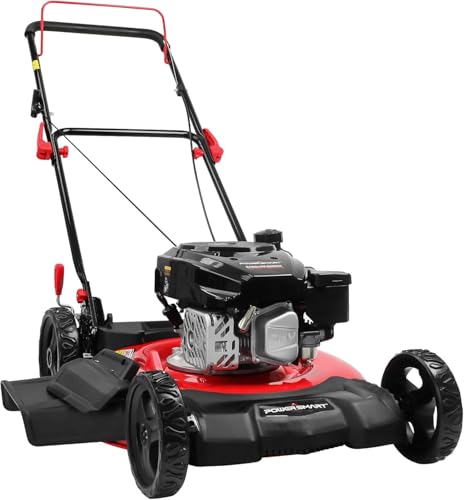
Pros
- Durable 21-inch steel deck stands up well to everyday debris and small yard obstacles
- Single-lever 6-position height adjustment simplifies switching between high spring grass and close summer cuts
- Relatively lightweight design makes manual pushing comfortable on flat residential lots
- Auto choke eliminates guesswork when starting the engine cold on weekend mornings
Cons
- Manual push operation requires steady physical effort on hilly ground or uneven terrain
- Does not include a grass collection bag for homeowners who prefer bagging clippings
- Engine displacement of 144cc is geared toward routine maintenance rather than dense, overgrown brush
The PowerSmart DV8621C is a walk-behind gas push lawn mower engineered specifically for routine residential yard upkeep. Powered by a dependable 144cc 4-cycle OHV engine, this machine caters to suburban homeowners, first-time property buyers, and budget-conscious yard owners with small to medium-sized lawns. For anyone looking to bypass the limited runtime of cordless battery tools while avoiding complex commercial machinery, this mower offers an accessible, straightforward entry into gas-powered lawn care.
During regular mowing sessions, the 21-inch steel deck provides ample coverage to help cut down on overall walking time. The mower features a practical 2-in-1 cutting system that lets users choose between mulching clippings back into the turf or ejecting them through the side-discharge chute. Mulching is ideal for returning vital nitrogen to the soil during warm summer months, while the side-discharge function assists when cutting slightly taller grass after steady spring rain. A convenient single-lever adjustment lets you select between six cutting heights ranging from 1.5 to 3.9 inches, helping you avoid scalping on uneven patches.
Build quality centers on a durable stamped steel deck that resists cracking from stray pebbles and roots far better than standard plastic alternatives. Weighing in at roughly 59 pounds, the unit remains agile enough for operators to steer around flower beds, sidewalks, and patio corners without excessive fatigue. The engine features an automatic choke connected to a traditional recoil pull-cord, which removes the need for manual primer bulbs and helps ensure smooth starts before a Saturday morning backyard cookout.
Setup and daily operation are refreshingly simple. Arriving approximately 95 percent assembled, the mower only requires unfolding the upper handle, securing the locking knobs, and adding standard four-cycle engine oil along with fresh unleaded gasoline. The folding handle system collapses down over the engine shroud, allowing homeowners to park the mower tightly against a garage wall or slide it beneath shed shelving. Routine engine maintenance is equally accessible, with easy reach to the oil fill neck, foam air filter, and spark plug.
There are a few realistic limitations to keep in mind before making a purchase. Because this is a standard push mower without a self-propelled transmission, users with sloped yards, steep ditches, or thick turf will need to supply all the forward momentum. Additionally, the unit is strictly configured for mulching and side discharge, so homeowners who prefer bagging their clippings for a completely clear finish will need to consider other options. The 144cc engine is engineered for standard weekly maintenance rather than reclaiming wild, overgrown fields.
For homeowners maintaining up to a half-acre of relatively flat suburban turf, this PowerSmart mower represents an excellent balance of cutting width, durability, and practical value. Its straightforward mechanical design, rugged steel construction, and space-saving footprint make it a dependable companion for seasonal yard cleanup and routine grass maintenance.
The heart of this push mower is its 144cc 4-cycle OHV engine, designed to deliver steady torque to the 21-inch cutting blade. Because it is a 4-cycle design, there is no need to mix two-stroke oil with gasoline, keeping routine fill-ups quick and clean. The auto-choke feature regulates fuel intake automatically, making cold pull-starts reliable without manual carb adjustments.
Beneath the chassis, the 21-inch steel mowing deck provides durability against debris impacts. Operators can easily configure the deck for mulching to promote lawn health or install the included side-discharge chute when tackling taller, moisture-laden grass. The single-point height adjustment lever raises or lowers all four wheels simultaneously across six positions, accommodating different grass species and regional climates throughout the growing season.
Compact storage is a major advantage for suburban homes with limited garage space. The upper handle folds forward across the engine block, substantially reducing the vertical and horizontal footprint of the mower. This makes it easy to tuck the unit away during the off-season or slide it between utility shelves.
Routine maintenance tasks are straightforward for beginners and experienced DIYers alike. The oil fill port and dipstick are easy to reach on the engine side, and the air filter housing can be serviced quickly without specialized equipment. Keeping the underside of the steel deck free of wet grass buildup after each mow will help preserve the finish and maintain optimal airflow for clean mulching year after year.
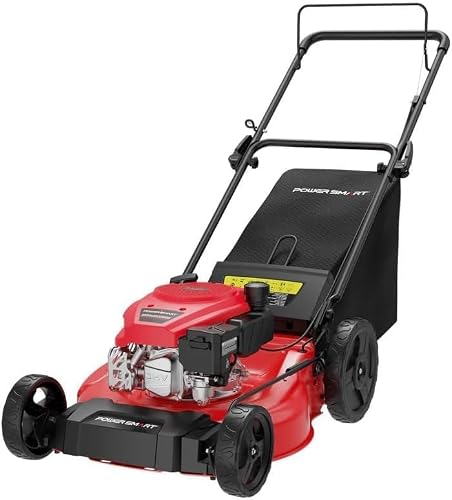

Pros
- Easy to start on the first or second pull according to multiple customer reviews
- Self-propelled system moves smoothly up inclines, good for sloped lots up to half an acre
- Fully assembled out of the box except for unfolding the handle; no complicated setup
- Price point is competitive for a 21-inch self-propelled gas mower with 3-in-1 capability
Cons
- Some users report loose or failing parts on first use; quality control may vary
- 66-pound weight can feel heavy when maneuvering in tight flower beds or manually pushing
- Fuel tank is only 0.21 gallons, requiring refills for larger yards over half an acre
The AMERISUN AV8621S1 is a 21-inch, self-propelled gas lawn mower aimed at homeowners who want reliable cutting performance without spending a fortune. It packs a 170cc 4-cycle OHV engine and rear-wheel drive into a compact package that handles moderate slopes and thick grass with ease. While it's not a commercial-grade machine, it offers solid value for yards up to about half an acre.
This mower is best suited for DIY homeowners and weekend warriors who need a dependable tool for weekly mowing, leaf mulching, and occasional bagging. The auto choke and recoil starter make it far less frustrating than older gas mowers. Multiple reviews confirm it fires up on the first or second pull after filling with oil and gas. The 170cc engine provides enough torque to push through tall or damp grass without stalling, and the rear-wheel drive gives good traction on gentle hills.
Build quality is decent for the price. The 15-gauge steel deck feels sturdy enough for residential use, and the six-position lever height adjustment is quick to use. The folding handle is a genuine space-saver, letting you store the mower upright in a 33-inch tall space. However, a few early reviews mention parts rattling loose or falling off on the first run. That's a concern and suggests you should tighten all bolts before the first cut. The plastic bagger is a bit small at 1.4 bushels, so expect to empty it frequently if you bag heavy clippings.
Ergonomics are okay but not exceptional. The handle is fixed height and doesn't tilt for different operator heights. At 66 pounds, it's not light, but the self-propelled drive takes most of the effort out of mowing on flat or gently sloping ground. On steep banks you'll still need to muscle it a bit. The side-discharge works well for fast mowing on large open areas, and the mulching capability returns fine clippings to the lawn.
In summary, the AMERISUN AV8621S1 is a capable entry-level self-propelled mower that delivers on its core promise: easy starting, good power, and a clean cut. If you're a homeowner with a modest lot and you want to avoid the hassle of corded electric or battery swapping, this is a solid buy. Just check all hardware before first use and be prepared for a few plastic trim pieces that may need tightening over time. It's a fair trade for the price.

Pros
- Reliable 144cc engine with no oil mixing needed, plus better fuel economy than 2-stroke alternatives.
- Durable steel deck and overmolded wheels handle rocky or hilly lawns well.
- 5 height settings give you control over cut length from short to tall grass.
- Low noise compared to many gas mowers, making it neighbor-friendly during early morning or evening mowing.
- Easy maintenance with accessible air filter and blade replacements.
Cons
- No self-propulsion; you'll need to push it manually, which can be tiring on larger yards or steep slopes.
- At 43.4 pounds, it's heavier than some comparable push mowers, though the wheels help rolling.
- Only side discharge included; no bagging or mulching option mentioned, limiting versatility for some users.
The SENIX LSPG-L5 is a gas-powered push lawn mower designed for homeowners who want a dependable machine without the complexity of battery charging or 2-stroke engine maintenance. It uses a 144cc 4-cycle OHV engine that runs on straight gasoline, offering a simple start and consistent power for cutting grass on small to medium lawns (up to about a quarter acre).
This mower is best suited for DIY-oriented homeowners who value fuel efficiency and low noise over the convenience of self-propulsion. The 20-inch steel deck provides a good balance between cutting width and maneuverability, allowing you to trim around flower beds and fences without too much hassle. The 5-position height lever lets you quickly adjust from 1.25 to 3.75 inches, accommodating different grass lengths and seasonal conditions.
Performance is solid for its class. The engine starts reliably (prime and pull) and runs smoothly, cutting through typical turf grass without bogging down. The side discharge clears clippings well, though on very thick wet grass you may need to overlap passes. The 7-inch overmolded wheels roll easily over uneven ground and small bumps, but the lack of self-propulsion means you'll feel the weight on inclines or longer sessions. At 43 pounds, it's manageable but not lightweight.
Build quality is good for the price point. The steel deck feels sturdy and the plastic components are well fitted. Assembly takes about 20 minutes with basic tools. The 2-year warranty adds peace of mind, though you'll want to keep the blade and air filter clean to ensure longevity. A realistic drawback: there's no mulching or bagging attachment included, so if you need those features you'll have to look at other models or buy accessories separately.
Overall, the SENIX 144cc gas lawn mower is a smart choice for budget-conscious homeowners who want a reliable gas mower for flat to slightly rolling yards. It's not for steep hills or large acreage, but for everyday lawn care it delivers good value with low operating costs.
Brand: SENIX
Power Source: Gas Powered (4-stroke OHV engine, 144cc)
Cutting Width: 20 inches
Cutting Height Range: 1.25 - 3.75 inches (5 positions)
Discharge Type: Side discharge
Wheel Size: 7 inches front and rear (overmolded)
Deck Material: Heavy-duty steel
Weight: 43.4 pounds
Dimensions (assembled): 27.2 x 22.2 x 14.2 inches
Assembly Required: Yes
Warranty: 2-year manufacturer warranty
UPC: 843212102748
Model Number: GCJ-LSPG-L5

Pros
- Auto choke simplifies startup, especially for beginners or users who don't want to fiddle with manual controls
- Steel deck feels sturdier than plastic competitors and can handle occasional bumps or debris
- Height adjustment is quick and tool free from the rear, letting you adapt to different grass lengths on the fly
- Mulching performance effectively chops clippings fine, returning nutrients to the lawn without clumping
Cons
- Side discharge chute can be a bit finicky to attach and remove, and may clog in thick, wet grass
- Engine vibrates noticeably at higher RPMs compared to more expensive brands, but still operates fine for its class
- Pull cord can be stiff initially, requiring a few strong tugs to break in the engine
The PowerSmart 21 inch gas lawn mower is a straightforward push mower designed for homeowners who need a reliable cutting tool for smaller lawns. It's best suited for DIY homeowners with flat, fenced yards of about a quarter acre or less. This isn't a self propelled model, so you'll be doing the pushing, but on level ground the large wheels and manageable 59 pound weight make it reasonably easy to maneuver around flower beds and trees.
Performance wise, the 144cc OHV engine delivers enough torque to power through typical grass without bogging down. The auto choke is a standout feature that eliminates the classic pull start frustration. Pull the cord and it starts on the first or second try, even after sitting for weeks. The 21 inch cutting width is a standard sweet spot for this size lawn, letting you make decent passes without too much back and forth. The six position height adjustment lever at the rear is easy to reach and click into place, giving you solid control over cut length from 1.5 to 3.9 inches. Mulching chops clippings fine enough to feed the lawn, and the side discharge works well when grass is longer than average.
Build quality centers on an all steel 15 gauge deck that feels substantial for the price point. It's not a fabricated deck like on commercial mowers, but it's far more durable than the plastic decks found on similar budget push mowers. The folding handle collapses for compact storage, which is a real plus if you're short on shed space. Assembly out of the box is minimal; just unfold the handle and add oil and fuel. The manual does recommend 10W 30 oil, and the fuel tank holds only 0.21 gallons, enough for a full yard on a single tank if you're efficient.
That said, there are a few realistic drawbacks. The side discharge chute can feel flimsy during attachment and removal, and it may clog if you're cutting wet or overly thick grass. The engine does produce a fair amount of vibration compared to higher end models, but it's not a deal breaker for occasional weekly mowing. The pull cord required some muscle for the first few starts before loosening up. Additionally, the manual operation means you'll be doing all the pushing, so hills or steep slopes will be a workout.
Overall, the PowerSmart 21 inch gas lawn mower offers solid value for the budget conscious homeowner who doesn't want to overspend on a premium self propelled model. It's a practical choice for flat lawns, easy starting, and reliable cutting performance. If your yard is under a quarter acre and you're comfortable with a push mower, this will handle the job without breaking the bank. For larger or sloped properties, you'll want to look at a self propelled version or a model with a bigger engine.
Engine: 144cc OHV 4 stroke, auto choke
Power Type: Gasoline, pull cord start
Cutting Width: 21 inches
Deck Material: 15 gauge steel
Cutting Height: 6 positions, 1.5 to 3.9 inches
Cutting Options: Mulch, side discharge
Wheel Size: Front 7 inch, Rear 10 inch
Fuel Tank Capacity: 0.21 gallons
Recommended Oil: SAE 10W 30
Dimensions (open): 56 D x 22 W x 42 H inches
Folded Size: 33 H x 22 W x 17 D inches
Weight: 59.4 pounds
Recommended Lawn Size: Up to 1/4 acre
Terrain: Flat
Before buying a push gas mower, consider your lawn size and terrain. The PowerSmart 21 inch is best for flat, smaller yards. If you have hills or a larger lawn, a self propelled model will save you effort. Check your grass type to see if the 1.5 to 3.9 inch height range covers your needs. Also, remember you'll need to buy SAE 10W 30 oil and gasoline separately. The folding storage is a big plus if space is tight.

Pros
- Starts reliably on the first pull thanks to auto choke
- Strong enough to handle overgrown grass and weeds without bogging down
- Easy height adjustment with a single lever that works on all four wheels simultaneously
- Lightweight enough for most users to maneuver and store
Cons
- Plastic motor cover and dipstick housing can crack under vibration, leading to oil leaks
- Height adjustment lever may slip during use, requiring a zip tie to hold position
- Not designed for slopes over 15 degrees or hilly terrain
The BILT HARD 20 inch gas lawn mower is a budget friendly push mower aimed at homeowners maintaining small to medium sized flat yards. Powered by a 144cc 4-cycle OHV engine with an auto choke system, it eliminates the hassle of priming and choking, so you just pull the cord and it fires up. The 20 inch cutting deck is a practical size for navigating gates and storage areas while still covering decent ground.
This mower is best suited for people with a quarter to half acre lot that doesn't have steep hills. The 8 position height adjustment lets you go from a short 0.7 inch trim to a taller 3.2 inch cut, which is useful for different grass types or seasonal conditions. In real world use, the engine handled thick grass and weeds without stalling, and the side discharge kept clippings spreading evenly. The foam wrapped grip and ball bearing wheels make pushing comfortable on flat turf, though the mower is not self propelled so you'll need to supply the legwork.
Build quality is a mixed bag. The metal cutting deck feels solid, but several components like the motor cover, dipstick housing, and wheel retainers are plastic. Some users reported excessive vibration that caused those parts to crack or fall off within hours of use. The height adjustment lever also has a tendency to slip, though a simple zip tie fix works. That said, many owners have put multiple seasons on their mower without issues, so your mileage may vary depending on how rough the terrain is.
Ergonomics are decent for a budget mower. The handle is adjustable and the grip stays comfortable even after an hour of mowing. At 51 pounds, it's not overly heavy to lift or push. Storage is straightforward thanks to the compact footprint. Just be mindful that you shouldn't tilt the mower on its side to avoid oil entering the combustion chamber, as noted in the manual.
Drawbacks are worth considering before buying. The plastic parts are a real durability concern, and the mower isn't meant for slopes. If you have a perfectly flat lawn and want a mower that starts easily and cuts well without breaking the bank, the BILT HARD delivers. But if you need something that will survive rough use or tricky terrain, look at a more rugged model with a metal frame and better vibration dampening. For the price, it's a solid value for light duty homeowners.
Engine: 144cc 4-Cycle OHV, 3.8 HP
Cutting Width: 20 inches
Cutting Heights: 8 positions, 0.7 to 3.2 inches
Wheels: 7 inch rear, 6 inch front with ball bearings
Weight: 51 pounds
Dimensions: 57.4 x 21.6 x 38.5 inches
Deck Material: Metal
Discharge: Side
Start Type: Auto choke, recoil pull
Fuel Type: Gasoline (unleaded)

Pros
- Easy, predictable starting thanks to the no-choke, no-primer engine design.
- Self-propelled rear-wheel drive provides good traction on hills and uneven ground.
- 8 cutting height options give you precise control over lawn appearance.
- 3-in-1 versatility saves time by letting you choose the best disposal method for the season.
Cons
- At 89 pounds, this mower is heavier than some electric models, which can be a drawback for storage or transport.
- Single-speed self propel may not be fast enough for some users who prefer a variable speed control.
- The foam handle, while comfortable, may absorb moisture and degrade over time if left in the rain.
The BILT HARD 21" self propelled gas lawn mower is a straightforward, no-nonsense machine built for homeowners who need reliable cutting power without complicated electronics. Its 201cc OHV engine provides solid torque for tackling thick, tall grass, and the 3-in-1 deck lets you bag, mulch, or side discharge clippings as needed. This is a traditional gas mower that trades fancy features for proven performance and ease of use.
Best suited for owners of medium to large lawns, this mower excels when you have a mix of flat areas and gentle slopes. The rear-wheel drive self propel pulls the mower forward consistently, reducing the effort required to push it across the yard. The single lever height adjustment is a real time saver – you can quickly change the cut from a low 1.2 inches for a golf course look to a tall 3.75 inches for drought stressed grass. The no-choke, no-primer starting system is a welcome convenience; a simple pull of the rope usually gets the engine running on the first or second try.
Build quality is decent for the price point. The steel deck feels sturdy enough for regular use, and the foam wrapped handle is comfortable, though it may not hold up as well as rubber grips if left in the elements. The 89 pound weight gives it a solid feel, but it also means you'll need some muscle to lift it over curbs or into a shed. The single speed self propel is adequate for casual mowing, but power walkers might find it a bit slow.
One realistic drawback is the lack of a washout port for cleaning the deck – you'll need to scrape off clippings manually. Also, there are no reviews yet, so long term reliability is unproven. However, BILT HARD offers customer support, and the engine is a common 201cc platform that should be easy to maintain.
Overall, if you want a dependable gas mower that doesn't overcomplicate things, this BILT HARD model is a solid value. It's especially good for homeowners who prefer gas over electric and appreciate a self propel feature that reduces fatigue. Just be prepared for the weight and the single speed limitation.
Engine: 201cc 4-cycle OHV, 9.0 ft-lb torque
Deck: 21 inch steel, 3-in-1 (bag, mulch, side discharge)
Drive: Rear-wheel drive, single speed self propelled
Cutting Height: 8 positions, 1.2" to 3.75"
Start: Recoil, no choke, no primer
Weight: 89.15 pounds
Wheel Size: Not specified, but typical for 21" mowers
Handle: Foam wrapped, angled
This mower works best for homeowners with medium to large lawns (quarter acre to half acre) that have gentle slopes. The self propel feature makes it suitable for yards where pushing a manual mower would be tiring. It's also a good choice for those who want the flexibility of bagging, mulching, or side discharge depending on the season. Not ideal for very small yards where a push mower or electric corded model would be lighter and more maneuverable.

Pros
- Self-propelled rear-wheel drive handles inclines and uneven lawns better than front-wheel drive models
- Auto choke eliminates the frustration of flooding the engine during cold starts
- Steel deck construction is tough enough for years of residential use
- 6 height positions allow fine-tuning for seasonal grass growth
Cons
- 2-in-1 system lacks a side discharge option, which some users prefer for tall or wet grass
- Single speed self-propelled drive (3.6 km/h) may feel slow for larger or flat lawns
- Small 0.21-gallon fuel tank requires refilling more often on bigger yards
- Limited brand track record compared to established names like Honda or Toro
The PowerSmart 22-inch self-propelled gas lawn mower is a solid mid-range choice for homeowners who deal with sloped or uneven terrain. It combines a 170cc OHV engine with rear-wheel drive to give you the traction you need on hills without wearing you out. This is not a commercial-grade mower, but for a typical quarter to half-acre yard, it offers dependable cutting performance at a reasonable price.
Best suited for DIY-oriented homeowners, this mower shines on lawns with gentle to moderate slopes. The rear-wheel drive system digs in better than front-wheel drive alternatives, and the high 10-inch rear wheels help it roll over ruts and roots. The auto choke is a genuine time saver no more fiddling with a manual choke to get the engine started. Once running, the 170cc engine has enough torque to power through thicker grass without bogging down, though you will need to slow down in heavy patches.
Build quality is decent for the price point. The 16-gauge steel deck feels solid and should resist dents under normal residential use. The 22-inch cutting width is a sweet spot for maneuverability around flower beds and fences while still covering ground efficiently. Height adjustment via a six-position lever is straightforward, ranging from 1.5 to 3.9 inches. The 1.4-bushel rear bag collects clippings adequately, but you will need to empty it more often on lush lawns. The mower is relatively light at 60 pounds, making it easy to lift into a shed or truck bed.
On the downside, this model is a 2-in-1 only bagging and mulching which means no side discharge for those times when you want to blow clippings into a pile. The self-propelled drive is single speed, so you can not adjust your pace to match conditions. Some users may find 3.6 km/h a bit too fast or too slow depending on the terrain. The fuel tank is small (0.21 gallons), so expect to refill mid-job on larger lawns. And with only 11 reviews on Amazon, the long-term reliability data is still emerging, though initial feedback is positive overall.
All things considered, the PowerSmart 22-inch self-propelled mower is a practical option for homeowners who want self-propelled convenience on hilly lots without stepping into premium price territory. It is not the most feature-rich mower available, but it gets the job done reliably. If you value traction and easy starting over extra cutting modes or variable speed control, this is a machine worth considering for your next season of yard work.
Engine: 170cc OHV, gas powered with recoil start and auto choke
Cutting Width: 22 inches
Deck Material: 16-gauge steel
Cutting Height: 6 positions, 1.5 to 3.9 inches
Cutting Options: 2-in-1 (bagging, mulching)
Drive Type: Self-propelled, rear-wheel drive, single speed 3.6 km/h
Wheel Size: Front 7 inches, Rear 10 inches
Bag Capacity: 1.4 bushels
Fuel Tank: 0.21 gallons
Weight: 60 pounds
Dimensions (folded): 33 H x 24 W x 17 D inches
Terrain Recommended: Flat, slanted, uneven up to 1/2 acre
This mower is ideal for residential lawns with mild to moderate slopes up to about half an acre. Homeowners who have uneven ground, bumpy patches, or a few hills will appreciate the rear-wheel drive and high rear wheels. It is also a good fit for DIYers who want a simple, no-fuss mower that starts easily with auto choke. Not recommended for flat, large lawns where a wider deck or variable speed would be more efficient, nor for commercial landscaping due to the single speed and smaller fuel tank.
Engine backfiring occurs when a fuel-air mixture ignites outside the combustion chamber, typically in the exhaust pipe or intake tract. In a healthy 4-cycle engine, the spark plug ignites the mixture inside the cylinder during the compression stroke. When the timing is off or the mixture is too rich, unburned fuel escapes into the hot exhaust system where it ignites spontaneously. This creates the distinctive “pop” or “bang” sound. While occasional backfires during deceleration or shutdown are normal, frequent backfires during operation indicate a malfunction that needs attention.
| Potential Cause | Symptom Pattern | Typical Fix |
|---|---|---|
| Stale or Dirty Fuel | Backfires after storage or inconsistent idling | Drain tank, clean carburetor |
| Dirty Air Filter | Rich mixture, black smoke, popping | Replace or clean air filter |
| Fouled Spark Plug | Weak spark, misfires, backfires | Clean or replace spark plug |
| Valve Clearance Issues | Loud pops, reduced power | Adjust valve clearance per manual |
| Carburetor Jetting | Lean or rich conditions | Check and clean jets |
Fuel quality is the most frequent culprit for backfiring in residential mowers. Gasoline begins to degrade within 30 days of being dispensed, forming gums and varnishes that clog the carburetor jets. When these jets are partially blocked, the engine may run lean at idle but rich under load, causing unburned fuel to reach the exhaust.
This is particularly common in mowers that sit unused for several weeks during seasonal transitions. If the fuel has been in the tank for more than 60 days, it is likely the primary cause of the issue. Draining the tank and running the engine until it stalls can clear the old fuel from the system.
- Check the fuel age and drain if older than 30 days.
- Inspect the air filter for dirt, grass clippings, or oil saturation.
- Remove the spark plug and check for carbon buildup or fouling.
- Listen for a consistent pop frequency during idle and full throttle.
- Verify the throttle linkage is not sticking or binding.
- Check the exhaust pipe for cracks or loose connections.
- Ensure the fuel cap vent is not clogged with debris.
The Role of the Air Filter and Intake System
A dirty air filter restricts airflow into the carburetor, forcing the engine to run with a richer fuel mixture than intended. When too much fuel is present relative to air, the combustion process becomes incomplete, and unburned hydrocarbons pass into the exhaust. The hot exhaust gases then ignite this residual fuel, creating the backfire.
In mowers with paper filters, this can happen quickly if the mower is used in dusty or high-debris environments. A saturated filter can also cause the engine to bog down, making the backfires more frequent and loud. Replacing the filter is a low-cost fix that often resolves the issue immediately.
Some mowers feature foam filters that require periodic cleaning with soapy water and re-oiling. If the oil level in a foam filter is too high, it can restrict airflow similarly to a dirty paper filter. If it is too low, the filter may not capture fine dust particles effectively.
Maintaining the correct oil saturation is crucial for consistent airflow. Additionally, checking the intake manifold gasket for leaks is important. A vacuum leak can cause a lean mixture, which can also lead to backfires, though it is less common than rich condition issues in residential units.
Spark Plug Condition and Ignition Timing
The spark plug initiates the combustion process, and its condition directly impacts how cleanly the fuel burns. A fouled plug with carbon deposits can cause a weak or delayed spark, leading to incomplete combustion. This is especially true if the plug gap is too wide, which can prevent a consistent arc.
A plug that is too loose can also cause a slight vacuum leak, altering the air-fuel ratio. Replacing the spark plug with the correct heat range and gap specification is a standard maintenance task that can eliminate backfires caused by ignition issues.
Ignition timing is another factor, though it is less adjustable in small engine mowers. If the timing is advanced too much, the mixture may ignite before the piston reaches top dead center, causing pre-ignition or detonation. If it is retarded, the flame front may still be burning when the exhaust valve opens, leading to backfires. In most walk-behind mowers, the timing is set at the factory and does not require adjustment. However, if the engine has been serviced or the flywheel key has been replaced, the timing should be verified by a professional. A worn flywheel key can shift the timing, causing persistent backfiring and power loss.
Carburetor Function and Fuel Mixture Balance
The carburetor meters the fuel and air mixture, and any blockage or wear can disrupt this balance. Clogged jets, particularly the main jet or idle jet, can cause the engine to run lean or rich depending on the throttle position. A rich mixture is the most common cause of backfiring because it leaves unburned fuel in the exhaust.
Cleaning the carburetor with a dedicated cleaner and compressed air can remove gummed-up varnish. However, disassembling the carburetor requires care to avoid losing small springs or seals. If the carburetor is heavily corroded, replacement may be more cost-effective than cleaning.
Some mowers feature electronic fuel injection, which is less prone to clogging but can still develop issues with the fuel injectors or sensors. If the fuel injectors are dirty, they may not atomize the fuel properly, leading to a rich mixture.
Cleaning the injectors with a fuel system cleaner can help, but severe clogs may require professional cleaning. The fuel filter should also be checked for debris, as a clogged filter can cause pressure fluctuations that affect the fuel mixture. Ensuring the fuel line is not kinked or cracked is also important for consistent fuel delivery.
Valve Clearance and Exhaust System Integrity
Valve clearance, or the gap between the valve stem and the rocker arm, affects how tightly the valves seal against the valve seats. If the clearance is too tight, the valve may not close fully, allowing unburned fuel to escape into the exhaust.
If it is too loose, the valve may not open fully, reducing airflow and causing a rich mixture. Adjusting the valve clearance is a technical task that requires a feeler gauge and specific torque specifications. It is recommended to have this done by a qualified technician if you are not experienced with small engine repair.
The exhaust system itself can also contribute to backfiring. A crack in the exhaust pipe or a loose gasket can allow air to be drawn into the exhaust stream, changing the pressure dynamics. This can cause the unburned fuel to ignite more violently. Inspecting the exhaust pipe for cracks and ensuring the gasket is seated properly can prevent this issue. If the exhaust pipe is severely damaged, it should be replaced to prevent further backfiring and potential engine damage.
Preventive Maintenance and Fuel Storage
Preventing backfiring starts with proper fuel storage and regular maintenance. Using fresh, stabilized fuel can prevent the formation of gums and varnishes in the carburetor. Adding a fuel stabilizer to the tank before storing the mower for the season can help keep the fuel clean. Running the engine until it stalls before storage can also help clear the carburetor of residual fuel. Regularly replacing the air filter and spark plug as part of seasonal maintenance can ensure the engine runs at peak efficiency.
- Use fresh fuel with a stabilizer for seasonal storage.
- Replace the air filter every 50 hours of use or as needed.
- Check the spark plug gap and condition every season.
- Clean the fuel filter and inspect the fuel line for cracks.
- Store the mower in a dry, well-ventilated area.
- Run the engine until it stalls before long-term storage.
Addressing backfiring promptly can save you from more expensive repairs down the line. A simple check of the fuel quality and air filter often resolves the issue without the need for major disassembly. If the problem persists after these basic checks, consulting the owner’s manual for specific valve clearance specifications or seeking professional assistance is the best course of action.
Maintaining your mower with the right care ensures it runs smoothly and efficiently for years to come. For more information on maintaining your equipment, our guide on replacing push mower blades offers additional safety tips for working under the deck.


Write Your Review
No reviews yet. Be the first to share your experience!