


Uneven lawn striping, torn grass tips, and stalled clipping discharge often trace back to a fundamental question: which direction do lawn mower blades spin? After pulling a cutting deck for seasonal maintenance or unboxing fresh replacement steel, many property owners find themselves second-guessing the proper rotational path. Installing a blade backward or confusing the direction of rotation degrades cut quality, damages turf, and places unnecessary strain on spindle bearings.
Most rotary mowers in North America follow a predictable rotational pattern tied directly to deck discharge physics. When removing a lawn mower blade for service, taking a moment to confirm rotational direction ensures the sharpened cutting edge strikes the grass first. Understanding how blade geometry, spindle threading, and deck baffles interact allows you to service your machine with complete mechanical confidence.

Pros
- Direct fit replacement for 52-inch Ariens IKON and Gravely ZT zero-turn decks
- Curved high-lift wing generates strong suction for clean discharge and reduced clumping
- Convenient 3-pack replaces all deck blades at once for balanced performance
- Protective exterior finish guards against damp lawn moisture and rust
Cons
- Only fits 52-inch decks with 5/8-inch round center holes, excluding other deck sizes
- High-lift profile requires adequate engine power when cutting through extremely overgrown turf
- Protective coating over the cutting edge may benefit from a quick touch-up for maximum sharpness
Keeping a large yard looking pristine requires sharp, reliable cutting edges, especially when operating a high-speed zero-turn mower. The Zuvxilo23 04771200 Lawn Mower Blades come as a matched three-pack specifically designed for 52-inch cutting decks on popular Ariens and Gravely residential zero-turn mowers. Whether you are maintaining a sprawling suburban lawn or clearing acres on a rural property, these replacement blades provide an accessible way to refresh your cutting deck without the steep price tag of direct dealership parts.
In practical lawn maintenance, blade shape plays an enormous role in how your turf looks after mowing. These blades feature a pronounced high-lift curve along the trailing edge, which generates substantial air velocity beneath the mower deck. This upward suction stands grass blades upright just before the cutting edge strikes them, resulting in a cleaner, more uniform height across your lawn. The added airflow also accelerates clippings out through the side discharge chute, helping prevent unsightly clumps when mowing thick spring grass or maintaining the turf after seasonal rain.
Each blade measures 18 inches in length, 2-1/4 inches in width, and includes a standard 5/8-inch round center mounting hole. Three 18-inch blades together provide the standard overlap required for a 52-inch cutting deck. Based on product specifications, the blades are treated with a dark protective finish to resist surface rust and moisture exposure while stored in damp sheds or garages. Balanced weight distribution across all three pieces helps keep deck vibration down, protecting spindle assemblies and delivering a smoother ride across rougher terrain.
Routine deck maintenance is straightforward with this set. Homeowners swapping out dull, nicked, or bent blades after striking hidden yard debris like rocks or tree roots will appreciate the direct factory fit. Replacing all three blades simultaneously ensures even wear and balanced deck dynamics. As with most replacement blades featuring a protective factory coating, taking a few minutes to inspect or lightly touch up the cutting edge prior to mounting can help you achieve optimal sharpness right out of the box.
For owners of Ariens IKON and Gravely ZT series machines with 52-inch decks, this three-pack represents a sensible, cost-effective maintenance purchase. It provides the necessary lift and airflow to keep acreage neat before weekend gatherings, manage rapid summer growth, and handle routine property upkeep with dependable cutting performance.
The high-lift wing profile on these 18-inch blades significantly impacts overall lawn appearance. By generating high-velocity airflow under the 52-inch deck, the blades lift flattened grass blades so they are sheared cleanly rather than torn. This reduces brown, frayed tips on grass blades, leaving a healthier and greener appearance across the lawn.
Additionally, the enhanced air current assists in discharging clippings cleanly out of the deck tunnel. This is especially advantageous for suburban homeowners dealing with thick turf or early morning dampness, where standard or low-lift blades often struggle with clogging and heavy clipping windrows.
Replacing blades on a 52-inch zero-turn deck is a simple DIY project that can be completed with basic hand tools. Before starting, always disconnect the spark plug wires and engage the parking brake for safety. Use a wooden block clamped to the deck rim to securely hold the blade in place while loosening the spindle bolt with an appropriately sized socket wrench.
When installing these replacement blades, ensure the curved sail points upward toward the underside of the deck and the flat cutting surface faces the turf. Tighten all hardware to the mower manufacturer specified torque value to ensure safe, vibration-free operation during your next mowing session.

Pros
- Strong vacuum lift keeps damp grass moving cleanly into collection bags
- Substantial 5mm blade thickness holds up better against rocks and scalping than light-duty aftermarket alternatives
- Direct 5-point star fit matches OEM spindle hubs for quick workshop installation
- Protective black coating prevents corrosion while sitting on the garage shelf
Cons
- High-lift geometry demands steady engine RPM and draws more power in heavy, wet grass than low-drag mulching blades
- The factory protective paint over the cutting edge takes a pass or two across the lawn to wear down to bare steel
- Optimized for bagging and discharge rather than closed-deck mulching setups
Tackling thick turf or overgrown paddocks requires blades that do more than just slice grass tips. These GICOOL 48-inch replacement blades are purpose-built for riding mowers and lawn tractors running three-blade 48-inch decks, including popular Husqvarna, Craftsman, and Poulan models. Designed as a direct replacement for part numbers like 532180054 and 173920, they cater specifically to homeowners, hobby farmers, and DIY landscapers looking to restore crisp cutting performance without paying dealership prices.
Where these blades stand out is in their high-lift design. With an aggressive 1-7/32-inch air lift wing on the trailing edge, each blade generates substantial airflow under the deck. This strong draft stands up bent blades of grass for a uniform cut and propels clippings cleanly through the discharge chute or directly into a collection bag. If you regularly mow thick, slightly damp spring growth, this extra lift keeps the underside of your deck significantly clearer compared to standard flat blades.
Build quality is rock solid. GICOOL crafts these from 40MnB boron steel with a substantial 13/64-inch (5mm) thickness. That extra metal provides structural rigidity that prevents flex when hitting uneven ground or hidden sticks. The 5-point star arbor matches standard spindle shafts cleanly, ensuring a vibration-free seat once torqued down. A durable black coating covers the entire surface to resist rust in humid workshop storage; this finish rubs off naturally along the cutting edge after your first run.
Keep in mind that high-lift profiles are not one-size-fits-all. The aggressive air movement places a slightly higher load on your tractor engine compared to flat mulching blades, meaning you will want to keep your deck clean and your engine at full throttle. Additionally, if you run a fully sealed mulching plug without a discharge chute, high-lift blades can pack grass tightly against the deck baffles rather than cycling it into fine dust.
For anyone running a bagging system or dealing with wide side-discharge patterns on a 48-inch yard tractor, these blades are a rugged, dependable upgrade. They drop into place easily, hold an edge through tough cutting conditions, and restore the suction your mower deck had when it was brand new.
Blade Length: 16-3/4 inches (425 mm)
Blade Width: 2-1/2 inches (63.5 mm)
Blade Thickness: 13/64 inches (5 mm)
Air Lift Height: 1-7/32 inches (31 mm)
Center Hole Pattern: 5-Point Star
Material: 40MnB Boron Steel
Compatible Deck Size: 48-Inch (takes 3 blades)
OEM Cross Reference: Husqvarna 532180054, 532173920, 173920, 539107519; Craftsman 24679, 173921; Poulan PP24005, PP24006
Bagger Systems: The aggressive air lift creates the necessary airflow to send grass up collection chutes without frequent clogging.
Overgrown Properties: Ideal for acreage and rural lawns where grass gets tall between mowings and demands clean side ejection.
Seasonal Yard Overhauls: Perfect for spring cleanup and fall leaf collection where extra suction pulls debris into the cutting path.
Pros
- Durable alloy steel construction resists bending when running through thick patches or small yard debris
- Efficient mulching contour chops clippings finely enough to avoid ugly lawn clumping
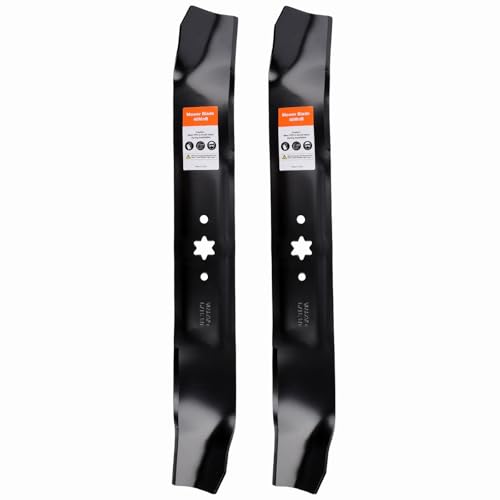
- Exact 6-point star cutout sits flat and firm against spindle assemblies without slippage
- Provides an economical alternative to expensive OEM branded replacement pairs
Cons
- Factory black paint on the bevel dulls the initial edge until it wears off after the first mow
- Strictly fits 6-point star shafts, so owners must check their spindle shape before buying
- Homeowners tackling thick, wet grass may still experience slight underside deck accumulation
Keeping a riding tractor in prime cutting condition requires routine deck maintenance, and these Hipa 942-0616 mulching blades offer an accessible replacement set for 42-inch mowing decks. Designed specifically for outdoor equipment owners running Cub Cadet, Troy-Bilt, or MTD tractors, this matched pair replaces worn, nicked, or unbalanced factory steel. If you are a homeowner or small acreage owner handling your own seasonal tune-ups, swapping in fresh blades is one of the easiest ways to eliminate ragged grass tips and improve overall lawn health.
In practical lawn care, mulching capability comes down to blade geometry and rotational lift. These blades feature an upward kick designed to swirl clippings within the deck cavity long enough for repeated cuts. The result is a fine mulch that settles down into the thatch layer without requiring you to rake or haul heavy bags. While heavily overgrown or damp grass will test any mulching setup, these blades generate plenty of airflow on standard 42-inch decks to keep material circulating cleanly under normal mowing schedules.
Build quality centers on an alloy steel composition fortified with chromium and molybdenum. This mixture provides greater tensile strength and abrasion resistance than plain low-carbon steel, which helps prevent deep notches if you graze a stray tree root or gravel edge. Hipa dips these blades in a protective black coating to ward off rust while sitting in warehouse storage. That coating also covers the cutting edge; while it prevents nasty cuts while wrestling the blades onto the spindle, you will find that the cutting edge sharpens up significantly once that paint wears off after your first twenty minutes of mowing.
The primary consideration before buying is spindle fitment. The center mounting hole is a true 6-point star, which will not work on round, triangular, or 5-point patterns found on other mower years. Always verify your current spindle shaft before turning a wrench. For property owners looking to knock out annual spring prep without paying dealership markups, this Hipa 2-pack provides a solid balance of edge life, straightforward installation, and reliable yard cleanup.
Verify your machine fits these replacement specifications before installation:
Center Mount Pattern: 6-Point Star configuration.
Deck Size: 42-inch cutting decks (requires 2 blades for a full set).
Replaces Part Numbers: 942-0616A, 742-0616A, 942-0616, 742-0616, 942-04126, and 742-04126.
Compatible Riding Mowers: Troy-Bilt Bronco, Troy-Bilt Pony, Cub Cadet XT1 LT42, XT2 LX42, LT1040, LT1042, LT4200, ZT1-42, and select MTD 42-inch lawn tractors.

Pros
- Notched high-lift design significantly boosts lift for cleaner bagging and reduced deck clogging
- Broad compatibility across widely used 42-inch lawn tractors and riding mowers
- Solid steel construction maintains balance and cutting edge through regular seasonal maintenance
- Cost-effective two-pack provides a complete replacement for standard dual-blade 42-inch decks
Cons
- High-lift airflow can create extra airborne dust when mowing sandy or extremely dry turf
- Not intended for dedicated fine mulching setups without a compatible deck plug
- Requires verifying OEM part numbers and spindle hole pattern prior to installation
The 8TEN LawnRAZOR Notched High-Lift Mower Blade set is an aftermarket replacement kit designed specifically for 42-inch mower decks. Engineered to replace common original equipment parts from brands like Husqvarna, Poulan, AYP, and Ariens, this two-blade pack directly targets homeowners seeking to revive their cut quality without paying premium dealership prices. Whether you are maintaining a wide suburban lawn or managing a rural property, replacing worn or bent blades is one of the most effective ways to restore proper deck operation.
In practical lawn maintenance, high-lift blades excel at generating significant air velocity under the cutting deck. The distinct rear sail and notched edges draw limp grass upright before the cutting edge makes contact, resulting in a consistent, manicured look across the entire yard. This enhanced suction works exceptionally well for bagging clippings during peak growing season or propelling damp discharge out of the chute to prevent clumping. Suburban lawn owners preparing their turf for weekend barbecues will appreciate the clean lines and reduced need for rake cleanup.
Build quality centers on resilient steel stock with a total package weight of nearly four pounds. The blades come finished with a durable green powder coating that guards against surface corrosion while sitting in humid garden sheds or garages between mowings. While the factory edge provides a dependable working sharpness out of the box, some lawn care enthusiasts may prefer a quick touch-up with a file for an ultra-sharp cut before mounting them to the deck spindles.
Swapping out blades is a manageable seasonal task for DIY homeowners. Because this package includes a matched pair, replacing both sides simultaneously ensures smooth deck rotation and minimizes spindle vibration. As long as users disconnect the spark plug wire and secure the deck properly before wrenching, installation is straightforward. Routine maintenance involves periodic checks for nicks after hitting hidden rocks, alongside standard end-of-season sharpening.
Realistic limitations relate primarily to your specific yard conditions and deck setup. Because these blades generate strong upward suction, mowing on parched ground or sandy soil can throw up extra dust and debris. Additionally, while they handle heavy bagging and side discharge admirably, dedicated mulching setups may require standard or specialized mulching blades to achieve powder-fine clippings. For general weekly mowing and bagging duties, however, this set provides an affordable and reliable refresh for your riding mower.
The notched high-lift profile on these 8TEN blades is built to optimize air movement beneath standard 42-inch mower decks. By pulling grass blades vertically before shearing, the cutting deck leaves behind fewer missed strands and prevents the uneven patches often caused by bent or dull factory blades. Homeowners tackling fast-growing spring grass will find the extra lift helpful in keeping discharge chutes free from wet blockages.
When paired with a rear bagging attachment, the suction generated by high-lift wings drives clippings and chopped leaves directly into the collection bins with fewer clogs in the discharge chute. This efficient airflow also helps disperse heavy clippings evenly when side discharging, preventing thick clumps from smothering green grass during regular weekend cuts.
This blade set is engineered as a direct replacement for standard 42-inch riding mowers and lawn tractors built by AYP, Husqvarna, Poulan, Craftsman, and Ariens. It replaces OEM part numbers including AYP 138498, 134149, and 127843, along with Husqvarna numbers 532138498 and 532127843. It fits popular riding tractor models such as the Husqvarna YTH series, Poulan PB models, and corresponding lawn tractors.
Before purchasing, homeowners should verify their mower deck width and check the center mounting hole against their existing spindle shaft. Installing properly matched blades protects the spindle bearings from unnecessary stress, prevents blade overlap collisions, and ensures a level cut across the entire mowing path.

Pros
- Solid hardened steel build with good rigidity for consistent cutting on large decks
- Balanced design keeps vibration low, reducing strain on the mower spindle and operator
- Corrosion-resistant coating helps the blades last longer in humid storage or frequent wet mowing
- Affordable three-pack price point makes full deck replacement economical
Cons
- Limited review data available, so long-term durability compared to OEM blades is not yet proven
- Coating may wear off over time if used heavily on abrasive or sandy soil
- Only fits specific 52-inch deck models, so careful deck measurement is required before purchase
The Yolvvetrx 04771200 lawn mower blades are a replacement set designed specifically for Ariens IKON X, IKON XL, Edge and Gravely ZT X, ZT XL zero-turn mowers with 52-inch decks. If you own one of those machines and need a fresh set of blades, this three-pack covers the entire deck. These blades measure 18 inches in length, 2-1/4 inches in width, and 0.158 inches in thickness, with a 5/8-inch center hole. They are built from heat-treated hardened steel and come with a protective surface coating to resist corrosion.
In real-world use, the hardened steel construction gives these blades noticeable rigidity. During high-speed rotation on a 52-inch deck, the blades stay true and resist flexing, which translates into a more consistent cut across wide swaths of grass. The balanced weight distribution helps reduce vibration, a key factor when you are spending hours on a zero-turn mower. Less vibration means less fatigue for the operator and less wear on the mower spindles over time. The 0.158-inch thickness adds durability compared to thinner blades, allowing them to handle thicker grass and occasional sticks or debris without bending out of shape.
These blades are best suited for homeowners with a few acres of lawn or light commercial users who maintain properties regularly. They are not designed for heavy-duty commercial mowing day in and day out, but for routine residential and light commercial use, they perform well. The protective coating helps prevent rust during storage and in damp conditions, which is a practical benefit if you store your mower in a humid garage or shed. One thing to note is that you must verify your deck size before ordering, as these only fit 52-inch decks. Double-check your mower model compatibility from the list provided.
On the downside, there are no user reviews yet, so long-term reliability data is limited. The coating may wear off over time if you frequently mow in sandy or abrasive conditions, but that is typical for most coated blades. Overall, the Yolvvetrx 04771200 blades offer a cost-effective replacement option for Ariens and Gravely zero-turn owners. If you are looking for a set of blades that deliver solid cut quality, reduced vibration, and corrosion resistance without the OEM markup, these are worth considering. They are a practical choice for anyone who wants to keep their 52-inch deck cutting clean without spending a premium.
Length: 18 inches
Width: 2-1/4 inches
Thickness: 0.158 inches
Center Hole Diameter: 5/8 inches
Quantity: 3 blades per pack
Material: Heat-treated hardened steel
Coating: Protective corrosion-resistant finish
Color: Black
Compatible Decks: 52-inch decks on select Ariens and Gravely zero-turn mowers
Ariens IKON X: 915177, 915225, 915222, 915223, 915332, 915205, 915330
Ariens IKON XD: 915266, 915267, 915335, 915341, 915343
Ariens IKON XL: 915227, 915239, 915201
Ariens Edge: 915254, 915285
Gravely ZT X and ZT XL models with 52-inch decks
Always verify your deck size and model number before purchasing.
Understanding Mower Blade Rotation Direction and Safe Blade Setup
When standing behind a lawn mower or sitting in the operator seat, the cutting blades almost always rotate in a clockwise direction. This clockwise movement corresponds to the right-side discharge chute found on the vast majority of walk-behind mowers, lawn tractors, and commercial zero-turn machines. However, perspective changes when you look beneath the cutting deck, which is where confusing installation mistakes frequently happen.
Operator Viewpoint Versus Under-Deck Perspective
The primary source of confusion regarding blade rotation comes from the observer’s physical vantage point. When you sit in the operator seat and look down toward the cutting deck, the spindle pulleys rotate in a clockwise circle. This movement sweeps the blades forward on the left side and backward along the right side, guiding clippings toward the right discharge opening.
When you tilt a walk-behind mower onto its side or look up at the spindles from beneath a raised deck, that perspective reverses. From underneath, looking directly at the retaining bolt, the blade appears to turn in a counterclockwise circle. Failing to establish this frame of reference beforehand often leads DIYers to question whether their cutting edges face forward or backward.
To prevent spatial confusion during deck maintenance, orient yourself relative to the discharge opening rather than relying on clock directions. The leading cutting edge of the blade must always travel toward the discharge chute as it sweeps along the curved deck housing. Grounding your perspective in the physical structure of the deck eliminates doubt regardless of how the machine is tilted.
How Deck Discharge Geometry Dictates Rotational Path
Lawn mower cutting decks function as carefully tuned aerodynamic chambers. The curvature of the outer deck shell, the placement of internal baffles, and the location of the discharge chute dictate how air and clippings circulate. Centrifugal force throws severed grass outward against the deck perimeter, while rotating blade sails generate high-velocity airflow that pushes material along the inner circumference.
Because standard mowers in North America feature a discharge chute on the operator’s right side, internal airflow must travel clockwise when viewed from above. If a blade spun counterclockwise from that top-down vantage, clippings would slam into the closed left baffle. This reverse airflow would choke the cutting chamber, cause severe grass clumping, and stall the engine under load.
Rear-discharge walk-behind mowers follow a similar mechanical principle by directing material straight back into a collection bag. Even in rear-bagging setups, single-blade push mowers retain clockwise rotation from the operator perspective. The internal swirl chamber relies on that specific rotational vector to fling damp clippings up the rear chute without clogging the tunnel.
Identifying the Leading Cutting Edge and Lift Sail
Every rotary mower blade features two distinct functional areas at each working tip: the sharpened cutting bevel and the raised lift wing. The sharpened edge is the leading face that slices cleanly through grass stems as the spindle turns. Directly behind that cutting edge sits an upward-curved sail designed to produce vertical airflow, lifting grass upright before the cutting bevel strikes.
Installing a mower blade upside down is one of the most common errors during seasonal maintenance. When a blade is bolted on upside down, the blunt back of the sail strikes the grass first while the sharpened bevel trails uselessly behind. This incorrect orientation tears rather than cuts the lawn, leaving ragged brown tips that invite fungal turf disease.
High-lift options, such as the Zuvxilo23 18-inch blades for 52-inch zero-turn decks or the 8TEN notched high-lift blades, feature pronounced rear wings engineered to generate powerful draft. On these aggressive profiles, the curved sail must point upward toward the underside of the mower deck shell. If the wings point down toward the lawn, the blade pushes grass downward, causing poor clipping dispersal and ragged cuts.
Many replacement blades feature stamped markings on the steel surface, such as “BOTTOM” or “GRASS SIDE,” to clarify proper mounting orientation. When those markings are absent, remember that the flat side of the blade faces the lawn while the raised aerodynamic wings point up toward the deck housing.
Single-Blade, Multi-Blade, and Counter-Rotating Decks
Standard walk-behind push mowers utilize a single spindle positioned in the center of the cutting deck. Because there is only one cutting path, verifying rotation on a walk-behind machine is consistent across nearly all brands. If the mower discharges to the right or rear, the single blade rotates clockwise when viewed from behind the handlebars.
Riding mowers and zero-turn machines use multi-blade systems across wider cutting widths, such as 42-inch, 48-inch, and 52-inch configurations. On standard side-discharge decks, all two or three spindles rotate in the identical clockwise direction from the operator seat. On a Husqvarna 48-inch deck using GICOOL Z248F blades, all three spindles turn together, passing clippings across the deck and out the right chute.
However, counter-rotating blade systems represent an important exception that property owners should understand. Certain specialized lawn tractors and dedicated rear-collect mowers utilize two counter-rotating blades that spin toward one another. In these configurations, the left blade turns clockwise while the right blade turns counterclockwise, throwing clippings between them into a central rear collection chute.
Timed decks rely on toothed cogged belts to keep counter-rotating blades synchronized at ninety-degree angles so their cutting paths do not collide. If you own a mower with a central rear tunnel, check your operator manual to confirm whether your spindles share the same rotational direction. Installing standard clockwise blades on a counter-rotating spindle causes one side to slice grass with its blunt edge.
Spindle Hardware, Bolt Thread Direction, and Rotational Mechanics
The rotational direction of a mower spindle directly influences the threading of the mounting hardware securing the blade. In mechanical design, spindle fasteners are engineered so that rotational resistance from mowing tends to tighten, rather than loosen, the retaining bolt. For standard clockwise-rotating spindles, manufacturers almost universally employ standard right-hand threaded hardware.
Right-hand threads tighten clockwise and loosen counterclockwise. When viewing the bolt head from underneath the deck, rotating your wrench counterclockwise breaks the fastener free for blade removal. Because the blade appears to spin counterclockwise from below, the inertial drag of striking thick turf exerts a clockwise tightening force on a right-hand bolt, keeping it securely seated.
On counter-rotating dual-blade decks, however, the spindle that spins in reverse often requires a left-hand threaded bolt to maintain this self-tightening safety dynamic. Left-hand bolts loosen by turning clockwise and tighten counterclockwise. Applying excessive force in the wrong direction on a left-hand spindle can shear the bolt head or strip spindle threads, creating an expensive repair.
Before applying heavy leverage with a breaker bar, inspect the exposed spindle threads or check manufacturer diagrams. If a retaining bolt resists reasonable counterclockwise torque, confirm whether that specific spindle uses reverse threading before forcing the fastener.
Center-Hole Geometry and Orientation Compatibility
Mower blades mount to spindles using specific center-hole geometries designed to transmit rotational torque without slipping. Common patterns include round center holes, 5-point star openings, and 6-point star configurations. For example, Hipa 942-0616 mulching blades use a 6-point star pattern for Troy-Bilt and Cub Cadet mowers, while GICOOL and 8TEN blades feature 5-point star openings for Husqvarna and AYP equipment.
While star patterns prevent the blade from spinning freely on the spindle shaft, they do not prevent upside-down installation. Symmetrical star openings fit onto the spindle star whether the cutting bevel faces up or down. Property owners must remain attentive during installation, ensuring that the star teeth engage fully into the spindle flange while verifying that the lift wings point toward the deck shell.
Zero-turn commercial units often utilize round center holes, such as the 5/8-inch openings found on 04771200 replacement blades for Gravely and Ariens decks. On these round-hole setups, robust hardened steel blade construction resists torsional twisting during sudden load spikes when cutting dense turf. Friction washers and accurate bolt torque keep round-hole blades aligned, making proper rotational orientation equally critical.
Never modify a center hole by drilling or filing to fit an incompatible blade onto an unmatched spindle. Altering mounting geometry weakens structural integrity, creates dangerous rotational imbalance, and risks blade failure at operating speeds exceeding three thousand revolutions per minute.
Factory Coatings, Edge Inspection, and Dynamic Balance
Replacement blades typically arrive with a protective layer of paint covering the entire metal body, including the cutting edge. Buyers sometimes mistake this painted edge for a dull or backward blade, wondering if the coating alters rotational performance. Manufacturers apply this finish to prevent surface rust during storage and protect hands during handling.
Evaluating the factory edge sharpness on new blades confirms that the cutting bevel is properly formed beneath the paint layer. As soon as you engage the mower deck in thick turf, this thin protective coating wears away naturally along the cutting bevel, exposing bare cutting steel. You do not need to grind away factory paint before installation, but you must ensure the bevel faces the correct rotational direction.
Dynamic rotational balance is another critical factor tied directly to blade spinning velocity. When a blade spins at high speed, even a small weight difference between the cutting tips creates vibration that travels into the spindle assembly. This excessive vibration can wear spindle bearings prematurely, loosen deck hardware, and degrade cut consistency across your lawn.
Whenever you sharpen existing blades or inspect new replacements, place the center hole on a cone balancer to verify equilibrium. If one side dips downward, carefully grind small amounts of material from the heavy side until the blade rests horizontally. A balanced blade spins smoothly through its rotational arc, reducing engine strain and protecting your cutting deck.
Safe Physical Verification Steps Before Starting the Engine
Never verify blade rotation or test spindle clearance while the mower engine or electric motor is capable of starting. Before placing your hands beneath a mower deck, always disconnect the spark plug wire on gas machines or remove the safety key and battery pack on cordless models. Disconnecting the power source prevents accidental engine startup if the blade is rotated past compression top dead center.
Wearing heavy work gloves, slowly rotate the mounted blades by hand through their complete circular path under the deck. Confirm that the cutting bevel leads into the sweep and that the lift wings point toward the underside of the deck housing. Listen for any rubbing against internal deck baffles, discharge chute lips, or adjacent blade tips.
On multi-blade decks, check the clearance between neighboring blade tips when they point toward one another. A properly matched replacement set maintains consistent clearance without overlapping or contacting adjacent blades during rotation. If blade tips touch during a manual rotation check, stop immediately and verify that your blade lengths match your deck size requirements.
Once you confirm that the cutting bevels lead forward, the lift sails point upward, and the mounting hardware is securely fastened, reconnect your power source. Taking these methodical verification steps ensures your cutting deck delivers clean cuts while operating safely all season long.




Write Your Review
No reviews yet. Be the first to share your experience!