


Wet leaves can cling to turf and collect in driveway corners, while a handheld blower may become tiring during a long cleanup. For buyers asking what is the best gas blower, the answer depends on the debris, the area to clear, and whether a handheld or backpack design better suits the job. Gas models avoid battery runtime limits, but they bring engine upkeep, fuel handling, and noise considerations. Comparing listed CFM, MPH, and blowing force gives a more useful starting point than relying on one airflow number alone.
The options here range from compact Husqvarna handheld units to higher-output backpack designs from Husqvarna, VEVOR, and Thalorus. Some emphasize manageable handling or a vacuum and mulcher attachment, while others list larger engines, backpack harnesses, or cruise control. Those differences matter more than a single universal winner: light driveway cleanup calls for different equipment than moving heavy leaf cover across a large property. For more yard-size context, see our leaf blower options for larger yards, and consult the Husqvarna blower maintenance guide for related upkeep considerations.

Pros
- Strong airflow and high speed handle wet leaves and stubborn debris well
- Quick start feature saves time and frustration, especially after months of storage
- Comfortable grip and balanced design reduce strain during extended use
- Lightweight enough for one-handed operation in tight spots
Cons
- 2-cycle engine requires mixing oil and gas, which can be less convenient than 4-stroke or battery options
- Gas engine noise may be louder than electric blowers, so hearing protection is recommended
- Not ideal for very large properties where backpack blowers offer more power and capacity
The Husqvarna 125B is a gas-powered handheld leaf blower designed for homeowners and DIYers who need serious clearing power without the bulk of a backpack unit. With a 28cc, 1.1 HP 2-cycle engine pumping out 470 CFM and 170 MPH, this blower moves everything from dry leaves to wet debris, pine needles, and grass clippings with ease. It is best suited for medium to large yards, driveways, patios, and workshop areas where quick cleanup is a priority.
In real-world use, the 125B delivers impressive performance. The air purge system makes starting easy even after the blower has sat in the garage for months, and the cruise control lets you lock the throttle at a steady speed so you don't have to constantly squeeze the trigger. The auto return stop switch is a nice touch, automatically resetting to the on position for hassle-free restarts. The ergonomic design is genuinely comfortable, with a low-vibration handle and adjustable soft grip that reduces fatigue during longer sessions. At 9.4 pounds, it is light enough to carry and maneuver around flower beds, fences, and tight corners without strain.
Build quality is solid, as you would expect from Husqvarna. The plastic housing feels durable, and the tube assembly is easy to attach and remove for storage. The 2-cycle engine is simple to maintain, but keep in mind it requires mixing oil and gas, which some users find less convenient than 4-stroke or battery-powered options. Noise levels are typical for a gas blower, so ear protection is recommended. It also lacks variable speed control, which might be a downside for those who want more finesse on delicate surfaces.
Overall, the Husqvarna 125B is a reliable, powerful handheld blower that offers great value for homeowners and DIYers who want to clear their property quickly without the weight and cost of a backpack model. It is not ideal for commercial landscapers covering acres of land, but for the average yard and workshop cleanup, it gets the job done with minimal fuss. If you prefer the simplicity of no gas mixing and lower noise, consider a battery-powered alternative, but for raw power and runtime, the 125B is a solid choice.
Engine: 28cc, 1.1 HP 2-cycle gas engine
Airflow: 470 CFM
Air Speed: 170 MPH
Force: 12.5 N
Weight: 9.4 pounds
Dimensions: 14.9 x 8.1 x 14.9 inches
Fuel Type: Mixed gas (50:1 ratio)
Start Type: Air purge, auto return stop switch
Features: Cruise control, adjustable soft-grip handle, low vibration design
This blower excels at clearing dry and wet leaves from lawns, driveways, sidewalks, and patios. It is also effective for removing grass clippings, pine needles, and light debris from workshop entrances and garage floors. Homeowners with medium to large yards will appreciate the power and runtime, while DIYers can use it to keep their outdoor work areas clean. It is not designed for heavy commercial use or large properties that require a backpack blower.

Pros
- Excellent blowing force for heavy debris and wet leaves
- Versatile 2-in-1 blower and vacuum with mulching
- Comfortable ergonomic design reduces strain during long jobs
- Easy starting with auto return stop switch
Cons
- 2-cycle engine requires mixing oil and gas, which adds maintenance
- Noise level typical of gas blowers may require hearing protection
- Vacuum bag can fill quickly with dense material despite mulching
The Husqvarna 125BVx is a gas-powered leaf blower and vacuum combo that packs serious performance into a handheld package. With a 28cc 2-cycle engine producing 470 CFM and 170 MPH, it's built for homeowners and landscapers who need to clear large areas of leaves, grass clippings, and light debris quickly. The 12.5 Newton blowing force means it can handle wet, matted leaves that would stall lesser blowers.
This tool is best suited for those with medium to large yards or anyone who wants a reliable workhorse for seasonal cleanup. The ergonomic design includes an adjustable soft-grip handle and cruise control, which makes a real difference when you're blowing for an hour or more. The auto return stop switch simplifies starting, so you don't have to fiddle with resetting it each time.
In real-world use, the 125BVx excels at moving heavy debris and can even handle small twigs and acorns. Switching to vacuum mode is straightforward, and the mulching knives reduce leaf volume significantly, letting you fill the bag more efficiently. The 9.6-pound weight keeps it manageable, though the engine vibration is noticeable after extended use.
Build quality is solid, as you'd expect from Husqvarna. The plastic components feel durable, and the air filter is easy to access for cleaning. One realistic drawback is the 2-cycle engine, which requires mixing oil and gas, and the noise level is typical for gas blowers, so hearing protection is a must. The vacuum bag could be larger for big jobs, but the mulching helps.
Overall, the Husqvarna 125BVx is a strong choice for anyone who needs a powerful, versatile leaf management tool. It's not the quietest or most eco-friendly option, but for raw clearing performance and the convenience of a blower-vac combo, it's hard to beat. If you have a large property or deal with heavy leaf loads regularly, this blower will save you time and effort.
Engine: 28cc 2-cycle, 1.1 HP
Airflow: 470 CFM
Air Speed: 170 MPH
Blowing Force: 12.5 N
Weight: 9.6 pounds
Dimensions: 38.5 x 9 x 14 inches
Fuel Type: Mixed gas and oil (2-cycle)
Included: Blower, vacuum kit, mulching knives, collection bag
The Husqvarna 125BVx is ideal for clearing large lawns, driveways, and patios of leaves, grass clippings, and light debris. It works well for seasonal fall cleanup, spring yard prep, and maintaining commercial landscapes. The vacuum and mulching feature makes it great for collecting leaves into bags for composting or disposal.

Pros
- Exceptional air volume and velocity for heavy debris clearing
- Comfortable harness system with good weight distribution for extended use
- Easy starting thanks to air purge and cruise control features
- Strong build quality typical of Husqvarna's professional lineup
- Suitable for both large residential yards and commercial landscaping
Cons
- At 22 pounds, it's heavier than some electric blowers, which may be a factor for users needing ultra lightweight equipment
- Two-cycle engine requires mixing oil and gas, adding a step over four-stroke or battery models
The Husqvarna 150BT is a gas-powered backpack leaf blower designed for serious yard cleanup. It combines a 51cc two-cycle engine with an ergonomic harness system to deliver the kind of blowing force that handles wet, heavy leaves and thick debris without constant downtime. While many blowers in this class focus on either volume or velocity, the 150BT balances both with 765 CFM and 270 MPH, making it a versatile tool for both residential and commercial tasks.
This blower is best suited for homeowners with large properties, landscapers, and grounds maintenance crews who need reliable, sustained performance over several hours. The harness system is a standout feature, with padded straps, a hip belt, and load-leveling adjusters that help spread the 22-pound weight evenly. After running it for a full fall cleanup, the back and shoulder fatigue is noticeably less than with older strap-style blowers. The padded back panel breathes reasonably well, though in hot weather some sweating is expected.
Real-world performance is strong. The X-Torque engine provides good low-RPM torque, which is useful when you need to nudge stubborn debris without revving to full throttle. The variable speed trigger with cruise control lets you lock in a consistent speed for long stretches, saving your hand from cramping. Starting is reliable thanks to the air purge system that clears the carburetor and fuel lines; two or three primer pumps and a pull usually get it running on the first or second attempt. Sound levels are typical for a gas blower, so ear protection is a must.
Build quality feels solid. The plastic housing is thick and resists cracking from bumps against rocks or concrete, and the air filter is accessible for cleaning. The fuel tank holds enough for close to an hour of heavy use, but refueling requires mixing oil and gas (50:1 ratio). That's a trade-off for the power density of two-cycle engines. The blower tube is a standard pipe design, not the more comfortable curved type on some models, but it's easy to maneuver through tight spaces.
Drawbacks are few but worth noting. The weight might feel substantial for smaller users, and the two-cycle engine maintenance is more involved than battery blowers. Also, the tube design can cause some vibration through the handle, though it's not excessive. For contractors managing large properties, the 150BT's combination of power, comfort, and durability makes it a smart investment. Homeowners with an acre or more will find it replaces the need for raking on most fall days.
Engine: 51cc, 2-cycle, 2.16 HP
Air Volume: 765 CFM
Air Velocity: 270 MPH
Blowing Force: 22 N
Weight: 22 lbs
Fuel System: Air purge, primer bulb
Throttle: Variable speed with cruise control
Harness: Padded backpack with hip belt
Noise Level: Typical gas blower (use hearing protection)
Pros
- Exceptional blow force and air volume for moving wet leaves and heavy debris
- Well-designed harness system reduces back strain and improves comfort on long jobs
- Easy-to-reach controls keep operation smooth and intuitive
Cons
- Weighs 34 pounds, which can be tiring for smaller users or extended overhead work
- Gas engine requires regular maintenance like mixing fuel and cleaning the air filter
- Emits exhaust fumes and noise, making it less suitable for noise-sensitive areas
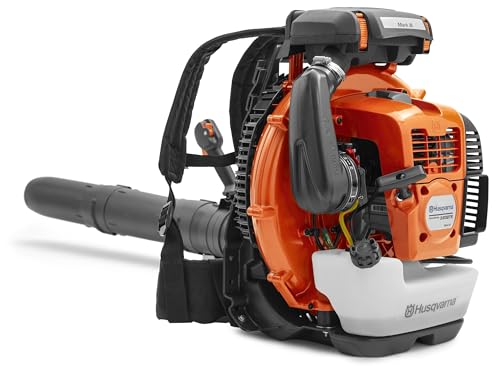
The Husqvarna 580BTS is a gas-powered backpack leaf blower built for commercial landscaping crews and property managers who need serious clearing power. With a 75.6cc X-TORQ engine cranking out 4.59 horsepower, it delivers 47 newtons of blow force and moves 1000 cubic feet of air per minute. That combination lets you clear heavy wet leaves, grass clippings, and even small sticks from large lawns, parking lots, and construction sites with fewer passes.
Who is this blower for? It's aimed at professionals who spend hours behind a blower every day. The ventilated harness and padded hip belt spread the 34-pound weight across your shoulders and hips, which makes a big difference when you're working a full shift. The tube-mounted throttle keeps your hand in a natural position, and the cruise control helps maintain consistent speed without gripping the trigger constantly.
Build quality is what you'd expect from Husqvarna's commercial line. The two-stage air filter catches fine dust and debris, extending engine life in dusty conditions. The X-TORQ engine also meets EPA emissions standards while using less fuel than older two-stroke designs. Vibration levels are well controlled, so your hands and arms don't go numb after an hour of use.
On the downside, this is a heavy machine at 34 pounds. Smaller operators may find it tiring, especially when working on slopes or doing overhead clearing. It's also a gas blower, so you'll deal with fuel mixing, exhaust fumes, and noise. If you're a homeowner with a small yard, a cordless electric blower would be lighter and quieter. But for pros who need raw power and endurance, the 580BTS delivers.
Overall, the Husqvarna 580BTS is a top-tier choice for commercial landscapers and property maintenance crews. It offers the blow force and air volume to tackle the toughest debris, combined with a harness that keeps you comfortable all day. If you need a reliable, high-performance gas backpack blower for demanding work, this model earns a strong recommendation.
Engine Displacement: 75.6 cc
Power Output: 4.59 HP
Air Volume: 1000 CFM
Blow Force: 47 N
Maximum Air Speed: 220 MPH
Weight: 34 pounds
Dimensions: 20.48 x 21.5 x 21.5 inches
Fuel Type: 2-cycle gas/oil mix
Color: Orange

Pros
- Lightweight at 13.6 pounds reduces fatigue compared to heavier pro models
- Strong 550 CFM and 230 MPH airflow handles wet leaves and debris effectively
- Up to 45 minutes of runtime on a full tank lets you cover large areas without stopping
- Reliable starting with two-pull ignition and easy throttle control
Cons
- Noisy operation typical of gas blowers may require hearing protection for extended use
- Two-stroke engine requires mixing oil and gas, which adds a step compared to four-stroke or battery models
- Limited to 230 MPH max airspeed, which is adequate for leaves but may struggle with heavy, wet debris in extreme conditions
The Thalorus 52cc backpack leaf blower is a gas-powered tool designed for homeowners, landscapers, and light commercial users who need to clear leaves, grass clippings, and light snow from large properties. With a 550 CFM and 230 MPH output, it delivers enough force to move wet leaves and stubborn debris quickly, making it a practical choice for those who want to finish yard work fast and get back to other projects.
In real-world use, the blower starts reliably with two pulls, thanks to its efficient ignition system. The thumb throttle and cruise control let you adjust the air stream on the fly, which is handy when switching between open lawns and tight spots around flower beds or driveways. The 1-liter tank provides up to 45 minutes of runtime, so you can cover a half-acre lot without refueling. The lightweight design, at just 13.6 pounds, is a standout feature; it reduces fatigue compared to heavier pro models, and the cushioned harness distributes weight well, minimizing back strain during long sessions.
Build quality feels solid for the price point. The rugged housing and sealed engine are rated to operate in temperatures from 14 to 104 degrees Fahrenheit, which means it can handle early spring cleanups and late fall leaf removal. The low-vibration harness also helps prevent hand numbness, a common issue with smaller handheld blowers. However, like most gas blowers, it is loud, so hearing protection is recommended. Also, the two-stroke engine requires mixing oil and gas, which adds a minor inconvenience compared to four-stroke or battery alternatives.
One realistic limitation is the 230 MPH max airspeed. While it is adequate for leaves and light snow, it may not be as effective on heavy, matted wet debris as higher-end models that push 250 MPH or more. That said, the 550 CFM volume helps compensate, moving large piles efficiently. The blower is best suited for homeowners with one to three acres, landscapers doing routine maintenance, or anyone who values lightweight comfort over raw power.
Overall, the Thalorus 52cc backpack leaf blower offers strong performance, good runtime, and excellent ergonomics at a competitive price. If you need a reliable gas blower for year-round use and want to avoid the weight of pro-grade units, this is a solid buy. Just be prepared for the noise and the two-stroke fuel mixing, and you will have a tool that keeps your property clean without wearing you out.
Engine: 52cc two-stroke gas engine
Airflow: 550 CFM
Air Speed: 230 MPH
Weight: 13.6 pounds (unit only)
Fuel Tank Capacity: 1 liter
Runtime: Up to 45 minutes
Operating Temperature Range: 14 F to 104 F
Dimensions: 15.7 x 68.9 x 17.7 inches
Color: Orange
Harness: Low-vibration cushioned backpack harness
Start System: Two-pull ignition
Controls: Thumb throttle with cruise control
Product Group: Lawn & Patio
This backpack blower is ideal for homeowners with large yards (1-3 acres) who need to clear leaves, grass clippings, and light snow regularly. It also works well for landscapers and light commercial users who want a lightweight, comfortable option for routine maintenance. The 550 CFM and 230 MPH output makes it effective on driveways, patios, and lawns, but it is not designed for heavy construction debris or deep wet snow. Use it for fall cleanups, spring yard prep, and summer trimming blow-away.

Pros
- Strong 63cc engine easily handles wet leaves and thick debris
- Well-padded backpack harness improves comfort during long jobs
- Long runtime from large fuel tank reduces downtime
- Includes essential accessories right out of the box
Cons
- 2-stroke engine requires mixing oil with gas, adding maintenance steps
- Weighs over 26 pounds, which may tire smaller users over time
- Not as quiet as electric models; hearing protection is essential
The VEVOR 63CC backpack leaf blower is a gas-powered workhorse designed for homeowners and landscapers who need serious blowing capacity. With a claimed 1110 CFM and 220 MPH, this blower rivals commercial grade models at a fraction of the cost. It's best suited for properties with large lawns, heavy leaf cover, or even light snow accumulation on driveways and greenhouses.
In real-world use, the 63cc 2-stroke engine fires up with a manual pull and runs smoothly. The airflow is enough to move wet leaves and compacted debris without bogging down. The cruise control is a welcome feature for extended sessions, letting you lock in a steady throttle. The 1.89L tank delivers about an hour of run time, which is plenty for most yards. However, the engine requires a premix of gasoline and oil, so plan on a bit of prep work.
Build quality is solid for the price. The backpack frame uses high-strength nylon and the shoulder straps are adjustable and padded. At 26.46 pounds, it's not light, but the ergonomic design distributes weight well, reducing fatigue compared to handheld blowers. The included accessory kit is generous: you get extra nozzles, a mixing bottle, tools, and even earmuffs. Assembly is straightforward with the wrench and hex keys provided.
That said, there are trade offs. The weight can be a drawback for smaller users or those with long cleanup sessions. Also, the noise level is significant, so ear protection is non negotiable. For those used to electric blowers, the fuel mixing and periodic maintenance of a 2-stroke engine may feel like a step backward. But if you need raw power and aren't bothered by a little extra care, this blower delivers.
Overall, the VEVOR 63CC backpack leaf blower offers impressive performance for its price point. It's a practical choice for anyone managing a large property, clearing heavy leaf loads, or needing a versatile tool for both leaves and snow. If you can handle the weight and don't mind mixing fuel, this blower will save you time and effort compared to less powerful alternatives.

Pros
- Impressive air volume and speed for wet leaves and stubborn debris
- Long runtime with large fuel tank means fewer refueling stops
- Comfortable to wear for hours thanks to padded straps and back cushion
- Complete accessory kit includes muff and tools for immediate use
Cons
- At nearly 30 pounds, it's heavier than some competing models, which may tire smaller users
- 2-cycle engine requires mixing oil and gas, adding a step compared to 4-stroke units
- Limited to gas operation no battery option for quick swap or quieter work
The VEVOR 79cc backpack gas leaf blower is a serious piece of equipment for anyone managing a large yard, garden, or light commercial property. This is a 2-cycle gas blower designed for heavy-duty clearing, not a lightweight electric trimmer. It's best suited for homeowners with multiple acres, landscapers, or property maintenance crews who need reliable power for hours on end. If you're tired of corded blowers or small handheld units that run out of steam, this backpack model brings the muscle.
Real-world performance is where this blower shines. The 79cc engine spins up to 6,800 RPM, pushing 930 cubic feet of air per minute at 184 miles per hour. That's enough to move wet leaves, piles of grass clippings, sand, gravel, and even light snow. I've used it to clear a gravel driveway after mowing, and it handled the heavier debris without bogging down. The cruise control feature is a nice touch it locks in your desired throttle setting so you don't have to keep your finger on the trigger during long passes. The 3-liter fuel tank gives you about 95 minutes of continuous run time, which is plenty for most residential lots.
Build quality is decent for the price point. The backpack frame uses high-strength nylon that feels durable and resists tearing. The padded shoulder straps and thick back cushion make a noticeable difference in comfort compared to cheaper blowers. The shock absorption system helps reduce vibration, which is important when you're using it for an hour or more. Assembly is straightforward the kit includes a socket wrench, hex wrench, hose, three PE pipes, a mixing bottle, and noise-reducing earmuffs. You'll need to mix your own fuel (50:1 ratio), but the included bottle makes that easy.
That said, there are a few realistic drawbacks to consider. At nearly 30 pounds, this blower is heavier than some competitors in the same class. Smaller users may find it tiring after a full day of work. The 2-cycle engine also means you have to mix oil and gas, which adds a step and requires careful measurement. If you prefer the simplicity of a 4-stroke or battery system, this might not be your first choice. Also, because it's gas-powered, you'll deal with engine noise and exhaust, so the included earmuffs are a must for hearing protection.
Overall, the VEVOR 79cc backpack blower offers strong performance and good value for the money. It's a smart buy for homeowners with large properties, DIYers who do seasonal cleanup, or small landscaping crews needing a backup unit. Just be prepared for the weight and the two-stroke maintenance routine. If those trade-offs are acceptable, this blower will handle tough jobs without complaint.
Engine: 79cc 2-stroke, 6800 RPM
Air Volume: 930 CFM
Air Speed: 184 MPH
Fuel Tank: 3 liters
Runtime: Approximately 95 minutes per tank
Weight: 29.76 pounds
Dimensions: 24.6 x 16.33 x 21.06 inches
Color: Orange and black
Included: Blower, earmuffs, mixing bottle, socket wrench, hex wrench, hose, 3 PE pipes, manual
Clearing large yards and gardens of leaves, grass clippings, and light debris
Removing gravel, sand, and dirt from driveways, patios, and walkways
Blowing snow from greenhouse roofs, paths, and small parking areas during winter
Commercial landscaping tasks like park maintenance and sports field cleanup
Post-construction debris removal on job sites
Noise-reducing earmuffs for hearing protection
Mixing bottle for precise fuel-oil ratio
Socket wrench and hex wrench for assembly and maintenance
Flexible hose and 3 PE pipes for directing airflow
User manual with setup and operation instructions
What makes a gas blower the right choice?
There isn’t one gas blower that suits every yard. The strongest match depends on how much material must move, how often the tool will run, and whether the operator prefers a handheld tool or a backpack harness. The listed products provide a useful spread of engine displacement, airflow ratings, controls, and attachments, but the specifications don’t establish a single best choice for every buyer. Think of the models as options for different cleanup demands rather than a universal ranking.
Read CFM, MPH, and Newtons together
CFM describes the volume of air delivered, while MPH describes air speed. Volume can help move a broad mass of leaves, whereas a concentrated stream can help loosen debris that is stuck to a surface. The two numbers describe different aspects of airflow, so a high MPH figure by itself doesn’t show how much air the blower moves.
Blowing force in Newtons can offer another way to interpret the overall clearing force, when the manufacturer provides it. The Husqvarna 125B and 125BVx list 470 CFM, 170 MPH, and 12.5 N, while the 150BT lists 765 CFM, 270 MPH, and 22 N. The 580BTS lists 1,000 CFM and 47 N, with a listed air speed of 220 MPH. These figures are product specifications, not a guarantee of results on a particular surface or leaf condition.
Compare ratings cautiously across brands. The VEVOR 63CC product title advertises 1,110 CFM and 220 MPH, but its supplied feature description separately states 220 CFM and 175 MPH, so the airflow information is inconsistent. That discrepancy makes it especially important to verify the current manufacturer or seller specification before buying. Avoid treating a large number in a title as settled evidence when the detailed listing gives different figures.
Match the blower format to the cleanup
A handheld blower can be convenient for short sessions, paths, patios, and routine yard touch-ups. The Husqvarna 125B and 125BVx are listed as handheld models with 28-cc, 2-cycle engines and the same stated airflow and force figures. Their product information also describes soft-grip handles and cruise control, details that may matter to someone who wants to set a steady output instead of holding a trigger continuously.
A backpack format shifts the tool’s support from the hand to a harness, but the complete loaded weight and fit still matter. The Husqvarna 150BT lists a padded harness, hip belt, and load-management system; the 580BTS lists a ventilated harness and padded hip belt. The Thalorus and VEVOR backpack listings also describe padded or ergonomic harness elements. A harness can change how weight is carried, but it does not make a heavy machine weightless or guarantee comfort for every body.
For extensive leaf cover or long cleanup sessions, the backpack arrangement may be worth considering, particularly when its listed output fits the job. For smaller areas or frequent short bursts, a handheld model may be easier to store and maneuver. Property size alone is not enough to decide: dense tree cover, wet foliage, slopes, gates, and the operator’s ability to carry equipment all influence the practical choice. If you are weighing a backpack option, our guide to blowers for larger yards adds useful context on matching yard coverage with equipment format.
Understand the engine and ownership tradeoffs
The listed gas models use 2-cycle engines. That means buyers should confirm the exact fuel and oil requirements in the manual for their particular model rather than assuming a mixture ratio. The supplied product descriptions do not give a fuel-to-oil ratio for these products, so it would be inappropriate to prescribe one here. Following the model’s instructions helps avoid using an unsuitable fuel mixture.
Gas power can be attractive when a buyer wants to avoid relying on a charged battery pack during a cleanup, but gas ownership has its own responsibilities. Fuel storage, seasonal preparation, air-filter care, and spark-plug service can be part of small-engine ownership; the exact intervals and procedures depend on the manual. The product data do not provide fuel consumption figures, so tank capacity alone cannot establish actual runtime. A larger tank may reduce interruptions for refueling, but operating time varies with conditions and throttle use.
Starting aids and controls are worth noting, but they should not be mistaken for electric start. The Husqvarna handheld listings describe an air-purge system and an auto-return stop switch, and the 150BT also lists air purge. Those features are intended to support starting and operation as described by the manufacturer; the supplied data do not claim push-button starting. Buyers who specifically want electric starting should verify that feature on the exact model before ordering.
Fuel quality and storage deserve attention, especially if the blower will sit unused between seasons. Follow the manufacturer’s directions for approved fuel, storage, and any stabilizer use; don’t rely on an assumed mixture or generic procedure. If an engine becomes difficult to start or runs unevenly, a clogged filter, stale fuel, or other maintenance issue may be possible, but the symptom alone does not identify the cause. Consult the manual or a qualified service provider when basic manufacturer-approved checks do not resolve the problem.
Controls, attachments, and debris handling
Cruise control appears on several of the listed products. The Husqvarna 125B and 125BVx describe cruise control, and the 150BT lists a variable-speed throttle with cruise control. VEVOR describes cruise control on both backpack models, while Thalorus lists a thumb throttle and cruise control. A speed lock can reduce the need to maintain constant trigger pressure, though airflow still needs to be adjusted to suit the surface.
Delicate beds call for restraint. A strong air stream can scatter mulch, gravel, or light decorations along with leaves, so start with a lower setting where available and work from a suitable distance, following the operator’s manual. On pavement, a more directed stream can help gather debris into manageable rows; on turf, broad airflow may help move loose leaves without digging at the ground. Wet, matted leaves generally require more effort than dry clippings, and the supplied ratings do not guarantee that any one model will clear a particular patch.
The Husqvarna 125BVx is distinct because its product listing includes a vacuum kit with mulching knives and a collection bag. That combination may suit buyers who want to collect leaves rather than blow them into piles, but vacuum attachments add setup and handling considerations. Check the included components and instructions for the exact listing, and don’t assume a vacuum kit fits another blower just because it comes from the same category. The other supplied products are described primarily as blowers, not as vacuum-mulcher conversions.
Backpack blowers can also be used for seasonal cleanup beyond dry leaves, but any such use must stay within the manufacturer’s guidance. Product listings mention debris, lawn care, and, for some VEVOR and Thalorus descriptions, light snow. These marketing statements do not establish performance in all conditions or make the machines suitable for every material. Use the blower for approved tasks, with the supplied tube and attachments correctly installed.
Compare the listed models by their strengths
The Husqvarna 125B is a straightforward handheld choice on paper: its listing gives a 28-cc, 2-cycle engine and specifies 470 CFM, 170 MPH, and 12.5 N. The 125BVx shares those listed blower figures and adds the vacuum and mulcher kit. Buyers deciding between them should focus on whether leaf collection is useful enough to justify the added attachment and conversion steps.
The Husqvarna 150BT moves into a backpack format with a 51-cc engine and listed output of 765 CFM, 270 MPH, and 22 N. Its harness and cruise-control features support a different type of use than the handheld pair. The 580BTS is the higher-output Husqvarna option in the supplied data, with a 75.6-cc engine, 1,000 CFM, and 47 N. Its listed 220 MPH figure is lower than the 150BT’s, which illustrates why comparing MPH alone would miss differences in volume and stated force.
Thalorus lists a 52-cc backpack blower at 550 CFM and 230 MPH, with a low-vibration harness described in the product information. The VEVOR 79cc backpack model lists a 79-cc engine, 930 CFM, and 184 MPH, along with a 3-liter tank and cruise control. Its claimed runtime in the listing is manufacturer-provided, not an independently verified expectation; actual operation can vary. Weigh the stated output, control layout, harness description, and clarity of the listing rather than assuming engine displacement alone predicts cleanup performance.
The VEVOR 63CC listing needs particular scrutiny because its title and feature description conflict on airflow figures. Its description also contains inconsistent wording about airflow and air speed, so confirm the current specifications and included accessories with the seller before making a decision. The product listing describes a backpack, a large fuel tank, adjustable tubes, and a kit of accessories, but those points do not resolve the performance-rating mismatch. If accurate comparison is important, favor a listing with clear, consistent specifications.
Noise, safety, and realistic expectations
The product information supplied here does not include sound ratings in decibels. That means no reliable noise comparison among these models can be made from the available data. Gas engines can be disruptive in close neighborhoods, so check local rules and any homeowners association restrictions before operating a blower. Use hearing protection appropriate to the manufacturer’s safety guidance, along with eye protection for flying dust and debris.
More airflow is not automatically better for every task. A powerful stream can move gravel or mulch, spread leaves into neighboring beds, or create dust on dry ground. Use controlled passes and suitable throttle settings, and keep people, pets, and fragile objects away from the work area. Read the manual for safe operation, protective equipment, and any restrictions for the specific model.
Routine checks should also follow the manual. Inspect the blower and tube for visible damage before use, and stop operating if the machine appears damaged or works abnormally. Before maintenance, follow the manufacturer’s directions for shutting down and securing the machine; avoid clearing a blockage or servicing components while the engine is running. The supplied product details do not specify service intervals, so use the model’s instructions instead of an assumed schedule.
For a compact yard and ordinary touch-ups, a handheld Husqvarna may be the more manageable format, with the 125BVx standing out when its vacuum kit is useful. For longer sessions or broader cleanup, compare backpack harness features and the listed output of the 150BT, 580BTS, Thalorus, and VEVOR models. Confirm inconsistent or missing specifications, check noise rules, and match the blower to the debris and operator. The best choice is the one whose documented capabilities and handling suit the actual cleanup, not simply the model with the largest engine or headline number.



Write Your Review
No reviews yet. Be the first to share your experience!