


Introduction
A mower that starts reliably and suits the size and layout of a yard can make routine lawn care more manageable. The question of what best lawn mower engine has no single answer: the right choice depends on whether you need a complete mower, a replacement engine, or a maintenance part for an engine you already own. Engine displacement alone does not establish cutting performance, and a replacement part that looks similar may not match your mower. Exact model information matters.
The products listed below cover different needs, including a gas push mower, a vertical-shaft replacement engine, and parts for maintenance or repair. The SENIX mower, for example, is listed with a 125 cc Briggs & Stratton four-cycle engine, while the Aceup Energy engine is a separate 173 cc vertical-shaft unit with stated shaft details. Those are different purchase types, so compare the product identity and fitment before treating them as alternatives. For a broader look at a walk-behind mower, see this John Deere push mower guide.
Product Shortcode


Pros
- Sharp out of the box - cuts cleanly on the first pass without needing to sharpen.
- Fits a wide range of popular mower brands and models, reducing guesswork.
- Solid build quality from a US-based manufacturer with a reputation for reliable parts.
- Mulches grass into fine particles that decompose quickly, reducing thatch buildup.
- Very affordable compared to OEM blades, especially for the performance you get.
Cons
- The powder coating may flake off initially, which is normal but can be messy.
- Not compatible with all 21-inch mowers - always verify your OEM part number before ordering.
- Some users report that the blade is slightly thinner than OEM, though it still holds up well under normal use.
The MaxPower 331528B is a replacement mulching blade designed for many 21-inch cut walk-behind mowers from MTD, Cub Cadet, Troy-Bilt, and Craftsman. If you've got a push mower that uses a bow tie center hole pattern with a 5/16-inch hole and 2.5-inch spacing, this blade is likely a direct drop-in. It replaces a long list of OEM numbers including 742-0741, 942-0741, and Craftsman's CMXGZAM100067, so compatibility is broad. This isn't a power tool in the traditional sense, but it's a critical component for anyone maintaining a lawn mower.
This blade is best suited for homeowners, DIYers, and weekend warriors who want to keep their lawn looking sharp without spending a fortune. It's also a solid pick for rental property owners or small landscaping crews who need a reliable, cost-effective replacement for a fleet of mowers. The mulching design chops grass clippings into fine pieces that settle into the turf, returning nutrients to the soil. That means less bagging and a healthier lawn overall.
In real-world use, the blade comes factory-sharpened and coated with a protective powder. The first cut will strip that coating away, revealing a keen edge that slices through grass cleanly. Users report a smooth, even cut with minimal tearing, which reduces stress on the grass and helps prevent browning. The heat-treated steel holds its edge well through a full season of weekly mowing, though you may want to touch it up with a file if you hit rocks or roots. Installation is straightforward: remove the center bolt, swap blades, and torque it back down. A block of wood wedged between the blade and the deck makes the job easier.
Build quality is solid for an aftermarket blade. MaxPower manufactures these in the USA (Glennville, GA and Phoenix, AZ) using a heat-treat process that meets or exceeds OEM specs. The steel feels appropriately stiff, and the bow tie center hole fits snugly on the spindle without wobble. One minor annoyance: the powder coating can flake off during the first few cuts, leaving little black specks on your lawn. That's cosmetic and harmless, but worth noting. Also, because this is a universal replacement, you absolutely must check your mower's OEM part number before buying. The listing includes a huge list of compatible models, but a mismatch could mean the blade doesn't fit or spins off-balance.
Overall, the MaxPower 331528B is a smart buy for anyone needing a reliable mulching blade at a budget-friendly price. It cuts well, fits a wide range of mowers, and is built to last. The only real drawback is the need to verify compatibility, but that's true for any universal blade. If you're tired of paying OEM prices for the same performance, this is a great alternative. Just double-check your part number, and you'll be back to mowing in no time.
Blade Length: 21 inches
Blade Width: 2.25 inches
Center Hole: Bow tie pattern, 5/16-inch diameter outer holes, 2.5-inch center-to-center spacing
Weight: 1.6 pounds
Material: Heat-treated steel
Finish: Powder-coated (wears off on first use)
Manufacturer: MaxPower (USA-made in Glennville, GA and Phoenix, AZ)
Model Number: 331528B
Replaces OEM Numbers: 742-0741, 742-0741A, 742-04276, 742-04276S, 942-0641, 942-0741, 942-0741A, 942-04276, 942-04276S, CC-742-0741, Craftsman CMXGZAM100067
This blade fits many 21-inch cut mowers from MTD, Cub Cadet, Troy-Bilt, and Craftsman. Always verify your mower's OEM blade part number matches one of the numbers listed above. Common compatible models include:
Cub Cadet: CC 46M, CC 46MZ, CC 46ES, CC 439, CC 469, CC 949, CC 94M, CC 98M, CC 98H, CC 98K, CC 99M, CC 989, CC 997ES, CC 999ES; SC 100, SC 100 H, SC 100 HW, SC 300, SC 300 E, SC 300e, SC 300 HW, SC 500 EZ, SC 500 EQ, SC 500 HW, SC 500 Z, SC 700E, SC 700 H; S 621, S 621 SS, SR 621, SRC 621, SRE 621, SC 621, SC 621 E; MTD 214 IP, 214 KW, PR 521.
Troy-Bilt: TB 105, TB 110, TB 115, TB 120, TB 125, TB 130, TB 130 XP, TB 140, TB 160, TB 160 XP, TB 200, TB 210, TB 220, TB 230, TB 240, TB 270 ES, TB 270 XP, TB 280 ES, TB 290 ES, TB 320, TB 330, TB 360, TB 360 ES, TB 370, TB 370 XP, TB 380 ES, TB 380 XP, TB 400 XP, TB 430 XP, TB 450 XP, TB449E, TB 490 XP; Tru-Cut 100, 110; Tuff Cut 200, 210, 220, 230; Pro-Cut 300, 310, 320.
Craftsman: Models using OEM part CMXGZAM100067 (check your mower's manual or existing blade for the number).
Pros
- Wide compatibility with popular Honda engine models
- Easy to install with basic hand tools
- Cost effective compared to OEM replacements
- Lightweight and compact for storage
Cons
- Plastic housing may not withstand heavy commercial use
- Some users may need to adjust alignment for perfect fit
- Limited to Honda GC/GCV/EN engine series only
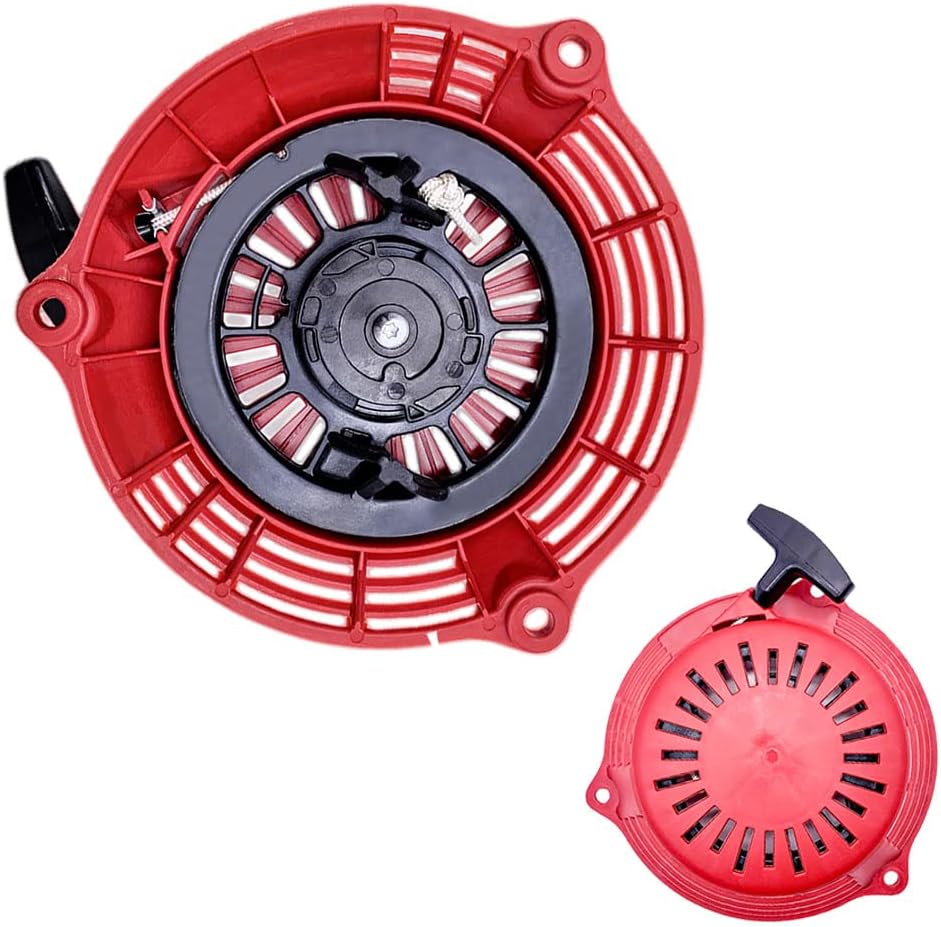
The Aniro Moto GCV160 recoil starter is an aftermarket pull start assembly designed for Honda GC135, GC160, GCV135, and GCV160 engines found in many lawn mowers, pressure washers, and generators. It is an ideal replacement part for homeowners and DIY enthusiasts who need to restore starting capability to their equipment without spending on a full OEM part.
Installing this recoil starter is straightforward with basic tools. The assembly engages the engine crankshaft reliably, providing consistent pull start action. Users will appreciate the easy fitment and the fact that it comes with all necessary hardware. Its lightweight plastic construction helps keep the overall weight low, but it still feels solid enough for typical residential use.
Build quality is decent for the price point. The plastic casing is adequately thick, and the spring mechanism feels responsive. While it may not match the durability of the original Honda part in heavy commercial applications, for weekly mowing or occasional pressure washing it should perform well. The three-month warranty adds a layer of confidence.
One realistic limitation is that the plastic components might wear faster under frequent, heavy use. Some installations may require slight adjustments to align the starter properly. Overall, this is a smart buy for anyone looking to fix their push mower or pressure washer starter on a budget. It offers great value and gets the job done for typical home maintenance tasks.
Package Dimensions: 9.33 x 9.13 x 1.65 inches
Item Weight: 1 pound
Model Number: NBX070
ASIN: B0727YBPJF
Best Sellers Rank: #18,690 in Patio, Lawn & Garden, #173 in Lawn Mower Parts

Pros
- Affordable and easy to use with clear instructions
- Precise leveling leads to a healthier, more attractive lawn
- Durable plastic design holds up to regular workshop use
- Compatible with a wide range of lawn mower brands and models
Cons
- Requires user to ensure tires are properly inflated before use for accurate leveling
- Plastic construction may not withstand heavy impact if dropped repeatedly
- Only measures blade height; does not include a leveling bubble or digital readout
The Oregon Small Engine Deck Leveling Gauge is a straightforward maintenance tool designed to ensure your lawn mower deck sits perfectly level. An unlevel deck causes uneven cutting, scalping, and accelerated wear on blades and spindles. This gauge solves that problem by giving you a quick, accurate way to measure blade tip height from the ground.
This tool is best suited for homeowners and DIY enthusiasts who want a professional-looking lawn without the hassle of trial-and-error adjustments. It's equally useful for small engine mechanics or anyone maintaining a riding mower or push mower. The gauge works on almost any deck style, making it a versatile addition to your workshop.
In real-world use, the gauge is refreshingly simple. Park on level ground, set your mower to the desired cutting height, and place the gauge under each blade tip. The clear markings let you see instantly if both sides are equal and if the front is slightly lower than the back. Adjust the deck hangers until both sides match, and you're done. The pro tip about checking tire pressure before leveling is a practical reminder that saves time.
Build quality is solid for a plastic tool. It's lightweight and won't rust, so you can toss it in a toolbox or hang it in the garage without worry. The only real limitation is that you must have the mower on level ground and tires properly inflated for the reading to be accurate. Also, if you're used to a digital level or bubble gauge, this might feel a bit basic. But for the price, it does exactly what it promises.
Overall, the Oregon Deck Leveling Gauge is a no-nonsense purchase for anyone serious about lawn care. It pays for itself in fewer blade replacements and a noticeably better cut. If you're tired of uneven stripes or patches in your yard, grab this gauge and spend ten minutes leveling your deck. You'll see the difference on the first mow.

Pros
- Live tachometer makes carburetor adjustments, idle setting, and governor checks simple
- Fully potted IP-68 sealed construction withstands heavy washdowns and bad weather
- Direct plug-in fit on factory pre-wired zero-turn mowers eliminates wire splicing
- Compact footprint snaps flush into standard mower and tractor instrument panels
Cons
- Sealed internal battery cannot be replaced once it fully discharges over years of service
- Inductive wire lead requires careful routing away from hot exhaust manifolds on universal setups
- Dashboard cutout may require minor filing if retrofitting older non-standard brackets
Small engines on commercial mowers, pressure washers, and generators run in hot, dusty, and high-vibration conditions where routine upkeep makes or breaks equipment life. The Hardline Products N310 Digital Hour Meter and Tachometer is engineered specifically to take the guesswork out of engine maintenance. Designed as a direct drop-in replacement for factory meters across major brands like Cub Cadet, Bad Boy, Toro, Troy-Bilt, and MTD, this unit serves as a dependable diagnostic and run-time monitor for commercial landscapers, small engine mechanics, and serious DIY property owners.
Where this gauge shines is its smart dual-display operation. When your engine is off, the LCD screen displays total accumulated operating hours up to 9,999.9 in tenths of an hour, allowing you to log oil changes, valve clearances, and belt inspections right on schedule. As soon as the engine fires up, the display switches automatically to an active tachometer reading up to 15,999 RPM. That live feedback is gold when you are tuning carburetors, setting governed top speeds, or diagnosing engine bog under load.
Build quality matches commercial turf standards. The electronics are 100% epoxy-encapsulated inside an IP-68 rated waterproof housing, meaning you can power wash the deck and console without fogging the lens or shorting the circuit board. Shock and vibration from commercial zero-turn suspensions will not knock it out of calibration. Installation is equally practical: mowers equipped with factory hour-meter plugs accept this unit directly via spring-loaded dash clips, while machines without harness wiring can use the included inductive pickup wire wrapped around the spark plug lead.
Because the unit is fully sealed against moisture, the internal lithium power cell is non-serviceable, meaning the entire gauge will eventually need replacement when the battery reaches the end of its multi-year life. However, given the affordable entry cost, flawless weather sealing, and USA-based assembly, the N310 is one of the most reliable upgrades you can bolt onto your power equipment to protect your small engine investment.
Commercial Zero-Turn Mowers: Perfect for landscape professionals running Cub Cadet Pro series, Bad Boy, Toro, or Troy-Bilt rigs who bill maintenance by machine run hours or need to maintain warranty compliance.
Small Engine Diagnostics: Indispensable tool for workshop mechanics setting proper idle RPMs and wide-open throttle governor limits on Briggs and Stratton, Kohler, or Kawasaki engines.
Backup Generators and Pumps: Ideal add-on for stationary utility equipment lacking factory instrument clusters to track fuel consumption cycles and oil change intervals.

Pros
- Reliable Briggs & Stratton engine starts easily even after sitting for weeks
- Lightweight construction makes it easy to push and lift over obstacles
- Easy tool-free assembly and height adjustment; includes oil for first start
- Quiet operation for a gas mower, acceptable for residential neighborhoods
Cons
- Wheels may feel less durable than more expensive models, with some reports of adjustment pins popping out
- Side discharge only no mulching or bagging capability without separate accessories
- Not self-propelled, so larger lawns or hilly terrain may require more effort
The SENIX 20-inch gas push mower (model LSPG-L3) is a straightforward, no-frills walk-behind mower designed for homeowners with small to medium lawns. It pairs a 125cc Briggs and Stratton Prime n Pull engine with a stamped steel deck, offering a solid blend of power and durability at a price that won't break the bank. This isn't a commercial-grade machine, but for the average DIYer or contractor looking for a lightweight backup mower to handle tight spots around the jobsite, it gets the job done without fuss.
Real-world performance is where this mower shines for its class. The engine fires up on the first or second pull, even after sitting for a few weeks, as verified by multiple reviewers. It chews through tall grass and light weeds with ease, though it may stall in extremely dense patches. The 20-inch cutting width is practical for most suburban lots, and the 5-position height adjustment (1.25 to 3.75 inches) gives you solid control over cut quality. The side discharge chute with vortex tunnel design spreads clippings evenly, though you'll need to plan your mowing direction in tight quarters to avoid leaving piles.
Build quality is decent for the price point. The steel deck feels sturdy enough for years of use, and the fold-down handle is a nice touch for compact storage. Assembly is truly tool-free you can snap the handle in place and tighten a few wing nuts in minutes. However, some users have noted the wheels can feel a bit cheap, with occasional reports of the height adjustment lever popping out during use. Pushing effort is light thanks to the 49-pound weight and 7-inch wheels, making it easy to maneuver around landscaping and tight corners.
Ergonomics are generally good, with a comfortable plastic handlebar. The Prime n Pull startup reduces strain, though the pull cord recoil can produce a loud twang if the handle flexes too far. One notable drawback is the lack of mulching or bagging options out of the box it only side discharges. If you need a 3-in-1 mower, you'll need to look at the 21-inch or 22-inch SENIX models or buy an aftermarket bagger. Also, it's not self-propelled, so on larger lawns or gentle slopes you'll be doing the pushing yourself.
Overall, the SENIX 20-inch gas mower is a smart buy for homeowners who want reliable cutting performance without paying for features they don't need. It's especially suited for those with small yards, or as a light duty trim mower for contractors who already have a rider. If you catch it on sale near $200, it's an exceptional value. Just be aware of its limitations around wheel durability and lack of mulching, and it will serve you well for many seasons.


Pros
- Strong 4.4 HP power output handles heavy grass and weeds with ease
- Durable internal components like cast iron liner and forged crank for extended lifespan
- Quick start with primer bulb and reliable recoil start system
- Affordable price point makes it a great value for budget-conscious DIYers
Cons
- Some users report mounting bolt holes not being pre-threaded, requiring extra effort for installation
- Engine may have minor quality control issues like carburetor leaks or hard starting in some units
- Lacks a throttle control cable setup, so it runs at a fixed governed RPM which may not suit all applications
The Aceup Energy AE170V is a 173cc, 4.4 HP vertical shaft gas engine designed primarily as a replacement for lawn mowers and other small outdoor power equipment. It's a straightforward 4-stroke OHV engine with a recoil start and a primer bulb for easier cold starts. If your old mower motor has given up the ghost, this engine offers a cost-effective way to bring it back to life without buying a whole new machine.
This engine is best suited for homeowners and DIYers who are comfortable with basic mechanical work. It's not a high-end commercial unit, but it provides enough grunt for residential lawn care. With a max torque of 8.5 Nm at 2500 RPM, it can handle thick grass and even some light weeds without bogging down. The vertical shaft measures 7/8 inch in diameter and 3.16 inches long, which fits many common mower decks from brands like Craftsman and Huskee.
Build quality is decent for the price. The engine uses a metal camshaft, forged crankshaft, and a cast iron cylinder liner, which are all good signs for longevity. The forced air cooling system helps prevent overheating during longer mowing sessions. At just 18.1 pounds, it's light enough to lift and bolt onto a mower deck without needing a second person. However, some users have noted that the mounting holes on the engine block may not be threaded, so you might need to tap them or use self-tapping bolts. Also, a few reviewers reported issues with carburetor leaks or hard starting, though the seller appears responsive to resolving problems.
One realistic drawback is that this engine runs at a governed, fixed RPM. There's no throttle control cable, so it's not ideal for applications where you need variable speed, like a log splitter or a tiller. It's really built for a lawn mower where constant speed is fine. Additionally, the engine does not come with oil, so you'll need to add that before first use. The included spark plug wrench is a nice touch, but the manual is basic.
Overall, the Aceup Energy 173cc engine is a solid, budget-friendly replacement for homeowners looking to resurrect a mower. If you're handy with tools and don't mind the possibility of minor fitment adjustments, it offers good power and value. For commercial use or critical applications, you might want to spend more on a premium brand. But for the average DIYer, this engine gets the job done without breaking the bank.
Brand: Aceup Energy
Model: AE170V
Engine Type: 4-Stroke OHV, Air Cooled
Displacement: 173cc
Max Power: 4.4 HP at 3600 RPM
Max Torque: 8.5 Nm at 2500 RPM
Shaft Diameter: 7/8 inch
Shaft Length: 3.16 inches
Keyway: 3/16 inch
Shaft End Thread: 3/8-24 UNF
Fuel Type: Gasoline (87 octane or higher)
Fuel Tank Capacity: 0.9 gallons
Start Method: Recoil Start with Primer
Ignition System: Magneto
Weight: 18.1 pounds
Dimensions: 12 x 11.8 x 9 inches
Warranty: 1-year limited
This engine is primarily designed as a direct replacement for walk-behind lawn mowers with vertical shaft configurations. It works well for Craftsman, Huskee, and similar brands where the bolt pattern and shaft dimensions match. Some users have also successfully adapted it for log splitters and field trimmers with minor modifications. It's best suited for residential lawn care where you need reliable power for weekly mowing. Not recommended for commercial zero-turn mowers or equipment requiring variable throttle control.
Pros
- Combines hour meter, tachometer, and service reminder in one compact unit.
- Waterproof and shockproof enough for outdoor equipment and rough handling.
- Simple 2-wire hookup that you can do with basic hand tools.
Cons
- Internal battery is not user-replaceable without opening the unit, which may void the warranty.
- Display lacks a backlight, so it can be hard to read at night or in dimly lit sheds.
- No digital tachometer reading while the engine is off; only shows total hours at rest.
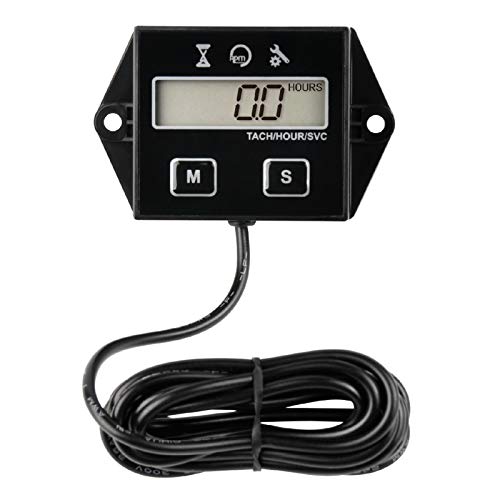
The Runleader Digital Hour Meter Tachometer is a compact, multi-function gauge designed for owners of gas-powered equipment like lawn mowers, tractors, generators, marine outboards, ATVs, and snowmobiles. It does three key jobs: it records total engine run time, shows real-time RPM while the engine is running, and lets you set a maintenance interval that flashes a service warning when its time for an oil change, filter swap, or tune-up. For DIYers and light commercial users who maintain a fleet of small engines, this one device can replace separate hour meters and tachometers while adding a helpful reminder feature.
In the workshop or on the jobsite, this unit shines in simplicity. Installation requires just two wires: one connects to the engine kill switch or ignition coil, and the other to ground. Once wired, it automatically detects the engine firing pattern (you can also program it for specific patterns). During use, the tachometer reads RPM accurately enough to set idle speed or diagnose performance issues. The hour meter logs run time in tenths of an hour, perfect for sticking to maintenance schedules. The service reminder counts down from whatever interval you set and flashes an icon when service is due, so you do not have to rely on memory or a grease-pen note on the air filter housing.
Build quality is respectable for the price. The housing has an IP65 waterproof rating, meaning it resists rain, hose splashes, and dust. That is essential for equipment left outside or used in wet conditions. The display is clear and easy to read in daylight, though it lacks a backlight, so it can be tough to see in a dark shed or at night. A small toggle button lets you cycle through total hours, trip hours, tachometer, and programmable settings, and you can manually shut off the unit to save battery life when storing equipment for long periods. The internal CR2450 battery holds the memory and powers the screen when the engine is off, so you always see total hours.
The main downside is the battery situation. It is a button cell inside the sealed housing, and if it dies, you have to pry open the case to replace it, which may compromise the weather seal. Also, the lack of backlight is a real inconvenience for anyone working in low-light conditions. The display does not show RPM when the engine is off, only total hours, so you cannot use it as a standalone tachometer for bench testing. Still, for its core purpose tracking runtime and reminding you of maintenance this Runleader unit delivers reliable, no-nonsense performance at a very reasonable price.
Overall, the Runleader Digital Hour Meter Tachometer is a worthwhile buy for homeowners with several gas tools, weekend mechanics restoring classic tractors, or contractors who want to log hours on their mowers and generators. It is easy to install, rugged enough for outdoor use, and the maintenance reminder alone can save you from costly neglect. If you need a simple, combined hour meter and tachometer with a programmable service alert, this is a solid choice.
Deep Dive: Matching a Lawn Mower Engine to the Job
The best lawn mower engine is the one specified for the mower or replacement application, not automatically the one with the largest displacement. Start by deciding whether you are buying a complete mower, replacing an engine, or repairing an existing engine. Those choices involve different fitment checks and cannot be compared on engine size alone. The listings here include all three types of purchase, along with accessories that support maintenance or mower operation.
Separate complete mowers from replacement engines
A complete mower includes a cutting system and chassis as well as its engine, so its overall suitability depends on more than the power unit. The SENIX 20-Inch Gas Lawn Mower with 125 cc 4-Cycle is listed as a push mower with a 20-inch cutting width, a steel deck, side discharge, and a five-position height adjustment from 1.25 to 3.75 inches. Its listing identifies a Briggs & Stratton 125 cc four-cycle E300 engine with Prime n Pull starting. That makes it a mower purchase, not a standalone engine replacement.
The Aceup Energy Gas Engine Vertical Shaft, by contrast, is listed as a separate 173 cc, four-stroke OHV gas engine with recoil start and a primer. The specifications include a 7/8-inch shaft diameter, a 3.16-inch shaft length, a 3/16-inch keyway, and an end tapped 3/8-24 UNF. Those interface details are more useful for an engine-replacement decision than displacement by itself. They do not establish compatibility with a particular mower unless that mower’s required mounting and shaft specifications match.
For an existing mower, identify its make, exact model, engine model and code where available, and the equipment’s serial or frame information. Compare those identifiers with the engine or replacement-part listing and the mower manufacturer’s parts information. Similar engine capacity or a shared brand name does not prove the crankshaft, mounting pattern, controls, or other connections are correct. If a required specification is missing, ask the seller or a qualified service provider rather than assuming fit.
What displacement tells you, and what it cannot
Engine displacement describes the engine’s stated size, but it is not a direct measurement of mowing speed, cut quality, fuel use, or performance in thick grass. The supplied options include a 125 cc engine on the SENIX complete mower and a 173 cc Aceup Energy standalone engine. Their different product roles and configurations mean those figures alone do not establish which will work better in a given yard. Deck design, blade condition, mower setup, and the manufacturer’s intended application also matter.
A buyer choosing a complete mower should consider the cutting width, height adjustment, clipping management, and handling needs alongside engine information. The SENIX listing specifies a 20-inch cutting width and side discharge, but it does not establish bagging or mulching capability. Its five-position adjustment is given with a 1.25-to-3.75-inch range, a useful distinction because the number of positions and the actual height range describe different aspects of adjustment. The listed dimensions do not establish the mower’s full footprint or whether it will pass through a particular gate.
The SENIX product description says the mower is intended for small to medium yards and identifies a fold-down handle for storage. Treat that as product positioning, not a promise of coverage for every property. Yard layout, obstacles, grass conditions, and storage space affect whether the mower is practical. The listing also states that engine oil is included and describes a two-year limited warranty, so check the current package and warranty terms before purchase.
Replacement engine fit depends on interfaces
For a standalone replacement engine, shaft dimensions and configuration are key initial checks, but they are not a complete fitment confirmation. The Aceup listing gives shaft diameter, length, keyway, and tapped-end details, and describes a vertical-shaft engine. A mower may require a different shaft arrangement or additional specifications that are not supplied here. Confirm the complete engine requirements for the exact mower before ordering.
The product listing also states a maximum of 4.4 horsepower at 3,600 rpm and a maximum torque of 8.5 N.m at 2,500 rpm. These are listed engine specifications, not independent measurements of mower cutting performance. The listing describes an air-cooled OHV four-stroke design, a 0.9-gallon fuel tank, and a preference for gasoline grade 87 or higher. Follow the engine maker’s current instructions for fuel, installation, operation, and maintenance; do not infer that every mower can use this engine from those specifications.
The Aceup product description states EPA compliance, functional testing before shipment, a one-year limited warranty under normal use, and lifetime technical guidance. Those are claims made in the supplied listing, not independent verification. Warranty coverage can depend on conditions and exclusions, so review the seller’s and manufacturer’s documentation. If fitment or installation requirements are unclear, professional service is a sensible option.
Maintenance parts are not engine replacements
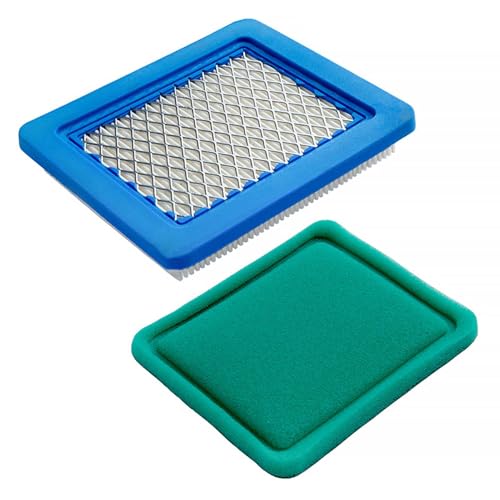
Several products in the list serve maintenance or repair needs rather than replacing an engine. The HOODELL 491588s Air Filter with Pre Filter is listed as compatible with specified 491588-family references and certain small-engine applications, including stated 625, 675, and 725 series. Its listing describes a filter and washable pre-filter. Check the existing filter number and engine or mower model before ordering; a broad application description is not proof that the filter fits every mower from the named brands.
The abliubale 799584 Lawnmower Carburetor Kit is listed for specified Briggs & Stratton 550EX, 625EX, 675EX, and 725EXi series engines and includes carburetor reference numbers such as 799584, 594057, and 594058. Its stated package contents include seals, fuel line, clamps, an air filter, and a spark plug. That is a repair kit, not a complete engine, and its listed compatibility should be checked against the exact engine model and part number. Fuel-system work has safety implications, so use the manufacturer’s service guidance or qualified assistance if the procedure is unfamiliar.
The GCV160 Pull Start Recoil Starter Compatible listing identifies Honda GC135, GC160, GCV135, and GCV160 engines and references several replacement numbers. The Genuine OEM Honda V-belt listing gives specific HRR216K9 model suffixes and explicitly tells buyers to verify the engine or equipment model, code type, and serial or frame number. These examples show why a model family alone may not settle fitment. Check the exact suffix and part reference rather than relying on appearance or a general engine label.
Other listed items support the mower or its upkeep but do not determine which engine is correct. The Maxpower 331528B is a mulching blade for some 21-inch MTD, Cub Cadet, Troy-Bilt, and Craftsman mowers, with specified OEM references and a bow-tie center-hole pattern. The Oregon Small Engine Deck Leveling Gauge is a deck-related tool, while the Hardline and Runleader products are hour meters or tachometers. Their presence in the same collection does not make them engine components or establish compatibility with every mower.
Blade compatibility deserves separate attention because cutting width alone is not enough to choose a replacement. The Maxpower listing says to match the current blade OEM number and supplies center-hole details. A mower’s blade mounting pattern and specified part number control the selection, not simply whether the deck is described as a common size. For more context on a separate cutting-system component, this mower blade replacement guide covers blade replacement considerations.
Use service tracking to plan upkeep
An hour meter can help an owner track engine runtime, but it does not identify the correct engine or diagnose a mechanical problem. The Hardline Products USA Digital Hour Meter listing describes runtime tracking up to 9,999.9 hours and tachometer display up to 15,999 rpm, with an inductive pickup option for units without the described pre-wiring. It lists compatibility with specified mower families and replacement references. Confirm the mower model and wiring arrangement before choosing it.
The Runleader Digital Hour Meter Tachometer listing describes an hour meter, tachometer, programmable service reminder, and an internal battery. It is listed for gas-powered equipment categories, but that broad description should not substitute for checking installation requirements and the instructions. Runtime records can help owners follow service intervals in the equipment manual. They do not replace the manufacturer’s maintenance schedule or confirm that a particular service is needed.
Routine upkeep should follow the engine and mower manufacturers’ instructions, including the specified oil, air-filter service, spark-plug reference, and seasonal storage guidance. Product listings in this collection do not provide a complete maintenance schedule for every engine. Do not use a replacement filter, plug, carburetor, belt, or blade solely because it fits a broad product category. Exact model and part-number checks reduce avoidable ordering mistakes.
A practical decision before ordering
If you need a complete walk-behind mower, assess the mower as a system: cutting width, height settings, discharge method, starting design, storage, and warranty all matter alongside the engine. If you need a replacement engine, begin with the mower’s documented engine requirements and compare the shaft and mounting specifications, not just displacement. If the mower runs but needs service, identify the faulty component and use its exact model or OEM reference to select a compatible part. Those paths answer different versions of the question about which engine is best.
Before checkout, verify model suffixes, serial information where required, part numbers, shaft details, and package contents. Confirm whether the product is a complete mower, a standalone engine, or an accessory, and review warranty terms and installation guidance. Where a listing leaves a compatibility point unresolved, pause and verify it with the manufacturer or seller. The most useful choice is the one documented for the intended mower and job, not an engine selected from displacement alone.


Write Your Review
No reviews yet. Be the first to share your experience!