


Most new lawn mower blades arrive with a factory-sharpened edge designed to cut cleanly right out of the box, so immediate sharpening is rarely necessary. You should only sharpen a new mower blade if the edge is visibly dull, chipped, or inconsistent after a careful visual inspection. Many homeowners discover a worn or damaged blade after mowing, but for a fresh replacement, the priority is verifying fit and balance rather than adding metal removal.
Before reaching for a grinder or drill attachment, confirm that the blade matches your mower’s deck configuration, center hole geometry, and blade quantity. A properly balanced blade reduces vibration and protects the spindle assembly. If the edge looks sharp and the blade is not bent, leave it as is. For guidance on related maintenance tasks, see our lawnmower blade cost and replacement guide to understand the value of preserving factory edges.

Pros
- Powerful 700W motor handles tough blade restoration quickly.
- Integrated dust collection keeps metal shavings contained for a cleaner workspace.
- Includes three grit sandpapers for complete sharpening stages.
- Heavy steel base provides stability and reduces vibration during use.
Cons
- No blade holder or guide included, requiring careful hand positioning.
- Some assembly and setup may be needed before first use.
The WEWEAL 7-Inch Lawn Mower Blade Sharpener is a benchtop grinder designed specifically for restoring dull, chipped, or damaged mower blades to a sharp edge. Unlike manual files or angle grinders, this dedicated sharpener offers a more controlled and efficient process, making it a valuable tool for homeowners who prefer to maintain their own equipment. With a 700W motor, built-in dust collection, and a set of three sandpaper grits, it aims to simplify blade maintenance while keeping your workspace clean.
This sharpener is best suited for homeowners, lawn care enthusiasts, and gardeners who regularly mow their lawns and want to keep their blades cutting cleanly. It's also a practical option for budget-conscious shoppers who prefer to sharpen blades themselves rather than pay for professional sharpening or replace blades frequently. The product description highlights compatibility with a wide range of blade types, including high lift, low lift, gator, and flat designs, so it should work with most standard walk-behind mowers and some riding mower blades.
In terms of real-world performance, the 700W motor provides ample power for grinding through hardened steel. The included 60-grit disc handles coarse grinding on heavily damaged edges, while the 120-grit refines the edge, and the 320-grit produces a smooth finish. The hook-and-loop system allows quick sandpaper changes, which is convenient when moving between stages. The built-in dust collection case captures most metal shavings, reducing mess and making cleanup easier. According to the manufacturer, it captures up to 99% of particles, which is a significant advantage over open bench grinders.
Build quality appears solid with a heavy-duty steel base that adds stability and helps minimize vibration. The ceramic wheel is designed for longevity and consistent sharpening. The detachable dust box is a thoughtful feature that allows you to empty shavings without stopping work. The overall dimensions (13 x 9.3 x 10.4 inches) mean it will occupy a permanent spot on your workbench, but it's not overly large.
Ease of use is straightforward: mount the sharpener on a stable surface, attach the desired sandpaper disc, and guide the blade along the wheel. However, there is no included blade guide or holder, so you'll need to manually control the angle and pressure. This requires a steady hand, especially for beginners. Maintenance of the sharpener itself is minimal: occasional cleaning of the dust box and replacement of sandpaper discs as they wear. The product does not include a blade holder, which some users may find as a limitation.
Realistic limitations include the price point, which is higher than manual sharpening tools but lower than industrial-grade sharpeners. Also, the sharpener is not designed for very wide blades or those with complex profiles. For most standard mower blades, it should work well. Overall, if you value a clean workspace, consistent results, and have multiple blades to maintain, the WEWEAL 7-Inch Lawn Mower Blade Sharpener is a worthwhile investment for your lawn care toolkit.
The WEWEAL sharpener uses a 700W motor to drive a ceramic wheel at high speed, allowing it to grind through steel efficiently. The three included sandpaper grits (60, 120, 320) cover the full sharpening cycle: coarse grinding to reshape the edge, medium sharpening to refine it, and fine finishing to polish. The hook-and-loop attachment makes switching between grits quick, so you can move through the stages without delay. The dust collection system is a standout feature, capturing most metal particles and keeping your bench clean. For homeowners who sharpen blades seasonally, this system reduces cleanup time significantly.
The sharpener features a reinforced steel base that adds weight and stability, reducing vibration during operation. The ceramic wheel is durable and resists wear, maintaining its shape over many sharpening sessions. The housing appears to be impact-resistant, and the detachable dust box is made of sturdy plastic. Overall, the build quality seems designed for regular use in a home workshop. The product dimensions are compact enough to fit on most benches, and the base has mounting holes if you want to secure it permanently. The manufacturer provides a standard warranty, though the exact length is not specified in the product data.

Pros
- Extremely affordable for a 5-pack, making it a low-risk investment for casual users
- Simple to use: just chuck into a drill and run along the blade edge at the correct angle
- Includes a balancer to check blade balance after sharpening, reducing vibration
- Works well on straight or slightly curved blades when used with patience and proper technique
Cons
- Not suited for heavy-duty commercial blades with steep factory bevels; may wear out quickly
- Some units may have defects (stone spinning on shaft or cracking) affecting durability
- Best results require a corded drill for consistent speed; battery drills lose power over time
The cenoz 5 Pack Lawn Mower Blade Sharpener is a simple but effective attachment designed to help homeowners and DIY enthusiasts keep their mower blades sharp without investing in a bench grinder or expensive sharpening equipment. It fits any standard power drill (corded models work best) and uses a double-layer corundum grinding stone to restore a sharp edge on dull blades. This is a budget-friendly solution for anyone who wants smoother cuts and healthier grass without frequent blade replacements.
This sharpener is best suited for homeowners with push mowers, riding tractors under 54 inches, and other light to medium-duty cutting equipment. It's not intended for professional landscapers running high-end commercial mowers with thick, hardened blades. For those users, a dedicated bench grinder or abrasive wheel setup would be more reliable. However, for the average yard care routine, the cenoz sharpener gets the job done with a little patience.
Real-world performance depends heavily on technique. Users who clamp the blade securely and move the spinning stone back and forth along the existing bevel at a consistent angle report excellent results. The built-in balancer is a nice touch for checking that the blade spins evenly after sharpening. That said, some reviewers noted the grinding wheel can spin on the shaft if not tightened fully, and a few experienced cracking or disintegration after a minute of use. These issues seem to affect a minority of units, and the low price per stone (around $2 each) makes it easy to accept occasional failures.
Build quality is adequate for the price point. The double-layer corundum material is more durable than the standard single-layer stones found in many budget sharpeners. It doesn't melt or glaze over at high drill speeds, which is a common problem with cheaper alternatives. The 5-pack means you have spares to share or keep in the garage. Just be realistic: these are consumable items that will wear down over time, especially if you sharpen multiple sets of blades each season.
Overall, the cenoz 5 Pack Lawn Mower Blade Sharpener is a solid choice for DIY homeowners who want to extend the life of their mower blades on a tight budget. It's easy to use, installs quickly, and includes extras like a balancer. The main drawbacks are the limited suitability for heavy-duty blades and the occasional quality control issue. If you have a standard push mower or a small riding mower and don't mind spending a few minutes per blade, this set offers great value. For professionals or those with high-end equipment, look elsewhere.

Pros
- Extremely affordable and widely compatible with most residential mower blades.
- Simple to use: just chuck it in a drill and run along the blade edge.
- Including both sharpener and balancer means you get a complete blade maintenance solution.
- Lightweight and portable, perfect for small workshops and home garages.
Cons
- Requires a drill to operate, so you need one on hand.
- Manual balancing takes a bit of patience to get right compared to electronic balancers.
- Not ideal for heavy commercial use or high-volume shops where speed is critical.
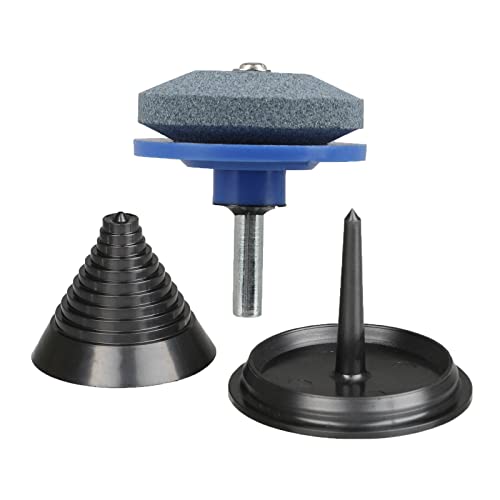
The Arnold BSK-1 is a straightforward sharpening and balancing kit designed for lawn mower blades. It turns your regular electric drill into a reliable sharpening tool, making it easy to maintain a clean cutting edge without investing in a dedicated grinder. The kit includes a cone-shaped sharpening stone and a simple static balancer, both built to handle blades from walk-behind mowers, lawn tractors, and zero-turn machines.
This kit is best suited for homeowners and DIYers who prefer to handle their own mower maintenance rather than taking blades to a shop. It's also useful for small engine mechanics who need an affordable backup method. But if you're a professional landscaper sharpening dozens of blades a week, you'll likely want a faster, more automated system.
In real-world use, the sharpener works quickly. Chuck it into a drill, run the stone along the blade's edge at a shallow angle, and you'll see burrs form within seconds. The vibration-free claim holds up -- the stone spins smoothly, which helps avoid gouging the blade. The balancer is straightforward: hang the blade on the cone and see which side drops. Rotate a few times to confirm. It's not fancy, but it effectively reveals if the blade is heavy on one side.
Build quality is typical for a budget tool. The sharpening stone is abrasive and should last through several sharpenings. The balancer is made of plastic and a metal cone. It's lightweight (just over two ounces) and stores easily in a drawer. For the price, durability is acceptable for occasional weekend usage. You won't hesitate to toss it in a toolbox or tool bag.
The main drawback is that you need a drill, and the process is manual. Balancing requires patience -- you'll have to grind off material from the heavy side and recheck. It's not as precise as a professional blade balancer, but it's more than enough to get a decently balanced blade. Overall, the Arnold BSK-1 is a smart buy for anyone who wants to keep their mower cutting cleanly on a budget. It's a practical addition to any workshop, especially if you already own a drill.
Color: Black
Dimensions: 3 x 7 x 10 inches
Weight: 0.24 pounds
Product Group: Outdoors
Binding: Lawn & Patio

Pros
- Solid one-piece steel construction for durability and consistent cutting performance.
- Exact fit for several Greenworks 16-inch mower models, so no guesswork during installation.
- Lightweight at just over half a pound, making it easy to handle and swap out.
- Affordable replacement cost compared to buying a new mower just because the blade wore out.
Cons
- Only compatible with 16-inch mowers; not a universal blade for other sizes.
- Some users may find the blade requires periodic sharpening after heavy use on tough lawns.
- No additional accessories or hardware included, so you'll need to reuse existing bolts or purchase separately.
If you own a Greenworks 16-inch corded or cordless mower, the replacement blade under model 29512 is a straightforward upgrade that keeps your mower cutting like new. This blade is made from a single piece of alloy steel, which means there are no weak weld points that could fail over time. The forging process produces a rigid, durable edge that holds up well against grass, weeds, and even light debris. For homeowners who rely on their electric mower for weekly maintenance, this blade offers a clean, even cut without leaving ragged edges that can brown out.
The installation process is simple. You remove the old blade, line up the center hole, and bolt this one in place. The 15.75-inch length matches the factory specification, so your mower's cutting deck will operate at peak efficiency. Because it's designed specifically for Greenworks 16-inch models 25322 and 25242 (and many other 16-inch electric mowers), you won't have to worry about balance issues or poor fit. Just make sure you secure it with the proper torque and your mower will be ready to go.
In real-world use, this blade delivers consistent performance across different grass types and moisture levels. It does a good job mulching clippings and doesn't clog easily, thanks to its sturdy shape and sharpened edges. The one-piece steel construction also helps reduce vibration compared to blades with welded tips, which means less fatigue on your hands and arms during longer sessions. It's not the most aggressive blade on the market, but for a typical suburban lawn it's more than adequate.
Build quality is solid. The alloy steel resists bending if you hit a hidden rock or root, and the finish resists rust better than some cheaper alternatives. That said, like any mower blade, it will eventually need sharpening. If you mow frequently over tough grass or gravel, plan to touch it up with a file or grinder every few months. The lightweight design (just under 0.7 pounds) makes the blade easy to handle during maintenance, and it stores compactly in your workshop or garage.
One limitation is that it's not a universal blade. It only fits 16-inch mowers with the specific center hole pattern. Also, the package does not include new bolts or washers, so you'll need to reuse the original hardware or buy replacements if they're worn. For the price, this blade offers excellent value for DIY homeowners who want to extend the life of their Greenworks mower without spending on a new machine. It's a practical, reliable choice that gets the job done neatly.
Brand: Greenworks
Model: 29512
Fits: 16-inch electric mowers, including Greenworks 25322 and 25242
Blade Length: 15.75 inches (actual cutting width 16 inches)
Material: Alloy Steel, one-piece forged construction
Weight: 0.69 pounds
Dimensions: 15.75 x 1.97 x 0.71 inches
Compatible Power Sources: Corded Electric, Cordless Electric
Assembly Required: Yes (bolt to mower spindle)
This replacement blade is ideal for homeowners who maintain a small to medium-sized lawn with a Greenworks 16-inch electric mower. It's perfect for routine weekly mowing of Bermuda, fescue, or rye grass. Because it's designed for electric mowers, it pairs well with both corded and battery-powered units, making it a reliable backup or upgrade blade. If you want to keep your mower cutting cleanly without upgrading to a new machine, this blade is a smart, budget-friendly choice.

Pros
- Heavy-duty American steel build offers dependable durability against tough grass and seasonal yard debris
- Mulching-optimized wing profile promotes fine clipping recirculation and smoother lawn discharge
- Reduces clipping clumps on sidewalks and driveways, making post-mow leaf blower cleanup faster
- Manufactured under rigorous factory balancing standards to help protect mower spindles and engines
Cons
- Requires verifying your mower deck clearance and 1-inch round spindle dimensions before purchase
- DIY replacement requires standard safety precautions, including work gloves and a properly torqued mounting bolt
A crisp, clean cut is the foundation of a healthy lawn, and having a sharp, well-balanced blade under your mower deck makes all the difference. The Oregon 21-Inch Universal Lawn Mower Blade (measuring 20-3/4 inches in total length) is designed as a direct replacement component for standard 21-inch residential walk-behind mowers. Manufactured in the United States, this heavy-duty blade provides suburban homeowners, budget-conscious property caretakers, and DIY lawn enthusiasts with a dependable way to restore cutting performance without paying steep original-equipment prices.
In everyday yard care, the cutting performance of this replacement blade helps maintain neat grass height across front lawns, backyards, and side strips. Its raised rear lift geometry creates strong under-deck airflow, pulling grass blades upright just before the cutting edge strikes. This air movement also enhances mulching capability, chopping clippings into fine bits that decompose quickly into the soil. As a result, you spend less time blowing thick mats of grass off concrete patios, walkways, and driveway edges after your Saturday morning mowing session.
Durability is a major strength of this Oregon blade. Weighing over two pounds, the heavy-gauge steel construction resists bending or warping when brushing against minor turf obstacles such as small twigs, pine cones, or concealed tree roots. According to manufacturer specifications, each blade undergoes a 26-point quality certification standard to confirm structural integrity, finish consistency, and rotational balance. Maintaining proper balance is critical for any rotary mower, as an uneven blade can cause excessive deck vibration, increase operator fatigue, and wear out the engine spindle bearings prematurely.
Installation is straightforward for anyone comfortable handling routine lawn equipment maintenance. The blade features a standard 1-inch round center hole, fitting many common residential walk-behind mower shafts. Prior to swapping the blade, always remember to disconnect the mower spark plug boot for safety. With a standard socket wrench, a block of scrap wood to hold the blade in place, and sturdy work gloves, homeowners can swap out a dull factory blade in under fifteen minutes. Checking your deck clearance and center bolt size beforehand ensures an effortless fit.
While this universal blade fits a broad selection of standard mowers, it is always wise to confirm that your specific mower model accepts a 1-inch round center hole rather than a star, bowtie, or specialized adapter mount. For suburban residents, first-time yard care buyers, and seasoned gardeners who want a manicured lawn and less cleanup debris around their property, this Oregon replacement blade provides a practical, cost-effective solution built for seasonal longevity.
Oregon has earned a strong reputation among outdoor power equipment users for producing rugged, long-lasting replacement components. This 21-inch mower blade is forged from heavy-duty steel and weighs approximately 2.16 pounds, providing the heft needed to power through thick fescue, Bermuda, or overgrown spring turf without losing momentum.
The blade is finished with a protective coating to help resist moisture, sap, and early surface corrosion during wet spring cuttings. Furthermore, its compliance with a strict 26-point factory certification process helps guarantee consistent dimensional tolerances and balance, minimizing unnecessary engine stress over years of routine yard upkeep.
Routine maintenance keeps your mower blade running smoothly throughout the growing season. At the start of spring and midpoint of summer, inspect the cutting edge for any nicks caused by hidden gravel or curbside debris. A quick touch-up with a standard metal file or grinding wheel restores the cutting angle without removing excessive metal.
Whenever you remove the blade for sharpening, place the center hole on a cone balancer or screwdriver to confirm that both sides remain evenly weighted. Before winter shed storage, wipe the blade clean of dried grass residue and apply a light coat of household tool oil to protect the bare steel edges until spring arrives.

Pros
- Wide 15-degree to 45-degree angle range with 7 preset positions accommodates diverse blade bevel profiles.
- Durable aluminum alloy frame with ball bearings and snug bushings reduces grinding wobble.
- Extended 20.08-inch articulated arm supports blades from 1.77 inches up to 3.15 inches wide.
- Works across straight, mulching, and high-lift mower blade configurations.
- Supplied with 4 grinder adapter screws for convenient angle grinder integration.
Cons
- Requires an external angle grinder and grinding wheel, which are not included with the fixture.
- Listing contains conflicting width statements between 1.77-3.15 inches and 7-14 cm, requiring buyers to verify exact blade dimensions.
- Does not include a blade balancer to verify weight distribution after sharpening.
The Aurorasters Large Size Mower Blade Sharpener is a specialized workshop jig designed to clamp lawn mower blades securely and guide an angle grinder along the factory cutting edge. Built around a black aluminum alloy frame, this sharpening assembly features an extended 20.08-inch articulated arm, an enlarged 25mm handle, and an integrated ball bearing structure designed to stabilize the grinding pass. Rather than relying on freehand grinding, this guide system helps operators maintain a consistent edge geometry across the length of the blade.
This sharpening fixture is best suited for DIY homeowners, lawn care enthusiasts, riding mower owners, lawn tractor operators, and commercial property maintenance crews seeking to restore worn blades at home. The manufacturer states compatibility with standard straight, mulching, and high-lift lawn mower blades, making it a versatile tool for walk-behind, self-propelled, and zero-turn mower decks within the supported width parameters.
A core functional attribute of this sharpener is its 15-degree to 45-degree adjustable frame, which provides 7 discrete angle settings to match original factory edge specifications. Maintaining the proper cutting bevel is critical for clean grass cutting and minimizing turf stress, as freehand grinding often results in inconsistent angles or rounded edges. The articulated arm guides the attached grinder along the cutting face, accommodating blade widths specified in the listing between 1.77 inches and 3.15 inches.
From a construction standpoint, the sharpener utilizes wear-resistant and corrosion-resistant aluminum alloy. The manufacturer notes that close-fitting bushings sit snugly over the guide pins, working in tandem with the ball bearing assembly to reduce wobble, vibration, and mechanical slop. The unit measures approximately 13.5 x 9 x 3.4 inches in its boxed dimensions and includes 4 dedicated adapter screws to mount common angle grinder head configurations to the guide plate.
Owners must note that this product is a guiding jig and does not include an angle grinder, abrasive discs, or a blade balancing cone. Additionally, the manufacturer listing presents a slight dimensional variance, citing a blade width range of 1.77 to 3.15 inches in the main features and 7 to 14 cm in the descriptive text, so buyers should measure their mower blades prior to purchase. When sharpening blades, users should always wear personal protective equipment and ensure blades are properly balanced before reinstalling them on the mower spindle according to the equipment manufacturer instructions.
The Aurorasters sharpener features a 7-position angle selector spanning 15 degrees to 45 degrees, allowing users to match OEM bevel specifications accurately. This range covers standard push mower blades, specialized mulching blades with curved cutting profiles, and high-lift bagging blades.
Blade compatibility is listed for blade widths ranging from 1.77 inches to 3.15 inches (with descriptive references up to 7-14 cm). The package includes 4 angle grinder adapter screws designed to secure standard angle grinder housings to the articulated grinding carriage.
Constructed from aluminum alloy, the frame is designed to resist workshop moisture, rust, and surface wear. Mechanical stability is reinforced through snug-fitting bushings over guide pins and a ball bearing pivot design that prevents lateral arm drift during the grinding stroke.
Setup follows a basic four-step procedure: securing the sharpener base to a workbench or sturdy surface, setting the indexing pin to the desired bevel angle, clamping the mower blade firmly into the vise assembly, and securing the user-supplied angle grinder via the provided adapter screws.

Pros
- Excellent bagging capability - throws clippings far and fills bags quickly
- Cuts through tall, wet grass without bogging down on gas mowers
- Sturdy construction holds an edge for weeks of regular mowing
- Comes with adapters to fit many mower brands beyond standard universal blades
Cons
- Heavier than OEM blades, which can strain electric mower motors and drain batteries fast
- Mulching performance is weak - grass clumps and doesn't fall evenly
- Universal fit may require slight filing or milling on some mower decks for proper clearance
The Arnold Xtreme 21-inch lawn mower blade is a heavy-duty replacement designed for walk-behind mowers with a 21-inch cutting deck. While it's not a power tool in the traditional sense, it's an essential upgrade for anyone serious about lawn care and maintenance. This blade is built for homeowners and DIYers who want better bagging performance and are willing to trade some mulching capability for raw cutting power.
In real-world use, this blade shines when bagging. The high-lift design throws clippings hard and fast, filling the bag completely without leaving clumps behind. It also handles tall, overgrown grass impressively on gas-powered mowers, cutting through six-inch growth in a single pass according to one user. The blade's extra weight helps it maintain momentum, but that same weight can be a problem on electric mowers. Battery-powered models will drain significantly faster, and some users report the blade barely clears the deck, requiring minor modifications.
Build quality is solid. The steel is thick and holds an edge for over a month of regular use. The universal fit covers most brands, and the included adapters make it easy to install on popular models like Husqvarna and Toro. However, the universal claim is a stretch - some users had to file the center hole slightly to get the mounting pegs to align perfectly. It's not a dealbreaker, but expect a few minutes of adjustment.
The main drawback is mulching performance. Multiple reviews note that the blade fails to chop clippings finely enough for mulching, leaving visible strips of grass on the lawn. If you prefer to leave clippings as fertilizer, this isn't the blade for you. It's best used with a bagger or side discharge chute. Also, the weight makes it unsuitable for most electric mowers, so stick with gas models.
Overall, the Arnold Xtreme is a great choice if bagging is your priority and you run a gas mower. It's durable, cuts well, and offers good value for the price. Just don't expect it to mulch effectively, and be prepared for a slight fitment hassle on some decks. For homeowners with tough, tall grass who want a clean bagged lawn, this blade delivers.

Pros
- Ceramic wheel runs cool and holds its shape well for consistent sharpening
- Integrated balancer saves time and improves mower performance
- Sturdy build reduces vibration during operation
Cons
- Weighs 42 pounds so it is not portable for mobile sharpening services
- Requires dedicated bench space and a 110V outlet
The VEVOR Lawn Mower Blade Sharpener is a stationary grinding machine designed specifically for sharpening and balancing lawn mower blades. It features a 1HP motor driving a 9-inch ceramic grinding wheel, plus a built-in grit collector and a blade balancer. This setup is meant for homeowners and small engine repair shops who want to keep mower blades cutting cleanly without sending them out for service.
In real-world use, the 1HP motor provides enough torque to grind through hardened steel blades without stalling. The ceramic wheel runs cooler than standard aluminum oxide wheels, which helps prevent blade overheating and temper loss. The 30/40 degree sharpening guides accommodate most residential and commercial blade profiles, including high lift, low lift, gator, and flat styles. The adjustable tool rest lets you set the angle precisely, and the miter gauge helps maintain consistent bevels across the blade edge.
After sharpening, the included balancer is a practical addition. You mount the blade on the cone and see which side drops. Grind a little more off the heavy side until it balances. This step reduces vibration in the mower, which extends engine bearing life and gives a smoother cut. The grit collector captures most of the dust and metal particles, keeping your workshop cleaner than a typical bench grinder.
Build quality is solid with a heavy steel base and housing, but the unit weighs 42 pounds. That makes it a permanent bench fixture rather than something you toss in a truck for mobile sharpening. It also requires a standard 110V outlet, so it fits most home garages. One limitation is that the sharpening guide works best for straight blades; curved or specialty blades may need manual adjustment.
Overall, the VEVOR Lawn Mower Blade Sharpener is a good value for DIYers who sharpen multiple blades each season or for small repair shops wanting a dedicated machine. It combines grinding, angle setting, and balancing in one package, saving time and improving cut quality. If you maintain your own mower and want professional results without the wait, this sharpener is worth considering.
Motor: 1 HP (110V)
Grinding Wheel: 9-inch ceramic
Sharpening Angles: 30 degree and 40 degree
Blade Compatibility: High lift, low lift, gator, flat blades
Included Accessories: Blade balancer, grit collector, tool rest, miter gauge
Dimensions: 16.93 x 12.4 x 10.43 inches
Weight: 42.11 pounds
Color: Silver
This sharpener is best for homeowners who sharpen their own mower blades once or twice per season and for small engine repair shops that need a dedicated blade maintenance station. It handles standard residential blades up to about 22 inches long. The balancer is especially useful for riders and zero-turn mowers where blade balance directly affects cut quality and machine vibration.

When to Sharpen New Mower Blades and How to Verify Edge Quality
New blades typically do not require sharpening because manufacturers grind them to a precise angle during production. The decision to sharpen depends on the condition of the cutting edge, not the age of the blade. If the edge is smooth, continuous, and reflects light evenly, it is ready for use. Only proceed with sharpening if you see nicks, rust spots, or a rounded profile that fails to slice through grass cleanly.
| Blade Condition | Action Required | Reason |
|---|---|---|
| Sharp, smooth edge | None | Factory edge is functional |
| Visible nicks or chips | Sharpen or replace | Damages grass and unbalances blade |
| Rounded or dull edge | Sharpen | Reduces cutting efficiency |
| Bent or cracked blade | Replace immediately | Safety hazard and poor performance |
Inspect the blade in good light before installing it. Run a finger lightly across the edge, keeping your hand away from the cutting path, to feel for consistency. A factory-sharpened blade should feel sharp but not dangerously keen. If one side feels duller than the other, the blade may have been damaged in transit or storage. In such cases, a light pass with a sharpening tool can restore symmetry, but excessive material removal weakens the blade over time.
Some blades, such as high-lift or mulching designs, have complex geometries that are harder to sharpen uniformly. These blades often rely on their specific angle to generate airflow for bagging or mulching. Altering the angle with a generic sharpener can reduce lift performance. For these models, it is often safer to replace the blade if the edge is compromised rather than risking an uneven grind.
Visual and Tactile Checks for Factory Edges
Look for a consistent bevel along the entire cutting edge. A factory edge usually has a uniform angle, often between 30 and 45 degrees depending on the blade type. If the bevel is interrupted by scratches or discoloration, the edge may be compromised. Check both the top and bottom surfaces of the blade, as some designs have angled edges on both sides.
Use a magnifying glass if available to spot micro-chips that are invisible to the naked eye. These small imperfections can tear grass instead of cutting it, leading to browning at the tips. A clean cut is essential for lawn health, so a blade that tears rather than slices should not be installed. If you are unsure, compare the new blade to an old one if you still have it. The difference in edge clarity is usually obvious.
Why Over-Sharpening Harms Blade Longevity
Removing too much metal from a new blade reduces its structural integrity. Each sharpening pass removes a thin layer of steel, and repeated cycles shorten the blade’s life. For a new blade, the goal is to preserve the factory geometry, not to create a sharper edge than intended. Over-sharpening can also alter the balance point, causing vibration during operation.
Many blade sharpeners, including drill attachments and bench grinders, are designed for worn blades that have lost significant material. Using them on a new blade is often unnecessary and can create an uneven edge if the angle is not perfectly maintained. The heat generated during grinding can also affect the steel’s hardness, potentially making the edge more susceptible to chipping in the future.
Blade Types That Require Special Caution
Mulching blades and high-lift blades have specific geometries that are critical to their function. Mulching blades often have curved edges and notches that create a vacuum to cut grass multiple times. High-lift blades have a pronounced angle to direct grass into the bag. Sharpening these blades with a standard flat sharpener can destroy the intended airflow pattern. If these blades are damaged, replacement is usually the better option.
Standard straight blades are more forgiving and can be sharpened with common tools if needed. However, even for these, the factory edge is usually sufficient. If you decide to sharpen a standard blade, ensure you maintain the original angle. Many sharpening kits, such as those with adjustable guides, help maintain consistency. Without a guide, hand sharpening often results in an uneven edge that performs poorly.
Safe Sharpening Practices If Needed
If you must sharpen a new blade due to damage, follow safety guidelines strictly. Always wear eye protection and secure the blade in a vise or clamp. Never sharpen a blade while it is attached to the mower. Disconnect the spark plug wire to prevent accidental starting. Use a slow, steady motion when grinding or filing, and avoid overheating the steel. Let the blade cool naturally between passes.
After sharpening, check the balance again. An unbalanced blade can damage the spindle and deck. Use a blade balancer to verify that the blade hangs level. If it tilts to one side, the material removal was uneven. Correct this by removing more material from the heavier side, or replace the blade if the imbalance is severe. Proper balance ensures a smooth mowing experience and extends the life of your mower’s components.
- Inspect the edge for nicks, chips, or rust before installation
- Check the bevel angle for consistency along the entire length
- Feel the edge lightly to detect dullness or unevenness
- Compare with an old blade if available for reference
- Verify the center hole and mounting pattern match your mower
- Ensure the blade is not bent or cracked
Verifying Fit and Balance Before Mowing
Fit is just as important as edge quality. A blade that does not fit correctly can cause vibration, poor cutting, or even detach during operation. Check the center hole diameter and shape against your mower’s spindle. Some mowers use a square hole, while others use a round hole with a keyway. Ensure the blade orientation is correct, as many blades are directional and must be installed in a specific way.
Balance the blade using a simple balancer or a screwdriver. Hold the blade in the center and see if it hangs level. If it tilts, mark the heavier side and remove a small amount of material from that side. Recheck the balance until the blade hangs level. This step is critical for new blades, as shipping damage can sometimes affect balance. A balanced blade reduces strain on the mower’s engine and deck, leading to a cleaner cut and less wear on the machine.
For specific blade setup and installation details, refer to our mower blade setup options guide. This resource covers common mounting patterns and safety checks. Ensuring the blade is installed correctly prevents many of the issues that lead to premature wear or damage. Take the time to verify these details before your first mow.
Common Mistakes to Avoid with New Blades
One common mistake is assuming that a new blade needs sharpening to perform well. This belief often leads to unnecessary material removal and potential damage. Another error is ignoring the balance check. A new blade can arrive unbalanced due to manufacturing tolerances or shipping impacts. Skipping this step can lead to vibration and uneven cutting. Always perform a balance check before installing any blade, new or old.
Using the wrong sharpening tool is another frequent issue. Drill attachments and angle grinders are powerful but can be difficult to control. Without proper guidance, it is easy to remove too much material or create an uneven edge. If you are not experienced with sharpening tools, it is often better to replace the blade if it is damaged. Replacement blades are affordable and ensure a perfect fit and edge geometry.
Finally, neglecting to check the mounting hardware is a critical oversight. Ensure the blade bolt, washer, and nut are included and in good condition. A loose blade is a serious safety hazard. Tighten the hardware to the manufacturer’s specified torque, if available. If you do not have a torque wrench, use a standard wrench and ensure the bolt is snug. Recheck the tightness after the first few mows, as the blade can settle into place.
- Do not sharpen a new blade unless the edge is damaged
- Always check the balance before installation
- Verify the center hole and mounting pattern match your mower
- Use the correct mounting hardware and tighten securely
- Avoid using high-power grinders on delicate blade geometries
- Replace bent or cracked blades immediately
By following these guidelines, you can ensure your new mower blade performs optimally and lasts for many seasons. The key is to inspect the blade carefully, verify fit and balance, and only sharpen if absolutely necessary. This approach protects your mower, ensures a clean cut, and extends the life of your blade. Take the time to do these checks properly, and you will avoid many common issues associated with mower blade maintenance.


Write Your Review
No reviews yet. Be the first to share your experience!