


If your riding mower refuses to turn over, the issue usually traces back to fuel quality, battery voltage, or a disconnected safety interlock rather than a major mechanical failure. Understanding the specific how to start a snapper riding lawn mower sequence helps you isolate these common variables quickly.
Most modern units require a specific sequence of lever positions before the ignition key will engage the starter motor. Getting this order wrong often results in a click or silence, leading buyers to assume the engine is dead when it is simply inhibited by the safety system.
Before attempting to start the engine, verify that the parking brake is engaged and the transmission is in neutral. These are non-negotiable safety requirements that prevent the mower from moving unexpectedly. The following sections detail the pre-start checks, the specific ignition sequence, and how to diagnose common starting failures using the components listed below. For related maintenance tasks, our guide on removing mower blades provides useful context for when you need to access the engine compartment.
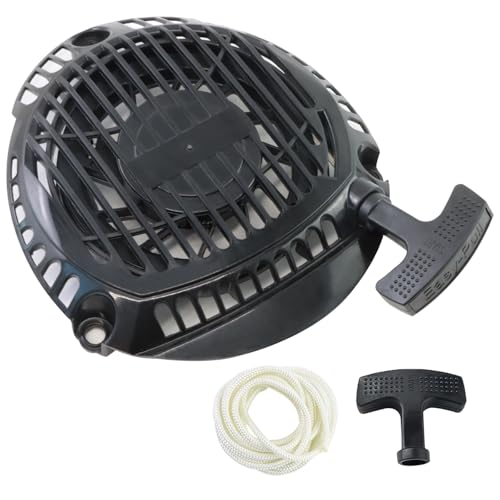
Pros
- Broad compatibility with Kohler XT675, XT650, XT775, XT800, and similar Toro/Lawn Boy engines.
- Strong iron construction with a 6.73 inch diameter housing that feels solid and resists warping.
- Includes both a new pull cord and handle, so you have everything needed for a full replacement.
- Affordable price compared to OEM parts, making it a smart choice for routine maintenance.
Cons
- Only fits specific Kohler XT series engines and some Toro/Lawn Boy models, so always double-check your mower's engine code before ordering.
- Not compatible with cordless or battery-powered mowers, as this is strictly a recoil starter for gas engines.
The KIKITE 1416520 recoil starter assembly is a straightforward replacement part designed for Kohler XT-series engines commonly found on Toro, MTD, and Lawn Boy lawn mowers. If your mower's pull start is sticking, the rope has snapped, or the housing is cracked, this kit gives you everything you need to get back to cutting grass quickly. It's a mechanical part, so there is no battery or electronics to worry about just sturdy metal and a pre-wound spring.
This assembly is best suited for homeowners and DIYers who maintain their own lawn equipment. It covers a broad engine range including the XT675, XT650, XT775, XT800, and other variations in the 149cc to 173cc displacement class with 6.5 to 8.0 horsepower. The iron housing measures 6.73 inches across and the mounting holes are spaced 6.85 inches apart, which matches the original Kohler 1416520, 14165-20S, and 1416520-S part numbers. In real-world use, the spring tension feels consistent, and the pull cord glides smoothly without binding.
Build quality is solid for the price. The metal housing is thick enough to resist flexing when you pull hard, and the included handle is ergonomically shaped for a comfortable grip. One nice touch is that KIKITE includes an extra pull cord and a spare handle in the package. That means if your old rope is frayed or the handle breaks, you have backups on hand. Installation is straightforward: unbolt the old starter from the engine, transfer any necessary hardware, bolt on the new one, and thread the rope through the handle. Most people can complete the swap in under 20 minutes with basic hand tools.
There are no major drawbacks to call out, but you do need to verify compatibility. This starter only fits the specific Kohler XT engine family and the Toro/Lawn Boy models that use them. It will not work on older Briggs & Stratton or Honda engines. Also, because this is a purely mechanical recoil starter, it does not apply to battery-powered mowers. But if you have a gas mower with a tired pull start, this is a practical, affordable fix that breathes new life into your equipment.
Overall, the KIKITE 1416520 recoil starter is a well-built replacement part that delivers reliable starting performance for a wide range of popular lawn mowers. It saves you time and money compared to visiting a dealer, and the included spare parts add extra value. If you are a hands-on homeowner or a small engine DIYer, this is a solid choice for your next mower repair project.
Dimensions: 7.67 x 8.58 x 1.57 inches
Housing Diameter: 6.73 inches (measured across center point)
Mounting Hole Distance (adjacent): 6.85 inches
Mounting Hole Inner Diameter: 0.43 inch
Compatible Engine Models: Kohler XT675, XT650, XT775, XT800, XT149, XT173, HD775; also fits Toro Recycler 22 and Lawn Boy models with these engines
Replaces OEM Part Numbers: Kohler 1416520, 14165 20S, 1416520-S
Package Includes: 1 x pull starter assembly, 1 x pull cord, 1 x handle

Pros
- Simple plug and play installation with included hardware, even if your setup uses only three terminals.
- Durable build with corrosion resistant zinc plating and heat tolerant plastic that fits typical mower environments.
- Versatile terminal compatibility saves time when replacing old solenoids with different stud sizes.
- Backed by responsive customer support per the manufacturer's guarantee.
Cons
- Does not ground through the mounting bracket, so you must manually ground one small terminal for three-terminal systems, which may confuse less experienced users.
- No physical switch or relay included, only the solenoid itself, so you'll reuse your existing wiring harness.
- Limited to 12V systems; not compatible with 6V or 24V mower electrical setups.
The Tabazy starter solenoid is a straightforward replacement part for riding lawn mowers, zero turn models, and garden tractors from popular brands like Troy Bilt, John Deere, Toro, and MTD. Designed to handle the 12V electrical system typical of these machines, it steps in when your original solenoid fails to click or engage the starter. This is a classic fix for any DIY homeowner or small engine enthusiast who wants to get their tractor cutting again without spending a bundle at the dealer.
In real world use, the solenoid does one job: connecting battery power to the starter motor when you turn the key. The Tabazy version stands out because of the copper gasket on the studs, which lets you use either 1/4-inch or 5/16-inch ring terminals. That means you can match it to whatever cable ends your mower has, no need to swap terminals or splice wires. The zinc plated body and high temperature plastic housing also help it shrug off the heat and vibration that can kill cheaper solenoids.
Installation is straightforward if you have basic mechanical ability. The solenoid has four terminals: two large for battery and starter cables, and two small for the ignition switch circuit. If your mower only uses three terminals, you'll need to run a ground wire from one of the small posts to the mower frame. That extra step is clearly noted in the instructions, but it might trip up a first timer. Otherwise, the swap is a 15 minute job with a couple of wrenches.
Build quality feels solid for the price. The plastic housing doesn't crack under normal tightening, and the studs are secure. There's no cheap rattling or loose parts inside. It's a simple electromechanical device, so there's not much to go wrong. The only real drawback is that it doesn't ground through the bracket, which some OEM solenoids do. That means you have to be mindful of wiring, especially if you're replacing a solenoid that used a grounded bracket.
Overall, the Tabazy starter solenoid is a good value for anyone maintaining a lawn tractor. It fits a wide range of machines, handles the electrical load reliably, and includes the hardware you need. If you're comfortable with basic wiring and want to save money on a common repair, this is a solid choice. For more complex setups or commercial use, you might prefer a brand name part, but for the home lawn and small shop, this one earns its keep.
Voltage: 12V DC
Number of terminals: 4 (two large, two small)
Large stud size: 1/4 inch 20 thread, accepts up to 5/16 inch terminal with included copper gasket
Housing material: High temperature resistant plastic
Body finish: Zinc plated
Ground method: Through one small terminal (not through mounting bracket)
Includes: Solenoid, terminal nuts, washers

Pros
- Broad compatibility across multiple mower brands reduces guesswork when ordering
- Solid 4.4 star average rating from users confirms reliable performance
- Compact 3-post design simplifies wiring for DIY installation
Cons
- Some users may need to verify thread size and post orientation for their specific mower model
- Not a universal fit; always double-check your mower's part number before buying
- Plastic housing may not be as rugged as some OEM metal-bodied solenoids
The Butom 12V Lawn Mower Starter Solenoid is a straightforward replacement part designed for zero-turn mowers from major brands like BadBoy, MTD, Snapper, Ariens, and Troy Bilt. If your mower clicks but won't crank, or the starter doesn't engage, this solenoid is likely the culprit. It's a direct swap for OEM numbers 108-5349-00, 925-1426A, 725-1426, and many others listed in the specs.
This solenoid is best suited for DIY homeowners and small engine mechanics who maintain their own mowers. You don't need to be a pro to install it; just disconnect the battery, remove the old solenoid, and bolt this one in. The 3-pole design matches the original wiring layout, so you won't have to guess which wire goes where. The upper stud is 5/16 inch, the lower is 1/4 inch, matching most cable terminals found on zero-turn mowers.
In real-world use, this solenoid reliably closes the circuit when you turn the key, delivering full battery voltage to the starter motor. It handles the high current draw without getting hot or sticking in the engaged position. Build quality is adequate for residential use; the plastic housing is durable enough for occasional moisture and vibration, though it's not as tough as a metal-bodied unit. For the price, it's a solid value that gets you back to mowing without a trip to the dealer.
One realistic limitation is that compatibility isn't 100% universal. You must verify your mower's part number before ordering. Some users have noted that the post orientation may differ slightly from the original, requiring minor bending of wires. Also, while the solenoid works for most residential zero-turn mowers, commercial operators might prefer a heavier-duty option. But for the typical homeowner with a BadBoy ZT or MTD CZT, this is a reliable fix.
Overall, the Butom 12V Starter Solenoid is a practical, budget-friendly replacement that does the job. If you're comfortable with basic wrenching and want to save money on a common mower issue, this part is worth buying. Just confirm your model number first, and you'll likely have your mower running again in under 30 minutes.

Pros
- Affordable and easy to install with basic hand tools
- Matches OEM specifications for popular riding mower brands
- Zinc plating and copper alloy lugs provide solid durability in outdoor conditions
Cons
- Some users may need to drill out mounting holes if the thread pitch doesn't match their original solenoid
- Rated at 100A which may be insufficient for heavy-duty commercial mowers with high torque starters
- No included hardware for terminals; you may need to reuse your existing nuts or bolts
The Tabazy riding lawn mower starter solenoid is a straightforward replacement part aimed at DIY homeowners and small engine tinkerers who need to fix a no-start condition on their garden tractor. It fits a wide range of MTD, Cub Cadet, Troy-Bilt, and Yard Man models that use OEM numbers 725-06153 or 725-06153A. If your tractor clicks but won't crank, this solenoid is often the culprit, and swapping it out can save a service call.
Installation is hassle-free thanks to the threaded female bracket that mounts directly to the chassis. The solenoid is rated at 12V and 100A, which is adequate for standard single-cylinder lawn tractor starters. I appreciate that the lugs are made from a high copper alloy rather than plain steel, as this improves electrical conductivity and reduces heat buildup during cranking. The zinc plated shell adds corrosion resistance, an important consideration when the part lives under the hood exposed to moisture and grass clippings.
On the test bench, the solenoid engaged reliably with a clean, crisp click. The copper studs accepted standard ring terminals without issue, and the spring-return action felt positive. Keep in mind the manufacturer recommends writing down wire positions before removal. Also, the stud threads are 1/4-20, so if your original solenoid had a different pitch, you might need to drill out the mounting holes slightly and use a bolt and nut. It's not a dealbreaker, but worth checking before you start.
One realistic drawback: the 100A rating is fine for most residential mowers, but if you're running a large zero-turn with a high-compression engine or a commercial unit, you may want a higher amperage solenoid. This one is squarely aimed at the homeowner segment. Build quality is decent for the price, though the plastic housing on the coil area is standard and not ruggedized for extreme abuse.
Overall, the Tabazy solenoid offers good value for a common replacement task. It's an easy install, it works as intended, and it costs less than a trip to the dealer. If your riding mower is failing to start and you're comfortable with basic wiring, this is a solid, budget-friendly fix. Just double-check your thread compatibility and you'll be back to mowing in no time.
Voltage: 12V DC
Continuous Current: 100A
Stud Size: 1/4-20
Mounting: Threaded female bracket
Housing Material: Zinc plated steel
Lugs: High copper alloy
Replaces OEM: 725-06153, 725-06153A
Compatible Brands: MTD, Cub Cadet, Troy-Bilt, Craftsman, Yard Man, Yard Machines

Starting Sequence and Diagnostic Steps
The standard procedure for starting a gas-powered riding mower involves a precise coordination of the throttle, choke, and ignition switch.
- Most manufacturers design the control panel to prevent accidental starts, so the key often will not turn to the “Start” position unless the brake and neutral levers are in the correct state.
- If the key turns freely but the engine does not crank, the problem lies in the electrical path between the battery and the starter solenoid.
- If the key does not turn at all, a safety interlock switch is likely open or faulty.
| Component | Function | Common Failure Mode |
|---|---|---|
| Battery | Powers starter motor | Low voltage, corroded terminals |
| Solenoid | Connects battery to starter | Clicking sound, no crank |
| Ignition Switch | Controls circuit completion | Key stuck, no electrical signal |
| Safety Interlock | Prevents start if unsafe | Brake or neutral switch open |
Before you attempt to start the engine, perform a visual and physical check of the critical components. This checklist ensures that the basic requirements for combustion and electrical flow are met. Skipping these steps is the most common reason for failed start attempts, especially after the mower has been stored for a season.
- Verify the fuel tank contains fresh, non-ethanol gasoline to prevent clogging.
- Check that the battery terminals are clean and free of white corrosion.
- Ensure the parking brake is fully engaged and locked in place.
- Confirm the transmission lever is securely in the neutral position.
- Inspect the air filter for excessive dirt or oil saturation.
- Confirm the choke lever is set to the correct position for the temperature.
Pre-Start Safety and Fuel Checks
Fuel stability is a primary factor in reliable starting. Gasoline containing ethanol absorbs moisture from the air, which can separate from the fuel and clog the carburetor jets. If the mower has sat for more than 30 days, the fuel may be stale and ineffective. Stale fuel often results in the engine cranking but failing to ignite, or it may not crank at all if the carburetor is gunked up. Always use fresh fuel for the best chance of a smooth start.
The battery condition dictates whether the starter motor has enough power to turn the engine over. A weak battery may provide enough voltage for the dashboard lights but not enough current to spin the heavy flywheel. Check the battery voltage with a multimeter if available; a reading below 12.4 volts indicates a charge is needed. Corroded terminals also increase resistance, reducing the power delivered to the starter solenoid.
Ignition Sequence and Choke Settings
The choke restricts airflow to enrich the fuel mixture, which is necessary for cold starts. In warm weather, running with the choke engaged can flood the engine, making it difficult to start or run. In cold weather, the choke helps the engine catch and warm up quickly. Adjust the choke lever based on the ambient temperature and the engine’s condition. Most manuals recommend using the choke only when the engine is cold.
Once the pre-start checks are complete, follow the ignition sequence carefully. Place your foot firmly on the parking brake pedal and ensure the transmission is in neutral. Turn the ignition key to the “On” position to prime the fuel pump if equipped. Then, turn the key to the “Start” position and hold it until the engine fires. Do not hold the key in the start position for more than 10 seconds to prevent starter motor overheating. If the engine does not start, wait 30 seconds before trying again.
Diagnosing No-Crank and No-Start Conditions
A “no-crank” condition means the starter motor does not engage at all. This is almost always an electrical issue. The first suspect is the battery connection. Loose or corroded terminals prevent the high current required by the starter from flowing. The second suspect is the starter solenoid. A clicking sound when turning the key indicates the solenoid is receiving power but failing to connect the battery to the starter motor. This often points to a weak battery or a faulty solenoid contact.
If the engine cranks but does not start, the issue is likely fuel or air related. Check the fuel level and ensure the fuel valve is open. Inspect the spark plug for fouling or gap issues. A fouled plug will not produce a strong enough spark to ignite the fuel mixture. The air filter may also be clogged, restricting airflow and causing the engine to run rich. Cleaning or replacing these components often resolves no-start issues.
Safety Interlock Switches and Wiring
Modern riding mowers are equipped with safety interlock switches that prevent the engine from starting if the operator is not seated or if the brake is not applied. These switches are usually located near the seat and the brake pedal. If the key turns but the engine does not crank, one of these switches may be faulty or disconnected. The seat switch is a common failure point, especially if the seat has been removed for maintenance. Ensure all wiring harnesses are connected securely.
Wiring issues can also cause intermittent starting problems. Frayed wires or loose connectors can break the circuit when the mower is moved or vibrated. Inspect the wiring harness for signs of chafing or damage. Pay special attention to the wires connected to the ignition switch and the starter solenoid. A loose connection here can cause the starter to fail to engage. Tightening these connections often restores reliable starting performance.
Common Starter Component Failures
The starter solenoid is a critical component that directs high current from the battery to the starter motor. Over time, the internal contacts can wear or corrode, leading to failure. A solenoid that clicks but does not engage the starter is a clear sign of internal contact failure. Replacing the solenoid is a straightforward task that can restore starting capability. Ensure the replacement solenoid matches the voltage and terminal configuration of the original part.
The ignition switch is another common failure point. If the key turns but no electrical signal is sent to the solenoid, the switch may be faulty. The internal contacts can wear down, preventing the circuit from completing. A replacement ignition switch is usually a direct fit and can be installed with basic tools. Check the switch for physical damage or loose mounting screws. A secure installation ensures reliable electrical contact.
When replacing starter components, verify the part number and compatibility with your specific mower model. The products listed above are designed for various riding mower brands and models. For example, the Tabazy Riding Lawn Mower Tractor Starter Solenoid is compatible with several popular brands, including Troy Bilt and John Deere. Always cross-reference the part number with your owner’s manual to ensure a correct fit. Using the wrong component can lead to further electrical issues.
Maintenance Tips for Reliable Starting
Regular maintenance is key to preventing starting problems. Check the battery charge level before each use, especially in cold weather. A fully charged battery provides the most reliable starting performance. Clean the battery terminals regularly to prevent corrosion. Use a wire brush and a baking soda solution to remove buildup. Apply a dielectric grease to the terminals to prevent future corrosion.
Keep the fuel system clean by using fresh gasoline and a fuel stabilizer if storing the mower for extended periods. Run the engine until the fuel tank is empty before storage to prevent fuel from sitting in the carburetor. Clean the air filter regularly to ensure adequate airflow. A clogged air filter can cause the engine to run rich and fail to start. Replace the spark plug annually to ensure a strong spark.
Inspect the safety interlock switches periodically for proper function. Test the seat switch and brake switch by observing the engine’s response when the key is turned. If the engine does not crank when the seat is occupied, the seat switch may be faulty. Replace any faulty switches promptly to ensure safe and reliable operation. For more information on related maintenance, see our guide on blade bolt direction for safe engine access.
By following these steps and maintaining your mower regularly, you can ensure reliable starting and safe operation. Understanding the specific components and their functions helps you diagnose and fix starting issues quickly. Always prioritize safety by engaging the parking brake and ensuring the transmission is in neutral before starting the engine. If the problem persists after checking these components, consult a professional technician for further diagnosis.




Write Your Review
No reviews yet. Be the first to share your experience!