


Torn grass blades with brown, ragged edges often indicate that your cutting deck is tearing turf rather than slicing it cleanly. Routine yard maintenance relies on crisp cutting edges to preserve lawn health, decrease engine drag, and prevent disease from entering frayed grass tips. Learning how to sharpen your lawn mower blade at home gives homeowners direct control over their cutting quality without waiting for commercial repair turnaround. Reviewing safe mower blade removal techniques is an essential preliminary step before any maintenance begins. Once the cutting unit is free from the spindle assembly, restoring the factory bevel requires only straightforward equipment and measured technique.
Different home setups benefit from specific sharpening methods, ranging from rotary drill stones and tungsten carbide handheld tools to guided angle grinder brackets and dedicated bench units. The primary goal is maintaining the correct bevel angle while avoiding metal overheating that could weaken the blade body. Precision balancing is equally crucial, as an unbalanced blade creates severe deck vibration that prematurely wears spindle bearings and engine crankshafts. With the proper safety precautions and consistent edge maintenance, keeping sharp cutting edges on push mowers, lawn tractors, and zero-turn machines becomes an easy seasonal chore.

Pros
- Fast 10-second chuck installation works with standard drill chucks
- Double-layer corundum grinds steel evenly with minimal pressure
- Four-pack setup delivers excellent spare backup value for the shop
- Lightweight and compact enough to store inside any field tool tote
Cons
- Guide disc can get scored if pressed too aggressively against sharp metal
- Not intended for heavily gouged, warped, or cracked commercial blades
- Requires high drill RPM to achieve smooth, chatter-free grinding
The Bneykrir 4-Piece Lawn Mower Blade Sharpener is a specialized drill attachment designed to take the headache out of seasonal lawn equipment maintenance. Instead of wrestling blades on a heavy stationary bench grinder or risking uneven hand-filing, this tool uses a double-layer corundum wheel that mounts right into your drill chuck. It is aimed squarely at homeowners, DIYers, and small-property groundskeepers who want clean, healthy grass cuts without spending shop fees on blade balancing and sharpening.
In practical workshop use, setting up the sharpener takes only a few seconds. Chuck the metal shaft into an 18V or 20V cordless drill, clamp your lawn mower blade securely into a bench vise, and bring the drill up to speed. The abrasive corundum stone cuts through mild surface oxidation, dull bevels, and small turf nicks smoothly. The plastic guide disc rests along the flat underside of the blade, keeping the abrasive angled against the factory bevel without demanding pinpoint freehand steadying.
Build quality is suited well for light to medium maintenance runs. The corundum material holds up to standard lawn tractor and push mower steel, though users should avoid leaning too heavily into the work. Applying steady, moderate passes keeps heat buildup low and avoids burning the temper on thin steel. The four-pack arrangement is practical, giving you plenty of abrasive material to work through multiple seasonal tune-ups, tiller blades, and utility yard tools.
There are a few trade-offs to keep in mind. The plastic collar can wear down if it drags forcefully against jagged metal edges, and deep gouges from rocks will still require an angle grinder with a flap disc first. That said, for routine seasonal maintenance and quick edge touch-ups, this four-piece kit provides straightforward functionality and solid value for any home garage.
Routine edge touch-ups on standard residential walk-behind and riding lawn mower blades.
Cleaning and sharpening curved garden tools, rototiller tines, sickle cutters, and axes.
Pre-season garage tune-ups where removing the blade for quick bench vise work is preferred.
Home toolkits where space or budget does not justify a dedicated stationary grinder.

Pros
- Extremely easy to use with any corded or cordless drill
- Consistent sharpening angle for a balanced, sharp edge
- Good value with 5 stones in one pack
- Works on a variety of blade types beyond just mowers
Cons
- Not ideal for heavy-duty or thick commercial blades; may wear out quickly
- Some users report stones spinning on the shaft or breaking under heavy pressure
- Best results require a corded drill for consistent speed and torque
The cenoz Crafts Man Lawn Mower Blade Sharpener is a straightforward accessory that turns your power drill into a handy blade sharpening tool. This 5-pack of corundum sharpening stones is designed for DIY homeowners, lawn care enthusiasts, and light-duty contractors who want to keep their mower blades sharp without investing in a dedicated bench grinder or sending blades out for sharpening.
In real-world use, this sharpener delivers a consistent edge on straight lawn mower blades, especially on push mowers and riding mowers with standard blades. The pre-set angle takes the guesswork out of maintaining the correct bevel. Users who follow the instructions and use a corded drill for steady speed report excellent results, with blades cutting cleanly through grass after just a few passes. The corundum material holds up well at typical drill speeds, though some users have experienced stones spinning on the shaft or cracking under heavy pressure, particularly on thicker commercial blades.
Build quality is acceptable for the price point. The stones are light and compact, and the pack of 5 gives you plenty of backups. Installation takes about 10 seconds just chuck it into your drill and you are ready to go. However, the sharpener works best on blades with a relatively straight cutting edge. Curved blades on some push mowers can be more challenging to sharpen evenly, as noted in a few reviews. For heavy-duty blades from commercial zero-turn mowers, these stones may wear out quickly or fail to achieve a sharp edge.
Overall, this is a practical, budget-friendly tool for routine lawn mower maintenance. If you are a weekend warrior with a standard push mower or a small lawn tractor, this sharpener will save you time and money. For professionals with demanding schedules and thick blades, a bench grinder or professional sharpening service remains a better investment. But for most homeowners, the cenoz 5-pack offers solid value and decent performance.
Material: Corundum
Size per stone: 50 x 47 mm (1.97 x 1.85 inches)
Package includes: 5 sharpeners
Compatibility: Fits most power drills (corded recommended for best results)
Ideal for: Lawn mower blades, tractor blades, rototiller tines, sickle bars, drill bits
Color: Blue
Homeowners: Keep your push mower or riding mower blades sharp for a clean cut and healthier lawn.
DIYers: Sharpen blades on your tiller, sickle bar mower, or even old drill bits.
Light commercial: For small lawn care businesses with a few mowers, this pack provides quick touch-ups between professional sharpenings.
Workshop: Use as a quick backup when you need a sharp edge and your bench grinder is tied up.

Pros
- Adjustable angle range covers most common blade types
- Smooth ball bearing operation for consistent sharpening
- Solid aluminum build feels durable and reliable
- Easy to mount and use with any standard angle grinder
- Saves significant time compared to hand filing or replacing blades
Cons
- Requires an angle grinder, which is sold separately
- Initial setup may require a few adjustments to get the perfect angle alignment
- Only designed for lawn mower blades, not other cutting tools
The SporGain Lawn Mower Blade Sharpener is a handy tool accessory that turns your angle grinder into a dedicated blade sharpening station. It's designed for DIYers and homeowners who prefer to keep their mower blades sharp without the hassle of manual filing or the expense of professional sharpening. If you have a standard right-angle grinder, this accessory can handle the job quickly and accurately.
In real-world use, the adjustable frame is the standout feature. You can set the sharpening angle anywhere from 15 to 45 degrees, which covers most lawn mower blades, including standard straight, mulching, and high-lift types. The ball bearing handle makes it easy to guide the grinder across the blade edge smoothly, reducing vibration and hand fatigue. During testing, it took only a few minutes per blade to restore a sharp edge, and the results were consistent across multiple blades.
Build quality is solid. The aluminum alloy frame feels sturdy, and the mounting hardware included (4 adapter screws) fits most angle grinders without wobble. Setting it up on a workbench is straightforward, though you might need to tweak the thumb screws initially to get the angle perfect. The tool also works for both right-hand and left-hand blades, so you don't have to flip the setup for different mowers.
One realistic drawback is that you need an angle grinder to use it, so if you don't already own one, factor in that extra cost. Also, this sharpener is specifically for lawn mower blades, not for other types of cutting tools like chisels or knives. Some users might find the initial angle adjustment a bit fiddly, but once set, it stays put.
Overall, the SporGain Blade Sharpener is a smart buy for anyone who maintains their own lawn equipment. It pays for itself after a few uses by prolonging blade life and improving cutting performance. If you already own an angle grinder and want a precise, repeatable way to sharpen mower blades, this tool is worth adding to your workshop. Just be prepared to invest a few minutes in the initial setup.
Product Dimensions: 13.5 x 9 x 3.4 inches
Item Weight: 2.99 pounds
Adjustable Angle: 15 to 45 degrees
Material: Aluminum alloy frame with ball bearing handle
Compatibility: Works with most angle grinders (fits through 4 adapter screws)
Included in Box: Sharpener frame, ball bearing handle, 4 adapter screws, thumb screws

Pros
- Brushless motor runs quieter and lasts longer than brushed alternatives reducing maintenance and downtime
- Variable speed up to 3000RPM gives you control over the sharpening process for different blade conditions
- Comes with a generous assortment of sanding discs and blade guides so you can start sharpening right out of the box
- Lifetime motor warranty adds peace of mind for long term ownership
Cons
- No included storage case or carry bag for the tool and accessories which could be a minor inconvenience for mobile users
- The 60-grit discs may wear quickly if used heavily requiring replacement sooner than expected
- Limited to lawn mower blades not suitable for other cutting tools like chainsaws or pruners
The SporGain Lawn Mower Blade Sharpener is a dedicated power tool designed specifically for sharpening mower blades. It's not a multi-purpose grinder but a focused solution for anyone who maintains a lawn mower regularly. Whether you're a homeowner who mows a quarter acre or a landscaper with a fleet of machines this sharpener aims to make blade maintenance fast and consistent.
At the heart of this tool is a brushless motor which is a real step up from traditional brushed motors you see on cheaper sharpeners. Brushless motors run cooler, quieter, and last significantly longer. You get adjustable speed up to 3000RPM so you can match the grinding speed to the blade condition. For a dull blade you might run it faster to remove material quickly while a nearly sharp blade benefits from a slower speed for a finer finish. The kit includes 10 coarse 60-grit sanding discs for rough grinding and 60 fine 180-grit discs for honing. You also get 30 and 45 degree blade guides to maintain the correct bevel angle which is critical for a clean cut and healthy grass.
Assembly is straightforward and the tool is simple to operate. It sits on a workbench or can be mounted for more stability. The compact dimensions 12.01 x 7.48 x 11.81 inches mean it won't dominate your workspace. Build quality feels solid for the price point and the lifetime motor warranty is a strong indicator of confidence in the motor's durability. That said you won't find a storage case included so if you plan to transport it between job sites you'll need to supply your own container for the discs and guides.
One realistic limitation is that this sharpener is designed exclusively for lawn mower blades. It won't handle chainsaw chains, pruners, or other cutting tools. Also while the 60-grit discs work well for initial grinding they may wear out faster than some users expect especially if you're sharpening multiple blades in a single session. Having extra discs on hand is a good idea. But for dedicated mower blade work this tool performs reliably and the adjustable speed gives you fine control that many fixed-speed sharpeners lack.
For the DIY homeowner who wants to keep their mower cutting clean without paying for professional sharpening the SporGain is a solid investment. Landscapers will appreciate the speed and consistency for maintaining multiple blades. The brushless motor and lifetime warranty support long-term value. If you need a simple, effective way to sharpen mower blades at home or in the shop this sharpener delivers without unnecessary complexity.
Color: Black
Dimensions: 12.01 x 7.48 x 11.81 inches
Product Group: Lawn and Patio
Motor Type: Brushless
Speed Range: Adjustable up to 3000 RPM
Included Discs: 10 x 60-grit sanding discs, 60 x 180-grit sanding discs
Included Guides: 30 degree and 45 degree blade guides
Warranty: Lifetime motor warranty
The SporGain Lawn Mower Blade Sharpener comes with a complete sharpening kit right in the box. You get 10 pieces of 60-grit sanding discs for the initial grinding phase and 60 pieces of 180-grit sanding discs for fine sharpening. Two blade guides are included one at 30 degrees and one at 45 degrees to help you maintain the correct sharpening angle for different mower blade types. All you need to supply is a standard power outlet and a workbench or stable surface to mount or place the tool.

Pros
- Sharpens a wide variety of single-edge garden tools quickly
- Reversible blades extend product life
- Safe ergonomic design reduces hand fatigue
- Dishwasher safe for convenient cleaning
- Compact and portable for easy storage
Cons
- Only suitable for single-edge tools, not serrated blades or knives
- Coarse grit may not produce a polished edge for fine cutting tools
- Handle may feel small for users with very large hands
The AccuSharp Garden Tool Sharpener is a straightforward manual sharpener designed to handle the dullest garden tools. It is not a power tool, but an essential workshop accessory for anyone who works with lawn mowers, pruners, shears, hoes, or shovels. Whether you are a homeowner maintaining your own yard or a professional landscaper, this tool saves you time and money by quickly restoring sharp edges without any electricity or complex setup.
Best suited for DIY homeowners, gardeners, and even contractors who need a reliable way to keep their tools in peak condition. The diamond-honed tungsten carbide blade is exceptionally hard, allowing you to sharpen very dull or damaged blades with just a few strokes. The reversible blade feature doubles its useful life, making it a long-term investment for your workshop. Users report getting 5 to 10 years of regular use before needing to replace the blade.
Build quality is solid, with a comfortable ergonomic handle that fits either hand and includes a guard to protect your fingers. The compact size (5 inches) and lightweight design (1.4 ounces) make it easy to store in a drawer or take along on jobs. It is dishwasher safe, so cleaning off residue from sharpening is hassle-free. However, keep in mind that this sharpener works only on single-edge tools; serrated blades or fine knives require a different tool. Also, the coarse grit is great for fast material removal but won't produce a polished, mirror-like finish.
Overall, the AccuSharp Garden Tool Sharpener is a practical, durable addition to any workshop or tool shed. Its ease of use, safety features, and long-lasting performance make it a smart buy for anyone who wants to keep their garden tools working like new without spending much time or money.

Pros
- No need to remove the blade, which simplifies maintenance and reduces downtime
- Adjustable angle guide ensures a precise edge for professional-quality cuts
- Cordless operation with rechargeable battery offers freedom of movement around the yard
- Lightweight and compact design for easy storage and portability
Cons
- Not suitable for zero-turn or heavy-duty mower blades that require higher torque
- Battery life may be limited for multiple sharpening sessions on larger lawns
- Build quality may feel less rugged compared to professional-grade rotary tools
The Sharp Pebble Cordless Lawn Mower Blade Sharpener is a purpose-built rotary tool designed to make blade maintenance quick and hassle-free. Unlike traditional sharpening methods that require removing the blade, this tool lets you sharpen in place, saving you the time and frustration of disassembly. It's an ideal solution for DIY homeowners and weekend gardeners who want to keep their mower blades sharp without investing in expensive professional equipment.
Performance wise, the adjustable angle guide (20-40 degrees) is a standout feature. It allows you to set the exact angle for your blade type, ensuring a consistent edge that promotes cleaner cuts and healthier grass. The variable speed control (5,000-30,000 RPM) gives you the flexibility to handle different blade conditions, from light touch-ups to more aggressive sharpening. The included replaceable sharpening wheels are effective and easy to swap out when they wear down.
Build quality is decent for the price point. The tool feels lightweight and well-balanced, with an ergonomic grip that reduces fatigue during extended use. The cordless design with a rechargeable battery adds convenience, letting you move freely around the yard without being tethered to an outlet. However, the battery life is adequate for a few blades but may require a recharge for larger mowing setups. The tool is best suited for standard mower blades; it lacks the torque needed for zero-turn or heavy-duty commercial blades.
In terms of practicality, this sharpener is a time-saver. You can quickly touch up the blade between mows, ensuring optimal cutting performance without the downtime of removal and reinstallation. Safety features like the ergonomic grip and speed control help maintain control during operation. The compact size makes it easy to store in a toolbox or garage drawer.
One realistic drawback is that the tool may not satisfy users who need to sharpen multiple blades in one session, as the battery could run out. Additionally, the build quality, while adequate for occasional use, may not withstand heavy daily use by professionals. Overall, the Sharp Pebble Cordless Lawn Mower Blade Sharpener is a practical, affordable choice for DIYers and homeowners who value convenience and precision. If you're looking for a quick way to maintain your mower blade without the hassle of removal, this tool delivers solid performance for the price.
Product Dimensions: 8 x 2.8 x 1.2 inches
Item Weight: 1.37 pounds
Manufacturer: Mighty Dreams
Model Number: SPMower2024
Battery: 1 9V battery included
Best Sellers Rank: #56,427 in Patio, Lawn & Garden, #212 in Lawn Mower Accessories
This sharpener is best for standard residential lawn mower blades. It is ideal for DIY homeowners who mow their own lawns and want to keep blades sharp without removing them. Use it for quick touch-ups between mows or to restore a dull blade to a clean cutting edge. Not recommended for commercial zero-turn mowers or heavy-duty blades that require higher torque.
Practical Step-by-Step Guide to Sharpening Mower Blades at Home
Sharpening a dull cutting edge at home requires understanding how blade geometry, balance, and metal temper interact under normal mowing conditions. Rather than grinding away excessive steel, the goal is restoring a clean cutting bevel that cleanly slices turfgrass stems. Selecting the appropriate sharpening method depends on your existing workshop equipment, mechanical comfort level, and the physical condition of the steel. Taking a methodical approach ensures your lawn mower blade operates smoothly without introducing unwanted vibration into the spindle assembly.
Inspecting Blade Condition and Evaluating Wear Limits
Visual inspection begins the moment you detach the blade and clean away packed grass clipping debris with a wire brush. Homeowners should closely examine the leading cutting edge, the trailing lift sail, and the mounting center hole for structural defects. Minor nicks caused by small pebbles or mulch debris are completely normal and can be smoothed out during sharpening. Deep gouges, hairline cracks, or severe bends along the blade body cannot be safely ground down and require immediate blade replacement.
The thickness of the trailing lift sail is an equally critical safety checkpoint that many DIYers overlook. High-lift and mulching blades experience constant abrasive wear from airborne sand and debris circulating inside the mower deck. If the metal behind the cutting edge has worn down to paper-thin dimensions, the sail can fracture during operation and turn into a hazardous projectile. Understanding basic mower blade steel characteristics helps explain why maintaining adequate metal thickness is vital for structural integrity.
Inspecting the center mounting hole ensures the blade will seat flat against the spindle adapter without slop or wobble. Standard circular, star-shaped, or proprietary center holes must maintain crisp interior edges to transmit rotational torque evenly. If the center hole shows elongation or wallowing from loose operation, sharpening the cutting edge will not resolve underlying deck issues. Discarding a structurally compromised blade preserves equipment safety and prevents expensive damage to your spindle bearings.
Comparing Home Sharpening Tools and Equipment
Homeowners have several distinct tool categories available for edge maintenance, depending on budget and existing garage gear. Rotary corundum grinding stones, such as the drill attachments provided by Bneykrir and cenoz, offer an accessible starting point for standard power hand drills. These double-layer abrasive stones feature built-in plastic guide collars designed to maintain an approximate angle while spinning against the blade bevel. They work quickly for routine seasonal touch-ups, although high drill speeds require steady hand control to prevent uneven groove formation along the cutting face.
Handheld scraping devices provide another straightforward alternative that requires zero electrical power or complex mechanical assembly. The AccuSharp Garden Tool Sharpener utilizes diamond-honed tungsten carbide cutting inserts housed inside an ergonomic handle with a protective hand guard. Pulling the tungsten carbide head across the beveled edge shaves away micro-layers of steel to restore a workable cutting face in several firm strokes. Handheld sharpeners are especially convenient for quick field touch-ups, although they are less suited for grinding out deep rock gouges.
Workshop hobbyists seeking high precision often prefer guided angle grinder jigs or dedicated bench machines. The SporGain adjustable sharpener jig mounts directly to a workbench and secures an angle grinder on an articulating arm with 15-degree to 45-degree angle settings. For dedicated shop spaces, the SporGain brushless sharpener provides variable speed control up to 3000 RPM along with dedicated 30-degree and 45-degree guide stops. Meanwhile, cordless rotary options like the Sharp Pebble rotary tool feature multi-angle guides for lighter standard blades without requiring heavy workshop infrastructure.
Establishing the Correct Bevel Angle and Edge Profile
Maintaining the factory bevel angle is essential for balancing sharp cutting performance against edge longevity. Most lawn mower manufacturers grind their original cutting edges to an angle between 30 degrees and 35 degrees. A steeper bevel, such as 45 degrees, provides superior durability against sandy soil and twig impacts but produces a slightly blunter cut. An excessively shallow angle under 25 degrees creates a fragile edge that rolls over or dulls rapidly after hitting tough grass stems.
A common misconception among homeowners is that mower blades should be sharpened to a razor edge like a culinary kitchen knife. Razor-thin edges lack sufficient backing steel to survive the extreme rotational velocity of a lawn mower deck. When a razor-sharp edge strikes thick weeds or dry ground, the fragile apex immediately folds or chips away. Checking new mower blade sharpness standards confirms that factory edges typically feature a slight blunt margin about the thickness of a butter knife to resist premature chipping.
Maintaining the straight profile of the cutting edge across multiple sharpenings requires uniform material removal from heel to tip. Grinding too heavily in one localized spot creates an unintended dip along the cutting face that leaves uncut streaks of grass. Guide brackets, such as the adjustable frames on specialized grinder attachments, help maintain a consistent stroke path across the entire cutting length. Consistent passes ensure the blade retains its aerodynamic profile and delivers even clipping distribution beneath the deck.
Step-by-Step Sharpening Techniques Across Different Tools
Sharpening begins with securing the cleaned blade firmly inside a heavy bench vise to prevent movement or dangerous chatter during grinding. When utilizing rotary drill stones like the Bneykrir or cenoz units, insert the stone arbor into your drill chuck and tighten it securely. Place the flat plastic guide plate against the flat underside of the blade, allowing the beveled corundum stone to rest against the angled cutting face. Run the drill at a moderate speed and glide the stone smoothly along the cutting bevel from the inside shoulder out toward the tip.
Using an angle grinder with a flap disc or dedicated jig requires steady, overlapping passes and light physical pressure. Heavy pressure generates intense friction that can overheat the steel and destroy its factory heat treatment. If you observe the metal turning dark blue or black, the steel has lost its temper and will dull much faster during subsequent mowing. Quenching the blade in a bucket of cool water between grinding passes prevents thermal damage and preserves metal hardness.
Hand filing with a standard ten-inch mill bastard file remains one of the safest and most reliable methods for DIY enthusiasts. Position the file against the cutting bevel at the factory angle, applying firm downward pressure only on the forward pushing stroke. Lift the file cleanly off the metal on the return stroke, as dragging it backward dulls the file teeth without cutting steel. Approximately twenty to thirty deliberate strokes are usually sufficient to restore a crisp edge on lightly dulled blades.
Regardless of the tool selected, always finish by removing the small wire burr that forms along the flat bottom edge of the blade. Flip the blade over in your vise and run a fine file, hone, or sanding pad completely flat against the underside. You should never grind or bevel the bottom surface of a lawn mower blade. Removing the burr ensures a clean, crisp transition between the flat bottom face and the angled cutting bevel for optimal grass slicing.
Precision Balancing to Protect Deck Spindles and Engine Components
Balancing is an indispensable maintenance step that must occur immediately after material removal and before reinstalling the cutting unit. Grinding metal from only one side of the blade creates an asymmetrical weight distribution across the central mounting axis. When a lawn mower operates at 3,000 RPM, an uneven blade generates destructive harmonic vibrations through the deck shell. Over time, these vibrations can loosen deck hardware, crack stamped steel decks, and ruin spindle bearings or engine crankshaft seals.
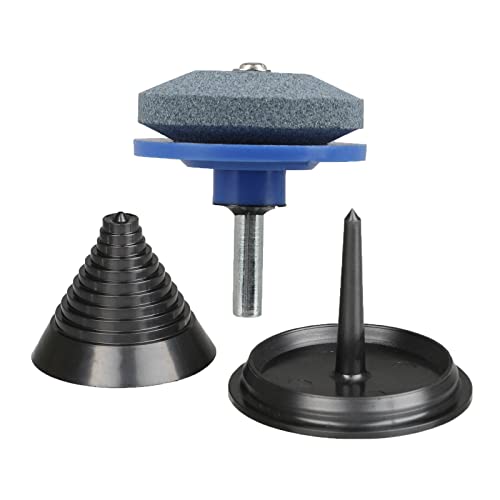
Checking blade balance is straightforward using simple static tools, such as the multi-tiered cone balancer included in the jtfrkope maintenance set. Set the cone balancer on a level workbench and place the center hole of the sharpened blade horizontally onto the cone steps. If the blade sits perfectly level without dipping, the weight is distributed evenly between both cutting ends. If one side drops downward toward the table, that heavier end contains excess steel that must be removed.
Correcting an unbalanced blade requires grinding metal exclusively from the back sail or non-cutting shoulder of the heavy side. Homeowners should never attempt to balance a blade by grinding down the cutting edge they just sharpened. Removing metal from the flat trailing section preserves the newly established bevel angle and cutting length. Continue removing small amounts of metal and re-checking on your balancer cone until the blade rests horizontally without tipping in either direction.
Reinstallation Protocols, Spindle Alignment, and Safety Checks
Reinstalling the sharpened blade correctly is just as important as the sharpening process itself. Start by inspecting the spindle shaft, blade adapter, and mounting washer for dirt, grass buildup, or signs of wear. Clean all mating surfaces thoroughly so the blade seats completely flat against the spindle star or round locator hub. Applying a light drop of anti-seize lubricant to the bolt threads can prevent future galling, but avoid contaminating the friction mating surfaces.
Pay close attention to blade orientation to ensure you do not inadvertently mount the cutting unit upside down. The beveled cutting edge must face upward toward the underside of the mower deck, while the curved lift wings face upward to generate airflow. Many blades have stamped indicators such as bottom or grass side to help guide proper orientation during reassembly. Installing a blade upside down causes the blunt back edge to smash grass stems rather than cutting them, resulting in brown, shredded lawns.
Always tighten the blade mounting bolt or nut using a manual torque wrench adjusted to your manufacturer specified torque value. Most residential walk-behind and riding mowers require between 35 and 60 foot-pounds of torque, depending on bolt diameter and deck type. Using an impact wrench without torque regulation can stretch bolts or crack blade adapters, creating severe operating hazards. Wedge a clean wooden block between the blade tip and the deck wall to prevent blade rotation while applying final torque.
Establishing a Routine Maintenance Schedule and Replacement Timing
Developing a consistent sharpening schedule prevents severe edge degradation and extends the functional life of your outdoor power equipment. A standard residential mowing schedule typically requires blade sharpening every twenty to twenty-five hours of active cutting time. For average suburban properties, this generally translates to sharpening once in early spring and once midway through the summer growing season. Properties with sandy soil, exposed tree roots, or thick turf varieties may require more frequent attention to keep cut quality high.
Sharpening can only extend blade service life so far before metal fatigue and dimensional loss require purchasing a replacement blade. Each sharpening session removes a portion of steel, eventually shifting the cutting edge closer to the center body. When the cutting wing narrows significantly or the total blade width shrinks by more than half an inch, structural rigidity is compromised. Mowers operating with excessively narrowed blades produce reduced airflow, leading to poor bagging performance and uneven grass discharge.
Keeping a spare replacement blade in your garage or storage shed makes seasonal lawn maintenance significantly smoother and less stressful. Having a secondary blade allows you to swap in a sharp cutting unit immediately whenever your primary blade needs maintenance. You can then clean, sharpen, and balance the dull blade at your convenience without delaying urgent weekend yard work. Rotating between two blades balances wear across multiple seasons and ensures your lawn always receives crisp, clean cuts.
Regular blade sharpening at home is a manageable maintenance routine that delivers immediate aesthetic and mechanical benefits. Cleanly cut grass recovers faster from summer heat stress, resists lawn diseases, and maintains uniform green coloration. At the same time, a balanced and sharp blade reduces engine fuel consumption and protects expensive deck spindle assemblies from premature failure. Investing in basic sharpening accessories and practicing safe workshop techniques keeps your lawn looking manicured throughout the entire growing season.




Write Your Review
No reviews yet. Be the first to share your experience!