


Ragged, brown grass tips after a weekend cut often signal that a lawn mower blade has lost its clean cutting edge. When a rotary blade becomes dull or nicked by hidden yard debris, it tears grass fibers rather than slicing them cleanly, which stresses turf and forces the engine to work harder. Homeowners looking into how to sharpen mower blades with a file often choose manual hand filing because it removes damaged steel in a controlled manner without overheating the metal. For those weighing routine blade maintenance against installing standard replacement mower blades, keeping a sharp edge on an existing blade is one of the most cost-effective ways to improve mowing performance.
Manual filing gives you total control over the factory bevel angle and prevents the blue heat discoloration caused by high-speed power grinders. Clean cutting edges are especially critical when cutting thick grass during peak growing seasons, where resistance can quickly bog down walk-behind and riding mowers alike. Learning how to sharpen mower blades with a file requires only a sturdy bench vise, personal protective gear, a quality flat mill file, and a dependable blade balancer. Taking time to hone the edge properly restores clean grass discharge, extends deck spindle life, and promotes healthier turf growth across your entire yard.

Pros
- Fast 10-second chuck installation works with standard drill chucks
- Double-layer corundum grinds steel evenly with minimal pressure
- Four-pack setup delivers excellent spare backup value for the shop
- Lightweight and compact enough to store inside any field tool tote
Cons
- Guide disc can get scored if pressed too aggressively against sharp metal
- Not intended for heavily gouged, warped, or cracked commercial blades
- Requires high drill RPM to achieve smooth, chatter-free grinding
The Bneykrir 4-Piece Lawn Mower Blade Sharpener is a specialized drill attachment designed to take the headache out of seasonal lawn equipment maintenance. Instead of wrestling blades on a heavy stationary bench grinder or risking uneven hand-filing, this tool uses a double-layer corundum wheel that mounts right into your drill chuck. It is aimed squarely at homeowners, DIYers, and small-property groundskeepers who want clean, healthy grass cuts without spending shop fees on blade balancing and sharpening.
In practical workshop use, setting up the sharpener takes only a few seconds. Chuck the metal shaft into an 18V or 20V cordless drill, clamp your lawn mower blade securely into a bench vise, and bring the drill up to speed. The abrasive corundum stone cuts through mild surface oxidation, dull bevels, and small turf nicks smoothly. The plastic guide disc rests along the flat underside of the blade, keeping the abrasive angled against the factory bevel without demanding pinpoint freehand steadying.
Build quality is suited well for light to medium maintenance runs. The corundum material holds up to standard lawn tractor and push mower steel, though users should avoid leaning too heavily into the work. Applying steady, moderate passes keeps heat buildup low and avoids burning the temper on thin steel. The four-pack arrangement is practical, giving you plenty of abrasive material to work through multiple seasonal tune-ups, tiller blades, and utility yard tools.
There are a few trade-offs to keep in mind. The plastic collar can wear down if it drags forcefully against jagged metal edges, and deep gouges from rocks will still require an angle grinder with a flap disc first. That said, for routine seasonal maintenance and quick edge touch-ups, this four-piece kit provides straightforward functionality and solid value for any home garage.
Routine edge touch-ups on standard residential walk-behind and riding lawn mower blades.
Cleaning and sharpening curved garden tools, rototiller tines, sickle cutters, and axes.
Pre-season garage tune-ups where removing the blade for quick bench vise work is preferred.
Home toolkits where space or budget does not justify a dedicated stationary grinder.



Pros
- Sharpens a wide variety of single-edge garden tools quickly
- Reversible blades extend product life
- Safe ergonomic design reduces hand fatigue
- Dishwasher safe for convenient cleaning
- Compact and portable for easy storage
Cons
- Only suitable for single-edge tools, not serrated blades or knives
- Coarse grit may not produce a polished edge for fine cutting tools
- Handle may feel small for users with very large hands
The AccuSharp Garden Tool Sharpener is a straightforward manual sharpener designed to handle the dullest garden tools. It is not a power tool, but an essential workshop accessory for anyone who works with lawn mowers, pruners, shears, hoes, or shovels. Whether you are a homeowner maintaining your own yard or a professional landscaper, this tool saves you time and money by quickly restoring sharp edges without any electricity or complex setup.
Best suited for DIY homeowners, gardeners, and even contractors who need a reliable way to keep their tools in peak condition. The diamond-honed tungsten carbide blade is exceptionally hard, allowing you to sharpen very dull or damaged blades with just a few strokes. The reversible blade feature doubles its useful life, making it a long-term investment for your workshop. Users report getting 5 to 10 years of regular use before needing to replace the blade.
Build quality is solid, with a comfortable ergonomic handle that fits either hand and includes a guard to protect your fingers. The compact size (5 inches) and lightweight design (1.4 ounces) make it easy to store in a drawer or take along on jobs. It is dishwasher safe, so cleaning off residue from sharpening is hassle-free. However, keep in mind that this sharpener works only on single-edge tools; serrated blades or fine knives require a different tool. Also, the coarse grit is great for fast material removal but won't produce a polished, mirror-like finish.
Overall, the AccuSharp Garden Tool Sharpener is a practical, durable addition to any workshop or tool shed. Its ease of use, safety features, and long-lasting performance make it a smart buy for anyone who wants to keep their garden tools working like new without spending much time or money.

Pros
- Easy to use even for beginners, with a clear instruction manual included
- Restores sharpness without removing blades, saving time and effort
- Affordable way to extend the life of your reel mower and improve cut quality
Cons
- Only works with reel (manual push) mowers, not rotary or powered mowers
- Requires some manual effort and repetition to get all blades evenly sharpened
- Grinding compound can be messy if not applied carefully
The American Lawn Mower Company SK-1 Reel Lawn Mower Sharpening Kit is a simple, well-designed solution for keeping your manual push mower in top cutting shape. If you own a reel mower from brands like Great States, American Lawn Mower, Scotts, or Earthwise, this kit lets you sharpen the blades at home without special tools or a trip to the shop.
This kit is best for homeowners who prefer a quiet, environmentally friendly mowing experience and want to maintain that crisp, scissor-like cut that reel mowers are known for. You don't need to be a mechanical expert. The included back-lapping crank rotates the reel backward while the compound is applied, grinding away dull spots and nicks. It's a straightforward process that takes about 15 to 20 minutes and can be done right in your garage or driveway.
In real-world use, this kit restores cutting performance noticeably. After a few seasons of mowing, reel blades naturally lose their edge. With this sharpener, the mower cuts cleanly again, reducing the need to go over the same spot twice. The grinding compound is coarse enough to remove metal but fine enough to leave a smooth edge. The brush lets you apply it evenly, and the crank fits the reel hub securely.
Build quality is solid. The crank is metal and feels durable, the brush bristles are firm, and the compound jar holds enough for several sharpenings. The kit is compact, so it stores easily in a toolbox or shed shelf. One realistic drawback is that you need to be patient and work methodically to get even results across all blades. Also, it only works on reel mowers, not on rotary or gas-powered push mowers.
Overall, the SK-1 Sharpening Kit is a smart investment for anyone with a manual reel mower. It saves money, extends the life of your mower, and keeps your lawn looking its best. For the DIY homeowner who values a sharp, efficient cut without the noise and fumes of a gas mower, this kit is a must-have accessory.
Brand: American Lawn Mower Company
Model: SK-1
Type: Compound Sharpening Kit
Material: Metal crank, abrasive compound
Color: Silver
Item Weight: 0.5 pounds
Product Dimensions: 10.6 x 5.5 x 1.8 inches
Compatible Mowers: Great States, American Lawn Mower, Scotts, Earthwise manual reel mowers (models 1705-16, 1815-18 and similar)
Included Items: Grinding compound, application brush, back-lapping crank, instruction manual
Operation: Manual, no battery or power required

Pros
- Easy to use with straightforward instructions included
- Affordable alternative to professional sharpening services
- Works on both the reel blades and the bed knife in one kit
- Compact size makes it easy to store in a toolbox or drawer
Cons
- Requires manual effort and some elbow grease to get good results
- Best suited for reel mowers only, not compatible with rotary or power mowers
- May not work on all reel mower models, check compatibility before buying
The American Lawn Mower Co. SK-2 Reel Lawn Mower Hand Sharpener is a purpose-built tool for anyone who uses a reel push mower. If you own a manual reel mower from brands like Great States, American Lawn Mower, Scotts, or Earthwise, this sharpener is designed to keep your blades cutting cleanly season after season. It is a handheld kit that sharpens both the spinning reel blades and the stationary bed knife, restoring the scissor-like action that gives a precise cut.
This sharpener is best suited for homeowners with small to medium lawns who prefer the quiet, eco-friendly operation of a reel mower. It is also a smart buy for DIYers who want to handle their own mower maintenance without spending money on professional sharpening. The kit includes two sharpening stones, one for the reel blades and one for the bed knife, plus a small brush for applying the included grinding compound. The process is straightforward: you apply the compound, then run the appropriate stone back and forth along the blade surface. It takes some time and a bit of patience, but the results are noticeable. Users report that after sharpening, their mower cuts more cleanly and requires less effort to push through grass.
Build quality is solid for the price. The plastic housing is lightweight but feels durable enough for occasional seasonal use. The sharpening stones are coarse enough to remove dull edges without being overly aggressive. At just 1.72 ounces, the entire kit is easy to toss in a tool bag or store on a shelf. One thing to keep in mind is that this is a manual tool. It requires physical effort to get a good edge, especially if your blades are very dull or have never been sharpened. Some users have found it helpful to use a drill with a socket attachment to speed up the process, but that is not included and requires some improvisation.
A realistic drawback is that this sharpener only works on reel mowers. If you also own a rotary or power mower, you will need a different sharpening system. Also, the instructions could be clearer regarding disassembly steps, particularly when removing the wheel clip. A few users mention that the included directions are basic, but with a little common sense and the tips found in online reviews, most people can get the job done. Overall, this is a practical, low-cost maintenance tool that extends the life of your reel mower and improves your lawn cutting experience.
If you want to keep your reel mower performing at its best without spending a lot of money, the American Lawn Mower Co. SK-2 is a solid choice. It is not a power tool, but it is a valuable workshop accessory for anyone who values a sharp, even cut from a manual mower. For the price, it delivers real value and is a worthwhile addition to any homeowner's tool collection.

Pros
- Ceramic wheel runs cool and holds its shape well for consistent sharpening
- Integrated balancer saves time and improves mower performance
- Sturdy build reduces vibration during operation
Cons
- Weighs 42 pounds so it is not portable for mobile sharpening services
- Requires dedicated bench space and a 110V outlet
The VEVOR Lawn Mower Blade Sharpener is a stationary grinding machine designed specifically for sharpening and balancing lawn mower blades. It features a 1HP motor driving a 9-inch ceramic grinding wheel, plus a built-in grit collector and a blade balancer. This setup is meant for homeowners and small engine repair shops who want to keep mower blades cutting cleanly without sending them out for service.
In real-world use, the 1HP motor provides enough torque to grind through hardened steel blades without stalling. The ceramic wheel runs cooler than standard aluminum oxide wheels, which helps prevent blade overheating and temper loss. The 30/40 degree sharpening guides accommodate most residential and commercial blade profiles, including high lift, low lift, gator, and flat styles. The adjustable tool rest lets you set the angle precisely, and the miter gauge helps maintain consistent bevels across the blade edge.
After sharpening, the included balancer is a practical addition. You mount the blade on the cone and see which side drops. Grind a little more off the heavy side until it balances. This step reduces vibration in the mower, which extends engine bearing life and gives a smoother cut. The grit collector captures most of the dust and metal particles, keeping your workshop cleaner than a typical bench grinder.
Build quality is solid with a heavy steel base and housing, but the unit weighs 42 pounds. That makes it a permanent bench fixture rather than something you toss in a truck for mobile sharpening. It also requires a standard 110V outlet, so it fits most home garages. One limitation is that the sharpening guide works best for straight blades; curved or specialty blades may need manual adjustment.
Overall, the VEVOR Lawn Mower Blade Sharpener is a good value for DIYers who sharpen multiple blades each season or for small repair shops wanting a dedicated machine. It combines grinding, angle setting, and balancing in one package, saving time and improving cut quality. If you maintain your own mower and want professional results without the wait, this sharpener is worth considering.
Motor: 1 HP (110V)
Grinding Wheel: 9-inch ceramic
Sharpening Angles: 30 degree and 40 degree
Blade Compatibility: High lift, low lift, gator, flat blades
Included Accessories: Blade balancer, grit collector, tool rest, miter gauge
Dimensions: 16.93 x 12.4 x 10.43 inches
Weight: 42.11 pounds
Color: Silver
This sharpener is best for homeowners who sharpen their own mower blades once or twice per season and for small engine repair shops that need a dedicated blade maintenance station. It handles standard residential blades up to about 22 inches long. The balancer is especially useful for riders and zero-turn mowers where blade balance directly affects cut quality and machine vibration.
Complete Guide to Sharpening Mower Blades With a File
Restores clean grass cutting by maintaining the correct factory bevel without removing excess metal. Hand filing remains one of the most reliable DIY maintenance methods because a quality mill file shaves steel smoothly without generating the extreme friction heat that ruins blade hardness. Understanding how the process works from dismounting to balancing ensures your lawn mower delivers clean slicing action rather than tearing grass tips.
Why Manual File Sharpening Protects Blade Temper
Steel mower blades undergo factory heat treatment to achieve a balance between hardness and impact resilience. When DIYers use high-speed angle grinders or uncooled bench wheels, high rotational friction can quickly overheat the thin cutting edge. This heat draws the temper out of carbon steel, turning the metal blue or bronze and leaving it soft and prone to rapid dulling.
A standard hand file removes microscopic ribbons of metal through mechanical shearing rather than thermal abrasive friction. Because manual filing generates virtually no heat, the factory-tempered molecular structure of the cutting edge remains intact throughout the sharpening process. This preserved hardness helps the edge resist minor impacts from small twigs and sand far longer than an edge weakened by power grinding.
Filing also prevents the accidental gouging that frequently occurs when high-rpm grinding wheels dig too deeply into the steel. A hand file gives you tactile feedback, letting you feel high spots, burrs, and minor imperfections along the cutting bevel. Homeowners who maintain their equipment manually often find that controlled filing removes only what is strictly necessary to restore a clean, functional edge.
Selecting the Right Mill File and Filing Accessories
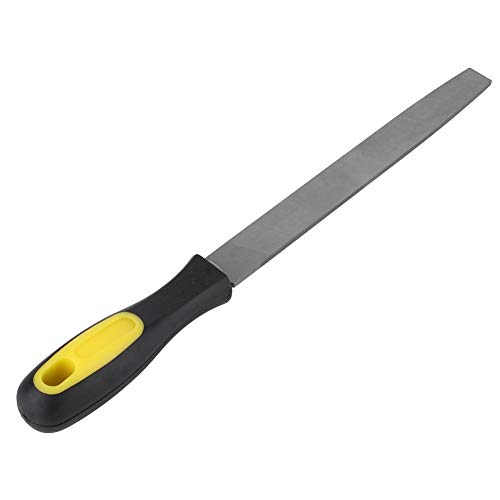
Successful manual sharpening begins with selecting an appropriate file designed specifically for metal removal. An 8-inch or 10-inch flat mill file with a single-cut bastard or smooth tooth pattern provides the ideal combination of material removal and surface finish. Products such as the Wvapzwr 8in Flat Mill File or the Kafuty-1 8in Flat Mill File utilize hardened carbon tool steel with ergonomic handles to maintain safe grip during repetitive filing strokes.
File tooth geometry plays an important role in how cleanly metal shears away from the blade edge. Single-cut files feature diagonal, parallel rows of teeth that shave metal smoothly without chatter, producing a uniform bevel. Double-cut files cut more aggressively but can leave a coarser surface that requires light honing to clean up.
Beyond the file itself, a complete sharpening workstation requires heavy work gloves, eye protection, a file card or wire brush for clearing metal shavings, and a secure bench vise. Having a wire brush on hand is essential because file teeth collect pin-like metal particles known as pins, which can scratch the blade if not regularly cleared. An accurate blade balancer, such as the Oregon precision cone included in the WORKPRO flat file bundle, is equally critical for verifying balance before reinstallation.
Safe Blade Removal and Deck Preparation
Safe maintenance begins before loosening any deck mounting hardware. Always disconnect the spark plug boot on gas mowers or remove the battery pack on cordless electric models to prevent accidental engine engagement. When tilting a walk-behind gas mower, position the machine so the air filter and carburetor face upward to stop crankcase oil and fuel from contaminating the intake system.
Mower blades are torqued tightly onto spindle shafts and require secure blocking before you apply wrench pressure. Jam a piece of scrap wood between the blade and the mower deck wall to lock rotation while you loosen the retaining bolt with a breaker bar or socket wrench. Note the orientation of the blade wings, washers, and any specialized adapters before sliding the blade off the spindle.
Once the blade is free from the mower, scrape away accumulated grass clippings and dried mud using a putty knife or wire brush. Cleaning both sides of the blade reveals hidden hairline cracks, stone nicks, and the true factory bevel angle. Operating on rough turf or mowing on uneven terrain frequently exposes blades to hidden rocks and exposed roots, making careful visual inspection essential before sharpening.
Securing the Blade and Establishing the Factory Bevel Angle
Clamp the mower blade horizontally or at a slight diagonal in a heavy bench vise, ensuring the cutting edge faces upward and remains fully supported. Clamping close to the cutting edge minimizes blade flex and chatter as the file passes over the steel. If you do not have soft vise jaws, place strips of cardboard or scrap wood between the metal jaws to prevent marring the blade body.
Rotary lawn mower blades are not designed to feature a razor-sharp, knife-like edge. Most manufacturers grind cutting bevels to an angle between 30 and 40 degrees, maintaining a blunt leading edge roughly the thickness of a butter knife. A knife edge is too fragile for a high-speed mower blade and will quickly chip, roll over, or dull upon contacting rough grass stems and small sticks.
Align your flat mill file with the existing factory bevel to maintain the original cutting geometry. Tilting the file too steeply creates a blunt, inefficient edge, while holding it too flat produces an excessively thin edge prone to premature damage. Maintaining consistent hand orientation across the entire length of the cutting surface ensures uniform material removal from heel to tip.
Proper Push-Stroke Filing Technique and Burr Removal
Hand files are strictly single-direction cutting tools that cut only on the forward push stroke. Place the file against the cutting bevel at the inner heel, apply moderate downward pressure with both hands, and push smoothly across the edge toward the outer tip. Lift the file completely off the steel on the return stroke to avoid dulling or breaking the file teeth.
Count your push strokes on the first cutting edge so you can apply approximately the same number of passes to the opposite side. Typically, between 20 and 40 smooth strokes are sufficient to eliminate minor nicks and restore a clean, reflective bevel. If deep gouges remain after reasonable filing, do not grind away excessive steel solely to make the edge visually pristine, as this removes valuable blade material and creates weight imbalances.
As the file shears metal from the angled bevel, a microscopic ridge of curled steel called a burr forms along the flat bottom side of the blade. Flip the blade over in the vise and hold the file completely flat against the unsharpened bottom surface. Make a single, gentle forward pass with minimal pressure to slice away the burr without altering the flat profile of the underside.
Static Balancing to Prevent Spindle and Deck Vibration
Sharpening inevitably removes metal, which can alter the weight distribution between opposing blade ends. An unbalanced blade spinning at several thousand revolutions per minute creates severe rotational vibration that damages spindle bearings, cracks mower decks, and causes uneven turf cuts. Checking static balance is just as vital as sharpening the cutting edge itself.
Place the center hole of the sharpened blade onto a cone balancer or hang it horizontally from a nail mounted level in a wall. If one side dips lower than the other, that heavy wing contains surplus metal that must be trimmed. Never remove metal from the newly sharpened cutting bevel to balance the blade; instead, file metal away from the back edge or the thick non-cutting heel of the heavy side until the blade rests horizontally.
Precision balancing tools, such as the Oregon balancer bundled with the WORKPRO flat file or standalone cone units found in rotary sharpening sets, offer reliable static verification. Balanced blades spin smoothly, reducing operator fatigue and protecting internal drive components across both gas tractors and electric mulching mower options. Consistent balance also maintains optimal clipping flow under the deck throughout heavy mowing sessions.
Comparing Hand Files to Rotary Drill Stones and Grinders
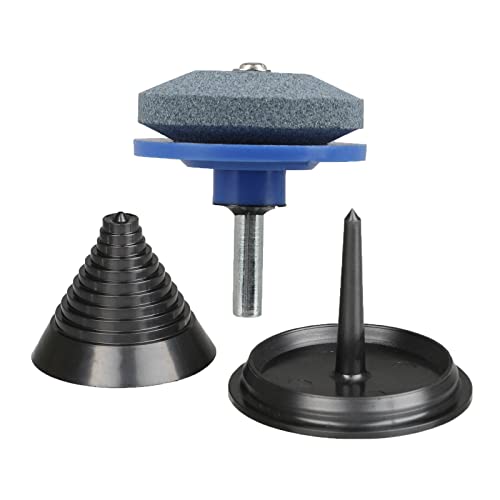
Homeowners often weigh manual filing against drill-mounted corundum sharpening stones, such as the multi-pack rotary sharpeners offered by Bneykrir, Eoppen, and jtfrkope. Drill-mounted rotary stones attach to standard power drills via 1/4-inch shanks and grind edges quickly with minimal physical effort. While these tools save time when reviving neglected blades, they offer less tactile precision than a flat mill file and can produce inconsistent bevel angles if held unevenly.
Bench grinders and dedicated sharpening stations like the VEVOR 1HP sharpener provide high-volume metal removal suitable for busy shops, but they require practiced technique to avoid edge overheating. Handheld tungsten carbide sharpeners, like the AccuSharp garden tool sharpener, offer another portable alternative that shaves steel quickly with preset carbide blades. For traditional reel mowers with curved cylinder blades, compound kits such as the American Lawn Mower Company SK-1 or SK-2 hand sharpeners use abrasive paste and back-lapping rather than flat files.
For standard rotary mower blades, the classic flat mill file remains the gold standard for controlled, safe DIY maintenance. A manual file costs very little, requires no electrical power, produces no dangerous sparks, and eliminates the risk of overheating blade steel. For routine mid-season touch-ups, spending ten minutes with a quality file is often the simplest and most effective approach.
Knowing When to Resharpen Versus Replace a Mower Blade
While a quality flat file can extend the working life of a mower blade over multiple seasons, steel blades cannot be resharpened indefinitely. Every sharpening session removes metal, gradually reducing the width of the blade and wearing away the curved aerodynamic lift wings. When the outer corners become rounded or the lift sails show noticeable thinning from blowing abrasive sandy soil, the blade must be retired.
Carefully examine the blade for bent tips, cracks near the center mounting hole, or deep structural gouges caused by rocks and metal pipes. A bent or cracked blade represents a severe safety hazard, as centrifugal forces can cause compromised metal to fracture and eject from under the deck at high velocities. If structural damage is detected during inspection, sharpening is no longer appropriate, and immediate replacement is necessary.
When replacing a worn blade, always verify the exact replacement specifications, including blade length, center-hole geometry, and manufacturer part numbers. Matching replacement dimensions ensures correct deck clearance and aerodynamic lift for proper discharge or mulching. Regular maintenance preserves blade balance and helps your mower engine run smoothly across every mowing session.
Reinstalling your sharpened blade with the wings pointing toward the underside of the deck and torquing the mounting bolt to manufacturer specifications completes the maintenance cycle. Periodic inspection after every 20 to 25 hours of mowing helps you catch dulling edges early before ragged grass tips appear. Regular touch-ups with a flat mill file keep your outdoor power equipment operating smoothly and protect the long-term health of your lawn throughout the entire mowing season.


Write Your Review
No reviews yet. Be the first to share your experience!