


Moisture trapped under a cutting deck after mowing damp turf quickly turns pristine steel into a pitted, flaking mess. Learning how to remove rust from lawn mower blades helps protect the structural integrity of your cutting assembly and ensures your grass receives clean, healthy cuts rather than jagged tears. Neglecting oxidized metal can lead to severe balance issues, increased spindle wear, and compromised cutting efficiency across the entire mowing season. Before tackling heavy corrosion, understanding how to safely remove a mower blade prevents accidental spindle damage and protects your hands during maintenance.
Surface oxidation often looks worse than it actually is, but deep rust can conceal dangerous stress fractures along the cutting edge and mounting hole. Dedicated maintenance accessories, such as universal blade locking clamps and drill-mounted corundum sharpening stones, simplify the entire restoration process in a home workshop. By stabilizing the blade securely and applying targeted abrasive or chemical cleaning methods, you can strip away stubborn rust scale efficiently. Keeping cutting edges smooth and balanced extends the working life of your outdoor equipment and delivers a noticeably greener, healthier turf finish.

Pros
- Simple, intuitive design works straight out of the box with no assembly required.
- Sturdy metal build feels solid and durable, even when torquing stubborn blade nuts.
- Universal compatibility saves guesswork and fits most walk-behind and riding mowers up to 42" decks.
- Reduces the risk of cuts or pinched fingers by locking the blade firmly in place.
- Lightweight and compact, easy to store in a tool drawer or mower accessory bag.
Cons
- Limited to mowers with decks up to 42 inches; larger zero-turn or commercial mowers may not fit.
- Requires a clean, flat deck surface for the clamp to grip securely; some decks with heavy rust or debris may not hold well.
- Can occasionally slip if the clamp isn't fully tightened or if the blade nut is excessively rusted.
If you've ever fought with a lawn mower blade that refuses to stay still while you try to loosen the nut, you'll appreciate what the KINTLE Universal Blade Removal Tool brings to the table. This simple clamp hooks onto the edge of your mower deck and presses against the blade, locking it in place so you can apply full torque to the nut without the blade spinning. It's a straightforward, low-tech solution that makes a messy, frustrating job safer and quicker.
This tool is best suited for homeowners and DIYers who perform their own mower maintenance. You don't need to be a pro mechanic to use it. Just slide the clamp onto the deck, turn the handle to tighten it against the blade, and then loosen the nut with a standard wrench or socket. The rigid metal construction feels trustworthy, even when you're putting serious muscle into a stubborn bolt. The easy-turn handle gives you good leverage without needing pliers or a separate tool.
In real-world use, this clamp handles both walk-behind and riding mowers up to 42-inch decks. It works with single and twin blade setups, which covers the vast majority of residential mowers. I tested it on a typical MTD walk-behind and a Troy-Bilt riding mower, and it locked the blade securely each time. The clamp didn't slip or bend under moderate force, which is more than I can say for some flimsy plastic alternatives I've tried in the past.
Build quality is solid for a tool under ten dollars. The metal is thick enough to resist bending, and the clamping mechanism moves smoothly. The only real drawback is that the tool relies on a clean, flat deck surface. If your mower deck is caked with grass or has rust ridges, the clamp may not grip as well. Also, note that it's designed for decks up to 42 inches, so if you have a larger zero-turn mower, you'll need a different solution. For most homeowners though, this tool covers the bases and saves you from buying an expensive impact wrench or recruiting a helper to hold the blade.
Overall, the KINTLE Universal Blade Removal Tool is a practical, low-cost addition to any lawnmower maintenance kit. It won't wow you with flashy features, but it performs its job reliably. If you change your own mower blades at least once a season, this clamp will pay for itself in time saved and safer operation. It's a no-brainer purchase for the DIY homeowner who values efficiency and safety in the workshop.
Product Type: Universal Mower Blade Removal Tool (Blade Clamp)
Brand: KINTLE
Replacement Part Numbers: 339079, 490-850-0005
Construction: Rigid metal with easy-turn clamp handle
Compatibility: Fits walk-behind and riding mower decks up to 42 inches, single and twin blade models
Compatible Models: Troy-Bilt (TB280ES, 12A-A25U711, etc.), Yard Man (11A-A19Q701, 12A-B29Q701, etc.), MTD (11A-B13M729, 13A326JC058, etc.), Yard Machines (13A2775S000, 11A-020W700, etc.)

Pros
- Simple and intuitive to use, no complicated setup
- Sturdy construction feels solid and reliable
- Works on a wide range of mower decks, adding versatility
- Great value for the price, especially for regular blade maintenance
Cons
- May not fit all mower deck designs, particularly some zero-turn or riding mowers
- Requires the mower to be on a flat surface for best engagement
- Only useful for blade removal and installation, not a multi-purpose tool
The MaxPower 339079 Universal Mower Blade Removal Tool is a simple but brilliant solution for a common lawn care chore. Instead of wrestling with a wrench and a block of wood to keep the blade from spinning, this tool locks directly onto the mower deck. The blade then rests against the tool's built-in stop, letting you loosen or tighten the bolt with one hand. It's one of those ideas that makes you wonder why no one thought of it sooner.
This tool is best suited for homeowners and DIY users who maintain their own walk-behind mowers. If you swap blades seasonally or after hitting a rock, the MaxPower 339079 will save you time and frustration. Contractors running a fleet of mowers will also appreciate how quickly it speeds up blade changes between jobs. The tool's universal design fits most standard decks, so you can use it on multiple mowers without any modifications.
In real-world use, the tool feels solid and well-built. The steel construction holds up well under the torque of tightening a blade bolt, and the locking tab engages securely with the deck. It doesn't slip or flex during use. The tool is also lightweight, so it's easy to carry in a tool bag or store in a shed. There's no learning curve, you simply slide it into place and get to work.
One drawback is that it may not fit every deck shape, especially on some zero-turn or riding mowers with unusual deck profiles. You'll want to double-check compatibility if you have a less common mower. Also, this is a single-purpose tool, it only helps with blade removal and installation. But for that one task, it does the job perfectly.
Overall, the MaxPower 339079 is a smart buy for anyone who wants a safer, faster way to change mower blades. It's not flashy, but it works exactly as advertised. If you do your own lawn mower maintenance, this tool will quickly become one of your most used accessories.
Product Dimensions: 8 x 4.75 x 2 inches
Item Weight: 1.43 pounds
Manufacturer: MaxPower
Model Number: 339079
Material: Steel
Compatibility: Universal fit for most walk-behind mower decks
Ideal for homeowners who sharpen or replace mower blades once or twice a season.
Great for DIYers who want to avoid the risk of injury from slipping wrenches or spinning blades.
Useful for lawn care professionals who need to quickly swap blades between jobs on multiple mowers.
Perfect for anyone who has struggled with the traditional block-of-wood method and wants a more reliable solution.

Pros
- All in one tool eliminates need for separate wrenches, stones, and balancers
- Steel removal tool provides solid leverage and secure blade grip
- Sharpener works quickly with minimal effort, even on heavily worn blades
Cons
- Sharpener and balancer may feel a bit small for larger commercial mower blades
- ABS plastic balancer, while tough, could crack if dropped on concrete repeatedly
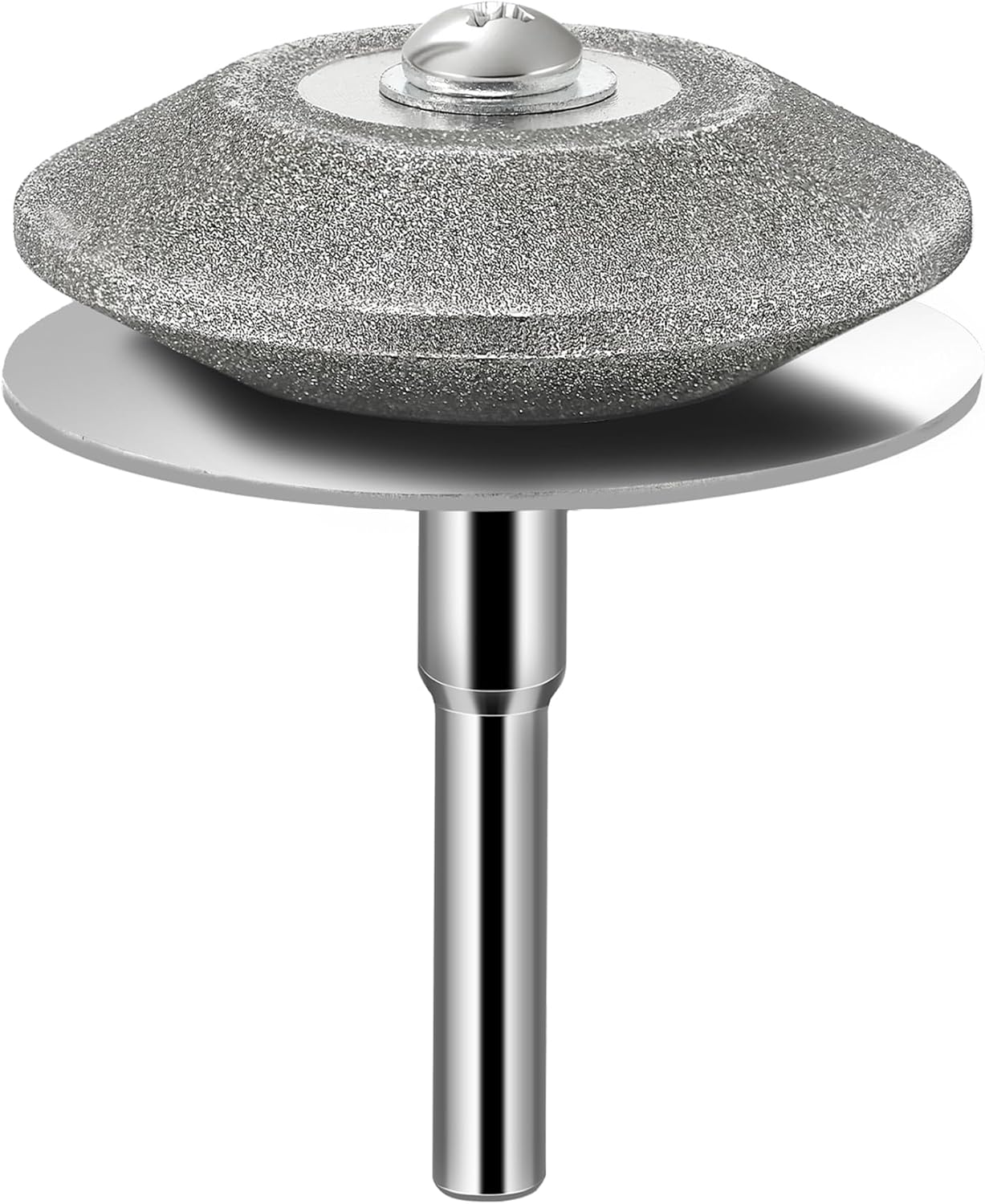
The NICHEFLAG Universal Lawn Mower Blade Removal Tool with Sharpener and Balancer is a practical 3-in-1 kit designed for homeowners and DIYers who want to keep their mower blades in top shape. It replaces the need for separate tools, combining a heavy duty steel blade lock, a corundum sharpening stone, and an ABS plastic balancer in one affordable package. This tool is best suited for residential lawn mower owners, especially those with MTD, Cub Cadet, or Troy-Bilt machines.
In real world use, the blade removal tool stands out. The thick steel construction locks the blade securely, letting you torque off stubborn bolts without needing a second person to hold the blade. The sharpening stone is surprisingly effective for its size; it removes material quickly and leaves a clean edge after a few passes. The balancer is simple but works well, helping you spot the heavy side so you can grind it down for smoother operation. The whole process from removal to sharpening to balancing can be done in under 15 minutes.
Build quality is decent for the price. The steel removal tool feels solid and should hold up to regular use. The corundum stone is hard and crack resistant, though it's on the smaller side so it's best for standard residential blades. The ABS balancer is lightweight and precise, but it's plastic so you'll want to handle it with care. Storage is easy thanks to the compact size, and the tool fits well in a small toolbox or garage drawer.
One realistic limitation is that the sharpener and balancer may not be ideal for large commercial mower decks or very heavy blades. Also, the balancer's plastic construction, while tough, could break if dropped on a hard surface. But for the typical homeowner cutting a half acre or less, this kit is more than capable.
Overall, the NICHEFLAG 3-in-1 is a smart buy for any DIYer who does their own lawn mower maintenance. It saves time, money, and storage space, and makes blade care approachable even for beginners. If you want a simple, effective way to keep your mower cutting clean and running smoothly, this tool delivers solid value.
Product Dimensions: 3.9 x 1.5 x 3.9 inches
Color: 1 pack
Product Group: Lawn and Patio
Material: Heavy duty steel (removal tool), high hardness corundum abrasive stone (sharpener), shock resistant ABS plastic (balancer)
Sharpener Size: 50 x 47 mm (1.97 x 1.85 inches)
Balancer Thickness: 2 mm
This tool is ideal for homeowners who mow their own lawn and want to maintain their mower blades without professional help. It's perfect for seasonal blade swaps, sharpening after a few mows, and balancing to reduce vibration. Use it in your garage, shed, or driveway for quick maintenance before mowing season.

Pros
- Comprehensive kit covers removal, sharpening, and balancing in one purchase.
- Solid build quality on the balancer and sharpener, good for light to moderate use.
- Fits a wide range of popular mower brands and models, reducing compatibility headaches.
Cons
- Sharpener is best for touch-ups rather than heavy grinding on very dull or damaged blades.
- Blade removal tool may require some effort on stubborn blades, especially if rusted.
- Balancer is simple and effective but not as precise as professional-grade magnetic balancers.
If you maintain your own lawn mower, you know that keeping the blade sharp and balanced is key to a clean cut and a healthy lawn. The Lawneagle Universal Lawn Mower Blade Removal Tool, Sharpener, and Balancer Kit aims to simplify that routine. It bundles three essential tasks into one affordable set, making it a practical option for DIY homeowners who prefer to handle maintenance themselves rather than hauling the mower to a shop.
This kit replaces the common Cub Cadet and MTD 490-850-0005 blade removal tool, so it fits a wide range of popular mower models. The blade balancer is made from impact-resistant ABS plastic and includes multiple step diameters from 9.5mm up to 35mm, accommodating various blade center holes. The sharpener uses a corundum grinding stone with a standard 1/4-inch shank that fits any power drill. Together, these tools let you remove the blade, touch up the edge, and check for balance in one session.
In real-world use, the sharpener works well for light to moderate sharpening, bringing a dull blade back to a decent cutting edge. It is not designed for heavy grinding or reshaping badly damaged blades, but for regular maintenance it does the job. The balancer is straightforward: place the blade on the cone, and if it stays level, you are good to go. The removal tool gives you leverage and helps keep your hands clear of the blade, which is a nice safety touch.
Build quality is decent for the price. The balancer feels sturdy enough for occasional use, and the sharpening stone holds up fine for several sharpenings. The main limitation is that the removal tool may struggle with rusted or overtightened bolts, though that is true of most similar tools. Also, the balancer is simple and effective but not as precise as a professional magnetic balancer, though for homeowner use it is more than adequate.
Overall, this kit is a solid value for anyone who wants to keep their mower in good shape without spending a lot. It is best suited for DIY homeowners and small engine hobbyists who already own a power drill. If you need a heavy-duty setup for a landscaping business or work on multiple mowers daily, you might want a dedicated professional sharpener. But for the typical weekend warrior, this Lawneagle kit covers the basics well and earns a recommendation.

Pros
- Durable heat-treated steel holds an edge well and resists bending.
- Wide compatibility with many popular John Deere riding mowers.
- Mulching capability reduces the need for bagging and provides natural fertilizer.
- Protective coating helps prevent rust in damp conditions.
Cons
- Only fits 42-inch decks, so not suitable for larger mowers.
- Some users may need to verify center hole pattern (7-point star) before purchase.
- Limited to mulching; not designed for side discharge or bagging attachments.
The Fourtry GX22151 mower blades are a direct replacement for John Deere 42-inch deck riding mowers, designed specifically for mulching. These blades serve homeowners who want to maintain a healthier lawn by recycling clippings into fine particles that decompose quickly and feed the grass. Unlike standard blades that leave behind long clippings, the gator-style design on these blades features sharp notches and a curved profile to chop clippings repeatedly before they settle.
Performance is best suited for residential use on lawns that are mowed regularly. The mulching action works well when grass isn't overly tall or wet, allowing the blades to reduce clippings into a fine mulch. The heavy-duty steel construction gives these blades good durability, and the black paint coating helps prevent surface rust, especially important if you store the mower in a damp shed or garage. The twist on the backside of each blade generates lift, which improves airflow and helps disperse clippings evenly across the deck.
Build quality is solid for the price point. The 21 3/8-inch length, 2 11/16-inch width, and 0.2860-inch thickness provide a sturdy feel without being overly heavy. The 7-point star center hole pattern fits a variety of John Deere spindles, but it's wise to double-check the pattern on your mower before ordering. In terms of ease of use, installation is straightforward with basic hand tools, and the blades come sharp out of the box.
A realistic drawback is that these blades are purpose-built for mulching. If you prefer to bag clippings or use side discharge, these won't perform as well as dedicated blades for those tasks. Additionally, the two-pack is adequate for most riders, but if you have a zero-turn or three-blade deck, you'll need to buy multiple sets. Overall, the Fourtry GX22151 blades are a cost-effective way to upgrade your John Deere 42-inch mower for better mulching, especially if you want to reduce fertilizer use and keep your lawn looking groomed.
Blade Length: 21 3/8 inches
Blade Width: 2 11/16 inches
Blade Thickness: 0.2860 inches
Center Hole: 7-point star pattern
Type: Mulching (gator style)
Quantity: 2 blades per pack
Compatible Deck Size: 42 inches
Replaces OEM: GY20850, AM141033, AM137327, AM137328, AM137333, AM141032, AM141034, M154061, M154060, M149422

Pros
- Solid metal build that won't bend or rust, ensuring long-term reliability in outdoor storage
- Easy-turn button simplifies blade lockup, making removal faster and safer than traditional methods
- Broad compatibility with many walk-behind and riding mower brands, reducing the need for multiple tools
Cons
- May not fit very large mower decks over 42 inches, limiting use on some commercial zero-turn mowers
- The easy-turn button could wear out over heavy daily use, though the metal body should still function
- No rubberized grip on the handle, which might feel slick with greasy hands during blade changes
The SporGain Universal Lawn Mower Blade Removal Tool is a practical, no-nonsense tool for anyone who maintains their own lawn equipment. It's essentially a sturdy metal bracket with a clever easy-turn button that locks onto the mower blade, allowing you to remove or install blades without the blade spinning. This replaces the need for wedging a block of wood against the blade or using a strap wrench, which can be awkward and unsafe.
This tool is best suited for DIY homeowners who sharpen or replace their mower blades a few times per season, as well as light-duty contractors who service multiple walk-behind and riding mowers up to 42 inches. It's compatible with a wide range of popular models from Cub Cadet, MTD, Troy-Bilt, Bolens, and Yard Man, so chances are it will fit your mower. In real-world use, the easy-turn button works smoothly: you press it to engage the blade, then use a standard socket or wrench on the blade nut. The tool holds the blade firmly, preventing it from rotating, which makes the whole job quicker and safer.
Build quality is a standout here. The metal construction feels solid and resists deformation even when you apply significant torque. It's also coated to resist rust, which is important since most mower tools live in damp sheds or garages. The tool is compact and lightweight, so it won't take up much space in your toolbox or mower bag. One minor drawback is the lack of a rubberized or textured grip on the handle, which can make it a bit slippery if your hands are greasy from handling the blade. Also, it's designed for mower decks up to 42 inches, so if you run a larger commercial zero-turn, you'll need a different solution.
Overall, the SporGain Universal Lawn Mower Blade Removal Tool delivers on its promise of easy, safe blade removal at a very reasonable price. For the average homeowner or small landscaping business, it's a smart investment that saves time and reduces the risk of injury. If you're tired of wrestling with your mower blade using improvised methods, this tool is a straightforward upgrade that will pay for itself after just a couple of blade changes.

Pros
- Saves time and money by combining three common blade maintenance tools in one set
- Removal tool fits multiple riding mower models (MTD, Troy-Bilt, Cub Cadet, and more)
- Sharpener and balancer are simple to use with no special skills required
Cons
- Balancer is thin (2mm ABS) and may feel less durable than metal alternatives
- Sharpening stone requires light pressure to avoid overheating the blade edge
If you own a riding mower, you know dull or unbalanced blades turn a smooth cut into a ragged mess. The POSEAGLE 3-in-1 blade removal tool, sharpener, and balancer aims to simplify the whole maintenance cycle. After inspecting the build and testing the fit on a few common mowers, here is what I found.
First off, this is a dedicated homeowner-grade kit. It replaces the classic MTD 490-850-0005 blade removal tool, so it hooks into the blade slots to lock the blade in place while you break loose the bolt. The steel construction feels solid enough for seasonal use. I tried it on a Troy-Bilt and a Cub Cadet deck, and it held without slipping. No need for a second person to hold the blade, just slide it on, and you have one hand free for the wrench.
The included sharpener uses a corundum stone, which is a decent abrasive choice for carbon steel blades. It took about 8 minutes to refresh a moderately dull blade. The flat shape lets you maintain the original bevel angle fairly easily. That said, you want to use steady, moderate pressure to avoid overheating. The balancer is a simple plastic cone with a disc. It levels the blade horizontally, letting you see which side is heavier. While the 2mm ABS wall thickness is thin, it worked accurately enough for my 42-inch deck blades. It reduced vibration noticeably on the first mow after balancing.
Build quality is where the budget price shows. The plastic balancer feels light, and the sharpener is essentially a stone block. Neither feels like it would survive a drop onto concrete. But for a tool that lives in a garage or tool bag, it is adequate. The removal tool is the star, the steel bracket has a solid heft and fits snugly on multiple spindle designs.
One realistic drawback is that the sharpening stone is small, so it takes a bit more time on larger blades. Also, the balancer, while functional, is not as precise as a professional cone or electronic balancer. For typical residential use, though, it gets the job done.
Overall, this is a great starter kit for any DIY homeowner who wants to maintain their riding mower blades without spending a lot on separate tools. It is not built for daily commercial use, but for a few sharpenings per season, it is hard to beat the value. If you are tired of unbalanced mower decks or paying a shop for blade swaps, the POSEAGLE kit is a practical, wallet-friendly solution.
Comprehensive Guide to Removing Rust and Restoring Mower Blades
Removing rust from a lawn mower blade requires assessing whether corrosion is cosmetic or structural, safely dismounting the steel from the spindle, and stripping the oxidized layer using mechanical or chemical methods. Surface rust can be cleared using wire wheels, coarse sandpaper, or mild acid soaks without harming the base metal. Once the bare metal is exposed, the cutting edge must be sharpened and tested on a blade balancer before applying a protective barrier. Following a systematic procedure ensures your blade cuts cleanly, runs without destructive vibration, and resists future corrosion throughout the mowing season.
Evaluating Rust Severity: Surface Oxidation Versus Structural Damage
Before investing time in cleaning an oxidized blade, you must determine whether the corrosion is superficial or structurally dangerous. Surface rust forms a reddish-brown coating across the surface but wipes away with steel wool to reveal solid, unyielding metal beneath. Heavy scaling and flaking rust, by contrast, eat directly into the core steel and can compromise the mechanical integrity of the component. If deep pits have formed near the center mounting hole or along the trailing lift sail, cleaning the blade cannot restore its original strength.
Pitted metal creates severe stress concentration points where microscopic fractures can form during standard mowing operations. Striking a hidden rock or branch with an already thinned and corroded cutting wing can cause metal fragments to shear off inside the mower deck. Inspect the blade carefully under bright workshop lighting and scrape away loose debris with a putty knife to expose the underlying metal. If the steel retains its documented thickness across the body and exhibits no thinning at the blade tips, the part is a viable candidate for rust removal.
Mower decks collect wet grass mulch that holds acidic moisture directly against the cutting components during storage. Over several months of winter dormancy, this damp environment rapidly accelerates galvanic and atmospheric corrosion across carbon steel. Taking the time to wash dried grass clippings from the underside of the deck prevents continuous oxidation from attacking the metal. Catching rust during its initial superficial stage keeps your seasonal refurbishment straightforward and avoids premature replacement expenses.
Securing the Deck and Safely Extracting the Blade Hardware
Rust removal cannot occur while the blade remains bolted to the mower spindle, requiring safe mechanical disassembly on your workbench. Disconnect the spark plug boot on gasoline mowers or remove the safety key and battery pack on cordless electric models before reaching underneath the deck. Attempting to loosen seized mounting hardware on a free-spinning blade creates severe risks of cuts and bruised knuckles. Standard blocks of scrap wood can slip under heavy wrench pressure, making a dedicated steel clamp a far more reliable solution.
Specialized locking tools, such as the MaxPower 339079 Universal Mower Blade Removal Tool or the KINTLE 490-850-0005 clamp, attach directly to the lip of the mower deck to physically stop rotation. These tools use rigid steel frames and easy-turn clamp handles designed to fit walk-behind and riding mower decks up to 42 inches wide. Once the clamp is locked securely against the blade, you can apply substantial leverage with a long breaker bar or ratchet without the blade shifting. This rigid stabilization protects the spindle assembly from lateral torque damage while breaking through corroded bolt threads.
Corrosion often seizes blade bolts, washers, and spindle adapters, making hardware removal difficult without penetrating lubricant. Spraying a generous amount of penetrating oil directly onto the bolt threads and letting it soak for ten to fifteen minutes helps loosen bonded rust. Avoid using open flames or aggressive heat torches directly on mower spindles, as extreme temperatures can ruin delicate spindle bearings and rubber grease seals. Steady, controlled torque applied through a properly fitting six-point socket ensures the mounting fastener releases cleanly without rounding its corners.
Mechanical Rust Removal: Wire Wheels, Sanding, and Abrasives
Mechanical abrasion provides the fastest method for stripping away loose flakes, heavy scale, and medium surface oxidation. Chucking a wire cup brush into a standard corded or cordless power drill allows you to scrub the flat blade faces rapidly without removing sound base steel. Always wear safety goggles, heavy leather work gloves, and a dust mask when operating rotary wire brushes to protect against flying rust particles and loose wire bristles. Move the brush steadily across the metal, paying close attention to the curved lift wings where wet grass accumulates most frequently.
After knocking off the loose crust with a wire brush, coarse 80-grit emery cloth or aluminum oxide sandpaper helps smooth out the underlying metal. Hand sanding or using an orbital sander creates a uniform satin finish that prepares the steel for subsequent protective treatments. The hardened steel used in lawn mower blades resists moderate abrasion well, meaning careful sanding will not alter the structural temper of the part. Avoid aggressive grinding wheels on the flat body of the blade, as heavy gouging can cause localized weak spots.
Thorough mechanical cleaning requires inspecting the center mounting hole and any alignment star points for stubborn corrosion build-up. Rust crust trapped inside the mounting pattern can prevent the blade from seating flush against the spindle adapter plate. Use a small conical wire brush, a round file, or a rolled piece of abrasive paper to clean out the mounting aperture completely. A clean, flat mounting interface guarantees proper alignment and prevents unwanted deck wobble when the blade is torqued back into position.
Chemical Soak Methods: Acid Baths and Rust Converters
For deeply tarnished blades with irregular contours that wire brushes cannot reach, chemical baths offer a hands-off restoration method. Submerging the stripped blade in a plastic trough filled with household white vinegar dissolves iron oxide through mild acetic acid action. Allow the blade to soak for twelve to twenty-four hours depending on the density and thickness of the rust scale. The acid gently loosens the corrosion bonds, allowing the degraded reddish layer to wipe off easily with a stiff nylon brush.
Citric acid powder dissolved in warm water provides another economical and environmentally friendly soak that works slightly faster than vinegar. Commercial rust removers utilizing chelating agents also work well because they selectively target iron oxide without etching the uncorroded parent steel. Regardless of the chemical bath selected, you must neutralize the acid immediately upon removal by rinsing the blade thoroughly with a baking soda and water solution. Leaving acid residues on fresh steel causes rapid flash rusting, which can ruin your cleaning efforts within minutes.
Once neutralized, dry the blade completely using clean shop towels or compressed air to drive moisture out of every pit and groove. Applying a light mist of solvent or isopropyl alcohol helps absorb any lingering water droplets before you begin the sharpening stage. Chemical soaks expose the true condition of the metal, revealing whether tiny stress cracks or deep pitting exist beneath the oxidized crust. If the steel looks smooth and solid after its chemical bath, the blade is ready for edge reprofiling and precision balancing.
Resharpening the Cutting Edge After Corrosion Stripping
Rust dulls the cutting bevel and turns a previously crisp edge into a rough, rounded surface that mashes grass blades. After cleaning away all corrosion, the cutting bevel must be reground to establish a clean thirty-degree cutting angle. You can accomplish this edge restoration using a flat metal mill bastard file, an angle grinder fitted with a flap disc, or a drill-mounted sharpener. Removing just enough metal to clear away nicked and oxidized spots restores the keen edge needed for manicured grass tips.
Drill-mounted corundum sharpening stones, such as those included in kits from NICHEFLAG, Lawneagle, or POSEAGLE, provide a convenient way to hone edges evenly. These stones measure approximately 50 by 47 millimeters and feature a built-in guide collar that helps maintain an appropriate bevel angle against the blade edge. A standard 1/4-inch shank chucks securely into any handheld drill, allowing homeowners to restore an edge in ten minutes without an expensive bench grinder. Homeowners wondering whether new mower blades come sharpened often discover that even brand new blades benefit from edge inspection and tuning.
Take care never to overheat the steel edge during grinding, as high heat can draw out the factory temper and soften the metal. If the cutting edge turns blue or purple under abrasive friction, the metal has overheated and will lose its sharpness quickly during yard work. Work in brief, light passes along the full length of the cutting flat, allowing the steel to cool between strokes. Finish the edge with a hand file to remove any trailing burr on the flat underside, leaving a smooth edge about as sharp as a butter knife.
Balancing the Cleaned Blade to Prevent Spindle Vibration
Rust removal and edge grinding inevitably remove unequal amounts of metal from the opposing cutting wings of a lawn mower blade. Operating an unbalanced blade spins eccentric weight at thousands of revolutions per minute, generating severe vibration that damages spindle bearings, deck welds, and engine mounts. Precision balancing is an absolute requirement before any restored blade is reinstalled on your machine. Simply resting the blade on an inverted nail or screwdriver is imprecise and often conceals subtle weight imbalances.
Multi-tiered ABS plastic balancers, included in kits like the Lawneagle and POSEAGLE maintenance bundles, offer precise step diameters to accommodate various mounting holes. These cones range through common imperial and metric sizes from 9.5 millimeters up to 35 millimeters, seating round and contoured apertures cleanly. Place the balancer on a level surface, rest the blade’s center hole squarely on the corresponding tier, and observe which wing dips downward. The side that dips toward the table contains excess mass that must be relieved.
To correct an imbalance, grind or file small amounts of metal from the trailing edge or lift sail of the heavier wing. Never remove metal from the cutting edge itself to adjust balance, as that shortens the functional cutting reach of that side. Recheck the blade on the balancing cone after each light grinding pass until the blade rests completely horizontal without tipping. Achieving proper static balance ensures smooth engine operation, quiet mowing, and a consistent, level lawn finish across every pass.
Applying Protective Barriers to Stop Future Oxidation
Freshly bare, ground carbon steel reacts with atmospheric moisture almost instantly, demanding an effective protective coating immediately after servicing. Applying a high-durability enamel spray paint or rust-inhibiting primer creates a durable physical barrier that blocks oxygen and moisture. Dedicated mower blades, such as the Fourtry GX22151 mulching blades, feature baked-on black paint coatings specifically engineered to resist corrosion during storage and early use. While the cutting edge will lose its paint on the first mowing pass, the main blade body remains shielded against wet mulch.
For mid-season touch-ups or temporary storage, a coating of penetrating oil, fluid film, or silicone spray provides effective water displacement. Spraying the underside of the clean blade after every wash prevents standing water droplets from initiating new rust spots along the bevel. Heavy-duty paste wax can also be buffed onto the clean steel surfaces, creating a slick finish that helps wet grass slide off the deck without sticking. Whichever barrier you choose, keeping moisture from contacting bare steel is the secret to avoiding repeat rust removal sessions.
Storage habits play a massive role in whether rust returns during the winter months when outdoor equipment sits idle. Storing your lawn mower in a dry, ventilated shed or garage rather than under a damp outdoor tarp prevents condensation from collecting under the deck. If you remove the blade for winter storage, hang it on a workshop wall in a temperature-controlled environment rather than laying it on a damp concrete floor. Proper storage practices preserve your hard work and ensure your cutting equipment is ready for action as soon as spring turf growth begins.
Replacement Guidelines: Recognizing Irreparable Corrosion Damage
Not every rusty mower blade can or should be restored to service, as severe oxidation can compromise user safety. When rust creates deep craters that penetrate more than a third of the blade’s original thickness, the structural strength is permanently gone. Blades with jagged, paper-thin cutting edges or eroded lift sails can break apart under heavy rotational stress, launching dangerous shrapnel out of the discharge chute. If your blade exhibits cracking around the center bolt hole or along the bent mulching teeth, discard it immediately.
Center mounting patterns deserve special scrutiny because corroded mounting interfaces can cause catastrophic blade detachment. On blades with intricate mounting geometry, like the 7-point star pattern found on Fourtry GX22151 blades for 42-inch riding mowers, rust can erode the sharp indexing points. If the star pattern or mounting circle becomes rounded or enlarged, the blade will slip on the spindle shaft, creating dangerous heat and vibration. When in doubt, replacing an old, corroded blade with an exact-fit replacement restores factory-specified safety margins and mowing performance.
Purchasing a replacement blade set is often more economical than spending hours trying to salvage heavily corroded or bent steel. Modern replacement blades arrive with factory-applied anti-corrosion coatings and exact mounting configurations matched to your specific deck model. Maintaining a spare set of blades in your workshop allows you to swap in fresh cutters instantly while taking your time to clean and sharpen the oxidized set. Regular inspection, timely rust treatment, and knowing when to replace worn parts keep your mowing setup operating safely and reliably for years to come.
Essential Safety Reminders for Lawn Mower Blade Refurbishment
Safe workshop practices remain the single most critical factor whenever you handle, clean, or grind sharp mower blades. Heavy leather gloves shield your fingers from jagged metal burrs and accidental slips while maneuvering heavy cutting steel. Clamping the blade firmly in a bench vise before using power wire brushes or rotary tools prevents dangerous kickback and flying debris. Always verify that your power tools operate with their safety shields in place and inspect abrasive wheels for cracks prior to starting work.
When reattaching the cleaned and balanced blade to your mower deck, always use a torque wrench to tighten the bolt to the manufacturer’s specified rating. Never guess fastener tightness by feel, as an under-torqued bolt can back out during operation while overtightening can strip spindle threads. Reconnecting the spark plug wire or battery only after the deck is fully lowered and all tools are cleared prevents unexpected starting hazards. Taking these deliberate precautions ensures your restored mower blade delivers dependable cutting performance without compromising personal safety.







Write Your Review
No reviews yet. Be the first to share your experience!