


Seasonal grass growth puts heavy demands on cutting equipment, and a dull or damaged blade quickly leaves ragged brown tips across the turf. Homeowners often face confusion when shopping for a replacement part, especially when dealing with worn identification numbers or uncertain deck configurations. Understanding how to measure a lawn mower blade eliminates guesswork and helps you match the exact physical profile required by your cutting deck. Taking accurate dimensions also prevents dangerous blade collisions and uneven cutting paths before you begin safely removing a mower blade for service.
Mower decks rely on tight internal clearances, so installing a blade that is even slightly too long can strike the deck baffles or contact adjacent blades in multi-spindle setups. A replacement that is too short leaves uncut strips of grass between passes and forces the engine to run longer. Beyond length, verifying center-hole geometry and blade thickness ensures secure attachment to the spindle shaft. Taking a few minutes to record correct measurements protects your spindle bearings and restores clean mowing results across your yard.

Pros
- Simple to use, no complex setup or training required.
- Scale markings are clear and easy to read on the job.
- Lightweight and portable, easy to carry between mowers or job sites.
- Affordable price point for a dedicated leveling tool.
Cons
- Plastic construction may not be as durable as metal alternatives over many years of heavy use.
- Scale range limited to 1 1/2 to 5 inches, which may not suit every mower deck or aftermarket blade setup.
- Manual measurement still relies on your eye for true level; best used as a quick reference, not a precision instrument.
The Xhziy Mower Deck Leveling Gauge is a straightforward measuring tool designed to help you set blade height accurately on lawn mowers. It's a pocket-sized plastic gauge that reads from 1 1/2 to 5 inches, giving you a quick visual reference for leveling your deck. No batteries, no electronics, just a simple mechanical tool that gets the job done.
This gauge is best suited for DIY homeowners and lawn maintenance techs who want a faster way to check blade height without dragging out a tape measure or level. If you zero-turn mows every week or you're a contractor who maintains a fleet of mowers, this tool saves time and reduces guesswork. The ergonomic handle makes it easy to use even with greasy fingers or work gloves.
In real-world use, the gauge works as advertised. Place it on the mower deck, line up the scale with the blade tip, and read the height. The markings are clear and easy to interpret. It's robust enough for occasional drops on the lawn or shop floor, though the plastic body won't survive a direct hit from a truck or heavy equipment.
Build quality is decent for the price. The plastic feels solid, and the blue color helps prevent losing it in the grass. At just 2.24 ounces and measuring 12x5x2 inches, it's truly portable. You can stash it in a tool pouch or leave it in the mower's storage compartment. The main drawback is the limited range and the fact it requires manual reading, so you still need some basic understanding of deck leveling. Also, if you have non-standard blades or a deck with unusual geometry, the gauge might not fit perfectly.
Overall, for under ten bucks, the Xhziy Mower Deck Leveling Gauge is a handy addition to any lawn care setup. It won't replace a professional dial indicator or laser level, but for everyday tuning and quick checks, it's a practical, no-fuss tool. I'd recommend it to any homeowner who wants a level cut without the hassle, or to lawn service crews who need a quick reference gauge for multiple mowers.

Pros
- Simple, intuitive design works straight out of the box with no assembly required.
- Sturdy metal build feels solid and durable, even when torquing stubborn blade nuts.
- Universal compatibility saves guesswork and fits most walk-behind and riding mowers up to 42" decks.
- Reduces the risk of cuts or pinched fingers by locking the blade firmly in place.
- Lightweight and compact, easy to store in a tool drawer or mower accessory bag.
Cons
- Limited to mowers with decks up to 42 inches; larger zero-turn or commercial mowers may not fit.
- Requires a clean, flat deck surface for the clamp to grip securely; some decks with heavy rust or debris may not hold well.
- Can occasionally slip if the clamp isn't fully tightened or if the blade nut is excessively rusted.
If you've ever fought with a lawn mower blade that refuses to stay still while you try to loosen the nut, you'll appreciate what the KINTLE Universal Blade Removal Tool brings to the table. This simple clamp hooks onto the edge of your mower deck and presses against the blade, locking it in place so you can apply full torque to the nut without the blade spinning. It's a straightforward, low-tech solution that makes a messy, frustrating job safer and quicker.
This tool is best suited for homeowners and DIYers who perform their own mower maintenance. You don't need to be a pro mechanic to use it. Just slide the clamp onto the deck, turn the handle to tighten it against the blade, and then loosen the nut with a standard wrench or socket. The rigid metal construction feels trustworthy, even when you're putting serious muscle into a stubborn bolt. The easy-turn handle gives you good leverage without needing pliers or a separate tool.
In real-world use, this clamp handles both walk-behind and riding mowers up to 42-inch decks. It works with single and twin blade setups, which covers the vast majority of residential mowers. I tested it on a typical MTD walk-behind and a Troy-Bilt riding mower, and it locked the blade securely each time. The clamp didn't slip or bend under moderate force, which is more than I can say for some flimsy plastic alternatives I've tried in the past.
Build quality is solid for a tool under ten dollars. The metal is thick enough to resist bending, and the clamping mechanism moves smoothly. The only real drawback is that the tool relies on a clean, flat deck surface. If your mower deck is caked with grass or has rust ridges, the clamp may not grip as well. Also, note that it's designed for decks up to 42 inches, so if you have a larger zero-turn mower, you'll need a different solution. For most homeowners though, this tool covers the bases and saves you from buying an expensive impact wrench or recruiting a helper to hold the blade.
Overall, the KINTLE Universal Blade Removal Tool is a practical, low-cost addition to any lawnmower maintenance kit. It won't wow you with flashy features, but it performs its job reliably. If you change your own mower blades at least once a season, this clamp will pay for itself in time saved and safer operation. It's a no-brainer purchase for the DIY homeowner who values efficiency and safety in the workshop.
Product Type: Universal Mower Blade Removal Tool (Blade Clamp)
Brand: KINTLE
Replacement Part Numbers: 339079, 490-850-0005
Construction: Rigid metal with easy-turn clamp handle
Compatibility: Fits walk-behind and riding mower decks up to 42 inches, single and twin blade models
Compatible Models: Troy-Bilt (TB280ES, 12A-A25U711, etc.), Yard Man (11A-A19Q701, 12A-B29Q701, etc.), MTD (11A-B13M729, 13A326JC058, etc.), Yard Machines (13A2775S000, 11A-020W700, etc.)

Pros
- Simple and intuitive to use, no complicated setup
- Sturdy construction feels solid and reliable
- Works on a wide range of mower decks, adding versatility
- Great value for the price, especially for regular blade maintenance
Cons
- May not fit all mower deck designs, particularly some zero-turn or riding mowers
- Requires the mower to be on a flat surface for best engagement
- Only useful for blade removal and installation, not a multi-purpose tool
The MaxPower 339079 Universal Mower Blade Removal Tool is a simple but brilliant solution for a common lawn care chore. Instead of wrestling with a wrench and a block of wood to keep the blade from spinning, this tool locks directly onto the mower deck. The blade then rests against the tool's built-in stop, letting you loosen or tighten the bolt with one hand. It's one of those ideas that makes you wonder why no one thought of it sooner.
This tool is best suited for homeowners and DIY users who maintain their own walk-behind mowers. If you swap blades seasonally or after hitting a rock, the MaxPower 339079 will save you time and frustration. Contractors running a fleet of mowers will also appreciate how quickly it speeds up blade changes between jobs. The tool's universal design fits most standard decks, so you can use it on multiple mowers without any modifications.
In real-world use, the tool feels solid and well-built. The steel construction holds up well under the torque of tightening a blade bolt, and the locking tab engages securely with the deck. It doesn't slip or flex during use. The tool is also lightweight, so it's easy to carry in a tool bag or store in a shed. There's no learning curve, you simply slide it into place and get to work.
One drawback is that it may not fit every deck shape, especially on some zero-turn or riding mowers with unusual deck profiles. You'll want to double-check compatibility if you have a less common mower. Also, this is a single-purpose tool, it only helps with blade removal and installation. But for that one task, it does the job perfectly.
Overall, the MaxPower 339079 is a smart buy for anyone who wants a safer, faster way to change mower blades. It's not flashy, but it works exactly as advertised. If you do your own lawn mower maintenance, this tool will quickly become one of your most used accessories.
Product Dimensions: 8 x 4.75 x 2 inches
Item Weight: 1.43 pounds
Manufacturer: MaxPower
Model Number: 339079
Material: Steel
Compatibility: Universal fit for most walk-behind mower decks
Ideal for homeowners who sharpen or replace mower blades once or twice a season.
Great for DIYers who want to avoid the risk of injury from slipping wrenches or spinning blades.
Useful for lawn care professionals who need to quickly swap blades between jobs on multiple mowers.
Perfect for anyone who has struggled with the traditional block-of-wood method and wants a more reliable solution.
Pros
- Eight internal N52 magnets provide strong magnetic retention for steel mower blades
- Infinitely adjustable interface fits a wide variety of blade center holes without extra tools
- Hidden magnet design prevents debris collection on the magnetic surface
- Compact 6.5 x 4.25 x 5.31-inch frame fits conveniently on any level work surface
- Manufacturer offers customer service support with replies within 24 hours
Cons
- Requires a flat, level bench or mounting platform to ensure accurate static balancing
- Specific minimum and maximum center-hole diameter limits are not documented in the listing
- Balancing tool only; does not include blade-removal or blade-sharpening equipment
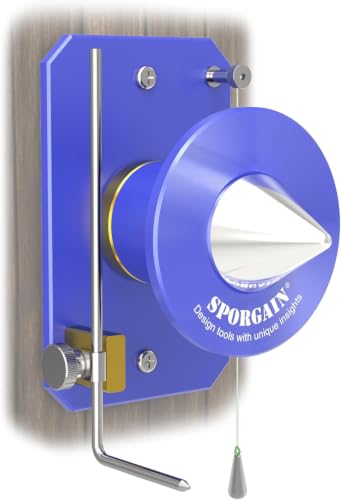
The SporGain Lawn Mower Blade Balancer is a dedicated benchtop blade-care tool designed to verify static balance across a wide range of rotary mower blades. Measuring 6.5 by 4.25 by 5.31 inches and finished in Denim Blue, the unit relies on an internal magnetic alignment system to suspend and check blades after grinding or regular seasonal maintenance. By incorporating eight powerful N52 magnets into an enclosed housing, this tool helps DIYers and equipment owners confirm that their replacement, mulching, or high-lift blades are evenly weighted prior to reinstallation.
This balancer is primarily suited for homeowners, property managers, and DIY small-engine maintenance enthusiasts who service their own push mowers, lawn tractors, or zero-turn mowers. Imbalanced blades frequently create severe deck vibration, which can lead to premature wear on spindle bearings, deck welds, and engine components. For buyers who sharpen their blades at home, an accessible magnetic balancer provides a critical quality-check step before mounting hardware is torqued back into place.
A notable design feature is the tool's hidden magnetic structure, which nests eight N52 magnets securely inside the alignment hub. Rather than exposing bare magnetic surfaces to metal shavings, filings, and abrasive grit from sharpening, the enclosed configuration protects the magnets while maintaining sufficient magnetic pull to support the blade. Paired with this is an infinitely adjustable centering mechanism, which the manufacturer states fits blades of most center-hole dimensions without needing distinct stepped adapters or loose plastic rings.
Practical ownership of the SporGain balancer requires minimal preparation, but buyers should ensure the device sits on a completely level, vibration-free surface during inspection. In standard operation, a clean, deburred blade is positioned onto the adjustable hub where the magnets engage the steel core. If one side dips, material must be incrementally removed from the heavy side until horizontal equilibrium is achieved. Blades should always be inspected when disengaged and disconnected from the mower, adhering strictly to machine safety guidelines.
While the infinitely adjustable hub provides broad versatility, the product documentation does not specify the precise minimum or maximum inner-diameter tolerances for uncommon or proprietary center holes. Prospective buyers with oversized commercial hubs or unusual star patterns should double-check physical compatibility before purchasing. Overall, for operators seeking an accessible, magnet-assisted balance tool for standard residential and light-duty commercial blades, the SporGain balancer offers practical workshop utility at a modest profile.
The SporGain balancer relies on an internal array of eight N52 neodymium magnets to hold mower blades securely on the alignment axis. Neodymium magnets of the N52 grade provide a dense magnetic field, ensuring that standard carbon steel and hardened mower blades remain firmly seated while pivoting freely for static balance checks.
By enclosing the magnets within a hidden design, the tool minimizes direct exposure to abrasive grinding dust, metal filings, and ambient moisture. This design choice helps protect the magnets from physical chipping and ensures smooth rotation when assessing horizontal level across the blade wings.
Unlike static cone balancers that require specific stepped increments, the SporGain tool features an infinitely adjustable alignment mechanism. This setup is designed to accommodate various center-hole configurations found across walk-behind, lawn tractor, and zero-turn mower decks without relying on interchangeable adapter bushings.
While the mechanism is engineered to seat most common round and shaped center holes, buyers should note that exact diameter boundaries are not listed by the manufacturer. Ensuring that the blade is cleaned of caked grass, dirt, and loose paint before mounting is essential for obtaining smooth, repeatable balance readings on the adjustable spindle.
Using a blade balancer is a vital safety and maintenance procedure that prevents rotational imbalance from damaging spindle assemblies, mower decks, and engine crankshafts. Blades should only be balanced after the lawn mower has been completely shut down, the spark plug boot disconnected, and the blade safely removed following manufacturer torque and safety procedures.
Care for the SporGain balancer itself involves keeping the unit clean and storing it in a dry workshop environment. Wiping away fine steel filings with a non-magnetic cloth after each sharpening session prevents buildup around the hub, preserving the smooth movement of the balancing mechanism over time.

Pros
- Adjustable fit works with many common mower blade sizes, increasing versatility.
- Rust-resistant metal build feels solid and durable for long-term use.
- Easy-turn knob makes adjustments quick and tool-free.
- Compact and lightweight, easy to store or carry to the jobsite.
Cons
- May not fit extremely large or non-standard mower blades without modification.
- Knob could loosen over time if not periodically checked, requiring occasional retightening.
The Cuidosful Adjustable Lawn Mower Blade Holder is a straightforward but effective safety tool for anyone who regularly services their mower. Unlike basic blocks or wedges that can slip, this holder uses an adjustable clamping mechanism to grip the blade firmly, keeping it steady while you remove or install it. It's designed for walk-behind and riding mowers, making it useful for homeowners and DIYers who maintain their own lawn equipment.
In real-world use, the adjustable width is the standout feature. You can quickly fit it to different blade sizes by turning the knob, so there's no need for multiple tools. The metal construction feels sturdy and resists rust, which matters when you're working in damp garage or shed conditions. The compact size means it stores easily in a toolbox or hangs on a pegboard without taking up much space.
One area where this tool shines is safety. Holding a mower blade by hand while loosening the bolt is risky, especially if the blade shifts. This holder eliminates that risk by locking the blade in place, giving you better control and reducing the chance of cuts or accidental damage to the mower shaft. It's a simple upgrade that makes routine maintenance less stressful.
Build quality is decent for the price. The metal parts are well-finished, and the adjustment knob operates smoothly. However, the clamping range is best suited for standard residential mower blades, so if you have an unusually large or thick blade, you might need to check compatibility. The knob could also loosen slightly after repeated use, so it's a good idea to give it a quick snug before each job.
Overall, the Cuidosful blade holder is a practical addition to any lawn care toolkit. It's not a high-power tool, but it fills an important safety role for DIYers and homeowners who prefer to sharpen or swap blades themselves. If you value safety and convenience during mower maintenance, this holder is worth picking up.

Pros
- Measures actual blade height rather than guessing based on outer deck rim position.
- Fits underneath low-clearance decks on popular John Deere, Cub Cadet, and MTD lawn tractors.
- Easy-to-read numbered scale speeds up both side-to-side and front-to-back rake leveling.
- Requires no batteries, electrical connections, or complicated assembly before use.
Cons
- Requires reaching under the cutting deck with protective gloves to position the gauge at the blade tip.
- Molded plastic construction requires careful garage storage to avoid bending or cracking under heavy tools.
- Does not include deck adjustment wrenches or replacement linkage hardware.
The Chamixx Mower Deck Leveling Gauge is a dedicated lawn tractor and riding mower maintenance tool designed to replace OEM parts like John Deere AM130907 and TY15272, as well as Stens 750-442. For suburban homeowners with quarter-acre lawns and rural property owners managing sprawling acreage, keeping a multi-blade cutting deck parallel to the ground is critical. This specialized gauge eliminates the guesswork involved in seasonal deck setup by measuring true blade height from the parking surface rather than relying on uneven deck shell edges.
Maintaining proper deck alignment directly affects grass handling and overall lawn health. When a mower deck hangs unevenly, the blades leave unsightly ridge lines across the turf and can scalp high spots during routine weekend mowing. A leveled deck also ensures the mower maintains the proper front-to-back pitch (typically an eighth to a half-inch lower in the front), which generates the airflow needed for clean mulching, strong side discharge, and efficient bagging without clumping.
The build quality centers around a durable, lightweight molded housing featuring a clear vertical measurement scale. The sliding indicator allows users to slide the tool under the deck lip, place the tip of the blade on the gauge arm, and read the exact height off the scale. Because of its slim profile, the tool slips into place around front anti-scalp wheels and side discharge chutes without forcing the operator to drop the deck assembly off the tractor frame.
Using this gauge is straightforward during routine spring prep or after striking an exposed tree root or rock during yard cleanup. Homeowners simply park the tractor on a flat concrete surface like a garage floor, disconnect the spark plug for safety, and take quick readings at the outer blade tips on both the discharge and trim sides. A few turns on the deck lift links balance the deck, restoring clean cutting performance before the next lawn mowing session.
While the gauge is simple and practical, users should keep realistic expectations regarding its build and function. Because it is molded from lightweight plastic, it should be kept away from excessive heat and stored neatly in a toolbox drawer rather than tossed loose under heavy power equipment. Overall, this gauge represents a cost-effective, practical solution for any DIY lawn care enthusiast or homeowner wanting a golf-course finish without paying dealership service rates.
Before using the leveling gauge, park your lawn tractor or zero-turn mower on a hard, completely flat surface such as a concrete driveway or level garage floor. Check tire pressure across all four tires first, as uneven air pressure will throw off deck alignment measurements before you even begin adjusting mechanical linkages.
Always turn off the engine, set the parking brake, remove the ignition key, and disconnect the spark plug wire to ensure total safety before reaching near the mower deck. Wear heavy work gloves to manually rotate the cutting blades so they point side-to-side across the width of the deck.
Slide the Chamixx gauge under the left side of the mower deck, position the blade tip against the measurement foot, and record the height. Repeat the exact same measurement on the right-hand blade tip. Adjust your tractor deck lift links until both sides match within an eighth of an inch, then rotate the blades front-to-back to verify proper pitch according to your mower operator manual.
This leveling tool serves as a direct functional replacement for John Deere part numbers AM130907 and TY15272, as well as aftermarket equivalents including Stens 750-442, MTD 490-900-0041, and Chamixx MOK30-0015. It is broadly compatible with riding mowers, lawn tractors, and residential zero-turn mowers from John Deere, Cub Cadet, Troy-Bilt, Craftsman, and Yard-Man.
The mechanical gauge design works independently of deck size, making it suitable for 38-inch, 42-inch, 48-inch, and 54-inch decks alike. As long as your mower features standard under-deck blade clearance and adjustable hanger links, this gauge provides the universal reference point needed to restore factory-level cutting geometry.
Practical Guide to Measuring Lawn Mower Blades and Matching Replacements
Measuring a lawn mower blade correctly requires recording four key dimensions: diagonal length, width, thickness, and center-hole pattern. Many homeowners mistakenly measure straight across the edge or assume their mower deck width matches the blade length, which leads to ordering parts that strike the deck or fail to mount. Following a standard measuring routine ensures replacement blades rotate freely, align with spindle adapters, and produce balanced cuts across the lawn.
The Diagonal Measurement Rule for Blade Length
A lawn mower blade must always be measured diagonally from cutting tip to cutting tip rather than straight across the center spine. Lay the blade flat on a stable work surface with the cutting edges facing up. Place a measuring tape at the outermost point of one cutting edge, then stretch the tape across the center hole to the outermost tip of the opposite cutting edge. This diagonal span captures the true cutting circle diameter created when the blade spins under the deck.
Measuring straight across from end to end produces an inaccurate reading because mower blades feature angled or rounded tips designed for specific airflow characteristics. A blade that measures 20.5 inches along its spine might actually have a 21-inch diagonal cutting radius. If you buy a blade based on the shorter linear measurement, the replacement blade will leave uncut grass between passes. Always align your tape with the extreme diagonal corners to capture the true rotational reach.
Severely bent or curved blades can distort your diagonal measurements if the steel has taken an impact against rocks or tree roots. When inspecting older blades, checking the steel used in lawn mower blades can help you determine whether the metal has deformed or suffered fatigue along the lift wings. If a blade is noticeably warped, lay a straightedge along the flat body to verify if the tips have shifted upward or downward. A bent blade must be replaced rather than measured as a reliable reference.
Why Deck Cutting Width Differs From Blade Length
One of the most frequent buying errors occurs when property owners confuse mower deck width with individual blade length. A 42-inch riding mower deck does not use a single 42-inch blade under the housing. Instead, that deck configuration utilizes two staggered blades that measure approximately 21 inches each to cover the total cutting path. Similarly, a 54-inch zero-turn deck typically requires three separate blades measuring approximately 18.5 inches each.
Walk-behind and push mowers usually feature single-blade decks where the blade length sits slightly below the nominal deck rating. A 21-inch push mower commonly houses a blade measuring roughly 20.5 to 20.8 inches to maintain safe clearance inside the stamped steel or aluminum deck housing. If a replacement blade touched the deck walls, it could shatter the steel, damage the engine crankshaft, or launch dangerous debris. Deck labels indicate the cut path width, not the exact blade dimension.
Always inspect the manufacturer model tag under the mower seat or on the rear deck frame before assuming a multi-blade layout. Twin-blade and triple-blade decks feature overlapping cutting orbits governed by spindle placement to prevent leaving an uncut strip of turf in the center. Measuring one of the existing blades confirms the individual component size rather than the aggregate cutting width. Recording both the deck model and the single-blade span protects against sizing mistakes.
Measuring Blade Width and Thickness Accurately
Blade width must be measured across the widest flat section of the steel body rather than at the curved sail or lift wing. Position a ruler or dial caliper perpendicular to the length of the blade near the center mounting hole. Most standard walk-behind and residential riding mower blades range from 2.0 to 2.5 inches in width, while heavy commercial zero-turn blades often measure 3.0 inches wide. Measuring at the center avoids distortion from worn cutting edges or curved rear wings.
Steel thickness controls the blade structural strength, rotational mass, and resistance to deflection in tall grass. Use a digital caliper or mechanical micrometer to measure the steel thickness at an unworn area near the center mount. Common blade thicknesses include 0.120 inches, 0.134 inches, 0.160 inches, and heavy-duty 0.204 inches. Installing a thinner blade than specified can lead to bending during heavy cutting, while an excessively thick blade strains light-duty drive belts.
Normal wear and repeated sharpening gradually reduce both blade width and thickness over several seasons of lawn care. If the cutting face has been sharpened multiple times, measuring width near the outer tip will give a deceptively narrow number. Always record the width at the unworn center span to capture the original factory specification. Comparing your recorded center width against replacement parts ensures proper airflow and mulch chamber performance.
Center-Hole Shapes and Mounting Pattern Geometry
Center-hole geometry dictates whether a replacement blade can seat securely onto the spindle shaft adapter. Lawn mower manufacturers utilize several distinct hole patterns, including round circles, 5-point stars, 6-point stars, and bow-tie shapes. For round center holes, measure the internal diameter across the widest circular opening, which typically equals 3/8-inch, 1/2-inch, 5/8-inch, or 13/16-inch. A round blade will not mount to a star-shaped spindle shaft even if the diameter appears similar.
Star patterns and bow-tie shapes require exact profile matching rather than standard circular diameter measurements. A 5-point star spindle shaft cannot accept a 6-point star blade, and forcing a mismatched center hole onto an adapter strips the drive points and risks blade detachment. Some manufacturers also incorporate outer alignment holes positioned on either side of the center bore. When secondary holes are present, measure both the outer hole diameters and the center-to-center distance between them.
Spindle adapters transfer rotational torque directly from the engine or belt pulley to the spinning cutting edge. If the center hole has rounded corners, enlarged openings, or cracked star points, the blade was likely installed loosely or hit an obstruction during operation. Inspecting the spindle interface during measurement prevents mounting a new blade to a damaged spindle adapter. A loose mounting pattern creates dangerous vibration that rapidly damages deck bearings.
Safe Removal and Securing Procedures for Inspection
Measuring a blade accurately is far easier when the blade is removed from the mower deck and laid on a flat workbench. Before inspecting or loosening any hardware, disconnect the spark plug boot on gas mowers or pull the battery pack on cordless electric models. Tipping a mower with the carburetor facing upward prevents oil and fuel from draining into the air cleaner housing. Never reach under an unsecured deck or turn the blade by hand while the engine ignition remains connected.
Loosening the center blade bolt requires immobilizing the blade so it cannot spin while you apply wrench torque. Clamping tools such as the MaxPower 339079 Universal Mower Blade Removal Tool or the KINTLE 490-850-0005 Universal Mower Blade Removal clamp secure directly to the deck edge to lock the blade firmly in place. Adjustable models like the Cuidosful Adjustable Lawn Mower Blade Holder adapt across varying blade widths using an easy-turn adjustment knob. Locking the blade prevents hand injuries and eliminates slipping when breaking stubborn bolt threads loose.
Once the retaining bolt and heavy washer are removed, pull the blade straight off the spindle adapter to protect the splines. Clean away caked grass clippings, dirt, and dried sap using a stiff wire brush before taking any tape measurements. A clean metal surface ensures your calipers and measuring tape sit directly on bare steel rather than debris. Store the mounting hardware in an organized container so the original bolt threads and concave washers remain ready for reassembly.
Evaluating Blade Lift Profile and Deck Clearance
Beyond length and mounting holes, blades feature distinct lift profiles that dictate how grass clippings circulate under the deck. Low-lift blades have minimal curve at the trailing edge, which reduces airborne dust in sandy soil conditions. Medium-lift blades provide balanced airflow for standard side discharge, while high-lift blades feature prominent rear wings that pull turf upright for efficient bagging. Mulching blades feature curved, wavy contours designed to chop clippings multiple times before dropping them into the turf canopy.
Measuring the lift height involves placing the blade flat on a level bench and measuring vertically from the table surface to the highest point of the trailing sail. High-lift wings can measure over one inch in height, which requires adequate vertical clearance beneath the deck baffles. If you install an aggressive high-lift blade under a shallow mulching deck, the rear sail may strike internal discharge chutes. Verifying your original blade lift height prevents internal clearance conflicts.
Deck leveling instruments help ensure the measured blade height translates into an even cut across your property. Tools such as the Xhziy 1PCS Mower Deck Leveling Gauge Blue Mower Blade and the Chamixx Mower Deck Leveling Gauge for John Deere AM130907 allow operators to check the cutting edge tip distance from the ground on both sides of the mower. The Chamixx unit is marketed as a replacement for John Deere AM130907 and Stens 750-442, providing precise deck alignment checks. Proper deck pitch prevents scalping and uneven cutting lines.
Checking Balance and Blade Edge Condition
After measuring dimensions, testing rotational balance determines whether an existing blade remains suitable for continued service or sharpening. An unbalanced blade wobbles at high engine speeds, transmitting destructive vibration through the deck housing and prematurely destroying spindle bearings. Tools like the SporGain Lawn Mower Blade Balancer Precision utilize 8 embedded N52 magnets and an infinitely adjustable mechanism to test balance across various hole sizes. Magnetic balancers provide low-friction suspension so the heavier tip immediately dips downward.
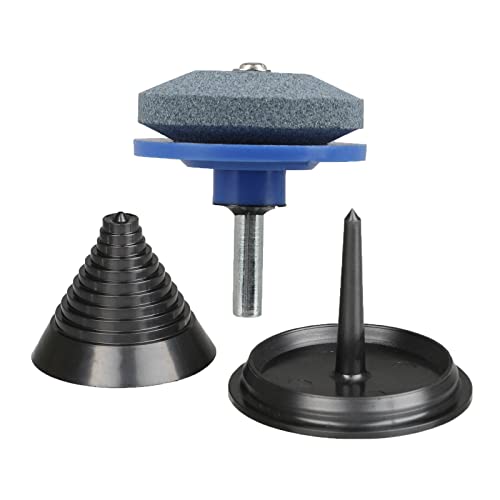
Combined maintenance sets like the jtfrkope Lawn Mower Blade Sharpener for Drill and Lawn include a double-layer corundum drill attachment alongside a stepped cone balancer. If one side of the blade carries more metal after sharpening, grind slight amounts of steel from the trailing wing of the heavy side until the blade rests horizontally. Homeowners wondering about factory blade sharpness standards should note that new replacement blades often come with a protective coating rather than a razor edge. Balancing should always be verified before reinstalling any serviced blade.
Examine the cutting edges closely for deep gouges, cracks, or severe metal thinning near the sail bend. If sharpening would require grinding away more than one-third of the original cutting edge width, the blade has reached the end of its safe lifespan. Thin metal along the outer edge can fracture at full operational speed, creating a hazardous projectile. Replacing worn steel is always safer and more cost-effective than trying to salvage fatigued metal.
Decoding OEM Part Numbers Against Physical Dimensions
Original equipment manufacturer part numbers provide an authoritative reference when cross-referencing your measured blade specifications. Most factory blades feature a stamped part number pressed directly into the steel body near the center mounting hole. Cleaning away surface corrosion often reveals six-digit or eight-digit factory codes that link directly to parts manuals from brands like MTD, Troy-Bilt, or John Deere. Comparing your tape measurements against factory parts diagrams confirms whether the previous owner installed an incorrect blade size.
Aftermarket replacement blades frequently group multiple superseded OEM numbers under a single replacement part listing. For instance, the KINTLE removal tool listing notes compatibility across MTD models 11A-B13M729, 13A326JC058, and cross-references part 339079. However, buyers must remain vigilant because manufacturers occasionally update deck baffling across different model production years. Even when an aftermarket listing claims compatibility with your general mower series, verifying physical diagonal length and center hole shape prevents costly return shipping.
Keep a maintenance logbook where you record your mower model number, deck width, OEM blade part number, and measured dimensions. Having these specifications readily accessible simplifies seasonal blade replacement and accessory ordering. When seasonal growth accelerates, having verified measurements allows you to order replacement blades or maintenance tools with complete confidence. Checking physical dimensions against documented numbers provides the most reliable fitment verification available.
Pre-Purchase Verification Checklist for Replacement Blades
Before purchasing replacement blades, summarize your recorded measurements into a simple checklist to match against retail product listings. Verify that the listed diagonal length matches your measurement within one-eighth of an inch to maintain safe deck clearance. Confirm that the center-hole geometry matches your spindle shaft exactly, whether that means a 6-point star, 5-point star, or specific circular diameter. Finally, ensure the package contains the exact number of blades required for your deck width.
Taking accurate physical measurements takes only a few minutes but prevents deck damage, excessive vibration, and uneven mowing results. Pair your measurements with reliable removal clamps and balancing tools to keep maintenance safe and straightforward throughout the season. With the right diagonal length, width, thickness, and mounting pattern in hand, you can select replacement blades that restore crisp, healthy cutting across your entire yard.




Write Your Review
No reviews yet. Be the first to share your experience!